
7 Reasons to Choose a Locally Owned Sand Delivery Company near Jackson, TN
Quick answer: Jackson Sand LLC is a locally owned sand and aggregate supplier at 139 United Dr., Jackson, TN 38305, serving West Tennessee and the broader Mid-South. They mix their own sand on premises from high-quality materials, own their delivery trucks, and include delivery in every order — which means cleaner loads, accurate quantities, and consistent product quality. Whether you manage a golf course, maintain an athletic field, run a landscaping crew, or need a few yards of sand or gravel at your home, working with a local supplier means faster service, real product knowledge, and a direct line to people who know West Tennessee soil and turf conditions firsthand.
What Does a Locally Owned Sand Delivery Company Actually Do?
Before diving into why local matters, it helps to understand what a sand delivery company actually provides. At the most basic level, they supply sand, gravel, and related aggregates and transport them directly to your job site or property. But the best local suppliers go several steps further — they blend their own products, test for quality, and deliver in their own trucks so nothing gets mixed or contaminated in transit.
More Than Just Dropping Off a Load
A locally owned sand and aggregate supplier is not simply a middleman who orders product from a distant quarry and resells it. At its best, a local supplier like Jackson Sand mixes sand on its own premises, maintains its own fleet of delivery trucks, and employs staff who understand the specific turf, drainage, and construction needs of the region. That vertical control — from raw material blending to the moment the load hits your site — is what separates a true local supplier from a regional distribution warehouse.
Jackson Sand, for example, produces bunker sand, top dressing sand, athletic field sand, and drainage aggregates all at its Jackson, TN facility. The team can walk you through particle size distributions, drainage coefficients, and compaction characteristics because they work with these materials every day in West Tennessee conditions.
The Range of Products a Full-Service Supplier Carries
A full-service local supplier should cover the full spectrum of sand and aggregate needs:
- Golf course materials: bunker sand, top dressing sand, and specialty blends for greens and tees
- Athletic field materials: infield mix, warning track sand, and drainage layers for school and collegiate fields
- Drainage aggregates: surface drainage, basin fill, and seepage drainage stone
- General landscaping materials: gravel, mulch, and utility sand
Having all of these products available from a single local source simplifies procurement, reduces freight costs, and gives you one point of contact for questions — a practical advantage that large national distributors rarely match.
1. On-Premises Mixing Means Consistent, High-Quality Sand Every Time

Product consistency is one of the most underrated advantages of working with a supplier who handles their own mixing. When you order 50 yards of bunker sand for a renovation project, you need the 50th yard to perform exactly like the 1st. That reliability is only possible when the supplier controls the blending process from start to finish.
Why Mixing Location Matters
When a supplier mixes sand at their own facility rather than accepting pre-blended product from a third party, they control every variable: particle size distribution, organic content, moisture level, and uniformity. For turf professionals, this is critical. A bunker sand that is 5% too fine will compact under rain and create drainage problems. A top dressing sand that is too coarse will disrupt ball roll on greens. On-premises mixing allows the supplier to hit the spec every batch, not just most of the time.
Jackson Sand mixes its products at its Jackson, TN facility, which means the sand loaded onto the truck is the same sand that was tested and approved — not a substitute blend sourced from wherever the regional warehouse happened to have inventory that week.
Lab-Tested Specs You Can Actually Read
Consistent mixing is only valuable if you can verify it. Jackson Sand publishes lab-tested spec sheets so superintendents, field managers, and contractors can confirm that the product meets their project requirements before ordering. Key metrics typically reported include:
- Particle size distribution (percent passing each sieve size)
- Percolation rate (inches per hour for drainage performance)
- Organic matter content (percent by weight)
- Bulk density (pounds per cubic foot)
You can review the published data at the Jackson Sand spec sheets page before you place a single order — a level of transparency that commodity suppliers rarely offer.
2. Company-Owned Trucks Keep Loads Clean and Accurate

Delivery logistics are where many aggregate suppliers quietly cut corners. Subcontracting to third-party haulers saves overhead but transfers quality control away from the people who actually know the product. A supplier that owns its trucks maintains direct accountability for what arrives on your site — and in what condition.
The Problem With Third-Party Haulers
Many aggregate suppliers — especially larger regional operations — rely on contracted trucking companies to make deliveries. That arrangement introduces several risks. A contracted hauler may carry different materials between loads, leaving residual contamination in the truck bed. Load weights may be estimated rather than measured. Scheduling is controlled by the hauler’s dispatcher, not the supplier, which can mean missed delivery windows during busy seasons.
When a supplier owns its trucks, none of those variables apply. The driver works for the same company that blended the product. The truck bed is dedicated to sand and aggregate. Load accuracy is a matter of company reputation, not a subcontractor’s incentive structure.
What Clean, Accurate Loads Mean for Your Project
For a golf course superintendent ordering bunker sand, a contaminated load can introduce weed seed, clay fines, or incompatible aggregate that undermines drainage for years. For a contractor pouring a concrete slab, an inaccurate load means either a shortage that halts the pour or excess material that has to be removed at cost. Company-owned trucks are not a minor operational detail — they are a direct quality-control mechanism.
Jackson Sand owns its delivery fleet and handles every load from the mixing pad to your site. That chain of custody is one of the clearest practical advantages of choosing a locally owned supplier over a distant distributor who subcontracts the last mile.
3. Local Knowledge That National Distributors Simply Cannot Match

Geography matters in the aggregate business. The drainage challenges on a Jackson, TN athletic field are not the same as those on a course in coastal Georgia or a field in the Midwest. Local suppliers accumulate years of region-specific experience that informs every product recommendation they make.
West Tennessee Soil and Climate Conditions
West Tennessee sits in a transitional zone between the humid subtropics of the Deep South and the continental climate of the upper Mid-South. Summers are hot and humid, with heavy rainfall events that can dump 3–5 inches in a single storm. Clay-heavy native soils are common across Madison County and surrounding areas, which creates persistent drainage challenges for turf managers and site-work contractors alike.
A local supplier who has been working in this environment understands which drainage aggregates perform under those clay conditions, which sand particle sizes resist compaction during wet springs, and how seasonal temperature swings affect material handling. That regional knowledge is not something you can replicate by calling a 1-800 number at a national distribution center.
Relationships With Local Turf Professionals and Contractors
Local suppliers build long-term relationships with the golf course superintendents, athletic field managers, landscapers, and contractors who work in the same market. Those relationships create informal feedback loops: a superintendent mentions that a particular sand blend is holding moisture too long after rain, and the supplier adjusts the mix or recommends a different product for the next renovation. That kind of iterative, relationship-driven improvement is simply not available from a supplier who treats every order as a one-time transaction.
Jackson Sand serves courses, schools, parks departments, and contractors across West Tennessee and the Mid-South, which means their team has seen a wide range of site conditions and project types — and can apply that experience to your specific situation.
4. Delivery Included — and What That Really Saves You

Delivery cost is one of the most commonly overlooked variables when comparing aggregate suppliers. A lower per-yard price means nothing if you have to add $200 in trucking to every order. Suppliers who own their trucks and include delivery remove that variable entirely — and that simplicity has real value over the course of a season.
The True Cost of 'You Haul' Aggregate Purchasing
Some aggregate suppliers post attractive per-yard prices but exclude delivery — leaving you to arrange and pay for trucking separately. For a 20-yard order, a single round-trip haul from a Jackson-area quarry or yard might add $150–$300 or more depending on distance and fuel surcharges, effectively erasing any price advantage. For larger orders of 50–100+ yards, the logistics cost can be substantial.
Beyond the dollar cost, self-arranged hauling introduces scheduling complexity. You are now coordinating between two vendors — the supplier and the hauler — and any miscommunication about load size, timing, or site access falls on you to resolve.
How Included Delivery Simplifies Project Planning
When delivery is included in the price, project budgeting becomes straightforward. You know the cost per yard delivered to your site, full stop. There are no freight line items to negotiate, no fuel surcharge surprises, and no separate trucking invoices to reconcile. For a school district purchasing athletic field sand on a fixed budget, or a golf course planning a bunker renovation, that cost clarity is genuinely valuable.
Jackson Sand includes delivery with every order — large or small. If you are unsure how many yards your project requires, the free yardage calculator on the Jackson Sand website can help you estimate before you call.
5. The Right Sand for Golf Courses, Athletic Fields, and Drainage Projects

Not all sand is interchangeable. The particle size, angularity, organic content, and percolation rate that make a sand ideal for a golf green root zone are completely different from what you want in a drainage basin or a baseball infield. A supplier who stocks and understands multiple specialty products — and can explain the differences — saves you from costly specification errors.
Golf Course Sand: Bunkers and Top Dressing
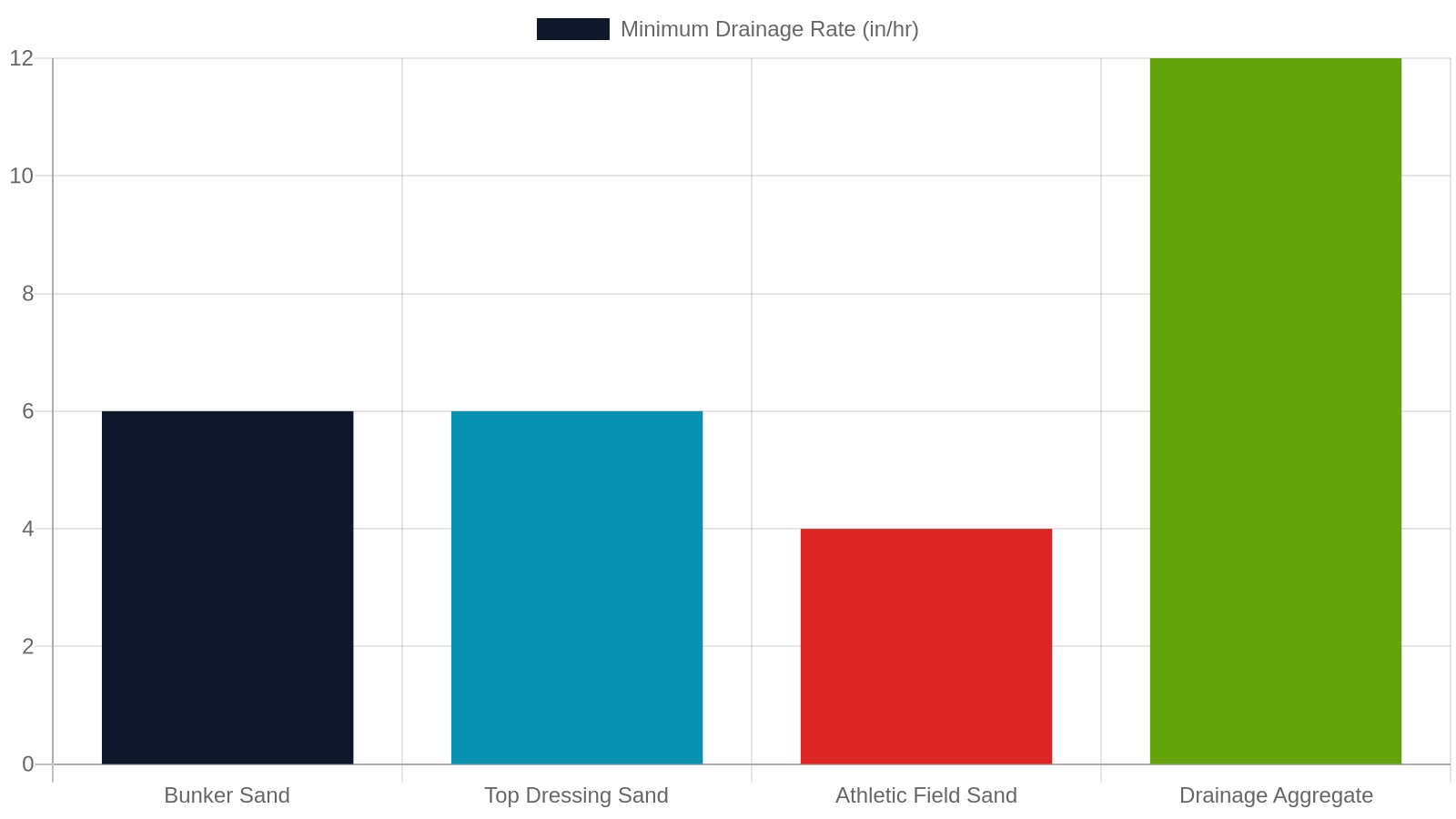
Golf course sand is among the most specification-sensitive aggregate products in the market. Bunker sand must meet USGA recommendations for particle size (typically 0.25–1.0 mm with less than 5% fine sand), resist layering, and drain at rates of at least 6 inches per hour. Top dressing sand for greens must be compatible with the existing root zone mix to avoid layering interfaces that disrupt water movement and root growth.
Jackson Sand produces both bunker sand and top dressing sand and offers top dressing services — meaning they can supply the product and apply it, which is particularly useful for smaller courses or facilities that do not own a top dresser. Spec sheets are available for review before ordering.
Athletic Field Sand and Drainage Aggregates
Athletic fields present a different set of requirements. Infield mix for baseball and softball diamonds typically combines sand with clay and silt to achieve the right balance of firmness and workability. Warning track material needs to be visually distinct and firm underfoot. Soccer and football fields built on sand-based root zones require drainage layers that move water fast enough to allow play within hours of heavy rain.
Drainage projects — whether surface grading, basin construction, or seepage systems — require aggregates graded for specific hydraulic conductivity. Using the wrong gradation can cause a drainage system to fail within a season. Jackson Sand stocks materials for all three drainage applications and can help you select the right product for your site conditions.
6. Serving Small Jobs and Large Projects Equally Well

One of the quiet advantages of a locally owned supplier is scalability in both directions. They can handle a major golf course renovation with multiple truckloads delivered on a tight schedule — and they can also take care of the homeowner who needs a few yards of gravel without making that customer feel like a nuisance. That range of service is a direct result of local ownership and operational flexibility.
Why Small Orders Often Get Deprioritized by Large Suppliers
Large regional aggregate distributors are optimized for high-volume orders. A 500-yard bunker renovation or a multi-truckload site-work contract fits neatly into their logistics model. A homeowner who needs 5 yards of sand for a backyard drainage fix, or a school that needs 15 yards of infield mix for one diamond, often finds themselves at the back of the scheduling queue — or facing minimum order requirements that force them to buy more than they need.
Local suppliers with their own trucks have more scheduling flexibility. They can route a smaller delivery efficiently alongside larger loads in the same area, making it economically practical to serve both the 500-yard renovation and the 5-yard residential order without penalizing either customer.
Homeowners and Small Contractors Are Welcome Customers
Jackson Sand serves homeowners across Jackson and West Tennessee who need sand, gravel, or mulch delivered for landscaping, drainage repair, or yard projects. There is no requirement to be a golf course or a large contractor to place an order. Whether you need a few yards of gravel for a driveway, sand for a children’s play area, or mulch for a landscaping bed, the same delivery-included service applies.
If you are not sure how much material you need, use the free yardage calculator on the Jackson Sand website to estimate your order before calling. It takes about 60 seconds and can save you from over-ordering or running short mid-project.
Sand and Aggregate Supplier Options: a 5-Point Comparison
Use this table to evaluate the key operational attributes of common aggregate purchasing options in West Tennessee and the Mid-South. The right supplier for your project depends on your quality requirements, budget, and timeline.
7. Supporting a Local Business Strengthens the West Tennessee Economy

Every purchasing decision is also an economic decision. When you choose a locally owned sand and aggregate supplier over a distant distributor, you are not just buying a product — you are investing in the local workforce, local infrastructure, and the long-term economic health of the Jackson, TN area. That matters, and it is worth naming plainly.
Where the Money Goes When You Buy Local
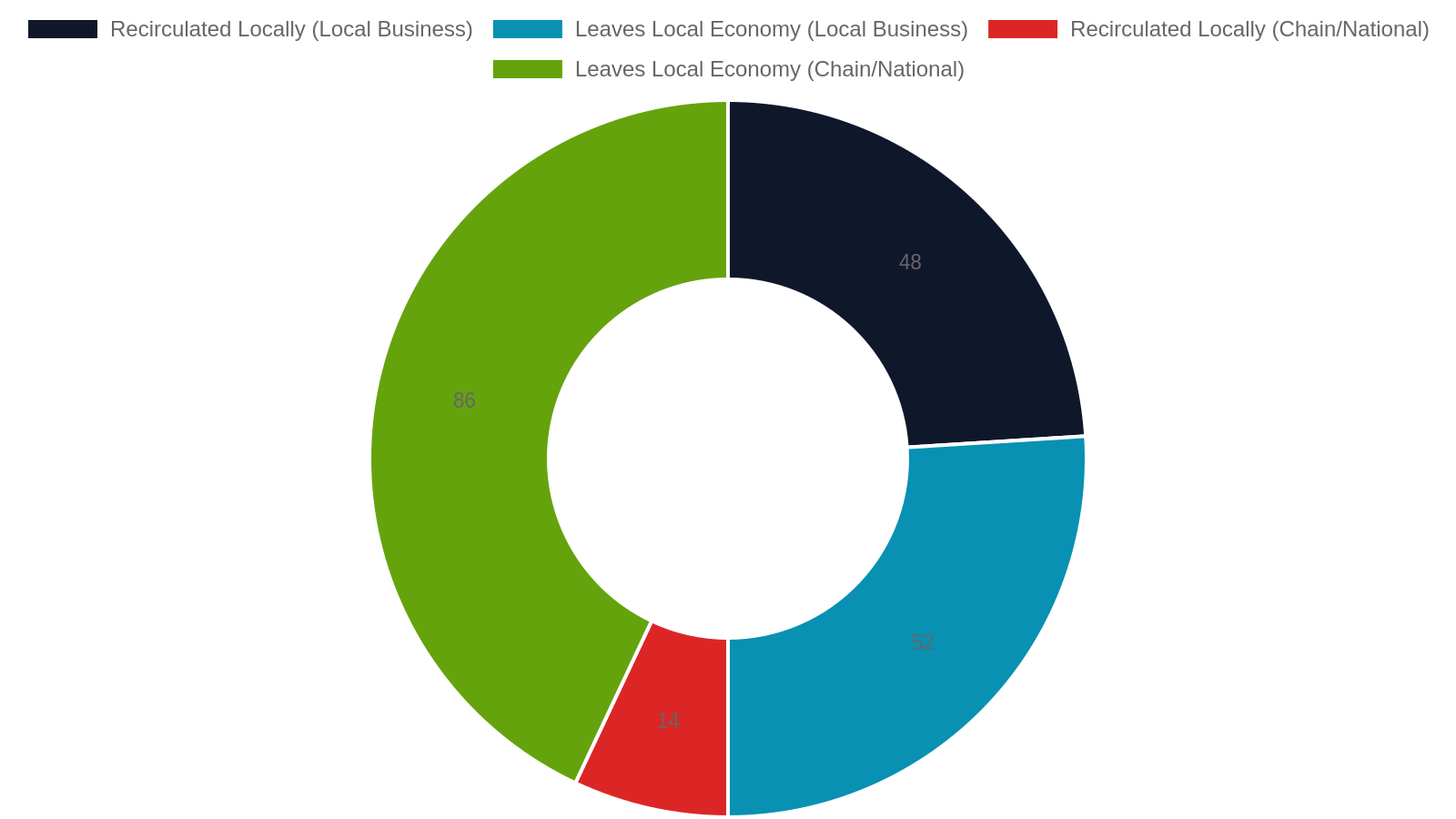
Economic research consistently shows that locally owned businesses recirculate a higher percentage of revenue within their home community than national chains or distant distributors. A commonly cited figure from the American Independent Business Alliance suggests that locally owned businesses return roughly 48 cents of every dollar to the local economy, compared to approximately 14 cents for chain businesses. When you purchase from Jackson Sand, the revenue supports local employees, local vendors, local equipment dealers, and local tax revenue — not a distant corporate headquarters.
For a region like West Tennessee, where small and mid-size businesses form the backbone of the economy, that recirculation effect compounds over time. Choosing a local supplier is not just a sentimental preference — it is a financially rational decision for the community as a whole.
Accountability That Only Local Ownership Provides
When something goes wrong with an order — a short load, a delivery that arrives at the wrong time, a product question that needs a fast answer — local ownership means you have a direct line to the people who can fix it. Jackson Sand is run by President Carlton Pope and Manager Wes Lipford, both of whom are accessible and invested in the reputation of the business in their own community. That personal accountability is structurally impossible at a national distributor where customer service is handled by a call center with no connection to the actual product or the local market.
How Jackson Sand Compares to Typical Aggregate Purchasing Options
Choosing an aggregate supplier involves more variables than price per yard. The table in this section breaks down the most important operational and quality attributes across four common purchasing scenarios so you can make a direct comparison.
Reading the Comparison: What to Look For
The comparison table below summarizes the key attributes that matter most when choosing an aggregate supplier — product consistency, delivery control, regional expertise, order flexibility, and transparency. Not every supplier will score well on every dimension, and the right choice depends on your specific project requirements. However, for most turf professionals, contractors, and homeowners in West Tennessee, the combination of on-premises mixing, company-owned trucks, and included delivery represents a significant practical advantage over the alternatives.
Use this table as a starting checklist when evaluating any aggregate supplier, not just Jackson Sand. Ask directly: Do you mix your own product? Do you own your trucks? Is delivery included? Can I see a spec sheet? The answers will tell you a great deal about what to expect when the truck arrives at your site.
What to Ask Before You Order Sand or Aggregate from Any Supplier

Armed with the right questions, you can evaluate any aggregate supplier objectively — regardless of how polished their website looks or how competitive their advertised price appears. The answers reveal whether a supplier has genuine operational control over their product and delivery, or whether they are simply reselling and re-routing materials from elsewhere.
Questions About Product Quality
Before placing any significant aggregate order, ask the supplier these product-focused questions:
- Do you mix your own sand on premises, or do you resell pre-blended product? On-premises mixing gives the supplier direct control over consistency.
- Are lab-tested spec sheets available for the products I need? Published specs are the only reliable way to verify particle size distribution and drainage performance before delivery.
- What is the percolation rate of your bunker sand / top dressing sand / drainage aggregate? A supplier who cannot answer this question immediately is not a specialist.
- Has this product been used successfully on projects similar to mine in this region? Regional track record matters more than generic product claims.
Questions About Delivery and Logistics
Logistics questions are equally important:
- Do you own your delivery trucks, or do you use contracted haulers? Company-owned trucks mean cleaner loads and more reliable scheduling.
- Is delivery included in the price, or is it quoted separately? Understand the all-in cost before comparing quotes.
- What is the lead time for delivery in my area? During peak season (spring and fall for turf projects), delivery windows can tighten significantly.
- Can you accommodate both large and small orders? If you have a small project now but anticipate larger orders later, knowing the supplier can scale with you is valuable.
Jackson Sand can answer all of these questions directly — call 731-668-0440 or visit the contact page to get started.
Ready to Order Sand Delivered to Your Site in West Tennessee?
Jackson Sand delivers sand, gravel, mulch, and drainage aggregates across Jackson, TN and the surrounding West Tennessee and Mid-South region. Every order includes delivery in company-owned trucks, loaded with on-premises mixed product that meets published lab specifications. Whether your project is measured in yards or hundreds of yards, the process starts with a single phone call.
How to Place an Order With Jackson Sand
Getting started with Jackson Sand is straightforward. Call 731-668-0440 to speak directly with the team about your project — whether you are a golf course superintendent planning a bunker renovation, an athletic field manager ordering infield mix for the spring season, a landscaper pricing a drainage project, or a homeowner who needs a few yards of gravel delivered. The team can help you identify the right product, estimate the quantity you need, and schedule delivery.
If you want to estimate your quantity before calling, use the free yardage calculator on the Jackson Sand website. It handles common shapes and depths and gives you a cubic yard estimate in under a minute.
Learn More About Jackson Sand and the Team Behind It
Jackson Sand LLC is located at 139 United Dr., Jackson, TN 38305, and has been serving West Tennessee and the Mid-South with sand, aggregate, and drainage materials for years. The business is led by President Carlton Pope and Manager Wes Lipford — local professionals who are personally invested in the quality of every load that leaves the yard.
If you want to understand more about the company’s approach to product quality, on-premises mixing, and customer service before placing an order, read about the Jackson Sand team and their commitment to quality on the About Us page. You will find the same plainspoken, practical approach there that you will get when you call.
Frequently Asked Questions
Does Jackson Sand deliver to areas outside of Jackson, TN?
Jackson Sand serves West Tennessee and the surrounding Mid-South region. Call 731-668-0440 to confirm whether delivery is available to your specific location and to get scheduling details.
How much sand do I need for my project?
The free yardage calculator at jacksonsand.com/yardage-calculator/ can estimate cubic yards based on the dimensions and depth of your project area. It works for rectangular, circular, and irregularly shaped spaces and takes about a minute to use.
What is the difference between bunker sand and top dressing sand?
Bunker sand is designed for golf course sand hazards and must meet specific drainage and particle size requirements — typically 0.25–1.0 mm with a percolation rate of at least 6 inches per hour. Top dressing sand is applied to greens and fairways to smooth the surface and improve drainage; it must be compatible with the existing root zone mix to prevent layering. Jackson Sand publishes spec sheets for both products at jacksonsand.com/sand-specs/.
Can homeowners order sand or gravel from Jackson Sand, or is it only for contractors and golf courses?
Jackson Sand serves homeowners as well as turf professionals and contractors. Whether you need a few yards of sand, gravel, or mulch for a landscaping or drainage project, delivery is included and there is no requirement to be a commercial customer.
Why does it matter whether a sand supplier owns its own trucks?
Company-owned trucks mean the same team that mixed the product is responsible for delivering it. This eliminates the risk of cross-contamination from a contracted hauler carrying different materials between loads, and it gives the supplier direct control over scheduling and load accuracy.
How do I know if the sand I am ordering meets USGA or industry specifications for my project?
Ask the supplier for a lab-tested spec sheet showing particle size distribution, percolation rate, organic matter content, and bulk density. Jackson Sand publishes these specs at jacksonsand.com/sand-specs/ so you can review them before placing an order.