

Green Dyed Divot Sand: Divot Repair and Spring Green-Up Guide
Quick answer: Green dyed divot sand is a clean, well-graded sand coated with a turf-safe green colorant. Golf courses use it to fill divots on tees and fairways so the scars blend in immediately while turf grows back through the sand. It can be amended with seed, fertilizer or peat to suit your grass and program, and it also works as a light spring top dressing for quicker green-up. Jackson Sand mixes it in Jackson, Tennessee.
What Green Dyed Divot Sand Is
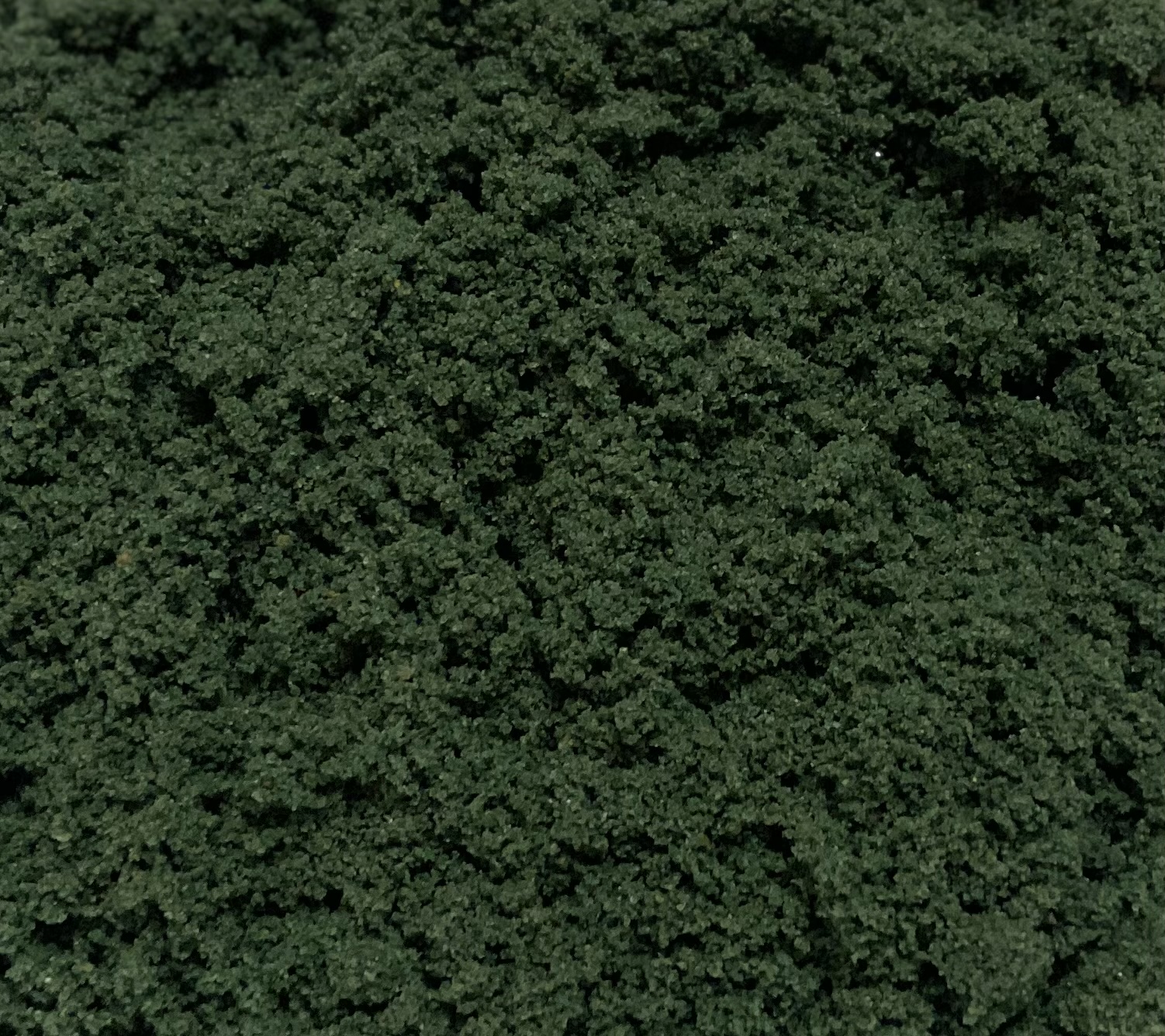
Green dyed divot sand is exactly what the name says: a clean, well-graded sand that has been coated with a green colorant so it reads as turf instead of a bare brown or tan patch. On a golf course, it is the material that goes into the bottle on the cart, the bucket by the tee box and the divot caddies the crew carries on fairway passes. When a golfer or a crew member fills a divot scar with it, the hole disappears visually right away, and the sand gives new shoots and stolons a stable, well-drained bed to grow into.
The color is cosmetic, but it matters more than most people think. A tee box covered in tan sand-filled scars looks beaten up even when the turf underneath is recovering on schedule. Green sand keeps the surface looking uniform during the weeks it takes bermudagrass, zoysia or a cool-season grass to knit back together. Members notice conditioning, and divot-pocked tees and landing areas are one of the first things they notice.
At Jackson Sand in Jackson, Tennessee, green dyed divot sand is mixed on our own premises, loaded in trucks we own and keep clean, and delivered to golf courses and turf managers across West Tennessee and the Mid-South. Because we control the mixing, the base sand and any amendments can be set up to your own design rather than an off-the-shelf bag recipe.
Where it gets used
- Tee boxes, especially par-3 tees where iron divots concentrate in a small area.
- Fairway landing zones and approach areas.
- Driving range tees, which take the heaviest divot load on any property.
- Spring top dressing on tees and other low-cut turf to help surfaces look green sooner as they break dormancy.
Why Divot Repair Matters for Playability and Turf Health
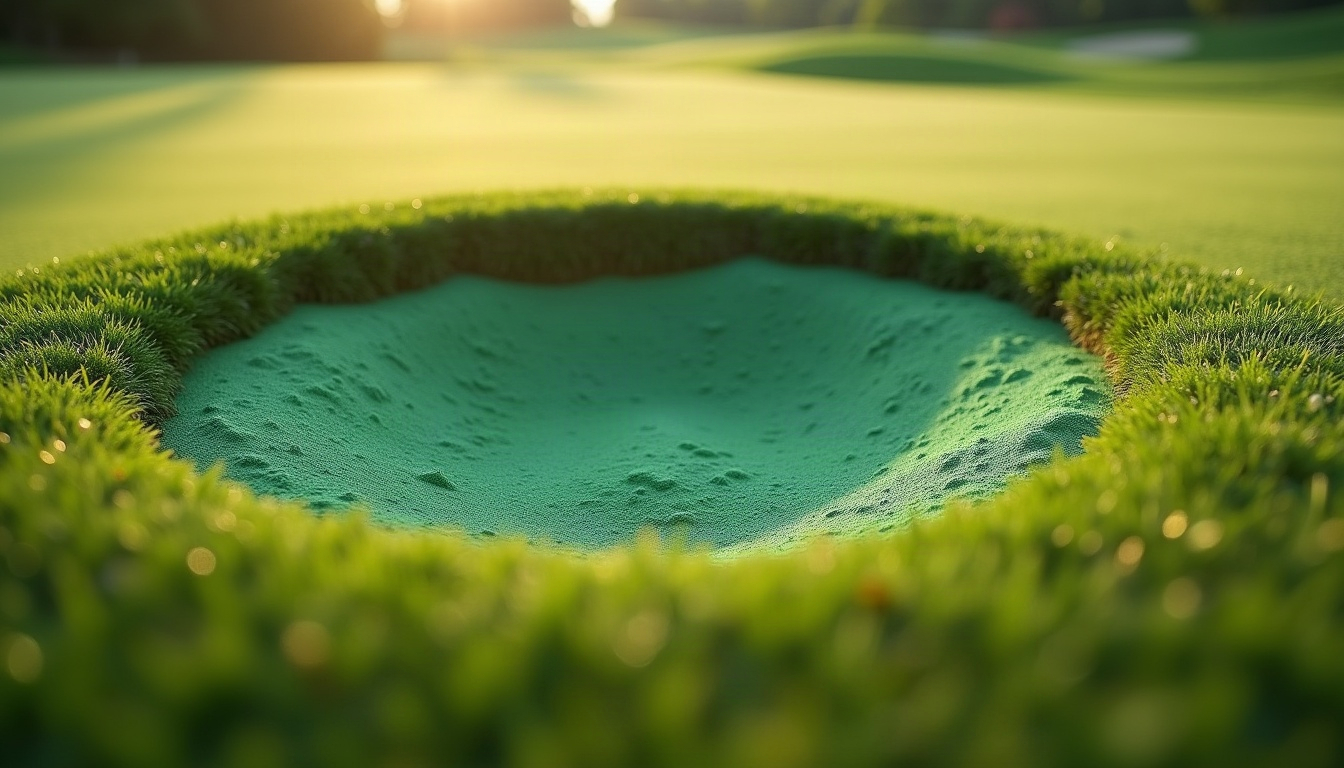
An open divot is more than an eyesore. It is a small wound in the turf canopy that exposes soil and roots, and how it is handled decides how fast the area recovers and whether it becomes a weak spot that invites weeds.
What happens to an unfilled divot
Left open, a divot scar dries out at the edges, the exposed soil crusts, and the surrounding turf has to creep sideways across a rough, uneven depression. On warm-season grasses that spread by stolons and rhizomes, that lateral growth needs something to root into. On a bare hollow, recovery is slow, and weed seeds such as crabgrass and goosegrass find an open seedbed with no competition. Fairways with many unfilled divots also play unfairly: a good drive can come to rest in a scar left by someone else.
What a properly filled divot does
- Restores a level surface so balls sit up and mowers do not scalp the edges.
- Provides a rooting medium that holds some moisture but drains, which is what spreading turf wants.
- Reduces weed invasion by occupying the space a weed seed would otherwise use.
- Speeds visual recovery, especially when the sand is green and the eye reads it as turf.
Most superintendents treat divot repair as a standing, daily or weekly task rather than an occasional project. The cost of the sand is small compared with the labor, so the material should be one that flows well from a bottle, levels easily, and does not cake or clump in storage. That is a big part of why a clean, consistent base sand matters as much as the color does.
Choosing the Right Base Sand
The green is just a coating. What does the real work is the sand underneath, and the sand you fill divots with ends up becoming part of your tee and fairway profile over years of repeated filling. A poor choice here can quietly build a layer that drains differently from the rest of the surface.
What to look for
- Compatibility with your existing top dressing. Ideally, divot sand should be close in particle size to the sand you already topdress tees and fairways with, so you are not creating layers.
- Low silt and clay. Fines clog pore space and slow drainage. A clean washed sand keeps divots from turning into soft, muddy pockets after rain.
- Medium-dominant particle size. Sands concentrated in the medium (0.25 to 0.5 mm) range fill and firm well without being so coarse they roll out of the hole or dull mower reels.
- Consistent color coverage so every scoop looks the same on the ground.
For reference, our regular top dressing sand tests at 98.9% sand with only 0.5% silt and 0.5% clay, and 58.3% of particles fall in the medium range. That is the kind of profile that makes a sensible starting point for a divot mix, because what goes in the divots matches what goes on the surface. You can review the full gradations on our sand specs page.
If your course already uses a specific top dressing, tell us. The point of mixing on our own premises is that we can build your divot sand around the material you already trust instead of asking you to change your program.
Custom Amendments: Seed, Fertilizer and Peat
Straight green sand is a good product on its own, but many courses want more out of their divot mix. Jackson Sand can add amendments to your own design, so the blend matches your grass type, season and maintenance philosophy.
Seed
Adding seed turns each filled divot into a small planting. On bermudagrass tees and fairways in summer, a hulled bermuda seed helps fill the scar faster than stolons alone. During fall and winter, many Mid-South courses that overseed with perennial ryegrass add rye seed to the divot mix so filled scars come back green through the cool months. On cool-season turf, the seed would match the species on the property. Seed in a divot mix should be matched to soil temperature: bermuda seed added in cold weather will mostly sit idle.
Fertilizer
A light fertilizer charge in the mix gives emerging seedlings and spreading stolons a nutrient boost right where they need it. The rate has to stay modest, because a divot is a small target and too much nitrogen concentrated in a small spot can burn new growth. A slow-release source is the common choice for that reason.
Peat
A small percentage of peat improves moisture holding in the divot, which helps seed germinate and keeps the fill from drying out on hot, windy tees. Peat also adds organic matter and supports microbial activity. The tradeoff is that too much organic material in a divot can soften the surface and hold too much water, so peat additions are usually kept light.
| Amendment | What it does | Best fit | Watch out for |
|---|---|---|---|
| Bermudagrass seed | Germinates in the scar to speed fill-in | Bermuda tees and fairways, late spring through summer | Poor germination in cool soils |
| Perennial ryegrass seed | Quick green cover in cool months | Overseeded courses, fall and winter | Transition back to bermuda in late spring |
| Slow-release fertilizer | Feeds new growth at the repair site | Any season with active growth | Burn risk if the rate is too high |
| Peat | Holds moisture, adds organic matter | Hot, exposed tees; seeded mixes | Soft, wet divots if overused |
| No amendment | Clean level fill and color | Courses that seed or feed separately | Slower recovery than seeded mixes |

Divot Repair Best Practice on Tees

Tees concentrate divots in a small area, and par-3 tees and range tees can take a beating every day. A good routine keeps them playable and recovering.
A practical tee routine
- Rotate tee markers regularly so wear is spread across the whole tee surface and each area has time to recover.
- Fill scars on a schedule. Busy tees often need daily filling in peak season. Fill the previous day’s divots before or after mowing so the surface is level for play.
- Fill to level, not above. Overfilled divots create small mounds that mowers scalp and that hold the ball unevenly. Scoop in enough sand to bring the scar flush with the surrounding surface.
- Smooth with a boot, trowel or the back of a scoop. Firming the sand lightly keeps it from washing out or getting kicked out.
- Water in when seeded. If your mix contains seed, normal irrigation cycles are usually enough, but seed needs consistent moisture to establish.
Driving range tees
Ranges are their own animal. Many courses use a strip pattern, where golfers are asked to take divots in a line so that each new divot sits just behind the last one and leaves turf strips intact between rows. Strips recover faster than random scatter. Once a section of range tee is retired, it gets a heavier fill of divot mix, often seeded, and is rested while the next section is opened.
On tees that see constant use, divot sand also becomes a gradual top dressing program. Over a season, the sand that goes into scars helps smooth the overall tee surface, which is one more reason to keep it compatible with your regular golf course sand.
Divot Repair Best Practice on Fairways
Fairway divots are spread across far more acreage than tee divots, so the question becomes efficiency. Crews have to cover a lot of ground without wasting material or labor.
Focus on the landing zones
Most fairway divots cluster in predictable zones: drive landing areas and the approach area where players hit their second or third shots. Concentrating crew time on those zones covers most of the damage. Golf carts equipped with divot bottles let players handle some of the work, though golfer-filled divots vary widely in quality and still benefit from a periodic crew pass.
Technique
- Replace or fill. On cool-season grasses, a divot that comes out in one intact piece can sometimes be replaced and stepped down. On bermudagrass and zoysia, divots tend to shatter, and filling with sand is generally the better approach.
- Fill flush and firm, the same as on tees.
- Avoid leaving piles. Spilled sand around the scar smothers healthy turf and can dull mower reels.
- Time crew passes after heavy play days and before major events so fairways look and play their best.
Mower considerations
Fairways are cut with reel mowers, and sand is abrasive. A clean, consistent sand without stray gravel helps protect bedknives and reels. That is one reason we keep our trucks dedicated and clean: a load contaminated with gravel or debris from a previous haul is the kind of thing that ends up in a fairway and then in a mower. For more on how sand choices fit into overall turf care, see our golf course maintenance page.
Using Green Dyed Sand for Spring Green-Up
Green dyed divot sand has a second job that many superintendents in the Mid-South value: spring top dressing for quicker green-up. Bermudagrass and zoysia go dormant and tan through the winter in West Tennessee. In early spring, before the turf has fully broken dormancy, surfaces can look patchy and brown even when they are healthy.
Why it helps
- Immediate visual improvement. A light pass of green sand gives tees and other low-cut areas a greener appearance while the grass is still waking up.
- Smoothing. Like any top dressing, it fills small irregularities left from winter play and frost heave.
- Warming effect. Darker surfaces absorb more sunlight than tan dormant turf, and many turf managers find this helps the surface warm and green up a little sooner. Results vary with weather, so treat this as a modest benefit rather than a guarantee.
How to apply
Keep it light. A thin dusting that settles down into the canopy is the goal; heavy layers can smother turf that is just starting to grow. Drag or brush the sand in so it does not sit on top of leaf blades, and irrigate lightly. Many courses combine the spring green-up pass with their first aerification or verticutting of the year so the sand moves down into the openings.
If you are planning a spring program on larger areas, our yardage calculator helps you estimate how much material you need. For a rough guide, a 1/8 inch layer works out to about 10.4 cubic feet, or 0.4 cubic yards, per 1,000 square feet. A green-up dusting is usually lighter than that.
Storage, Handling and Ordering Tips
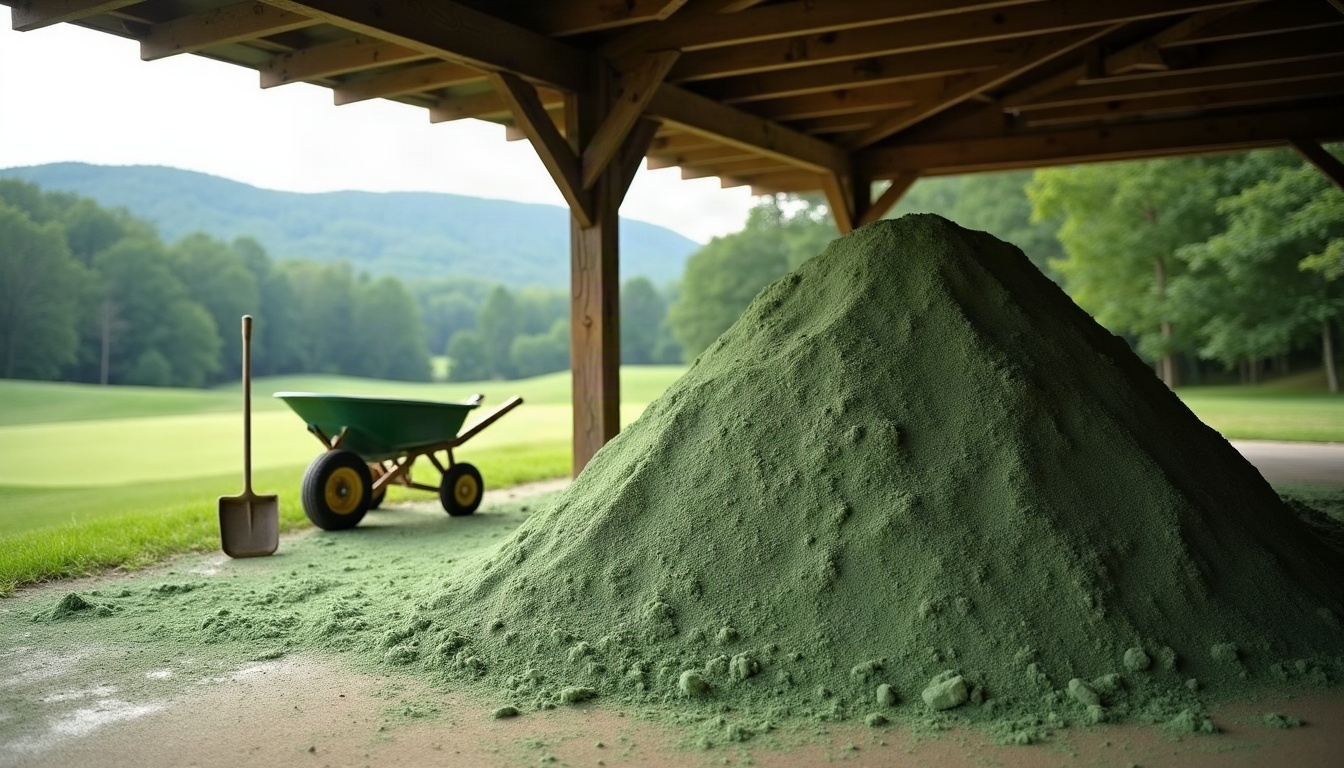
Divot sand is used in small amounts every day, so how you store and handle it affects how well it performs.
Keep it dry
Wet sand clumps in divot bottles and buckets, and it is heavier to haul around the course. Store the stockpile under cover or under a tarp, on a hard surface if possible. Seeded and fertilized mixes in particular should be kept dry and used within a reasonable time, because moisture can start seed germination in the pile and break down fertilizer.
Think about seasonal mixes
Because seed choice depends on the season, some courses order a seeded summer mix and a different cool-season mix rather than one blend all year. Plain green sand can serve as a year-round base when seeding is handled separately.
Figure out your volume
Divot sand use depends on rounds played, the size of your tees, whether you have a busy range, and how disciplined your golfers are about using their bottles. Track usage over a season and plan orders around it. If you use the same sand for spring green-up, add that volume on top.
Insist on a clean load
Jackson Sand started with about one truck and now runs around 14 trucks of its own. Because we own our own trucks, Jackson Sand can keep strict cleanliness standards and avoid cross-contamination. You get the mix you ordered, not your mix plus leftovers from someone else’s gravel delivery. On low-cut turf, that difference shows up in mower reels and in the surface itself.
Order Green Dyed Divot Sand from Jackson Sand
Jackson Sand has been in production since 1996 and has made golf course-grade material, including bunker sands, top dressings and root zone mixes, since around 1998. Our green dyed divot sand is mixed on our own premises in Jackson, Tennessee, with high-quality materials, and we can add seed, fertilizer or peat to your own design. We deliver in trucks we own, which keeps every load clean and exactly what you ordered.
We work with golf courses, sports-field managers, landscapers and contractors throughout West Tennessee and the Mid-South, hauling golf course-grade materials from Huntsville, Alabama to Jackson, Mississippi, Little Rock and Owensboro, Kentucky. If you want your divot mix built around the top dressing you already use, or you want to set up separate summer and winter blends, we can talk through the options with you.
- Browse our full line of golf course sand, including top dressing and bunker sands.
- Review lab gradations on our sand specs page.
- Estimate quantities with the yardage calculator.
Call us at 731-668-0440 or contact Jackson Sand online to order green dyed divot sand or to design a custom divot mix for your course.
Inside the Jackson Sand Plant
Take a 90-second look at where our sand comes from: the washing plant, screens and conveyors, and the Jackson Sand truck fleet that delivers every load. President Carlton Pope tells the story of how the company grew from one truck in 1996.
Sources and Further Reading
- divot repair: why and how (USGA)
- keep a step ahead of divots (USGA)
- to seed or not to seed divot mix (USGA Green Section Record)
Frequently Asked Questions
What is green dyed divot sand made of?
It is a clean, well-graded sand coated with a turf-safe green colorant. The base sand should be low in silt and clay and similar in particle size to your regular top dressing so repeated filling does not create layers. Jackson Sand mixes it on its own premises and can add seed, fertilizer or peat to your design.
Should I add seed to my divot mix?
Seed speeds recovery, especially on grasses that fill slowly from the edges. Match the seed to the season and grass: bermudagrass seed for warm months on bermuda turf, perennial ryegrass for courses that overseed in fall and winter. Many courses order a different seeded mix for each season, or use plain green sand and seed separately.
How full should a divot be filled?
Fill the divot level with the surrounding turf, then firm it lightly with a boot or the back of a scoop. Overfilled divots leave small mounds that mowers scalp and that disturb ball lie. Underfilled divots leave a hollow that collects water and recovers slowly. Sweep away any sand spilled onto healthy turf around the scar.
Can green dyed sand be used as a top dressing?
Yes. Many Mid-South superintendents apply a light pass of green dyed sand in early spring to help tees and other low-cut areas look green sooner as warm-season turf breaks dormancy. Keep the layer thin, drag or brush it into the canopy, and irrigate lightly so it does not smother turf that is just starting to grow.
Will the green color hurt the grass?
Divot sand colorants are designed for use on turf. The color is cosmetic and simply helps the repair blend in. The bigger factors for turf health are the base sand quality, how much fertilizer or peat is in the mix, and how heavily you apply it. Light, level fills and thin top dressing passes are what keep turf healthy.
Does Jackson Sand deliver divot sand?
Yes. Jackson Sand delivers in trucks it owns, which lets it keep strict cleanliness standards and avoid cross-contamination between loads. The company serves golf courses and turf managers in West Tennessee and the Mid-South. Call 731-668-0440 or use the contact page at jacksonsand.com to discuss quantities and amendments.
Ready to order or have a question about the right material? Call Jackson Sand at 731-668-0440 or send us a message and we will help you pick the right product and quantity.
Leave a Reply