
Top Dressing Sports Turf Fields: Your 8-Point Guide for West Tennessee
Quick answer: Top dressing a sports turf field means spreading a thin, uniform layer of sand over the playing surface to improve drainage, smooth out surface irregularities, dilute thatch, and firm the turf for safer play. In West Tennessee's clay-heavy soils, a compatible sand top dressing applied 2–4 times per year can transform a waterlogged, rutted field into a consistent, fast-draining surface. Jackson Sand mixes its own top dressing sand on-site in Jackson, TN, delivers in company-owned trucks, and publishes lab-tested spec sheets so you know exactly what you're getting. Call 731-668-0440 to get started.
1. What Top Dressing Actually Does to a Sports Field
Before committing a budget line to top dressing, it helps to understand the three concrete things it accomplishes for a sports field. Each benefit compounds over time, which is why a single application rarely tells the whole story — and why a consistent annual program pays dividends for years.
Drainage: The Number-One Reason Fields Get Top Dressed
West Tennessee soils are notoriously clay-rich. Clay compacts under foot traffic, sheds water instead of absorbing it, and turns a football or soccer field into a mud pit after a single hard rain. Incorporating a well-graded sand into the surface profile — even in thin, repeated lifts — gradually shifts the soil texture toward a faster-draining medium. Over two to three seasons of consistent top dressing, many field managers report standing water disappearing within an hour of a heavy rain instead of lingering for days.
- Surface drainage improves immediately because sand particles create macro-pores that water moves through quickly.
- Deep drainage improves over time as sand works down through aeration holes and thatch layers.
Smoothing the Surface and Reducing Injury Risk
Ruts, low spots, and uneven turf are more than cosmetic problems — they are injury hazards. A twisted ankle or a knee hyperextension on a bumpy field can sideline a student athlete for weeks. Top dressing fills minor depressions, levels out high spots caused by freeze-thaw cycles, and creates a more consistent ball roll and player footing. Studies published by the Sports Turf Managers Association (STMA) indicate that surface firmness and smoothness are among the top two factors influencing athlete safety on natural turf fields.
Thatch Dilution and Organic Matter Management
Thatch — the layer of dead stems, roots, and organic debris between the green leaf blades and the soil — builds up faster on high-traffic athletic fields than on residential lawns. A thatch layer thicker than ½ inch impedes water infiltration, harbors disease, and creates a spongy, inconsistent surface. Sand top dressing physically dilutes thatch by mixing inorganic material into the organic layer. When combined with core aeration (pulling plugs from the surface), top dressing accelerates thatch breakdown by improving oxygen and microbial activity in the mat zone.
2. Choosing the Right Sand: Particle Size Matters More Than You Think
The single biggest variable in a top dressing program is sand selection. Get it right and every subsequent application builds on a solid foundation. Get it wrong and you can create drainage problems worse than the ones you started with. Here is what to look for — and why Jackson Sand’s on-site mixing process gives you more control over the final product.
USGA and ASTM Particle Size Guidelines
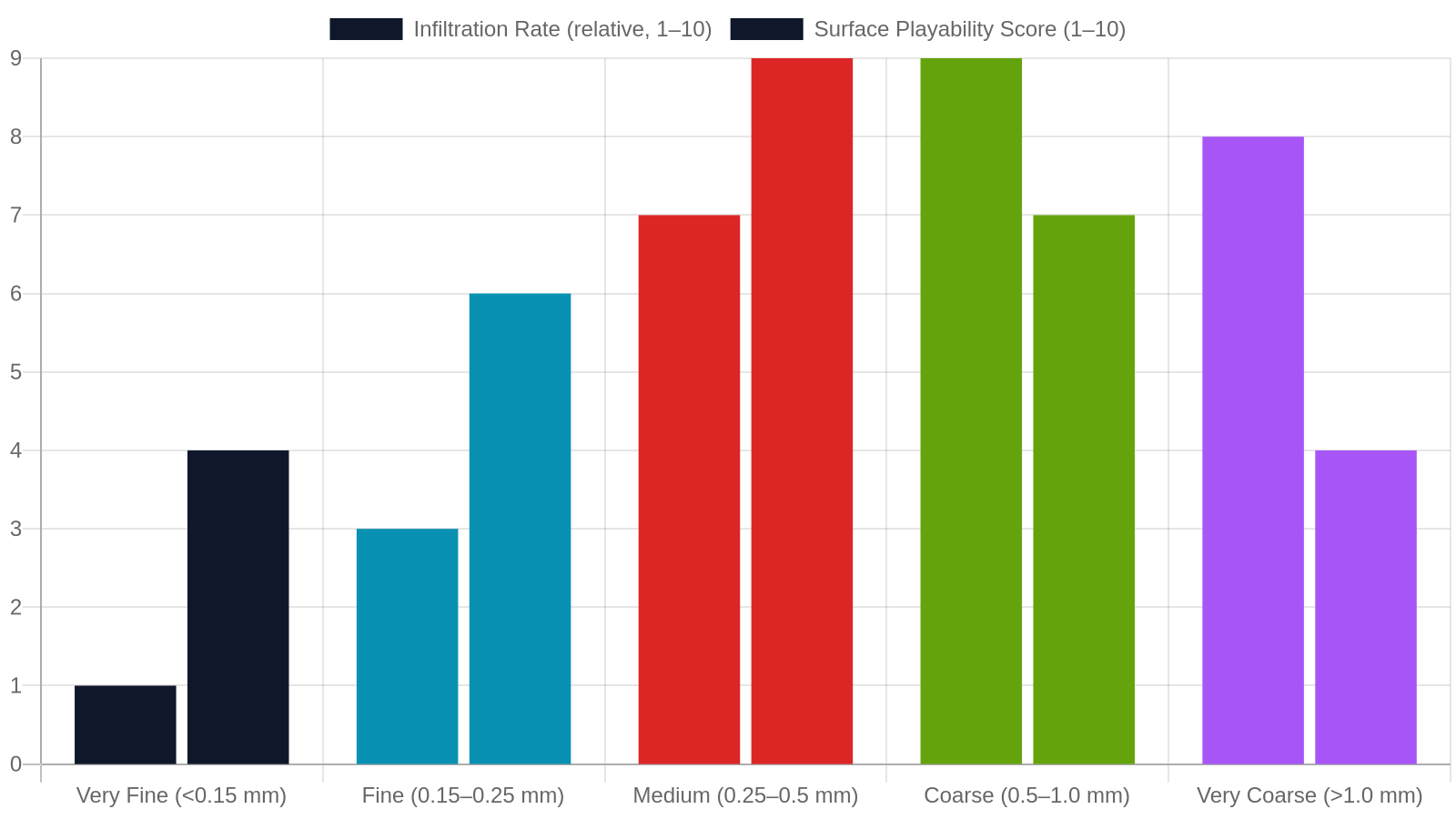
Not all sand is created equal. The United States Golf Association (USGA) and the American Society for Testing and Materials (ASTM) both publish specifications for sand used in turf applications. For sports fields, the ideal top dressing sand typically falls in the medium-to-coarse range: 0.25 mm to 1.0 mm particle diameter. Sand finer than 0.15 mm can seal the surface and actually reduce infiltration. Sand coarser than 2.0 mm feels abrasive underfoot and can affect ball roll unpredictably.
- Medium sand: 0.25–0.5 mm — excellent for most athletic field top dressing
- Coarse sand: 0.5–1.0 mm — preferred for heavily trafficked fields needing maximum drainage
- Very fine sand: below 0.15 mm — generally avoid for top dressing
Why Lab-Tested Specs Give You Confidence
Purchasing sand without a particle-size distribution report is a gamble. A batch that looks right can still contain too many fines — the sub-0.15 mm particles that clog pores and undo the drainage work you paid for. Jackson Sand publishes lab-tested sand spec sheets so turf managers and contractors can verify particle distribution, uniformity coefficient, and other physical properties before the first truck rolls. This is the same level of documentation expected for golf course bunker sand, and it matters just as much on a high-school football field.
Matching Sand to Your Existing Soil Profile
One of the most common top dressing mistakes is introducing a sand that is incompatible with the native soil. When a fine sand is layered over a coarse native soil — or vice versa — you can create a layering effect that actually traps water at the interface between the two materials. The fix is straightforward: get a soil test of your existing field, then select a top dressing sand whose particle-size distribution bridges or complements your native profile. Jackson Sand’s team can walk you through this matching process when you call 731-668-0440.
3. How Much Sand Do You Actually Need?
Quantity planning is where many top dressing programs go sideways — either running short mid-project or over-ordering and blowing the budget. The math is straightforward once you know your field dimensions and target depth. Here is how to calculate it, and how to make sure the number you land on is accurate.
Standard Application Rates for Athletic Fields
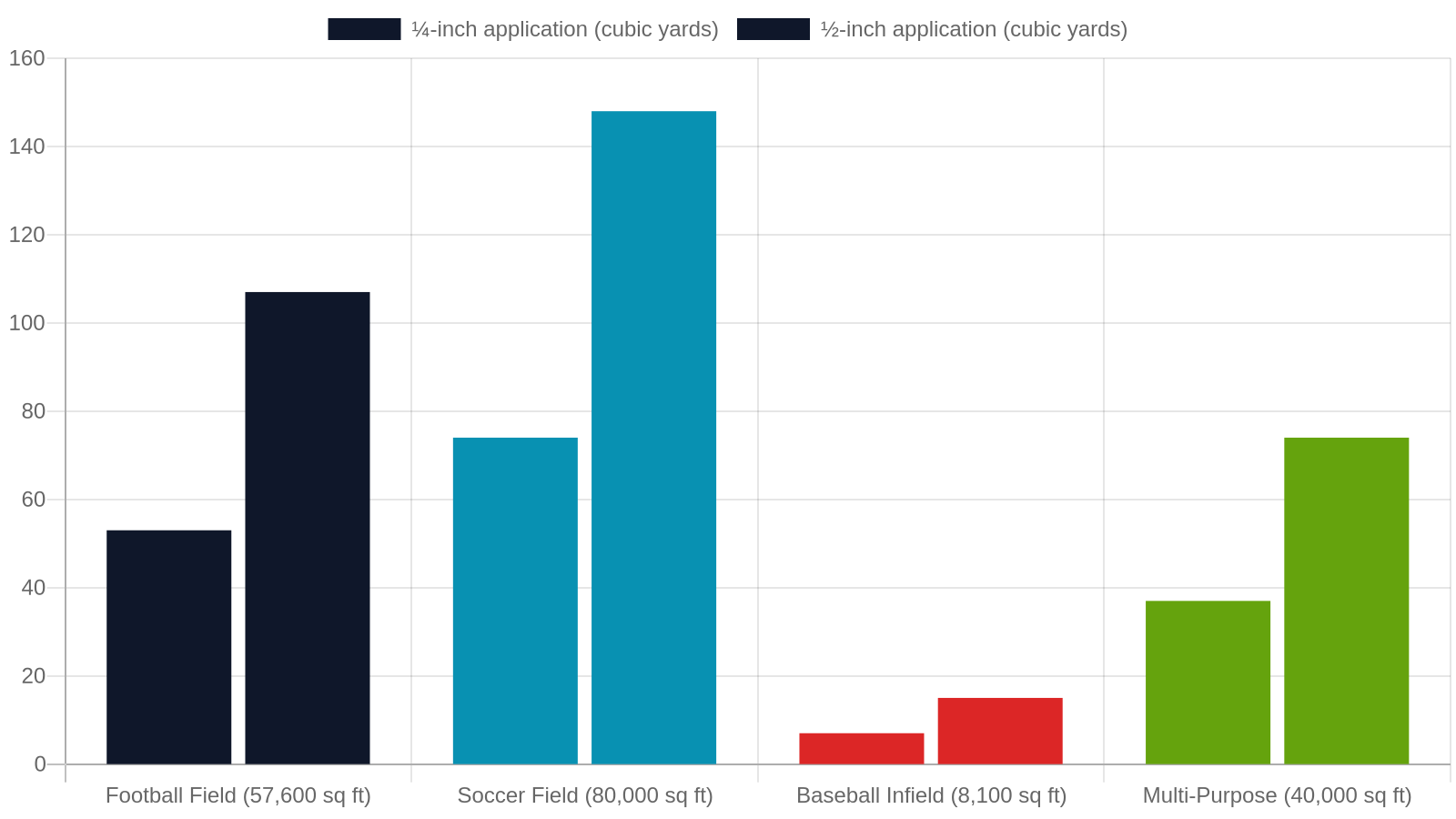
The industry standard for a maintenance top dressing application is ¼ to ½ inch (roughly 0.6–1.3 cm) per pass. Applied at ¼ inch depth, a standard football field (approximately 57,600 sq ft including end zones) requires about 53 cubic yards of sand per application. At ½ inch, that climbs to roughly 107 cubic yards. Most field managers run 2–4 applications per year, meaning annual sand consumption for a single football field can range from 106 to 428 cubic yards depending on the program’s intensity.
- ¼-inch application on 57,600 sq ft ≈ 53 cubic yards
- ½-inch application on 57,600 sq ft ≈ 107 cubic yards
- Soccer field (roughly 80,000 sq ft) at ¼ inch ≈ 74 cubic yards
Using a Yardage Calculator to Avoid Over- or Under-Ordering
Ordering too little sand means a second delivery and potential scheduling gaps. Ordering too much ties up budget and leaves material sitting on-site. Jackson Sand offers a free yardage calculator on their website — plug in your field dimensions and desired depth, and it returns the cubic yards you need. This is especially useful for odd-shaped fields, multi-field complexes, or when you are budgeting a full season’s worth of applications at once.
Accounting for Waste and Settling
A practical rule of thumb: add 5–10% to your calculated volume to account for material lost to wind, equipment spillage, and settling. Sand compacts slightly once it is worked into the turf canopy, so what looks like a generous application can settle to a thinner layer than intended. Experienced field managers typically round up to the nearest half-yard when placing an order. Jackson Sand delivers in company-owned trucks, which means loads are measured accurately before they leave the yard — you get what you ordered, not an approximation.
4. When to Top Dress: Timing Your Applications in West Tennessee
Timing is everything in turf management. Apply top dressing at the wrong point in the season — or the wrong point in the athletic calendar — and you can stress the turf, disrupt play schedules, or waste material that never integrates properly. Here is how to build a top dressing calendar that works for West Tennessee’s climate and the demands of a busy athletic program.
Warm-Season Turf: Bermudagrass and Zoysia Timing
The majority of athletic fields in West Tennessee and the broader Mid-South are planted with bermudagrass or zoysia — warm-season grasses that go dormant in winter and peak in growth from late May through September. The ideal top dressing window for warm-season turf is during active growth, typically late spring through early fall. Applying sand when the grass is actively growing allows the turf to recover quickly, knitting through the new sand layer within 2–4 weeks under good growing conditions. Avoid top dressing dormant bermudagrass — the sand sits on the surface without integrating and can smother emerging spring growth.
Coordinating with the Athletic Calendar
Timing top dressing around game schedules is as important as timing it around the grass growth cycle. A freshly top-dressed field needs 10–21 days of recovery before it should host heavy play — the sand must be worked in, the turf must recover, and the surface must firm up. For school districts and parks departments in the Jackson area, the practical windows are often: late May to mid-June (after spring sports, before summer camps), late July (before fall sports begin), and mid-November (after football season ends, before winter dormancy). Planning a season calendar in advance helps you reserve delivery slots and equipment time.
How Weather Affects Application Success
West Tennessee summers are hot and humid, which accelerates turf recovery but also increases disease pressure after top dressing. Avoid applying sand immediately before a forecasted heavy rain event — runoff can redistribute sand unevenly across the field. Conversely, applying during a dry spell without irrigation available can stress the turf during recovery. The sweet spot is a mild, partly cloudy day with light irrigation available. Jackson Sand’s delivery team can coordinate timing with your schedule — call 731-668-0440 to discuss your field’s calendar.
5. The Top Dressing Process: Step by Step
Top dressing is not complicated, but the sequence of steps matters. Skipping or shortcutting any stage reduces the effectiveness of the application and can leave you with a surface that looks worse before it looks better. Here is the standard process used by professional sports turf managers.
Step 1 — Core Aerate Before You Top Dress
Core aeration and top dressing are most effective when done together. Aeration pulls cylindrical plugs (typically ½–¾ inch diameter, 2–4 inches deep) from the field, creating channels that allow sand to move into the root zone rather than sitting on the surface. Jackson Sand offers aeration services alongside top dressing delivery, so you can coordinate both in a single visit. On heavily compacted fields, two passes of aeration in perpendicular directions before top dressing can dramatically improve how quickly the sand integrates.
Step 2 — Spread Sand Evenly Across the Surface
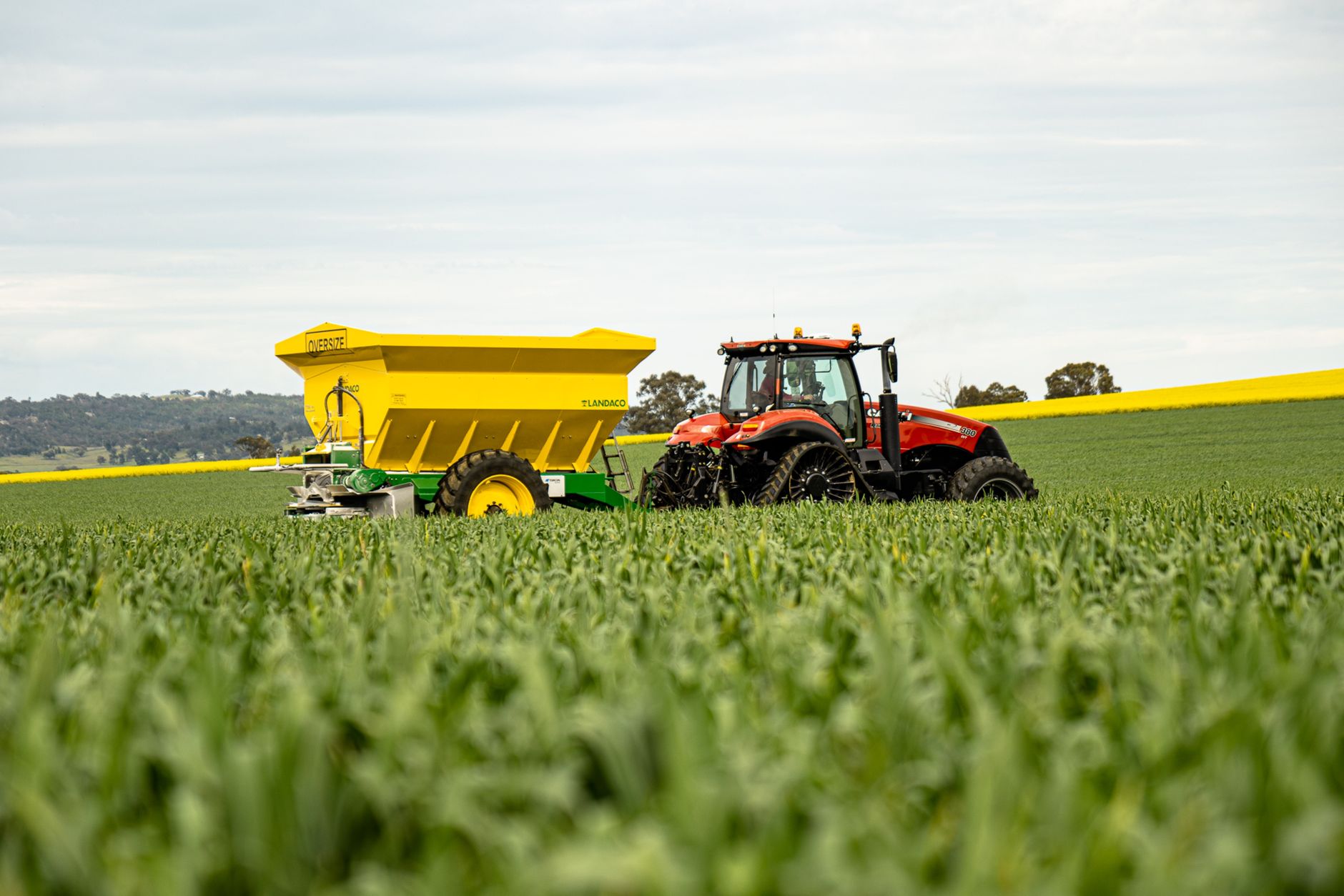
Sand is typically spread with a top dresser — a tow-behind or self-propelled machine that meters sand through a spinning brush or belt system and distributes it in a uniform layer. The target is a consistent depth across the entire field, with no windrows or heavy spots. For very large fields or multi-field complexes, Jackson Sand’s crew can coordinate delivery logistics so that fresh sand is staged efficiently and spread without long delays between loads. Uneven application is the most common cause of surface inconsistency after top dressing.
Step 3 — Work the Sand In and Water
Once spread, the sand is worked into the turf canopy using a drag mat, lute, or stiff-bristle brush. This step pushes sand down through the leaf blades and into the aeration holes, accelerating integration. After dragging, irrigate the field thoroughly — typically ½ to 1 inch of water — to settle the sand and reduce the risk of surface abrasion to athletes during the recovery period. Allow the field to firm up before resuming normal use. Most fields are playable again within 14–21 days under active growing conditions.
6. Top Dressing vs. Other Field Renovation Methods
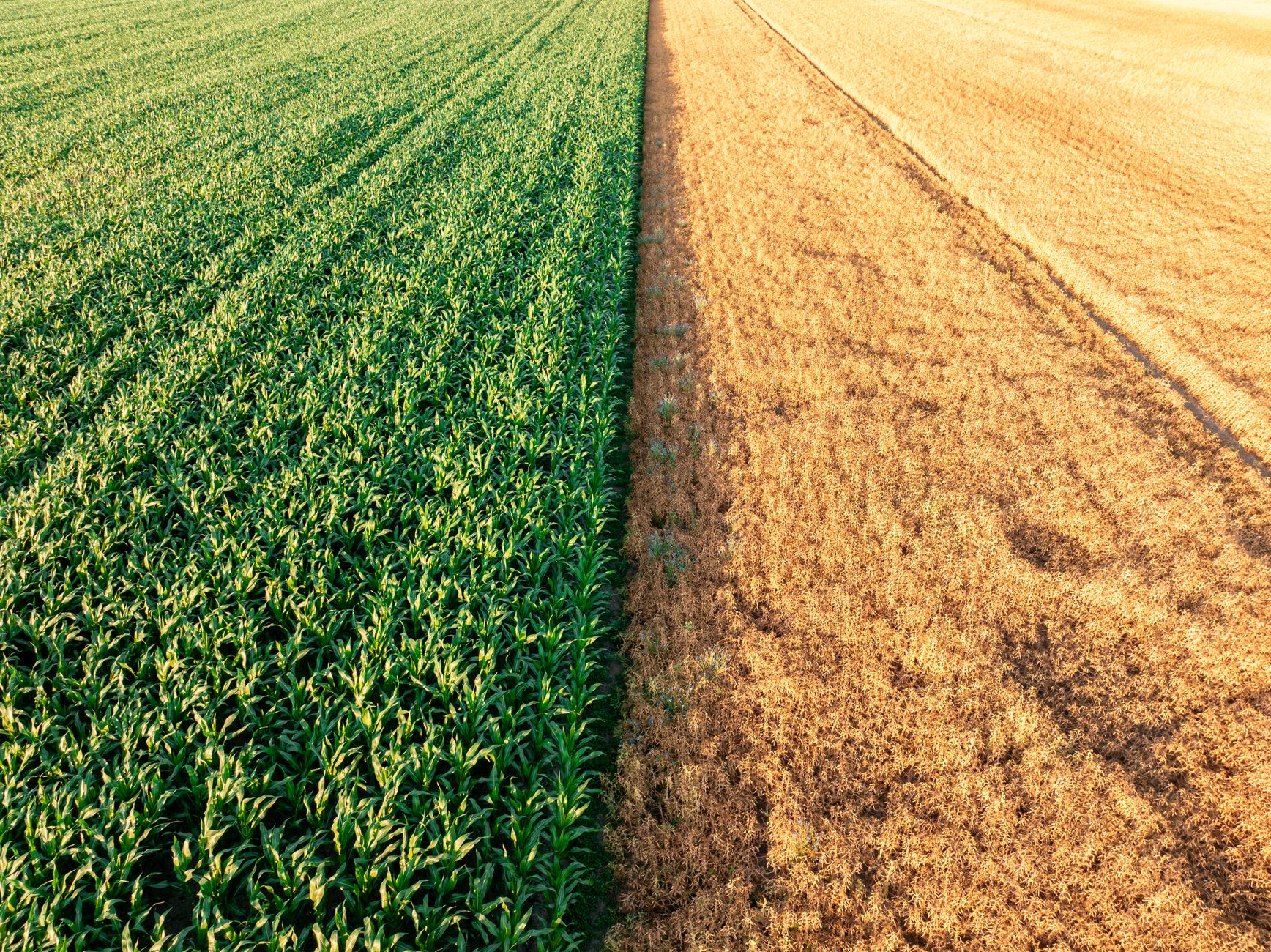
Top dressing is one tool in a field manager’s renovation toolkit — and understanding where it fits relative to other methods helps you make the right call for your budget and timeline. Here is how top dressing stacks up against the most common alternatives.
Top Dressing vs. Topdressing with Compost
Some turf managers use compost-based top dressing to add organic matter and nutrients rather than sand. Compost top dressing improves soil biology and can reduce fertilizer inputs, but it does not improve drainage the way sand does — in fact, adding organic matter to a clay-heavy soil can worsen waterlogging if overdone. For athletic fields where drainage and surface firmness are the primary goals, sand top dressing is the industry standard. Compost is better suited to low-traffic ornamental turf or as a supplement to sand on sandy-native soils that need organic matter.
Top Dressing vs. Full Field Renovation
A full field renovation — stripping the existing turf, regrading the subgrade, installing a drainage system, and replanting — is the nuclear option. It solves problems that top dressing cannot, such as a severely inadequate subgrade or a drainage system that has failed entirely. However, full renovation typically costs $50,000–$300,000+ for a standard athletic field and takes the field out of play for an entire season. Top dressing, by contrast, is a maintenance-level investment that keeps the field in play and compounds benefits over multiple seasons. Most fields benefit from a consistent top dressing program for 5–10 years before a full renovation becomes necessary.
Top Dressing vs. Infield Skin Drag and Grooming
For baseball and softball fields, dragging the infield skin and grooming the warning track are routine maintenance tasks that are often confused with top dressing. Dragging smooths the surface but does not add material. Top dressing the infield skin — using a calcined clay or sand product — adds material to fill low spots, improve drainage, and restore proper grade. These are complementary practices, not alternatives. Top dressing the grass areas around the infield with sand improves drainage and turf density, while skin maintenance products address the clay or dirt infield surface separately.
7. Drainage Materials That Work Alongside Top Dressing
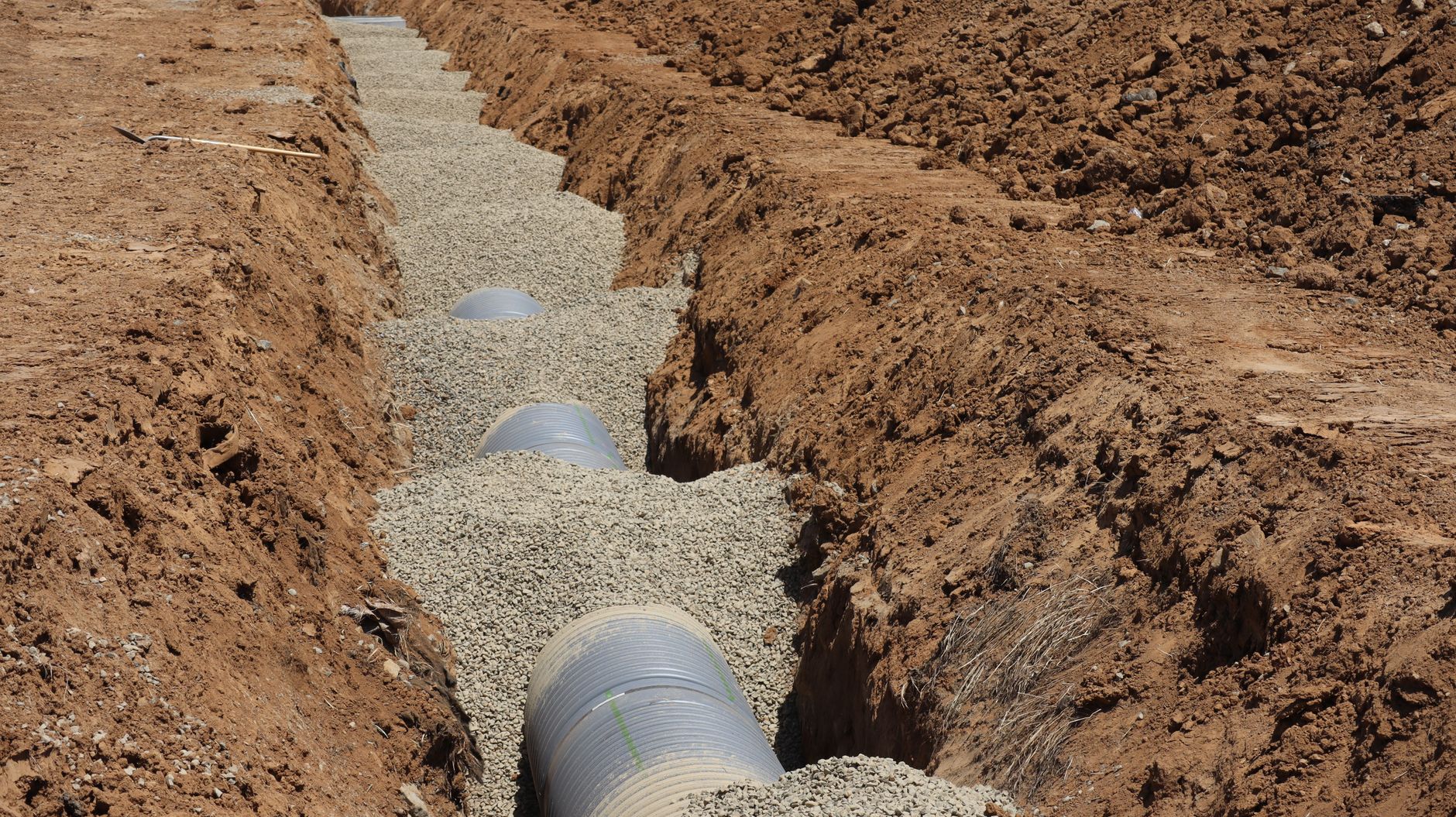
Top dressing improves what happens at the surface, but a field’s drainage performance ultimately depends on the entire system — from surface slope to subsurface pipe. Jackson Sand supplies materials for the full drainage picture, not just the top layer. Here is how the pieces fit together.
Surface Drainage and Slope Correction
Even the best top dressing program cannot compensate for a field with inadequate surface slope. Athletic fields should maintain a crown or cross-slope of approximately 1–2% to move surface water off the playing area quickly. If your field has low spots that collect water regardless of how much sand you apply, the underlying grade may need correction before top dressing will be effective. Jackson Sand supplies materials for surface water drainage and slope correction projects, including the graded aggregates used to build up low areas before turf is reestablished.
Drainage Basins and Catch Systems
For fields that receive runoff from adjacent parking lots, buildings, or higher terrain, surface top dressing alone will not solve the problem. A properly designed drainage basin intercepts water before it reaches the playing surface. Jackson Sand supplies the aggregate materials used in basin construction — clean gravel, drainage stone, and filter media — and can coordinate delivery with your contractor’s installation schedule. Addressing the drainage basin first, then establishing a top dressing program, is the most cost-effective sequence for chronically wet fields.
Seepage and Subsurface Drainage
Subsurface drainage — perforated pipe systems, French drains, and gravel-filled trenches — addresses water that moves through the soil profile rather than across the surface. On fields with a high water table or impermeable hardpan layer, subsurface drainage is often the missing piece that makes top dressing effective. Without it, sand applied at the surface has nowhere to drain to. Jackson Sand supplies the clean, washed gravel and drainage aggregate used in subsurface systems throughout West Tennessee.
Top Dressing Methods at a Glance: Sand vs. Compost vs. Full Renovation
Choosing the right approach depends on your field's condition, budget, and timeline. This table compares the three most common options for improving athletic field surfaces.
8. Building a Multi-Year Top Dressing Program
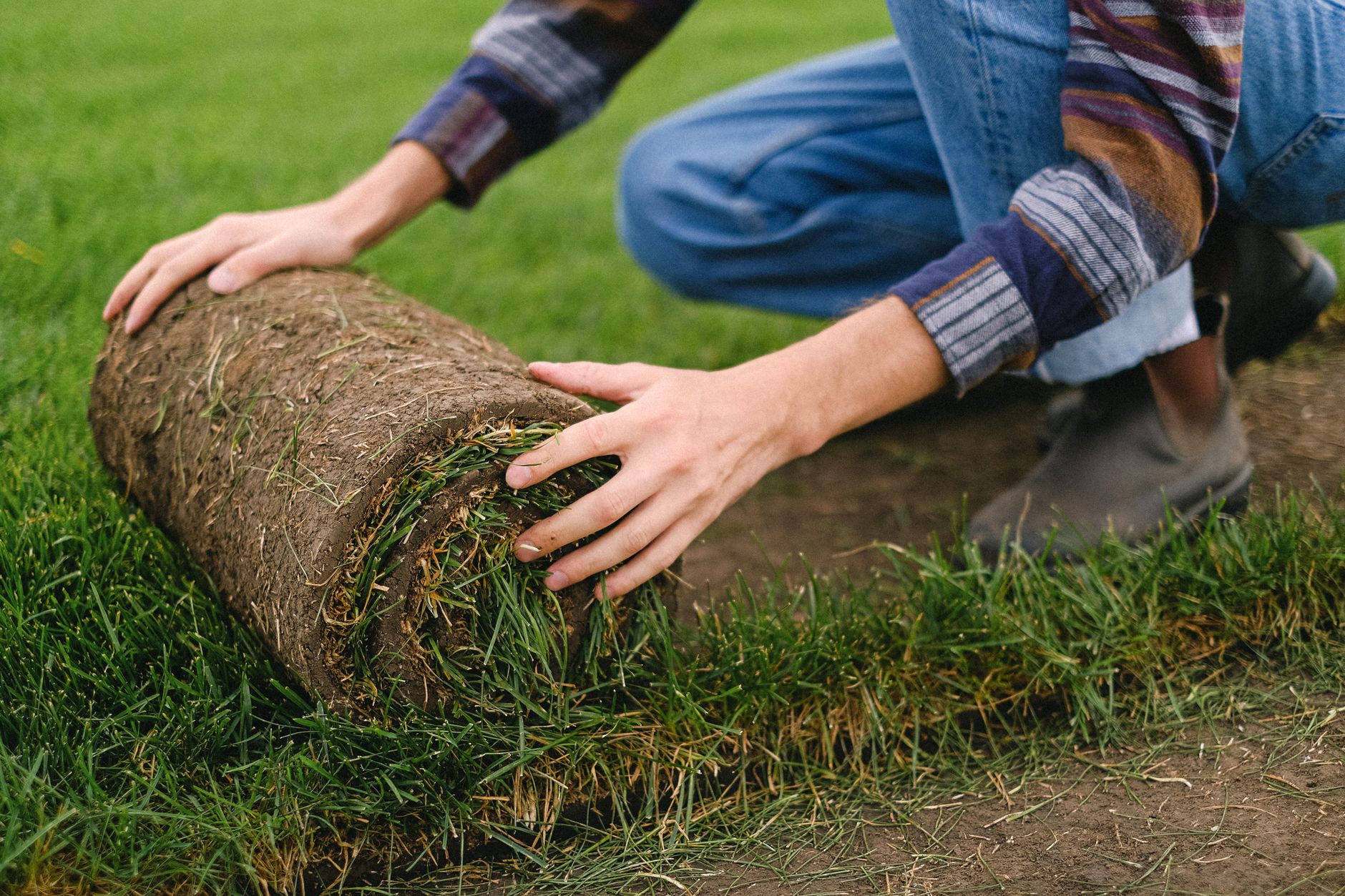
A single top dressing application is a good start, but the real transformation happens over multiple seasons. Here is how to think about a multi-year program — what to expect at each stage, how to measure progress, and how to keep the program on track year after year.
Year One: Establishing a Baseline
In the first year of a top dressing program, the primary goal is establishing a consistent sand layer throughout the field and identifying problem areas — chronic wet spots, high-traffic wear zones, and areas with severe thatch accumulation. A baseline soil test before the first application gives you a reference point for tracking improvement. Most field managers apply 2–3 times in year one: once in late spring, once in midsummer, and once in early fall. Document each application with photos and field notes — this record becomes invaluable when justifying the program’s budget to administrators or parks directors.
Years Two Through Five: Compounding the Benefits
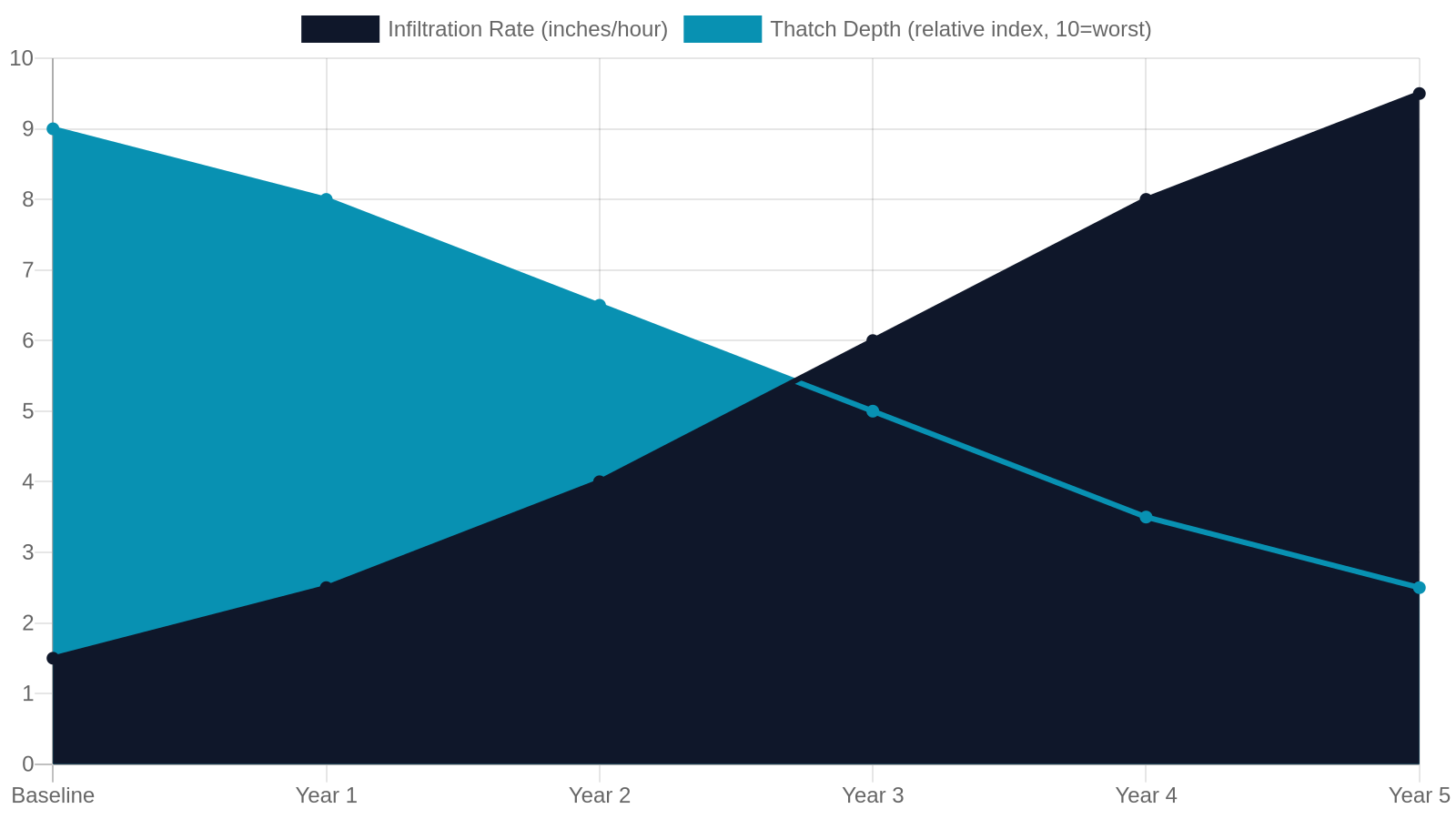
By year two, most fields show measurable improvement in drainage speed and surface firmness. The sand layer begins to integrate into the upper 2–3 inches of the soil profile, shifting the texture away from pure clay. Thatch depth typically decreases by 20–30% relative to untreated fields over a three-year period when top dressing is combined with regular aeration. By year five, many fields that previously required cancellation of games after moderate rain events are playing through conditions that would have been unplayable before the program began.
Tracking Progress and Adjusting the Program
A good top dressing program is not static. Track infiltration rate annually using a simple double-ring infiltrometer test — a baseline reading of 1–2 inches per hour on a clay-heavy field can improve to 6–10 inches per hour after three to five years of consistent sand top dressing and aeration. Adjust application rates and timing based on what the data shows. If certain areas of the field are improving faster than others, consider spot applications rather than full-field applications to allocate your sand budget more efficiently. Jackson Sand can help you plan quantities season by season — use the yardage calculator to model different scenarios before you commit.
9. Top Dressing for Different Field Types in West Tennessee
Not all sports fields have the same top dressing needs. Traffic patterns, grass species, field geometry, and use schedules all influence how a top dressing program should be structured. Here is a practical breakdown by field type for the schools, parks departments, and athletic programs across West Tennessee.
Football and Multi-Use Fields
Football fields endure some of the most concentrated traffic of any athletic surface — repeated cuts, pile-ups, and cleated footwear all accelerate compaction and wear. The hash marks and center of the field typically show the most stress and benefit most from targeted top dressing. Multi-use fields that host football in fall and soccer in spring face near-year-round traffic, making a consistent top dressing program especially important. For these fields, a ¼-inch application 3–4 times per year is a reasonable starting point, with heavier applications in the off-season when recovery time is available.
Baseball and Softball Fields
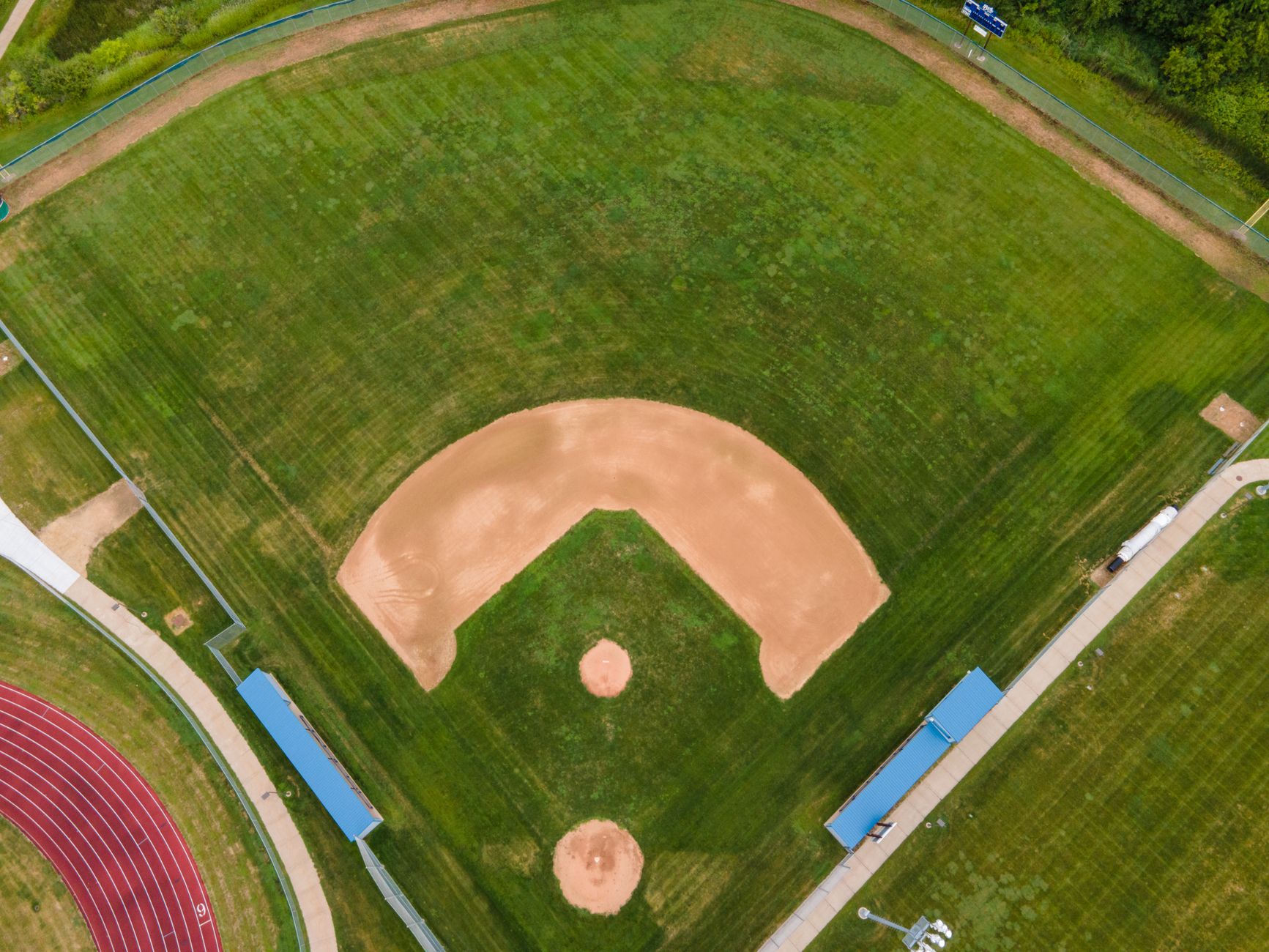
Baseball and softball field top dressing focuses primarily on the grass areas — outfield, foul territory, and the turf portions of the infield. These areas benefit from the same sand-based top dressing approach used on football and soccer fields. The infield skin (dirt area) is managed separately with calcined clay or conditioner products. Pay particular attention to the area around the pitcher’s mound and home plate — these high-wear zones often develop low spots that collect water and create unsafe footing. Spot top dressing these areas between full-field applications extends the life of the surface between major renovation cycles.
School and Parks Department Fields
Budget constraints are a reality for most school districts and parks departments in the Jackson, TN area. The good news is that top dressing scales to any budget — a single application per year is better than none, and even modest improvements in drainage can reduce game cancellations and the associated costs of rescheduling. Jackson Sand serves both large and small jobs, and delivery is included, which removes one of the common hidden costs of materials procurement. Starting with a single field and documenting the results is an effective strategy for building the case for a broader program across a district or parks system.
10. Why Jackson Sand Is the Right Source for West Tennessee Fields
There are several ways to source top dressing sand in West Tennessee, but not all suppliers offer the same combination of product consistency, delivery reliability, and local knowledge. Here is what sets Jackson Sand apart for athletic field clients across the region.
On-Site Mixing Means Consistent, Controlled Product
Jackson Sand mixes its own sand on premises at 139 United Dr., Jackson, TN. That means the particle-size distribution and material quality are controlled from the start — not left to chance based on whatever a distant quarry ships. When you order top dressing sand from Jackson Sand, you are getting a product that has been blended and quality-checked before it leaves the yard. This consistency matters enormously for top dressing programs where you are applying the same product repeatedly over multiple seasons — you need to know that load 10 matches load 1.
Company-Owned Trucks and Included Delivery
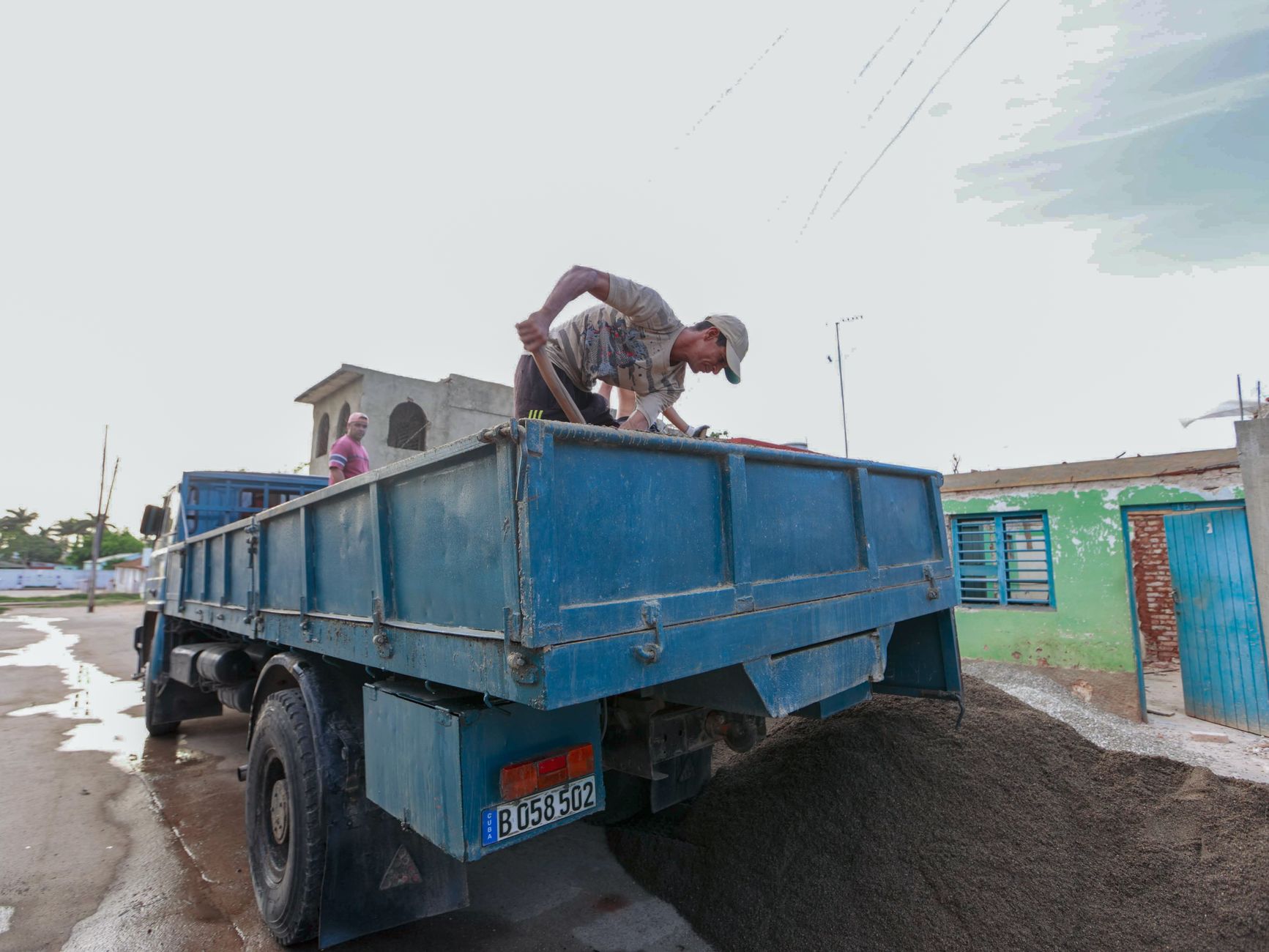
Jackson Sand delivers in its own trucks, which keeps loads clean, accurate, and on schedule. Third-party haulers introduce variables — mixed loads, inaccurate volumes, and scheduling gaps that can derail a tight field maintenance calendar. Delivery is included in the order, so there are no surprise freight charges when you are trying to hold a project budget. For field managers coordinating multiple deliveries across a season, this reliability is not a small thing — it is the difference between a program that runs smoothly and one that is constantly scrambling.
Serving the Full Mid-South Region
Jackson Sand serves West Tennessee and the surrounding Mid-South region, handling both large and small jobs. Whether you are managing a single community park field or overseeing a multi-field athletic complex for a school district, the same quality product and delivery reliability applies. To learn more about the full range of services — including aeration, drainage materials, and top dressing — visit the Jackson Sand top dressing services page or call 731-668-0440 to talk through your field’s specific needs with the team.
Frequently Asked Questions
How often should I top dress a sports turf field?
Most athletic fields benefit from 2–4 top dressing applications per year. High-traffic fields — football fields used for multiple sports, or fields with chronic drainage problems — typically need applications at the higher end of that range. Start with 2 applications in year one and adjust based on how quickly the field improves.
What kind of sand is used for top dressing athletic fields?
Medium to coarse sand with particle diameters between 0.25 mm and 1.0 mm is the industry standard for athletic field top dressing. Sand finer than 0.15 mm can actually reduce drainage by sealing the surface. Always ask your supplier for a lab-tested particle size distribution report before purchasing.
Can I top dress a field without aerating it first?
You can, but the results will be less effective. Core aeration creates channels that allow sand to move into the root zone rather than sitting on the surface. For compacted clay-heavy soils common in West Tennessee, aerating before top dressing significantly improves how quickly the sand integrates and how much drainage benefit you see.
How long does a field need to recover after top dressing before it can be used?
Most fields are ready for normal play within 14–21 days after a top dressing application, assuming the turf is actively growing and the field is irrigated properly during recovery. Avoid heavy use — especially cleated footwear — until the sand has worked into the canopy and the turf has knitted through the new layer.
Does Jackson Sand deliver top dressing sand to schools and parks departments in West Tennessee?
Yes. Jackson Sand serves both large and small jobs across West Tennessee and the Mid-South, and delivery is included. They work with school districts, parks and recreation departments, and private athletic facilities. Call 731-668-0440 to discuss your project and schedule a delivery.
How do I know how many cubic yards of top dressing sand I need?
Multiply your field's square footage by the desired depth in feet (e.g., 0.25 inches = 0.0208 feet), then divide by 27 to convert cubic feet to cubic yards. For a standard football field at ¼-inch depth, that works out to roughly 53 cubic yards. Jackson Sand's free yardage calculator on their website does this math for you automatically.