

7 Best Materials for Seepage Drainage on Golf Courses in West Tennessee
Quick answer: The best seepage drainage materials for West Tennessee golf courses include coarse washed sand, pea gravel, crushed limestone, angular drainage aggregate, pipe-bedding sand, choker stone, and blended drainage mixes. Each layer in a seepage system serves a specific purpose — moving water away from the root zone fast enough to keep turf playable after the heavy rains common across West Tennessee. Choosing the right particle size, gradation, and permeability rating for each layer is what separates a course that drains in two hours from one that stays waterlogged for two days.
Why Seepage Drainage Matters More in West Tennessee Than Almost Anywhere
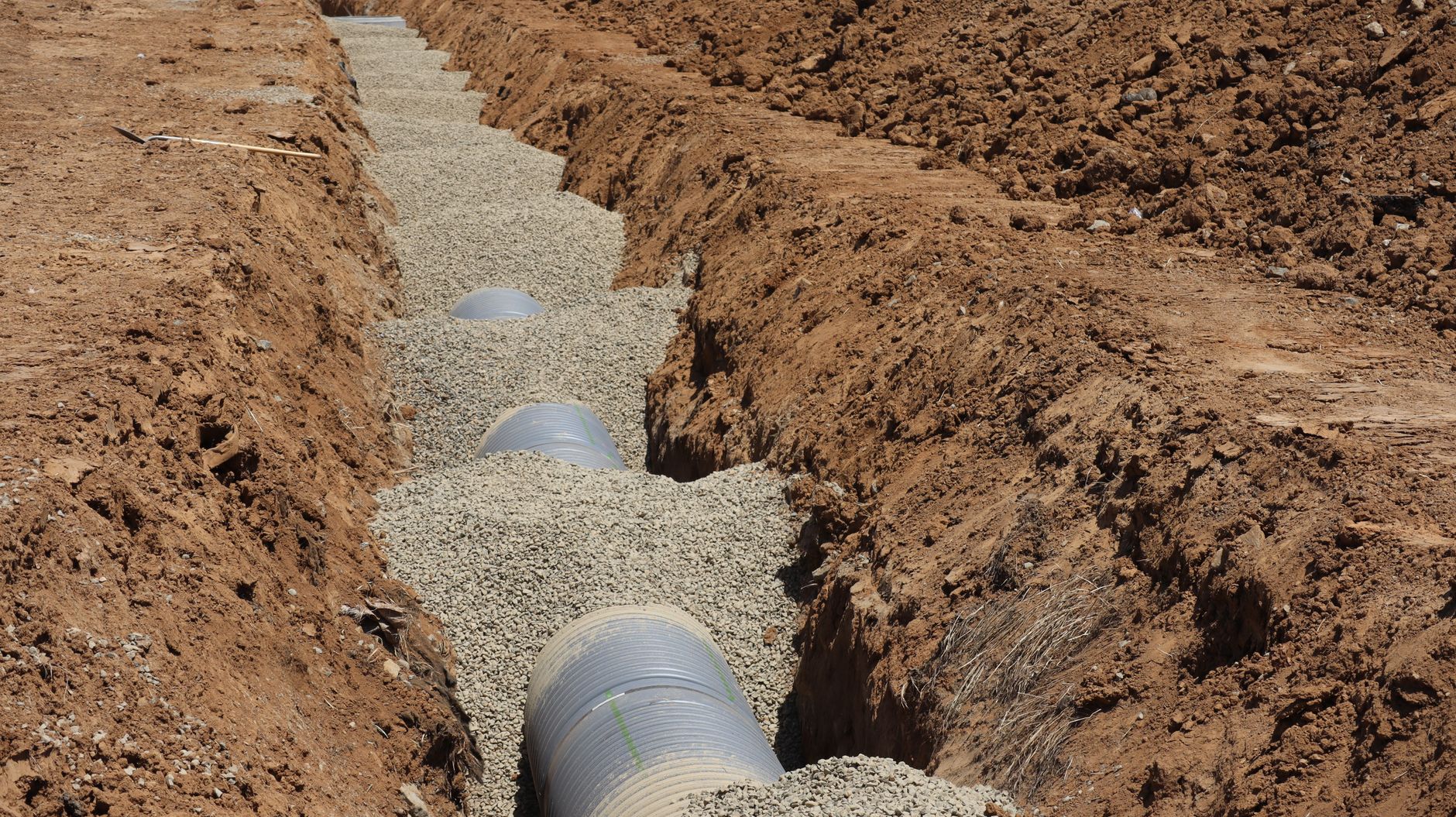
Before choosing materials, it helps to understand exactly what seepage drainage is solving — and why the Mid-South climate makes it a non-negotiable investment for any serious golf course or athletic facility in West Tennessee.
West Tennessee's Rainfall and Clay Soil Problem
Jackson and the surrounding Mid-South region receive an average of 52–55 inches of rainfall per year, with the wettest months clustering in winter and spring — exactly when golf courses are trying to open for the season and athletic fields are hosting tournaments. Unlike the sandy coastal plain soils farther south, much of West Tennessee sits on heavy clay-dominant soils that hold water like a bathtub. Without engineered seepage drainage beneath greens, tees, and fairways, that water has nowhere to go except up through the turf.
The practical result: standing water, cart path closures, lost revenue, and turf stress that invites disease and compaction. A properly designed seepage drainage system changes that equation entirely by giving water a fast, engineered path out of the root zone.
What 'Seepage Drainage' Actually Means
Seepage drainage — sometimes called subsurface drainage or French drain drainage — works by creating a permeable aggregate pathway beneath the turf surface. Water seeps down through the rootzone, enters a layer of coarse aggregate, and travels laterally toward a perforated pipe or drainage basin that carries it off the playing surface.
This is different from surface drainage (which relies on slope and grading) or drainage basins (which collect runoff at low points). Seepage drainage handles the water that has already infiltrated the soil — and on a golf course, that’s the water that does the most damage to turf health and playability.
1. Coarse Washed Sand — the Workhorse of the Rootzone Layer
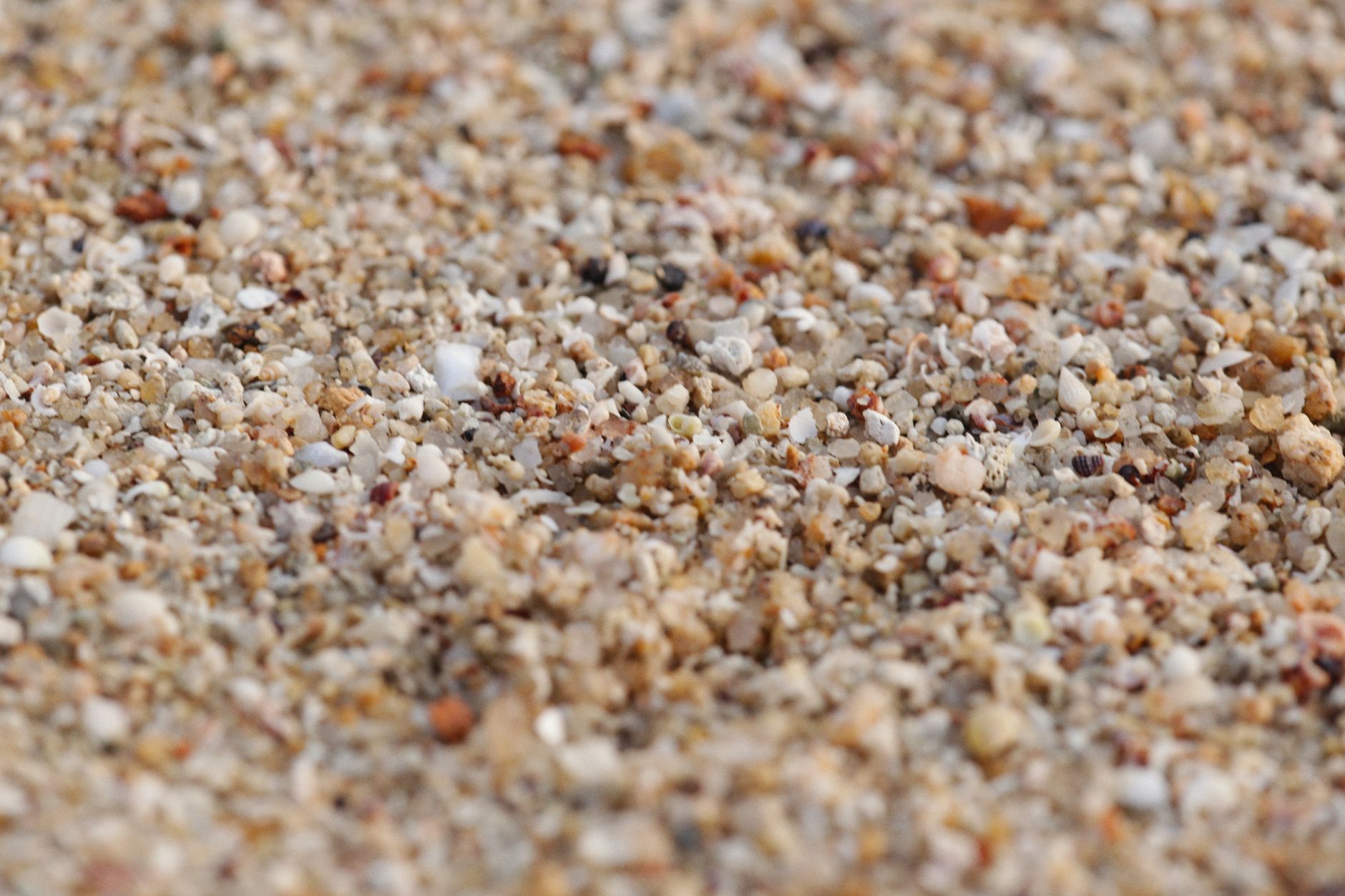
The rootzone layer is the foundation of any seepage drainage system on a golf course. Get the sand wrong here, and every other layer in the system underperforms. Coarse washed sand — properly graded and lab-tested — is almost always the right starting point.
Particle Size and Permeability Specs
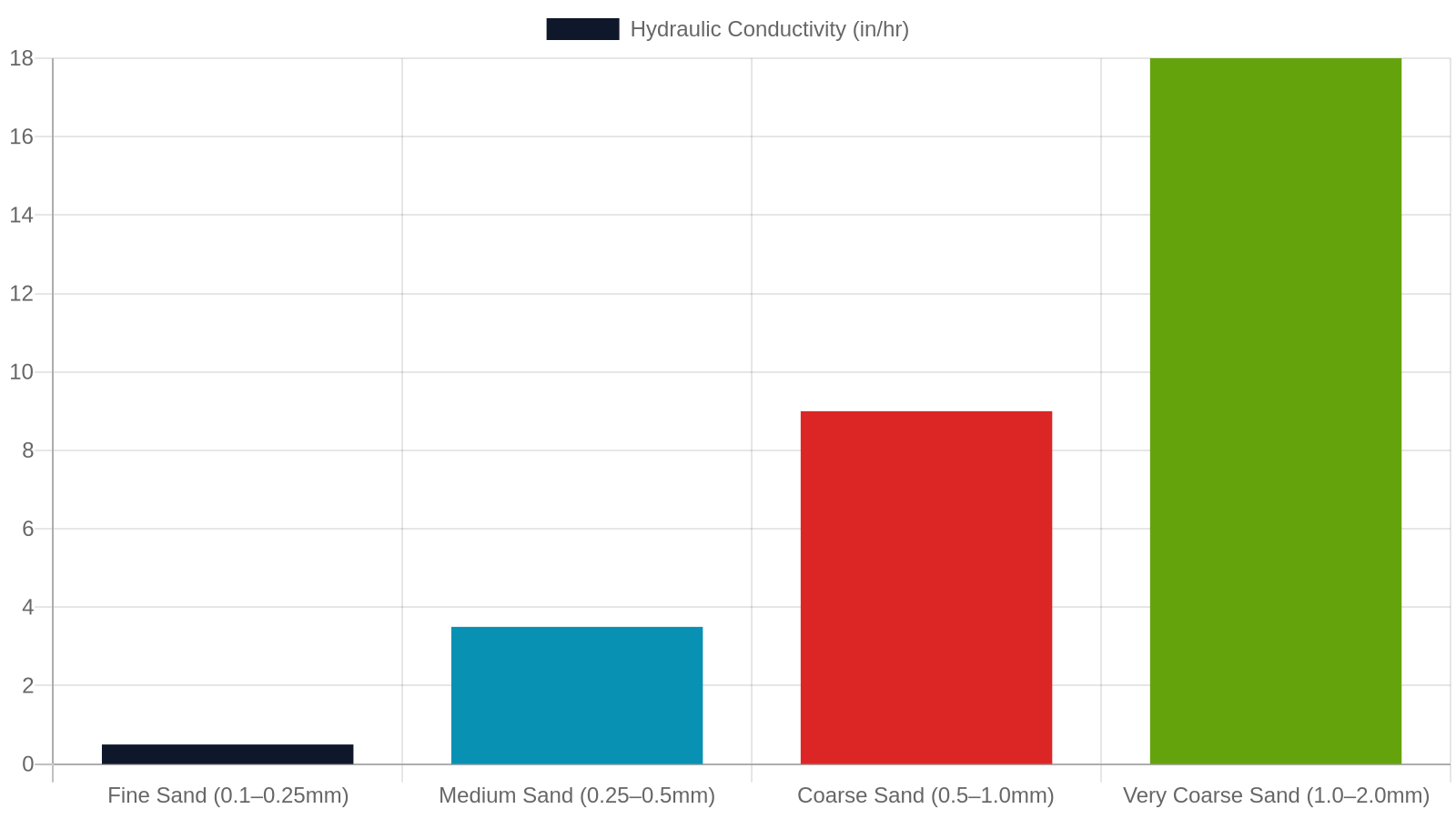
Coarse washed sand is the most commonly specified material for golf course rootzone construction, and for good reason. The USGA recommends a rootzone mix with 60–80% sand by weight, with the majority of particles falling in the medium-to-coarse range (0.25–1.0 mm). At that gradation, a properly built rootzone can achieve hydraulic conductivity rates of 6–12 inches per hour — fast enough to drain a one-inch rain event in under ten minutes at the surface.
Not all washed sand meets these specs. The difference between a sand that drains at 6 in/hr and one that drains at 0.5 in/hr often comes down to particle shape, gradation uniformity, and how much fine material (silt and clay) survived the washing process. That’s why lab-tested spec sheets matter — you can review Jackson Sand’s published sand specifications to see exactly how their materials perform before you order.
How Jackson Sand Mixes Rootzone Sand On-Premises
Jackson Sand mixes sand on their own premises in Jackson, TN, which means the gradation you see on the spec sheet is the gradation that arrives on your course — not a blend that shifted during transport or sat in a third-party stockpile. Their trucks are company-owned, which keeps loads clean and prevents cross-contamination with finer materials that could clog your drainage system over time.
For golf course superintendents specifying rootzone sand, this matters enormously. A single contaminated load of sand with excess fines can reduce permeability by 40–60% and require costly remediation. Mixing and hauling in-house removes that variable from the equation.
2. Pea Gravel — the Classic Intermediate Drainage Layer
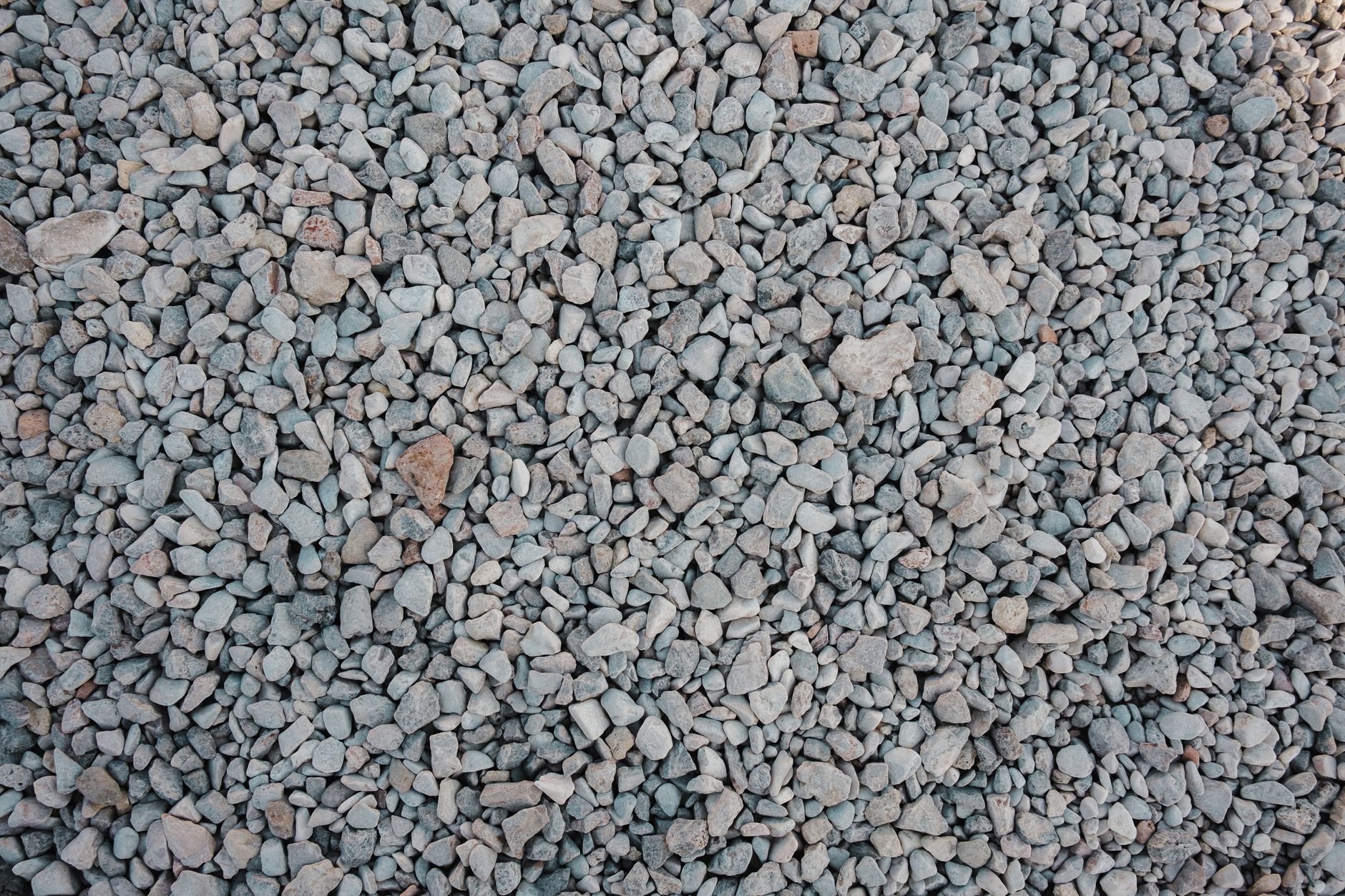
Pea gravel is one of the most specified drainage aggregates in golf course construction, and it earns that reputation by solving a specific engineering problem: how do you get water from the rootzone into the pipe without letting the rootzone migrate into the pipe? The answer is a properly sized intermediate layer.
Why Pea Gravel Sits Between Sand and Pipe
Pea gravel — typically 3/8-inch to 1/2-inch rounded stone — serves as the intermediate layer between the rootzone sand above and the perforated drainage pipe below. Its role is hydraulic bridging: it’s coarse enough to move water rapidly toward the pipe, but fine enough to prevent the rootzone sand from migrating downward and clogging the pipe over time.
A standard USGA-spec green construction calls for a 4-inch pea gravel layer beneath 12 inches of rootzone mix. The gravel layer’s permeability is typically 10–20× higher than the rootzone above it, which ensures water moves out of the rootzone quickly rather than backing up. In West Tennessee’s clay-heavy subgrade, that velocity differential is what keeps greens playable within hours of a heavy rain.
Rounded vs. Angular Pea Gravel for Drainage
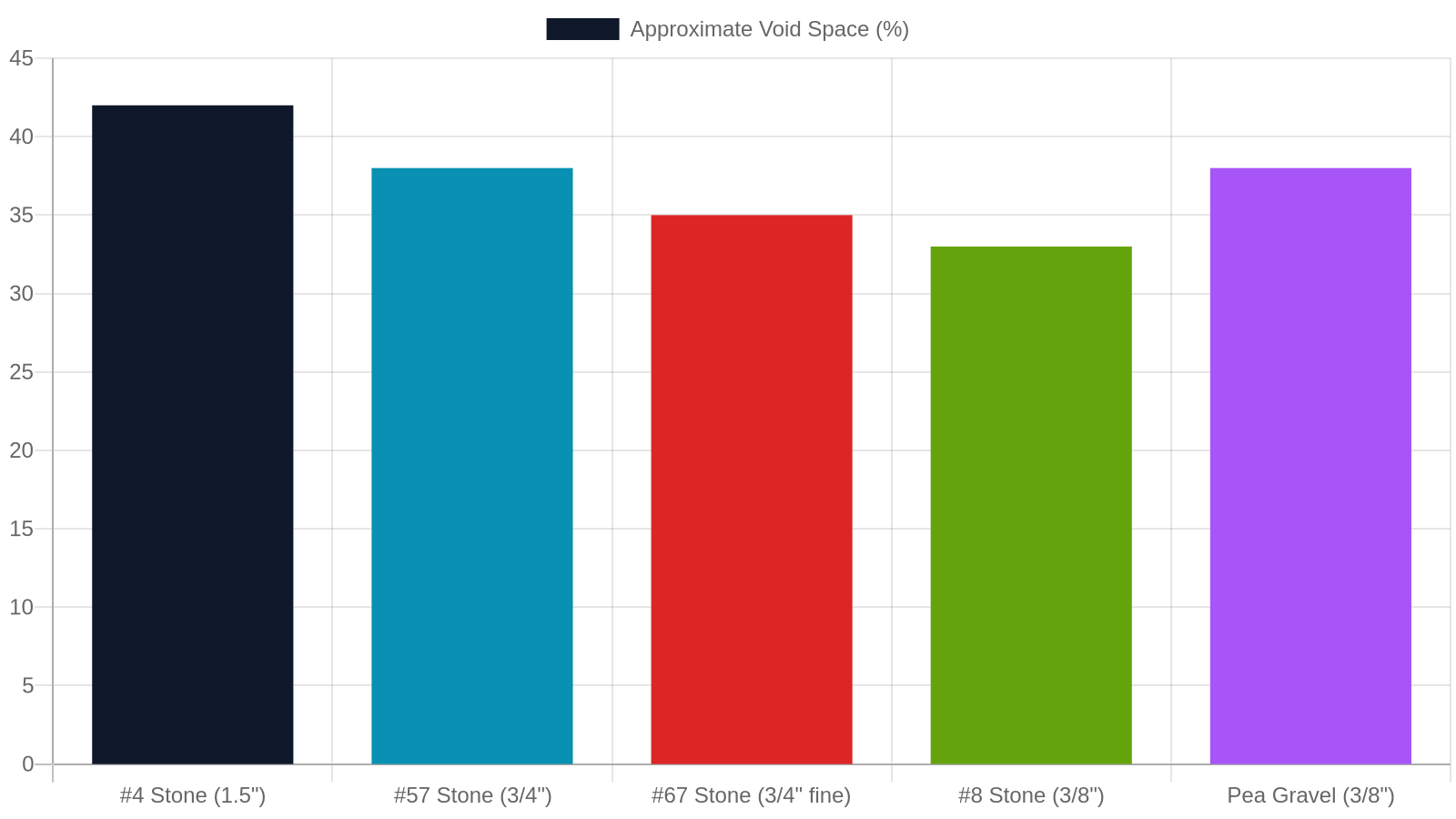
For seepage drainage applications, rounded pea gravel is preferred over angular because it packs less tightly, maintains higher void ratios (typically 35–40% void space vs. 28–32% for angular), and allows water to move more freely through the layer. Angular gravel can interlock and create preferential flow paths rather than uniform drainage across the entire pipe field.
That said, rounded pea gravel can be harder to source in consistent gradations in some parts of West Tennessee. Always ask for a gradation analysis before specifying — a well-graded pea gravel with too many fines behaves more like a sand than a drainage aggregate.
3. Crushed Limestone — Durable, Locally Available, and Versatile
Crushed limestone doesn’t always get the attention it deserves in golf course drainage discussions, but for fairway trenches, pipe bedding, and rough-area drainage in West Tennessee, it’s a practical workhorse that balances performance with availability.
Crushed Limestone as a Drainage Aggregate
Crushed limestone is one of the most widely available aggregates across Tennessee and the Mid-South, making it a practical and cost-effective choice for seepage drainage applications where rounded gravel is less accessible. Crushed limestone for drainage is typically specified at #57 stone (3/4-inch nominal) or #8 stone (3/8-inch nominal), depending on the layer in the drainage profile.
#57 limestone works well as a pipe-bedding material and as the coarse drainage layer in fairway drainage trenches. #8 stone is closer in size to pea gravel and can serve as an intermediate layer, though its angular shape means it packs tighter and achieves slightly lower void ratios than rounded alternatives. For high-volume drainage applications — like a fairway with a known low spot — the higher structural stability of angular crushed limestone can actually be an advantage.
Limestone and Long-Term pH Considerations
One consideration specific to golf course use: crushed limestone is alkaline by nature. Over time, water moving through a limestone drainage layer can leach calcium carbonate into the soil above, gradually raising the pH of the rootzone. For most West Tennessee courses maintaining bentgrass or bermudagrass greens, this is a minor concern that routine soil testing will catch early. Buffering with acidifying fertilizers or sulfur amendments is straightforward if pH drift becomes an issue.
For tee boxes, fairway drains, and rough-area drainage trenches where pH sensitivity is lower, crushed limestone is an excellent, durable choice with a long service life — typically 20–30+ years before significant migration or breakdown occurs.
4. Angular Drainage Aggregate — Engineered for High-Flow Applications
When flow volumes are high — think a low-lying fairway that collects runoff from adjacent areas, or a tee complex in a natural depression — standard pea gravel may not be enough. Angular drainage aggregate, properly sized and cleanly washed, steps in to handle the heavy lifting.
What Makes Angular Aggregate Different
Angular drainage aggregate — sometimes called crushed drainage stone or clean angular gravel — is specifically processed to remove fines and produce a uniformly sized, angular particle with high void space. Common specifications include #4 stone (1.5-inch nominal), #57 stone (3/4-inch), and #67 stone (3/4-inch with finer gradation). The angular shape creates interlocking stability that resists migration under load — important in areas with heavy cart traffic or maintenance equipment.
In seepage drainage systems on golf courses, angular aggregate is most commonly used in the collector trench surrounding perforated pipe. The trench is typically 12–18 inches wide and 18–24 inches deep, filled with clean angular stone that allows water to enter the pipe from all directions. The angular geometry keeps the stone in place even when the trench is saturated and under load.
Flow Rates and Sizing for West Tennessee Conditions
For West Tennessee courses dealing with heavy clay subgrades and 2–3 inch rain events, sizing the aggregate correctly for expected flow rates is critical. A 4-inch perforated pipe surrounded by #57 angular aggregate in a standard trench can handle approximately 0.5–1.0 gallons per minute per linear foot of trench under typical conditions. For a fairway with significant catchment area, that may mean spacing lateral drains every 15–20 feet to keep up with peak infiltration during heavy rain.
Working with a supplier who understands these specifications — and can deliver clean, well-graded aggregate without excess fines — is the difference between a drainage system that works as designed and one that silts up within a few seasons.
5. Pipe-Bedding Sand — the Often-Overlooked Foundation Layer
Pipe-bedding sand rarely makes it into drainage material discussions, but it’s the layer that keeps everything else working correctly. A drainage system is only as good as the slope and alignment of its pipes — and that starts with a stable, properly specified bedding layer.
What Pipe-Bedding Sand Does in a Drainage System
Pipe-bedding sand is a coarse, clean sand used to create a stable, level bed for perforated drainage pipe before the surrounding aggregate is placed. It sounds like a minor detail, but it matters: a pipe that shifts out of alignment during backfill loses its designed slope, and a drainage pipe without proper slope doesn’t drain — it holds water. The standard specification calls for 2–4 inches of bedding sand beneath the pipe, with the pipe laid to a minimum slope of 0.5% (1/2 inch per 10 feet) toward the outlet.
Pipe-bedding sand is typically specified as a coarse concrete sand or ASTM C33 sand — clean, well-graded, and free of clay fines. It’s not the same as rootzone sand, and substituting a finer material can lead to pipe settlement and alignment problems within the first few seasons.
Bedding Sand vs. Rootzone Sand — Don't Mix Them Up
One of the most common mistakes on golf course drainage projects is using leftover rootzone sand as pipe-bedding material, or vice versa. Rootzone sand is engineered for specific hydraulic conductivity and particle size distribution to support turf. Pipe-bedding sand is engineered for structural stability and drainage around a pipe. They’re related but not interchangeable.
When ordering materials for a drainage project, specify each material separately and confirm gradations with lab data. Jackson Sand’s team can help you identify which sand product is appropriate for each layer in your drainage profile — call 731-668-0440 to discuss your project specs before you order.
6. Choker Stone — the Critical Transition Layer
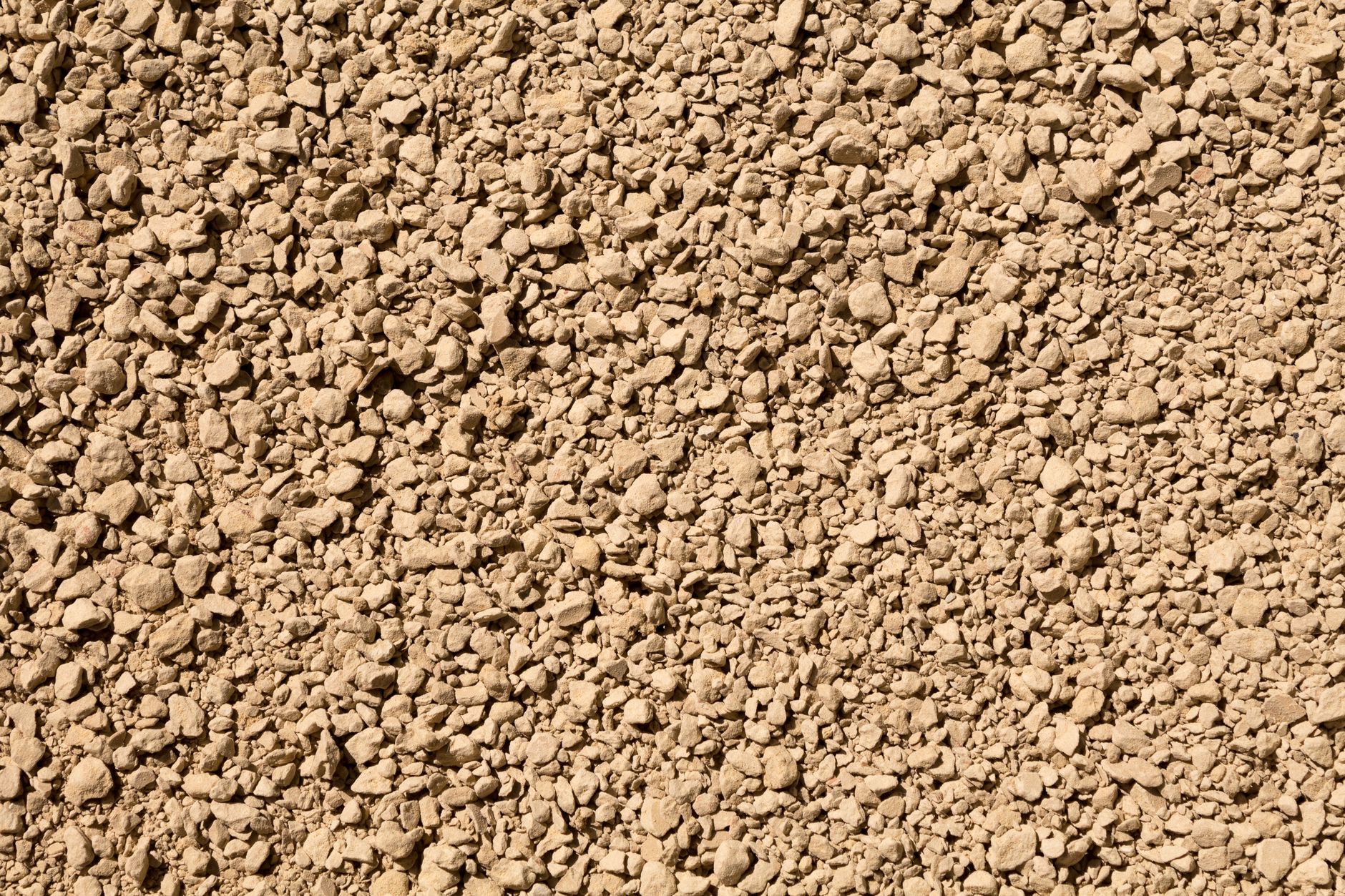
Choker stone is one of the most technically important materials in a seepage drainage system, and one of the least understood. Get this layer right, and your drainage system performs at spec for decades. Get it wrong — or skip it — and you’ll be chasing permeability problems that get worse every year.
What Choker Stone Is and Why It Exists
Choker stone is a fine aggregate — typically 1/4-inch to 3/8-inch crushed stone or coarse grit — placed between a larger drainage aggregate layer and a finer material above it. Its job is to prevent the finer material from migrating down into the coarser layer and reducing void space over time. Think of it as a mechanical filter built from aggregate rather than fabric.
In golf course drainage construction, choker stone is most commonly specified between the pea gravel layer and the rootzone sand layer in USGA-method green construction. Without a choker layer (or a geotextile fabric serving the same function), rootzone sand particles can gradually work their way into the pea gravel layer, reducing permeability by as much as 50–70% over 10–15 years — a slow, invisible failure that’s expensive to diagnose and correct.
Choker Stone vs. Geotextile Fabric — Which Is Better?
This is a genuine debate in the golf course construction industry. Geotextile fabric is faster to install and adds no weight to the drainage profile, but it can clog with fine particles over time and is difficult to inspect or replace once buried. Choker stone is heavier and adds a layer to the installation process, but it’s a permanent, self-maintaining solution that doesn’t degrade or clog in the same way.
Many golf course architects specify choker stone rather than fabric for high-value greens construction precisely because of its longevity. For fairway drainage trenches and less critical applications, geotextile fabric wrapped around the pipe and aggregate is a common and cost-effective alternative. The right choice depends on budget, expected traffic loads, and how long you need the system to perform without intervention.
7. Blended Drainage Mixes — Custom Solutions for Complex Sites
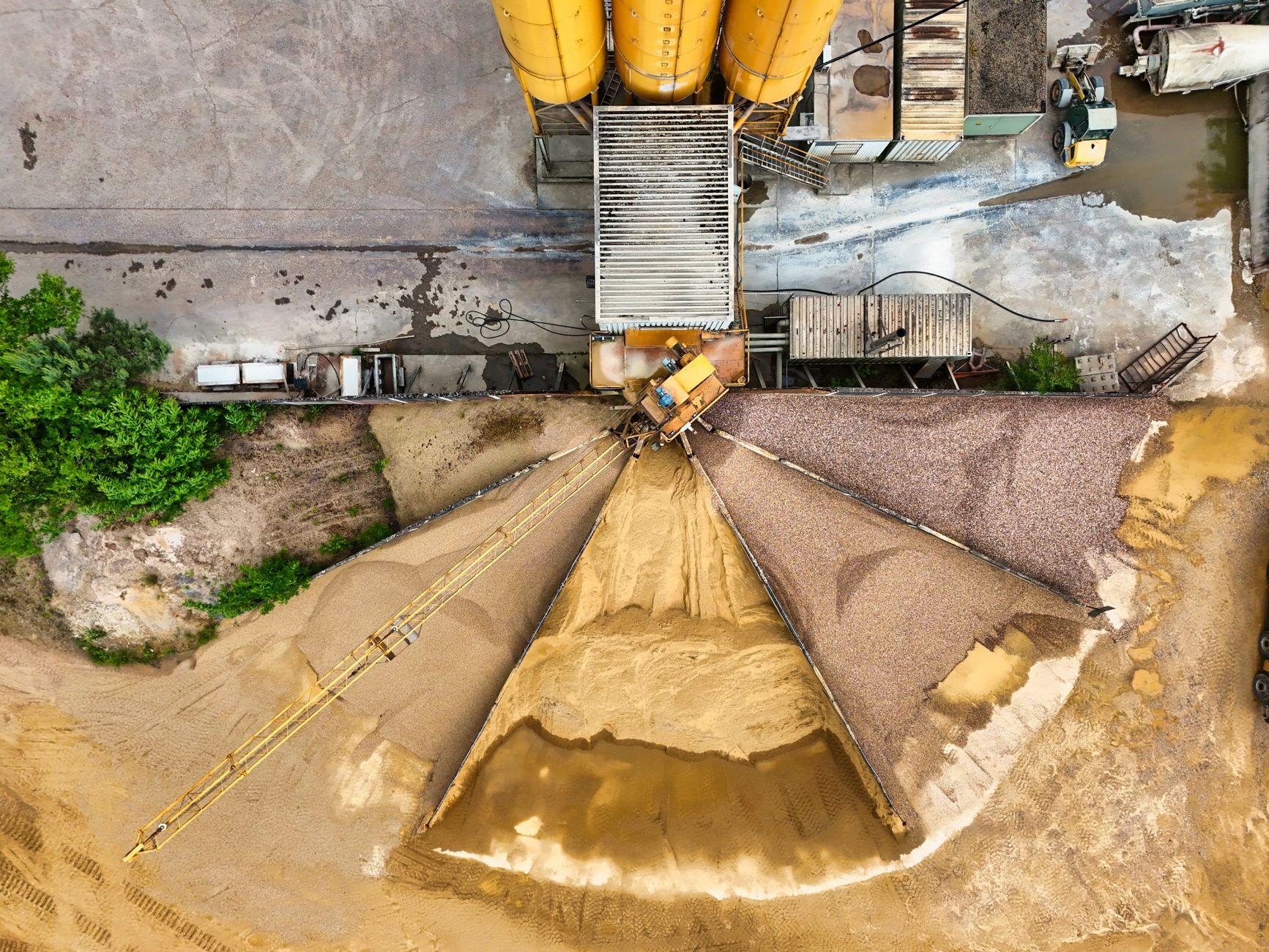
Sometimes the best drainage material isn’t a single product off a spec sheet — it’s a blend engineered for your specific site. Blended drainage mixes give golf course superintendents and contractors a tool for solving problems that standard materials alone can’t address.
When a Standard Spec Isn't Enough
Not every drainage problem fits a standard USGA profile or a simple French drain trench. Courses with unusual subgrade conditions, extreme rainfall exposure, or legacy drainage systems that need to integrate with new construction often benefit from a blended drainage mix — a custom combination of sand, gravel, and aggregate proportioned to hit specific permeability, stability, and particle-size targets.
Blended mixes are also common in topdressing programs where the surface material needs to match the rootzone below. Adding coarse sand to an existing green’s topdressing program can gradually improve surface drainage without a full reconstruction — a process called dilution topdressing that works best when the topdressing sand closely matches the existing rootzone’s particle size distribution.
Working with a Local Supplier to Dial In Your Mix
The advantage of working with a local supplier like Jackson Sand — who mixes materials on-premises in Jackson, TN — is the ability to adjust gradations and blends based on your specific site conditions and lab results. Rather than ordering a generic product from a regional distributor and hoping it matches your spec, you can work directly with a supplier who understands the soils and conditions across West Tennessee and the Mid-South.
Bring your soil test results, your existing drainage profile data, and your target hydraulic conductivity number to the conversation. Jackson Sand can help you identify which combination of materials will get you there — and deliver it in their own trucks to keep loads clean and accurate. Reach out at 731-668-0440 to start that conversation.
7 Seepage Drainage Materials at a Glance
Use this table to compare the key properties of each drainage material covered in this article and identify where each one fits in a typical golf course seepage drainage profile.
How to Layer These Materials: Building a Complete Seepage Drainage Profile

Understanding how individual materials perform is only half the picture. The other half is knowing how to stack them into a drainage profile that moves water efficiently from the surface to the outlet. Here’s how the materials covered above come together in practice.
The USGA-Method Profile for Greens
The USGA-method green construction profile is the most widely adopted standard in golf course drainage and provides a useful template for understanding how drainage materials layer together. From bottom to top:
- Subgrade: Native soil, graded to drain toward outlets at minimum 1% slope
- Perforated pipe: 4-inch pipe in trenches, bedded in coarse sand, spaced 10–15 feet apart
- 4 inches of pea gravel or #8 stone: The primary drainage layer
- 2 inches of choker stone (optional): Transition layer to prevent sand migration
- 12 inches of rootzone mix: USGA-spec coarse sand blended with organic matter
Total profile depth: approximately 18–20 inches. This profile can achieve hydraulic conductivity rates of 6 inches per hour or greater, which means a one-inch rain event drains from the surface in about 10 minutes under ideal conditions.
Simplified Profiles for Fairways, Tees, and Athletic Fields
Full USGA-method construction is expensive — typically $500,000–$1,000,000+ per green for a complete rebuild — and isn’t always necessary or practical for fairways, tees, and athletic fields. Simplified drainage profiles use the same materials in shallower configurations:
- Fairway slit drains: 4–6 inch wide trenches, 12–18 inches deep, filled with angular drainage aggregate and a perforated pipe, spaced 10–20 feet apart across the fairway
- Tee drainage: A perimeter French drain with a pea gravel or crushed limestone fill, connected to a main outlet
- Athletic field drainage: Slit drains or herringbone pipe systems with angular aggregate, topped with sand-based rootzone on high-use fields
The key principle across all profiles is the same: create a permeable pathway that moves water from the surface down through the rootzone and into a pipe or outlet faster than rainfall is adding it.
Calculating How Much Material You Need

Even the best drainage design fails if you run out of material halfway through installation or order the wrong gradation. Accurate quantity estimation and reliable delivery are just as important as material selection — especially on a golf course where project windows are tight and downtime is expensive.
Drainage Material Quantities by Layer
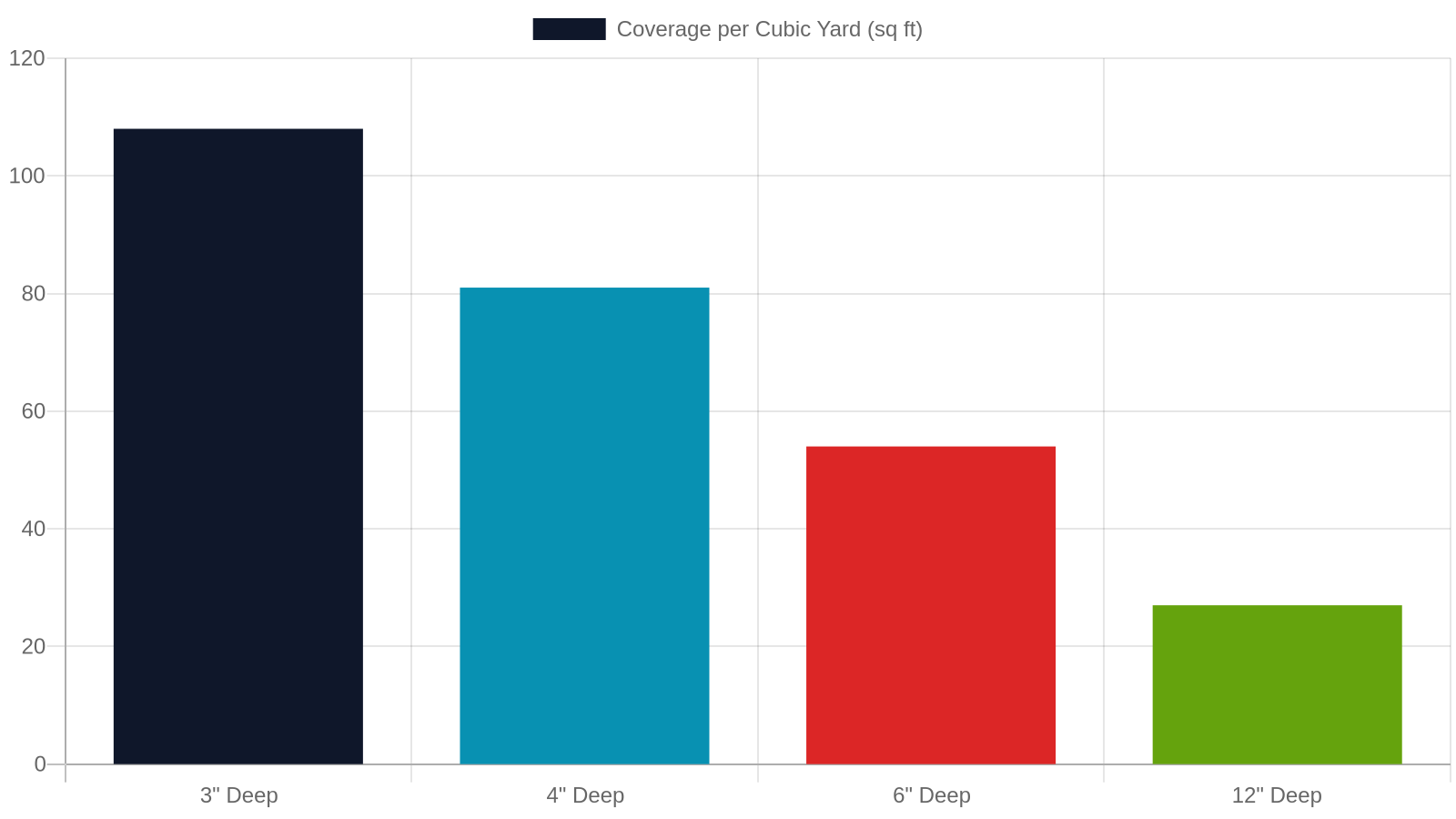
Estimating aggregate quantities for a drainage project requires knowing the area being drained, the depth of each layer, and the material’s compaction factor. A rough rule of thumb: 1 cubic yard of aggregate covers approximately 100 square feet at 3 inches deep, or 81 square feet at 4 inches deep. For a 5,000-square-foot green with a 4-inch pea gravel layer and a 12-inch rootzone layer, you’re looking at roughly 62 yards of pea gravel and 185 yards of rootzone sand — before accounting for waste and compaction.
These numbers add up fast, and ordering short means project delays while ordering long means paying for material you don’t need. Use the Jackson Sand yardage calculator to get an accurate estimate before you order — it’s free and takes less than two minutes.
Delivery and Logistics for Large Drainage Projects
For large golf course drainage projects, material delivery logistics matter as much as material selection. Jackson Sand delivers in their own trucks, which means consistent load sizes, clean material that hasn’t been cross-contaminated at a third-party yard, and a direct line of communication if a load needs to be adjusted or reordered mid-project.
For projects requiring multiple material types — rootzone sand, pea gravel, choker stone, and pipe-bedding sand all on the same job — coordinating delivery sequences with your contractor is critical. Aggregate delivered in the wrong order can block access to areas that need to be drained first. Jackson Sand’s team can help you think through delivery sequencing for complex projects — call 731-668-0440 to discuss.
Common Seepage Drainage Mistakes on West Tennessee Golf Courses
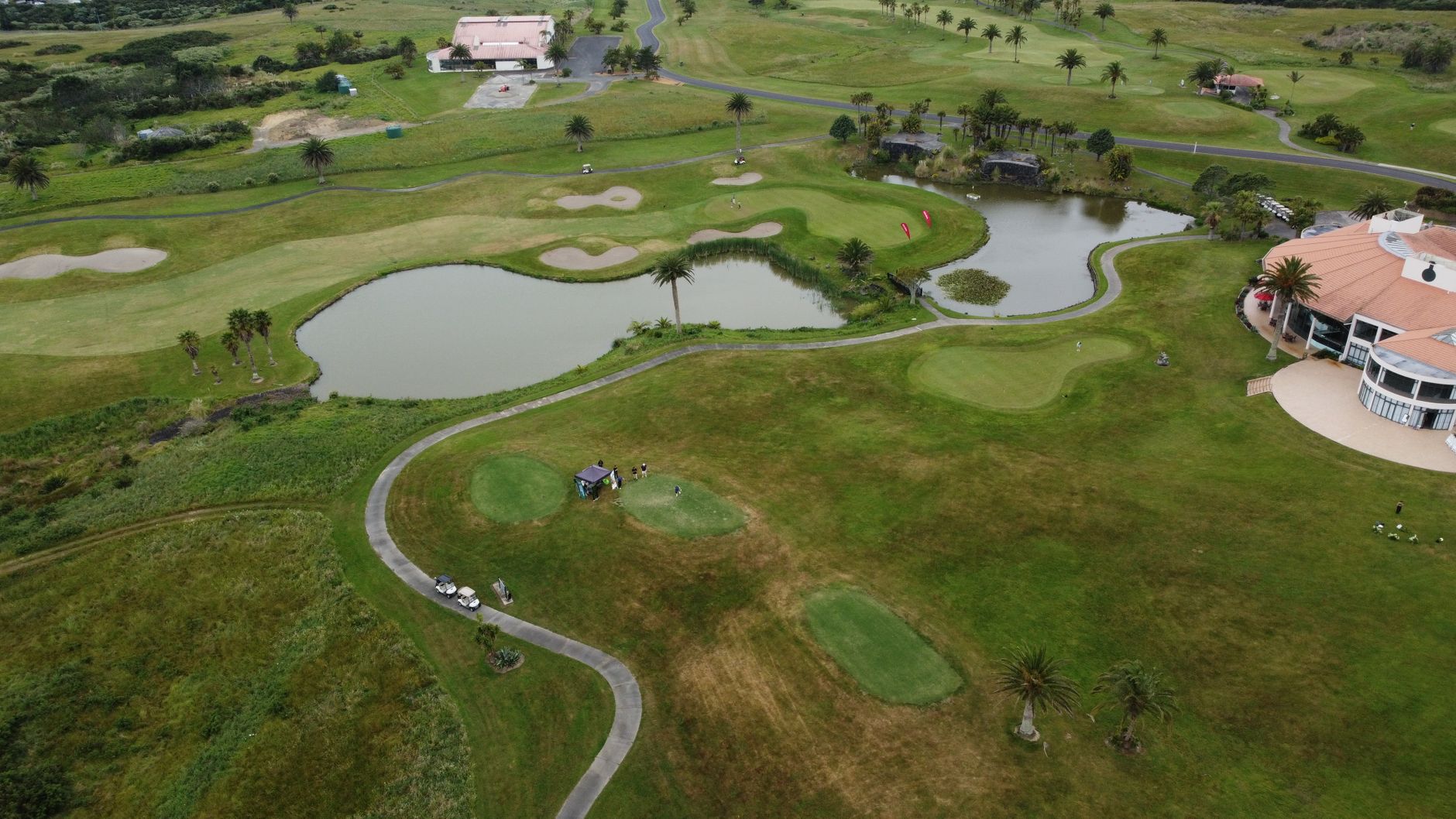
Good materials and poor execution produce the same result as poor materials: a drainage system that doesn’t work when you need it most. Here are the most common mistakes West Tennessee golf course operators make when specifying and installing seepage drainage — and how to avoid them.
Using the Wrong Sand Gradation
The single most common and costly mistake in golf course drainage construction is specifying or accepting sand that doesn’t meet the required gradation. A rootzone sand with too many fine particles (below 0.15 mm) will clog over time as organic matter accumulates, reducing permeability from a design spec of 6 in/hr to less than 1 in/hr within 5–10 years. Always require a lab gradation analysis — not just a supplier’s description — before accepting any sand for rootzone or drainage use.
Jackson Sand publishes lab-tested spec sheets for their products. Reviewing those specs before ordering is the fastest way to confirm you’re getting a material that will perform as designed over the long term.
Skipping the Choker Layer or Using Geotextile as a Shortcut
Geotextile fabric is a legitimate tool in drainage construction, but it’s not a substitute for a properly designed aggregate transition layer in high-value applications. Fabric can blind (clog) with fine particles over time, especially in soils with high silt content — which is common in parts of West Tennessee. Once a geotextile blinds, the only fix is excavation and replacement.
For greens and high-traffic tees where drainage failure is unacceptable, specify a choker stone layer rather than relying solely on fabric. It costs more upfront but eliminates a failure mode that’s expensive and disruptive to correct after the fact.
Ignoring Outlet Capacity
A seepage drainage system is only as effective as its outlet. If the perforated pipe network drains into an outlet that can’t handle peak flow — an undersized catch basin, a pipe that outlets into a low area with no positive drainage, or a system that ties into an already-overloaded storm sewer — the drainage system backs up and the greens stay wet anyway.
Design the outlet first, then work backward to size the pipe network and aggregate layers. For complex sites with multiple drainage zones, a licensed civil engineer or golf course architect should review the outlet design before construction begins.
Ready to Build a Drainage System That Actually Works? Start Here.
Seepage drainage is one of the highest-return investments a golf course or athletic facility can make in West Tennessee’s wet climate. The right materials, properly layered and delivered clean, are what separate a drainage system that performs for 30 years from one that needs remediation in five. Here’s how to get started with Jackson Sand.
Get the Right Materials from a Local Supplier Who Knows West Tennessee
Jackson Sand has been supplying sand, gravel, and drainage aggregate to golf courses, athletic facilities, and contractors across West Tennessee and the Mid-South from their location at 139 United Dr., Jackson, TN 38305. They mix sand on their own premises, own their delivery trucks, and include delivery — which means the material that leaves their yard is the material that arrives on your project, clean and on spec.
For seepage drainage projects specifically, explore the full range of materials and services on the Jackson Sand seepage drainage page — it covers products, applications, and how to get a quote for your specific project. Whether you’re rebuilding greens, installing fairway slit drains, or adding drainage to an athletic field, Jackson Sand can supply the aggregate that makes the system work.
Tools and Next Steps
Before you call, do two things:
- Estimate your quantities using the free yardage calculator at jacksonsand.com — it takes two minutes and gives you a number to work from.
- Review the sand spec sheets at jacksonsand.com/sand-specs to confirm the gradation matches your project requirements before you order.
Then call 731-668-0440 to talk through your project with the Jackson Sand team. They serve large and small jobs across West Tennessee and the surrounding Mid-South, and they’re ready to help you get the right material to the right place at the right time.
Frequently Asked Questions
What is seepage drainage on a golf course?
Seepage drainage is a subsurface system that moves water infiltrating the soil away from the turf root zone through layers of permeable aggregate and perforated pipe. It's designed to handle water that has already entered the soil, unlike surface drainage which manages runoff on top of the ground.
What sand is best for golf course drainage in West Tennessee?
USGA-spec coarse washed sand with particles in the 0.25–1.0 mm range is the standard for golf course rootzone construction. It achieves hydraulic conductivity rates of 6–12 inches per hour, which is fast enough to drain most rain events within hours. Always require a lab gradation analysis to confirm the sand meets spec before ordering.
How deep should a seepage drainage layer be under a golf green?
A standard USGA-method green profile calls for 12 inches of rootzone sand over 4 inches of pea gravel, with an optional 2-inch choker stone layer between them. The total drainage profile is approximately 18–20 inches deep, not counting the subgrade and pipe trenches beneath.
What is the difference between surface drainage and seepage drainage on a golf course?
Surface drainage manages water that runs across the top of the turf using slope, grading, and drainage basins. Seepage drainage manages water that has already infiltrated the soil, moving it through subsurface aggregate layers and perforated pipe to an outlet. Most well-designed courses use both systems together.
Does Jackson Sand deliver drainage aggregate to golf courses in West Tennessee?
Yes. Jackson Sand delivers sand, gravel, and drainage aggregate in their own trucks to golf courses and other sites across West Tennessee and the surrounding Mid-South. Delivery is included, and they mix materials on-premises to ensure clean, accurate loads. Call 731-668-0440 to discuss your project.
How much drainage aggregate do I need for a golf course drainage project?
Quantities depend on the area being drained and the depth of each layer. A rough benchmark: one cubic yard covers about 100 square feet at 3 inches deep, or 81 square feet at 4 inches deep. Use the free Jackson Sand yardage calculator at jacksonsand.com/yardage-calculator for a more precise estimate based on your specific dimensions.