
Seepage Drainage Aggregate Costs: Your 8-Point Guide for the Mid-South
Quick answer: Seepage drainage aggregate in West Tennessee and the Mid-South typically costs between $35 and $85 per cubic yard depending on material type, job size, haul distance, and site conditions. Coarse washed gravel, pea gravel, and specialty drainage stone are the most common choices. Delivery is usually the biggest variable in total project cost. Jackson Sand mixes and delivers aggregate in its own trucks from Jackson, TN, keeping loads clean and quantities accurate — call 731-668-0440 for a project quote.
1. What Seepage Drainage Aggregate Actually Does
Before you can price a seepage drainage project, you need to understand what the aggregate is actually doing underground. Seepage drainage aggregate is not just filler — it is an engineered layer that controls how water moves through your soil profile. Getting the material right matters as much as getting the price right, especially in the heavy clay soils that dominate Jackson, TN and the surrounding Mid-South region.
How Water Moves Through Aggregate
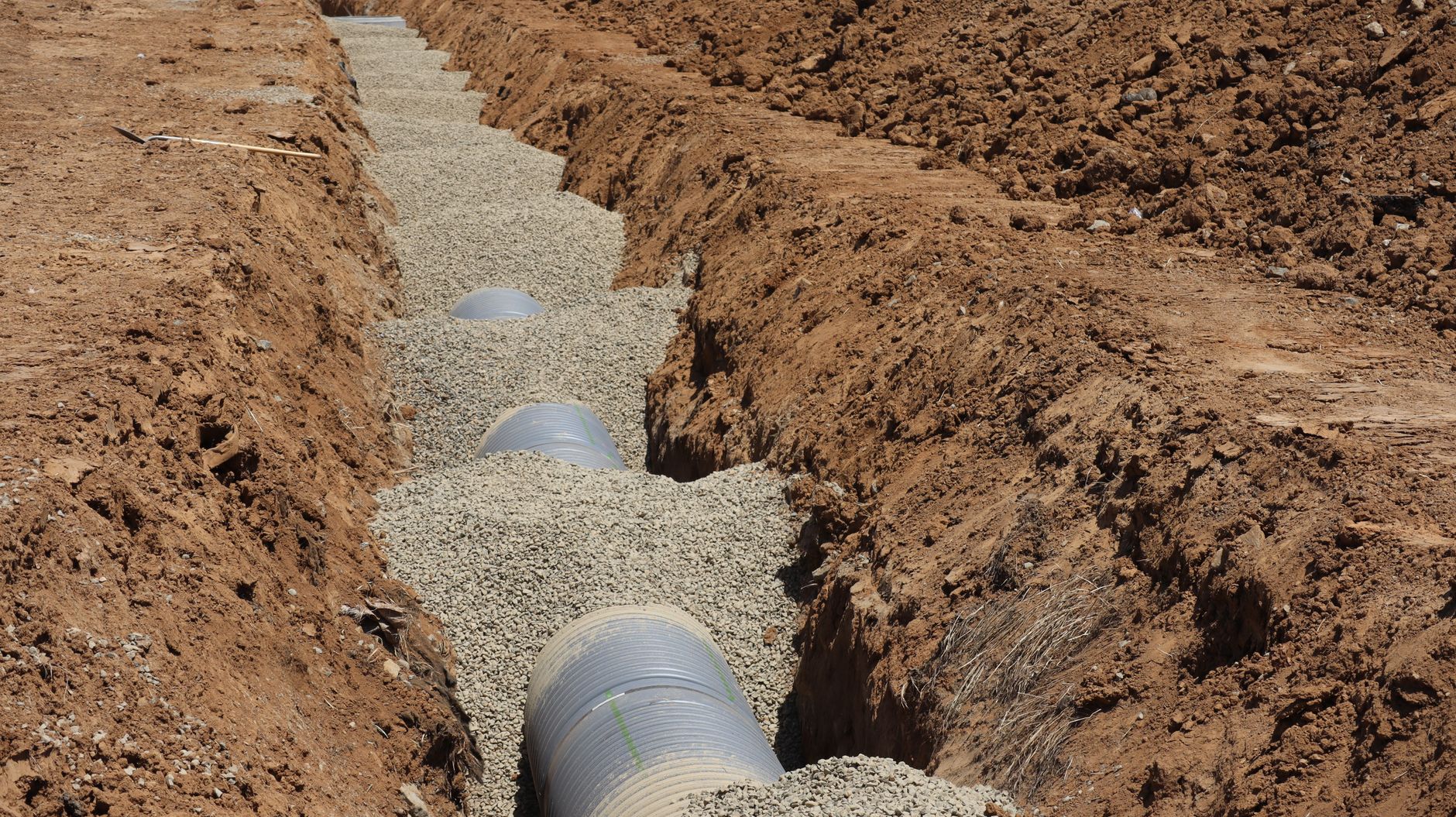
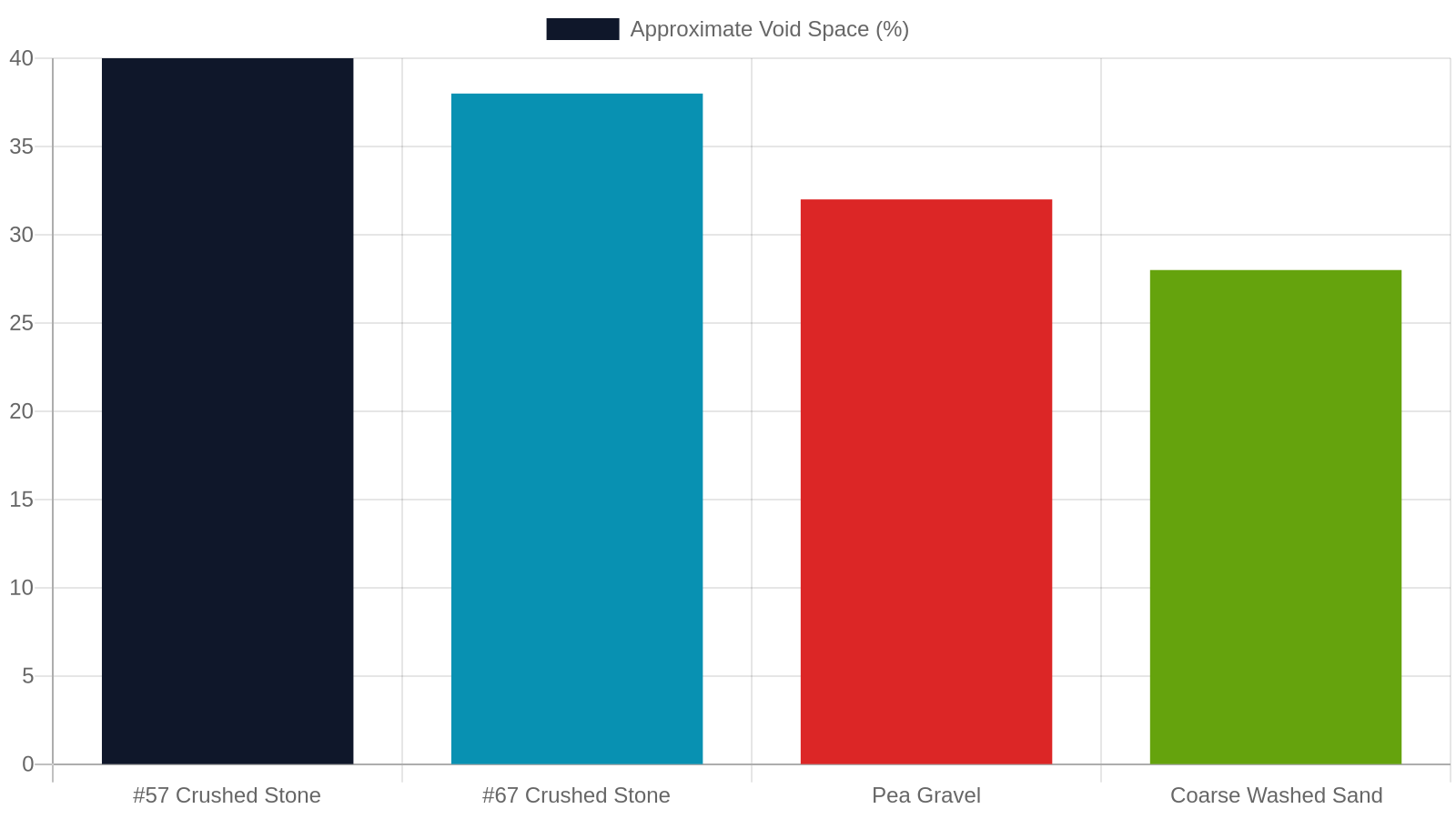
Seepage drainage works on a simple principle: water follows the path of least resistance. When you replace dense, compacted soil with a layer of clean, angular aggregate, you create thousands of tiny channels that allow water to percolate downward and away from the surface. The void space between aggregate particles — called porosity — is what does the work. A well-graded drainage stone can have 30–40% void space, compared to as little as 5–10% in compacted clay soil.
In West Tennessee, where heavy clay soils are the norm, this difference is dramatic. Standing water that would otherwise sit for days after a rain event moves through a properly installed seepage aggregate layer in a matter of hours.
Seepage vs. Surface Drainage: Know the Difference
Seepage drainage handles water that has already entered the soil profile or is trying to. Surface drainage, by contrast, moves water across the top of the ground using slope and grade. Most problem drainage sites need both — surface drainage to capture runoff and seepage drainage to handle subsurface saturation. If your lawn, athletic field, or construction site stays soggy even when the surface looks dry, seepage drainage aggregate is the material you need.
- Surface drainage: swales, slopes, catch basins, surface grading
- Seepage drainage: French drains, perforated pipe backfill, leach fields, infiltration beds
- Combined systems: most commercial and turf projects use both layers working together
2. The Main Types of Seepage Drainage Aggregate
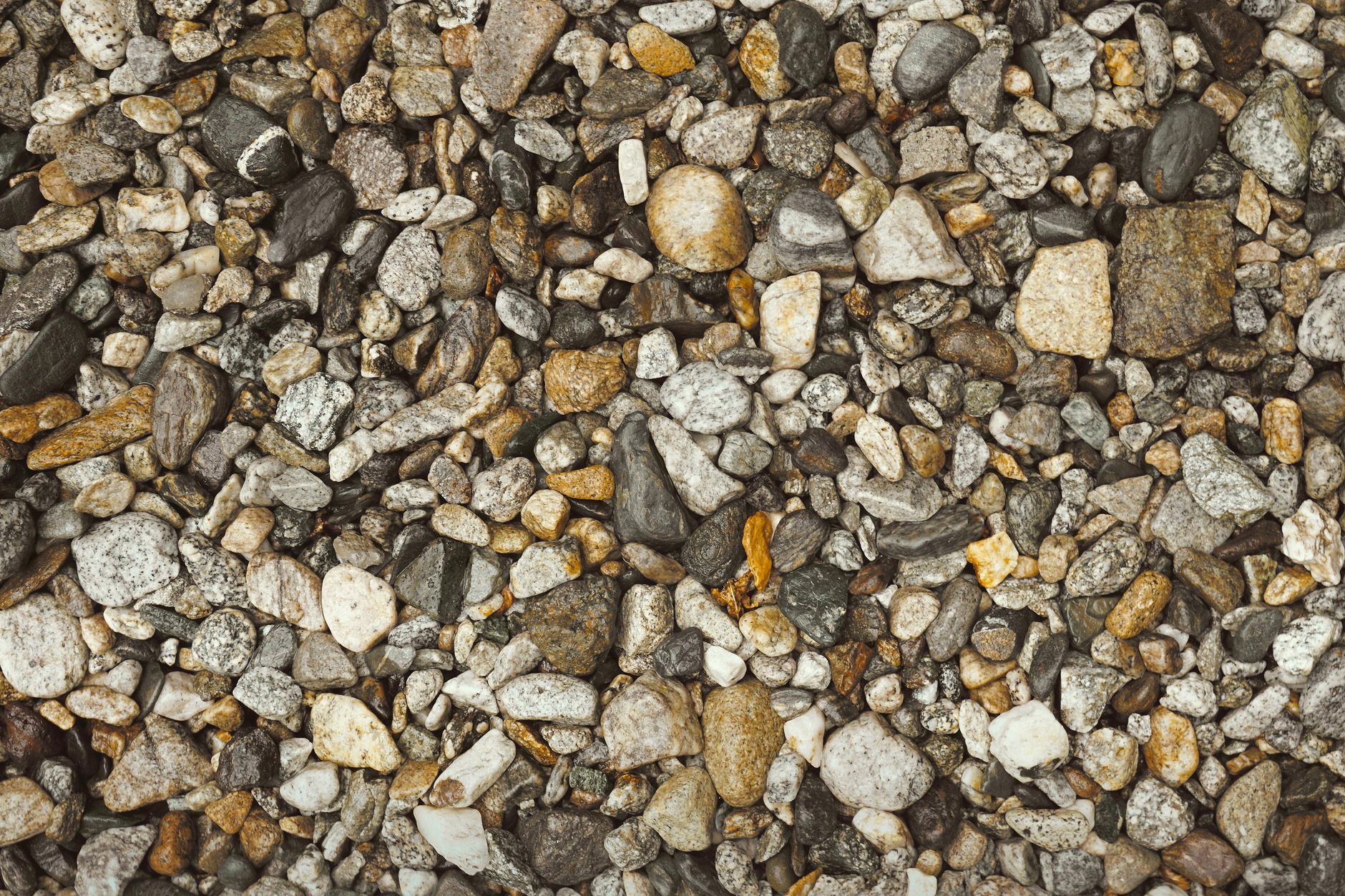
Not all drainage aggregate is the same, and the type you choose has a direct effect on both performance and cost. In West Tennessee and the broader Mid-South, you will encounter three main categories of seepage drainage aggregate at suppliers like Jackson Sand. Each has a different particle shape, gradation, and ideal application.
Washed Crushed Stone (#57 and #67 Gradations)
The most common seepage drainage aggregate in the Mid-South is washed crushed stone, typically graded as #57 (¾-inch nominal) or #67 (slightly smaller). These angular stones interlock loosely, creating excellent void space and resisting migration into the surrounding soil. #57 stone is the standard backfill material for French drains and perforated pipe systems. Its angular edges also resist shifting under load, making it suitable for driveways and parking areas that double as drainage features.
Expect #57 and #67 crushed stone to be among the most cost-effective options per cubic yard for large-volume drainage projects.
Pea Gravel and Rounded Stone
Pea gravel (typically ⅜-inch rounded stone) is popular for residential seepage applications, shallow French drains, and decorative drainage features. Because the particles are rounded rather than angular, they do not interlock as tightly — which means they can shift over time in high-flow situations. However, pea gravel’s smooth surface makes it easier to handle, less abrasive on pipe fittings, and more attractive in visible areas. It is a practical choice for homeowner drainage projects in Jackson and West Tennessee where aesthetics matter.
Specialty Drainage Stone and Washed Sand Combinations
Some seepage drainage systems — particularly those beneath athletic fields, golf course bunkers, and leach fields — use a layered aggregate system that combines coarse drainage stone at the bottom with a transition layer of coarse washed sand above. This prevents fine soil particles from migrating down into the drainage layer (a process called piping or fines migration). Jackson Sand supplies both the aggregate and the washed sand components for these layered systems, and can advise on the correct gradation for your soil type and application.
3. Key Factors That Drive Aggregate Cost in West Tennessee
Seepage drainage aggregate pricing is not a single number — it is the sum of several independent variables, each of which you can influence with smart planning. Understanding what drives cost helps you compare quotes accurately and avoid surprises when the invoice arrives.
Material Type and Gradation
The raw material itself is the first cost variable. Crushed limestone and river gravel are the most common base materials in the Mid-South, and their price reflects regional quarry availability. Specialty gradations — tightly sized stone for infiltration beds or USGA-spec drainage aggregate for golf courses — cost more per ton than standard #57 because of the additional screening and washing required. Always ask your supplier whether the price quoted is per ton or per cubic yard, since the conversion matters: one cubic yard of #57 stone weighs roughly 1.4–1.5 tons.
Job Volume and Order Size
Volume is one of the most significant price levers available to buyers. Suppliers price aggregate on a sliding scale — the more you order, the lower your per-unit cost. A homeowner ordering 2–3 cubic yards for a backyard French drain will pay a higher per-yard rate than a golf course or school district ordering 50+ yards for a field drainage project. If your project is large enough to justify multiple loads, coordinate delivery timing with your supplier to maximize efficiency and minimize per-load costs.
Haul Distance and Delivery Logistics
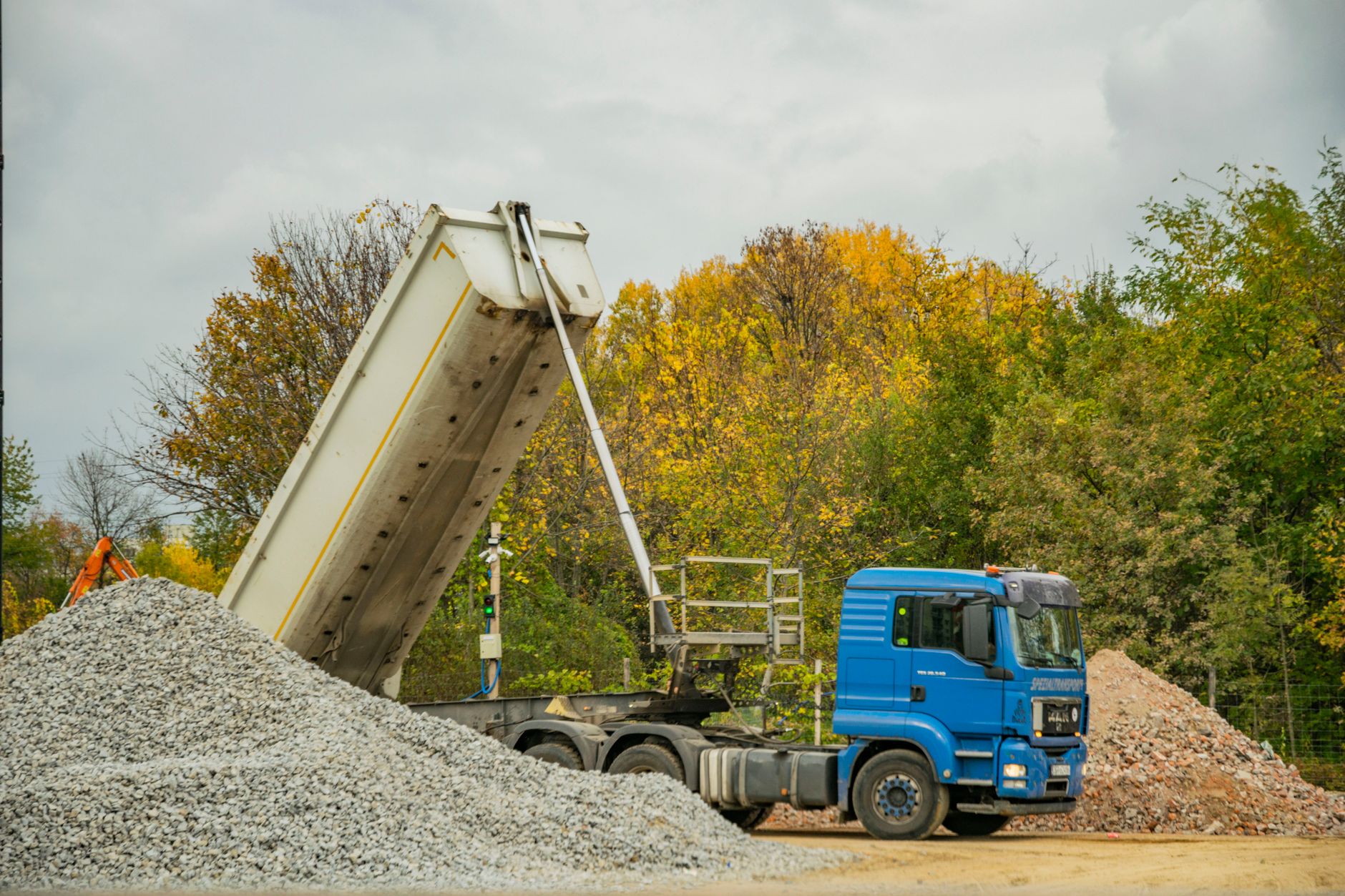
Delivery cost is often the most variable line item in an aggregate quote. Suppliers who own their own trucks — as Jackson Sand does — can control delivery costs more tightly than those who rely on third-party haulers. Haul distance from the supplier’s yard to your site is the primary driver. Sites within the Jackson, TN metro area will generally see lower delivery costs than remote rural sites in the outer Mid-South region. Site accessibility also matters: narrow lanes, low bridges, or soft ground that limits truck weight can add time and cost to any delivery.
4. Estimating How Much Aggregate Your Project Needs
Accurate quantity estimation is the single most important step in budgeting a seepage drainage project. Underestimate and you pay for a second delivery; overestimate and you pay for aggregate you cannot use. Here is how to get the number right before you call for a price.
The Basic Volume Formula
For a French drain or seepage trench, the volume of aggregate needed equals the length of the trench multiplied by its width multiplied by its depth, all measured in feet — then divided by 27 to convert cubic feet to cubic yards. For example, a trench that is 100 feet long, 2 feet wide, and 2 feet deep requires: (100 × 2 × 2) ÷ 27 = approximately 14.8 cubic yards of aggregate. Add 10–15% for compaction and waste. For infiltration beds or area drainage, calculate the full footprint area times the aggregate layer depth.
Using the Jackson Sand Yardage Calculator
Manual math is easy to get wrong, especially when a project involves irregular shapes, multiple trench runs, or layered aggregate systems. Jackson Sand publishes a free online tool that handles the calculation for you — plug in your dimensions and it returns the cubic yards you need. Use the Jackson Sand yardage calculator before you call for a quote so you can give an accurate volume estimate and get a faster, more precise price. Ordering too little means a second delivery charge; ordering too much wastes money on material you cannot use.
Accounting for Pipe, Fabric, and Other System Components
Aggregate is rarely the only material in a seepage drainage system. Most installations also include perforated pipe, filter fabric (geotextile), and sometimes a sand transition layer. When estimating total project cost, budget for these components separately from the aggregate. Filter fabric, for instance, wraps around the aggregate trench to prevent soil migration and typically adds $0.10–$0.30 per linear foot of trench to material costs. Perforated pipe adds another variable depending on diameter and material (PVC vs. corrugated HDPE).
5. Typical Cost Ranges for Seepage Drainage Projects in the Mid-South
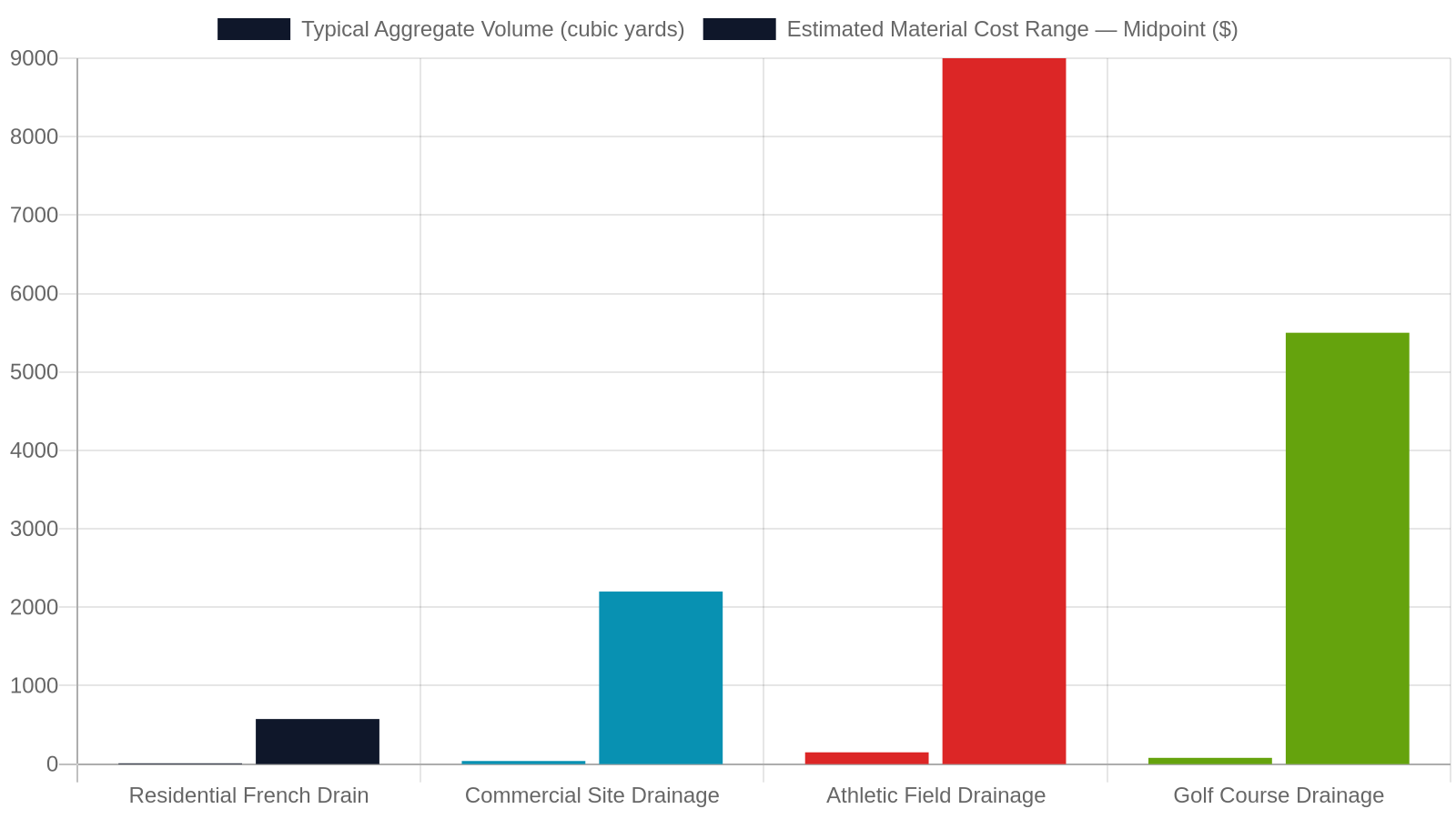
Cost ranges for seepage drainage aggregate vary enormously by project scale. A homeowner fixing a wet corner of their yard operates in a completely different budget universe than a golf course superintendent draining a fairway or a school district renovating an athletic field. Here are realistic cost benchmarks for each tier in the Mid-South market.
Residential French Drain Projects
A typical residential French drain in Jackson, TN or the surrounding West Tennessee area — say, 50–100 linear feet of trench, 18–24 inches deep — will require roughly 6–15 cubic yards of drainage aggregate. At current regional pricing, material costs alone for this scale of project generally fall in the $250–$900 range depending on aggregate type and supplier. Add installation labor (if hired out), pipe, and fabric, and total installed costs for a residential French drain commonly run $1,500–$4,500 depending on complexity and site conditions.
Commercial and Athletic Field Drainage
Athletic field drainage projects operate at a completely different scale. A single soccer field or baseball infield drainage renovation may require 80–300+ cubic yards of aggregate, depending on the system design. At that volume, per-yard material costs drop significantly, but total project material spend rises accordingly. Schools, parks departments, and colleges in the Mid-South should plan for aggregate material costs of $3,000–$15,000+ for field-scale seepage drainage projects, with total installed costs varying widely based on the depth and complexity of the drainage system.
Golf Course Drainage Applications
Golf course drainage aggregate requirements are among the most specification-driven in the industry. Bunker drainage, fairway drainage, and green drainage all call for specific particle size distributions that must meet agronomic standards. These tighter specs mean higher material costs per yard compared to standard construction aggregate. Golf course superintendents in West Tennessee should request lab-tested spec sheets — Jackson Sand publishes these at jacksonsand.com/sand-specs/ — and verify that the aggregate meets USGA or course-specific requirements before ordering.
6. Why Delivery Method Matters as Much as Material Price
The price per cubic yard is only part of the total cost equation. How the aggregate is sourced, mixed, and delivered affects the quality of what arrives on your site — and poor-quality or inaccurate deliveries can cost more to fix than the money saved on a cheaper quote. Here is what to look for in a delivery operation.
Clean Loads Start with Controlled Mixing
One of the most common quality problems with delivered aggregate is contamination — fines, soil, or mismatched material mixed in with the product you ordered. This happens most often when suppliers source from multiple quarries and blend loads without tight quality control. Jackson Sand mixes its own aggregate on premises from high-quality source materials, which means every load is consistent with the last. For seepage drainage applications, where particle size directly controls drainage rate, load consistency is not a minor detail — it is the difference between a system that works and one that clogs within a few seasons.
Owning the Trucks Means Controlling the Schedule
Suppliers who rely on third-party haulers are at the mercy of trucking availability, especially during busy construction seasons in West Tennessee. Jackson Sand operates its own delivery fleet, which means delivery scheduling is a direct conversation between you and the supplier — not a game of telephone through a broker. For time-sensitive projects like athletic field renovations that must finish before a season starts, or golf course drainage work that has to happen during a maintenance window, that scheduling control has real dollar value.
Accurate Load Quantities Protect Your Budget
Short loads — deliveries that arrive with fewer cubic yards than invoiced — are a persistent problem in the aggregate industry. When a supplier controls its own trucks and mixes on premises, there is a direct accountability chain from the yard to your site. Ask your supplier how they verify load quantities. Jackson Sand’s on-premises mixing and loading process is designed to keep quantities accurate, so the 10 yards you ordered is the 10 yards you receive. Over a multi-load project, short loads add up quickly and can blow a materials budget.
7. Soil Conditions in West Tennessee and How They Affect Drainage Design
Understanding your site’s soil conditions is not just an academic exercise — it directly determines how much aggregate you need, how deep your drainage system must go, and whether seepage drainage alone will solve your problem. West Tennessee presents some specific soil challenges that every drainage project in the region must account for.
The Clay Problem in the Mid-South
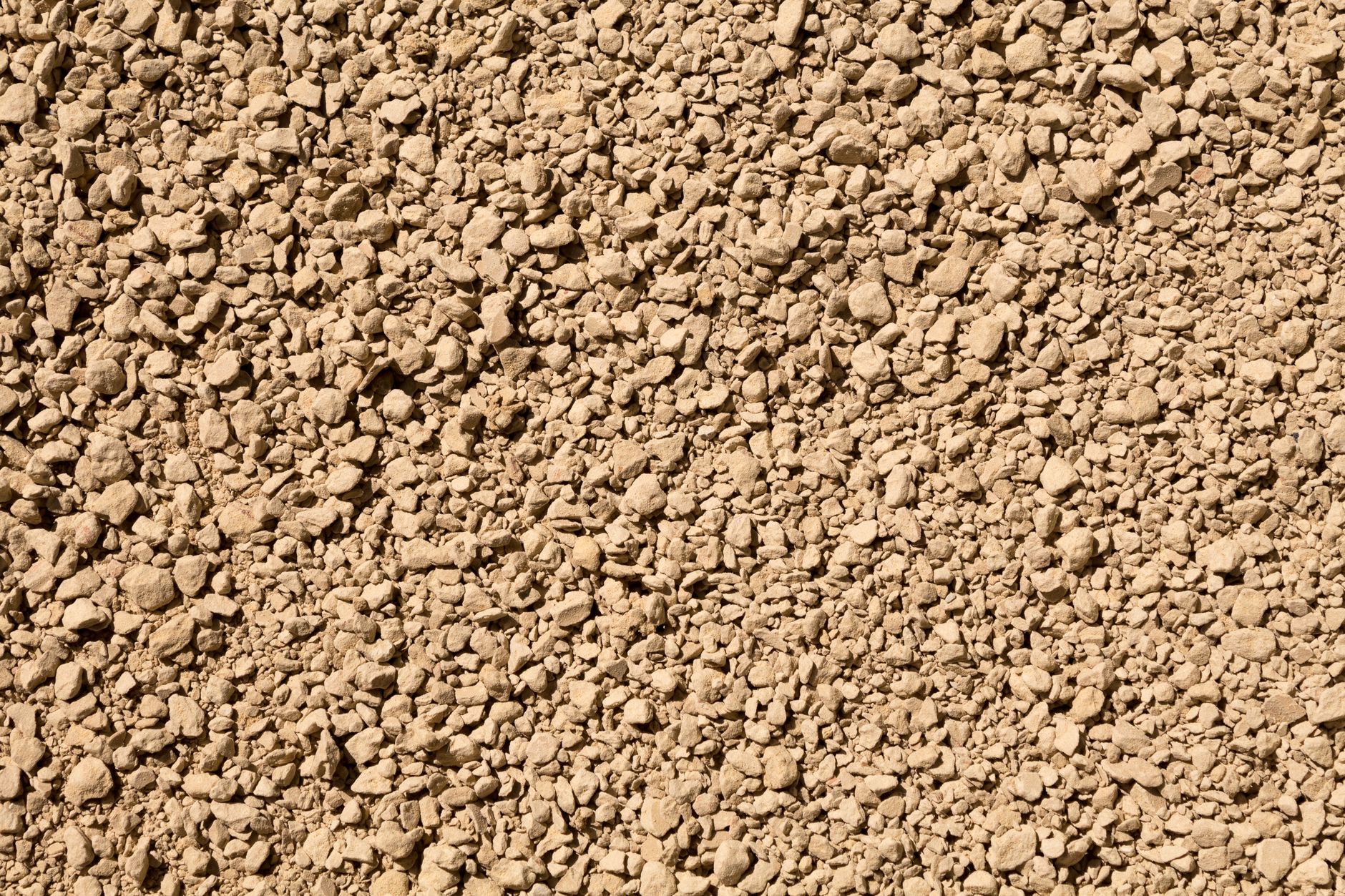
West Tennessee sits on some of the most productive — and most poorly draining — clay soils in the Mid-South. Madison County and surrounding counties are dominated by Vertisols and Alfisols with high clay content, some exceeding 50–60% clay by weight. These soils expand when wet and crack when dry, which creates a dynamic drainage environment that standard aggregate systems must be designed to handle. Aggregate trenches in heavy clay soils need to be sized generously, because the native soil will not contribute meaningful drainage capacity on its own.
Seasonal Water Table Fluctuations
The Mid-South experiences significant seasonal rainfall variation, with the wettest months typically running November through April. A seepage drainage system designed only for summer conditions may be overwhelmed during a wet winter or spring. When sizing aggregate trenches and infiltration beds in West Tennessee, factor in the high-water-table season — not just average annual rainfall. Deeper aggregate layers and larger-diameter perforated pipe are often justified by the seasonal extremes common to this region.
When Seepage Drainage Alone Is Not Enough
In sites with very high clay content or a seasonally high water table, seepage drainage aggregate must be paired with a positive-outlet drainage system — meaning the water collected in the aggregate layer needs somewhere to go besides back into the soil. Drainage basins, outlet pipes, and surface drainage slopes work in combination with seepage aggregate to create a complete system. If your site has standing water that does not respond to a basic French drain, a more comprehensive drainage design is likely needed.
Seepage Drainage Aggregate Comparison at a Glance
Use this table to match the most common drainage aggregate types to your project's performance needs, budget, and application in West Tennessee and the Mid-South.
8. Comparing Seepage Drainage Aggregate Options Side by Side
Choosing the right aggregate for a seepage drainage project comes down to matching material properties to your application’s performance requirements and budget. The comparison table below summarizes the most common options available in West Tennessee and the Mid-South, so you can make an informed decision before calling for a quote.
9. Common Mistakes That Drive Up Seepage Drainage Costs
Even well-intentioned drainage projects can end up costing far more than necessary when common planning and installation mistakes are made. Here are the three errors that most frequently result in failed systems and expensive do-overs in West Tennessee and the Mid-South.
Undersizing the Aggregate Layer
The most common and costly mistake in DIY and contractor-installed seepage drainage is making the aggregate layer too shallow or too narrow. A French drain trench that is only 12 inches deep in heavy clay soil may work fine in a dry summer but fail completely during a wet spring. The fix — excavating and reinstalling a deeper system — costs far more than doing it right the first time. In West Tennessee’s clay-dominant soils, drainage trenches for residential applications should generally be at least 18–24 inches deep, with commercial and turf applications often requiring 36 inches or more.
Skipping Filter Fabric
Filter fabric (geotextile) wrapped around the aggregate trench prevents fine soil particles from migrating into the void spaces of the aggregate over time — a process that will eventually clog any drainage system. Skipping fabric to save $50–$100 on a residential project often results in a failed system within 5–10 years that must be completely excavated and rebuilt. This is not a place to cut corners. Specify non-woven geotextile fabric rated for drainage applications, and wrap it around all four sides and the top of the aggregate trench.
Ordering the Wrong Gradation
Not all gravel is drainage gravel. Crushed stone with a high percentage of fines — the dust and small particles left over from crushing — can actually impede drainage rather than improve it. Always ask your supplier for a gradation specification or sieve analysis before ordering. For seepage drainage applications, you want clean, washed aggregate with minimal fines. Jackson Sand’s on-premises mixing process is designed to produce consistent, clean aggregate — and for applications where specs matter, lab-tested data is available at jacksonsand.com/sand-specs/.
10. How to Get an Accurate Quote from Jackson Sand
Getting a fast, accurate quote for seepage drainage aggregate in West Tennessee starts with a phone call — but the quality of the quote you get depends on the information you bring to the conversation. Here is how to make that call count, and what to expect from Jackson Sand’s quoting process.
What Information to Have Ready
The more specific you can be when you call, the faster and more accurate your quote will be. Before contacting Jackson Sand, gather the following: project location (city and county in West Tennessee or the Mid-South), approximate cubic yards needed (use the yardage calculator if unsure), aggregate type (crushed stone, pea gravel, or drainage sand), intended application (French drain, athletic field, golf course, etc.), and preferred delivery timing. If you have a site plan or drainage design, have it on hand — it helps the team confirm your volume estimate and recommend the right material.
Delivery Included — No Hidden Freight Charges
Jackson Sand includes delivery in its pricing for qualifying orders, using its own trucks. This is worth noting when comparing quotes from multiple suppliers — a lower per-yard material price from a supplier who charges separately for freight can easily end up costing more in total than a slightly higher per-yard price with delivery included. Always compare total delivered cost, not just material cost per yard. When you call Jackson Sand at 731-668-0440, ask for a delivered price to your site so you are comparing apples to apples.
Seepage Drainage Products from Jackson Sand
Jackson Sand supplies the full range of materials needed for seepage drainage systems in West Tennessee and the Mid-South — from coarse drainage aggregate and washed sand to the specialty gradations required for golf course and athletic field applications. Their seepage drainage materials page details the specific products available and their applications. Whether you are a homeowner installing a backyard French drain or a turf manager specifying drainage aggregate for a field renovation, Jackson Sand can supply and deliver the right material for the job.
Ready to Solve Your Drainage Problem? Start Here
Seepage drainage aggregate is one of those materials where the right supplier makes a measurable difference — in load quality, delivery reliability, and total project cost. Jackson Sand has been supplying West Tennessee and the Mid-South with sand, aggregate, and drainage materials from its Jackson, TN facility, mixing on premises and delivering in its own trucks. Here is how to move from reading to doing.
Calculate Your Yardage First
Before you call, take two minutes to run your project dimensions through the free Jackson Sand yardage calculator. It handles the math for trenches, beds, and area applications, and gives you a cubic yard number you can use to get a real quote — not a ballpark. Knowing your volume also helps you plan delivery logistics: how many loads, what size truck, and whether your site can accommodate a standard dump truck.
Call Jackson Sand at 731-668-0440
Jackson Sand serves golf courses, athletic fields, contractors, landscapers, and homeowners across Jackson, TN and the broader West Tennessee and Mid-South region. The team at 139 United Dr., Jackson, TN 38305 can help you identify the right aggregate gradation for your drainage application, confirm delivery availability to your site, and give you a delivered price with no hidden freight charges. Call 731-668-0440 or visit the contact page to get started. Whether your project is a 5-yard residential French drain or a 200-yard athletic field drainage renovation, Jackson Sand has the material, the trucks, and the expertise to deliver.
Frequently Asked Questions
How much does seepage drainage aggregate cost per cubic yard in West Tennessee?
Seepage drainage aggregate in West Tennessee and the Mid-South typically ranges from $35 to $85 per cubic yard depending on material type, order volume, and delivery distance. Crushed stone gradations like #57 tend to be at the lower end; specialty drainage sands and tightly graded aggregates for golf or athletic field applications cost more. Always compare total delivered cost, not just material price per yard.
What is the best aggregate for a French drain in Jackson TN?
Washed crushed stone in a #57 or #67 gradation is the most common and cost-effective choice for French drains in Jackson, TN. These angular stones provide excellent void space and drainage capacity in the heavy clay soils typical of West Tennessee. Wrap the trench in non-woven filter fabric to prevent soil migration into the aggregate over time.
Does Jackson Sand deliver seepage drainage aggregate to my area?
Jackson Sand delivers aggregate using its own trucks from its facility at 139 United Dr., Jackson, TN 38305. They serve Jackson and the surrounding West Tennessee and Mid-South region. Call 731-668-0440 to confirm delivery availability to your specific site and get a delivered price quote.
How many cubic yards of drainage aggregate do I need for a French drain?
Calculate cubic yards by multiplying trench length (feet) × width (feet) × depth (feet), then dividing by 27. A 100-foot trench that is 2 feet wide and 2 feet deep needs about 15 cubic yards. Add 10–15% for waste. Use the free Jackson Sand yardage calculator at jacksonsand.com/yardage-calculator/ to run the numbers before you order.
What is the difference between seepage drainage and surface drainage?
Surface drainage moves water across the top of the ground using slope, swales, and catch basins. Seepage drainage handles water that has already entered the soil profile, using aggregate-filled trenches and perforated pipe to collect and redirect subsurface water. Most problem drainage sites in West Tennessee need both systems working together.
Can I use regular gravel for seepage drainage, or does it need to be a specific type?
Not all gravel works for seepage drainage. You need clean, washed aggregate with minimal fines — the dust and small particles that clog void spaces and reduce drainage capacity. Dense-graded base gravel, for example, is designed to compact tightly and will actually impede drainage. Ask your supplier for a gradation spec or sieve analysis, and specify washed aggregate for any seepage drainage application.