

Bunker Sand Specs and Pricing: Your 9-Point Guide for the Mid-South
Quick answer: Bunker sand for golf courses in the Mid-South should meet USGA particle-size guidelines — predominantly medium sand (0.25–0.5 mm), less than 10% fine particles, and a percolation rate of at least 6 inches per hour. Pricing varies by volume, haul distance, and material grade, but buying from a local supplier like Jackson Sand in Jackson, TN — who mixes sand on premises and delivers in their own trucks — typically saves cost and ensures load accuracy. Call 731-668-0440 or use the online yardage calculator to get a quantity estimate before you order.
1. Why Bunker Sand Specs Are Not Optional

Every golf course superintendent knows that bunker sand is not a commodity purchase. The particle size, shape, infiltration rate, and organic content of the sand you choose will determine how the bunker plays, how long it holds its shape, and how much it costs to maintain over a five- to ten-year renovation cycle. In the Mid-South — where summer thunderstorms can drop two inches of rain in an hour — drainage performance is especially critical. Choosing sand based on price alone, without reviewing the specifications, is one of the most expensive mistakes a superintendent can make.
The Real Cost of Off-Spec Sand
Using sand that doesn’t meet specification isn’t just a performance problem — it’s a budget problem. Off-spec sand compacts too easily, drains too slowly, or blows out of the bunker face after a single hard rain. That means more labor hours reshaping, more material hauling to top off washed-out bunkers, and more complaints from golfers. Studies from the Golf Course Superintendents Association of America (GCSAA) suggest that a single poorly specified bunker renovation can cost a course 30–40% more in long-term maintenance than getting the spec right the first time.
How Spec Failures Show Up on the Course
The most common spec failures in Mid-South bunkers involve excess fines (particles smaller than 0.125 mm) and poor particle shape. Fines migrate downward and clog drainage layers, creating the dreaded “fried egg” lie and standing water after rain. Angular or sub-angular particles resist compaction better than rounded ones, but too much angularity causes ball plugging. Getting that balance right starts with reading a lab-tested spec sheet — not just a bag label.
2. USGA Particle-Size Guidelines Explained
The United States Golf Association (USGA) publishes the most widely referenced standard for bunker sand in North America. While bunker sand does not carry the same strict construction requirements as USGA-method putting green rootzone, the USGA’s particle-size recommendations are the de facto benchmark used by golf course architects, agronomists, and superintendents across the Mid-South and nationwide. Understanding these guidelines is the first step toward making a confident purchase decision.
The Six Particle-Size Categories
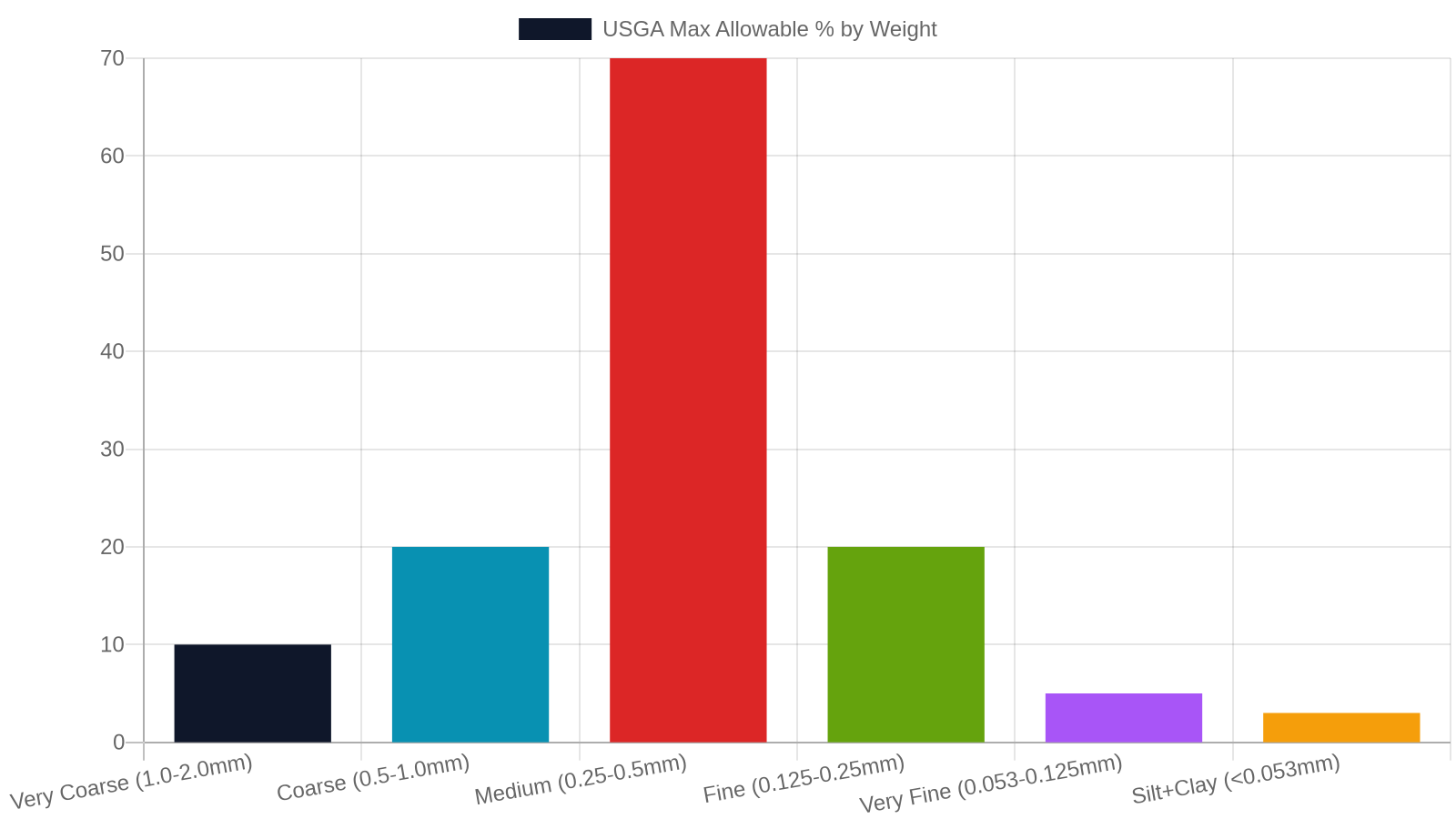
The USGA Method for Putting Green Construction (updated 2018) defines acceptable bunker sand using sieve analysis. The key size fractions are:
- Very coarse (1.0–2.0 mm): should be less than 10% of total sample
- Coarse (0.5–1.0 mm): acceptable up to 20%
- Medium (0.25–0.5 mm): the target dominant fraction, ideally 60–70%
- Fine (0.125–0.25 mm): no more than 20%
- Very fine (0.053–0.125 mm): less than 5%
- Silt + clay (<0.053 mm): less than 3%
A sand that meets these thresholds will resist layering, drain adequately, and resist wind erosion better than one skewed toward fines or coarse fractions.
Infiltration Rate: The Number That Matters Most
Particle size drives infiltration rate, but the two are not the same measurement. The USGA recommends a saturated hydraulic conductivity of at least 6 inches per hour (15 cm/hr) for bunker sand. High-quality bunker sands in the Mid-South typically test between 10 and 20 inches per hour when properly installed over a gravel drainage layer. Jackson Sand publishes lab-tested spec sheets for their bunker sand — you can review the full sand specs here before placing an order, so there are no surprises on delivery day.
Organic Matter and Contamination Limits
The USGA caps organic matter in bunker sand at less than 1% by weight. Organic contamination accelerates the growth of algae and fungi, causes sand to clump, and accelerates the breakdown of drainage performance. Reputable suppliers test for organic content as part of their standard lab analysis. Always request the test date on any spec sheet — sand stockpiled outdoors for more than 12 months can accumulate organic matter even if it tested clean at the source.
3. Particle Shape: Rounded vs. Angular

Particle size gets most of the attention in bunker sand specifications, but particle shape is equally important for both playability and long-term bunker stability. The shape of each grain determines how the sand compacts, how it responds to a golf club strike, and how resistant it is to displacement by rain or foot traffic. In the Mid-South, where summer heat and heavy rain cycles put bunkers under constant stress, shape matters as much as any other specification.
Why Shape Affects Playability
Particle shape is the spec that gets overlooked most often — and it has a direct impact on golfer experience. Rounded particles (like beach sand) shift easily underfoot, creating an unstable lie and causing balls to plug. Sub-angular to angular particles interlock slightly, providing better stability and a more consistent lie. The USGA recommends sub-angular to angular particles for bunker sand, with a roundness value between 0.3 and 0.5 on the Krumbein-Sloss scale.
Shape and Fried-Egg Lies
A “fried egg” lie — where the ball embeds deeply in the sand — is most common in bunkers filled with fine, rounded sand that compacts under impact. Coarser, sub-angular particles resist compaction and allow the ball to sit more cleanly on the surface. This is why a superintendent can’t simply substitute a cheaper masonry sand or fill sand and expect acceptable playing conditions. The particle shape spec is just as important as the size distribution when evaluating a potential bunker sand source.
Testing for Shape in the Field
Lab analysis using a petrographic microscope is the gold standard for shape evaluation, but superintendents can do a quick field check: pour a small sample of dry sand onto a flat surface and tilt it slowly. Sand that begins to slide at a tilt angle below 25° is likely too rounded. Sub-angular bunker sand should begin to move at roughly 28–35°. This simple test won’t replace a lab spec sheet, but it can flag obvious problems before a full load is placed in a bunker.
4. Drainage Performance in Mid-South Conditions
For golf course superintendents in West Tennessee and the surrounding Mid-South, drainage performance is the single most operationally critical specification for bunker sand. A sand that looks right on paper but drains poorly will cost you in labor, lost rounds, and golfer dissatisfaction every time a storm rolls through. Understanding how local rainfall patterns interact with your bunker construction system is essential before you finalize a sand specification.
Rainfall Intensity in West Tennessee
Jackson, TN and the broader Mid-South region experience some of the most intense summer convective storms in the eastern United States. The National Weather Service records average annual precipitation of approximately 54 inches per year in Jackson, with peak intensity events exceeding 2 inches per hour during July and August. A bunker sand that drains at only 4–5 inches per hour will hold standing water after every significant storm, creating unplayable conditions and accelerating bunker face erosion.
Liner Systems and Sand Interaction
The drainage performance of bunker sand is not just about the sand itself — it’s about the system. Sand placed directly over native soil will drain far more slowly than sand installed over a properly graded gravel drainage layer or a bunker liner. However, the liner introduces a new risk: if the sand’s particle size is too fine, particles will migrate through the liner over time, clogging the drainage layer below. Always match your sand spec to your liner system, and consult your liner manufacturer’s recommendations before finalizing your sand selection.
Percolation Testing Before You Buy
Before committing to a large bunker renovation purchase, request a percolation test result from your supplier. A reputable supplier will provide this as part of their standard documentation. The test should be conducted on a sample representative of the actual stockpile you’ll receive — not a generic product sample. At Jackson Sand, spec sheets are available for review so you know exactly what you’re getting before the first truck rolls. If you’re unsure how much material you need, the free yardage calculator on the Jackson Sand website can help you estimate cubic yards before you call.
5. Bunker Sand Pricing: What Drives the Cost

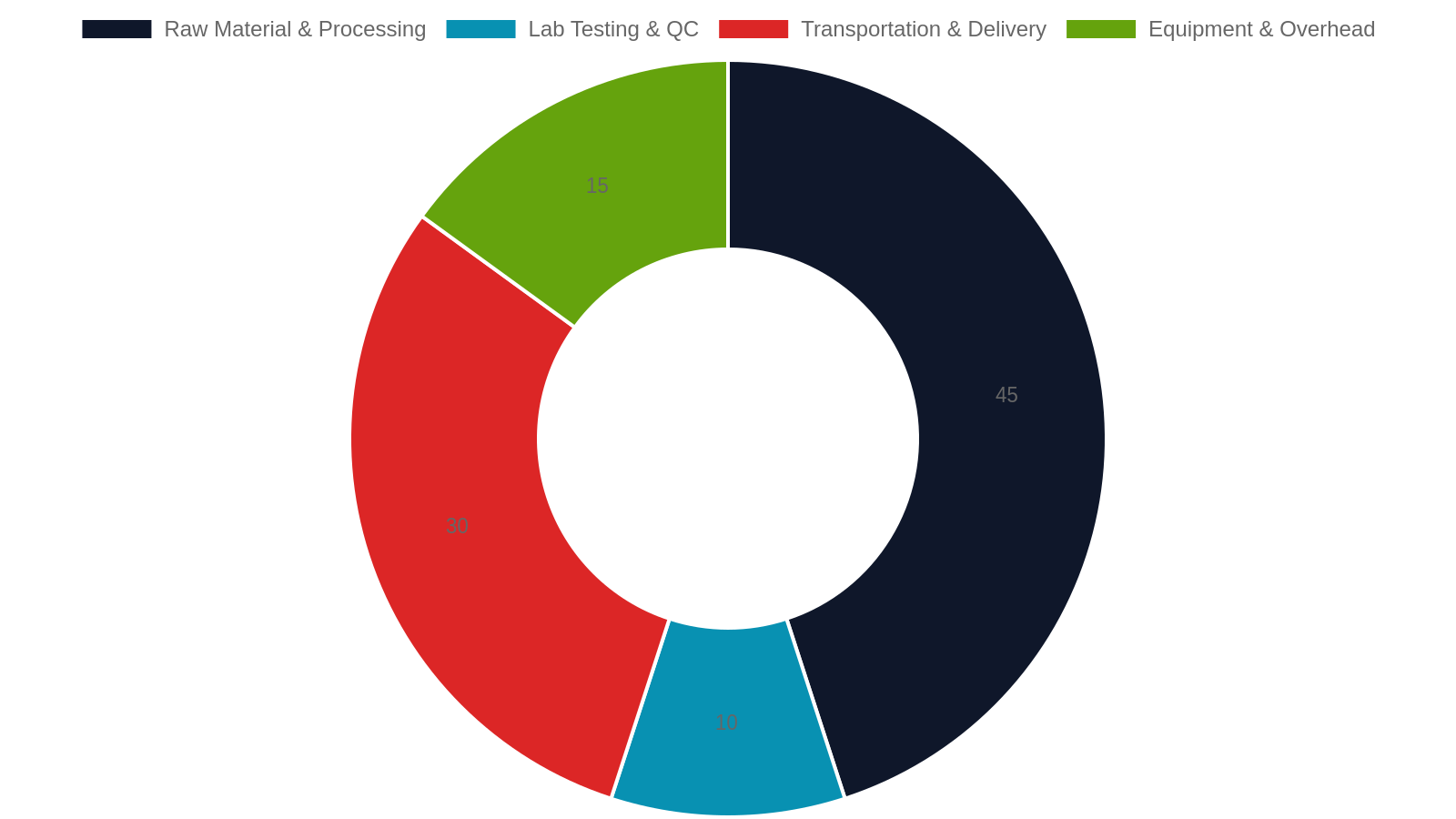
Bunker sand pricing in the Mid-South region is influenced by several factors: the cost of the raw aggregate, the processing required to meet specification, transportation distance, and whether delivery is included. Understanding each component helps you compare quotes accurately and avoid the trap of choosing the lowest per-yard number without accounting for the full delivered cost. Here’s a breakdown of what actually drives the price you’ll pay.
Raw Material and Processing Costs
Bunker sand costs more than fill sand or masonry sand for a straightforward reason: it requires more precise processing. The source aggregate must be washed, screened to tight particle-size tolerances, and tested in a lab before it can be sold as a specification-grade product. Suppliers who mix their own sand on premises — rather than reselling material blended elsewhere — can control quality more tightly and often offer better consistency from load to load. Jackson Sand mixes sand on their own premises in Jackson, TN, which means every load meets the same spec rather than varying by the batch.
Volume Discounts and Project Sizing
Like most aggregate products, bunker sand is priced on a per-cubic-yard or per-ton basis, and larger orders typically carry a lower unit price. A full-course bunker renovation involving hundreds of cubic yards will be priced differently than a spot repair of two or three bunkers. Before you call for a quote, know your approximate yardage — use the Jackson Sand yardage calculator to estimate volume based on bunker dimensions. Arriving at the conversation with a number in hand makes quoting faster and more accurate for everyone.
Delivery: Included vs. Add-On
One pricing variable that catches buyers off guard is delivery cost. Some suppliers quote sand FOB (freight on board) from their yard, meaning delivery is billed separately and can add significantly to the total cost per yard, especially on large loads over long distances. Jackson Sand includes delivery in their pricing and uses their own trucks, which keeps loads clean, accurate, and on schedule. When comparing quotes from multiple suppliers, always confirm whether delivery is included before comparing per-yard prices side by side.
6. Comparing Bunker Sand to Other Golf Course Sands

Not all golf course sands are interchangeable. Bunker sand, top dressing sand, and fill sand each serve a distinct purpose, and using the wrong product in the wrong application is one of the most common — and costly — mistakes made during course maintenance projects. Here’s how bunker sand compares to the other sand products commonly used on golf courses in West Tennessee and across the Mid-South.
Bunker Sand vs. Top Dressing Sand
Top dressing sand for putting greens is typically finer and more precisely graded than bunker sand — it needs to work into the turf canopy without smothering the grass. Bunker sand, by contrast, is coarser and prioritizes drainage and stability over fineness. Using top dressing sand in a bunker is a waste of money; using bunker sand on a putting green can damage the turf. The two products serve different purposes and should never be substituted for each other. Jackson Sand offers both products and can help you identify the right material for each application — see the top dressing services page for details on that product line.
Bunker Sand vs. Fill Sand
Fill sand is the most economical sand product available, but it is not appropriate for bunkers. Fill sand is typically unscreened or loosely screened, with a wide range of particle sizes and often significant fines content. It compacts readily, drains poorly, and will turn a bunker into a mud pit after a heavy rain. The cost difference between fill sand and specification bunker sand is real, but so is the cost of re-doing a bunker renovation with the wrong material two years later.
Specialty Bunker Sands: White vs. Tan vs. Brown
Color is a secondary specification but one that matters aesthetically. White bunker sands — typically derived from silica or quartzite — photograph well and provide high contrast against green turf, which is why they’re favored on television-visible courses. Tan and brown sands are often less expensive and can meet the same particle-size and drainage specifications while blending more naturally into the landscape. The right choice depends on your course’s aesthetic goals and budget, not on any performance advantage of one color over another.
7. How to Read a Bunker Sand Spec Sheet

A spec sheet is only useful if you know how to read it. Many purchasing decisions go wrong not because the spec sheet was missing, but because the buyer didn’t know which numbers to look at or how to compare them to the USGA benchmarks. Here’s a practical guide to interpreting the documentation your supplier should provide.
Key Fields on Every Spec Sheet
A complete bunker sand spec sheet should include: (1) sieve analysis results showing percentage retained at each screen size; (2) infiltration or hydraulic conductivity rate in inches per hour; (3) organic matter content as a percentage by weight; (4) particle shape description (rounded, sub-angular, angular); and (5) the test date and laboratory name. Any supplier unwilling to provide all five data points should be viewed with caution. Spec sheets without a test date may be years old and no longer representative of the current stockpile.
Interpreting Sieve Analysis Results
Sieve analysis results are reported as the percentage of the sample retained on each screen or passing through it, depending on the lab’s format. Make sure you know which convention your spec sheet uses before comparing it to USGA limits. The most important single number is the percentage of material in the medium-sand fraction (0.25–0.5 mm) — this should be the dominant fraction, ideally above 50% and preferably 60–70%. A sample dominated by fine or very fine particles will underperform in drainage regardless of what the infiltration rate says.
When to Request a Fresh Test
If you’re purchasing sand for a large renovation — say, more than 50 cubic yards — it’s reasonable to request a test dated within the past 6 months. Stockpiles change as material is added or as fines accumulate from wind and rain. A fresh test gives you confidence that the material you’re buying matches the spec sheet you approved. Jackson Sand provides lab-tested spec sheets for their bunker sand — you can review the sand specs page to see current documentation before committing to an order.
Bunker Sand vs. Other Sand Types: 6-Point Comparison
Not all sands are created equal. Use this table to compare bunker sand against other common sand products before making a purchasing decision.
8. Estimating How Much Bunker Sand You Need
Ordering too little sand stops a renovation mid-project. Ordering too much wastes budget. Getting the quantity right starts with accurate measurements and a reliable calculation method. Here’s how to estimate bunker sand volume for projects of any size — from a single spot repair to a full-course renovation.
Calculating Volume for a Standard Bunker
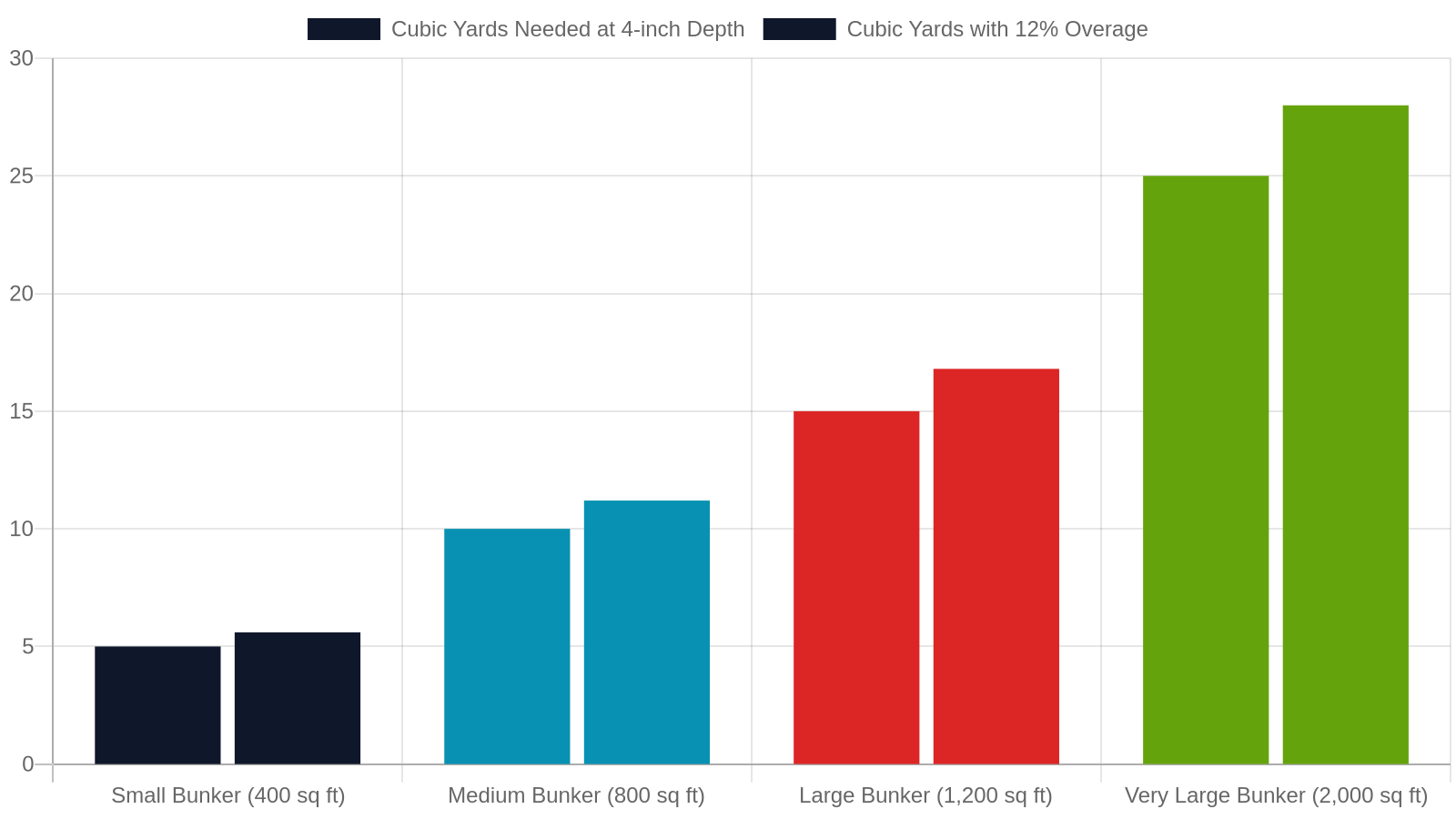
A typical golf course bunker holds between 15 and 40 cubic yards of sand, depending on size and depth. The standard installation depth for bunker sand is 4 inches (approximately 0.33 feet) over the prepared base. To estimate cubic yards, multiply the bunker’s surface area in square feet by 0.33, then divide by 27. For example, a bunker with 800 square feet of surface area needs approximately 10 cubic yards of sand at a 4-inch depth. A full 18-hole course renovation with 50 bunkers averaging 25 cubic yards each would require approximately 1,250 cubic yards total.
Accounting for Waste and Compaction
Always order 10–15% more sand than your calculated volume to account for compaction, spillage during installation, and minor variations in bunker depth. Sand compacts slightly under its own weight and under foot traffic during installation, so the loose volume you order will settle to a slightly smaller installed volume. For large renovations, a 12% overage factor is a common industry rule of thumb. If you’re unsure, err on the side of ordering more — having leftover sand is far less disruptive than running short mid-project.
Using the Jackson Sand Yardage Calculator
Rather than doing the math by hand, use the free yardage calculator on the Jackson Sand website. Enter your bunker dimensions and desired depth, and the tool will calculate the cubic yards you need. This is especially useful when planning multi-bunker renovations where you’re aggregating volumes across many different bunker sizes. Having an accurate number before you call for a quote speeds up the process and helps ensure you’re comparing apples to apples across multiple suppliers.
9. Installation Best Practices for Mid-South Courses

Even the best-specified bunker sand will underperform if it’s installed incorrectly. Installation practices matter as much as material selection, particularly in the Mid-South where weather patterns can stress a newly renovated bunker within days of completion. Here are the key installation guidelines that experienced golf course superintendents in West Tennessee follow to protect their renovation investment.
Timing Your Renovation Around Weather
In West Tennessee, the best windows for bunker renovation are late March through May and September through October. Summer installations risk being disrupted by intense convective storms before the sand has time to settle and compact properly. Winter installations in the Mid-South are possible but slow — cold temperatures reduce crew efficiency and can cause newly installed sand to shift if the ground freezes and thaws. Planning your renovation for spring or fall gives you the best chance of completing installation before the first significant weather event.
Base Preparation Before Sand Placement
The most important step in a bunker renovation happens before a single yard of sand is placed: proper base preparation. The bunker floor and faces should be graded to positive drainage slopes — a minimum of 1% grade on the floor and 3–5% on the faces. Any organic material, old contaminated sand, or soft spots should be removed and the base compacted. Installing new sand over a poorly prepared base is the single fastest way to undo a renovation investment within one or two seasons.
Depth and Compaction During Installation
Sand should be placed in lifts no deeper than 3 inches and lightly tamped before the next lift is added. The final installed depth on bunker floors is typically 4 inches; faces may be slightly shallower (3 inches) to reduce the risk of sand washing down onto the floor after rain. After installation, lightly irrigate the bunker to help the sand settle, then rake to the desired finished grade. Allow at least 48–72 hours before opening the bunker to play, longer if rain is forecast.
Ready to Order Bunker Sand in West Tennessee?
Jackson Sand serves golf courses, athletic fields, contractors, and homeowners across West Tennessee and the surrounding Mid-South. Whether you’re planning a full-course bunker renovation or topping off a few bunkers before the season opens, the team at Jackson Sand can help you select the right material, estimate your quantity, and schedule delivery in their own trucks. Visit the bunker sand page to learn more about available products and spec documentation, or call 731-668-0440 to speak directly with the team. For golf course-specific questions about sand selection and maintenance schedules, the golf course maintenance resources page is a good starting point.
What to Have Ready When You Call
To get an accurate quote quickly, have the following information ready before you call: (1) approximate cubic yards needed (use the yardage calculator if you’re unsure); (2) your delivery address and any site access constraints (gate widths, weight limits on access roads); (3) your target installation date or renovation window; and (4) any specific spec requirements from your architect or agronomist. The more detail you can provide upfront, the faster Jackson Sand can confirm availability and schedule delivery.
Why Local Sourcing Matters for Mid-South Projects
Sourcing bunker sand locally from Jackson, TN rather than from an out-of-state supplier offers several practical advantages: shorter lead times, lower transportation cost, easier reorder for top-off deliveries, and a supplier who understands Mid-South weather and soil conditions. Jackson Sand owns their delivery trucks and mixes sand on their own premises, which means you’re not dealing with a broker who resells material from an unknown source. What you see on the spec sheet is what arrives on the truck.
Frequently Asked Questions
What particle size should bunker sand be?
USGA guidelines recommend bunker sand dominated by medium-sized particles (0.25–0.5 mm), with less than 10% very coarse material, less than 20% fine particles, and less than 3% silt and clay combined. The medium fraction should ideally make up 60–70% of the total sample.
How much does bunker sand cost in the Mid-South?
Bunker sand pricing varies based on volume, material grade, and whether delivery is included. Contact Jackson Sand at 731-668-0440 for a current quote. Always confirm whether delivery is included in the per-yard price before comparing quotes from multiple suppliers.
How many cubic yards of sand does a bunker need?
A typical bunker requires 15–40 cubic yards of sand at a 4-inch installation depth, depending on its surface area. Multiply the bunker's square footage by 0.33 and divide by 27 to estimate cubic yards, then add 10–15% for compaction and waste. Use the free Jackson Sand yardage calculator at jacksonsand.com/yardage-calculator/ for a quick estimate.
What is the minimum infiltration rate for bunker sand?
The USGA recommends a saturated hydraulic conductivity of at least 6 inches per hour for bunker sand. High-quality bunker sands typically test between 10 and 20 inches per hour when properly installed over a gravel drainage layer, which is especially important in high-rainfall regions like West Tennessee.
Can I use fill sand or masonry sand in a golf bunker?
No. Fill sand and masonry sand have wide, inconsistent particle-size distributions, high fines content, and poor drainage rates — typically under 5 inches per hour. Using them in a bunker will result in compaction, standing water after rain, and poor playing conditions. Specification-grade bunker sand is required for acceptable performance.
Does Jackson Sand deliver bunker sand in West Tennessee?
Yes. Jackson Sand is based in Jackson, TN and delivers bunker sand and other aggregate products across West Tennessee and the surrounding Mid-South region using their own trucks. Delivery is included in their pricing. Call 731-668-0440 to discuss your project and schedule delivery.