

How Drainage Basins Improve Water Management on Golf Courses: A Complete Guide
Quick answer: Drainage basins are engineered collection points — catch basins, retention ponds, and infiltration structures — that capture, redirect, and slowly release excess water across a golf course. On a well-designed course, they prevent standing water on fairways and greens, protect root zones from saturation, reduce erosion on slopes, and allow play to resume faster after heavy rain. They work best when paired with surface grading, subsurface pipe networks, and the right aggregate materials. For courses in West Tennessee, where summer storms can drop two or more inches of rain in an hour, a properly sized and maintained drainage basin system is one of the highest-return investments a superintendent can make.
1. What Is a Drainage Basin on a Golf Course?
Before evaluating the benefits of drainage basins, it helps to understand exactly what they are and how they fit into a golf course’s broader water-management system. The term is used loosely in the industry, so let’s pin down the definitions and the most common configurations you’ll encounter on courses across West Tennessee and the Mid-South.
The Basic Definition
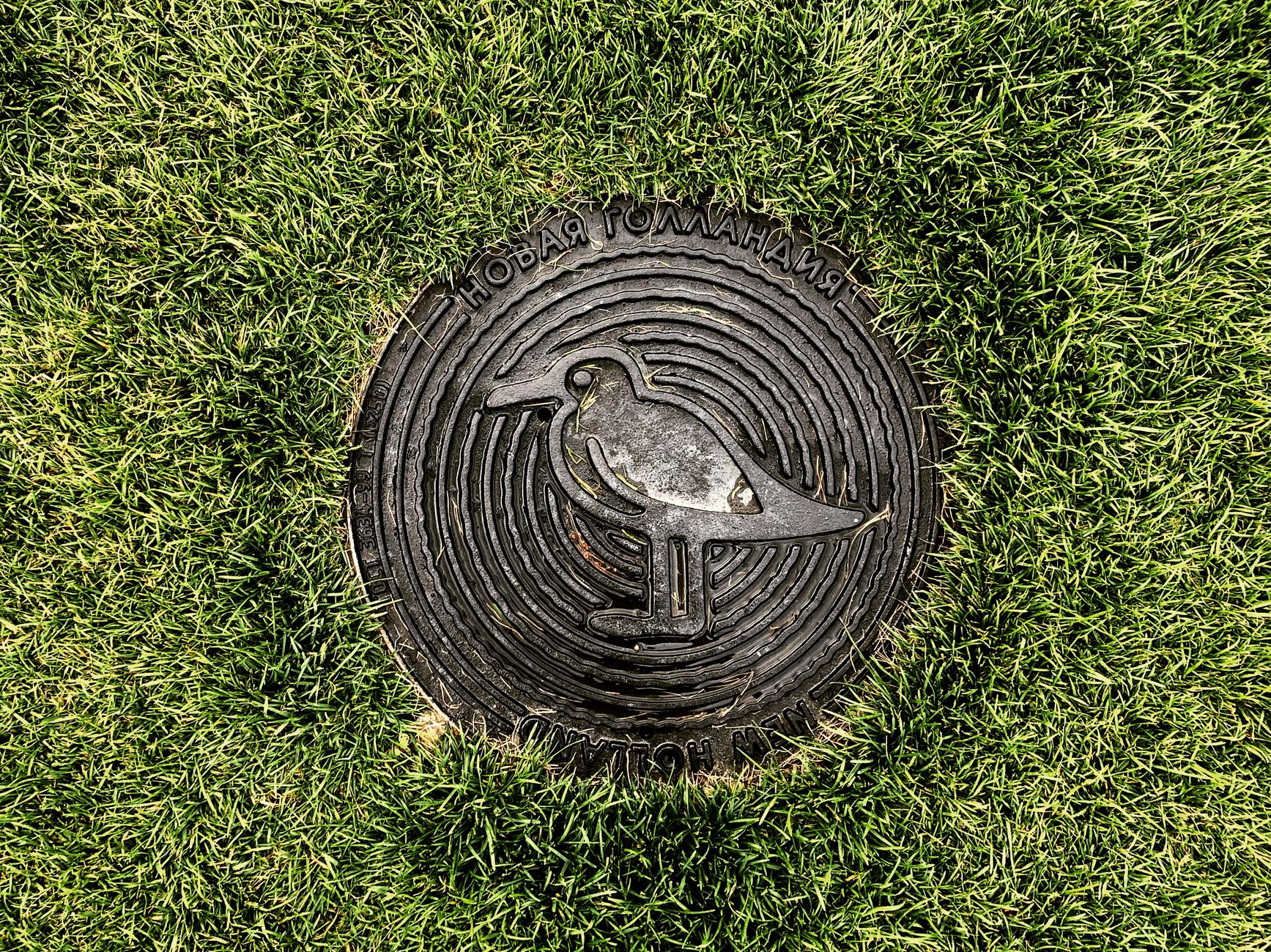
A drainage basin — sometimes called a catch basin, collection basin, or retention basin — is any engineered low point or structure designed to gather surface runoff and channel it safely away from playing surfaces. On a golf course, the term covers a wide range of features: concrete or polymer catch basin boxes set flush with the turf, open retention ponds that double as water hazards, vegetated swales along cart paths, and underground infiltration chambers beneath fairways.
The unifying idea is simple: water always flows downhill, and a drainage basin gives it somewhere intentional to go before it can pool on a green, saturate a bunker, or wash out a cart path embankment.
How Drainage Basins Differ from Simple Pipes
A drain pipe moves water. A drainage basin manages it. The distinction matters because large rain events — common in West Tennessee from April through September — can overwhelm a pipe network if there is no upstream collection point to slow and meter the flow. Basins act as buffers, accepting a surge of runoff and releasing it gradually so downstream pipes and outlets are never overloaded.
Think of it as the difference between a funnel and a bucket. A pipe is the funnel; the drainage basin is the bucket that prevents the funnel from backing up and spilling onto your putting surfaces.
Types Commonly Used on Golf Courses
Golf courses typically use three main basin types, often in combination:
- Catch basins — precast concrete or HDPE boxes with a grated inlet, set at low points in fairways, rough, and cart paths. Water enters the grate, drops into the box, and exits through a lateral pipe.
- Retention and detention ponds — larger open-water features that hold runoff for hours or days, allowing sediment to settle and water to evaporate or percolate.
- Infiltration basins — vegetated depressions filled with permeable aggregate that allow water to soak into the subsoil rather than run off the property entirely.
Each type has a different cost profile, maintenance requirement, and best-fit location on the course layout.
2. Why Water Management Is Critical for Golf Course Health
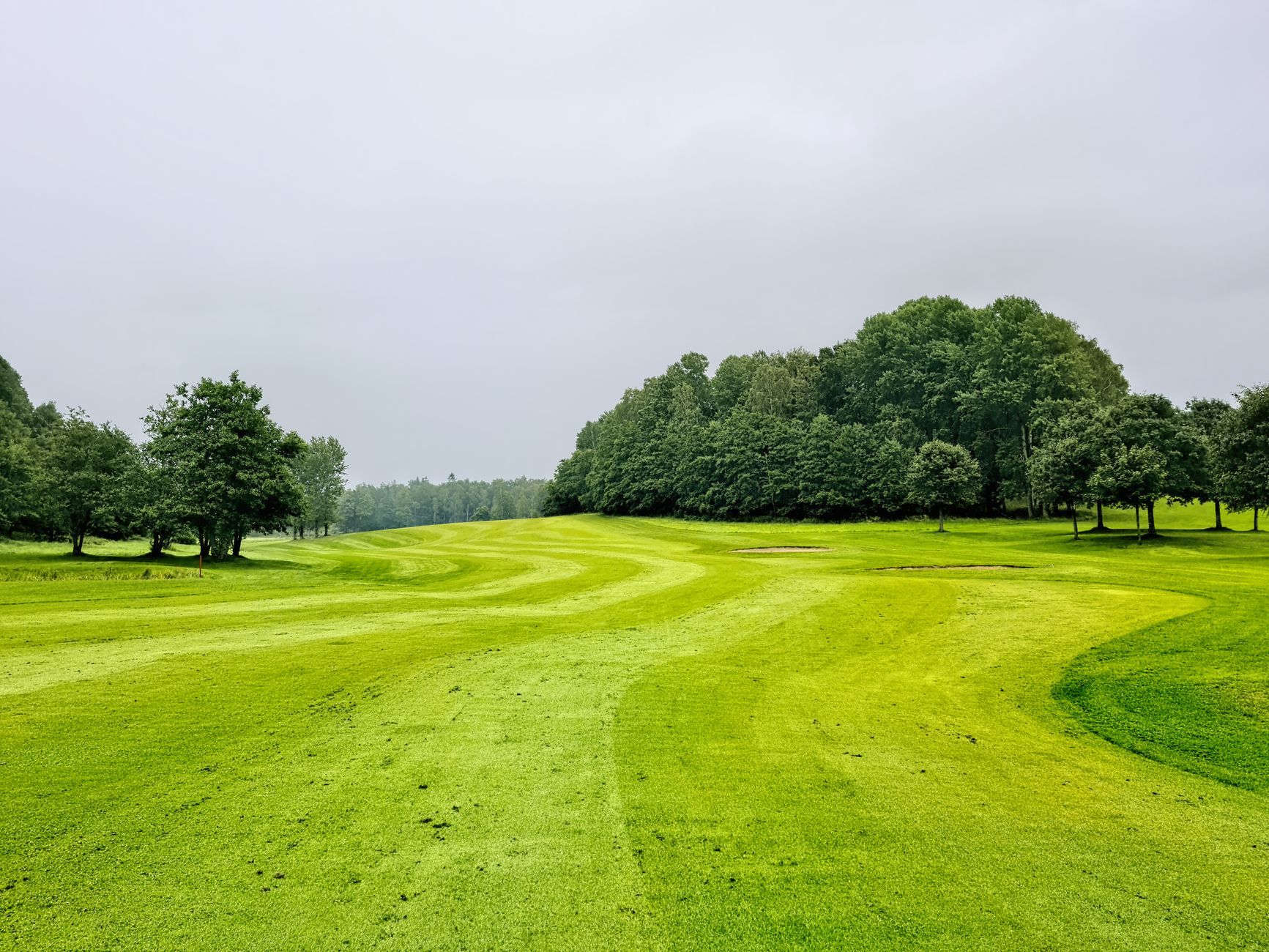
Water is both the lifeblood and the nemesis of a golf course. Too little and turf goes dormant; too much and it drowns, compacts, and becomes a breeding ground for disease. Understanding the stakes of poor water management is the first step toward appreciating why drainage basins deserve a central place in any course improvement plan.
The Hidden Costs of Poor Drainage
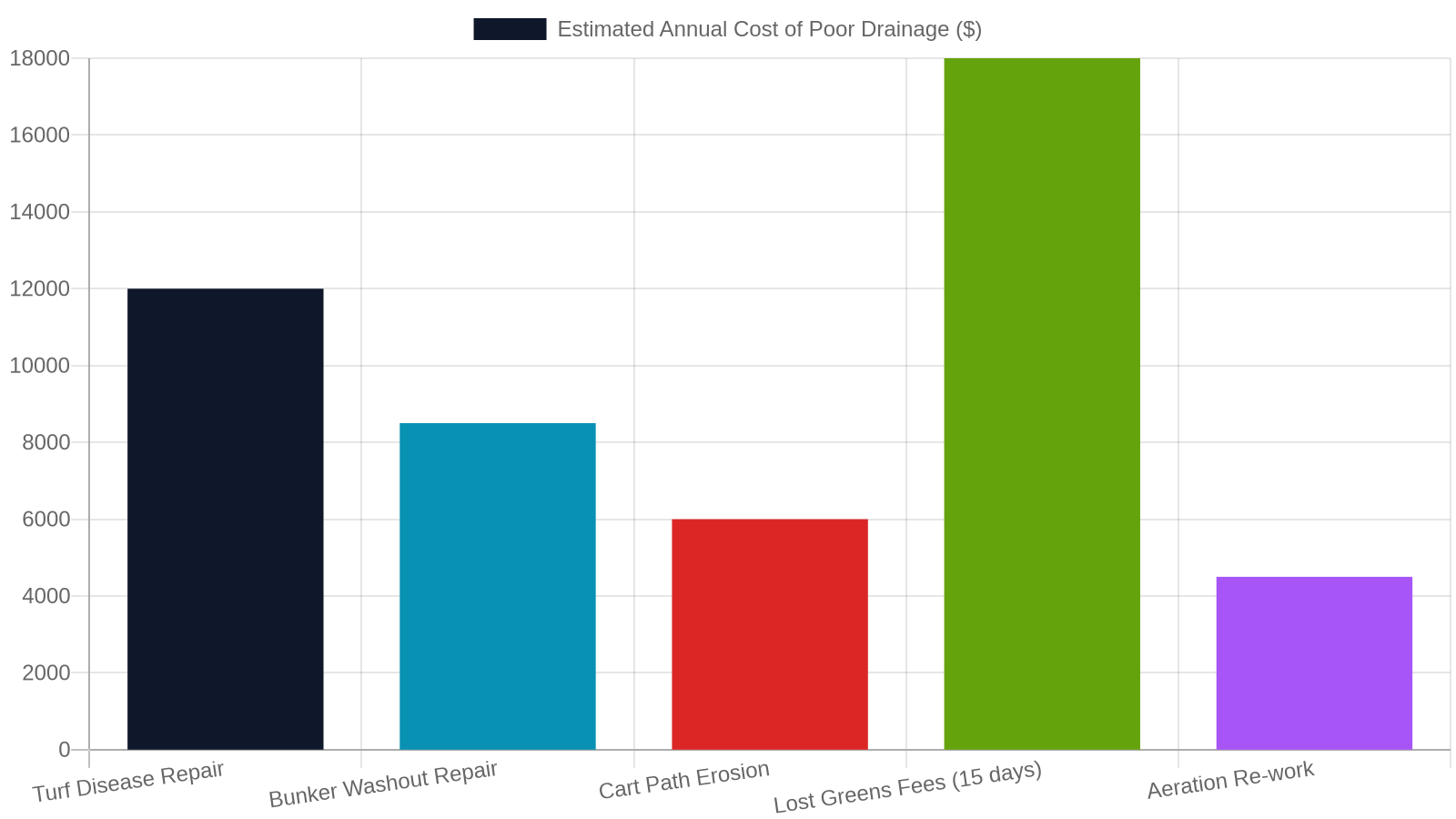
Standing water on a golf course is not just an aesthetic problem. Saturated soil compresses easily under foot traffic and mowing equipment, destroying the pore structure that grass roots depend on for oxygen. A single heavy rain event that leaves fairways wet for 48 hours can undo months of aeration and top-dressing work. Superintendents who deal with chronic drainage failures report higher fungal disease pressure, accelerated thatch buildup, and turf loss that requires costly renovation — sometimes exceeding $10,000 per affected acre.
Playability and Revenue
From a business standpoint, every hour a course is closed or cart-restricted after rain is lost revenue. Industry surveys suggest that a course in a wet climate that improves drainage to the point of opening one additional day per rain event can recover tens of thousands of dollars in greens fees annually. Golfers also rate course conditions as the number-one factor in their satisfaction scores, and “wet, muddy fairways” is consistently the top complaint on review platforms.
In West Tennessee, where spring and early summer routinely bring multi-inch rain events, the difference between a well-drained course and a poorly drained one can translate to 15 to 25 additional playable days per season.
Environmental and Regulatory Considerations
Golf courses are increasingly scrutinized for their water-quality impact on surrounding watersheds. Poorly managed runoff carries fertilizer nutrients, pesticide residues, and fine soil particles into streams and wetlands. A properly designed drainage basin system — especially one that incorporates retention ponds and infiltration areas — acts as a first-line filter, trapping sediment and giving nutrients time to break down before water leaves the property. This is not just good stewardship; in many jurisdictions it is a permit requirement tied to stormwater management plans.
3. How Drainage Basins Actually Work: The Hydraulic Basics
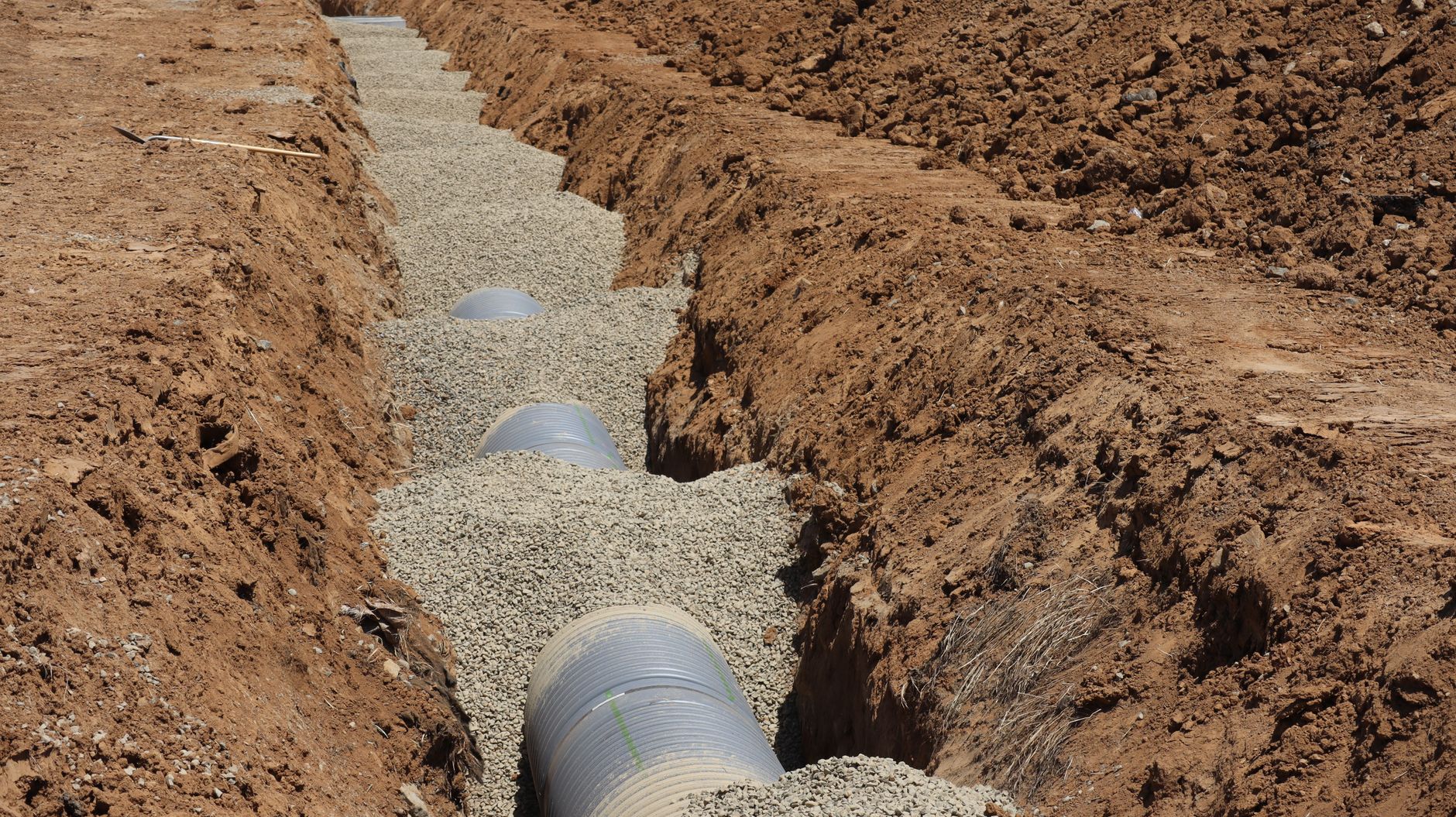
Understanding the hydraulic principles behind drainage basins helps superintendents and contractors make better decisions about placement, sizing, and material selection. You don’t need an engineering degree to follow the logic — water obeys gravity, and basins work by giving that gravity-driven flow a controlled destination.
Gravity, Grade, and Flow Paths
Every drainage system begins with grade — the slope of the land. Engineers and superintendents design course surfaces so that water naturally flows toward collection points rather than pooling in random low spots. A minimum surface slope of 1% (1 foot of drop per 100 feet of run) is the general rule for turf areas, while steeper grades of 2–4% are common near greens and tees where precision drainage is most critical.
Drainage basins are positioned at the terminus of these designed flow paths. When rain falls, water sheets across the turf surface, picks up speed on any slope, and converges at the basin inlet. The basin’s job is to accept that converging flow without backing up.
Inlet Capacity and Pipe Sizing
A catch basin is only as effective as its outlet pipe. Engineers size both the basin volume and the outlet pipe diameter based on the design storm — typically the 10-year or 25-year, 24-hour rainfall event for the region. In West Tennessee, NOAA precipitation data puts the 10-year, 24-hour storm at roughly 5.5 to 6 inches of rain. A basin and pipe network sized for that event will handle the vast majority of storms without surcharging.
Common outlet pipe diameters on golf courses range from 6 inches for small catch basins serving a single low spot, up to 18 or 24 inches for trunk lines that collect from multiple inlets across a fairway corridor.
The Role of Aggregate in Basin Performance
Aggregate — crushed stone, gravel, or coarse sand — plays a critical role in and around drainage basins. It is used as bedding beneath basin boxes to prevent settling, as backfill around perforated lateral pipes to allow water entry, and as the permeable medium inside infiltration basins. The particle size and gradation of the aggregate directly controls how fast water moves through it. A poorly graded aggregate that includes too many fine particles will clog within a few seasons, dramatically reducing basin capacity. Specifying the right material from the start is far cheaper than excavating and replacing a clogged system later.
4. Surface Drainage vs. Subsurface Drainage: Knowing the Difference
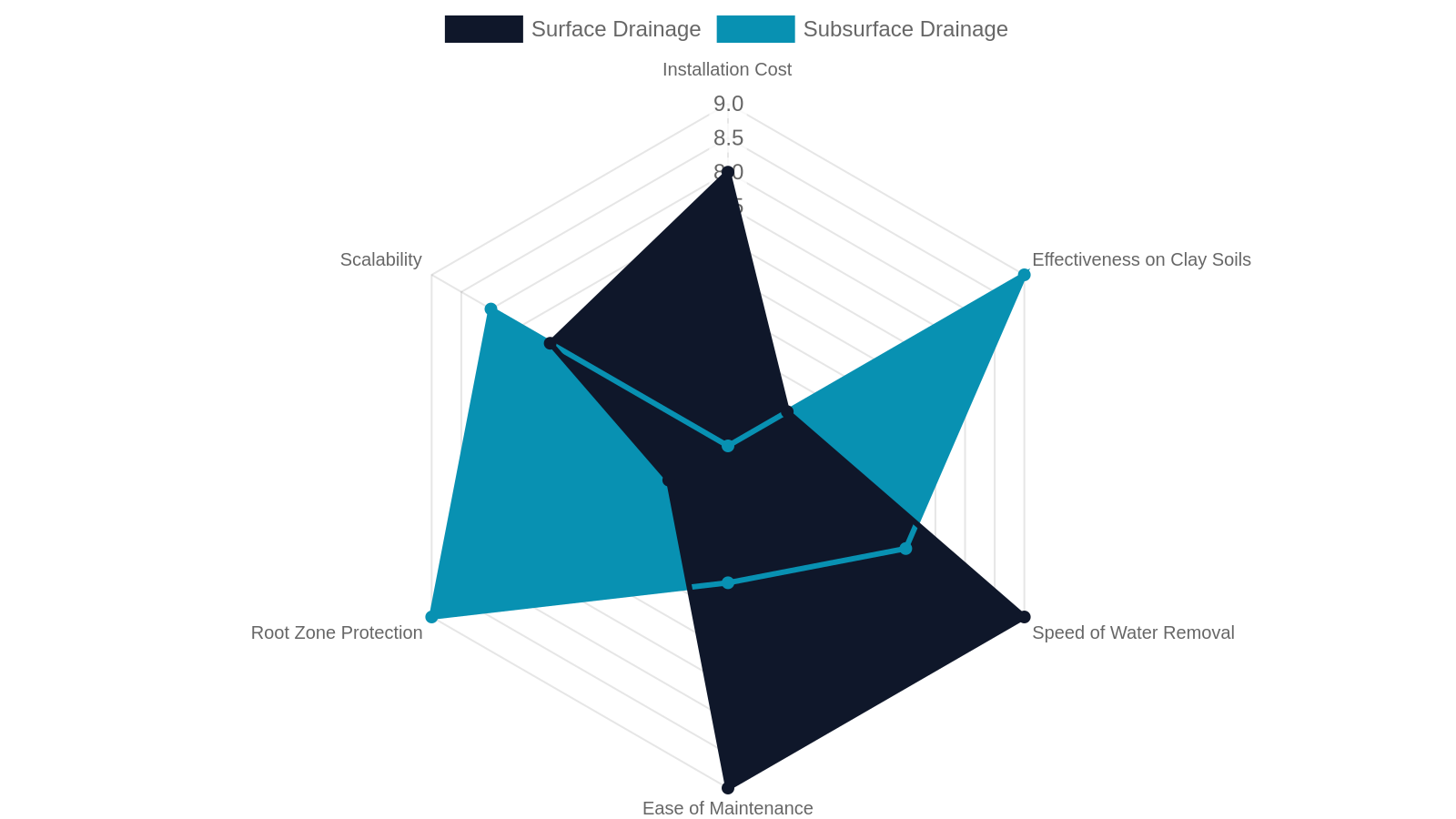
Golf course drainage problems fall into two broad categories: water that sits on top of the soil and water that is trapped within it. Drainage basins address both, but the design approach differs significantly. Knowing which problem you’re solving determines which system — or combination of systems — makes sense for your course.
Surface Drainage Systems
Surface drainage manages water that has not yet entered the soil. It includes grading, swales, catch basins, and open channels. Surface systems are the first line of defense and are most effective when a course has well-designed slopes and minimal low spots. They are relatively inexpensive to install and easy to inspect and clean. Their limitation is that they cannot address water that has already infiltrated the root zone — a saturated soil profile will stay wet even after surface water is removed.
Subsurface Drainage Systems
Subsurface drainage — perforated pipe networks, French drains, and sand-slit or sand-band systems — removes water from within the soil profile. These systems are essential on courses with heavy clay soils that drain slowly, or on greens and tees where root-zone saturation is particularly damaging. They are more expensive to install (typical costs range from $8 to $20 per linear foot of perforated pipe plus aggregate) but provide a level of drainage performance that surface systems alone cannot achieve.
The two systems are complementary, not competing. A drainage basin at the surface collects and removes the bulk of runoff quickly; subsurface laterals connected to the same basin network handle the slower movement of water through the soil profile.
Choosing the Right Approach for Your Course
The right mix of surface and subsurface drainage depends on soil type, rainfall intensity, course budget, and the specific problem areas. A course on sandy loam soils in West Tennessee may get excellent results from surface grading and well-placed catch basins alone. A course on heavy clay may need both surface basins and an extensive subsurface pipe network to achieve the same playability. A drainage audit — walking the course during or immediately after a significant rain — is the most practical way to identify where each approach is needed.
5. Key Benefits of Drainage Basins for Golf Course Superintendents

The return on investment for a well-designed drainage basin system shows up in multiple places on a superintendent’s balance sheet — from reduced repair costs to more playable days to healthier turf that requires less intervention. Here are the most significant benefits, backed by the numbers where data is available.
Faster Recovery After Rain Events
The most immediate benefit superintendents cite is speed of recovery. A course with properly sized drainage basins can shed the bulk of surface water within 2 to 4 hours of a storm ending, compared to 12 to 24 hours or more on a poorly drained course. That difference often determines whether the course opens for afternoon play or loses an entire day’s revenue. Faster recovery also means mowing and maintenance equipment can get back on the turf sooner, keeping the course in tournament-ready condition even during a wet stretch.
Protection of Greens, Tees, and Bunkers
Greens and tees are the most expensive and labor-intensive areas of any golf course to maintain. Both are particularly vulnerable to water damage: greens can develop anaerobic conditions in as little as 24 hours of saturation, killing roots and creating the conditions for Pythium and other water-mold diseases. Bunkers without adequate drainage wash out during heavy rain, requiring sand replacement and reshaping that can cost $2,000 to $5,000 per bunker per season on a poorly drained course.
Drainage basins positioned at the perimeter of greens complexes and at the low points of bunker floors intercept water before it can cause this damage.
Reduced Soil Compaction and Improved Turf Quality
Saturated soils compact dramatically under traffic. Each pass of a mower or cart over wet turf compresses soil pores, reducing oxygen availability to roots and making the compaction problem worse with every subsequent pass. Drainage basins that keep soils from reaching saturation in the first place reduce compaction accumulation between aeration cycles. Superintendents who upgrade drainage consistently report that their turf responds better to fertilizer, holds color longer into drought periods, and requires fewer emergency interventions throughout the season.
6. Aggregate and Sand Selection: The Materials That Make Basins Work
Even the best-designed drainage basin will underperform if it is filled with the wrong aggregate. Material selection is one of the most consequential — and most often overlooked — decisions in a drainage project. Here’s what superintendents and contractors need to know about choosing and sourcing the right materials.
Why Particle Size and Gradation Matter
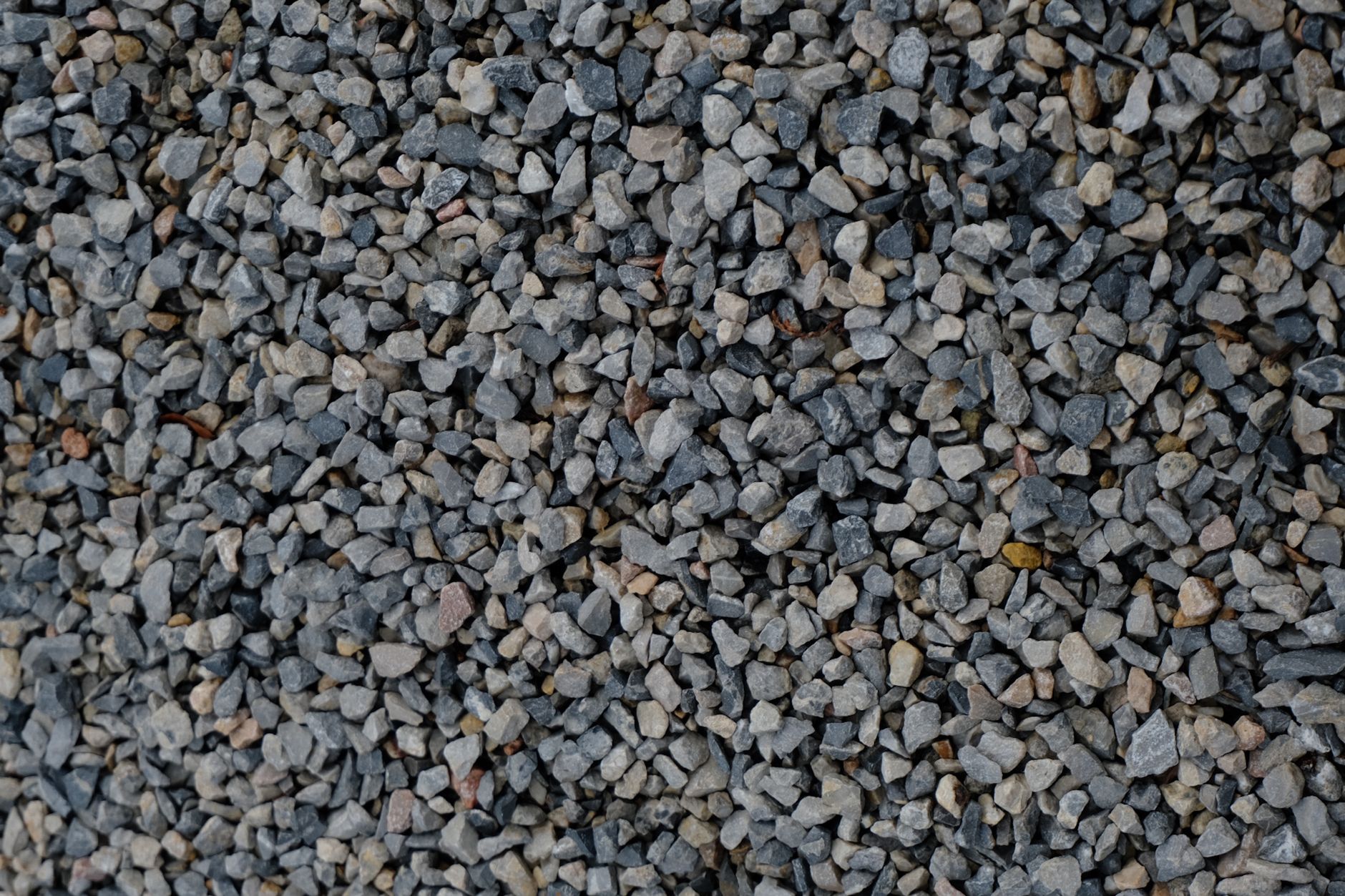
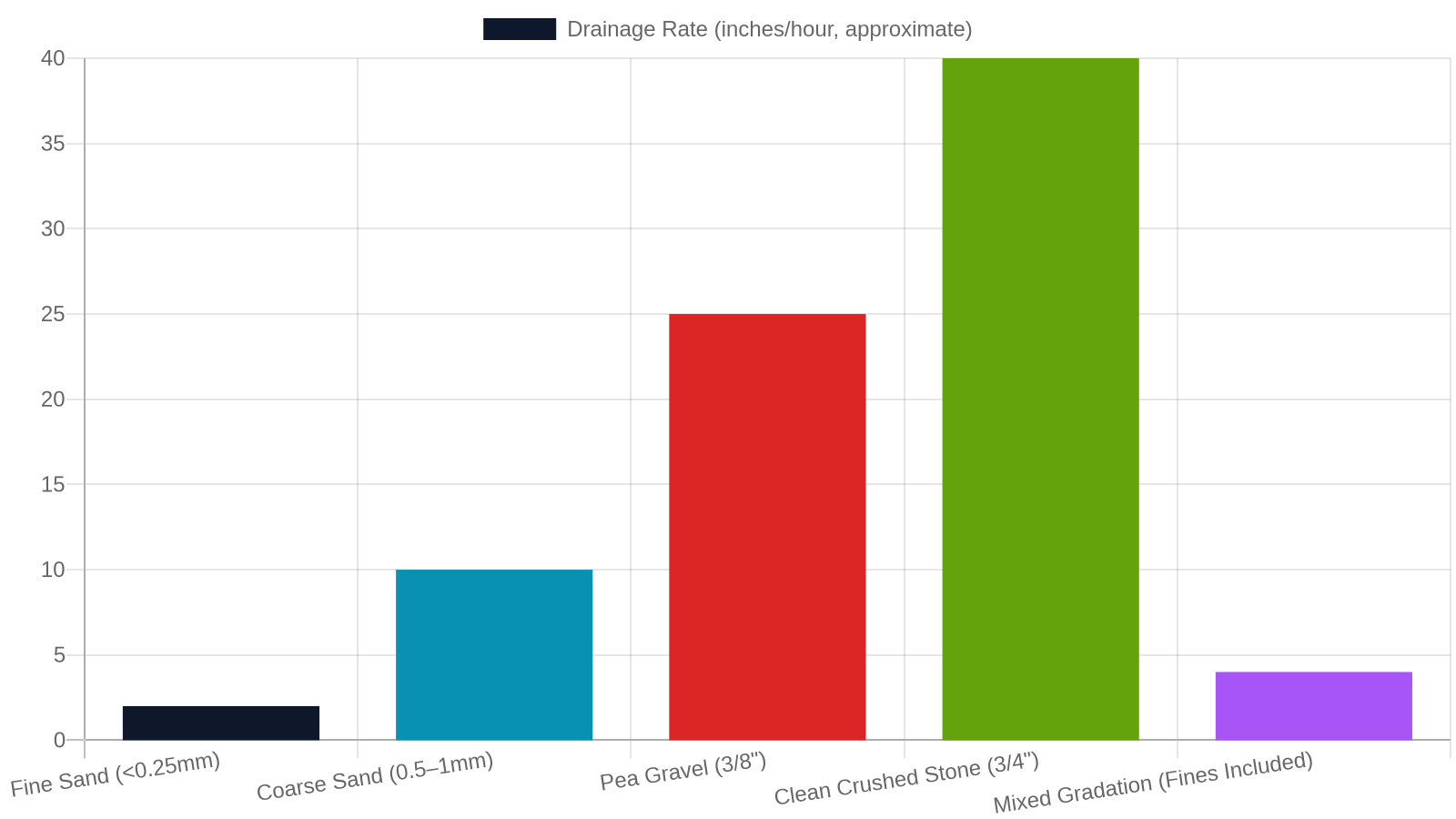
The aggregate used in and around a drainage basin is not a commodity decision. Particle size, shape, and gradation — the distribution of particle sizes within a load — determine how fast water moves through the material, how resistant it is to clogging, and how well it supports the structures around it. A well-graded crushed stone with particles ranging from 3/8 inch to 3/4 inch drains rapidly and resists fine-particle migration. A poorly graded material with too many fines will clog within two to three seasons, turning a drainage feature into a bathtub.
Jackson Sand publishes lab-tested spec sheets for its drainage materials — you can review the sand and aggregate specifications to confirm particle size distribution before ordering.
Coarse Sand vs. Gravel for Different Applications
Coarse sand is the preferred backfill material for perforated lateral pipes and sand-slit drainage systems because its smaller particle size creates a smooth transition between the native soil and the pipe zone, reducing the risk of soil migration into the aggregate. Gravel (typically 3/4-inch clean crushed stone) is preferred as bedding beneath catch basin boxes and as the primary fill in infiltration basins, where higher flow rates are needed.
Mixing the two without a proper filter layer between them is a common installation mistake that leads to premature clogging. Always follow the material specifications provided by your drainage engineer or aggregate supplier.
Sourcing Consistent, Clean Material
Consistency from load to load is critical for drainage aggregate. A supplier who mixes their own material on-premises and delivers in their own trucks — controlling the process from blending to delivery — reduces the risk of contamination or gradation variation between orders. For a multi-phase drainage project that spans several months, you want to know that the material arriving in October matches what was installed in April. Jackson Sand mixes sand and aggregate on its own premises in Jackson, TN, and delivers in company-owned trucks, which keeps loads clean and spec-consistent throughout a project.
7. Designing a Drainage Basin System: Key Planning Steps
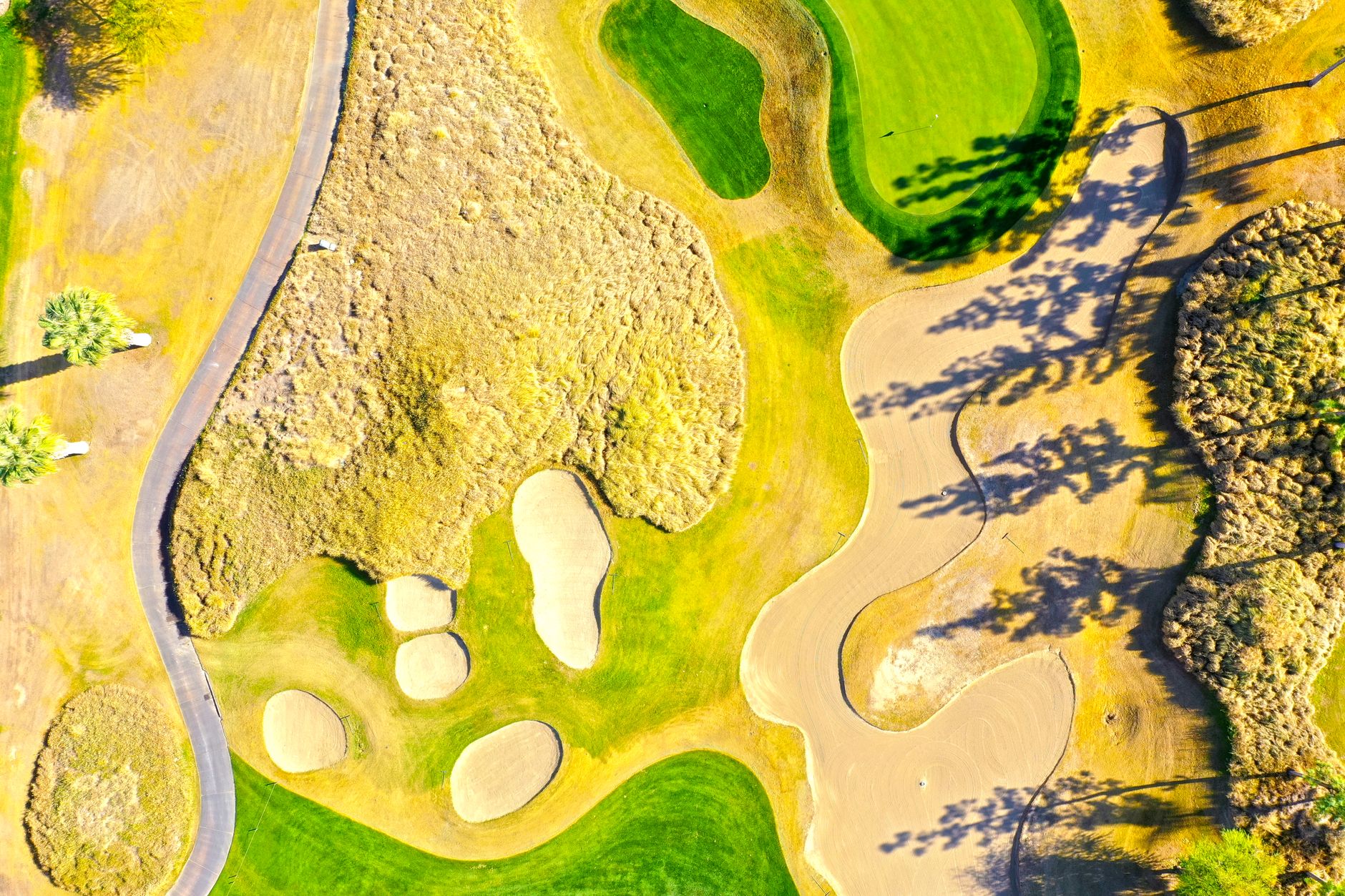
A drainage basin system that works well is not an accident — it is the result of deliberate planning that accounts for rainfall intensity, soil type, topography, and the specific performance goals of the course. Whether you’re working with a drainage engineer or planning a smaller improvement project in-house, these steps provide a practical framework.
Step 1 — Map Your Problem Areas
Start with observation. Walk the course during or immediately after a 1-inch rain event and mark every location where water ponds for more than 30 minutes. Note the approximate size of each ponded area and whether the problem appears to be surface runoff accumulating or water rising from a saturated soil profile. A simple GPS-enabled phone app can record these locations accurately enough for preliminary planning. Photograph each problem spot — these images become valuable reference points when working with a drainage engineer or contractor later.
Step 2 — Determine Contributing Area and Flow Volume
Each drainage basin must be sized to handle the runoff from its contributing area — the total land surface that drains toward it. A rough rule of thumb: for every acre of contributing area on a well-graded turf surface, plan for approximately 1 cubic foot per second of peak flow during a design storm. A drainage engineer can run more precise calculations using local rainfall data from NOAA and the rational method or TR-55 hydrologic model. Getting this sizing right is critical — an undersized basin will surcharge and back up onto the turf; an oversized one wastes budget.
Step 3 — Select Basin Type, Location, and Outlet
Once contributing areas and flow volumes are established, select the basin type that fits each location. Catch basins work well in fairway low points and along cart paths. Retention ponds are appropriate where large volumes need to be stored and where aesthetics can be incorporated into the course design. Infiltration basins work best in areas with permeable soils and no high water table. Every basin needs a defined outlet — a pipe, a channel, or a defined overflow path — that can handle the design flow without eroding surrounding turf. Never design a basin without accounting for where the water goes when it leaves.
8. Maintenance: Keeping Drainage Basins Performing Year After Year

Installing a drainage basin system is an investment; maintaining it is what protects that investment over the long term. Neglected basins lose capacity gradually — often without any obvious visible sign until a major storm reveals the problem. A consistent maintenance routine keeps basins performing at or near their design capacity for decades.
Routine Inspection Schedule
Drainage basins require regular inspection to maintain their design capacity. A practical inspection schedule for most golf courses includes: a post-winter check in late February or March to clear debris that has accumulated over the dormant season; a pre-season inspection in April before the first heavy rains; and a post-storm inspection after any event exceeding 2 inches of rain. During each inspection, check that grate inlets are clear of leaves, grass clippings, and sediment; that basin boxes have no more than 2 to 3 inches of sediment accumulation; and that outlet pipes show no signs of blockage or collapse.
Cleaning and Sediment Removal
Sediment accumulation is the most common cause of reduced basin capacity. A catch basin box that is one-third full of sediment has lost roughly 30% of its storage volume — enough to cause surcharging during a moderate storm. Sediment removal is straightforward with a vacuum truck or a small excavator, and should be done before the basin reaches half-full. For infiltration basins, surface scarification or rototilling can restore infiltration rates that have declined due to fine-particle clogging at the surface. Budget approximately $150 to $400 per catch basin for professional cleaning, depending on sediment volume and access.
Aggregate Replacement and System Upgrades
Even well-maintained aggregate eventually loses its drainage capacity as fine particles migrate into the void spaces over time. Perforated pipe backfill and infiltration basin media typically need partial or full replacement every 10 to 20 years, depending on soil conditions and maintenance quality. When you do replace aggregate, it’s an opportunity to upgrade to a better-specified material. Ordering from a supplier who can provide lab-tested gradation data ensures the replacement material meets the original design specification — or improves on it.
Drainage Basin Types at a Glance: A Side-by-Side Comparison
Not all drainage basins are the same. Use this comparison to match the right basin type to each problem area on your course or field.
9. Drainage Basins on Athletic Fields: Lessons That Apply to Golf

Golf course superintendents don’t have a monopoly on drainage expertise — some of the most innovative water-management techniques have come from the athletic field world, where the pressure to maintain playable surfaces is equally intense and the budgets are often tighter. Here’s what the two worlds share, and what golf can borrow from athletic turf management.
Shared Challenges Between Golf and Athletic Turf
Golf courses and athletic fields face remarkably similar drainage challenges: high-traffic turf on soils that compact easily, intense use that cannot be interrupted by wet conditions, and stakeholders — whether golfers or school administrators — who measure success by how quickly the surface is playable after rain. The drainage basin principles that work on a football field or soccer pitch translate directly to fairways and greens, and vice versa. Superintendents who manage both types of facilities often find that solutions developed for one inform improvements on the other.
Sand-Based Root Zones and Drainage Basin Integration
Both USGA-spec golf greens and high-performance athletic fields increasingly use sand-based root zones — a thick layer of coarse sand that provides excellent drainage and resists compaction. These root zones work in concert with drainage basins: the sand layer moves water quickly to the perforated pipe network below, which carries it to a collection basin at the field perimeter. The system only works if every component — sand gradation, pipe sizing, and basin capacity — is matched to the others. A coarse sand root zone draining into an undersized basin is like a high-flow faucet draining into a small cup.
Cost Comparisons Between Field Types
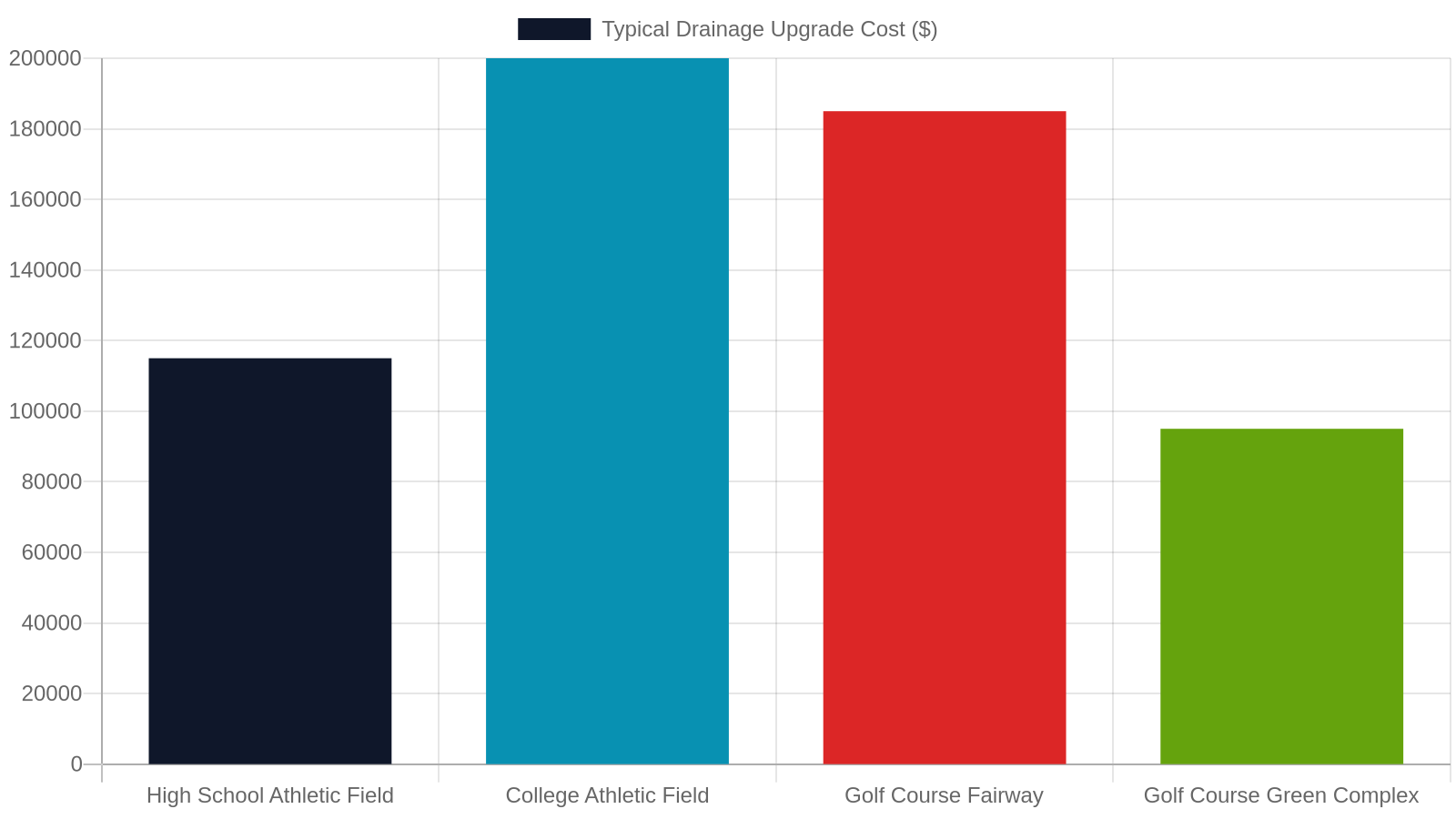
Athletic field drainage systems are often installed at a lower per-acre cost than golf course systems because the geometry is simpler and the aesthetic requirements are less demanding. A typical high school football field drainage upgrade — perforated pipe grid, catch basins at the sidelines, and connection to a storm sewer — might run $80,000 to $150,000. A comparable fairway drainage project on a golf course, with the added complexity of integrating into the course aesthetic and protecting existing turf, often runs $120,000 to $250,000 per fairway corridor. Understanding these benchmarks helps facility managers set realistic budgets and prioritize the highest-impact improvements first.
10. Common Drainage Basin Mistakes and How to Avoid Them
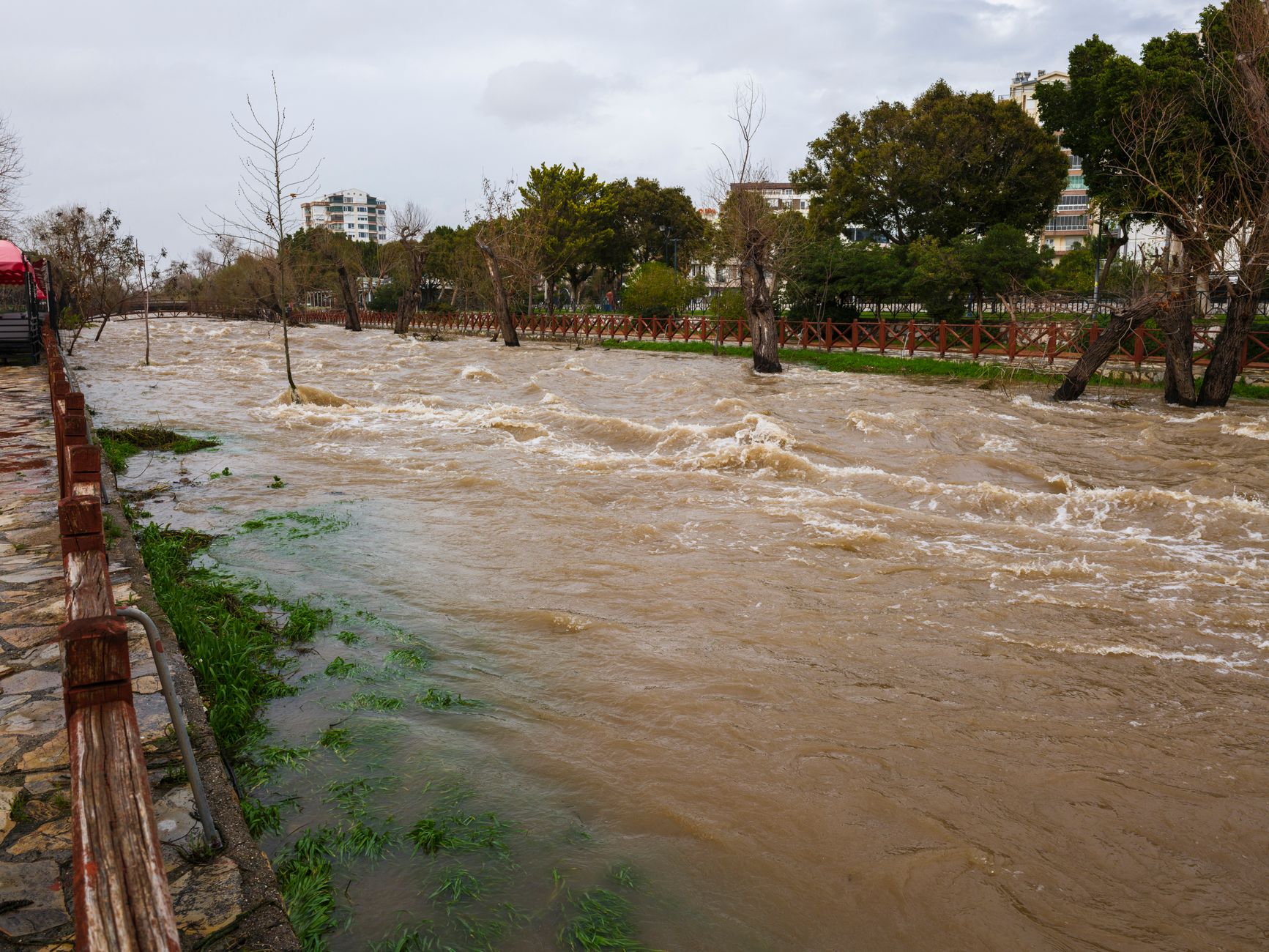
Even well-intentioned drainage projects can underperform if common planning and maintenance mistakes are made. These are the errors that drainage engineers and experienced superintendents see most frequently — and the straightforward steps that prevent them.
Undersizing the Basin or Outlet Pipe
The most common and costly mistake is designing for average rainfall rather than the design storm. A basin that handles a 1-inch rain perfectly will surcharge and back up during a 3-inch event — which is exactly the kind of event that causes the most damage. Always size drainage infrastructure for the 10-year or 25-year storm event using local NOAA precipitation data. The incremental cost of a larger basin box or a larger outlet pipe at installation is a fraction of the cost of excavating and replacing an undersized system after the fact.
Poor Outlet Design and Erosion at Discharge Points
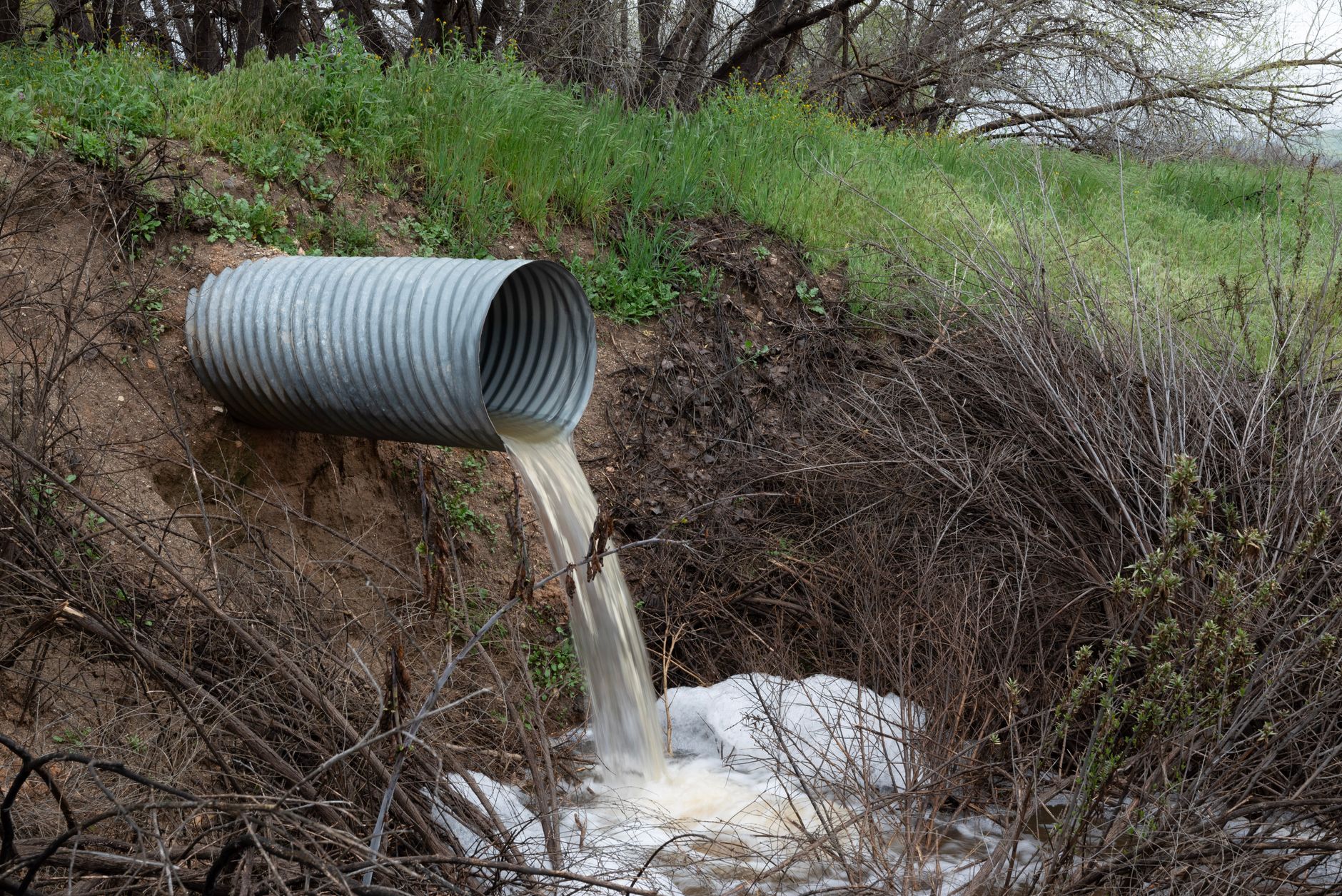
A drainage basin that collects and conveys water efficiently can still cause significant damage if its outlet discharges onto unprotected turf or soil at high velocity. Erosion at discharge points is one of the most common secondary problems in golf course drainage. The fix is straightforward: riprap aprons (loose stone placed at the outlet), energy dissipators, or discharge into an established channel or pond. Never allow a basin outlet pipe to terminate in mid-air above a slope without erosion protection below it.
Neglecting Maintenance Until Failure
Drainage basins fail gradually, not suddenly. A basin that was cleaning up a low spot perfectly five years ago may now be operating at 60% capacity due to sediment accumulation — and the superintendent may not realize it until a moderate storm causes unexpected ponding. Proactive maintenance is always cheaper than reactive repair. Set calendar reminders for inspections, keep a simple log of sediment depth in each basin box, and clean before the basin reaches half capacity. This discipline pays for itself many times over across the life of the system.
11. Jackson Sand's Drainage Materials for West Tennessee Courses

For golf courses, athletic fields, and contractors across West Tennessee, having a reliable local source for drainage aggregate — one that can document material quality and deliver consistently — makes a measurable difference in project outcomes. Here’s how Jackson Sand supports drainage projects from material selection through delivery.
What Jackson Sand Supplies
Jackson Sand supplies the drainage aggregate, sand, and gravel that go into catch basin installations, perforated pipe backfill, infiltration basin media, and surface drainage channels across West Tennessee and the Mid-South. Products include coarse drainage sand, clean crushed gravel, and specialty aggregates suited to golf course and athletic field applications. All materials are mixed on Jackson Sand’s own premises at 139 United Dr., Jackson, TN, and delivered in company-owned trucks — which means the gradation and cleanliness of what leaves the yard is what arrives on your site.
Lab-Tested Specs and the Yardage Calculator
One of the most common questions from contractors and superintendents is: “How do I know the material meets spec?” Jackson Sand addresses this directly by publishing lab-tested specification sheets for its sand and aggregate products. Before you order, you can review the sand specifications to confirm that particle size distribution, uniformity coefficient, and other key parameters match your project requirements.
Estimating how much material you need is equally important. Use the free yardage calculator on the Jackson Sand website to convert your basin dimensions or pipe trench lengths into cubic yards — so your order is accurate and you’re not paying for material you don’t need or making a second trip for material you’re short on.
Delivery Included — Large and Small Jobs
Jackson Sand serves both large commercial projects — multi-phase golf course drainage renovations, school athletic field upgrades, contractor site-work — and smaller residential jobs where a homeowner needs a few yards of gravel for a yard drainage fix. Delivery is included, handled by Jackson Sand’s own truck fleet. Whether you’re ordering 5 yards or 500, you deal directly with the same team that mixed the material and loaded the truck. That continuity reduces the miscommunications and substitution surprises that can derail a drainage project.
Ready to Improve Drainage on Your Course or Field?

Improving water management on a golf course or athletic field in West Tennessee doesn’t have to be an overwhelming project. With the right plan, the right materials, and a reliable local supplier, you can make meaningful improvements that pay back in better turf, more playable days, and lower long-term maintenance costs. Here’s how to take the next step.
Start with a Drainage Assessment
The best time to address a drainage problem is before the next heavy rain makes it worse. If you’re managing a golf course or athletic field in West Tennessee and you’re dealing with recurring wet spots, bunker washouts, or turf loss after rain events, a drainage assessment is the logical first step. Walk your site with a critical eye, identify the contributing areas for each problem zone, and sketch out where drainage basins could intercept runoff before it reaches the turf. That field observation, combined with a conversation with an experienced drainage contractor, will give you a clear picture of what’s needed and what it will cost.
Get the Right Materials from a Local Source
Once your drainage plan is in place, sourcing the right aggregate from a reliable local supplier is the next critical step. Explore the full range of drainage basin materials and services at Jackson Sand to see what’s available for your project — from coarse drainage sand and clean gravel to complete drainage aggregate packages for catch basin installations and infiltration systems.
Jackson Sand serves golf courses, athletic fields, contractors, and homeowners across Jackson, TN, and the surrounding West Tennessee and Mid-South region. Delivery is included in company-owned trucks, and material specs are available before you order so there are no surprises on delivery day.
Call Jackson Sand Today
Ready to get started? The team at Jackson Sand is available to discuss your drainage aggregate needs, help you estimate quantities, and schedule delivery. Call 731-668-0440 to speak directly with the Jackson Sand team in Jackson, TN. Whether you’re planning a full course drainage renovation or need a few yards of gravel for a targeted fix, Jackson Sand has the materials and the delivery capability to support your project from start to finish.
Frequently Asked Questions
How many drainage basins does a golf course typically need?
There is no universal number — it depends entirely on the course's topography, soil type, and rainfall patterns. A typical 18-hole course in a region with moderate to heavy rainfall might have anywhere from 50 to 200 catch basin inlets distributed across fairways, greens approaches, and cart paths, plus one or more retention ponds. A drainage audit after a significant rain event is the most reliable way to determine how many additional basins your specific course needs.
What type of aggregate is best for drainage basin backfill on a golf course?
Clean, well-graded crushed stone (typically 3/8-inch to 3/4-inch) is the standard choice for catch basin bedding and infiltration basin fill. Coarse sand with a uniformity coefficient below 3.5 is preferred for perforated pipe backfill and sand-slit systems. The key requirement for any drainage aggregate is that it be free of fines — material passing the #200 sieve — which clog void spaces and dramatically reduce drainage rates over time. Always request a lab-tested gradation report from your supplier.
How long does it take for a golf course to drain after a heavy rain with a proper drainage basin system?
A well-designed drainage basin system can clear surface water from fairways and rough within 2 to 6 hours after a 2-inch rain event. Greens with sand-based root zones and perforated pipe networks can drain even faster — sometimes within 1 to 2 hours. Courses without adequate drainage may take 12 to 48 hours or more to reach a playable condition after the same storm.
Can I add drainage basins to an existing golf course without major renovation?
Yes. Targeted catch basin installations at specific problem low points can often be completed with minimal disruption to surrounding turf. A typical catch basin installation — excavating the box location, setting the precast unit, connecting the outlet pipe, and restoring the surface — can be completed in one to two days per location. More extensive improvements, such as adding a perforated pipe network across an entire fairway, require more significant turf disturbance and are best scheduled during the dormant season.
Does Jackson Sand deliver drainage aggregate to golf courses outside of Jackson, TN?
Jackson Sand serves golf courses, athletic fields, and contractors across West Tennessee and the surrounding Mid-South region, delivering in company-owned trucks. Contact Jackson Sand at 731-668-0440 to discuss delivery for your specific location and project size.
How do drainage basins affect water quality in streams near a golf course?
Properly designed drainage basins — especially retention and infiltration basins — improve water quality by slowing runoff and allowing sediment, nutrients, and other particles to settle out before water leaves the property. A catch basin system alone moves water faster but does not provide significant water-quality treatment. For courses near sensitive waterways, combining catch basins with a downstream retention pond or vegetated buffer provides the best combination of drainage performance and water-quality protection.