
Sand and Aggregate Supply in West Tennessee: 8 Things That Shaped the Industry
Quick answer: West Tennessee's sand and aggregate industry grew from the region's rich geological deposits along the Tennessee and Mississippi River corridors. For decades, local suppliers have mined, processed, and delivered sand, gravel, and drainage materials to golf courses, athletic fields, contractors, and homeowners across the Mid-South. Jackson Sand, based in Jackson, TN, carries that tradition forward by mixing sand on-site, owning its delivery trucks, and serving both large commercial accounts and individual homeowners throughout West Tennessee. Call 731-668-0440 to discuss your project.
1. The Geology That Made West Tennessee a Natural Source

Before there were aggregate companies, there was geology. West Tennessee sits atop one of the most sand-rich landscapes in the American South, shaped by ancient river systems that left behind vast deposits of workable material. Understanding that foundation helps explain why this region became a reliable source of sand and aggregate for construction, turf management, and drainage projects across the Mid-South.
River Corridors and Alluvial Deposits
The Tennessee River, the Mississippi River, and their many tributaries have spent millions of years depositing sand, silt, and gravel across the lowlands and terraces of West Tennessee. These alluvial deposits — sediments carried downstream and settled over time — created some of the most accessible and workable sand reserves in the entire Mid-South region.
- Particle variety: Alluvial action naturally sorts particles by size, producing fine sands ideal for top dressing and coarser gravels suited to drainage and base work.
- Shallow depth: Many deposits sit close to the surface, making extraction practical and cost-effective compared to hard-rock quarrying.
- Consistent quality: River-deposited sand tends to be well-rounded and relatively clean, requiring less processing before it meets turf or construction specifications.
Why Particle Size Matters More Than Most People Realize
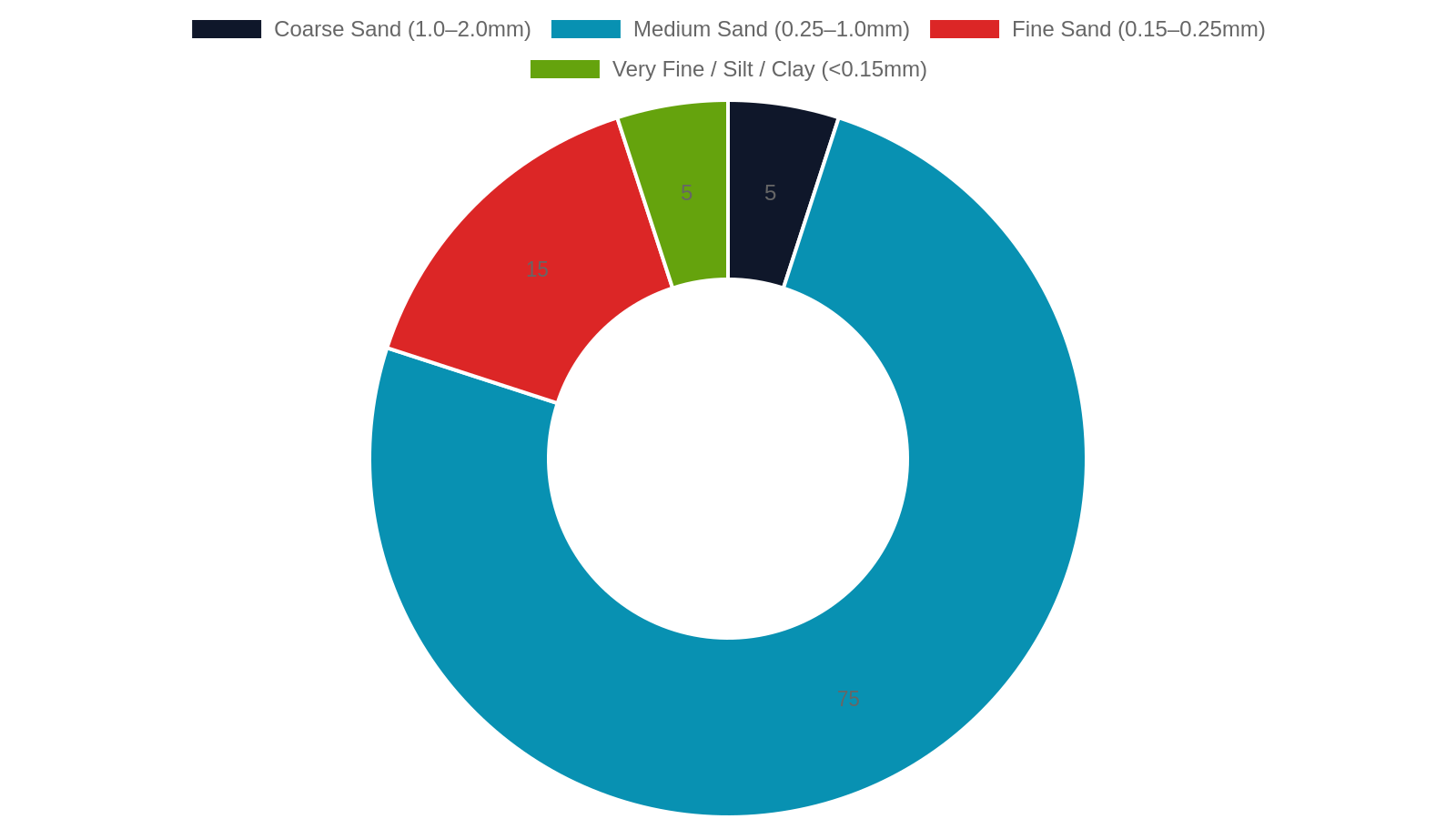
Not all sand is the same, and West Tennessee’s geology delivers a useful range. Particle size distribution — the percentage of fine, medium, and coarse grains in a given batch — directly determines whether sand will drain properly in a golf bunker, compact correctly under an athletic field, or flow freely through an aeration machine. The United States Golf Association (USGA) recommends that bunker sand particles fall predominantly between 0.25 mm and 1.0 mm, with strict limits on fine particles below 0.15 mm that can cause crusting and contamination. West Tennessee’s alluvial sands often fall naturally within workable ranges, though blending and testing are still essential to hit precise specs.
2. Early Industry: From River Barges to Local Mills

The commercial sand and aggregate industry in West Tennessee didn’t emerge overnight. It evolved over decades, shaped by transportation infrastructure, population growth, and the steady expansion of construction activity across the Mid-South. Tracing that arc helps explain the structure of the industry as it exists today — and why local, vertically integrated suppliers matter so much in this market.
The Barge Era and Bulk Transport
Through much of the early and mid-20th century, bulk sand and gravel in West Tennessee moved primarily by water. The Mississippi and Tennessee Rivers served as natural highways, with barges hauling aggregate from extraction points to river towns where it was offloaded and distributed by wagon, and later by truck. Jackson, TN, positioned roughly 80 miles east of the Mississippi and connected by rail, became a natural distribution hub for materials moving inland from river operations.
This era established a pattern that still shapes the industry: aggregate supply is inherently local. The weight and bulk of sand and gravel make long-distance hauling expensive, so suppliers who could source, process, and deliver within a regional footprint held a clear competitive advantage.
The Rise of Local Processing Operations
As road construction expanded across West Tennessee in the post-World War II decades, demand for aggregate surged. Local processing mills — facilities that could wash, screen, and grade raw material into specification-ready products — began appearing across the region. These operations reduced dependence on distant suppliers and allowed contractors to order material sized to their exact project needs.
- Washing: Removes clay, silt, and organic matter that would compromise concrete or turf performance.
- Screening: Separates particles by size using vibrating mesh screens, producing consistent gradations.
- Blending: Combines different size fractions to hit a target specification, such as a USGA bunker sand profile.
These capabilities — once rare — are now considered baseline expectations for any serious aggregate supplier serving professional turf or construction markets.
3. How Agriculture and Turf Management Drove New Demand

The aggregate industry in West Tennessee didn’t grow only because of construction booms. A quieter but equally important driver was the transformation of the region’s recreational and athletic landscape. As golf courses multiplied and organized sports programs expanded, a new class of buyers emerged — turf professionals who needed sand that performed to published specifications, not just sand that was cheap and available.
Cotton Country Transitions to Turf
West Tennessee was historically dominated by row-crop agriculture — cotton, soybeans, and corn across the flat, fertile bottomlands. But beginning in the 1960s and accelerating through the 1980s and 1990s, the region saw significant investment in golf courses, municipal parks, and organized sports facilities. Each of these end uses created new demand for specialty sands that standard construction aggregate couldn’t satisfy.
Golf course construction, in particular, pushed suppliers to think differently. A bunker or putting green isn’t just a hole in the ground filled with sand — it’s an engineered drainage system with specific permeability, firmness, and playability requirements. Suppliers who could meet those specs earned long-term relationships with course superintendents across the Mid-South.
Athletic Fields and the Sand-Based Root Zone
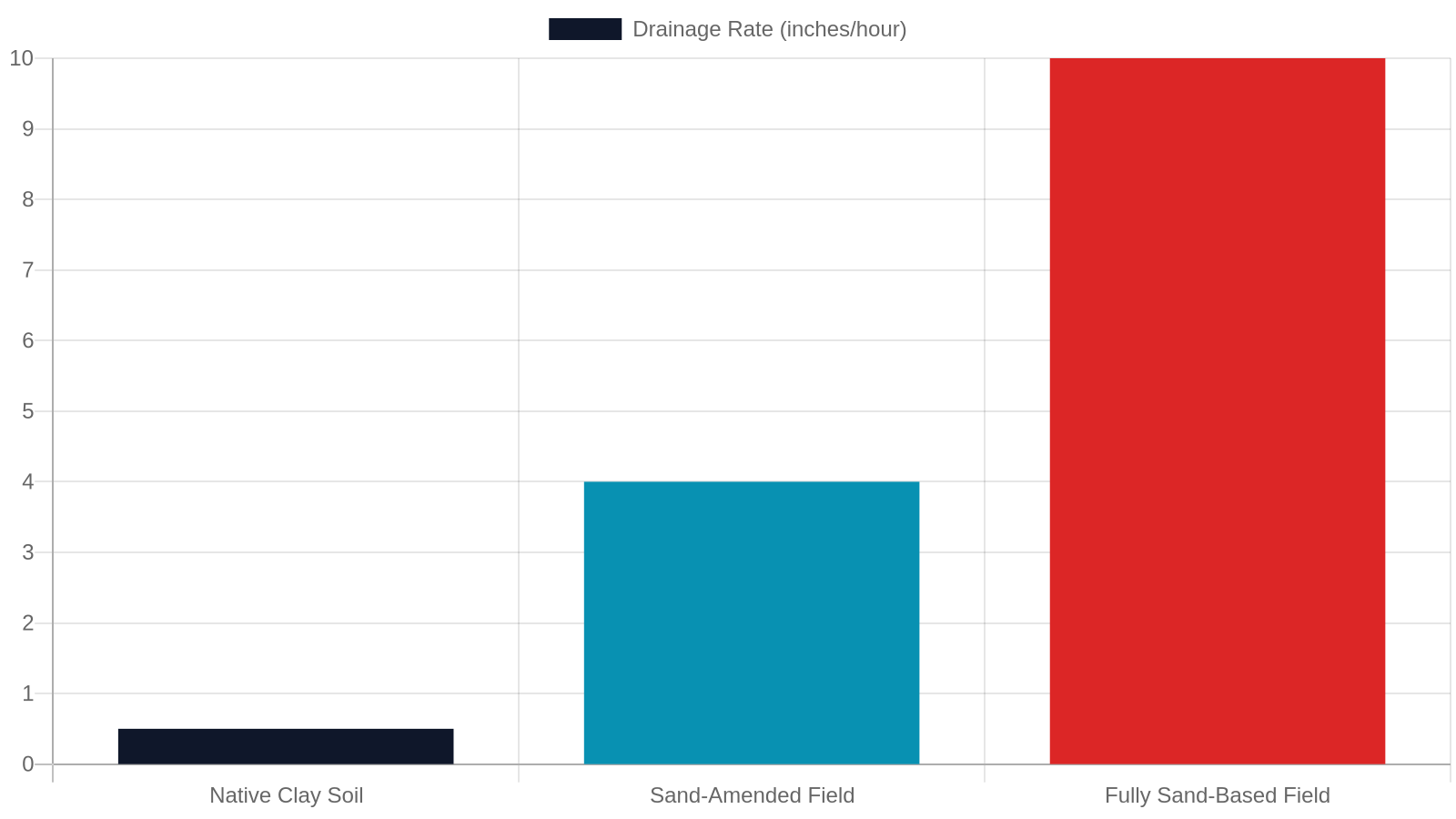
Parallel to golf, the growth of organized youth and scholastic athletics in Tennessee created demand for sand-based athletic field construction. Sand-based root zones drain faster than native soil fields, reducing downtime after rain and lowering the risk of compaction injuries to players. By the 1990s, many Tennessee school districts and parks departments were specifying sand-amended or fully sand-based fields for football, baseball, and soccer.
- A properly constructed sand-based field can drain at rates exceeding 10 inches per hour, compared to 0.5 inches per hour or less for native clay soils common in West Tennessee.
- Sand topdressing programs — applying thin layers of sand to existing turf — became standard maintenance practice for fields that couldn’t be rebuilt from scratch.
- This created a recurring, seasonal demand for consistent, spec-tested sand that local suppliers were well-positioned to fill.
4. The USGA Specification Era and What It Changed

One of the most consequential developments in the modern aggregate industry wasn’t a piece of equipment or a new deposit — it was a document. The USGA’s green construction specifications transformed how golf courses were built and, by extension, how sand suppliers operated. The ripple effects reached every serious turf sand supplier in the Mid-South, including those serving West Tennessee’s growing number of golf facilities.
Why the USGA Method Became the Industry Standard
In 1960, the United States Golf Association published its first guidelines for putting green construction. Revised significantly in 1993 and updated periodically since, the USGA Method prescribes a specific sand-based root zone mix, drainage layer, and gravel blanket designed to produce greens that drain rapidly while retaining enough moisture and nutrients for healthy turf. The method is now used on thousands of courses worldwide and has become the default specification language between golf course architects, superintendents, and sand suppliers.
For suppliers in West Tennessee, the USGA era meant one thing above all: you had to test your sand. Particle size distribution, infiltration rate, organic matter content, and other parameters had to be documented and shared with buyers. Suppliers who couldn’t produce lab-tested spec sheets lost bids to those who could.
Lab Testing as a Competitive Differentiator
Today, reputable aggregate suppliers publish sand specification sheets that document key physical properties for each product. These documents allow turf managers and contractors to verify that the sand they’re ordering will actually perform as needed before a single load is delivered. Key parameters typically reported include:
- Particle size distribution: Percentage of material in each size fraction (coarse, medium, fine, very fine, silt, clay)
- Infiltration rate: How quickly water moves through a column of the sand, measured in inches per hour
- Bulk density: Weight per unit volume, relevant for calculating how much sand a job requires
- Organic matter content: Should be very low for bunker and green construction
Jackson Sand publishes lab-tested spec sheets for its products — you can review them at jacksonsand.com/sand-specs/ before placing an order.
5. Infrastructure Growth and the Contractor Market
Sand and aggregate supply in West Tennessee has never been limited to golf courses and athletic fields. The contractor market — site work, road building, drainage engineering, and commercial construction — represents the backbone of regional aggregate demand. Understanding how that market evolved helps explain why suppliers who can handle both specialty turf products and bulk construction materials hold a distinct advantage.
Road Building, Site Work, and the Gravel Economy
While turf professionals drove demand for specialty sands, the larger volume market for aggregate in West Tennessee has always been construction. Road building, bridge approaches, utility trenching, and commercial site work all consume enormous quantities of gravel, crushed stone, and base material. Tennessee’s steady population growth and ongoing highway investment have kept that demand elevated for decades.
Contractors in the Mid-South learned quickly that aggregate supply logistics could make or break a project schedule. A delayed or inaccurate load — the wrong gradation, a short-measured truck, contaminated material — could halt a pour or force costly rework. Suppliers who owned their own trucks and controlled their own loading processes earned reputations for reliability that translated directly into repeat business.
Surface Drainage and the Engineered Landscape
As development spread across West Tennessee’s flat terrain, surface drainage became a critical engineering challenge. Flat topography doesn’t naturally shed water, and poorly drained sites create flooding, erosion, and structural problems for buildings and roads. Aggregate plays a central role in engineered drainage solutions:
- Drainage basins: Gravel-filled collection points that slow and filter runoff before it enters storm systems
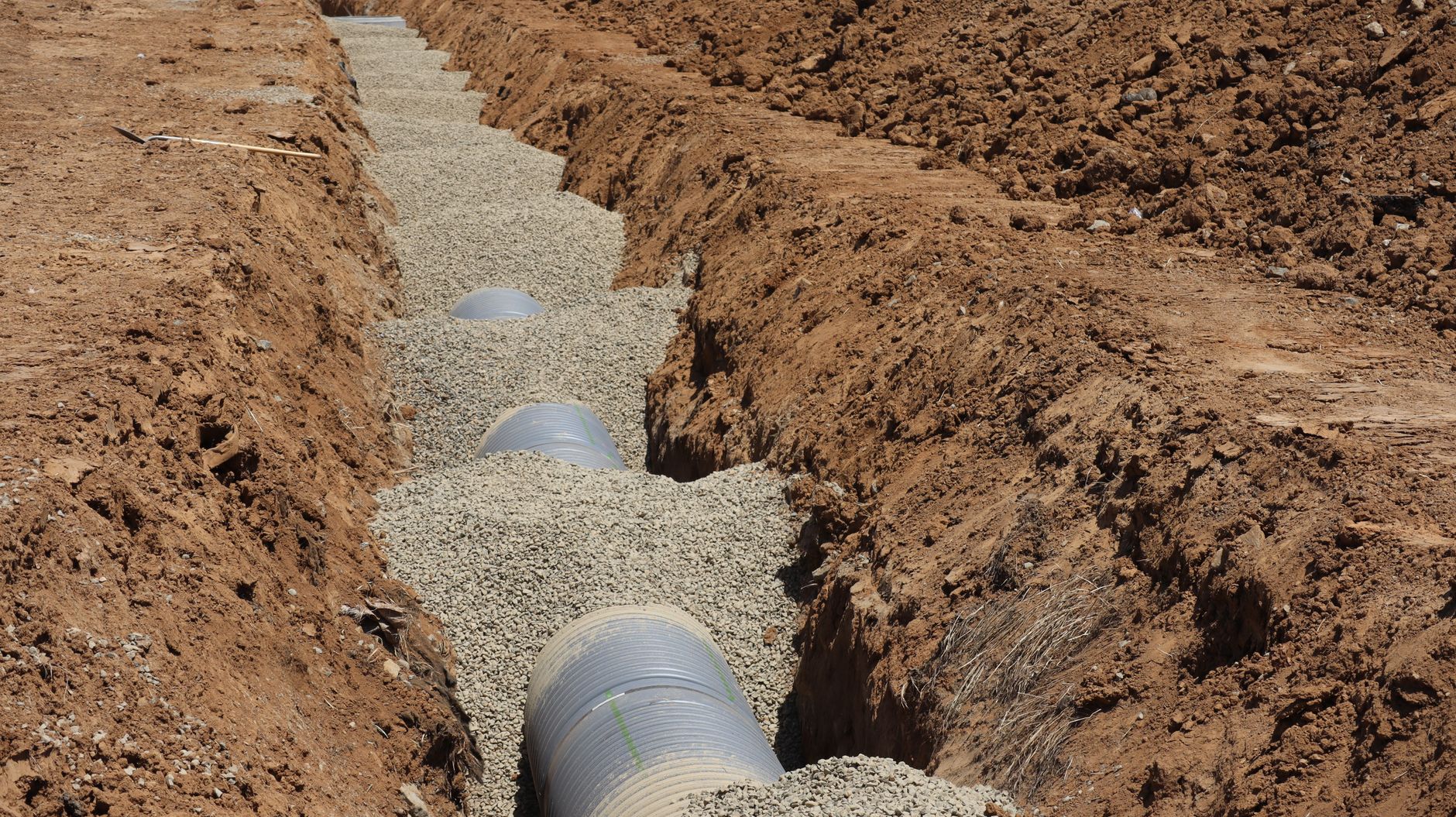
- French drains and seepage trenches: Perforated pipe surrounded by washed gravel, designed to intercept and redirect subsurface water
- Surface grading with aggregate: Properly sized gravel placed along slopes to control sheet flow and prevent erosion
Each of these applications requires aggregate that’s been sized and washed to specification — the wrong gradation can clog a drainage system or fail to provide adequate void space for water movement.
Sand and Aggregate Supply Options: How Key Factors Compare
Buyers in West Tennessee have several options when sourcing sand and aggregate. This table compares the most common supply models across the factors that matter most to turf professionals, contractors, and homeowners.
6. The Homeowner Market: Mulch, Gravel, and Backyard Projects
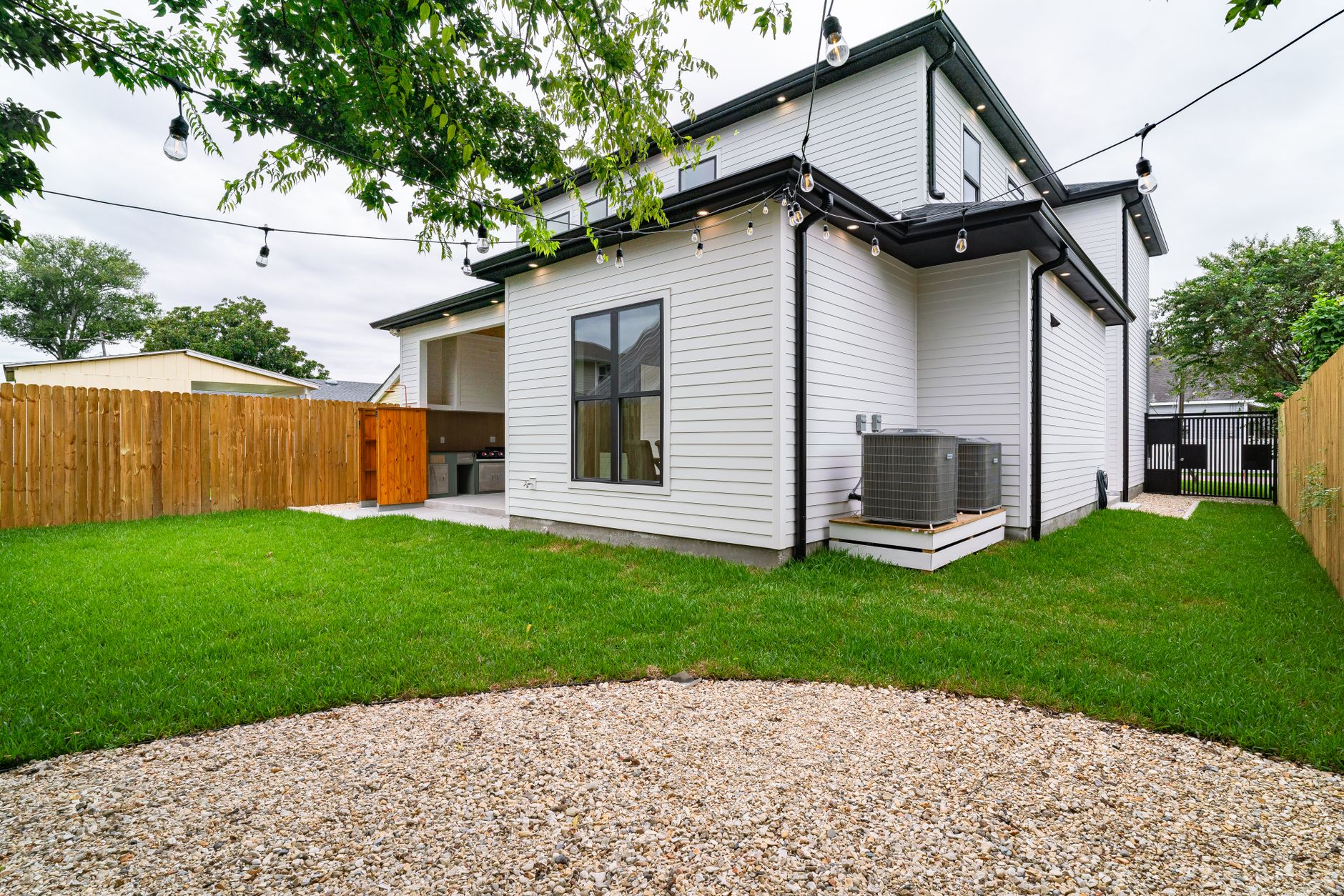
The story of aggregate supply in West Tennessee isn’t only about industrial-scale projects. Over the past few decades, homeowners have become an increasingly important part of the market — and suppliers who serve them well have built strong community reputations that complement their commercial work. From gravel driveways to backyard drainage fixes to mulched landscape beds, residential projects represent a meaningful share of regional aggregate demand.
When Homeowners Became a Real Customer Segment
For much of the 20th century, sand and aggregate suppliers in West Tennessee focused almost exclusively on commercial and institutional buyers — contractors, municipalities, golf courses. Individual homeowners who needed a few yards of gravel for a driveway or sand for a play area had limited options and often paid premium prices at hardware retailers for bagged material that was expensive per unit and inconvenient to transport.
That began to change as regional suppliers recognized that homeowner demand, in aggregate, was substantial. A single residential delivery might be small compared to a golf course order, but the volume of homeowner projects across a metro area like Jackson, TN adds up quickly. Suppliers who made the process easy — clear pricing, accurate quantities, reliable delivery — built loyal residential customer bases alongside their commercial accounts.
Mulch, Gravel, and the Landscape Economy
Beyond sand, the residential market created demand for mulch and decorative gravel as homeowners invested in landscaping. Mulch conserves soil moisture, moderates temperature, and suppresses weeds — benefits that resonate with homeowners in West Tennessee’s hot summers. Gravel provides durable, low-maintenance surfacing for driveways, walkways, and drainage swales.
- A typical residential mulch job requires 2–4 cubic yards for a standard landscape bed refresh.
- Gravel driveways commonly need 4–6 inches of depth, meaning a 20×40-foot driveway requires roughly 10–15 cubic yards of material.
- Using a yardage calculator before ordering prevents both costly over-ordering and frustrating shortfalls.
7. What Sets Quality Suppliers Apart: 5 Operational Factors
Not all aggregate suppliers operate the same way, and the differences matter — especially for buyers who need consistent, spec-conforming material delivered on a reliable schedule. Over the decades, the suppliers who built lasting reputations in West Tennessee shared a set of operational characteristics that set them apart from competitors who treated sand as a commodity rather than a performance material.
On-Site Mixing and Blending Control
One of the most important — and least visible — differences between aggregate suppliers is whether they mix and blend their own products on-site or simply resell material sourced elsewhere. Suppliers who control their own mixing process can adjust blends to hit specific particle size targets, respond quickly when a customer’s spec changes, and maintain consistency from load to load. Those who rely on third-party sources have less control over what ends up in the truck.
On-site mixing also allows a supplier to respond to lab feedback in real time. If a spec sheet shows a sand blend is running slightly coarse, an on-site operation can adjust the blend ratio immediately rather than waiting for a new shipment from an outside source.
Fleet Ownership and Load Integrity
Delivery logistics matter more than most buyers realize. Suppliers who own their trucks control load cleanliness, accuracy, and scheduling in ways that brokers or suppliers using third-party haulers cannot. A contaminated load — sand mixed with gravel fines, or gravel mixed with organic debris — can fail a spec test and require costly removal and replacement. An inaccurate load (a short yard here, an extra yard there) creates budget and planning problems for contractors and turf managers alike.
- Clean loads: Owned trucks that carry only one product type eliminate cross-contamination risk.
- Accurate measurement: Suppliers loading their own trucks can verify quantities before the truck leaves the yard.
- Scheduling control: Direct fleet ownership means delivery windows are set by the supplier, not a third-party dispatcher.
Published Specs, Calculators, and Transparent Communication
The third operational factor that separates strong suppliers is information transparency. Buyers — whether a golf course superintendent or a homeowner ordering gravel — make better decisions when they have access to clear product specifications and easy tools for estimating quantities. Suppliers who publish lab-tested spec sheets and offer quantity calculators reduce buyer uncertainty and build trust before the first load is ever delivered.
This kind of transparency also reduces costly mistakes. A superintendent who can verify particle size distribution before ordering avoids the expense of rejecting a non-conforming load. A homeowner who uses a yardage calculator before calling avoids ordering too little and paying a second delivery charge.
8. Jackson Sand's Place in the West Tennessee Story

Every industry has local companies that embody its history — businesses that didn’t just participate in a market but helped define how it operates. In West Tennessee’s sand and aggregate sector, Jackson Sand represents that kind of rooted, operationally serious supplier: one that controls its own process, publishes its specs, and delivers what it promises. Understanding the industry’s history makes it easier to see why those qualities matter.
Rooted in Jackson, Serving the Mid-South
Jackson Sand LLC, located at 139 United Dr. in Jackson, TN, operates at the intersection of everything described in this article. The company mixes its own sand on-site from high-quality materials, owns the trucks that deliver every load, and serves customers ranging from golf course superintendents managing bunker programs to homeowners who need a few yards of gravel for a driveway project. That range — from the highly technical to the straightforwardly practical — reflects the full breadth of the West Tennessee aggregate market.
President Carlton Pope and Manager Wes Lipford lead an operation built on the same principles that have defined quality aggregate supply in this region for generations: know your material, control your process, and stand behind every load. To learn more about the team and the company’s approach, visit the Jackson Sand About Us page.
Products That Cover the Full Spectrum
Jackson Sand’s product line maps directly onto the demand segments that shaped the West Tennessee aggregate industry over the past century:
- Golf course sand: Bunker sand and top dressing sand for courses across the Mid-South, with lab-tested specs available at jacksonsand.com/sand-specs/
- Athletic field sand: Spec-appropriate sand for field construction, topdressing, and aeration programs
- Drainage materials: Products for surface drainage, drainage basins, and seepage drainage applications
- Gravel and mulch: For contractors, landscapers, and homeowners across Jackson and West Tennessee
Delivery is included, and the company serves both large commercial accounts and smaller residential orders — a flexibility that reflects decades of regional market evolution.
Frequently Asked Questions
What types of sand does Jackson Sand supply in West Tennessee?
Jackson Sand supplies bunker sand, golf course sand, top dressing sand, athletic field sand, and drainage aggregate, along with gravel and mulch. All sand products are mixed on-site and delivered by company-owned trucks. Call 731-668-0440 for product availability.
Does Jackson Sand deliver to small residential orders in Jackson, TN?
Yes. Jackson Sand serves both large commercial accounts and smaller residential orders across Jackson and West Tennessee. Delivery is included with orders, so homeowners don't need to arrange their own hauling.
How do I know how much sand or gravel I need for my project?
Jackson Sand offers a free yardage calculator at jacksonsand.com/yardage-calculator/ that helps you estimate the cubic yards needed based on your project dimensions. This prevents over-ordering or coming up short and paying for a second delivery.
What is USGA bunker sand and why does particle size matter?
USGA bunker sand meets particle size specifications published by the United States Golf Association, targeting roughly 75% of particles in the medium range (0.25–1.0 mm) with strict limits on fine particles that cause crusting. Particle size directly affects drainage, firmness, and playability in golf bunkers.
Where is Jackson Sand located and what area do they serve?
Jackson Sand is located at 139 United Dr., Jackson, TN 38305 and serves West Tennessee and the surrounding Mid-South region. You can reach them at 731-668-0440 or visit jacksonsand.com to learn more.
Can I get lab-tested sand specifications before placing an order with Jackson Sand?
Yes. Jackson Sand publishes lab-tested sand spec sheets on their website at jacksonsand.com/sand-specs/. These documents show particle size distribution and other key properties so you can verify the product meets your project requirements before ordering.