
USGA-Spec Top Dressing Sand: What It Is and How It Works
Quick answer: USGA-spec top dressing sand is a clean, washed sand whose particle sizes fall within USGA root zone recommendations, with most particles in the medium and coarse range and very little silt and clay. Applied regularly and worked into aerification holes, it dilutes thatch, smooths the surface, firms the turf and keeps water moving, on golf greens, fairways, athletic fields and home lawns.
What Top Dressing Sand Is
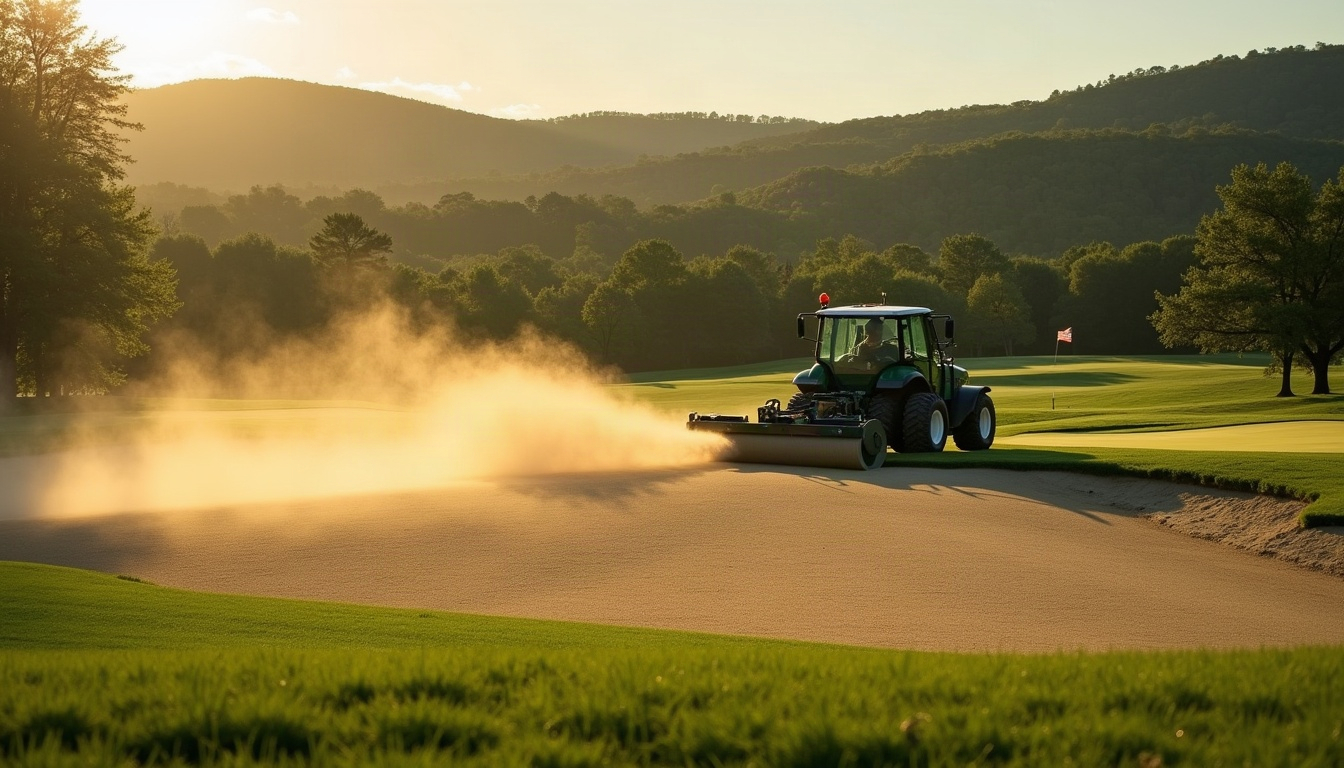
Top dressing is the practice of spreading a thin layer of material over established turf. On golf courses and sports fields, that material is almost always sand. It sounds simple, and it is, but it is also one of the most effective long-term tools a turf manager has. A consistent top dressing program changes the soil profile one thin layer at a time, building a firm, smooth, free-draining surface that holds up to traffic.
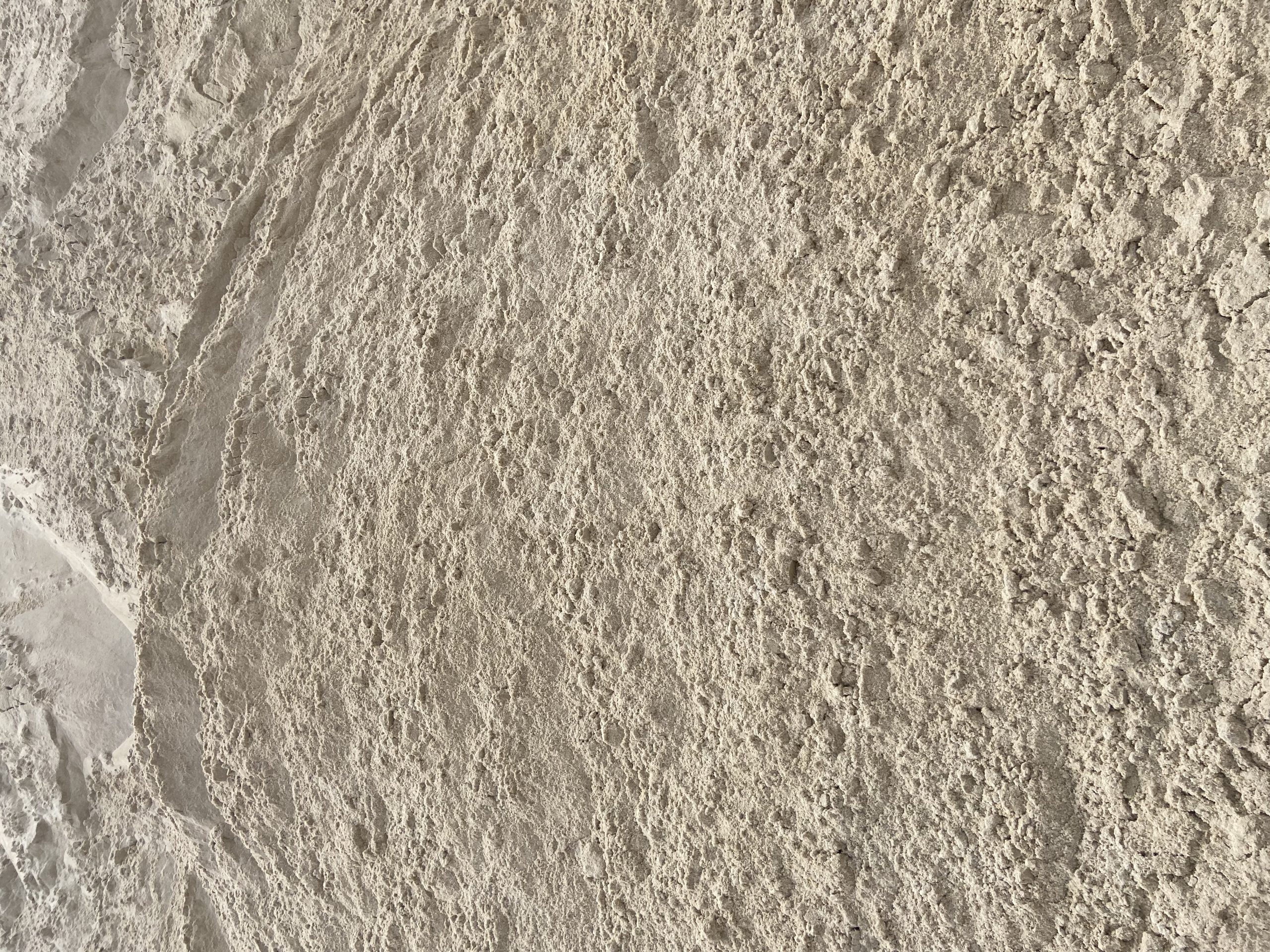
Top dressing sand is not the same as general construction sand or play sand. Those products often contain wide ranges of particle sizes, along with silt and clay that fill pore spaces and slow drainage. Put them on a putting green and you build a layer that holds water, compacts, and eventually seals the surface. Top dressing sand is selected and screened for a narrow particle size range and very low fines, so every layer you apply improves drainage instead of choking it.
Jackson Sand’s Regular Top Dressing is produced to meet USGA specifications when compared to USGA root zone recommendations. It is the general-purpose top dressing in the Jackson Sand line, suited to bentgrass and bermudagrass greens, tees, fairways, athletic fields and quality home lawns. A second product, Champion Bermuda Top Dressing, is a finer sand built specifically for ultradwarf bermudagrass greens and is covered in a separate article.
You can see the full lineup, including greens mixes blended with peat and porous ceramic Profile, on the top dressing page. This article focuses on Regular Top Dressing: what the USGA spec means, how the sand performs, and how to use it with aerification for the best results.
What "USGA Spec" Means for Top Dressing
The United States Golf Association publishes recommendations for putting green root zone construction. Those recommendations describe the particle size distribution a sand should have so that the finished green drains well, resists compaction, and still holds enough water for healthy turf. The particle size guidelines are widely used as the benchmark for top dressing sand as well.
The reasoning is straightforward. Top dressing becomes part of the root zone. Over a few years, a green that is top dressed regularly will have a top layer made almost entirely of the top dressing sand. If that sand matches the root zone below it, water moves smoothly from the surface down through the profile. If it does not match, you create a layer.
Why layering is the enemy
Water does not move easily from a fine-textured layer into a coarser one, or the reverse. A fine sand over a coarse root zone holds water at the interface and creates a wet, soft layer near the surface. A coarse sand over a fine root zone can dry out and fail to hold moisture where roots need it. Either way, the profile stops behaving the way it was designed. Using a sand that falls within the USGA ranges, and that matches your existing root zone, is the best protection against that problem.
The particle size categories
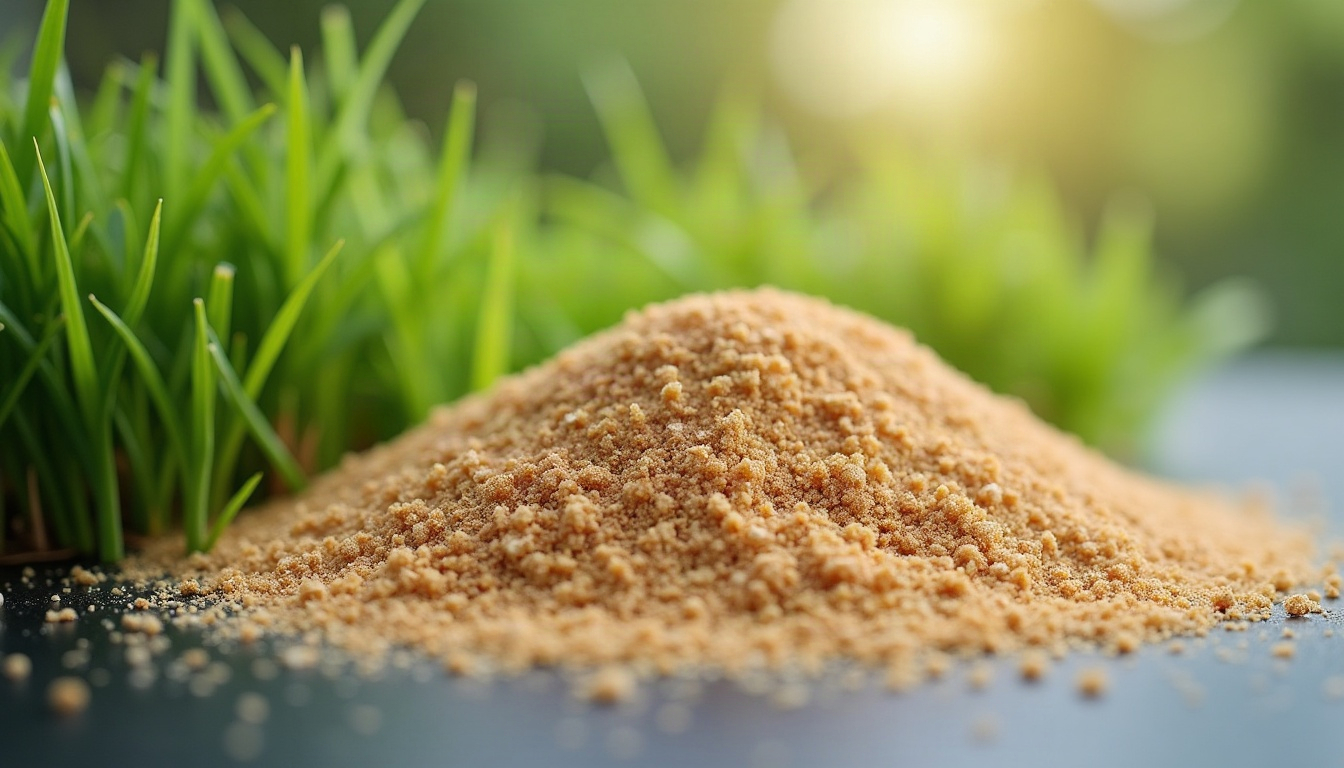
The USGA guidelines group particles into size classes: fine gravel, very coarse sand, coarse sand, medium sand, fine sand, very fine sand, silt and clay. The recommendations put limits on the largest particles and the smallest particles, and call for most of the sand to sit in the coarse and medium range. That middle range is where the balance of drainage and water holding is best. The lab results on the sand specs page let you check each Jackson Sand product against these classes.
Regular Top Dressing Lab Analysis
Here is how Jackson Sand’s Regular Top Dressing compares with the commonly cited USGA root zone particle size recommendations. Lab values come from a physical soil analysis of the product.
| Particle class | USGA recommendation (general) | Regular Top Dressing |
|---|---|---|
| Fine gravel plus very coarse sand (1.0 to 3.4 mm) | No more than 10% combined, with fine gravel 3% or less | 2.5% (gravel 0.1%, very coarse 2.4%) |
| Coarse plus medium sand (0.25 to 1.0 mm) | At least 60% | 81.4% (coarse 23.1%, medium 58.3%) |
| Fine sand (0.15 to 0.25 mm) | No more than 20% | 13.6% |
| Very fine sand (0.05 to 0.15 mm) | No more than 5% | 1.5% |
| Silt | No more than 5% | 0.5% |
| Clay | No more than 3% | 0.5% |
| Total sand | Predominantly sand | 98.9% |
Reading the numbers
The most important line is coarse plus medium sand. At 81.4%, Regular Top Dressing is heavily concentrated in the size range that supports drainage and air space. Silt and clay together total only 1.0%, so there is very little material to migrate into pores and slow infiltration. The large-particle fraction is small, which means the sand works into the canopy without leaving a gritty surface that dulls mowers.
Fine and very fine sand together are 15.1%. That modest share of smaller particles helps the sand hold some moisture and fill gaps between larger grains, which contributes to a firm, stable surface without sacrificing drainage.
When you evaluate any top dressing sand, ask for a lab sheet like this and compare it to your root zone test. A sand that meets the USGA ranges on paper still needs to be close to what is already in your greens.
How Sand Top Dressing Works
Turfgrass constantly produces organic matter. Roots, stolons, rhizomes and leaf tissue die and accumulate near the surface faster than soil microbes can break them down. That layer is called thatch, and in moderation it cushions the turf. In excess, it acts like a sponge: it holds water at the surface, stays soft, encourages shallow roots, and becomes a home for disease.
Dilution, not removal
Top dressing manages organic matter mainly by dilution. Each application mixes a little sand into the thatch layer. Over time, the surface zone shifts from a spongy, organic mat to a sand-rich layer with organic matter spread evenly through it. That mixed layer drains, firms up, and supports deeper roots. Physical removal through core aerification and verticutting helps too, but sand is what changes the character of the layer that is left.
Smoothing the surface
Sand settles into low spots, ball marks, and small irregularities in the canopy. Applied regularly, it produces a truer surface, which on a putting green means a ball that rolls straighter and more consistently. On fairways and sports fields, it means fewer divots, better footing and more even mowing.
Firmness and resilience
A sand-based surface is firmer than a thatchy one. Firm greens hold their shape under foot traffic, resist ball marks, and give golfers predictable bounces. On athletic fields, a firm, sand-rich surface recovers faster from play and drains quickly enough to get back into use after rain.
Why consistency matters
The benefits come from steady application over seasons, not from one heavy dose. Turf managers who top dress lightly and often keep pace with organic matter production. Those who skip months and then apply heavily end up with distinct layers in the profile. Programs are covered in depth in a separate guide, but the principle is the same everywhere: match the sand you apply to the rate your turf grows.
Top Dressing and Aerification Work Together
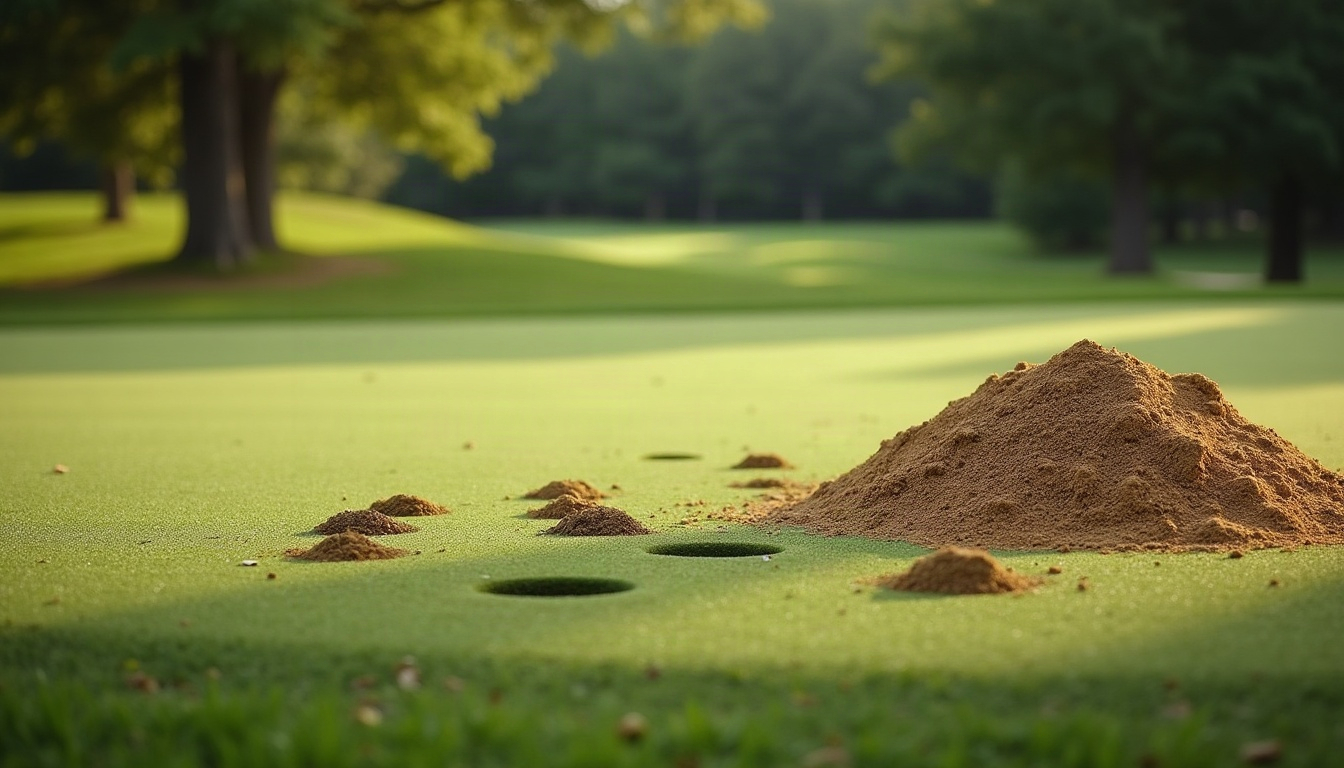
Aerification and top dressing are partners. Aerification opens channels into the soil; top dressing fills them with clean sand. The combination does what neither practice can do alone.
What aerification does
Core aerification pulls plugs of soil and thatch out of the turf. That physically removes organic matter, relieves compaction, and lets air and water reach the root zone. Solid tine and needle tine aerification create holes without pulling cores, which disrupts the surface less but removes no material.
What happens when you fill the holes
Filling aerification holes with top dressing sand creates vertical sand channels that run down through the thatch and into the root zone. Those channels carry water down quickly, give roots an easy path to grow deeper, and keep the profile open long after the surface has healed. If the holes are left empty, they collapse or fill with surrounding thatch and soil, and much of the benefit is lost.
Practical steps
- Aerify when the turf is actively growing so it heals quickly.
- Remove cores if the soil or thatch is not something you want to recycle back into the surface.
- Apply top dressing heavily enough to fill the holes, usually much more than a routine light application.
- Drag or brush the sand into the holes and repeat as needed until they are full.
- Water in lightly to settle the sand and help the turf recover.
For athletic fields, the practical guidance on Jackson Sand’s athletic fields page calls for aerating at least twice a year, in spring and midsummer, with three passes, holes 2 to 3 inches apart, cores 3/4 to 1 inch in diameter and 3 to 4 inches deep. Jackson Sand also offers aeration and top dressing services for athletic fields and lawns if you would rather have the work done for you.
Benefits for Golf Greens
Putting greens get the most attention in any top dressing program because they are mowed lowest, played most, and judged most closely. Regular Top Dressing gives greens the clean, properly sized sand they need to stay firm, fast and healthy.
- Organic matter control. Routine light applications dilute thatch as fast as it forms, keeping the surface from turning spongy.
- Better drainage. A sand that matches the USGA root zone ranges keeps water moving through the profile instead of perching at the surface.
- Smoother, truer putts. Sand fills small depressions and ball marks, so the ball holds its line.
- Firmness. A sand-rich surface resists ball marks and foot printing and holds approach shots more predictably.
- Disease pressure. Drier surface conditions and less thatch reduce the habitat for many turf diseases.
- Faster recovery after aerification. Sand-filled channels support new root growth and help the surface heal.
Bentgrass and bermudagrass
Regular Top Dressing works on both bentgrass and bermudagrass greens. In the Mid-South, many courses still manage bentgrass greens alongside bermudagrass fairways, while others have converted to ultradwarf bermudagrass. For bentgrass and standard bermudagrass greens, Regular Top Dressing is typically the default. For ultradwarf bermudagrass mowed extremely low, some superintendents switch to Champion Bermuda Top Dressing for routine light applications and keep Regular for aerification fill. That approach is covered in detail in the article on Champion top dressing.
Match it to your greens
Before switching sands, test your existing root zone. If your greens were built with a sand significantly different from Regular Top Dressing, talk through the lab sheets with your supplier so you do not create a layer. The overview on golf course maintenance covers how top dressing fits into broader course care.
Benefits for Fairways and Tees
Fairway top dressing used to be rare because of the sheer volume of sand involved. Today, more courses commit to it because the payoff is significant: firmer, faster-drying fairways that play better and need less water and fewer cart restrictions.
Fairways
Many fairways in West Tennessee sit on native silt loam and clay soils that drain slowly. After heavy rain, they stay soft for days, carts are kept on paths, and golfers lose roll. A sustained sand top dressing program gradually builds a sand cap over the native soil. Each year the surface layer gets deeper and more free-draining. Courses that stay with it for several seasons often see fairways dry out noticeably faster after storms.
Because of the volume, fairway programs usually rely on heavier applications less often, frequently timed with aerification. A consistent, clean sand is essential. Switching products partway through a multi-year fairway program builds layers that undo the benefits.
Tees
Tees take concentrated wear from divots and foot traffic. Top dressing levels the surface, fills divot scars and helps tees recover between events. Many courses use green dyed divot sand for daily divot filling and Regular Top Dressing for broader leveling and aerification fill.
Sizing the job
Fairway areas are large, so accurate volume estimates matter. A 1/8 inch application works out to about 10.4 cubic feet, or 0.4 cubic yards, per 1,000 square feet. On a one-acre fairway (about 43,560 square feet), that is roughly 17 cubic yards per application. The yardage calculator lets you plug in any area and depth to plan loads.
Benefits for Athletic Fields and Home Lawns
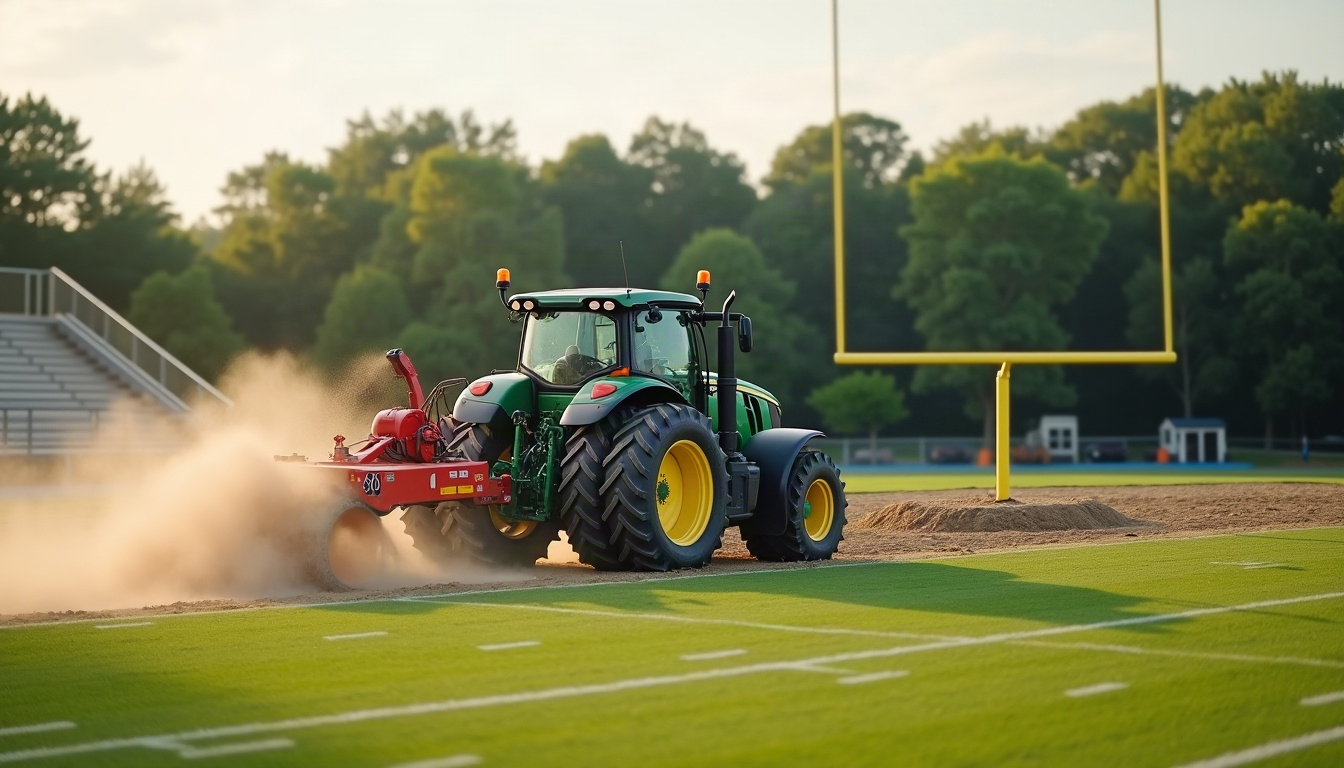
The same principles that make top dressing valuable on golf courses apply to sports fields and residential turf. The scale and goals differ, but clean sand over aerified turf improves drainage, footing and recovery.
Athletic fields
Sports fields take intense, concentrated traffic, often in wet conditions. Compaction is the main enemy. When soil compacts, water ponds, roots stay shallow, and worn areas spread. Pairing aerification with sand top dressing relieves compaction and gradually builds a sand-rich surface that drains and recovers faster.
A common target is a 1/8 inch top dressing layer, which takes about 10.4 cubic feet (0.4 cubic yards) of sand per 1,000 square feet. A typical football field with surrounding area runs in the range of 80,000 square feet, so a full 1/8 inch application is around 32 cubic yards. Fields with heavy wear often get extra sand in goal mouths, between the hashes and other high-traffic areas.
Home lawns
Homeowners use top dressing to level bumpy lawns, fill low spots and improve drainage in yards with heavy clay. The key is restraint. Apply thin layers, no more than about 1/4 inch at a time, so the grass can grow through. Heavier applications smother turf. Core aerate first in heavy soils so the sand reaches below the surface.
Avoid using a sand that is very different from your soil in a single heavy application. Thin, repeated layers over several seasons give a better result than one thick cover.
Jackson Sand provides aeration and top dressing services for athletic fields and lawns, in addition to delivering material. For sports field managers, the athletic fields page summarizes the recommended aeration practices.
Application Rates and Quantities
The right rate depends on the turf, the season and what you are trying to accomplish. Light applications maintain; heavy applications fill aerification holes and level surfaces. Use the table below to convert common depths into the sand you will need.
| Application depth | Cubic feet per 1,000 sq ft | Cubic yards per 1,000 sq ft | Typical use |
|---|---|---|---|
| 1/32 inch | About 2.6 | About 0.1 | Light, frequent dusting on greens |
| 1/16 inch | About 5.2 | About 0.2 | Routine maintenance on greens and tees |
| 1/8 inch | 10.4 | 0.4 | Athletic fields, fairways, post-aerification |
| 1/4 inch | About 20.8 | About 0.8 | Heavy fill after core aerification, leveling lawns |
Tips for even coverage
- Apply when the turf surface is dry so sand flows off leaves and into the canopy.
- Calibrate your top dresser on a measured area before treating greens.
- Drag, brush or broom the sand in, then water lightly.
- Do not exceed what the turf can absorb. If sand is still sitting on top after brushing, the rate is too heavy for the growth rate.
- Store sand on a clean pad, covered if possible, so it stays dry and free of debris.
Order clean, consistent sand
Consistency from load to load matters as much as the spec. Jackson Sand washes and classifies its sand at its own plant, mixes on its own premises and hauls in its own trucks, which avoids cross-contamination with other materials. Every load you spread is the same sand that was tested.
Get USGA-Spec Top Dressing in West Tennessee
Sand top dressing rewards consistency. Use a clean sand that meets USGA particle size recommendations, match it to your root zone, and apply it on a schedule that keeps up with your turf’s growth. Pair it with aerification, and you build a firmer, faster-draining surface every season.
Jackson Sand has produced golf-course-grade top dressings since around 1998. It makes Regular Top Dressing in Jackson, Tennessee, with plant capacity of up to 150,000 tons a year, and serves golf courses, sports fields, landscapers and homeowners across West Tennessee and the Mid-South. The company also offers aeration and top dressing services for athletic fields and lawns.
To order Regular Top Dressing, request a lab sheet, or schedule service, call 731-668-0440 or reach out to Jackson Sand online.
Inside the Jackson Sand Plant
Take a 90-second look at where our sand comes from: the washing plant, screens and conveyors, and the Jackson Sand truck fleet that delivers every load. President Carlton Pope tells the story of how the company grew from one truck in 1996.
Sources and Further Reading
- benefits of light and frequent topdressing (USGA research) (USGA)
- the complexity of putting green firmness (USGA Green Section Record)
- USGA Recommendations for a Method of Putting Green Construction (USGA)
- UT Extension turfgrass topdressing guide (W161-N) (University of Tennessee Extension)
Frequently Asked Questions
What does USGA-spec top dressing sand mean?
It means the sand's particle size distribution falls within the USGA root zone recommendations: most particles in the coarse and medium range, limited fine and very fine sand, very little gravel, and minimal silt and clay. Jackson Sand's Regular Top Dressing has 81.4% coarse plus medium sand and only 0.5% silt and 0.5% clay.
How often should golf greens be top dressed?
It depends on how fast the turf grows. Many superintendents apply light dustings every one to three weeks during active growth, plus heavier applications after core aerification. The goal is to dilute organic matter as fast as the turf produces it, which is why light, frequent applications usually outperform occasional heavy ones.
Can I use top dressing sand on my home lawn?
Yes. Top dressing sand is useful for leveling bumpy lawns and improving drainage, especially after core aeration. Apply thin layers, no more than about 1/4 inch at a time, so the grass can grow through. Heavy layers smother turf. Repeating light applications over several seasons gives better results than one thick application.
How much top dressing sand do I need per 1,000 square feet?
A 1/8 inch layer takes about 10.4 cubic feet, or roughly 0.4 cubic yards, per 1,000 square feet. A light 1/16 inch dusting takes about half that. Jackson Sand's free yardage calculator converts any area and depth into cubic yards so you can order the right amount.
Why fill aerification holes with sand?
Sand-filled holes become vertical channels that carry water down through thatch into the root zone and give roots an easy path to grow deeper. Empty holes tend to collapse or fill with surrounding thatch and soil. Filling them with clean top dressing sand extends the benefit of aerification long after the surface heals.
What is the difference between Regular and Champion top dressing?
Regular Top Dressing meets USGA specifications and is a general-purpose sand for greens, tees, fairways, sports fields and lawns. Champion Bermuda Top Dressing has the coarse particles removed for ultradwarf bermudagrass greens mowed very low, protecting reels and bedknives. Champion intentionally does not meet USGA spec and lowers perc rate somewhat.
Ready to order or have a question about the right material? Call Jackson Sand at 731-668-0440 or send us a message and we will help you pick the right product and quantity.
Leave a Reply