
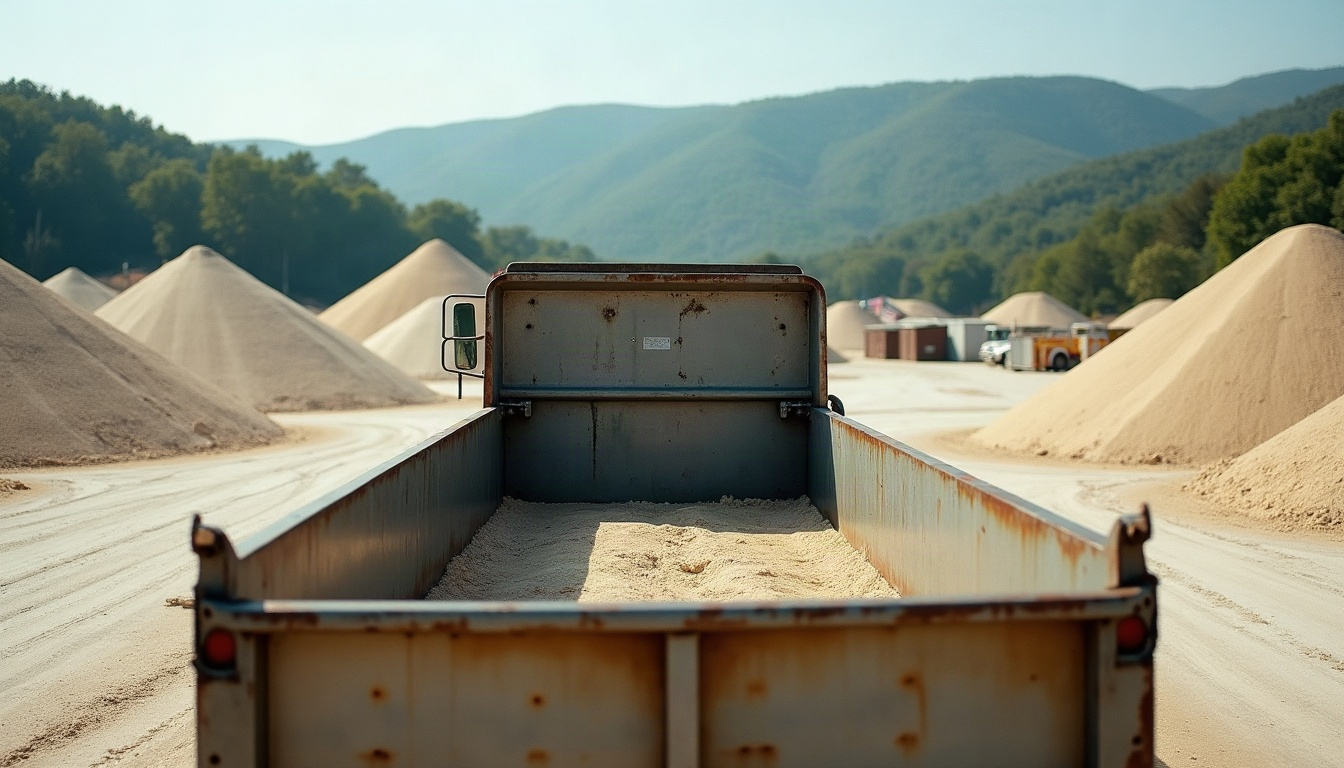
Why Clean Sand Delivery Matters for Bunkers, Greens and Fields
Quick answer: A sand that tests perfectly at the source can still arrive contaminated if the truck, loader or stockpile carries silt, clay, organic debris or other aggregate. On bunkers and greens, even small amounts cause crusting, slower infiltration, layering and mower damage. Buy from a supplier that controls mixing and hauling, and inspect every load on arrival: paperwork, color, feel, a jar test and a retained sample.
What Clean Sand Really Means
For a golf course superintendent or a sports-field manager, sand is not a commodity. It is an engineered material chosen for particle size, shape, color and drainage, and it is usually backed by a lab report from an accredited physical soil testing lab. That report describes the sand at the moment the sample was pulled. Everything that happens after that, from stockpiling to loading to hauling to dumping on your site, can change what actually ends up in a bunker or on a green.
Clean sand means the delivered material matches the tested material. In practice that means four things are kept out:
- Silt and clay, the very fine particles that seal pores and form crusts.
- Organic matter, such as soil, roots, leaves and wood.
- Foreign aggregate, meaning gravel, crushed stone, asphalt or concrete pieces, or a different sand.
- Debris like trash, wire, plastic and rust scale from equipment.
A specification sheet tells you what a sand can be. Delivery practices decide what it is when it hits your site. Our sand specs page shows lab results for the sands we supply; for example, our Regular Bunker Sand tests at 99.3 percent sand with less than 1 percent silt and less than 1 percent clay. Keeping it that way between our yard and your property is the subject of this article.
Common Contaminants and What They Do
Each contaminant causes a specific kind of damage. Knowing the symptoms helps you trace a problem back to its source.
| Contaminant | How it shows up | Effect in bunkers | Effect on greens and fields |
|---|---|---|---|
| Silt | Fine dust, cloudy water in a jar test | Surface crusting, slower infiltration, firmer and inconsistent lies | Seals pores, reduces percolation, encourages layering |
| Clay | Sticky lumps, color streaks (often red or gray) | Hard crust after drying, washouts on faces, discoloration | Creates impermeable layers that hold water at the surface |
| Organic matter | Dark specks, roots, leaves, musty smell | Accelerates sand degradation, supports weeds and algae | Adds to thatch, can contribute to black layer under low oxygen |
| Foreign aggregate | Gravel, crushed stone, asphalt bits, odd-colored sand | Rocks in the playing surface, golfer complaints, equipment damage | Nicks reels and bedknives, uneven surface, scalping |
| Debris | Plastic, wire, rust flakes | Safety hazard, unsightly | Mower damage, safety hazard on fields |
The fine contaminants are the most damaging because they are the hardest to see. A few large stones are obvious and can be picked out. A few percent of silt and clay spread through a load is invisible on the truck and only reveals itself weeks later as a crust in a bunker or a slow-draining green.
How Contamination Hurts Bunkers
Bunker sand is chosen for playability and drainage, and both depend on keeping fines out.
Infiltration and degradation
Bunker sand works as a filter. Every rain carries silt and organic matter from the surrounding turf into the sand, so even clean sand degrades over time. One documented example saw infiltration drop from 24 inches per hour to 12 inches per hour over three years, while organic matter rose from 0.3 percent to about 1 percent. That is the natural rate of decline with good sand. Starting with sand that already carries extra fines from a dirty truck puts you years ahead on that curve on day one, and bunkers start holding water and washing out sooner.
Crusting and playability
Silt and clay bind sand grains together as they dry, forming a crust that changes how a ball sits and how a club enters the sand. Golfers notice inconsistent lies long before anyone runs an infiltration test. Crusting potential is one of the seven factors used to evaluate bunker sand, alongside particle size, particle shape and penetrometer value, chemical reaction and hardness, infiltration rate, color, and overall playing quality.
Color
Bright bunker sands like our Tennessee White Bunker Sand are selected partly for appearance. A few loads streaked with red clay or gray fines dull that look across a course. Because bunker sand is installed at a minimum depth of 4 inches on floors, a contaminated delivery cannot simply be raked out; it becomes part of the profile.
See our bunker sand page for the lab data on both our bunker products.
How Contamination Hurts Greens and Top Dressing
Top dressing goes onto greens in thin, frequent applications. That makes it the most contamination-sensitive sand on a golf course.
Layering
A green’s root zone is built to drain at a designed rate. Each top dressing application becomes part of that profile. If a load carries fine silt or clay, it forms a thin layer of finer material. Over a season, layers like that interrupt water movement, hold moisture near the surface, and push roots shallow. Fixing layering usually means aggressive core aeration, which costs time and disrupts play.
Mower damage
Greens are cut with reel mowers set to very low heights. Ultradwarf bermudagrass greens may be mowed as low as 0.120 inch. A single piece of gravel picked up from a dirty truck bed can nick a reel or bedknife. That is why our Champion Top Dressing is screened to remove the largest particles: its lab profile shows 0 percent gravel, very coarse and coarse fractions. That screening is wasted if the truck adds stone back in on the way to you.
Organic matter and black layer
Top dressing is applied in part to dilute organic matter in the upper root zone. Sand that arrives carrying soil or plant debris works against that goal and, in wet, low-oxygen conditions, can contribute to black layer.
Our top dressing page covers the Regular and Champion products, and our golf course maintenance page covers aeration and top dressing routines.

How Cross-Contamination Happens with Shared Haulers
Most contamination does not come from the pit. It comes from the handling and hauling chain between the stockpile and your site.
The previous load
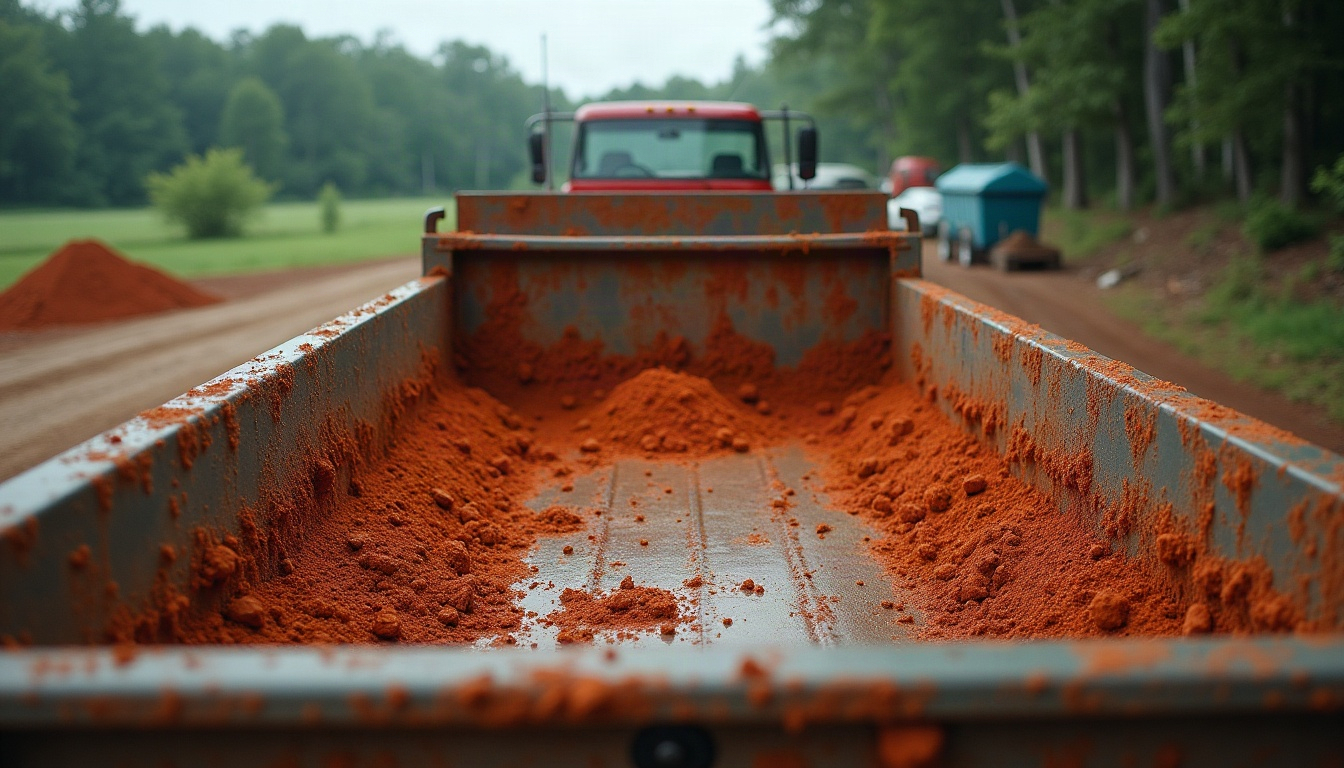
Many sand deliveries ride on contract or brokered trucks that haul whatever pays that day: fill dirt, crusher run, asphalt millings, lime, topsoil, demolition debris. Dump beds have corners, seams and tailgate gaskets that hold material. A few hundred pounds of red clay or base stone left from the morning load ends up mixed into your afternoon sand. Rinsing or sweeping between loads helps, but under schedule pressure it is easy to skip.
Tarps and tailgates
Tarps that were used on a dirty load drop material back onto a clean one. Worn tailgate seals leak, and rust scale from old beds falls into the load on every dump.
Loaders and stockpiles
At the yard, a loader bucket that just dug into a gravel pile can carry stone into a sand pile. Stockpiles placed directly on dirt pick up soil at the base, and a loader working the bottom of a pile can scrape it up. Piles sitting next to each other can blend at the edges.
On your site
Dumping on bare soil, mud or an old pile of different material contaminates the bottom of the load. So does a skid steer that was just moving topsoil.
Every step in that chain is controllable, but only by whoever controls it. When the supplier, the mixing and the trucks are separate businesses, nobody owns the whole chain.
Why Jackson Sand Mixes on Its Own Premises and Owns Its Trucks
Jackson Sand was set up around a simple idea: sand from the source. Our sands and mixes are blended on our own premises using high-quality materials, and we deliver them in trucks we own.
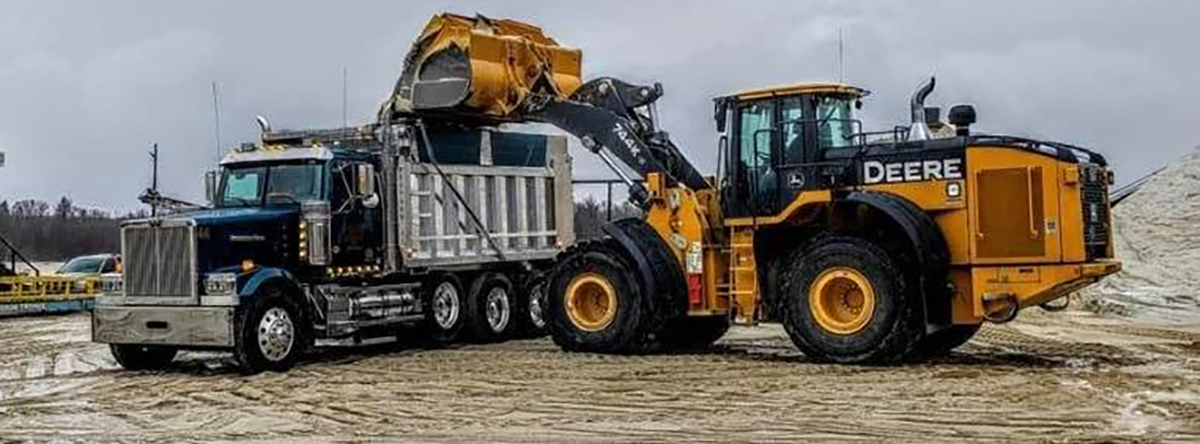
We came into production around 1996, and by about 1998 we had converted to making golf-course-grade material: bunker sands, top dressings and root zone mixes. The plant is built around cleanliness at the source. Sand is washed through screw classifiers that separate out silt and clay, then passed over vibrating dewatering screens before stacking conveyors build the stockpiles. A wheel loader loads our own dump trucks directly from those piles, and every load crosses our truck scale before it leaves the yard.
The fleet has grown from about one truck in the early days to around 14 trucks of our own, running daily from as early as 6 a.m. until 5 or 6 p.m. Those trucks haul golf-course-grade material across a wide region, from Huntsville, Alabama to Jackson, Mississippi, Little Rock, Arkansas and Owensboro, Kentucky, and as far east as Tullahoma, Tennessee. Long hauls are exactly where a dirty bed or a mixed load would do the most damage, which is why we keep them in-house.
That matters for three reasons.
- One chain of custody. The people who mix the sand are the same people who load and haul it. There is no broker in the middle and no truck that just came off a different job.
- Strict cleanliness. Because the trucks are ours, we decide what they carry and how they are cleaned. That is how we prevent cross-contamination and make sure you get exactly what you ordered.
- Consistent mixes. Greens mixes and root-zone blends with peat or porous ceramic amendments depend on accurate proportions. Blending in-house lets us control those proportions from batch to batch.
For a course that has invested in a lab-tested bunker sand or a USGA-spec top dressing, that consistency protects the investment. For a landscaper or homeowner, it means the pea gravel is pea gravel and the top dressing is top dressing. Learn more about what we supply on our golf course sand page.
Even with a controlled chain, inspecting deliveries is good practice. The next section walks through how.
How to Inspect a Sand Load on Arrival
A five-minute inspection when the truck arrives can save a season of problems. Build it into your receiving routine.
- Check the paperwork. Confirm the product name on the ticket matches what you ordered. Bunker sand, top dressing and divot mix can look similar in a truck bed.
- Look at the truck before it dumps. Glance at the bed edges and tailgate. Caked clay or gravel along the seams is a warning sign.
- Look at the load. Color should be uniform. Streaks of red, gray or black, or visible stones in a sand that should have none, deserve a closer look before you accept it.
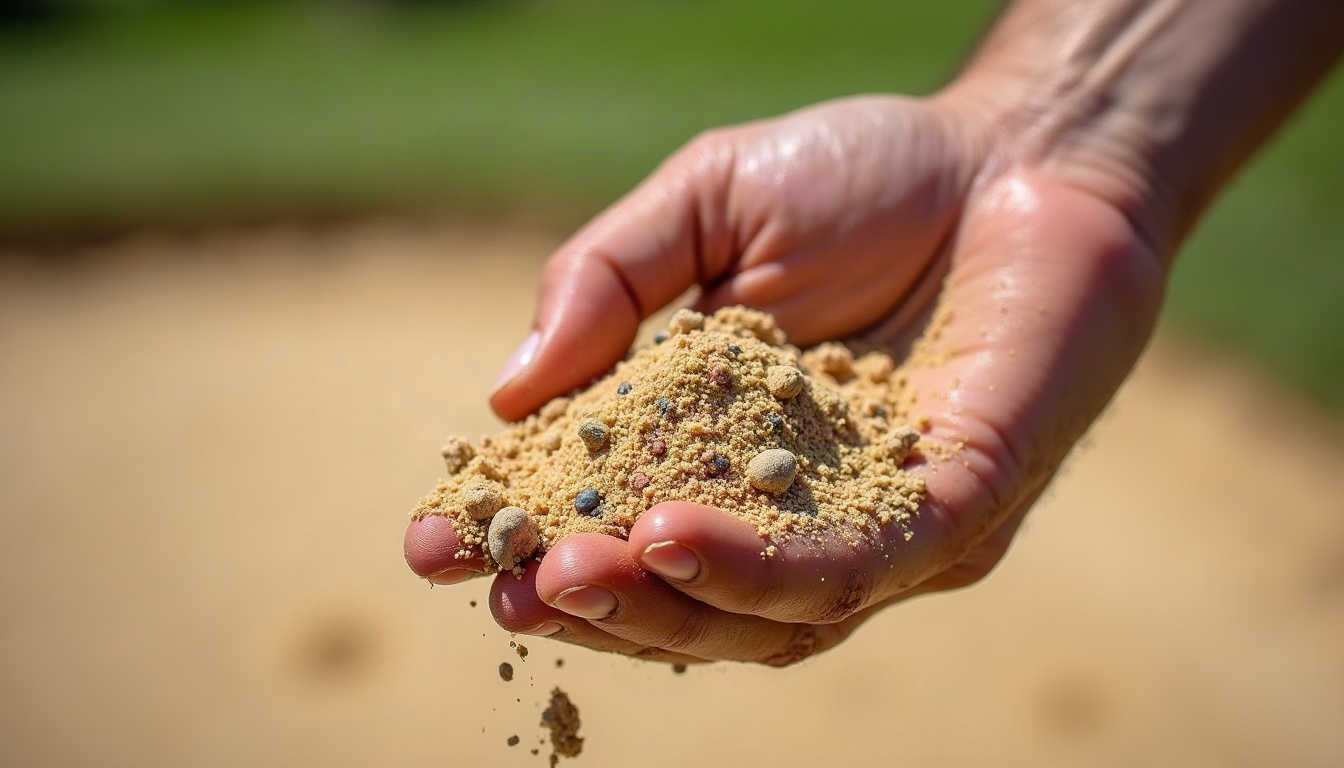
- Feel it. Squeeze a moist handful. Clean sand feels gritty and falls apart. Sand that holds a smooth ball, smears on your palm or leaves a muddy film carries excess silt or clay.
- Do a jar test. Fill a clear jar about one third with sand, add water to near the top, shake hard and let it settle. Clean sand settles quickly and the water clears within minutes. A layer of fines on top of the sand or water that stays cloudy points to silt and clay.
- Compare to a reference. Keep a labeled sample from a previous good delivery. Side by side, color and texture differences are easy to spot.
- Retain a sample. Bag about a quart from each load, label it with the date and ticket number, and store it. If a problem turns up later, you have evidence and a sample to send to a lab.
If something looks wrong, call the supplier before the material is spread. Once sand is in a bunker or on a green, it is very hard to get back out.
Staging and Storing Sand on Site
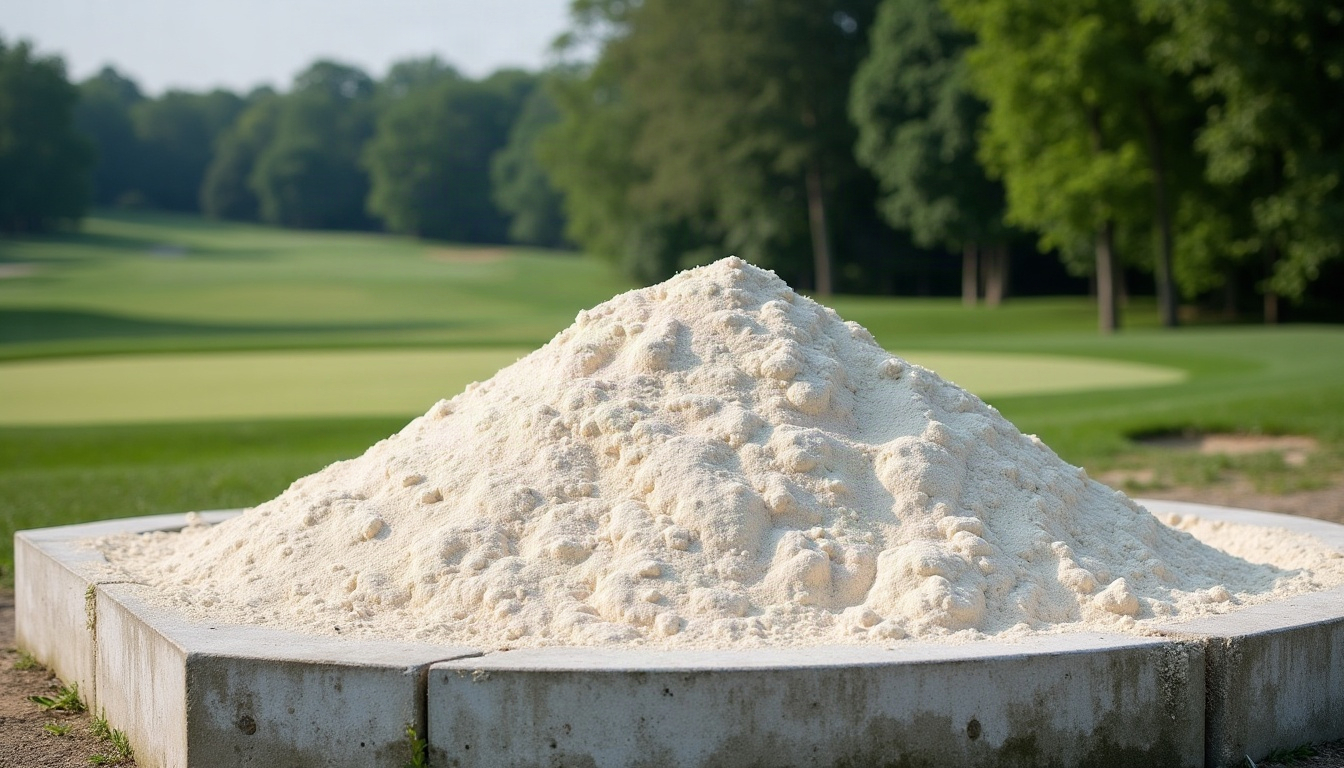
Clean delivery is wasted if the sand is contaminated at your own maintenance facility.
- Use a hard pad. Store sand on concrete or asphalt, or on a dedicated pad of the same sand, never on bare soil.
- Separate materials. Use bins or concrete block walls between sand types, gravel and soil. Keep top dressing well away from topsoil and mulch piles.
- Cover it. A clean tarp keeps out leaves, clippings and windblown dust, and keeps top dressing dry enough to spread evenly.
- Dedicate equipment. If possible, use one bucket or loader for top dressing only. At minimum, clean the bucket before moving from soil to sand.
- Watch drainage. Do not place piles where runoff from a parking lot or soil pile will wash into them.
- Use the oldest sand first and do not let the bottom few inches of a pile, which pick up the most contamination, go onto greens.
On sports fields, the same rules apply to top dressing used after aeration. Our athletic fields page covers aeration and top dressing schedules, including the 1/8 inch top dressing rate of about 0.4 cubic yards per 1,000 square feet.
Using Lab Reports to Hold Quality Steady
Inspection on arrival catches obvious problems. Lab testing confirms the subtle ones.
Know the baseline
Start with the supplier’s lab report from an accredited physical soil testing lab. It should show particle-size distribution, silt and clay content, and for bunker sand, values like D85 and uniformity coefficient. Our Regular Bunker Sand, for example, lists a D85 of 0.49 mm and a uniformity coefficient of 2.0. Those numbers describe exactly what the sand should be.
Test what arrives
Once a year, or when you start a large project such as a bunker renovation, send a retained sample from your own deliveries to an accredited lab and compare the results to the supplier’s report. Silt and clay drifting upward, or a shift toward finer or coarser fractions, tells you something has changed.
Watch your bunkers and greens
Simple field tests help between lab checks. Pour a measured amount of water into a ring pressed into a bunker floor and time how fast it drains. Probe greens for layering with a soil probe after top dressing seasons. Track the results so changes stand out.
The goal is not to distrust your supplier. It is to have the data that shows the program is working and to spot problems while they are still small.
Order Clean Sand from Jackson Sand
Jackson Sand has supplied golf-course-grade sand since 1996. Today we deliver bunker sand, top dressing, greens mixes, divot sand and gravel to golf courses, sports fields, landscapers, contractors and homeowners in Jackson, across West Tennessee and throughout the Mid-South. We wash and mix on our own premises and deliver in our own trucks, so what you ordered is what arrives. With production capacity of up to 150,000 tons a year, we can supply a full bunker renovation as readily as a season of top dressing.
If you want to see lab data before you buy, start with our sand specs. If you are planning a renovation or setting up a top dressing program, we are glad to talk through products and quantities.
Call 731-668-0440 or reach us through our contact page to place an order or ask a question.
Inside the Jackson Sand Plant
Take a 90-second look at where our sand comes from: the washing plant, screens and conveyors, and the Jackson Sand truck fleet that delivers every load. President Carlton Pope tells the story of how the company grew from one truck in 1996.
Sources and Further Reading
- monitoring sand contamination in bunkers (USGA Green Section Record)
- soil texture jar test for silt and clay (Clemson Extension HGIC)
- USGA guide to selecting the right bunker sand (USGA Green Section Record)
- SFMA guide to sports field rootzones (PDF) (Sports Field Management Association)
Frequently Asked Questions
How does sand get contaminated during delivery?
Most contamination happens after the sand leaves the stockpile. Shared or brokered trucks often carry clay, gravel, asphalt or topsoil on earlier loads, and residue in bed corners and tailgate seals mixes into the next load. Dirty tarps, loader buckets that touched other materials, and dumping on bare soil at the job site add more. Controlling the trucks and handling prevents it.
What does contaminated sand do to a bunker?
Silt and clay bind sand grains into a crust, slow infiltration and make lies inconsistent. Organic matter speeds up the normal degradation of bunker sand, and clay or odd-colored sand dulls the appearance. Foreign stones end up in the playing surface. Because bunker sand is installed at least 4 inches deep, contamination becomes part of the profile and is hard to remove.
Why is clean top dressing so important on greens?
Top dressing becomes part of the green's root zone. Fine silt or clay forms thin layers that slow drainage, hold water at the surface and push roots shallow. Gravel or stone picked up in transit can nick reel mowers and bedknives on greens cut very low. Organic debris works against the goal of diluting thatch.
How can I test a sand delivery on site?
Check the ticket, look at the load for uniform color and stray stones, and squeeze a moist handful; clean sand feels gritty and crumbles. For a jar test, shake sand and water in a clear jar and let it settle. Clean sand settles quickly and the water clears. A layer of fines or lasting cloudiness signals silt and clay.
Does Jackson Sand use its own trucks?
Yes. Jackson Sand runs a fleet of around 14 of its own trucks and washes and mixes its sand on its own premises. Keeping mixing and hauling under one roof lets the company maintain strict cleanliness, prevent cross-contamination from other materials, and deliver exactly the product the customer ordered.
Should I keep a sample from each sand delivery?
Yes. Bag about a quart from each load and label it with the date and ticket number. A retained sample lets you compare color and texture with future loads, and if a problem appears in a bunker or green later, you have material to send to an accredited lab for testing.
Ready to order or have a question about the right material? Call Jackson Sand at 731-668-0440 or send us a message and we will help you pick the right product and quantity.
Leave a Reply