
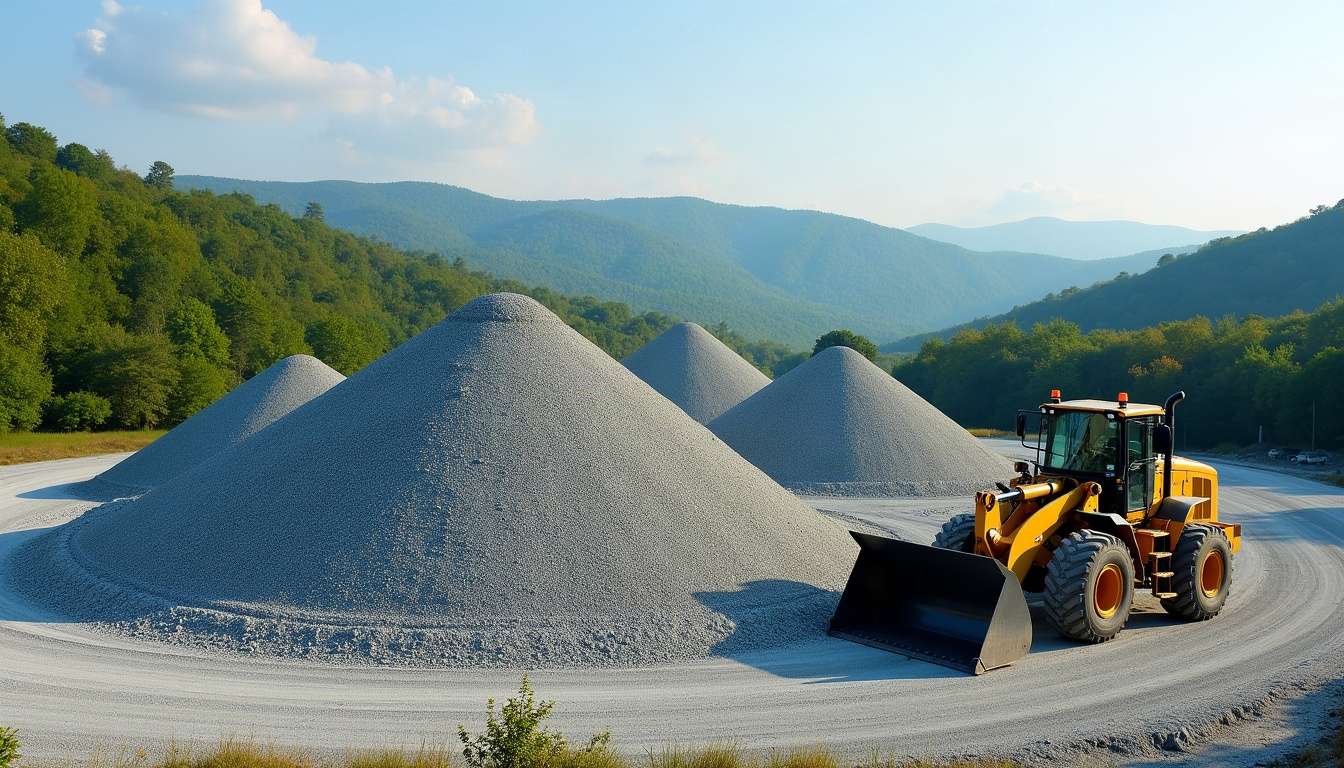
33C Limestone Gravel Guide: Driveways, Base and Concrete
Quick answer: 33C limestone gravel is crushed limestone with sharp, angular faces that interlock when compacted, creating a firm, load-bearing layer. Use it for gravel driveways, base under patios, pavers and slabs, ready-mix concrete aggregate, farm roads and parking areas. Place it in 3 to 4 inch lifts, compact each lift, and add 10 to 15 percent to your ordered volume for compaction.
What 33C Limestone Gravel Is
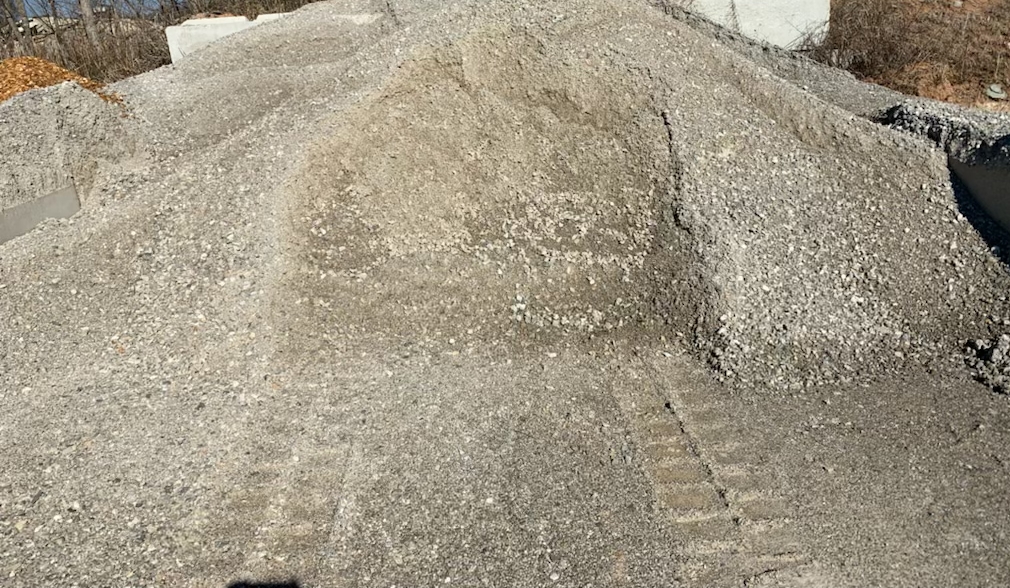
33C limestone gravel is a crushed limestone stone product. It starts as solid limestone bedrock, which is blasted or cut from a quarry face and then run through crushers and screens until the pieces fall within a usable size range. Unlike river gravel, which is shaped by water over thousands of years, crushed limestone comes out of the crusher with fresh, sharp, angular faces. That angularity is the reason it is one of the most widely used construction aggregates in the country.
Limestone is a sedimentary rock made mostly of calcium carbonate. It is hard enough to carry traffic and resist breaking down under normal loads, yet it crushes cleanly into consistent pieces. In color it usually runs light to medium gray, sometimes with blue or tan tones depending on the quarry, and it tends to lighten as it weathers in the sun.
Product names like “33C” come from the way quarries and suppliers label their screened sizes. Labels vary from region to region and supplier to supplier, so if your project calls for a specific gradation, such as a state transportation specification, confirm the requirement with your engineer or contractor and call us to talk through whether our 33C fits. For most residential and light commercial work, what matters is that it is a clean, crushed limestone gravel that compacts well and drains reasonably.
Jackson Sand stocks 33C limestone gravel alongside pea gravel and red river rock in our gravels lineup. Contractors, ready-mix producers, farmers, landscapers and homeowners across West Tennessee use it for driveways, base layers, concrete and roads. This guide explains how it works, how to install it, and how it compares with the rounded stones we carry.
Why Angular Crushed Stone Locks Together
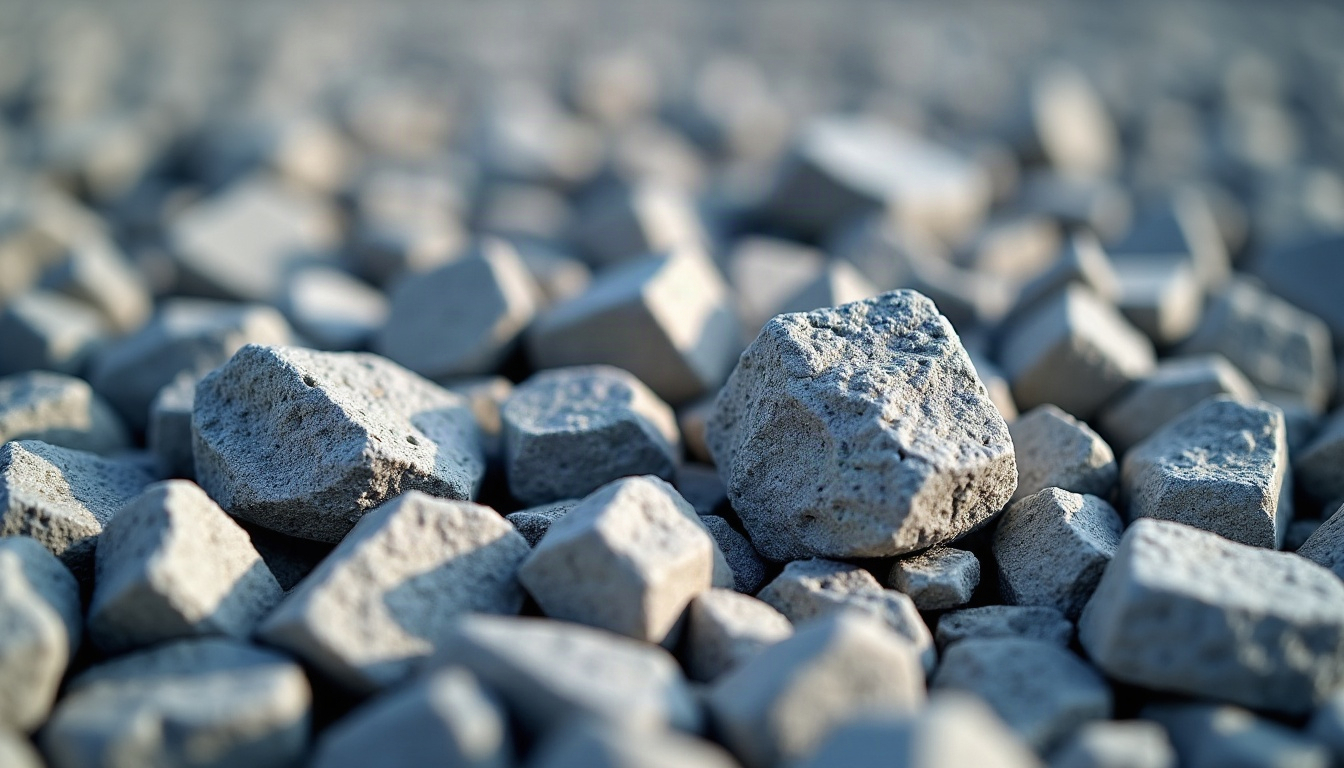
The single most important property of crushed limestone is its shape. Every piece has flat faces and sharp edges left by the crusher. When those pieces are spread and compacted, the faces press against one another and the edges wedge into neighboring gaps. The result is called aggregate interlock, and it is what turns a loose pile of stone into a firm, load-bearing layer.
Rounded vs. angular
Picture a jar of marbles compared with a jar of broken tile. Push down on the marbles and they roll aside. Push down on the tile and the pieces jam against each other and resist. Rounded stones like pea gravel and river rock behave like the marbles: easy to walk on, beautiful, free draining, but unstable under wheels. Angular crushed stone behaves like the tile.
Friction and fines
Two other factors help crushed limestone lock up:
- Surface texture. Freshly broken limestone has a rough texture that adds friction between pieces.
- Size range. Many crushed stone products include a range of sizes, so smaller pieces fill the spaces between larger ones. That makes the layer denser after compaction. More fines mean a tighter, firmer surface, while cleaner stone with fewer fines drains more freely.
What that means in practice
Interlock is why crushed limestone stays put on a sloped driveway, holds the edges of a parking pad, and carries the weight of trucks and equipment. It is also why crushed stone is the standard base under pavers, slabs, sheds and roads. Once compacted, it spreads loads over a wider area of the soil underneath, so the surface above is less likely to rut or settle.
Common Uses for 33C Limestone
Crushed limestone is a workhorse material. Here are the jobs it is most often asked to do.
Driveways
Limestone gravel driveways are a familiar sight on farms and rural homesites throughout West Tennessee. The angular stone stays in place better than rounded gravel, handles slopes, and drains well enough to keep the surface from turning into mud. Gravel driveways also cost less up front than asphalt or concrete and are easy to repair.
Base and sub-base
Under patios, paver walkways, concrete slabs, sheds, retaining wall footings, and above-ground pools, crushed limestone provides a stable, level base that compacts tightly and helps prevent settling.
Ready-mix concrete
Crushed limestone is widely used as coarse aggregate in ready-mix concrete. Its angular shape bonds well with cement paste. Concrete producers follow their own mix designs and specifications, so ready-mix plants and contractors should confirm suitability for their particular mix.
Roads and parking areas
Farm roads, logging roads, private lanes, equipment yards and gravel parking lots all rely on compacted crushed stone. It can be used as a finished gravel surface or as base under asphalt.
Railroads
Crushed stone is used in railroad construction, where the angular pieces help hold track in alignment and carry heavy loads.
Other uses
- Backfill behind retaining walls (often with a perforated drain)
- Pads for HVAC units, generators and storage buildings
- Stabilizing muddy farm gates and barn entrances
- Culvert bedding and road shoulders
Building a Limestone Gravel Driveway
A gravel driveway is only as good as what is underneath it. Most driveway failures, such as ruts, potholes and soft spots, trace back to poor preparation of the subgrade or skipping compaction.
- Plan the layout and drainage. Mark the route and identify where water flows. A driveway should be slightly crowned or sloped so rain runs off rather than down the middle. Ditches or culverts may be needed where the drive crosses a low area.
- Strip the topsoil. Remove sod, roots and organic topsoil. Organic material compresses and rots, leaving soft spots.
- Grade and compact the subgrade. Shape the soil to the final crown or slope and compact it. Soft or wet spots should be dug out and filled with stone.
- Consider geotextile fabric. On soft clay soils, a woven stabilization fabric helps keep stone from pushing down into the mud and extends the driveway’s life.
- Place stone in lifts. Spread crushed limestone in layers of roughly 3 to 4 inches and compact each lift before adding the next. A total of 6 to 8 inches is typical for a residential driveway on decent soil; poor soils or heavy trucks may call for more.
- Crown the surface. Finish with a slight crown, higher in the center, so water sheds to the sides.
- Maintain. Re-grade periodically and add stone to low spots before they turn into potholes.
Our page on surface water drainage and slope covers grading principles that apply to driveways as well as lawns.
Compaction: Getting It Right
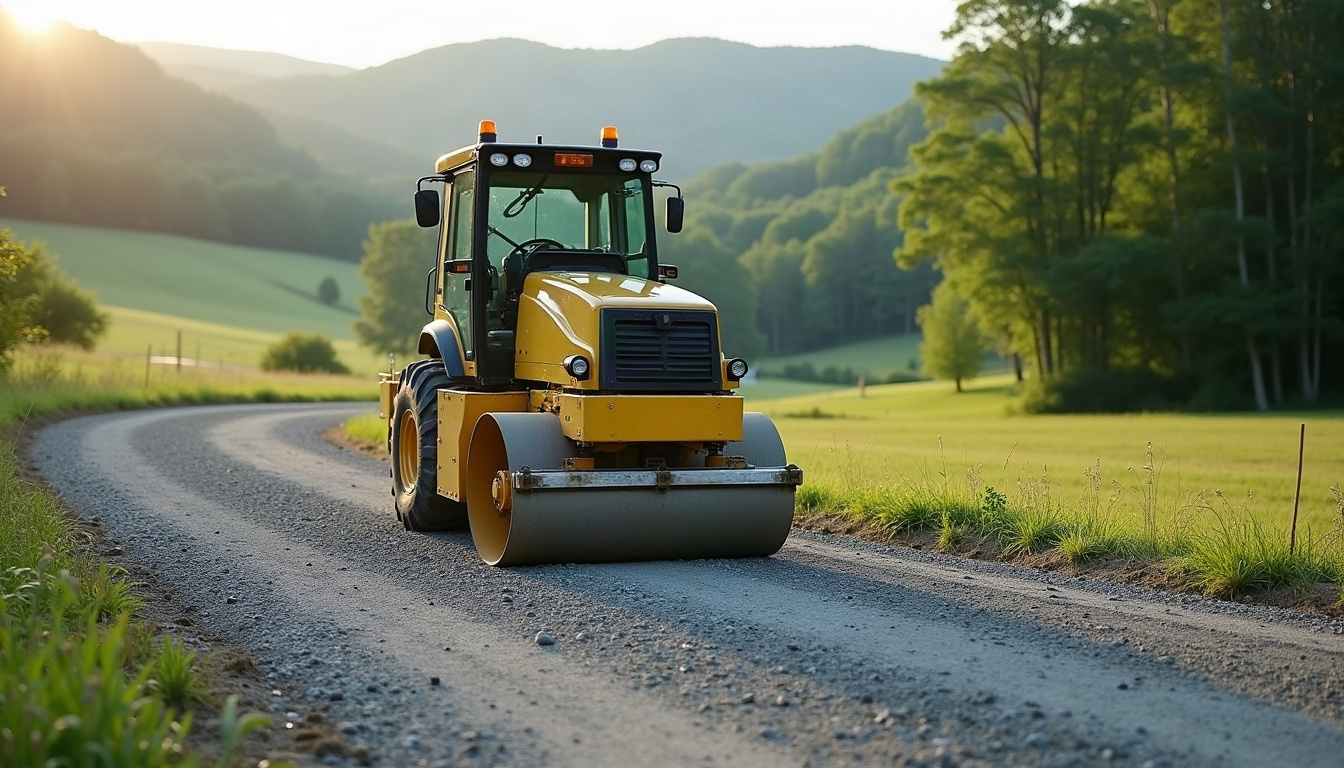
Crushed limestone delivers its strength only after it is compacted. Loose stone dumped and spread will shift and rut. The same stone compacted properly becomes a firm, stable layer.
Equipment
- Hand tamper: fine for small pads, around posts and tight corners.
- Plate compactor: the standard tool for patios, walkways and small driveways.
- Rammer (jumping jack): useful in trenches and confined areas.
- Vibratory roller: best for long driveways, roads and parking areas.
Technique
Compact in lifts. Even a heavy plate compactor only reaches a few inches deep, so placing 8 inches of stone and running the compactor over the top leaves the bottom loose. Spread 3 to 4 inches, compact it, then add the next layer.
Moisture matters. Stone that is bone dry does not consolidate as well, and fines can blow away. Lightly dampening the stone before compacting helps the pieces slide into place and the fines bind. Avoid saturating it, which can make the layer pump and the subgrade turn soft.
Make multiple passes. Run the compactor over the area in overlapping passes, then change direction and go again. You will notice the surface stop moving and the compactor start to ride rather than sink.
Testing
For commercial work or structural pads, a contractor or engineer may test compaction to a specified density. For most residential projects, a firm surface that does not show footprints or tire marks is a good sign.
33C Limestone vs. Pea Gravel vs. River Rock
Jackson Sand carries three main gravels. They look and behave very differently, and the right choice depends on what the surface needs to do.
| Feature | 33C limestone gravel | Pea gravel | Red river rock |
|---|---|---|---|
| Origin | Quarried and crushed limestone | Naturally rounded small stones | Naturally rounded river pebbles |
| Shape | Angular, rough faces | Small, round, smooth | Larger, round, smooth |
| Interlock | Strong | Little to none | Little to none |
| Compacts to firm surface | Yes | No | No |
| Look | Gray, utilitarian | Multicolored, natural | Warm reds and browns, decorative |
| Best uses | Driveways, base, ready-mix, roads, pads | Paths, patios, play areas, concrete aggregate | Decorative beds, dry creek beds, drainage edges |
| Comfort underfoot | Firm but rough | Very comfortable | Uneven, decorative |
Using them together
These materials complement each other. A common approach is to build a compacted limestone base and top it with a thin layer of pea gravel for a softer, more decorative surface. Landscapers often use limestone as the base under hardscapes and finish surrounding beds with river rock. Choosing the right stone for each layer gets you both performance and appearance.
Drainage Considerations
Crushed limestone drains reasonably well, but it is not the same as clean, open-graded drainage stone. The fines that help it lock together also fill some of the space water would otherwise move through. Understanding that tradeoff helps you pick the right material for each part of a project.
Where limestone works for drainage
- Driveway and road surfaces, where crown and side ditches move most of the water.
- Base under pavers, where a compacted, stable layer matters more than maximum flow.
- Stabilizing wet entrances and gates, where a firm surface is the goal.
Where clean drainage stone is better
French drains and other subsurface systems depend on open void space to collect and carry water. They typically use clean 3/8 to 3/4 inch gravel around a perforated pipe, with about 2 inches of stone under the pipe and 4 inches over it. On large areas such as athletic fields, these lines are often laid in a herringbone pattern. See our pages on seepage drainage and drainage basins for more detail.
Slope still matters
No gravel fixes a surface that is flat or tilted the wrong way. Paved areas need at least a 1 percent slope to move water, and turf needs about 2 percent. Build slope into the subgrade before the stone goes down.
How Much 33C Limestone to Order

Crushed stone is ordered by volume or weight. To figure volume in cubic yards, use the standard formula.
The formula
Length (ft) x width (ft) x depth (ft) / 27 = cubic yards. Divide inches by 12 to get feet, so 4 inches is 0.33 feet and 6 inches is 0.5 feet.
Examples
| Project | Dimensions | Depth | Approx. cubic yards |
|---|---|---|---|
| Shed pad | 12 ft x 16 ft | 4 in | 2.4 |
| Patio base | 16 ft x 20 ft | 4 in | 4.0 |
| Parking pad | 20 ft x 20 ft | 6 in | 7.4 |
| Residential driveway | 100 ft x 12 ft | 6 in | 22.2 |
| Long farm lane | 500 ft x 10 ft | 6 in | 92.6 |
Allow for compaction
Crushed stone compacts, so the loose volume you order shrinks once it is tamped or rolled. Many contractors add roughly 10 to 15 percent to the calculated volume to account for compaction and uneven subgrade. If you are ordering by the ton, ask us for help converting your cubic yards.
Our free yardage calculator handles the basic math. Enter your dimensions, add your compaction margin, and call us to confirm the order.
Maintaining Crushed Limestone Surfaces
A well-built limestone driveway or lot can last many years with modest upkeep. Most of the work comes down to managing water and catching small problems early.
- Re-grade periodically. Traffic pushes stone to the edges and creates ruts in wheel paths. A box blade or drag restores the crown and spreads stone back into the center.
- Fill potholes promptly. Clean out the hole, fill with crushed limestone, and compact. Left alone, potholes hold water and grow.
- Keep ditches clear. Clogged ditches and culverts send water across the surface and wash out stone.
- Add a top layer every few years. Stone gets pressed into the subgrade and scattered over time. A fresh layer of an inch or two restores the surface.
- Control weeds. Weeds take hold in dirt and debris on the surface. Regular grading disrupts them.
- Watch the edges. Mowers and tires break down the edges of a gravel drive. Defined edges help keep the stone in place.
Dust control
Crushed limestone surfaces can throw dust in dry summer weather, especially on lanes that see regular traffic. Keeping speeds down, maintaining a good crown so fines are not ground into powder in standing water, and refreshing the top layer with clean stone all help. Some property owners apply commercial dust suppressants to high-traffic stretches near homes and barns.
After heavy rain
Walk the driveway after a big storm. Look for washouts at culvert ends, stone carried into ditches, and spots where water crossed the surface instead of running off the sides. Those are the places to fix first, because they tell you exactly where the water is going.
Heavy equipment, wet seasons and steep grades all speed up wear. If a section of driveway repeatedly fails, the problem is usually drainage or a soft subgrade underneath, and fixing that once is cheaper than replacing stone every year.
Order 33C Limestone Gravel in West Tennessee
When a surface needs to carry weight and stay put, angular crushed limestone is the right tool. Jackson Sand supplies 33C limestone gravel from our yard in Jackson, Tennessee, to contractors, concrete producers, farms, landscapers and homeowners across West Tennessee and the Mid-South. We own our trucks, which means clean loads with no cross-contamination from previous deliveries. You get exactly the stone you ordered.
Jackson Sand has been in production since around 1996 and now runs about 14 trucks of our own, from as early as 6 a.m. until 5 or 6 p.m. Production capacity has grown from roughly 25,000 tons a year in the early days to as much as 150,000 tons a year, so larger driveway, lot and road projects are within reach. Every load crosses our truck scale before it leaves the yard.
Have your dimensions and depth ready, and call us at 731-668-0440 or contact us online for an order or to talk through which gravel fits your project.
Inside the Jackson Sand Plant
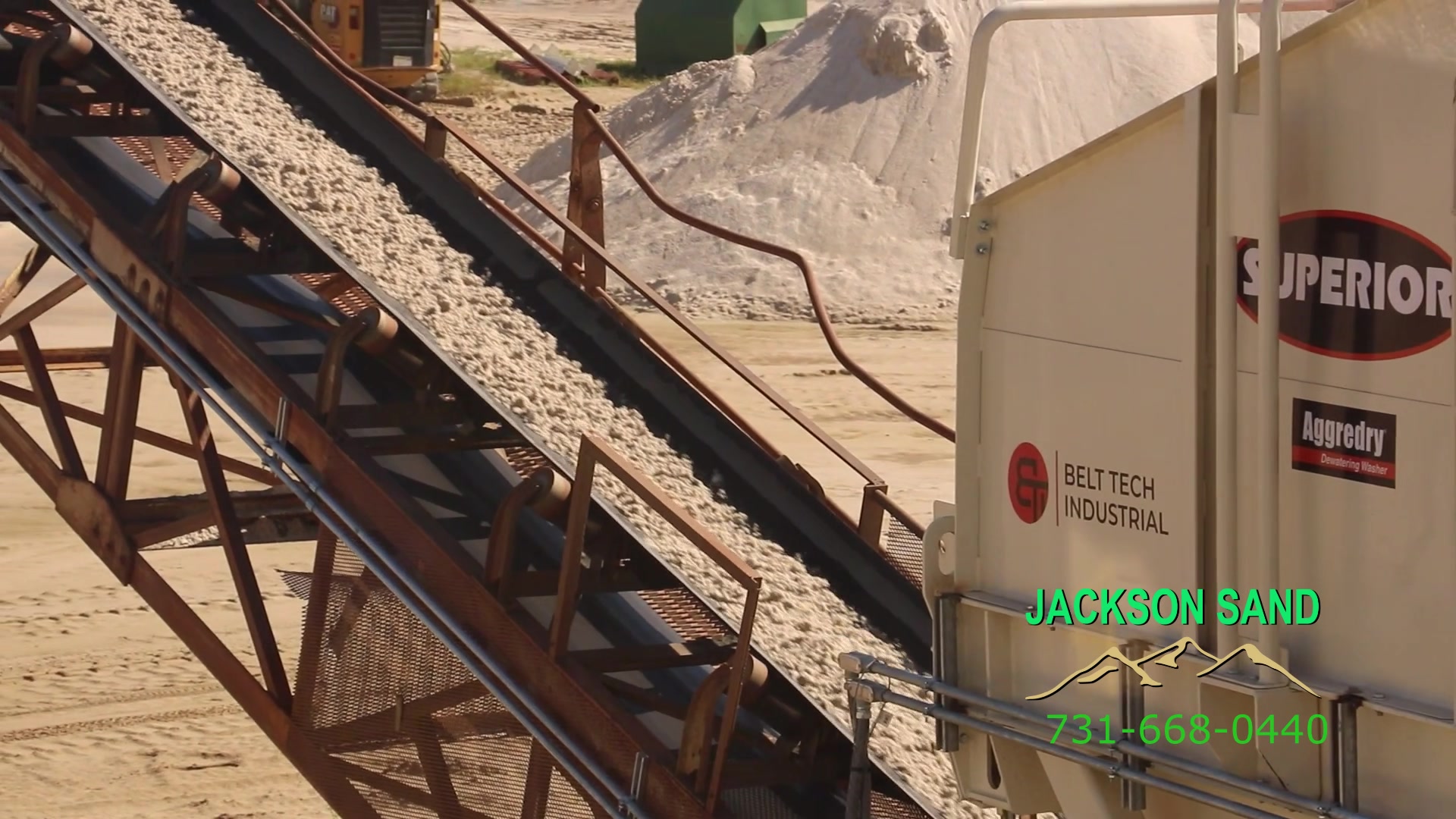
Take a 90-second look at where our sand comes from: the washing plant, screens and conveyors, and the Jackson Sand truck fleet that delivers every load. President Carlton Pope tells the story of how the company grew from one truck in 1996.
Sources and Further Reading
- USGS crushed stone statistics and information (U.S. Geological Survey)
- USGS Mineral Commodity Summary: crushed stone (PDF) (U.S. Geological Survey)
- Aggregate 101: limestone and crushed aggregate basics (PDF) (Penn State Center for Dirt and Gravel Road Studies)
Frequently Asked Questions
What is 33C limestone gravel used for?
33C limestone gravel is a crushed limestone used for gravel driveways, base layers under patios, pavers, slabs and sheds, ready-mix concrete aggregate, farm and private roads, parking areas and railroad work. Its angular shape compacts into a firm surface, which makes it a better choice than rounded stone anywhere vehicles or heavy loads are involved.
Why is crushed limestone better than pea gravel for driveways?
Crushed limestone has sharp, angular faces that wedge together when compacted, creating a stable surface that resists rutting and holds slopes. Pea gravel is rounded, so it rolls and shifts under tires. Many homeowners use limestone for the driveway itself, or use it as the base with a thin decorative layer of pea gravel on top.
How deep should a limestone gravel driveway be?
A typical residential gravel driveway uses about 6 to 8 inches of compacted crushed stone over a prepared subgrade, placed in 3 to 4 inch lifts. Soft clay soils, steep grades or heavy truck traffic may call for more depth and a stabilization fabric underneath. Proper drainage and a crowned surface matter as much as depth.
Do I need to compact crushed limestone?
Yes. Crushed limestone reaches its strength only when compacted. Spread it in lifts of 3 to 4 inches, lightly dampen it, and run a plate compactor or roller over it in overlapping passes. Loose, uncompacted stone will shift and rut. A properly compacted layer should not show footprints or tire marks.
Can crushed limestone be used for French drains?
It is not the best choice. The fines in crushed limestone that help it lock together also fill void space water needs to move through. French drains work best with clean, open-graded gravel, typically 3/8 to 3/4 inch, around a perforated pipe. Limestone is better suited to driveway surfaces and base layers.
How much extra limestone should I order for compaction?
Crushed stone shrinks as it is compacted, so many contractors add roughly 10 to 15 percent to the calculated volume. Use length x width x depth in feet divided by 27 to get cubic yards, then add your margin. Call Jackson Sand at 731-668-0440 if you need help converting yards to tons.
Ready to order or have a question about the right material? Call Jackson Sand at 731-668-0440 or send us a message and we will help you pick the right product and quantity.
Leave a Reply