

Champion Bermuda Top Dressing for Ultradwarf Greens
Quick answer: Champion Bermuda Top Dressing is a sand with its largest particles removed, made for ultradwarf bermudagrass greens mowed as low as 0.120 inch. Without coarse grains, it slips into the dense canopy, spares reels and bedknives, and supports smoother, faster putting surfaces. It intentionally does not meet USGA spec and lowers perc rate somewhat, so pair it with aerification and Regular Top Dressing.
Why Ultradwarf Greens Need a Different Top Dressing
Ultradwarf bermudagrass changed putting greens across the Southeast and the Mid-South. Cultivars bred for extremely dense, fine-textured growth can be mowed far lower than older bermudagrass greens and hold up through hot, humid summers that challenge bentgrass. Many courses in West Tennessee and the surrounding region have converted for exactly that reason.
That density and low height come with management demands. Ultradwarfs produce organic matter aggressively, so they need frequent top dressing to keep thatch from building up into a soft, puffy layer. At the same time, the canopy is so tight and the mowing height so low that the sand has very little room to disappear into. Sand that sits on the surface gets picked up by mowers.
Those two facts pull in opposite directions. You need to top dress often, but every application puts sand in front of reels set to fractions of an inch. A standard top dressing sand, even a high-quality USGA-spec product, contains coarse and very coarse grains that are larger than the gaps in an ultradwarf canopy. Those grains stay on top, and they are the ones that do the most damage to cutting units.
Champion Bermuda Top Dressing was developed for this situation. It is designed specifically for ultradwarf bermudagrass greens mowed as low as 0.120 inch, with the largest particles removed. The goal is a sand that works into the canopy quickly, causes less wear on equipment, and lets superintendents keep up the frequent light applications ultradwarfs require. You can find it alongside the rest of the line on the top dressing page.
What Champion Top Dressing Is: The Spec
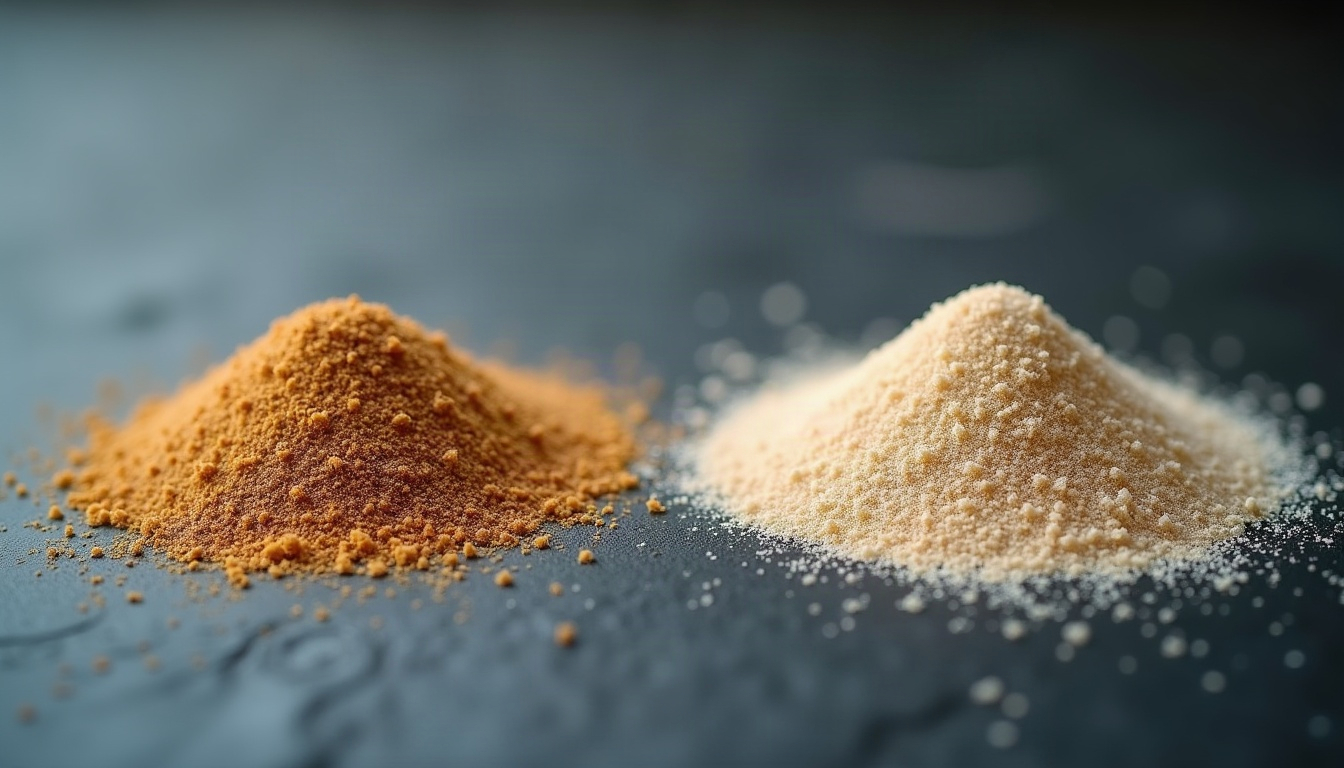
The easiest way to understand Champion is to put its lab analysis next to Regular Top Dressing. Both are clean, washed sands with very little silt and clay. The difference is where the particles fall.
| Particle class | Regular Top Dressing | Champion Bermuda Top Dressing |
|---|---|---|
| Total sand | 98.9% | 99.7% |
| Gravel | 0.1% | 0% |
| Very coarse | 2.4% | 0% |
| Coarse | 23.1% | 0% |
| Medium | 58.3% | 13.9% |
| Fine | 13.6% | 55.8% |
| Very fine | 1.5% | 30.3% |
| Meets USGA spec | Yes | No, by design |
What the numbers show
Champion has no gravel, no very coarse sand and no coarse sand. Every particle in the coarse end of the spectrum has been removed. What remains is mostly fine sand, with a substantial very fine fraction and a smaller share of medium sand. Regular Top Dressing, by contrast, is built around the medium and coarse range that USGA recommendations favor for drainage.
That shift is deliberate. Champion trades some of the drainage characteristics of a USGA sand for a particle size that suits an ultradwarf canopy and a cutting height measured in thousandths of an inch. It is a specialty tool, not a replacement for a root zone sand.
Full lab sheets for both products, plus the bunker sands and other materials, are on the sand specs page.
Why the Coarse Particles Are Removed
The decision to remove coarse particles comes down to how sand behaves in an ultradwarf canopy and what happens when it does not get into that canopy.
Canopy penetration
An ultradwarf green is a dense mat of tiny leaves and stems. The spaces between them are small. Fine and medium sand grains fall through those gaps and settle into the thatch where they do their job, diluting organic matter. Coarse grains, around 0.5 mm and larger, often cannot. They sit on top of the leaf blades, roll around, and get dragged by rollers and reels instead of working in.
Faster incorporation
Because nearly all of Champion’s particles are fine or very fine, a light application disappears into the surface quickly after brushing or irrigation. That shortens the window where sand is affecting play and equipment. It also means superintendents can top dress more often with less disruption, which is exactly what ultradwarfs need to keep organic matter in check.
Surface consistency
Coarse grains left on the surface create small irregularities. On a green mowed at standard heights, the effect is minor. At ultradwarf heights, a few large sand particles can affect how the ball rolls and how cleanly the mower cuts. Removing them produces a more uniform surface after each application.
Less waste
Sand that gets picked up by mowers ends up in the clipping baskets, not in the turf. Every grain that is collected is sand you paid for that never reached the thatch. A finer sand that incorporates fully gets more of the material where you want it.
The trade-off is that the particles that were removed are the same ones that contribute most to fast drainage in a USGA sand. That is the reason Champion does not meet USGA spec and why it needs to be managed as part of a broader program, covered later in this article.
Protecting Reel Mowers and Bedknives
For many superintendents, equipment wear is the deciding factor in choosing Champion. Greens mowers on ultradwarfs run with reels and bedknives set extremely close, with tight tolerances between the reel blades and the bedknife. Sand on the surface is abrasive, and coarse grains are the most abrasive of all.
How sand damages cutting units
When a reel passes over sand grains sitting on the canopy, some of those grains get caught between the reel blades and the bedknife. Hard quartz particles grind the cutting edges, round them off, and can nick them. A dull reel tears leaves instead of cutting them cleanly, leaving ragged tips that brown out and increase stress. Larger grains do more damage per contact and are more likely to be left on the surface where the mower will meet them.
The cost of grinding and replacement
Frequent top dressing with a coarse sand on ultradwarf greens can mean more frequent backlapping, grinding and bedknife replacement. That is labor, parts and downtime. Some courses avoid mowing for a period after top dressing for this reason, or switch to rolling only, which affects green speed and consistency for golfers.
What Champion changes
Champion’s largest particles are removed specifically to reduce damage to reel mower blades and bedknives. With no coarse or very coarse sand in the mix, there is less abrasive material left on the surface after application, and the material that is there is smaller. It still contains hard sand, so good practices still matter:
- Brush or drag the sand in thoroughly before the next mowing.
- Irrigate lightly to help wash particles off leaf blades and into the canopy.
- Consider rolling instead of mowing for the first pass after a heavier application.
- Check reel to bedknife contact frequently during periods of heavy top dressing.
The result is less wear between sharpening cycles and more flexibility to top dress on schedule.

Green Speed and Surface Quality

Golfers notice green speed first, and ultradwarfs are capable of very fast, smooth surfaces when managed well. Champion supports that in a few ways.
Faster ball roll
Faster ball roll and green speed are one of the primary benefits of Champion top dressing. A finer sand fills tiny voids in the canopy and settles into a tight, even surface. Combined with low mowing heights, that gives the ball less resistance and fewer imperfections to roll over.
Frequent light applications without disruption
Ultradwarf green speed depends on controlling grain and organic matter. Thatch buildup makes greens puffy and slow, and it allows grain to develop. Light, frequent top dressing keeps the canopy tight and upright. Because Champion incorporates quickly and is easier on mowers, superintendents can keep that frequency through the playing season without causing days of gritty, slow surfaces after each application.
Smoothness and trueness
Speed matters, but so does trueness. A green that is fast but bumpy frustrates golfers. Fine sand settles evenly, filling small depressions and leveling the surface. Paired with regular rolling, it helps keep putts on line.
Firmness
By diluting organic matter near the surface, Champion contributes to firmer greens that hold their shape and resist ball marks. Firmness also affects speed: a soft, thatchy green slows the ball no matter how low it is mowed.
These benefits depend on consistent use. A single application does little. A season of light, steady applications makes the difference golfers notice.
The Perc-Rate Trade-Off
Every specialty product involves a compromise, and Champion is honest about its own. Because the coarse particles are removed, Champion intentionally does not meet USGA specifications and lowers perc rate somewhat.
What perc rate means
Percolation rate, or infiltration rate, is how fast water moves down through the root zone. USGA-spec sands are concentrated in the medium and coarse range because those particles create large pore spaces that drain quickly while still holding enough water for turf. When you shift a sand toward fine and very fine particles, as Champion does, the pores get smaller. Water moves more slowly and the sand holds more of it.
Why it matters on a green
The top layer of a green that is top dressed regularly eventually becomes made largely of the top dressing sand. If that top layer drains more slowly than the root zone beneath it, water can linger near the surface. Slower drainage at the surface can mean softer greens after rain, wetter conditions that favor some diseases, and less margin during heavy storms common in the Mid-South summer.
Keeping it in perspective
The reduction is described as somewhat, not severe, and it is a known, manageable effect. Superintendents choose Champion knowing this and plan around it. The benefits to equipment and surface quality are real, and the drainage effect can be offset with a few standard practices.
The key is not to use Champion as the only sand on your greens indefinitely without a plan. Treat it as the routine light-dusting sand and rely on other tools to keep the profile open.
How to Manage the Perc-Rate Trade-Off
The recommended way to offset Champion’s effect on perc rate is straightforward: aerification plus regular top dressing. In practice, that means using two sands for two jobs.
Use Champion for routine light dusting
During the growing season, Champion handles the frequent, light applications that keep the canopy tight and organic matter diluted. These applications are small, so the amount of fine sand added to the profile at any one time is modest.
Use Regular Top Dressing to fill aerification holes
When you core aerify or use other hollow-tine or deep-tine methods, fill the holes with Regular Top Dressing, which meets USGA spec. Those holes become vertical channels of coarser, faster-draining sand that cut through the surface layer and carry water down into the root zone. They act as drainage chimneys through any finer material near the top.
Keep up with aerification
Aerification itself removes organic matter and opens the surface. On ultradwarfs in the Mid-South, core aerification is usually scheduled during peak summer growth when the turf recovers fastest. Venting with small solid or needle tines between core aerifications helps keep the surface open without major disruption.
Monitor and adjust
- Track how quickly greens firm up after rain compared with previous seasons.
- Take periodic samples of the top few inches and have an accredited lab measure organic matter and infiltration.
- If infiltration in the top layer trends down, increase aerification or shift more applications to Regular Top Dressing.
Managed this way, you keep the playability and equipment advantages of Champion while protecting drainage through the profile. The broader golf course maintenance overview covers how these practices fit together.
Application Practices for Champion
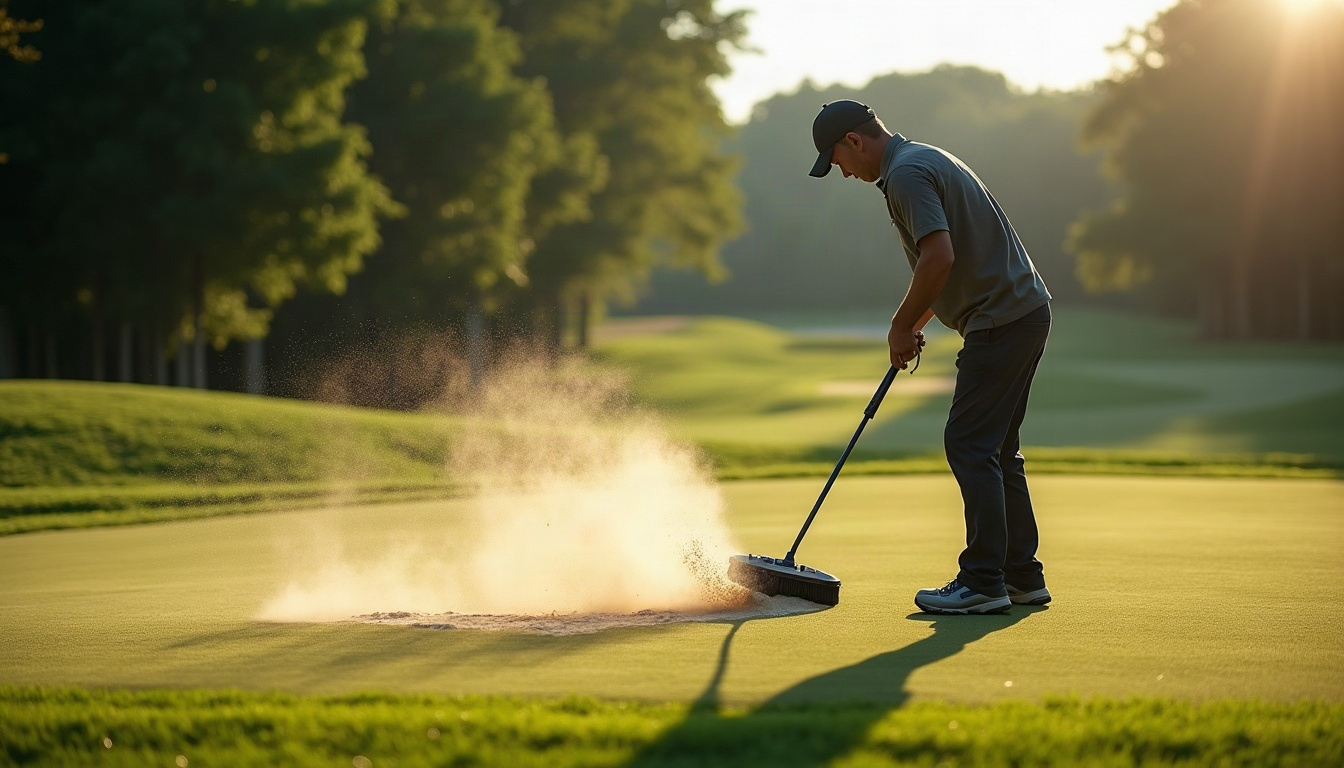
Champion works best when applied lightly and often. Here are practical guidelines superintendents commonly follow on ultradwarf greens.
Rates
Light dustings are the norm. A 1/32 inch application is roughly 2.6 cubic feet per 1,000 square feet, and a 1/16 inch application is roughly 5.2 cubic feet. Many superintendents stay at the light end during peak play and adjust based on growth rate and how quickly the sand disappears.
Frequency
During active growth, frequent applications every one to two weeks are common on ultradwarfs, since they produce organic matter quickly. Programs vary, and growth regulators, fertility and weather all affect how often sand is needed. The guiding rule is to keep pace with growth.
Application steps
- Apply to a dry surface so sand moves off leaves easily.
- Use a calibrated spinner or drop top dresser for an even layer.
- Brush or drag lightly to work sand into the canopy.
- Irrigate lightly to settle remaining particles.
- Roll or delay mowing if sand is still visible on the surface.
Storage and handling
Keep sand dry and clean. Wet sand clumps and spreads unevenly. Store on a hard pad, under cover if possible, and keep it away from soil, gravel and debris. Jackson Sand mixes on its own premises and delivers in its own trucks, with strict cleanliness to prevent cross-contamination, so the sand you receive matches the lab analysis.
Is Champion Right for Your Greens?
Champion is a specialty product. It is the right choice in some situations and the wrong one in others. Use this quick guide.
| Situation | Recommended sand |
|---|---|
| Ultradwarf bermudagrass greens mowed very low, routine light dusting | Champion Bermuda Top Dressing |
| Filling core aerification holes on any green | Regular Top Dressing |
| Bentgrass greens | Regular Top Dressing |
| Older bermudagrass greens at standard heights | Regular Top Dressing, in most cases |
| Tees, fairways, athletic fields, lawns | Regular Top Dressing |
| New construction or root zone repairs | Root zone or greens mix, matched to the design |
Questions to ask
- How low are you mowing, and how often are you grinding reels?
- Is sand pickup by mowers limiting how often you top dress?
- What does your root zone test show for infiltration and organic matter?
- Do you have an aerification program that can carry Regular Top Dressing into the profile?
If you are mowing ultradwarfs at very low heights, fighting equipment wear, and already aerifying on a regular schedule, Champion is likely a good fit. If drainage is already a concern, address that first. The golf course sand page lists the full range of options.
Order Champion Top Dressing From Jackson Sand
Champion Bermuda Top Dressing gives ultradwarf greens a finer sand that works into the canopy quickly, spares mowers and bedknives, and supports fast, smooth putting surfaces. Paired with aerification and Regular Top Dressing, it fits into a program that protects drainage as well as playability.
Jackson Sand has been making golf-course-grade sand since around 1998. It produces Champion and Regular Top Dressing in Jackson, Tennessee, and delivers to golf courses across West Tennessee and the Mid-South, from Huntsville, Alabama to Little Rock and as far east as Tullahoma, in a fleet of around 14 of its own clean trucks.
To talk through your greens, request lab sheets, or schedule a delivery, call 731-668-0440 or contact Jackson Sand.
Inside the Jackson Sand Plant
Take a 90-second look at where our sand comes from: the washing plant, screens and conveyors, and the Jackson Sand truck fleet that delivers every load. President Carlton Pope tells the story of how the company grew from one truck in 1996.
Sources and Further Reading
- managing ultradwarf bermudagrass putting greens (USGA Green Section Record)
- surface management for ultradwarf bermudagrass greens (USGA Green Section Record)
- UT Extension bermudagrass fact sheet (W159-A) (University of Tennessee Extension)
Frequently Asked Questions
What is Champion Bermuda Top Dressing?
Champion is a top dressing sand designed for ultradwarf bermudagrass greens mowed as low as 0.120 inch. Its largest particles are removed, leaving mostly fine and very fine sand with some medium sand. That helps it work into the dense canopy quickly, reduces wear on reel mowers and bedknives, and supports faster ball roll.
Does Champion top dressing meet USGA specifications?
No, and that is intentional. Removing the coarse and very coarse particles moves the sand outside USGA root zone recommendations. The trade-off is a somewhat lower perc rate. Most superintendents offset this by core aerifying regularly and filling the holes with Regular Top Dressing, which does meet USGA spec.
Why remove coarse particles from top dressing sand?
Coarse grains often cannot fall into an ultradwarf canopy. They sit on the surface, where mowers pick them up and grind them between the reel and bedknife. Removing them lets sand incorporate faster, reduces equipment wear, wastes less material in clipping baskets, and leaves a more uniform putting surface after each application.
How do I offset the lower perc rate of Champion?
Combine it with aerification and Regular Top Dressing. Use Champion for routine light dusting, and fill core aerification holes with USGA-spec Regular Top Dressing. Those sand channels carry water through the surface layer into the root zone. Monitor infiltration and organic matter with periodic lab tests and adjust the program as needed.
Can I use Champion on bentgrass greens?
Champion is designed for ultradwarf bermudagrass greens mowed very low. Bentgrass greens and standard-height bermudagrass greens are usually better served by Regular Top Dressing, which meets USGA spec. Talk with Jackson Sand about your root zone and mowing heights before choosing a sand.
Ready to order or have a question about the right material? Call Jackson Sand at 731-668-0440 or send us a message and we will help you pick the right product and quantity.
Leave a Reply