
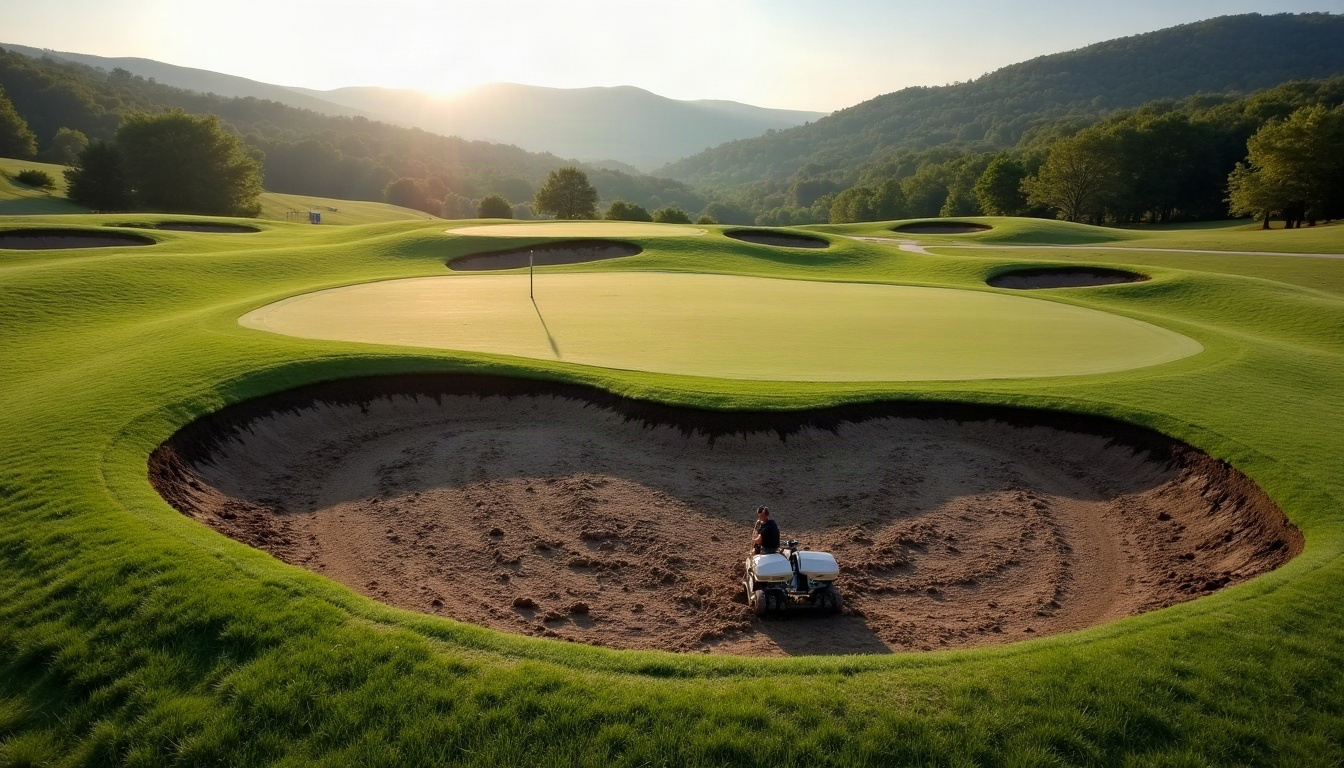
Greens Mixes and Root Zone Mixes: Sand and Peat Blends Explained
Quick answer: A greens mix, or root zone mix, is a top dressing sand blended with an organic amendment such as Dakota reed sedge peat, Peat Inc peat or Canadian sphagnum peat moss. The sand provides drainage and resists compaction; the peat raises water retention and nutrient holding, supports microbial activity and helps keep pH near neutral. Use full blends for green construction and renovation, and lighter or straight-sand programs for routine top dressing. Jackson Sand blends these in Jackson, Tennessee.
What a Greens Mix or Root Zone Mix Is
A greens mix is a sand-based growing medium blended with organic matter. When it is used to build the growing layer of a putting green, tee or sand-based sports field, it is usually called a root zone mix, because it becomes the zone where turf roots live. The terms overlap in everyday use, and at Jackson Sand both describe the same family of products: our top dressing sand blended with peat or with porous ceramic amendments.
The reason these blends exist is simple. Pure sand drains fast and resists compaction, which is why sand-based greens replaced soil greens on most modern courses. But straight sand holds little water and almost no nutrients. Native soil holds plenty of both, but compacts under traffic and drains poorly. A well-designed root zone mix sits in between: mostly sand for drainage and firmness, with enough organic matter to hold water and nutrients where roots can use them.
Jackson Sand blends greens mixes on our own premises in Jackson, Tennessee, using our top dressing sand, washed and classified at our own plant, and these amendments:
- Dakota peat, a reed sedge peat
- Peat Inc peat
- Canadian sphagnum peat moss
- Profile porous ceramic, an inorganic amendment, including high-content Profile mixes for DryJect systems
Because the blending happens at our yard and the mix ships in trucks we own, the ratio you specify is the ratio you get, with no contamination from a previous load. That consistency matters more for root zone material than almost anything else we sell, because a root zone is meant to stay in the ground for many years.
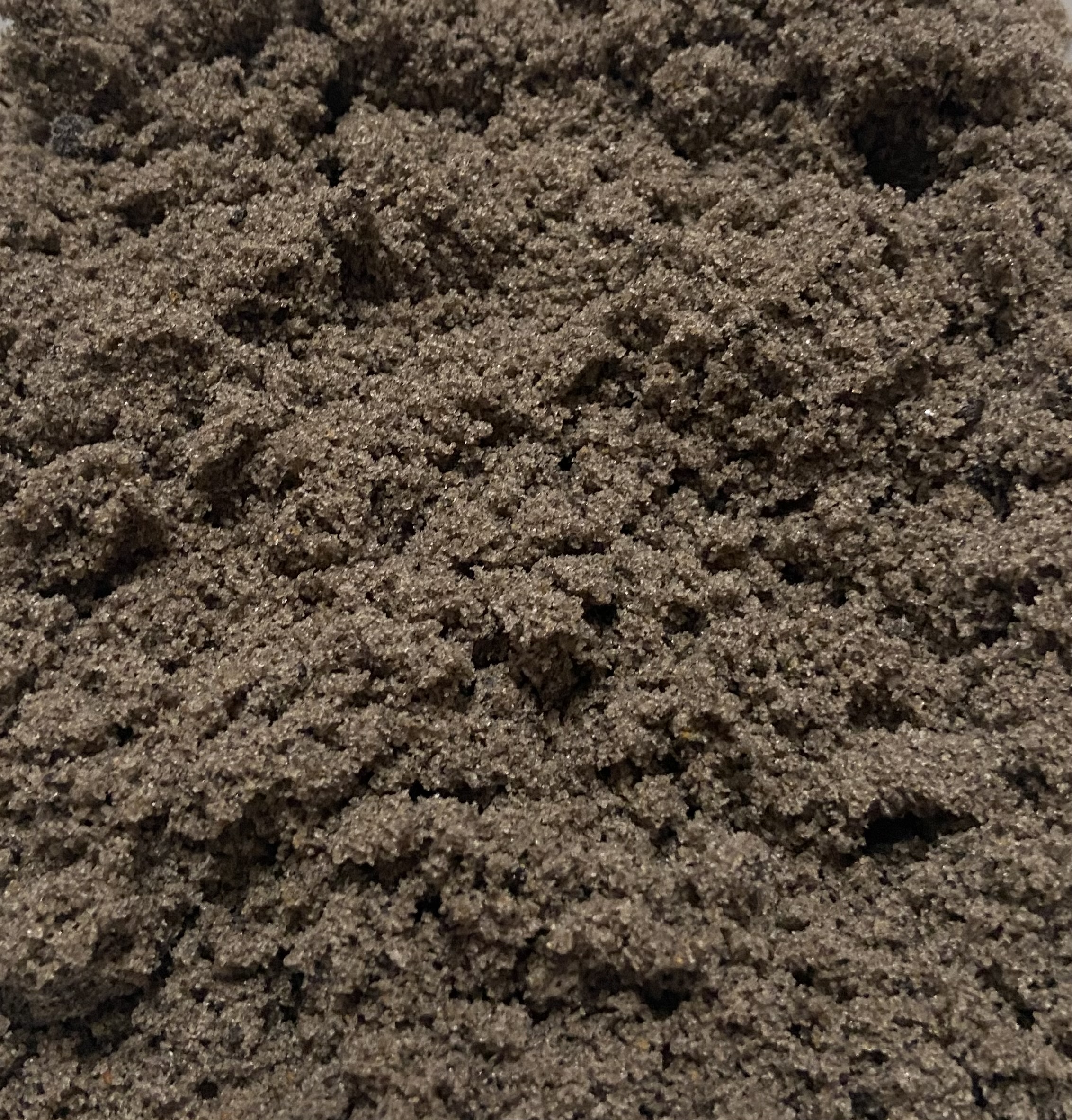
Why Sand Is the Foundation
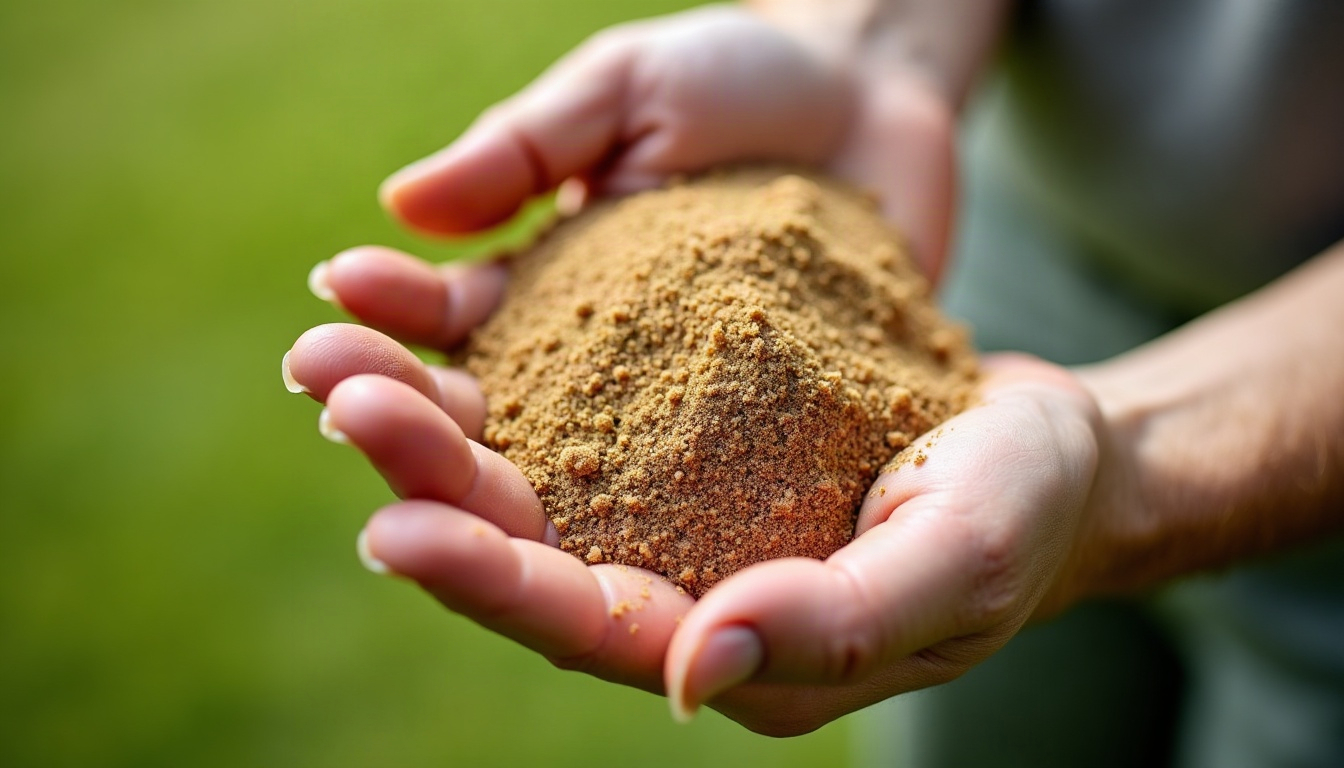
Before talking about peat, it is worth understanding why sand makes up the overwhelming majority of a root zone. The sand component decides how fast the green drains, how firm it plays and how well it resists compaction from foot traffic and mowers.
Particle size controls drainage
Water moves through sand in the pore spaces between grains. Medium and coarse grains create larger pores that drain quickly and let air back into the root zone after rain or irrigation. Very fine sand, silt and clay fill those pores and slow everything down. USGA guidance for putting green root zones focuses heavily on keeping most particles in the medium to coarse range and limiting fines.
Our regular top dressing sand, which is the base for our greens mixes, meets USGA specifications when compared with USGA root zone recommendations. Its lab test shows 98.9% sand, 0.5% silt and 0.5% clay, with 58.3% medium and 23.1% coarse particles.
| Particle class | Size | Regular Top Dressing |
|---|---|---|
| Gravel | over 2.0 mm | 0.1% |
| Very coarse sand | 1.0 mm | 2.4% |
| Coarse sand | 0.5 mm | 23.1% |
| Medium sand | 0.25 mm | 58.3% |
| Fine sand | 0.15 mm | 13.6% |
| Very fine sand | 0.05 mm | 1.5% |
| Silt / clay | below 0.05 mm | 0.5% / 0.5% |
Sand resists compaction
Sand grains do not stick together and collapse the way clay particles do. Even under daily traffic, a sand root zone keeps much of its pore space, which is why greens and high-end sports fields are built on sand. Full gradation data for our products is on the sand specs page.
What Peat Adds to the Root Zone
Peat is partially decomposed plant material that formed over long periods in wet, low-oxygen bogs and fens. Blended into sand in modest amounts, it changes how the root zone behaves in several useful ways.
Water retention
Peat holds water like a sponge. In a sand root zone, it raises the amount of plant-available water held after drainage, so the green does not dry out as fast between irrigation cycles. That is especially helpful during establishment, when young roots are shallow, and during hot, windy summer stretches in West Tennessee.
Nutrient holding
Clean sand has very little capacity to hold onto nutrients; fertilizer applied to pure sand can move down past the roots with the next heavy rain or irrigation. Organic matter adds exchange sites that hold nutrients in the root zone longer. The practical result is that a well-amended root zone typically needs less irrigation and less fertilizer to keep turf healthy.
Microbial activity
New sand is nearly sterile. Organic matter gives soil microbes food and habitat, and an active microbial population helps cycle nutrients and break down thatch. Root zone mixes are designed to promote that biological activity from the start rather than waiting years for it to build up on its own.
pH balance
Our root zone mixes are built to keep a neutral pH, which is the range where most turfgrass nutrients are readily available. The choice of peat affects this, which is one reason the type of peat matters as much as the amount.
The flip side is that organic matter has limits. Too much peat, or a peat that breaks down quickly, can reduce air-filled pore space, slow drainage and make the surface soft. That is why root zone ratios are kept mostly sand and why peat selection is worth thinking about.
Dakota Reed Sedge Peat, Peat Inc and Canadian Sphagnum Compared
Not all peat is the same. Peat types differ in the plants they formed from, how far they have decomposed and how acidic they are. Jackson Sand offers greens mixes built with three peat sources so you can match the blend to your specification or your past experience.
Dakota reed sedge peat
Dakota peat is a reed sedge peat. Reed sedge peats form from grasses and sedges rather than moss, and they are generally further decomposed than sphagnum, with a finer, darker texture. As a group, reed sedge peats tend to be less acidic than sphagnum and carry more of the nutrient-holding capacity associated with humified organic matter. Many turf managers like reed sedge peat for its ability to support microbial life in a new sand root zone.
Peat Inc
Peat Inc is another peat source we blend with. If your architect, agronomist or construction specification calls for it, or if your course has had good results with it in past projects, we can build your greens mix around it.
Canadian sphagnum peat moss
Sphagnum peat moss forms from sphagnum moss in northern bogs. It is fibrous, lightweight and holds a great deal of water for its volume. Sphagnum is naturally acidic, so blends using it are typically balanced to bring the finished root zone toward neutral. It is widely available and familiar to most turf professionals.
| Amendment | Origin | General character | Typical reason to choose it |
|---|---|---|---|
| Dakota peat | Reed sedge | Darker, more decomposed, finer texture | Nutrient holding and biological activity in new sand |
| Peat Inc | Peat | Organic amendment for sand blends | Matching a specification or past project |
| Canadian sphagnum | Sphagnum moss | Fibrous, light, high water holding, naturally acidic | Water retention; widely specified |
| Profile porous ceramic | Inorganic, manufactured | Porous particles that do not decompose | Permanent water and nutrient holding; DryJect fills |
A practical point: peat is sold by volume and its moisture content changes how it measures, so blends should be specified and checked by volume ratio and by lab performance rather than by eye. Mixing at a fixed yard with consistent equipment, as we do, keeps that ratio repeatable from load to load.
Whichever amendment you choose, the finished blend should be tested by an accredited physical soil testing lab when it is going into new construction.
Profile Porous Ceramic Mixes
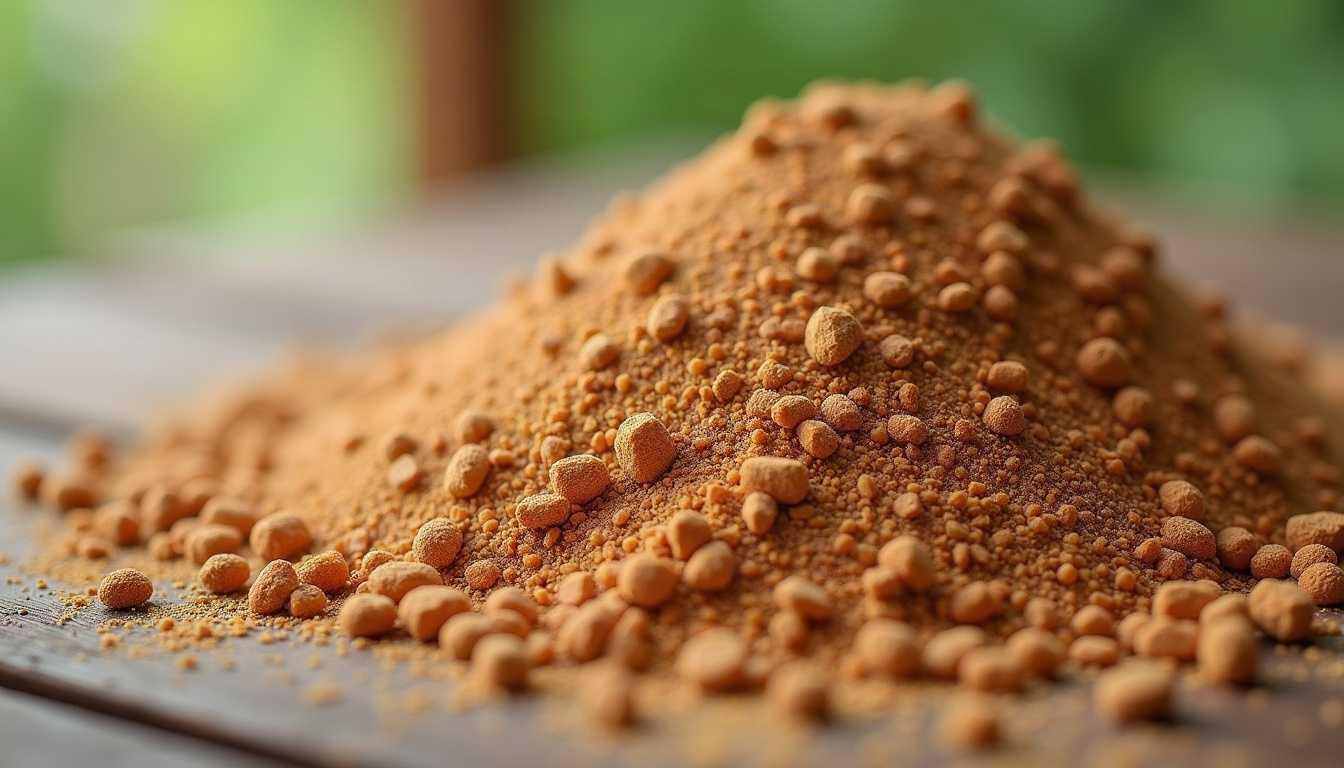
Peat is not the only way to improve a sand root zone. Profile porous ceramic is an inorganic amendment made of fired ceramic particles riddled with tiny internal pores. Those pores hold water and nutrients, while the spaces between particles still let water drain and air move.
How ceramic differs from peat
- It does not decompose. Peat slowly breaks down over the years. Ceramic particles keep their structure, so the benefit stays in the root zone.
- It holds water inside the particle. Instead of filling the pore spaces between sand grains, it stores water within itself, which helps keep drainage paths open.
- It is a firm particle. It behaves more like sand at the surface than organic matter does, which suits top dressing and aerification backfill.
Jackson Sand offers Profile mixes blended with our top dressing sand, and we produce high-content Profile mixes specifically for DryJect aerification systems, where the amendment is injected into the holes the machine creates. Some superintendents use ceramic in combination with a peat-based root zone, using peat for establishment and ceramic in ongoing aerification and top dressing programs.
Ceramic particles are also light in color and blend visually with sand, so a Profile top dressing does not leave a dark organic layer on the surface the way a heavy peat dressing can.
When deciding between peat and ceramic, think about the job. For building a new root zone, organic matter brings biological activity that ceramic does not. For modifying an existing green over time without adding more organic matter, ceramic is often the cleaner choice.
Construction and Renovation: Building a Root Zone
The biggest use of a root zone mix is building or rebuilding putting greens, tees and sand-based fields. In this setting, the mix is not a surface treatment; it is the growing layer the turf will live in for decades.
The typical profile
A common sand-based putting green design places a 4 inch gravel drainage blanket over a shaped subgrade with drain lines, then 12 inches of root zone mix on top. The gravel and root zone are matched so the finer root zone particles do not wash down into the gravel, and the contrast in particle size creates a perched water table that holds some moisture in the bottom of the root zone. Gravel choices and drain layout are covered on our seepage drainage page.
Mixing ratio
Root zone mixes are mostly sand. Ratios such as 80:20 or 85:15 sand to peat by volume are common starting points in industry practice, but the right ratio depends on the specific sand, the specific peat and lab results. Mixes should be tested before construction to confirm infiltration rate, porosity and water retention fall in the target ranges.
Why consistency matters
A root zone that varies from one truckload to the next creates a green that drains unevenly, with wet spots and dry spots that never go away. Mixing on our own premises and hauling in our own clean trucks is how we keep every load of root zone mix consistent with the one before it.
Quantity
To estimate volume, multiply length by width by depth in feet and divide by 27 to get cubic yards. A 5,000 square foot green at 12 inches deep needs about 185 cubic yards before allowing for settling and waste. Our yardage calculator does the math for you.
Greens Mix as a Top Dressing
Routine top dressing on established greens is a different job from construction. Here, the goal is to dilute thatch, smooth the surface and keep the upper root zone consistent with what is below it.
Straight sand or a mix?
Most superintendents top dress established greens with straight sand most of the time, because greens produce their own organic matter through roots and clippings, and adding more peat on top can build a soft, spongy layer. Our regular top dressing and, for ultradwarf bermudagrass, our Champion top dressing are the usual choices for routine programs. Details on both are on the top dressing page.
When a peat blend makes sense
- Grow-in. Newly sprigged or seeded greens benefit from the extra water holding while roots are shallow.
- Repair and patching. Sod and sprig repairs on greens and tees establish better in a mix that matches the original root zone.
- Aerification backfill on greens built with a peat root zone, where the goal is to keep the core channels similar to the surrounding profile.
- Very droughty sites, where a modest amount of organic matter helps hold moisture.
When ceramic makes sense
If your goal is better water and nutrient holding without adding decomposing organic matter, a Profile mix used after aerification is a common solution. High-content Profile blends are the standard backfill for DryJect.
Matching the Mix to Your Grass and Climate
West Tennessee and the Mid-South sit in the transition zone, where both warm-season and cool-season grasses are grown and both struggle at times. Summers are hot and humid; winters bring dormancy for bermudagrass and stress for cool-season grasses. Your root zone choices should reflect that.
Ultradwarf bermudagrass greens
Ultradwarfs produce a lot of organic matter on their own and are managed with frequent light top dressing and regular aerification. Construction mixes use peat for establishment, but ongoing programs tend to lean on straight sand and inorganic amendments to keep organic matter under control.
Bentgrass and cool-season greens
Bentgrass greens in this region face severe summer heat stress. A root zone that drains quickly but holds enough plant-available water helps roots survive July and August. Peat choice and ratio are especially important here.
Tees and sports fields
Sand-based tees and athletic fields often use similar root zone mixes, sometimes with a slightly different ratio to suit traffic and mowing height. Sports fields also see far more concentrated wear in goalmouths and between the hashes, so many field managers top dress those zones more often than the rest of the field.
Water and fertilizer budgets
Because peat-amended root zones hold more water and nutrients than straight sand, they can reduce irrigation and fertilizer needs. In a region where summer water use is a significant budget line, that benefit is real, but it has to be balanced against drainage and firmness.
Order Greens Mixes and Root Zone Mixes from Jackson Sand
Jackson Sand is sand from the source. We came into production in 1996 and converted to golf course-grade material around 1998, and root zone mixes have been part of that line ever since. We blend greens mixes and root zone mixes on our own premises in Jackson, Tennessee, combining our top dressing sand with Dakota reed sedge peat, Peat Inc, Canadian sphagnum peat moss or Profile porous ceramic. Our mixes are designed to keep a neutral pH, promote microbial activity and hold water and nutrients so your turf needs less irrigation and fertilizer.
We deliver in trucks we own, which lets us keep strict cleanliness standards and avoid cross-contamination. You get exactly the blend you ordered. We serve golf courses, sports-field managers, landscapers and contractors throughout West Tennessee and the Mid-South, with our own fleet of around 14 trucks hauling as far as Huntsville, Alabama, Little Rock and Owensboro, Kentucky.
- See all our golf course sand products.
- Check particle data on the sand specs page.
Planning a construction project, a renovation or a grow-in? Call 731-668-0440 or contact Jackson Sand online to talk through the right greens mix for your site.
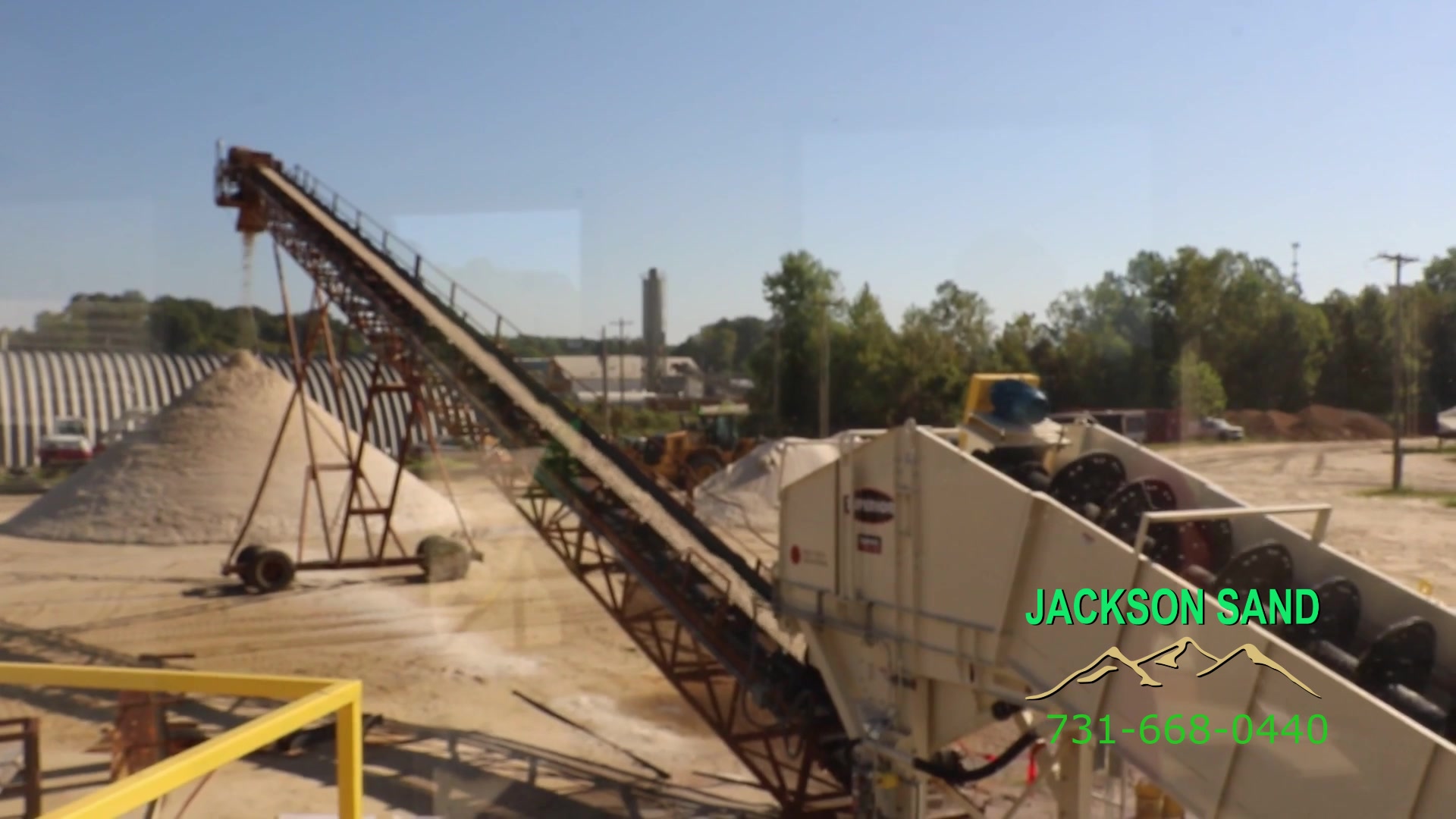
Inside the Jackson Sand Plant
Take a 90-second look at where our sand comes from: the washing plant, screens and conveyors, and the Jackson Sand truck fleet that delivers every load. President Carlton Pope tells the story of how the company grew from one truck in 1996.
Sources and Further Reading
- USGA Recommendations for a Method of Putting Green Construction (USGA)
- 2018 USGA Recommendations for Putting Green Construction (PDF) (USGA (via MSU Turfgrass Information Center))
- not all sand-based greens are USGA greens (USGA Green Section Record)
- lose the layers: rootzone layering problems (USGA Green Section Record)
- aging USGA putting greens research (USGA)
Frequently Asked Questions
What is the difference between a greens mix and a root zone mix?
In everyday use the terms overlap. Both describe sand blended with an organic or inorganic amendment such as peat or porous ceramic. Root zone mix usually refers to the material used to build the growing layer of a green, tee or sports field, while greens mix can also describe blends used for top dressing, repair and grow-in.
Which peat is best for a putting green root zone?
It depends on the specification and your goals. Reed sedge peats such as Dakota peat are more decomposed and generally less acidic, supporting nutrient holding and microbial activity. Canadian sphagnum peat moss is fibrous and holds a lot of water but is naturally acidic. Lab testing of the finished blend should guide the final choice.
What sand to peat ratio is used for greens construction?
Ratios around 80:20 or 85:15 sand to peat by volume are common starting points, but the correct ratio depends on the specific sand, the specific peat and lab test results. Construction mixes should be tested by an accredited physical soil testing lab to confirm infiltration, porosity and water retention before installation.
Should I top dress established greens with a peat mix?
Usually not as a routine practice. Established greens produce their own organic matter, and adding more can build a soft layer. Most programs use straight sand for routine top dressing. Peat blends are more useful for grow-in, repairs and backfilling aerification holes on greens originally built with a peat root zone.
Why use Profile porous ceramic instead of peat?
Porous ceramic holds water and nutrients inside its particles and does not decompose, so it improves a sand root zone without adding organic matter. That makes it a strong choice for aerification backfill and long-term modification of existing greens. High-content Profile mixes are the standard fill for DryJect aerification.
Does Jackson Sand blend custom root zone mixes?
Yes. Jackson Sand blends greens mixes on its own premises in Jackson, Tennessee, using its top dressing sand with Dakota peat, Peat Inc, Canadian sphagnum peat moss or Profile porous ceramic, and delivers in its own clean trucks. Call 731-668-0440 or use the contact page to discuss your specification.
Ready to order or have a question about the right material? Call Jackson Sand at 731-668-0440 or send us a message and we will help you pick the right product and quantity.
Leave a Reply