
Athletic Field Top Dressing and Aeration: A Practical Guide
Quick answer: Athletic fields should be core aerated at least twice a year, in spring and midsummer, with three passes, holes 2 to 3 inches apart, cores 3/4 to 1 inch in diameter and 3 to 4 inches deep. Follow with sand top dressing: a 1/8 inch layer takes about 10.4 cubic feet, or 0.4 cubic yards, per 1,000 square feet. Focus extra work on high-wear compaction zones. Jackson Sand in Jackson, Tennessee provides both aeration and top dressing services.
Why Athletic Fields Need Aeration and Top Dressing
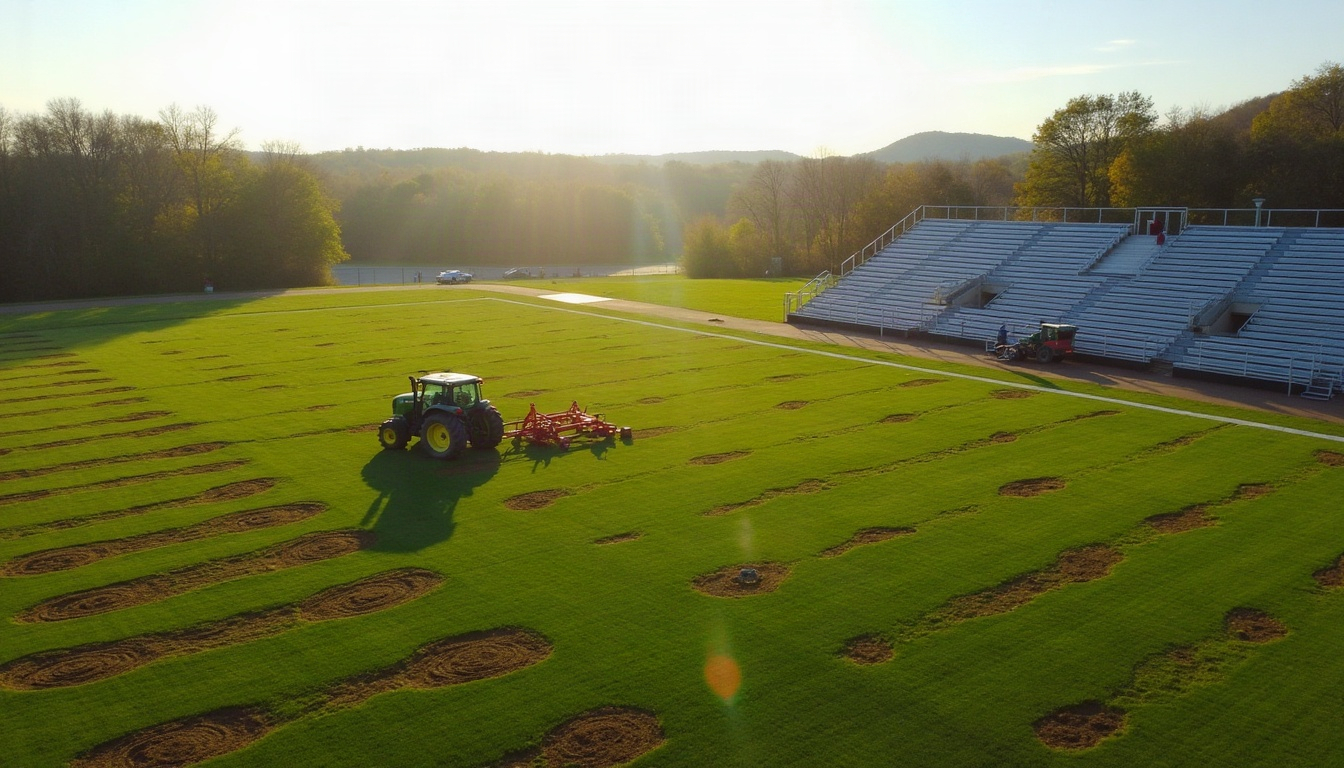
Athletic fields take more abuse per square foot than almost any other turf. Cleats tear, players pivot in the same spots over and over, and practices, games, band and youth leagues all share the same surface. Over a season, that traffic packs the soil, squeezes out the air and leaves turf thin, hard and slow to recover.
Two practices do more than anything else to reverse that damage: core aeration and sand top dressing. Aeration physically opens the soil to let air, water and roots back in. Top dressing fills the holes and the low spots with a material that resists compaction and drains, while smoothing the playing surface. Done together and on a schedule, they keep fields safer, more playable and greener through the season.
What compaction does to a field
- Roots suffocate. Compacted soil has little air-filled pore space, and roots need oxygen to grow.
- Water runs off or ponds. Rain and irrigation cannot soak in, so fields stay soggy on the surface while the root zone stays dry underneath.
- Surfaces get hard. Hard fields are less forgiving for players and have poor footing.
- Turf thins and weeds move in. Weak turf loses ground to goosegrass, crabgrass and other weeds that tolerate compaction.
Jackson Sand provides aeration and top dressing services for athletic fields and lawns, along with the sand to do the job, from our yard in Jackson, Tennessee. This guide covers the practices behind those services so field managers, athletic directors and parks staff in West Tennessee and the Mid-South can plan a sound program.
Identifying Compaction Zones on Your Field
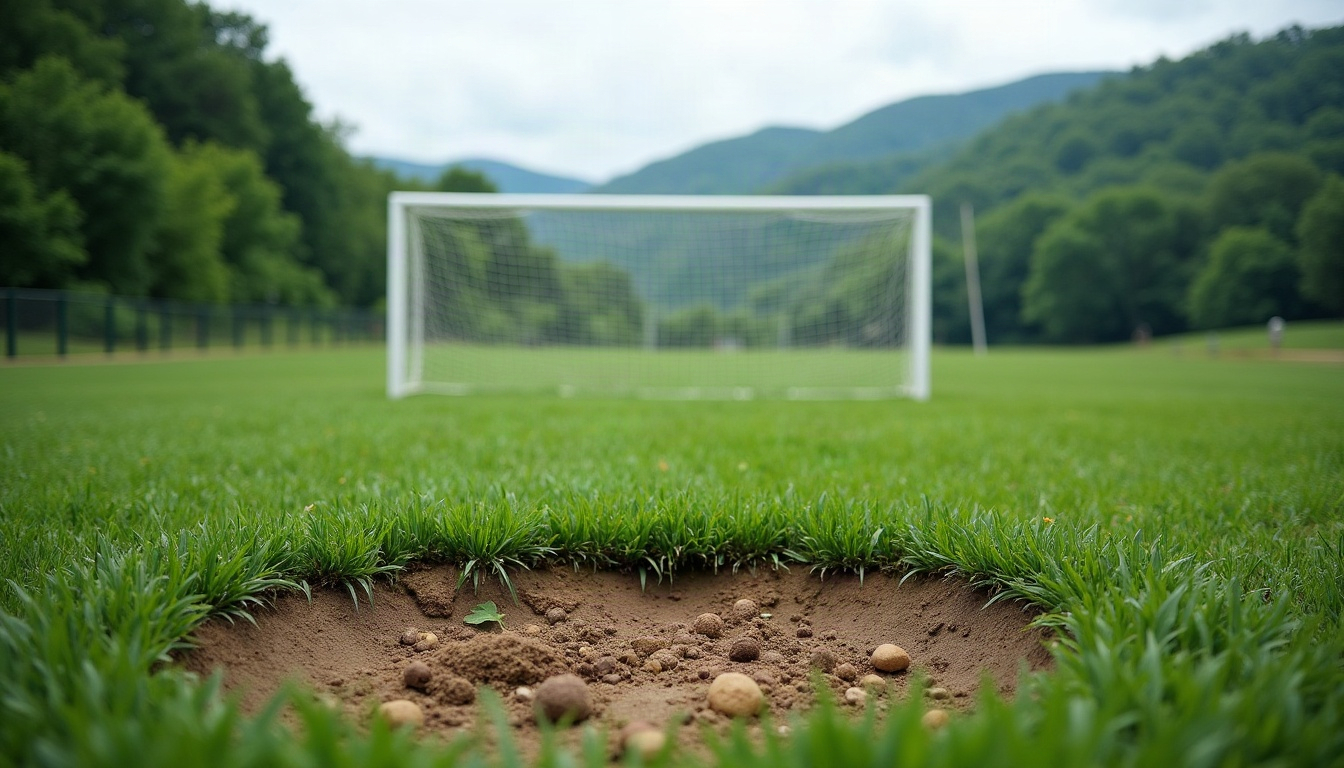
Not every part of a field gets the same wear. Traffic concentrates in predictable places, and those compaction zones deserve extra attention.
| Sport | Typical high-wear zones |
|---|---|
| Football | Between the hash marks, especially the middle third of the field; sidelines and team boxes |
| Soccer | Goalmouths, center circle, the central channel between the boxes |
| Baseball and softball | Infield grass edges, base paths transitions, outfield positions, foul territory near dugouts |
| Lacrosse | Crease areas, center of field, sidelines |
| Multi-use fields | Overlapping wear zones from each sport, plus practice drill areas |
How to check for compaction
You do not need a lab to spot a compaction problem. Push a screwdriver or soil probe into the ground in a wear zone and then in a lightly used area near the fence. If it goes in noticeably harder in the wear zone, you have compaction. Other signs include standing water after rain, thin or bare turf, shallow roots when you pull a plug, and grass that wilts quickly in heat.
Map it
Sketch your field and mark the wear zones each season. Over time, the map shows where to add extra aeration passes and heavier top dressing. It also helps when rotating practice areas, moving drill stations or shifting soccer goals to spread wear.
Core Aeration Best Practice: Passes, Spacing and Depth
Core aeration uses hollow tines to pull plugs of soil out of the ground. The holes left behind give air, water and roots a path into the root zone, and removing the cores actually relieves compaction rather than just pushing soil around. Solid-tine or spiking equipment has its uses, but for relieving compaction on sports fields, hollow-tine core aeration is the standard.
Recommended specifications
| Factor | Recommendation |
|---|---|
| Frequency | At least 2 times per year (spring and midsummer) |
| Passes per event | 3 passes |
| Hole spacing | 2 to 3 inches apart |
| Core diameter | 3/4 to 1 inch |
| Core depth | 3 to 4 inches |
Why multiple passes
A single pass with typical equipment leaves holes several inches apart and affects only a small percentage of the surface. Three passes in different directions bring hole spacing down to the 2 to 3 inch range, which is what it takes to make a real dent in compaction. In heavy wear zones, extra passes are worth the time.
Why depth matters
Shallow holes only open the top inch or two. Compaction on sports fields often extends deeper, and roots need room to grow. Reaching 3 to 4 inches requires soil with adequate moisture and properly maintained tines. Aerating bone-dry soil produces shallow, ragged holes; aerating saturated soil smears the hole walls and makes a mess.
Handling the cores
Cores can be left to dry and then broken up and dragged back into the turf, or collected and removed. Dragging returns soil to the surface and helps fill holes. Removing cores and replacing them with sand top dressing gradually improves the root zone over time, which is the better long-term strategy on fields with heavy native soil.
Timing Aeration Around the Season
The best time to aerate is when the turf is actively growing and can recover quickly, and when the field schedule allows a short recovery window. In West Tennessee and the Mid-South, most athletic fields are bermudagrass, which grows strongly from late spring through summer.
Spring
Once bermudagrass has greened up and is actively growing, a spring aeration relieves compaction from winter and spring use and prepares the field for summer growth. Avoid aerating too early while turf is still breaking dormancy, because it will recover slowly.
Midsummer
Midsummer is peak bermudagrass growth and often the quietest stretch for school fields between spring sports and fall preseason. A midsummer aeration with top dressing gives the field several weeks to recover before football and soccer arrive. If you only have room for one big field renovation each year, this is often the window.
Fall and in-season
Additional aeration during the season can help on heavily used fields, especially in wear zones, but schedule it around games so holes have time to close. On fields overseeded with ryegrass for winter play, aeration before overseeding improves seed-to-soil contact.
Watch the weather
- Aerate when soil is moist but not saturated, typically a day or two after a good rain or irrigation.
- Avoid aerating right before extreme heat without irrigation available, because open holes can dry the root zone.
- Top dress soon after aerating so the holes fill before the next storm.
Top Dressing After Aeration
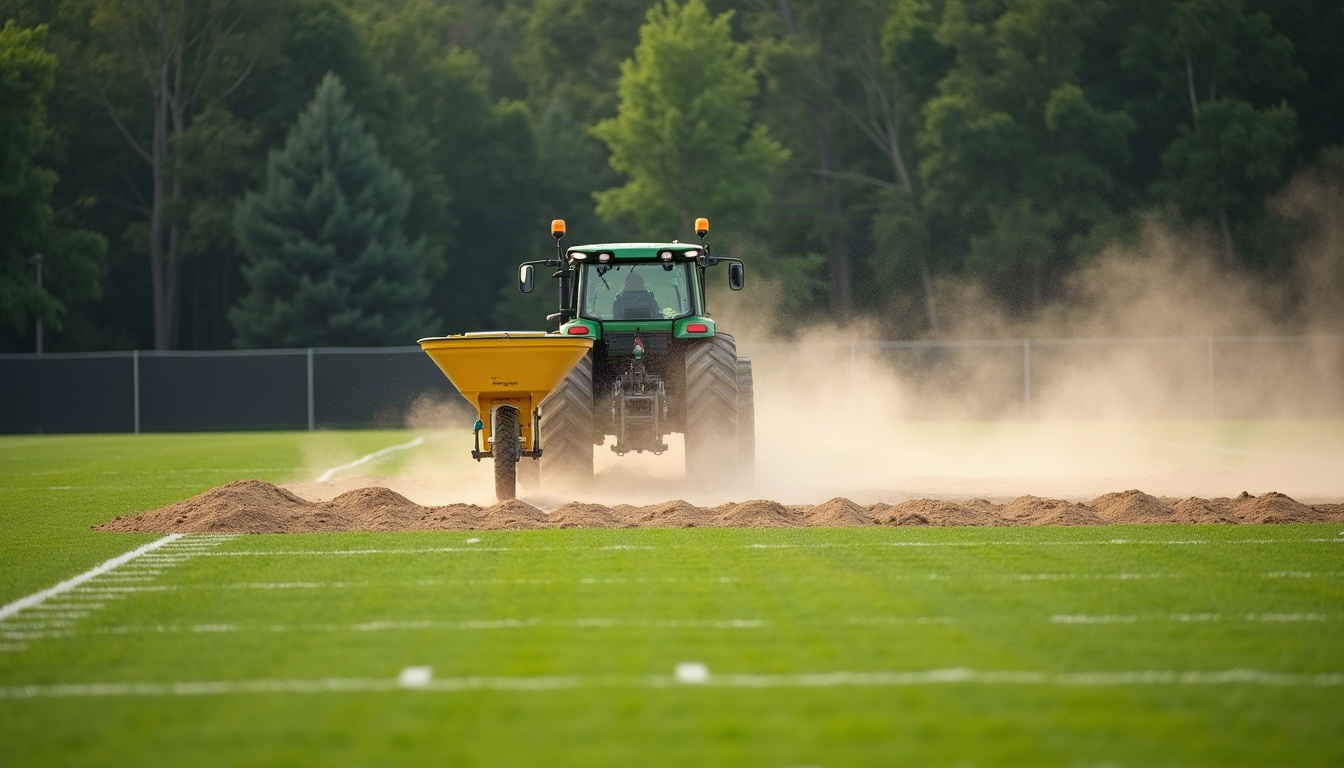
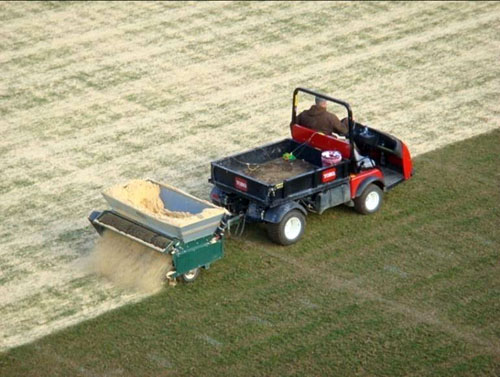
Aeration opens the soil; top dressing makes the improvement last. Spreading sand over the field right after aeration and working it into the holes creates columns of sand that resist compaction and drain far better than the native soil they replaced. Repeated over seasons, top dressing gradually builds a more sand-based surface layer that stands up to traffic.
What top dressing does
- Fills aeration holes with a material that keeps them open.
- Levels the surface, filling divots, cleat damage and low spots for safer footing.
- Dilutes thatch so water and air move into the soil.
- Improves drainage at the surface over time.
- Protects the crown of the grass plant in high-wear areas.
Choosing the right sand
Top dressing sand should be clean, low in silt and clay, and concentrated in the medium particle sizes. Fines in a cheap sand can fill pore space and make drainage worse. Our regular top dressing sand tests at 98.9% sand with just 0.5% silt and 0.5% clay, and it meets USGA specifications when compared with USGA root zone recommendations. It is washed at our own plant in Jackson, which is how we keep fines low. See the full gradation on our sand specs page.
Consistency matters
Use the same sand every time you top dress. Switching between sands of different particle sizes can create layers in the profile that block water movement. Because we mix on our own premises and haul in our own clean trucks, the sand you get next year matches the sand you got this year.
How Much Sand You Need: 1/8 Inch Equals 0.4 Cubic Yards
Top dressing works best in light, frequent layers. A common target is 1/8 inch per application, which puts down enough sand to fill holes and smooth the surface without smothering the turf.
The basic rate
A 1/8 inch layer of sand over 1,000 square feet equals about 10.4 cubic feet, or 0.4 cubic yards. From there, scaling to your field is simple multiplication.
| Area | Square feet | Sand at 1/8 inch | Sand at 1/4 inch |
|---|---|---|---|
| Small practice area | 10,000 | 4 cu yd | 8 cu yd |
| Soccer goalmouth zones (both ends) | about 5,000 | 2 cu yd | 4 cu yd |
| Football field, playing surface 360 x 160 ft | 57,600 | about 23 cu yd | about 46 cu yd |
| One acre | 43,560 | about 17.4 cu yd | about 34.8 cu yd |
The general formula
For any area and depth, multiply length in feet by width in feet by depth in feet, then divide by 27 to get cubic yards. A 1/8 inch layer is about 0.0104 feet. Our free yardage calculator does the math for you.
Heavier work in wear zones
Many field managers top dress the whole field at a light rate and add extra sand in goalmouths, between the hashes and other wear zones where turf is thin and the surface is uneven. If you are leveling ruts or low spots, you may need more in those areas. Avoid burying turf: heavy layers over 1/4 inch at once can smother grass, so build up low areas over several applications instead.
Working the Sand In and Aftercare
How the sand is worked in after spreading affects how quickly the field recovers and how well the holes fill.
Drag or brush
After spreading, drag the field with a steel drag mat or brush so the sand falls into the aeration holes and settles down into the turf canopy. Dragging also breaks up any cores left on the surface and mixes that soil with the sand. Multiple passes in different directions give the most even result.
Irrigate
Water lightly after top dressing to settle the sand and wash it off leaf blades. Fields with open aeration holes can dry out faster in summer, so keep irrigation steady for the first week or two.
Mowing
Wait until the sand has settled before mowing, and expect some extra wear on reel mower blades. Rotary mowers handle sand better, but any mower will see some wear from fresh top dressing. Clean, well-graded sand without stray gravel is easier on equipment.
Fertility
Aeration and top dressing are good times to fertilize, because nutrients reach the root zone through the holes and the turf is pushing new growth to recover. Follow a soil test and your normal fertility program.
Keep records
Write down the date, number of passes, tine size, depth reached and amount of sand applied for each event, along with notes on how the wear zones looked before and after. A few seasons of records show whether compaction is improving and where the program needs adjusting. They also help justify budgets to athletic directors and parks boards.
Recovery time
On actively growing bermudagrass, holes typically close within a couple of weeks with good water and fertility. Plan practice schedules around that window when possible, and rope off the worst wear zones if they need extra time.
Aeration and Top Dressing Services from Jackson Sand
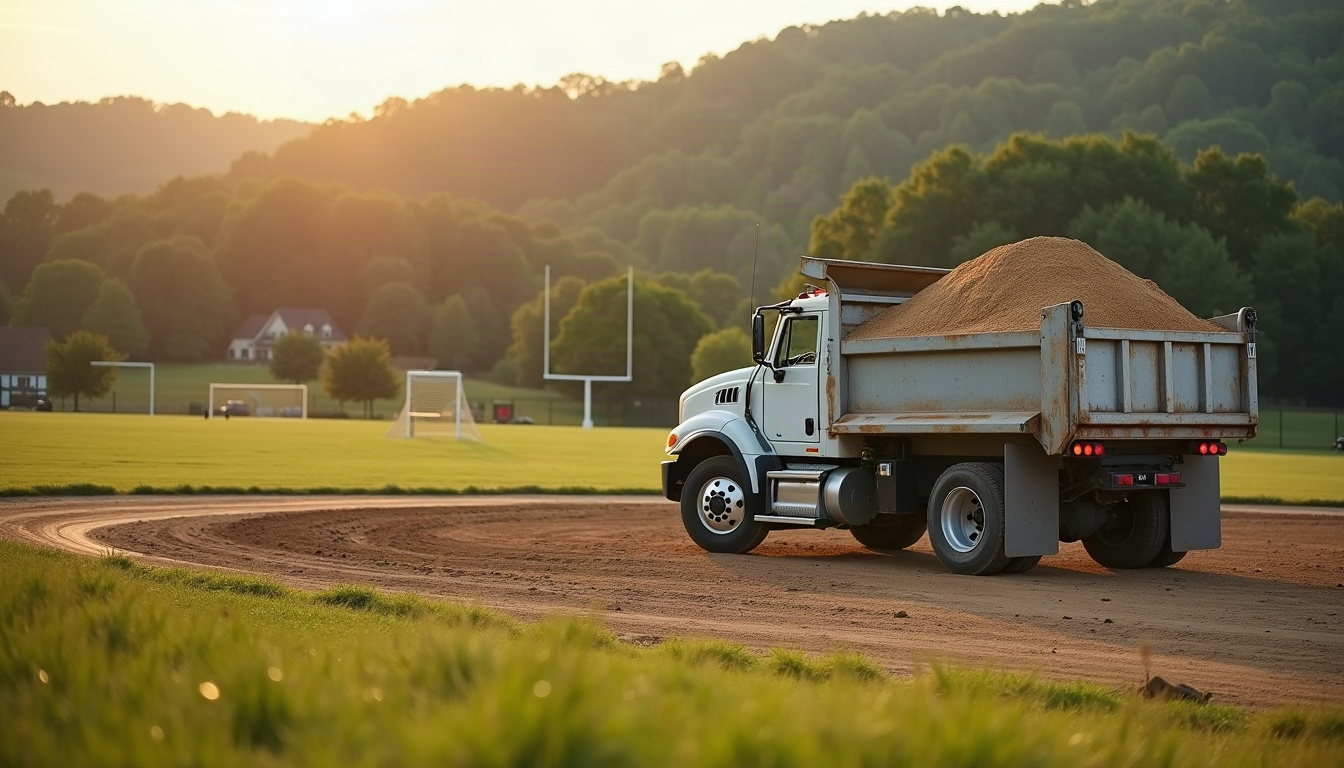
Jackson Sand is more than a sand supplier. We provide aeration and top dressing services for athletic fields and lawns, so schools, parks departments and field managers can have the whole job handled by one company, with the same clean sand every time.
Why that matters
- The material and the application come from the same source. You are not coordinating a sand delivery with a separate aeration contractor and hoping the timing lines up.
- Clean sand, clean trucks. We own our trucks, running around 14 of our own, so loads are not contaminated with gravel or debris from someone else’s job. That protects your field and your mowers.
- Consistent sand year after year. We wash and mix on our own premises, so the top dressing that goes on your field this season matches what went on last season, avoiding layers in the profile.
Who we work with
Our customers include golf courses, sports fields, landscapers, contractors and homeowners. Jackson Sand has been in production since 1996 and has made golf course-grade sand, including top dressings, since around 1998, and the same standards apply to the sand that goes on your field. More about our sports turf work is on the athletic fields page.
Lawns too
The same principles apply at home. Lawns compact under foot traffic, mowers, pets and vehicles, especially on the clay-heavy soils common across West Tennessee. Core aeration followed by a light sand top dressing relieves compaction, smooths bumpy yards and helps water soak in rather than run off. Jackson Sand provides aeration and top dressing services for lawns as well as athletic fields, using the same clean, washed sand. Homeowners should keep top dressing light, around 1/8 inch, and match the timing to the grass: late spring through summer for bermudagrass and zoysia, and early fall for fescue.
Drainage beyond top dressing
Some fields have drainage problems that aeration and top dressing alone will not fix, such as poor surface slope or a high water table. Turf surfaces generally need at least a 2% slope to shed water. Our surface water drainage and slope page explains the basics, and we supply drainage gravels when a field needs subsurface drains.
Schedule Field Aeration and Top Dressing
A field that is aerated at least twice a year and top dressed with clean sand plays firmer, drains better, recovers faster and is safer for athletes. Getting on the schedule early, especially for the midsummer window before fall sports, keeps your field on track.
Jackson Sand is sand from the source, based at 139 United Dr. in Jackson, Tennessee. We provide aeration and top dressing services for athletic fields and lawns, and we supply top dressing sand, root zone mixes and drainage materials to customers across West Tennessee and the Mid-South.
- Estimate your sand needs with our yardage calculator.
- Learn more about our top dressing sands.
Call 731-668-0440 or contact Jackson Sand online to schedule aeration and top dressing for your athletic field or lawn.
Inside the Jackson Sand Plant
Take a 90-second look at where our sand comes from: the washing plant, screens and conveyors, and the Jackson Sand truck fleet that delivers every load. President Carlton Pope tells the story of how the company grew from one truck in 1996.
Sources and Further Reading
- soil cultivation and topdressing on sports fields (Sports Field Management Association)
- what does topdress mean and why is it done? (Mississippi State University Extension)
- turfgrass cultivation and aeration (Clemson Extension HGIC)
- Carolina Athletic Fields maintenance guide (NC State Extension)
Frequently Asked Questions
How often should an athletic field be aerated?
At least twice a year, in spring once turf is actively growing and again in midsummer. Heavily used fields benefit from additional aeration, especially in wear zones such as goalmouths and the area between the hash marks. Each event should include about three passes so holes end up 2 to 3 inches apart.
How deep should aeration cores be?
Aim for cores 3 to 4 inches deep and 3/4 to 1 inch in diameter. Reaching that depth requires moist but not saturated soil and well-maintained tines. Shallow holes only open the top inch or two, while compaction on sports fields often runs deeper, so depth makes a real difference in results.
How much sand do I need to top dress a field?
A 1/8 inch layer takes about 10.4 cubic feet, or 0.4 cubic yards, per 1,000 square feet. A football playing surface of about 57,600 square feet needs roughly 23 cubic yards at that depth. For any area, multiply length by width by depth in feet and divide by 27, or use the Jackson Sand yardage calculator.
What kind of sand should be used for athletic field top dressing?
Use a clean, washed sand low in silt and clay, with most particles in the medium size range, and stick with the same sand every time to avoid layering. Jackson Sand's regular top dressing tests at 98.9% sand with 0.5% silt and 0.5% clay and meets USGA specifications when compared with USGA root zone recommendations.
When is the best time to aerate a bermudagrass field in West Tennessee?
When the bermudagrass is actively growing, from late spring through summer. A spring aeration after full green-up and a midsummer aeration before fall sports preseason fit most school and park schedules. Aerate when soil is moist but not saturated, and top dress soon afterward so the holes fill.
Does Jackson Sand provide aeration and top dressing services?
Yes. Jackson Sand provides aeration and top dressing services for athletic fields and lawns, using sand washed and mixed on its own premises and delivered in its own clean trucks. Call 731-668-0440 or visit the contact page at jacksonsand.com to schedule service.
Ready to order or have a question about the right material? Call Jackson Sand at 731-668-0440 or send us a message and we will help you pick the right product and quantity.
Leave a Reply