
Pea Gravel Guide: Uses, Installation and How Much to Order
Quick answer: Pea gravel is small, rounded stone used for garden paths, patios, play areas, decorative beds, drainage strips and concrete aggregate. Because the stones are smooth they do not lock together, so install it 2 to 3 inches deep over landscape fabric and, for patios and driveways, a compacted crushed stone base, with solid edging. Order by the cubic yard: length x width x depth in feet, divided by 27.
What Pea Gravel Is
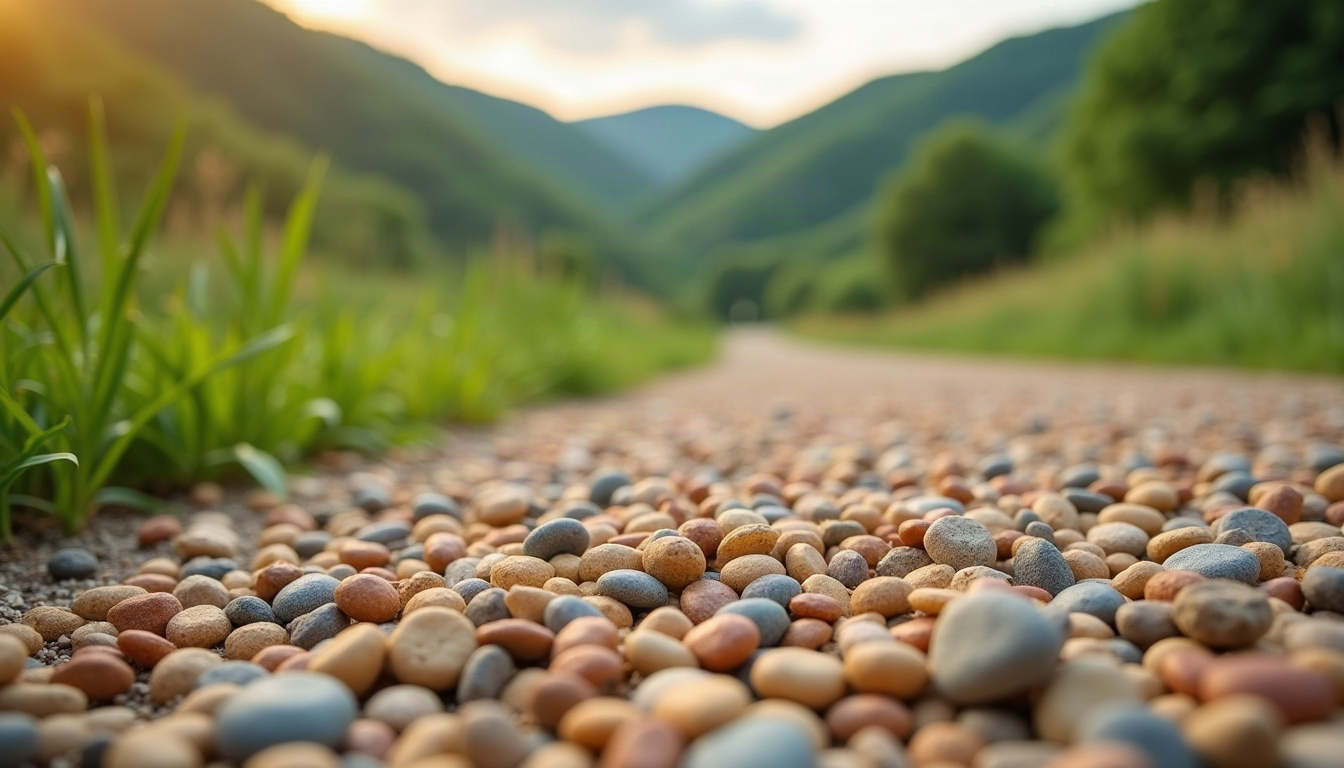
Pea gravel is small, rounded stone, roughly the size of a garden pea. Unlike crushed stone, which is broken in a crusher and has sharp, angular faces, pea gravel gets its shape from water. Over long stretches of time, rivers and glacial outwash tumble the stones against each other until the edges wear smooth. The result is a stone that feels comfortable underfoot, flows easily from a shovel or a truck bed, and has a natural, finished look in the landscape.
Most pea gravel falls somewhere around 1/8 inch to 3/8 inch across, though sizes vary by source. Color depends on the parent rock. In the Mid-South you will typically see blends of tan, brown, cream, gray and rust tones, with some white and darker pieces mixed in. That variety is part of the appeal: a pea gravel path or patio reads as warm and natural rather than industrial.
Because the stones are rounded, they do not lock together the way crushed stone does. That single characteristic drives almost everything about how pea gravel performs. It drains freely, it is pleasant to walk on, and it is easy to rake and level. It also shifts under load, scatters if it is not contained, and needs a stable base and solid edging to stay where you put it.
Jackson Sand carries pea gravel at our yard in Jackson, Tennessee, alongside our other gravels and sands. Homeowners, landscapers and contractors across West Tennessee use it for everything from backyard fire pit areas to the aggregate in decorative concrete. This guide covers where pea gravel works, where it does not, how to install it correctly, and how much to order.
Common Uses for Pea Gravel
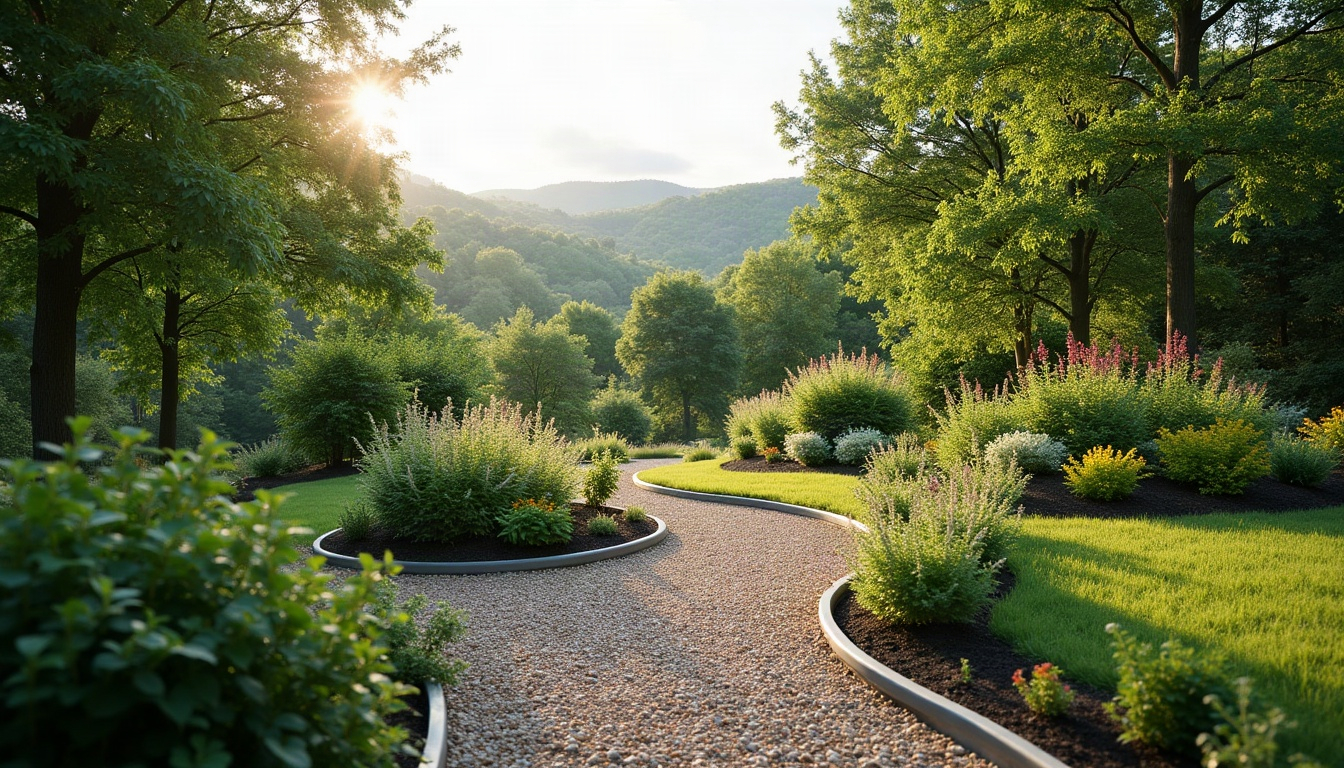
Pea gravel is one of the most versatile materials in a landscape yard. Its smooth shape and free-draining character make it useful in places where other stone would be uncomfortable or too rough.
Paths and walkways
Garden paths are the classic use. Pea gravel gives a soft crunch underfoot, follows curves easily and costs less than pavers or flagstone. It works best for casual garden routes rather than primary entries that see heavy daily traffic, shoes and wheelbarrows.
Patios and seating areas
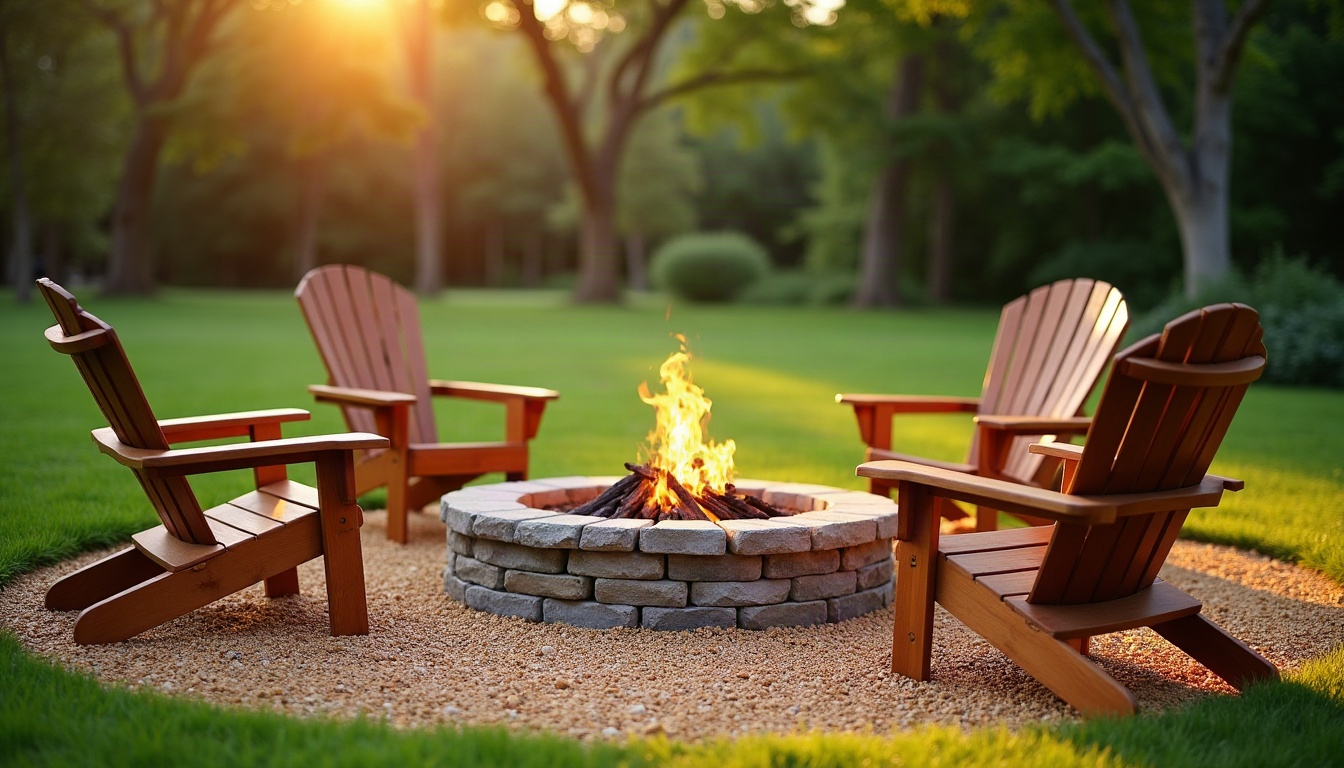
A pea gravel patio is a quick, affordable way to create an outdoor room. It is popular around fire pits, under bistro tables and in courtyard gardens. With a stabilizing grid underneath, it can hold furniture legs without sinking.
Playgrounds
Rounded stone has long been used under play equipment because it is loose and lacks sharp edges. If you use it in a play area, follow current playground safety guidance on fall heights and fill depth, and know that small children may be tempted to put small stones in their mouths. Many families choose it for older kids’ play spaces for that reason.
Driveways
Pea gravel can surface a driveway, but it needs a firm, compacted base beneath it and solid edging. On its own, rounded stone ruts and migrates under tires. More on this below.
Drainage
Because it does not pack tightly, pea gravel lets water move through quickly. It is used around downspout outlets, in narrow drainage strips along walls, and as a decorative cap over drainage features.
Concrete aggregate
Pea gravel is a common aggregate in concrete, including exposed aggregate finishes where the smooth, colorful stones are revealed on the surface of a patio, pool deck or walkway. It is also used in some pump mixes and fill applications where a smaller, rounded aggregate flows more easily.
Pea Gravel Pros and Cons
Pea gravel is a good material when it is used for the right job. Knowing its strengths and weaknesses up front will help you decide whether it fits your project or whether a crushed stone like limestone would serve you better.
| Advantages | Drawbacks |
|---|---|
| Smooth, comfortable to walk on, even barefoot | Shifts and rolls underfoot and under tires |
| Natural mix of colors suits many home styles | Scatters into lawns and beds without edging |
| Drains quickly, reduces puddling | Does not compact into a firm, locked surface |
| Easy to spread, rake and level | Hard to push wheelbarrows, strollers or wheelchairs through |
| Generally lower cost than pavers or flagstone | Can get tracked into the house on shoes |
| Easy to top up and repair | Weeds can sprout in fines and debris that collect over time |
| Works as concrete aggregate and decorative finish | Snow shoveling and leaf blowing displace stone |
When it is the right choice
Choose pea gravel when comfort, appearance and drainage matter more than a rock-hard surface. Garden paths, patios, fire pit areas, side yards and decorative borders are ideal.
When to consider something else
If you need a surface that stays put under vehicles, holds a steep slope, or must be accessible for wheels, an angular crushed stone usually performs better. Many driveways in West Tennessee use crushed limestone for exactly that reason. And for larger decorative stone with more color, river rock is a popular alternative.
Planning Your Pea Gravel Project
Good results start before the first load arrives. A few planning steps will save time and keep the finished surface looking sharp.
Mark the area
Lay out paths and patios with stakes and string, a garden hose or marking paint. Walk the layout and live with it for a day if you can. Paths should be at least 3 feet wide for comfortable walking, and 4 feet or more if two people will walk side by side or you need to roll a wheelbarrow through.
Check drainage first
Pea gravel drains quickly, but it cannot fix a low spot where water collects. Look at where water flows during a heavy rain. A path or patio should not sit in the lowest point of the yard unless you plan to handle the water with a drain. As a rule of thumb, surfaces near a house should slope away from the foundation. Our page on surface water drainage and slope explains the minimum grades that move water reliably.
Call before you dig
Before excavating, contact Tennessee 811 so utility lines are marked. Even a shallow path excavation can hit an irrigation line or a buried cable.
Decide on edging
Edging is not optional with pea gravel. Choose your material early so you can install it before the stone goes down. Common choices include steel or aluminum landscape edging, concrete or stone curbs, pavers set on edge, and treated timber. Plastic edging works for light-duty paths but tends to heave and show over time.
Plan for access
Think about where the delivery truck can drop the material. A pile placed close to the work area saves many wheelbarrow trips. Protect a driveway with plywood or a tarp if you want to keep it clean.
How to Install Pea Gravel the Right Way
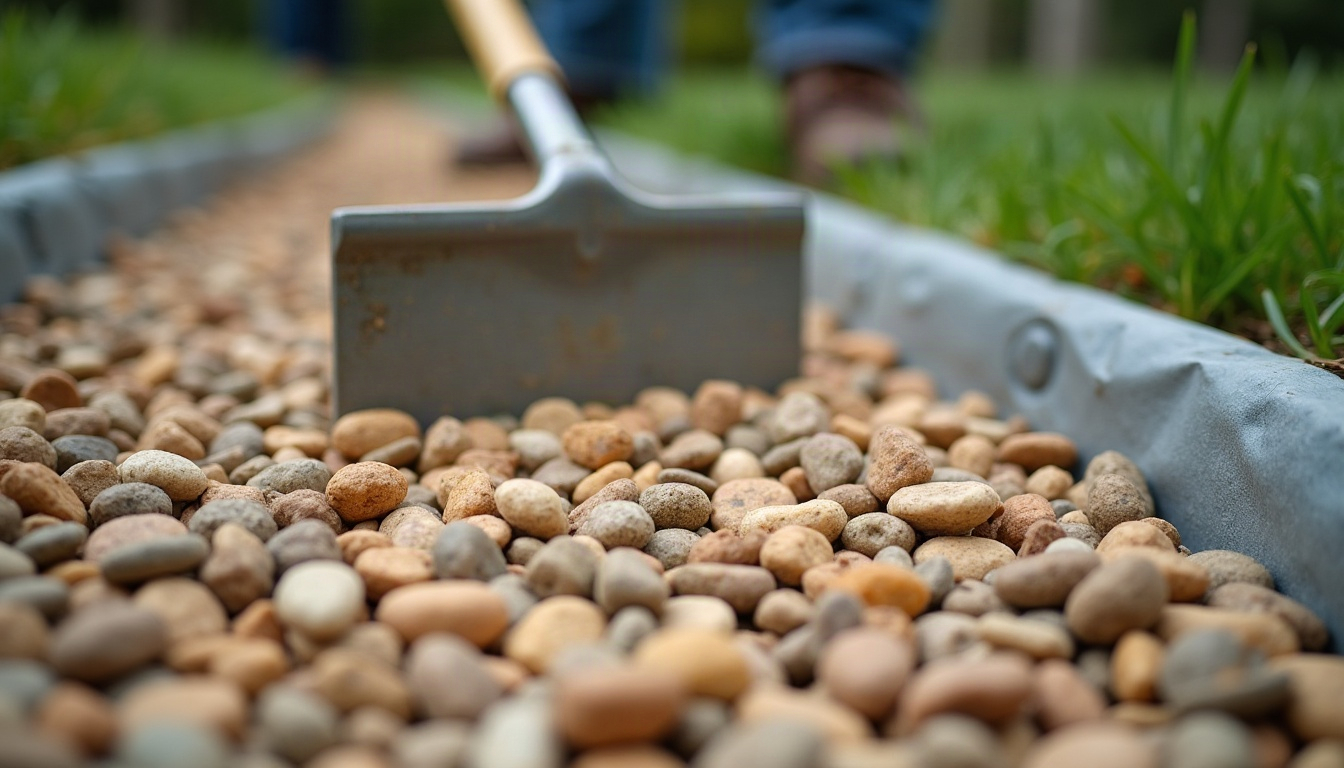
Pea gravel looks simple to install, and it is, but cutting corners on the base is the most common reason projects fail. Here is the process that gives the most stable, long-lasting result.
- Excavate. Remove sod, roots and topsoil to the planned depth. For a footpath, that is typically about 4 inches; for a patio with a base layer, plan on 5 to 6 inches; for a driveway, deeper still.
- Grade and compact the subgrade. Level the soil, set any slope you need for drainage, and compact it with a hand tamper or plate compactor.
- Install edging. Set edging so its top sits slightly above the finished gravel surface. That lip is what keeps the stone in place.
- Lay landscape fabric. A woven or nonwoven geotextile separates the gravel from the soil, keeping stone from pushing down into mud and slowing weeds coming up from below. Overlap seams by several inches.
- Add a compacted base where needed. For patios, high-traffic paths and driveways, place 2 to 4 inches of crushed stone and compact it in lifts. The angular stone locks together and gives the pea gravel a firm surface to rest on.
- Spread the pea gravel. Rake it out evenly to the finished depth. Avoid going too deep, which makes the surface feel loose and hard to walk on.
- Consider stabilizer grids. Honeycomb-style plastic grids filled with pea gravel help hold stones in place on patios, parking areas and gentle slopes.
- Water and settle. A light rinse removes dust and helps the stones settle.
Take your time with edging and base. Those two steps decide whether the stone stays where you put it.
Recommended Depths by Application
Depth is a balancing act. Too shallow and the base or fabric shows through. Too deep and the surface feels like walking on marbles. These are typical working depths for pea gravel on top of a properly prepared base.
| Application | Pea gravel layer | Base beneath | Notes |
|---|---|---|---|
| Garden path | 2 to 3 in | Compacted soil plus fabric, or 2 in crushed stone | Edging on both sides |
| Patio or seating area | 2 in | 3 to 4 in compacted crushed stone | Stabilizer grid recommended for furniture |
| Decorative bed or border | 2 to 3 in | Fabric over prepared soil | Keep away from siding |
| Driveway surface | 2 in or less | 4 to 8 in compacted crushed stone | Heavy edging; expect periodic raking |
| Play area | Follow playground safety guidance for fall height | Drained subgrade | Contain with timbers or curbs |
| Drainage strip along a wall | 3 to 4 in | Fabric | Grade away from the foundation |
Why thinner is often better
Rounded stone has no way to grip itself. When the layer is thin and sits on a firm, angular base, the pea gravel nests into the top of that base and stays reasonably stable. When it is thick, the stones roll freely. That is why experienced landscapers keep the pea gravel layer modest and put the depth into the crushed stone underneath.
Driveways need extra care
A pea gravel driveway can look great, but it needs that deep crushed stone base and should be kept fairly flat. On slopes, tires push rounded stone downhill quickly. If your drive climbs a hill, crushed limestone is usually the better surface.
How Much Pea Gravel to Order
Ordering by the cubic yard is standard. To figure your quantity, measure the area and choose a depth.
The formula
Length (ft) x width (ft) x depth (ft) / 27 = cubic yards. Convert inches to feet by dividing by 12, so 2 inches is 0.167 feet and 3 inches is 0.25 feet.
Examples
| Project | Dimensions | Depth | Approx. cubic yards |
|---|---|---|---|
| Garden path | 40 ft x 3 ft | 2 in | 0.75 |
| Garden path | 60 ft x 4 ft | 3 in | 2.2 |
| Fire pit patio | 16 ft x 16 ft | 2 in | 1.6 |
| Side yard | 50 ft x 8 ft | 3 in | 3.7 |
| Driveway top layer | 60 ft x 12 ft | 2 in | 4.4 |
For irregular shapes, break the area into rectangles and circles, figure each one and add them together. For a circle, use 3.14 x radius x radius for the area in square feet.
Add a margin
Order about 5 to 10 percent extra to account for settling, uneven subgrade and the stone that works its way into the base. It is easier to spread a little extra than to wait on a second delivery for the last few feet of path.
Use our calculator
Our free yardage calculator does the math for you. Enter length, width and depth, then call us with the result and we can confirm your order. Remember to figure any crushed stone base separately.
Maintenance and Long-Term Care
Pea gravel is low maintenance, not no maintenance. A little routine care keeps it looking fresh for years.
- Rake regularly. Foot traffic and rain push stones toward edges and low spots. A quick pass with a landscape rake every few weeks keeps the surface even.
- Keep it clean. Leaves and organic matter break down into soil that gives weed seeds a place to grow. Use a leaf blower on a low setting or rake debris off before it decomposes.
- Pull weeds early. Small weeds pull easily from loose gravel. Catching them early is far easier than dealing with an established patch.
- Top up as needed. Expect to add a thin layer every few years as stones migrate, settle or get carried off. Keeping a little extra on hand from your original order helps match color.
- Check edging. Freeze and thaw cycles and mower strikes can lift or bend edging. Reset it before stones start spilling into the lawn.
- Use door mats. A sturdy mat at entries reduces stones tracked indoors.
Snow and ice
West Tennessee does not get heavy snow often, but when it does, shoveling pea gravel moves stone into the yard. Use a shovel with the blade held slightly above the surface, or simply let the sun handle light snowfall.
Refreshing an old surface
If a path has become thin and weedy, it may be worth raking it out, adding new fabric, and putting down a fresh layer. A refresh usually costs far less than a new hardscape.
Pea Gravel vs. Other Gravels
Pea gravel is one of several stones Jackson Sand supplies. Choosing between them comes down to what the surface needs to do.
| Material | Shape | Locks together? | Best for |
|---|---|---|---|
| Pea gravel | Small, rounded | No | Paths, patios, play areas, decorative fill, concrete aggregate |
| 33C limestone gravel | Crushed, angular | Yes | Driveways, base layers, ready-mix concrete, roads |
| Red river rock | Larger, rounded | No | Decorative beds, dry creek beds, drainage edges |
A common combination is a compacted crushed limestone base with pea gravel on top. The limestone delivers strength and stability, and the pea gravel provides the look and the comfortable feel. Another pairing is pea gravel paths running between beds trimmed with larger river rock.
For drainage projects such as French drains, the goal is clean, open-graded stone in roughly the 3/8 to 3/4 inch range around a perforated pipe. Our seepage drainage page covers that work in more detail.
Order Pea Gravel in Jackson, TN
Pea gravel is an easy way to add a clean, natural surface to your yard, garden or job site, as long as you give it a firm base and solid edging. Jackson Sand keeps pea gravel and other gravels on hand at our yard in Jackson, and our own trucks deliver clean material to homeowners, landscapers and contractors across West Tennessee and the Mid-South. Because we own our trucks, your pea gravel is not mixed with leftover material from someone else’s load.
Jackson Sand has been in production since around 1996. Our fleet has grown from about one truck to roughly 14 of our own, running daily from as early as 6 a.m., which helps keep deliveries for landscape jobs and weekend projects on schedule.
Have your measurements ready, run them through the yardage calculator, and call us at 731-668-0440 or contact us online to place your order or ask a question about your project.
Inside the Jackson Sand Plant
Take a 90-second look at where our sand comes from: the washing plant, screens and conveyors, and the Jackson Sand truck fleet that delivers every load. President Carlton Pope tells the story of how the company grew from one truck in 1996.
Sources and Further Reading
- mulching with gravel, rock and organic materials (Colorado State University Extension)
- xeriscape mulches including pea gravel (Colorado State University Extension)
- USGS construction sand and gravel statistics (U.S. Geological Survey)
Frequently Asked Questions
How deep should pea gravel be?
For most paths and decorative beds, 2 to 3 inches of pea gravel is right. Patios usually get about 2 inches of pea gravel over 3 to 4 inches of compacted crushed stone. Driveways need a deeper crushed stone base, often 4 to 8 inches, with a thin pea gravel top. Going much deeper than 3 inches makes the surface loose and hard to walk on.
Do I need landscape fabric under pea gravel?
In most cases, yes. A geotextile fabric separates the stone from the soil so it does not sink into mud, and it slows weeds coming up from below. It will not stop weeds that sprout in debris on top of the gravel, so keep leaves raked off. Overlap seams by several inches and tuck the edges under your edging.
Is pea gravel good for a driveway?
It can work on flat driveways with a deep, compacted crushed stone base and strong edging, but rounded stone shifts and ruts under tires, especially on slopes. For sloped or heavily used driveways, crushed limestone usually performs better because the angular pieces lock together. Many homeowners use limestone for the base and a thin pea gravel layer on top.
How much does a cubic yard of pea gravel cover?
One cubic yard covers about 162 square feet at 2 inches deep, or about 108 square feet at 3 inches deep. Measure your area, multiply length by width by depth in feet and divide by 27 to get cubic yards. The yardage calculator on our website will do the math for you.
How do I keep pea gravel from spreading into the lawn?
Install sturdy edging such as steel, aluminum, concrete or stone, with the top slightly above the finished gravel. Keep the gravel layer at a moderate depth, since deep layers spill more easily. A stabilizer grid helps on patios and slopes. Rake stones back from the edges every few weeks.
Can pea gravel be used in concrete?
Yes. Pea gravel is a common concrete aggregate, especially for exposed aggregate finishes where the smooth, colorful stones show on the surface of a patio, walkway or pool deck. Its small, rounded shape also flows easily in some pump and fill applications. Talk with your concrete contractor about the mix design for your project.
Ready to order or have a question about the right material? Call Jackson Sand at 731-668-0440 or send us a message and we will help you pick the right product and quantity.
Leave a Reply