
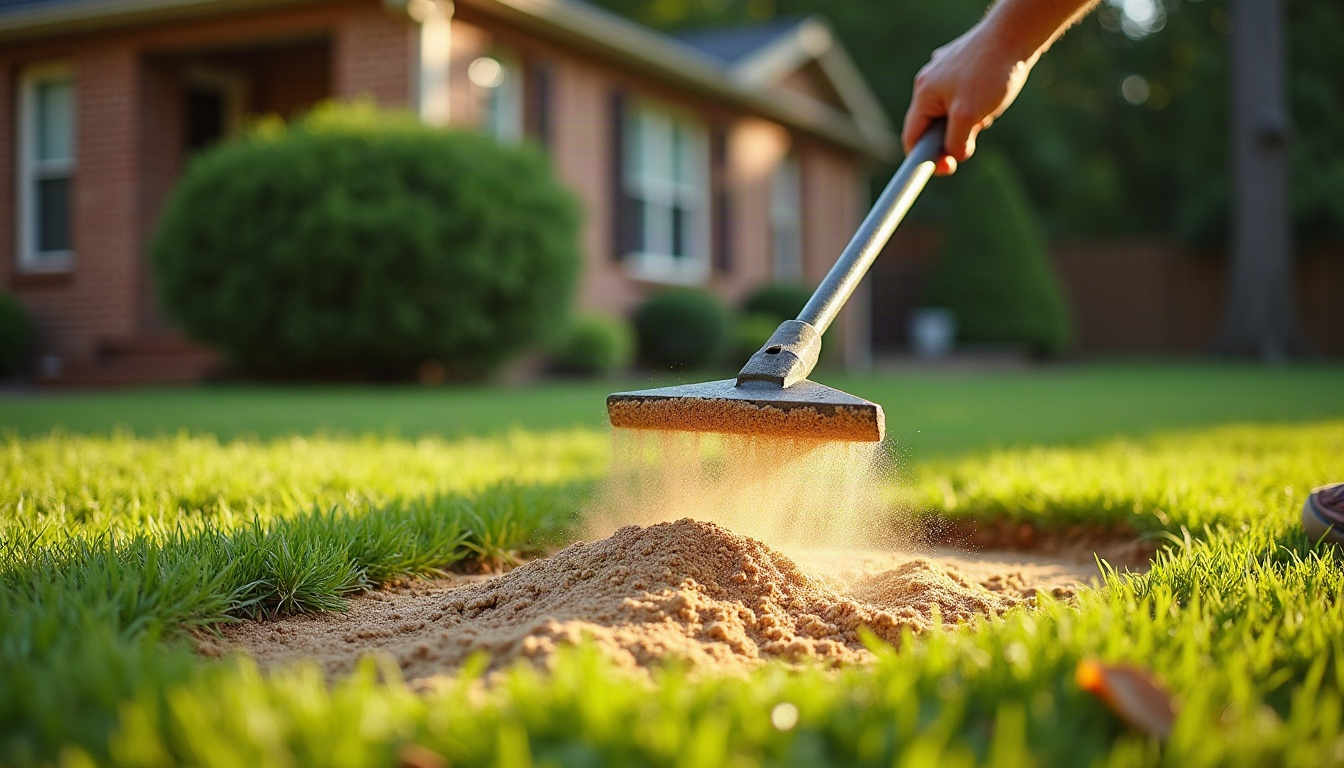
Sand Top Dressing for Home Lawns: Leveling Bumps the Right Way
Quick answer: Sand top dressing works best on bermudagrass and zoysiagrass lawns, which grow up through sand quickly in summer. Apply clean, washed sand in thin layers, about 1/8 to 1/4 inch at a time (0.4 to 0.8 cubic yards per 1,000 sq ft), during active growth from late May through July in West Tennessee. Fill deeper low spots in stages, never bury more than half the leaf blade, and use only light applications on tall fescue.
What Top Dressing Does for a Home Lawn
Top dressing means spreading a thin layer of material over turf and working it down into the canopy. Golf courses have done it on greens for generations to keep putting surfaces smooth, firm and fast. The same practice, scaled down, is one of the most effective ways to fix a bumpy home lawn.
For a homeowner, sand top dressing does four useful things:
- Levels the surface. Sand fills low spots, ruts and dips. Over a season or two, a lumpy yard becomes a lawn you can mow without scalping and walk without turning an ankle.
- Improves drainage at the surface. A sandy upper layer lets water move in faster, which helps on the heavy clay and silt soils common around Jackson and across West Tennessee.
- Manages thatch. Sand mixed into the thatch layer dilutes it and helps it break down.
- Firms the surface. A sand-dressed lawn holds up better to foot traffic and play.
What top dressing does not do is fix a major grading problem. If water runs toward your foundation or a whole section of yard sits a foot low, that is a job for regrading with fill before you think about top dressing. Our guide to surface water drainage and slope explains how to check that first. Top dressing is the finishing tool, the way to smooth out the last inch or two.
Which Grasses Tolerate Sand: Bermuda and Zoysia vs. Fescue
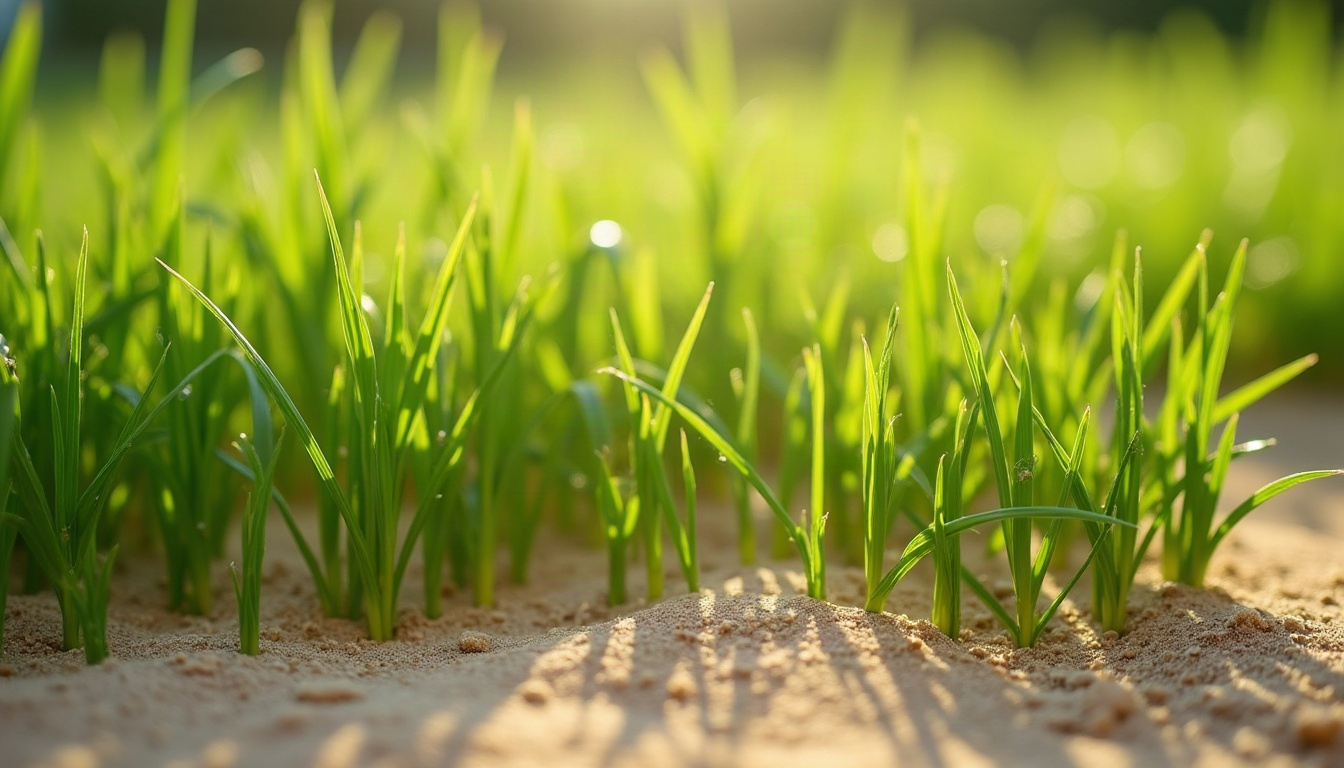
The single biggest factor in whether sand top dressing works on your lawn is the type of grass. In West Tennessee, most lawns are either warm-season bermudagrass or zoysiagrass, or cool-season tall fescue. They respond very differently.
| Grass | Growth habit | Sand tolerance | Best top dressing window | Max single layer |
|---|---|---|---|---|
| Bermudagrass | Spreads by stolons and rhizomes, fast | Excellent | Late May to July | Up to about 1/2 in in low spots; 1/4 in general |
| Zoysiagrass | Spreads by stolons and rhizomes, slower | Good | June to July | About 1/4 in; slower recovery than bermuda |
| Centipedegrass and St. Augustine | Stolons | Moderate | Early summer | Thin layers only |
| Tall fescue | Bunch-type, little lateral spread | Poor for leveling | Early fall, with overseeding | 1/8 in or less |
Why bermuda and zoysia handle it
Bermudagrass and zoysiagrass spread sideways by above-ground stolons and below-ground rhizomes. When you cover them with sand, they grow up through it and root into it, so a filled low spot turns green again within a couple of weeks in summer. Bermuda recovers fastest. Zoysia is slower and denser, so keep layers thinner and allow more time between applications.
Why fescue does not
Tall fescue grows in clumps and does not spread much on its own. Bury the crowns under sand and they struggle to come back, leaving thin spots. On a fescue lawn, use only a very light dusting, usually alongside fall aeration and overseeding, and fill any deep low spots with a sandy soil mix and reseed rather than relying on the grass to grow through.
Why Lawns Get Bumpy in the First Place
Before you level, take a minute to understand what caused the bumps. Some causes are one-time events; others will come back if you do not address them.
- Settling. Trenches for irrigation, utilities and downspout lines settle for years after they are backfilled. Tree stump grindings rot and sink.
- Moles and voles. Mole tunnels lift the surface into ridges, then collapse. Control the animals first or the bumps return.
- Freeze and thaw. West Tennessee winters are mild but swing above and below freezing often. Heaving in clay soil leaves an uneven surface each spring.
- Traffic when wet. Mowing, vehicles and play on soft, wet ground leave ruts and footprints that harden in place.
- Tree roots. Surface roots lift turf. These cannot be fixed with sand alone without smothering the grass over them; light, gradual dressing is the most you can do.
- Uneven original grading. Builders often leave yards rough. Shallow dips across the whole lawn are a top dressing project; deep swales are a regrading project.
Walk the lawn after mowing and mark low spots with flags or marking paint. A long straight board or a 10 foot straightedge laid across the turf shows how deep each dip really is. Anything under about an inch is easy work for one or two applications. Deeper spots take several rounds.
Timing: When to Top Dress in West Tennessee
Timing is about one thing: spreading sand when the grass is growing fast enough to recover through it.
Bermudagrass and zoysiagrass
In the Jackson area, warm-season grasses are fully out of dormancy and growing hard from late May through July. That is the ideal window. Soil temperatures are high, recovery is quick and you can make a second or third application a few weeks apart if needed. Avoid early spring, when the grass is still greening up, and avoid late summer and fall, when growth slows and sand may sit on the surface through winter.
Tall fescue
For fescue, the best time is early fall, roughly September into early October, when cool-season grass is actively growing and you are likely aerating and overseeding anyway. Keep it light. Avoid summer dressing on fescue, when heat stress already has the grass struggling.
Weather on the day
Spread sand when the turf and the sand are both dry. Dry sand flows off the leaf blades and down into low spots; wet sand clumps and smothers. A dry stretch of two or three days after spreading gives you time to work it in properly before rain or irrigation settles it.
A tip from golf and sports turf
Many green-up schedules on golf courses and sports fields use green dyed sand in spring so dressed areas look green right away. Our Green Dyed Divot Sand can serve the same role on a home lawn, especially on small patched areas where you want a finished look quickly.
How Much Sand per 1,000 Square Feet
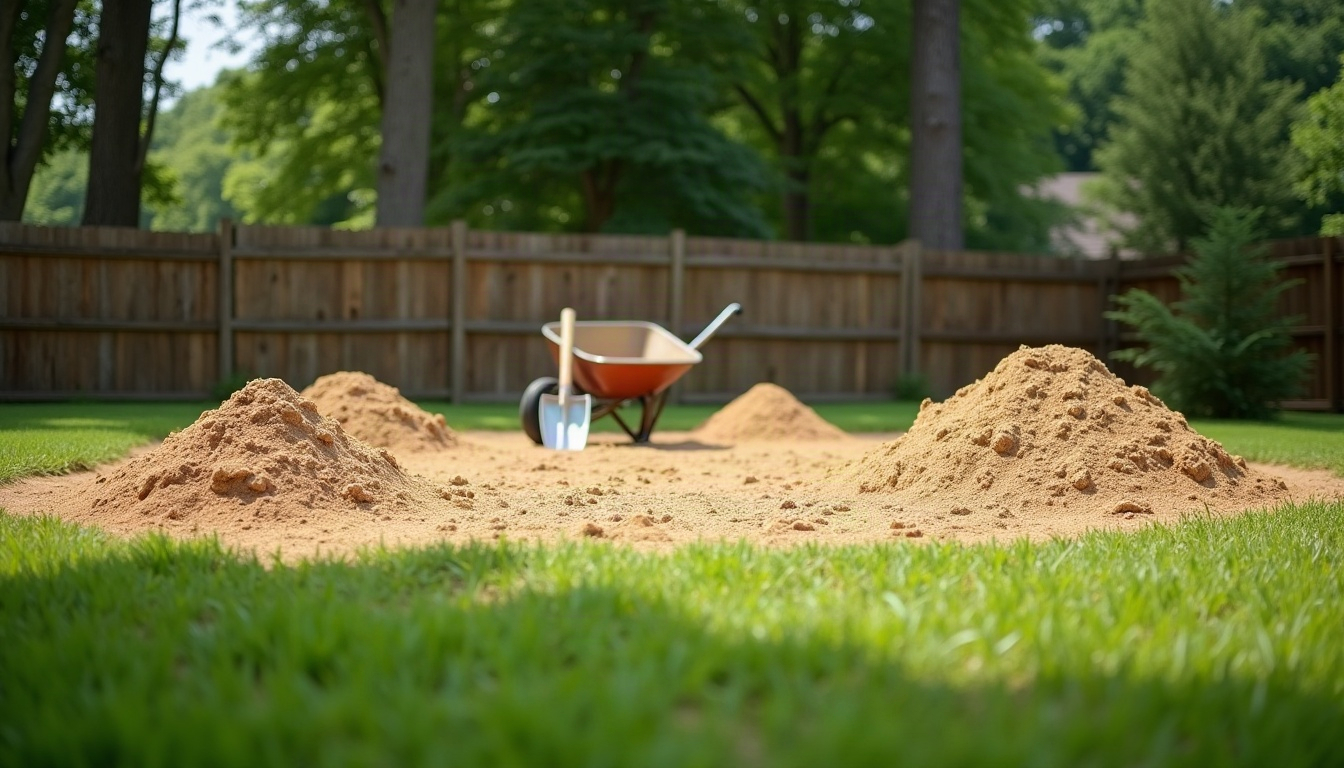
Sand is ordered by the cubic yard. The basic formula is length x width x depth, all in feet, divided by 27. For lawn work it is easier to think in depth per 1,000 square feet.
| Layer depth | Cubic feet per 1,000 sq ft | Cubic yards per 1,000 sq ft | When to use |
|---|---|---|---|
| 1/8 in | 10.4 | 0.4 | Routine dressing, fescue, after aeration |
| 1/4 in | 20.8 | 0.8 | General leveling on bermuda or zoysia |
| 3/8 in | 31.3 | 1.2 | Heavier pass on bermuda in peak summer |
| 1/2 in | 41.7 | 1.5 | Spot filling of low areas on bermuda only |
The 1/8 inch rate of about 10.4 cubic feet, or 0.4 cubic yards, per 1,000 square feet is the same figure sports-field managers use after aeration, as described on our athletic fields page.
Working out a whole-lawn order
A 5,000 square foot bermuda lawn dressed at 1/4 inch needs about 4 cubic yards. If you are only filling scattered low spots, measure the area of the worst sections, estimate average depth, and figure those separately; the total is often far less than covering the whole lawn.
Our free yardage calculator will do the math. Enter your area and depth and it returns cubic yards. Add a little extra for spillage and for the second pass you will probably want a few weeks later.
Tools for the Job
You do not need golf course equipment to top dress a home lawn, but the right hand tools make the work faster and the result smoother.
- Wheelbarrow and square shovel. For moving sand from the pile to the lawn. Dumping small piles every few feet is easier than spreading from one big pile.
- Leveling rake (lawn lute). A wide, flat-headed tool with a mesh or grid head, designed for pushing sand into low spots and pulling it off high spots. It is the single most useful tool for this job.
- Landscape rake. A wide aluminum rake works if you do not have a leveling rake. Use the flat back to spread.
- Drag mat or push broom. After the sand is spread, dragging a steel mat or brushing with a stiff broom works sand down through the canopy and off the leaf blades.
- Straightedge. A 6 to 10 foot straight board shows where low spots remain.
- Core aerator. Optional, but aerating before you dress lets sand fill the holes and start improving the soil below the surface. Rental units are widely available, or hire a service.
- Tarp or plywood. Put it down where the truck drops the load to protect the lawn and keep the sand clean.
A drop spreader can apply very thin, even layers of dry sand on smaller lawns, but for leveling work most homeowners find the shovel-and-lute method faster and more precise.
Step-by-Step: Leveling a Bumpy Lawn with Sand
- Mow low. Cut the lawn a notch or two lower than normal, without scalping. Shorter grass lets sand reach the soil and shows the bumps more clearly. Bag the clippings.
- Dethatch or aerate if needed. If thatch is more than about 1/2 inch thick, dethatch first. Core aeration is a good companion step, especially on clay soils.
- Mark the low spots. Flag the worst areas so you put the most sand where it is needed.
- Dump small piles. Spread shovel-sized piles across the area, more in the low spots and fewer on high ground.
- Spread with a lute. Push the sand into the low spots and pull it level across the surface. Work in several directions. The high spots should end up with almost no sand.
- Check the leaf blades. At least half of each grass blade should still be visible above the sand. If a spot is fully buried, pull some sand off; you will fill the rest on the next pass.
- Work it in. Drag a mat or brush with a stiff broom so sand settles into the canopy.
- Water lightly. A gentle watering settles the sand around the plants.
- Repeat as needed. On bermuda, wait two to three weeks for the grass to grow through, then dress again. Deep low spots may take three or four rounds over a summer.
Keep feeding and watering normally during the process. Healthy, actively growing turf recovers faster and fills in thicker.
Mistakes to Avoid
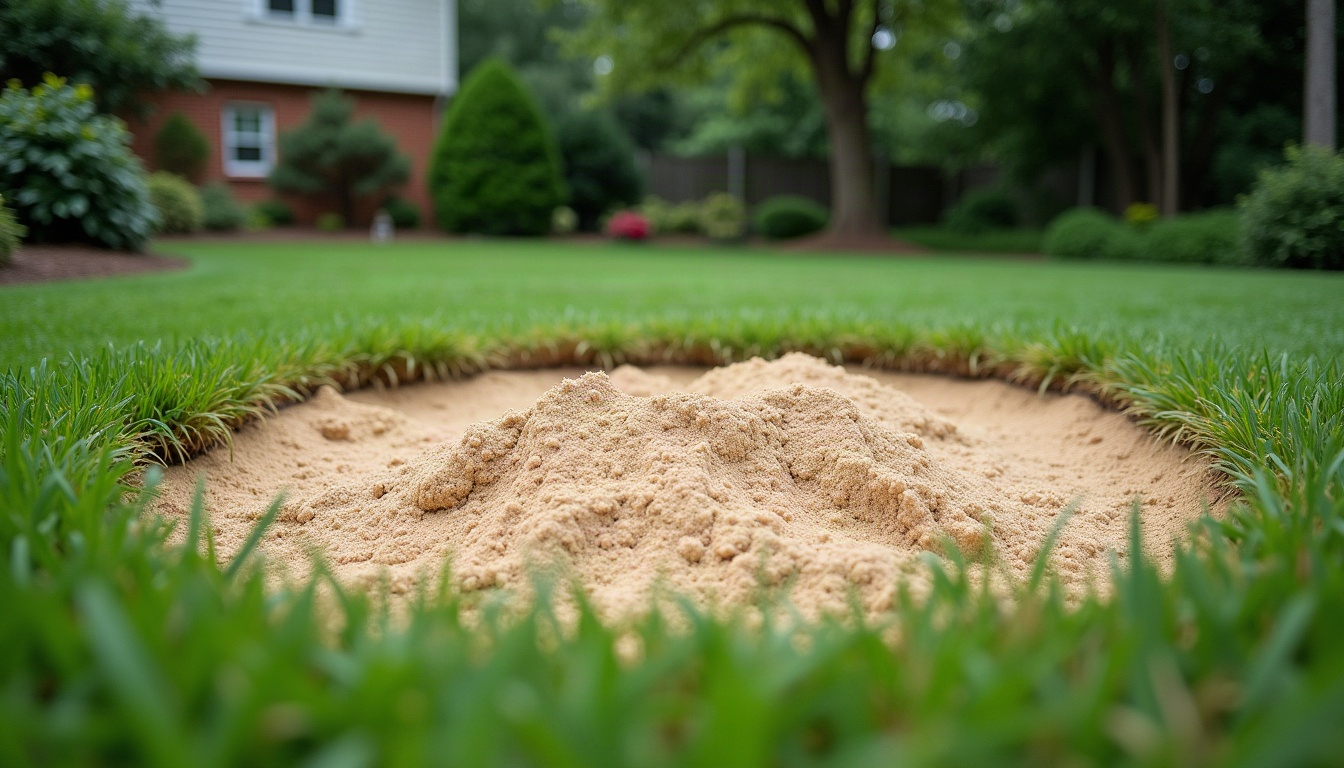
Top dressing is forgiving when it is done in light layers on the right grass. Most problems trace back to a few avoidable errors.
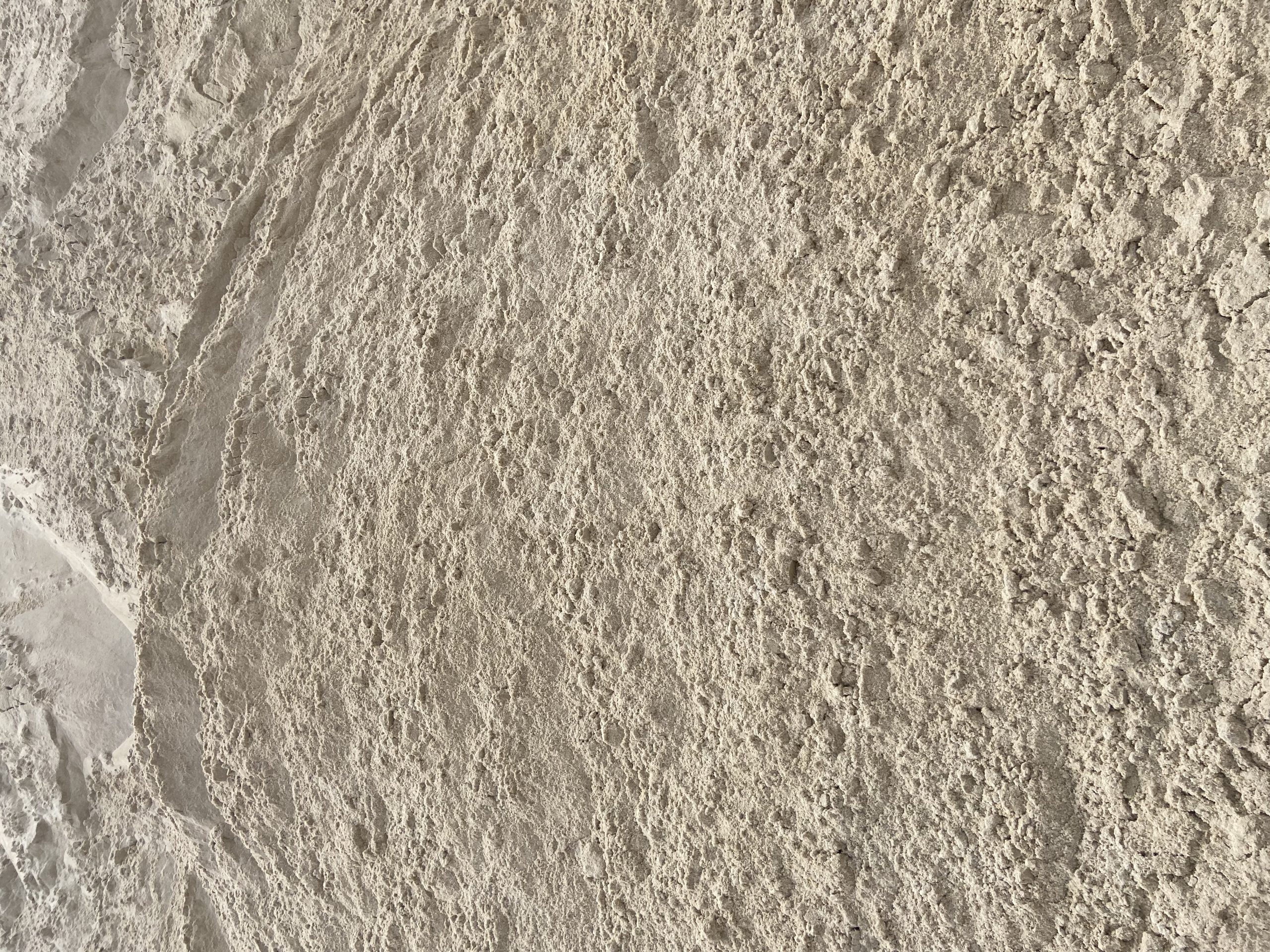
- Using the wrong sand. Play sand is often too fine and uniform. Masonry sand and fill sand can carry silt, clay or a wide range of particle sizes. Bagged topsoil and mixed soil create layers that hold water. Use a clean, washed top dressing sand with a consistent particle-size distribution.
- Switching materials. Changing back and forth between sand and soil builds alternating layers that interrupt drainage and rooting. Pick one material and stay with it.
- Going too thick. Smothering the grass kills it. Several thin applications beat one heavy one every time.
- Dressing at the wrong time. Sand on dormant or slow-growing turf just sits there. Match timing to your grass type.
- Treating fescue like bermuda. Heavy sand on tall fescue thins the stand. Keep it light and pair it with overseeding.
- Ignoring the cause. If moles, a settling trench or a drainage problem made the bumps, fix that first or they will come back.
- Spreading wet sand. Damp sand clumps on the blades and is hard to level. Let it and the lawn dry first.
- Burying sprinkler heads and valve boxes. Flag them before you start and keep sand clear.
Jackson Sand Top Dressing for Your Lawn
Jackson Sand has been producing sand since 1996, and since the late 1990s much of that work has been golf-course-grade material: bunker sands, top dressings and root zone mixes. The top dressing sand golf courses use on greens is the same kind of clean, consistent material that makes home lawn leveling go smoothly.
Our Regular Top Dressing meets USGA specifications. Lab testing shows 98.9 percent sand with only 0.5 percent silt and 0.5 percent clay, and most of the particles fall in the medium to coarse range. That means it drains well, levels evenly and will not build a layer of fines in your lawn. Full particle data is on our sand specs page.
A few other options are worth knowing:
- Green Dyed Divot Sand gives dressed areas a green color right away and is popular in spring for quicker green-up.
- Greens mixes blend top dressing sand with peat, which raises water and nutrient holding. On sandy or thin lawns that can reduce how much irrigation and fertilizer you need.
- Aeration and top dressing services. If you would rather not do the work yourself, we also offer aeration and top dressing services for lawns and athletic fields.
We wash and mix our sand on our own premises and deliver it in our own trucks, so the sand you spread on your lawn is clean and is exactly what you ordered.
Order Top Dressing Sand or Schedule Service
Whether you have a small backyard with a few bad dips or a large property that needs a full season of leveling, start by measuring the area and deciding how deep your first pass should be. Run the numbers in our yardage calculator, then give us a call.
When you call, it helps to know three things: the square footage you plan to dress, your grass type, and where on the property the truck can safely drop the load. A spot on the driveway or on a tarp near the work area saves a lot of wheelbarrow trips. If the lawn has a tight gate or soft ground, tell us so we can plan the delivery around it.
Plan for more than one delivery if you are leveling a whole yard in stages. Most homeowners order enough for the first pass, see how the lawn responds over a few weeks, then order the second round for the spots that still sit low. That keeps sand from sitting in a pile all summer and lets you adjust quantities as the surface improves.
Our own fleet of around 14 trucks runs daily from as early as 6 a.m., hauling the same golf-course-grade material we supply to courses across the region. Jackson Sand serves homeowners, landscapers, golf courses and sports fields in Jackson and across West Tennessee and the Mid-South. Call 731-668-0440 or reach us through our contact page to order top dressing sand or ask about aeration and top dressing service for your lawn.
Inside the Jackson Sand Plant
Take a 90-second look at where our sand comes from: the washing plant, screens and conveyors, and the Jackson Sand truck fleet that delivers every load. President Carlton Pope tells the story of how the company grew from one truck in 1996.
Sources and Further Reading
- topdressing a home lawn (Clemson Extension HGIC)
- UT Extension turfgrass topdressing guide (W161-N) (University of Tennessee Extension)
- turfgrass management in Tennessee (UT Extension Master Gardener Program)
- Carolina Lawns: maintaining quality turf (NC State Extension)
Frequently Asked Questions
Can I top dress my lawn with sand?
Yes, if you have bermudagrass or zoysiagrass, which grow up through sand quickly during summer. Use a clean, washed top dressing sand in thin layers of about 1/8 to 1/4 inch at a time. On tall fescue, keep applications very light and pair them with fall aeration and overseeding, since fescue does not spread to recover from being buried.
How much sand do I need to top dress 1,000 square feet?
A 1/8 inch layer takes about 10.4 cubic feet, or 0.4 cubic yards, per 1,000 square feet. A 1/4 inch layer takes about 0.8 cubic yards. For a whole lawn, multiply by the number of thousands of square feet. Jackson Sand's free yardage calculator at jacksonsand.com will do the math for any area and depth.
When is the best time to top dress a lawn in West Tennessee?
For bermudagrass and zoysiagrass, top dress from late May through July, when the grass is actively growing and recovers quickly. For tall fescue, use light applications in early fall, around September into early October, ideally combined with aeration and overseeding. Avoid dressing dormant or heat-stressed turf.
How thick can I apply sand to fill low spots?
On bermudagrass, low spots can take up to about 1/2 inch at a time, as long as at least half of each grass blade remains visible. On zoysia, stay around 1/4 inch. Let the grass grow through for two to three weeks, then apply again. Deep depressions usually take several rounds over a summer.
Can I use play sand or masonry sand to level my lawn?
It is not recommended. Play sand is often too fine and uniform, and masonry or fill sand can carry silt, clay or inconsistent particle sizes that create drainage layers in your lawn. A washed top dressing sand made for turf, such as one that meets USGA specifications, drains well and levels evenly.
Should I aerate before top dressing?
Aerating first is a good idea, especially on clay soils. Core aeration opens holes that fill with sand, improving drainage and rooting below the surface, while the top dressing smooths the surface itself. It also helps break down thatch. Jackson Sand offers aeration and top dressing services if you prefer not to do the work yourself.
Ready to order or have a question about the right material? Call Jackson Sand at 731-668-0440 or send us a message and we will help you pick the right product and quantity.
Leave a Reply