

USGA Spec Bunker Sand Delivery near Jackson, TN: Your 9-Point Guide
Quick answer: USGA spec bunker sand must meet strict particle-size, infiltration, and hardness standards so bunkers drain fast, resist contamination, and play consistently. For golf courses near Jackson, TN, Jackson Sand mixes bunker sand on-site from high-quality materials, publishes lab-tested spec sheets, and delivers in their own trucks — so every load arrives clean and accurately measured. Call 731-668-0440 or use the free yardage calculator to get started.
1. What 'USGA Spec' Actually Means for Bunker Sand
The phrase “USGA spec” gets thrown around freely in the golf industry, but it has a precise technical meaning rooted in particle-size distribution, infiltration rates, and material hardness. Understanding what the specification actually requires — and why each requirement exists — is the first step toward making a smart purchasing decision for your course.
The USGA Recommendations Document
The United States Golf Association publishes its Recommendations for a Method of Putting Green Construction — commonly called the USGA Method — which includes detailed tolerances for sand used in bunkers and greens. While the document is technically guidance rather than a mandatory code, it has become the de-facto industry standard that equipment manufacturers, agronomists, and golf course architects design around.
The key insight is that the USGA doesn’t certify individual products; instead, it defines measurable physical properties that a sand must hit. Any sand lab-tested to those properties can legitimately be called “USGA spec.”
Why a Spec Sheet Is Non-Negotiable
Without a published spec sheet, you’re guessing. A superintendent who orders “white bunker sand” from an unverified source may receive material that looks right but drains poorly, crusts after rain, or contaminates the green-mix rootzone over time. Jackson Sand publishes lab-tested sand spec sheets so you can verify particle-size distribution, infiltration rate, and other critical values before a single truck rolls.
- Particle-size distribution — percentage of sand in each sieve fraction
- Infiltration rate — how fast water moves through the profile
- Organic matter content — should be near zero for bunker fill
2. The 6 Physical Properties That Define USGA Bunker Sand
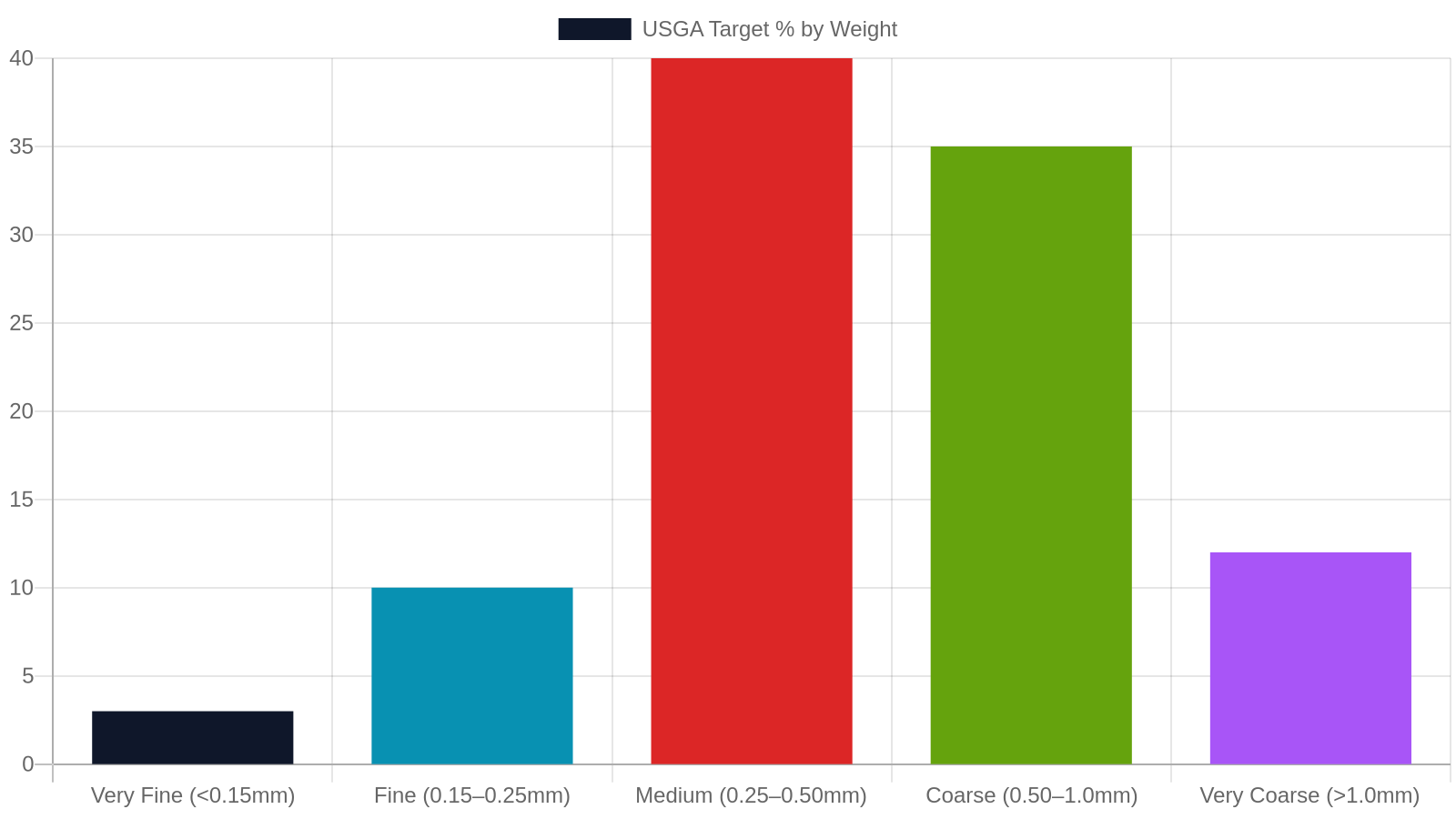
Six measurable properties determine whether a bunker sand will earn — and keep — the USGA spec designation. Miss any one of them and you may face chronic drainage problems, fried-egg lies, or a contaminated rootzone within just a few seasons. Here’s what the numbers mean in plain language.
Particle Size: The 0.25–1.0 mm Sweet Spot
USGA guidelines call for at least 65% of particles to fall in the medium-to-coarse range of 0.25–1.0 mm. Finer particles compact and crust; coarser particles feel punishing underfoot and resist raking. The ideal bunker sand sits in a narrow band that balances firmness, playability, and drainage.
Additionally, particles smaller than 0.15 mm (very fine sand and silt) should be kept below about 3% by weight. These fine particles migrate into the rootzone, clog pore spaces, and are the primary cause of long-term drainage failure in bunkers that were originally built to spec.
Infiltration Rate, Hardness, and Organic Matter
Beyond particle size, three other properties matter enormously:
- Infiltration rate: USGA-method greens target ≥6 inches per hour; bunker sand should match or exceed that so standing water doesn’t linger after a Tennessee thunderstorm.
- Particle hardness: Soft limestone particles break down under foot traffic and mowing equipment, generating fines that contaminate the profile. Hard, angular quartz grains resist breakdown for years.
- Organic matter: Should be less than 1% for new bunker fill. Higher organic content promotes crusting, algae growth, and inconsistent playing surfaces.
These three values, combined with the particle-size curve, form the complete picture of whether a sand will perform over a multi-year maintenance cycle.
Layering Coefficient and Uniformity
Two statistical measures — the coefficient of uniformity (Cu) and the coefficient of curvature (Cc) — describe how tightly clustered the particle sizes are. A well-graded bunker sand typically has a Cu between 2.0 and 2.5. A very uniform sand (Cu near 1.0) can be prone to surface sealing, while a poorly graded sand (Cu above 3.5) may segregate during delivery and raking, creating inconsistent playing conditions across the bunker face.
3. Why Bunker Sand Performance Matters More in the Mid-South

Choosing the right bunker sand is a universal challenge, but the specific climate and soil conditions of West Tennessee create pressures that make material quality even more consequential here than in many other parts of the country. Understanding those regional factors helps explain why spec compliance isn’t optional for courses in the Jackson area.
West Tennessee's Rainfall and Heat Stress
Jackson, TN averages roughly 54 inches of rainfall per year, with intense summer thunderstorms that can drop 2–3 inches in a single event. A bunker sand with a marginal infiltration rate that might perform adequately in an arid climate will flood repeatedly in West Tennessee, delaying play and forcing costly sand redistribution after every major storm.
High summer temperatures — routinely above 90°F from June through August — also accelerate organic matter breakdown and algae growth in bunkers that hold moisture. A properly spec’d, low-organic sand dries faster and resists biological crusting better than a cheaper alternative.
Clay-Heavy Native Soils and Contamination Risk
Much of the Mid-South sits on clay-rich soils. When bunker faces erode or splash-out occurs, native clay particles migrate into the bunker sand profile. If the base sand already has a high fines content, even modest clay contamination can push the profile past the drainage threshold quickly. Starting with a clean, hard, coarse-dominant sand gives you a much larger buffer before contamination becomes a playability problem.
This is one reason Jackson Sand mixes bunker sand on its own premises from carefully selected materials — controlling the input quality from the start rather than relying on whatever a quarry happens to have available.
4. On-Site Mixing: Why It Produces a More Consistent Product
The consistency of your bunker sand from delivery to delivery matters as much as the spec itself. A sand that tests perfectly in January but drifts out of tolerance by May — because the supplier’s source material changed — creates uneven playing conditions and forces mid-season corrections. Here’s how on-site mixing addresses that problem.
Controlling the Input Materials
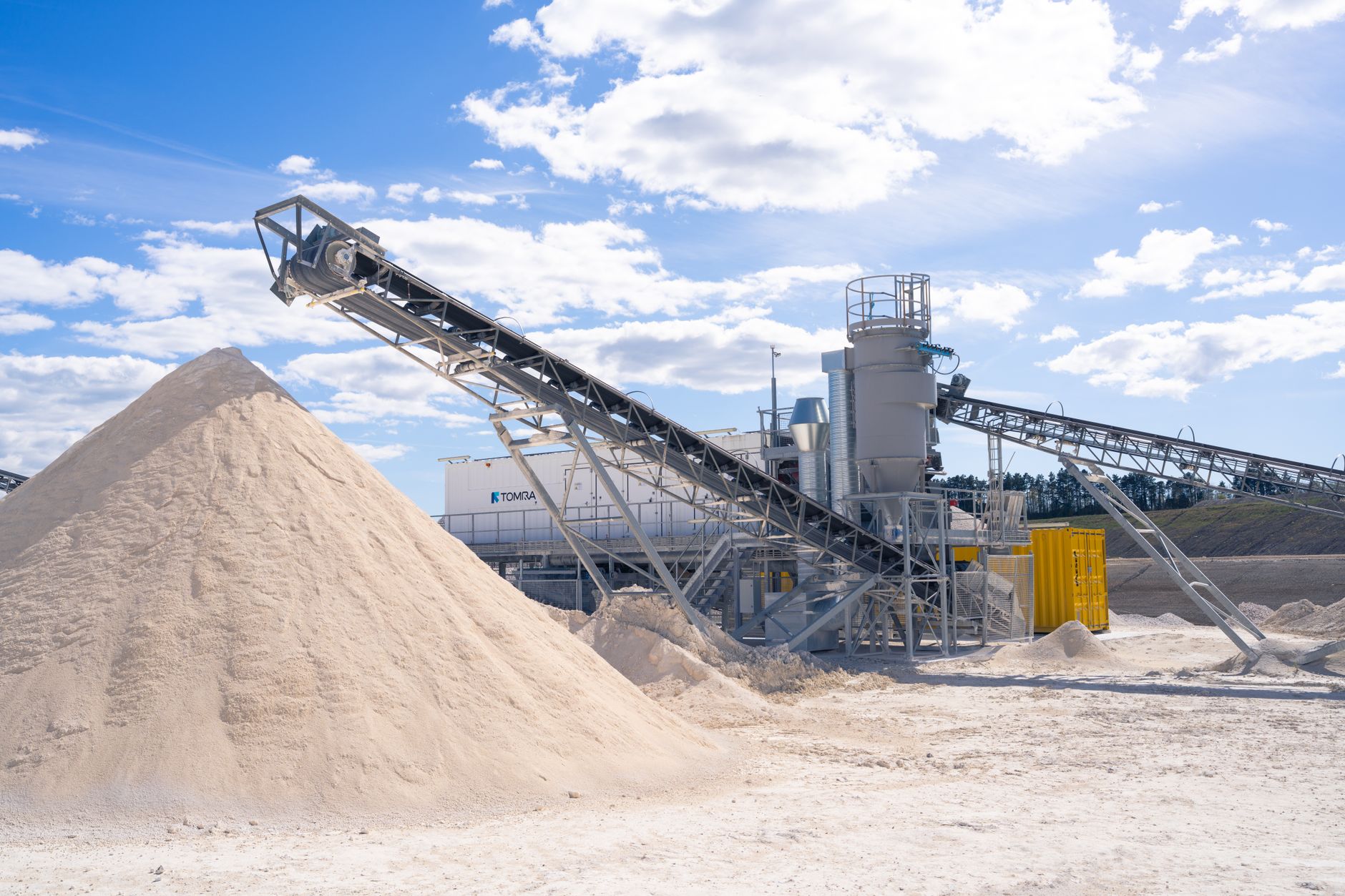
Most aggregate suppliers resell sand that arrives at their yard from a single quarry source. Quarry output varies — seasonal changes in the deposit, equipment wear, and blending practices all affect the final particle-size distribution. Jackson Sand takes a different approach: mixing sand on their own premises from high-quality materials they select and control. That extra step allows them to hit a consistent particle-size target load after load, rather than hoping the quarry’s output this week matches last month’s spec sheet.
What 'Clean Loads' Means in Practice
Contamination can happen at multiple points in the supply chain — at the quarry stockpile, during transfer to a secondary yard, or in a shared truck bed that previously carried topsoil or gravel. Jackson Sand delivers in their own dedicated trucks, which means the load that leaves their yard at 139 United Dr. in Jackson, TN is the same load that arrives on your course. No third-party haulers, no shared equipment, no mystery residue from a previous job.
For a superintendent who has just paid to renovate a bunker to USGA tolerances, a contaminated delivery can undo that investment before the first golfer sets foot in the sand.
5. How to Calculate How Much Bunker Sand You Need

Ordering too little sand means a second delivery and a gap in your renovation schedule. Ordering too much wastes budget and creates stockpile management headaches. Getting the quantity right starts with a straightforward volume calculation — and Jackson Sand makes it even easier with a free online tool.
The Basic Volume Formula
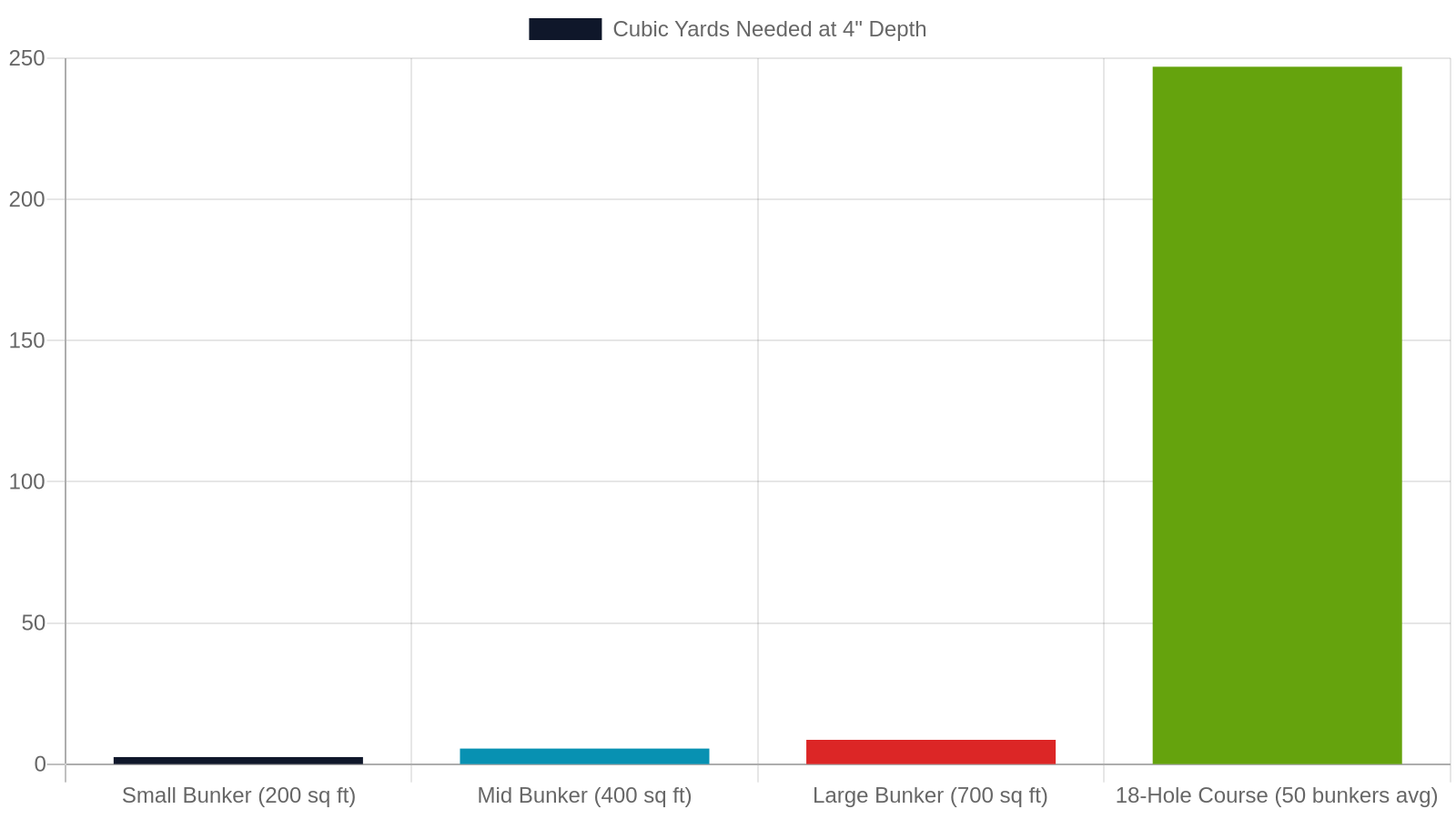
Bunker sand volume is calculated as: Length × Width × Depth (in feet) ÷ 27 = cubic yards. For a typical mid-size bunker — say 30 feet long, 15 feet wide, and 4 inches (0.33 ft) deep — that works out to roughly 5.5 cubic yards of sand. A full renovation that replaces 6 inches of sand across the same footprint would require about 8.3 cubic yards.
These numbers scale quickly when you’re renovating multiple bunkers across an 18-hole course. A course with 50 bunkers averaging 400 square feet each and needing 4 inches of new sand would require approximately 247 cubic yards — multiple truckloads that need to be coordinated carefully.
Use the Free Yardage Calculator
Rather than working through the math manually, use the free yardage calculator on the Jackson Sand website. Enter your dimensions and it returns the cubic yards you need — no spreadsheet required. This is especially useful when you’re budgeting for a multi-bunker renovation project and need a quick estimate before committing to a delivery schedule.
Once you have your yardage figure, call 731-668-0440 to discuss load sizes, scheduling, and whether your project benefits from phased deliveries to match your renovation timeline.
6. Bunker Renovation vs. Top Dressing: Choosing the Right Approach
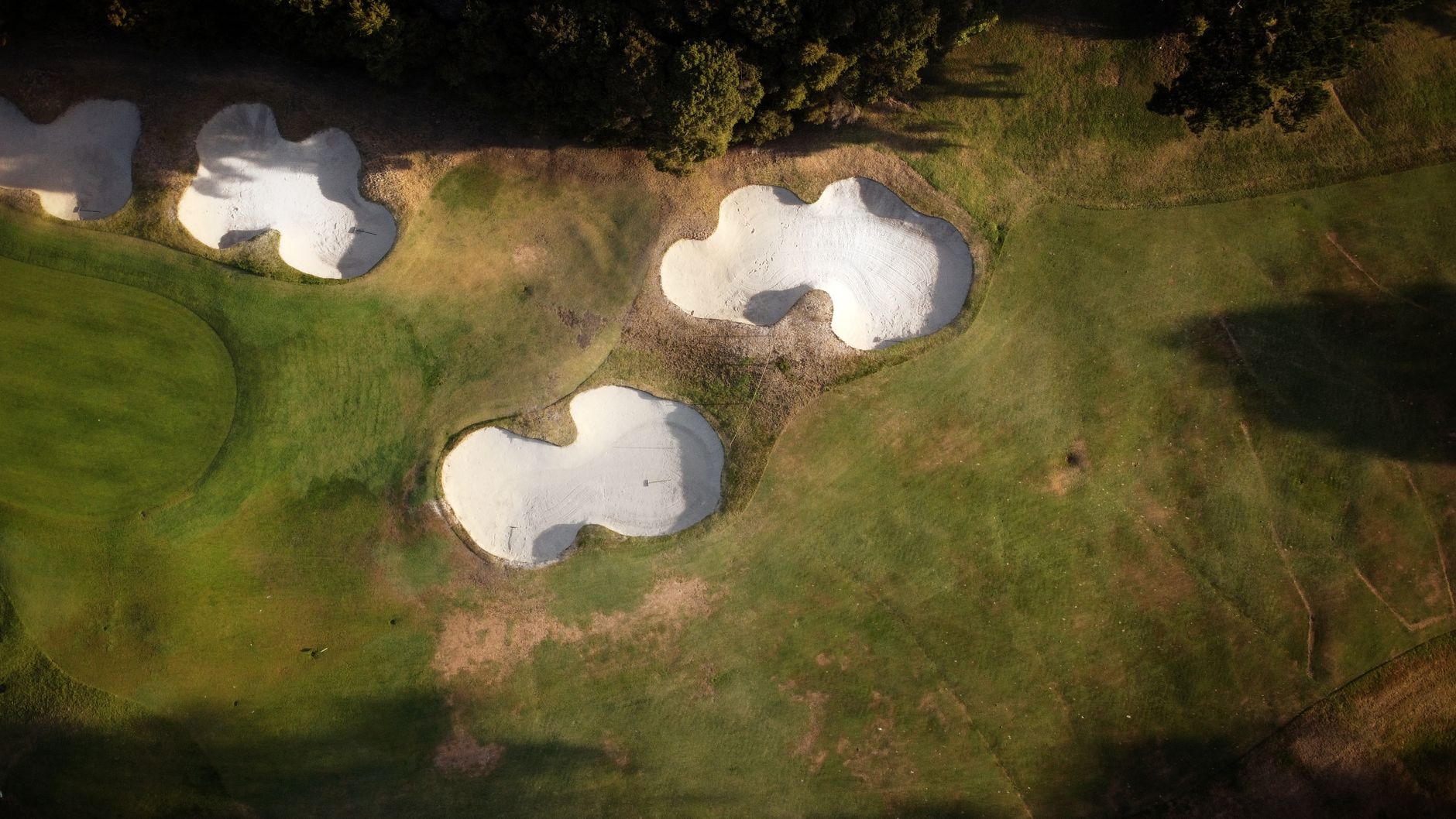
Not every bunker problem requires a full sand replacement. Understanding the difference between a renovation and a top-dressing program — and knowing when each is appropriate — helps you allocate your maintenance budget more effectively and avoid over-engineering a solution to a manageable problem.
Full Renovation: When to Start Fresh
A full bunker renovation — removing all existing sand, addressing drainage infrastructure, and replacing with fresh USGA-spec material — is warranted when:
- The existing sand has accumulated more than 15–20% fines by weight through contamination
- Infiltration rates have dropped below 2 inches per hour
- The bunker floor shows persistent standing water 24 hours after rainfall
- The sand depth has become inconsistent, with thin spots on faces and deep accumulation in the center
Full renovation is a significant investment but resets the clock on your bunker performance. Done correctly with properly spec’d sand, a renovated bunker should perform well for 8–12 years before another full replacement is needed.
Top Dressing: Maintaining What's Already Good
When your bunker sand is still within spec but has lost depth due to splash-out, wind, or routine play, annual or biannual top dressing with matching USGA-spec sand restores the profile without the cost of a full renovation. The critical requirement is that the new sand must match the existing sand’s particle-size distribution. Layering two different sands creates a hydraulic discontinuity that traps water at the interface — exactly the problem you’re trying to avoid.
Jackson Sand offers top dressing sand and top dressing services, so you can get both the material and the application from a single source, ensuring consistency across the entire job.
7. Drainage Infrastructure: The Foundation Beneath the Sand
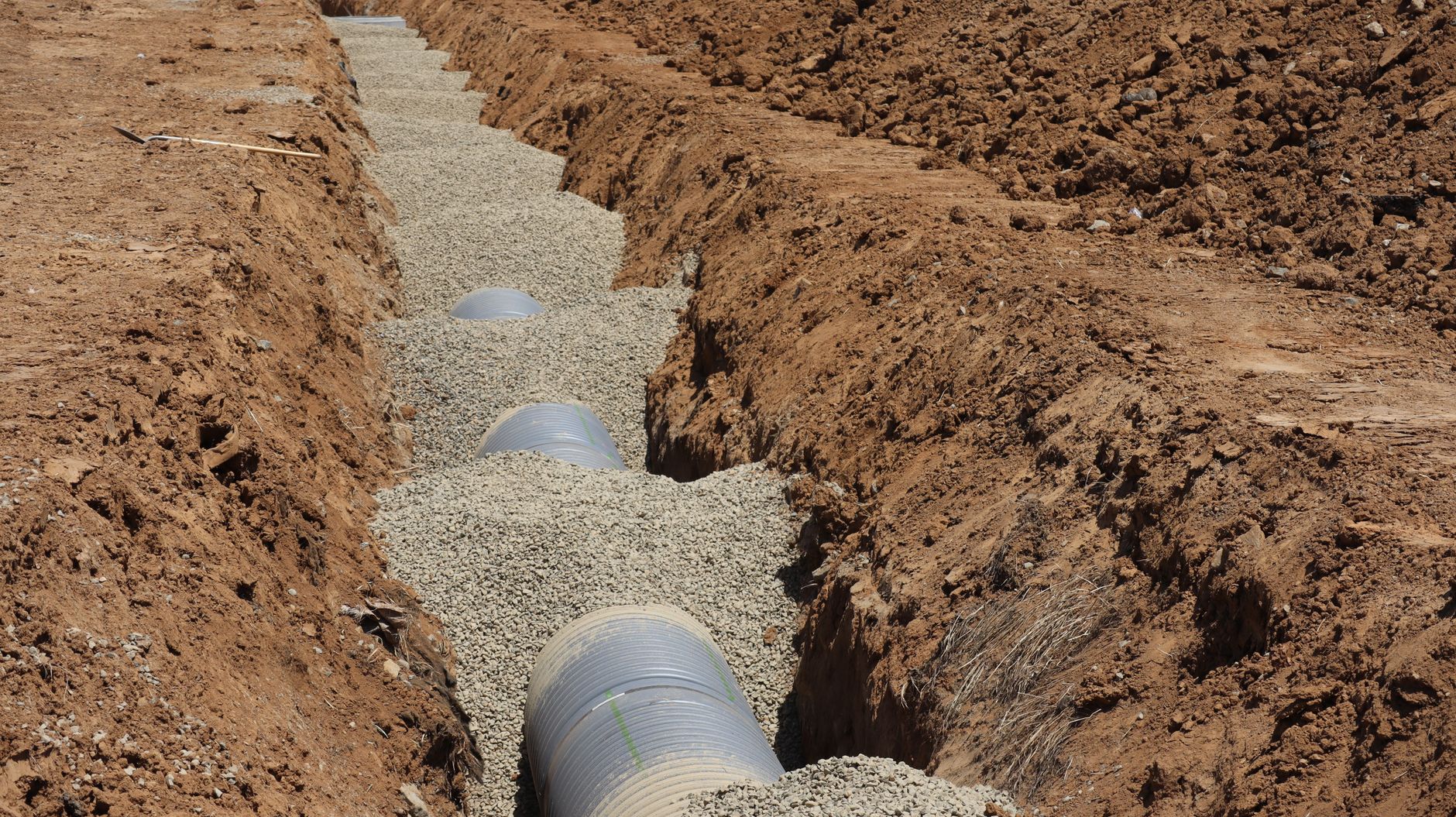
Bunker sand and bunker drainage are two halves of the same system. A superintendent who invests in premium USGA-spec sand but ignores a deteriorating drainage layer will see that investment wash away — literally — in the first major rainstorm. Here’s how to think about the two together.
Why Good Sand Fails in a Bad Drainage System
Even perfectly spec’d USGA bunker sand cannot compensate for a failed drainage system beneath it. If the perforated drain pipe is clogged, the gravel drainage layer has been contaminated with fines, or the bunker floor has no slope toward the drain, water will pond regardless of how well the sand itself infiltrates. The sand’s job is to move water quickly from the surface down to the drainage layer — but the drainage layer has to be functional for that to matter.
Before investing in new bunker sand, assess whether your existing drainage infrastructure can handle the load. A simple test: pour 5 gallons of water into the lowest point of the bunker and time how long it takes to disappear. If it’s still standing after 30 minutes, the problem is below the sand.
Jackson Sand's Drainage Material Options
Jackson Sand supplies drainage aggregates for bunker and course drainage projects, including materials for surface drainage and slope applications. Properly sized drainage gravel beneath the bunker sand layer is critical — too fine and it clogs; too coarse and it creates a capillary break that prevents water from moving downward efficiently.
Coordinating your sand and drainage aggregate orders from a single supplier simplifies logistics and ensures the two materials are compatible. Call 731-668-0440 to discuss your drainage situation before finalizing your bunker renovation plan.
Bunker Sand Options Compared: 5-Attribute Scorecard
Use this table to evaluate bunker sand options against the attributes that matter most for long-term performance and value. Ratings reflect typical product-category performance, not individual suppliers.
8. Reading a Bunker Sand Spec Sheet: A Field Guide

A spec sheet is only useful if you know how to read it. Superintendents who can interpret sieve analysis data and infiltration rates are better equipped to hold suppliers accountable and make apples-to-apples comparisons between competing products. Here’s a plain-language guide to the two most important sections of any bunker sand spec sheet.
The Sieve Analysis Table
Every legitimate USGA-spec bunker sand comes with a sieve analysis — a table showing what percentage of the sand by weight is retained on each standard sieve size. You’ll typically see sieve sizes listed in millimeters (4.75, 2.0, 1.0, 0.5, 0.25, 0.15, 0.075 mm) with cumulative percent passing for each. The USGA’s target ranges specify minimum and maximum percent passing at several of these sieve sizes simultaneously — a sand must hit all of the targets, not just one or two.
If a supplier can’t produce a sieve analysis from an accredited lab, that’s a significant red flag. Ask for the test date as well — a sieve analysis from three years ago may not reflect the current stockpile.
Infiltration Rate and What the Number Means
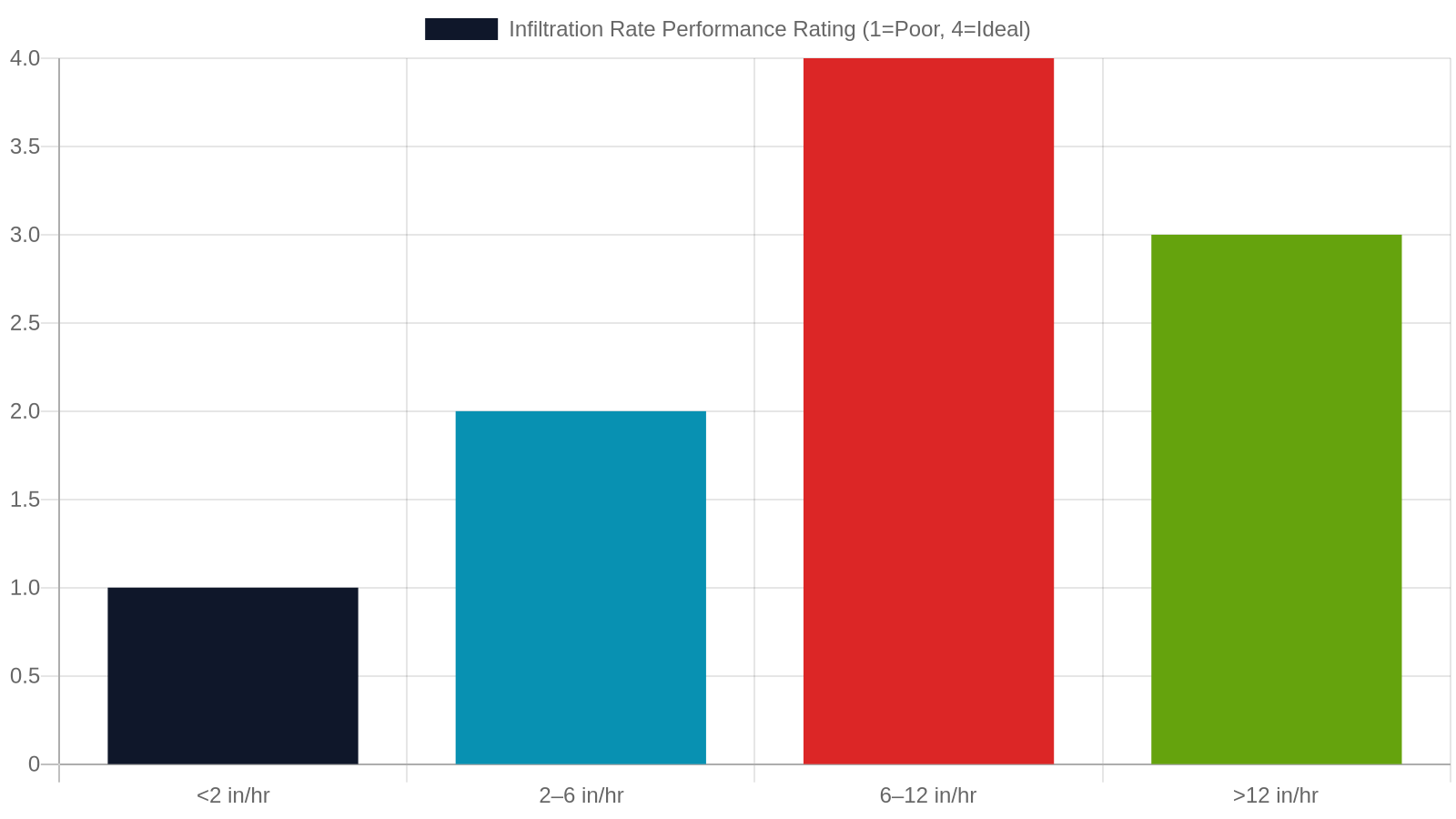
Infiltration rate is typically expressed in inches per hour (in/hr) and measured using a constant-head permeameter in a lab setting. USGA guidelines for putting greens target 6–12 in/hr; bunker sand used in a USGA-method construction should fall within a similar range to ensure compatibility with the rootzone drainage system.
- Below 2 in/hr: Likely to pond after heavy rain — avoid for bunkers
- 2–6 in/hr: Marginal; may be acceptable for low-traffic bunkers in drier climates
- 6–12 in/hr: USGA target range — ideal for most courses
- Above 12 in/hr: Very fast-draining; can cause excessive drying and sand movement on steep faces
9. Delivery Logistics: What to Expect from Jackson Sand

Getting the right sand is only half the equation — getting it delivered cleanly, on schedule, and to the right spot on your course is the other half. Jackson Sand’s owner-operated delivery model is designed to make that second half as straightforward as the first. Here’s what the process typically looks like.
Scheduling and Load Sizing
Jackson Sand delivers in their own trucks, which means scheduling is coordinated directly — no third-party dispatcher, no uncertainty about when the load will actually show up. For bunker renovation projects, it’s worth discussing whether a phased delivery schedule makes sense: receiving sand in stages aligned with your crew’s renovation progress prevents large stockpiles from sitting exposed to weather and contamination between uses.
Delivery is included, which simplifies budgeting. You’re not calculating a separate freight charge on top of the material cost. For large projects with multiple truckloads, call 731-668-0440 early to confirm scheduling availability, especially during peak renovation season in spring and fall.
Site Access and Unloading Considerations
Before your delivery date, walk the access route from the course entrance to each bunker work area. Consider:
- Gate widths and overhead clearance — confirm the delivery truck can reach the work area without crossing active playing surfaces unnecessarily
- Ground conditions — wet fairways or soft rough can be damaged by heavy truck traffic; plan routes on cart paths where possible
- Stockpile location — if you’re doing a phased renovation, identify a firm, clean staging area near the work zone that won’t contaminate the sand before it goes into the bunker
A little pre-delivery planning prevents the frustration of a perfect load of sand sitting in the wrong place or, worse, getting contaminated before it ever reaches the bunker.
10. Comparing Bunker Sand Options: Key Attributes at a Glance

When evaluating bunker sand options, it helps to line up the key attributes side by side. The comparison table below covers the most important factors — from particle size and infiltration rate to lifecycle cost and delivery reliability — so you can make an informed decision rather than guessing based on price alone.
What Separates Premium from Budget Sand
Not all bunker sands are created equal, and the price difference between a budget aggregate and a properly spec’d USGA product is almost always dwarfed by the cost of fixing the problems cheap sand creates. A bunker that floods after every rain, crusts between rounds, or contaminates the green-mix rootzone will cost far more in labor, re-renovation, and lost playing time than the premium paid upfront for quality material.
The comparison table below summarizes the key attributes across common bunker sand categories. Use it as a starting checklist when evaluating any supplier’s product.
Long-Term Cost of Ownership
Think of bunker sand as a multi-year infrastructure investment, not a consumable. A properly spec’d, hard-particle quartz sand installed over functional drainage should maintain acceptable infiltration rates for 8–12 years with routine top dressing. A soft limestone or high-fines sand may require complete replacement in 3–5 years as particles break down and drainage fails — effectively doubling the lifecycle cost.
For West Tennessee courses managing tight maintenance budgets, the math strongly favors paying for quality upfront. Jackson Sand’s on-site mixing process is specifically designed to deliver that quality consistently, load after load.
Ready to Order USGA Spec Bunker Sand near Jackson, TN?

Your bunkers are one of the most visible and play-defining features on your course. Getting the sand right — material quality, quantity, and delivery — sets the foundation for years of consistent performance. Jackson Sand makes that process straightforward for courses throughout West Tennessee and the Mid-South.
Start with the Spec Sheet and Yardage Calculator
Before you call, two resources on the Jackson Sand website will save time and ensure you’re ordering the right product in the right quantity. First, review the published sand spec sheets to confirm the product meets your course’s USGA requirements — particle-size distribution, infiltration rate, and organic matter content are all documented. Second, run your bunker dimensions through the free yardage calculator to get an accurate cubic-yard estimate before you call.
Having those numbers ready when you call means the conversation can move straight to scheduling and logistics rather than back-and-forth on quantities.
Get in Touch with Jackson Sand
Jackson Sand serves golf courses, athletic fields, contractors, and homeowners across Jackson, TN and the wider West Tennessee and Mid-South region. Whether you’re renovating a single bunker or planning a full 18-hole sand replacement program, the team at 139 United Dr., Jackson, TN 38305 is ready to help.
Explore the full details on our USGA spec bunker sand page, then call 731-668-0440 to discuss your project, confirm availability, and schedule delivery. Jackson Sand mixes their own sand, owns their trucks, and includes delivery — so what you order is exactly what arrives.
Frequently Asked Questions
What is USGA spec bunker sand and how is it different from regular sand?
USGA spec bunker sand meets specific particle-size, infiltration rate, and hardness standards defined by the United States Golf Association. It drains faster, resists compaction, and lasts longer than general-purpose or play sand, which typically has too many fine particles and too low an infiltration rate for golf course use.
Does Jackson Sand deliver bunker sand to golf courses near Jackson, TN?
Yes. Jackson Sand delivers bunker sand and other aggregates to golf courses throughout Jackson, TN and the broader West Tennessee and Mid-South region. Delivery is included and they use their own trucks to keep loads clean and accurate. Call 731-668-0440 to discuss your project.
How many cubic yards of bunker sand do I need for a renovation?
It depends on your bunker's dimensions and the depth of sand you're replacing. A 400-square-foot bunker with 4 inches of new sand requires roughly 5.5 cubic yards. Use the free yardage calculator at jacksonsand.com/yardage-calculator/ for a precise estimate based on your actual measurements.
How often should bunker sand be replaced on a golf course?
With properly spec'd USGA bunker sand and routine annual top dressing, a full sand replacement is typically needed every 8–12 years. Budget-grade sands with higher fines content often require replacement in 3–5 years as particles break down and drainage fails.
Can I see the particle-size specs for Jackson Sand's bunker sand before ordering?
Yes. Jackson Sand publishes lab-tested spec sheets for their sand products. You can review them at jacksonsand.com/sand-specs/ or request a copy by calling 731-668-0440.
Does bunker sand need to match the particle size of the existing sand when top dressing?
Yes — this is critical. Layering two sands with different particle-size distributions creates a hydraulic discontinuity at the interface that traps water and causes drainage problems. Always match new top-dressing sand to the existing bunker sand's sieve analysis.