
Top Dressing Sand Cost per Yard in the Mid-South: Your 8-Point Guide
Quick answer: Top dressing sand in the Mid-South typically runs between $35 and $75 per cubic yard delivered, depending on sand grade, job size, and haul distance. Golf-grade USGA-spec sand sits at the higher end; general lawn top dressing sand costs less. Because Jackson Sand mixes its own sand on-site in Jackson, TN and delivers in company-owned trucks, pricing stays competitive and loads arrive clean and accurate. For a precise estimate, use the free yardage calculator at jacksonsand.com or call 731-668-0440.
1. What Top Dressing Sand Actually Is (and Why Grade Matters for Price)

Before you can evaluate any price quote, you need to know what you’re actually buying. Top dressing sand is an engineered product, not a commodity scoop from a gravel pit. The grade, particle distribution, and cleanliness of the material all influence both the price tag and the agronomic outcome on your turf.
Defining Top Dressing Sand
Top dressing sand is a coarse-to-medium washed sand spread in thin layers over turf surfaces — typically ⅛ to ¼ inch per application — to level the surface, improve drainage, dilute thatch, and firm up the playing surface. It is not the same as masonry sand, fill sand, or play sand, and substituting a cheaper grade can compact, seal the soil surface, and damage turf rather than help it.
Because the material is purpose-formulated, it carries a higher price per yard than ungraded fill. Understanding that premium is the first step to building an accurate project budget.
How Particle Size Affects Cost
Sand is priced partly by the precision of its gradation. A USGA-spec bunker or putting-green sand requires tight particle-size distribution — usually 0.25 mm to 1.0 mm — confirmed by sieve analysis. That lab testing and careful blending adds cost. A general fairway or athletic-field top dressing sand may have a slightly broader gradation curve and therefore a lower price point.
Jackson Sand publishes lab-tested spec sheets so buyers know exactly what they’re getting. Review the sand spec sheets before comparing quotes from different suppliers — you may be comparing different products without realizing it.
2. The Mid-South Price Range: What to Expect per Cubic Yard
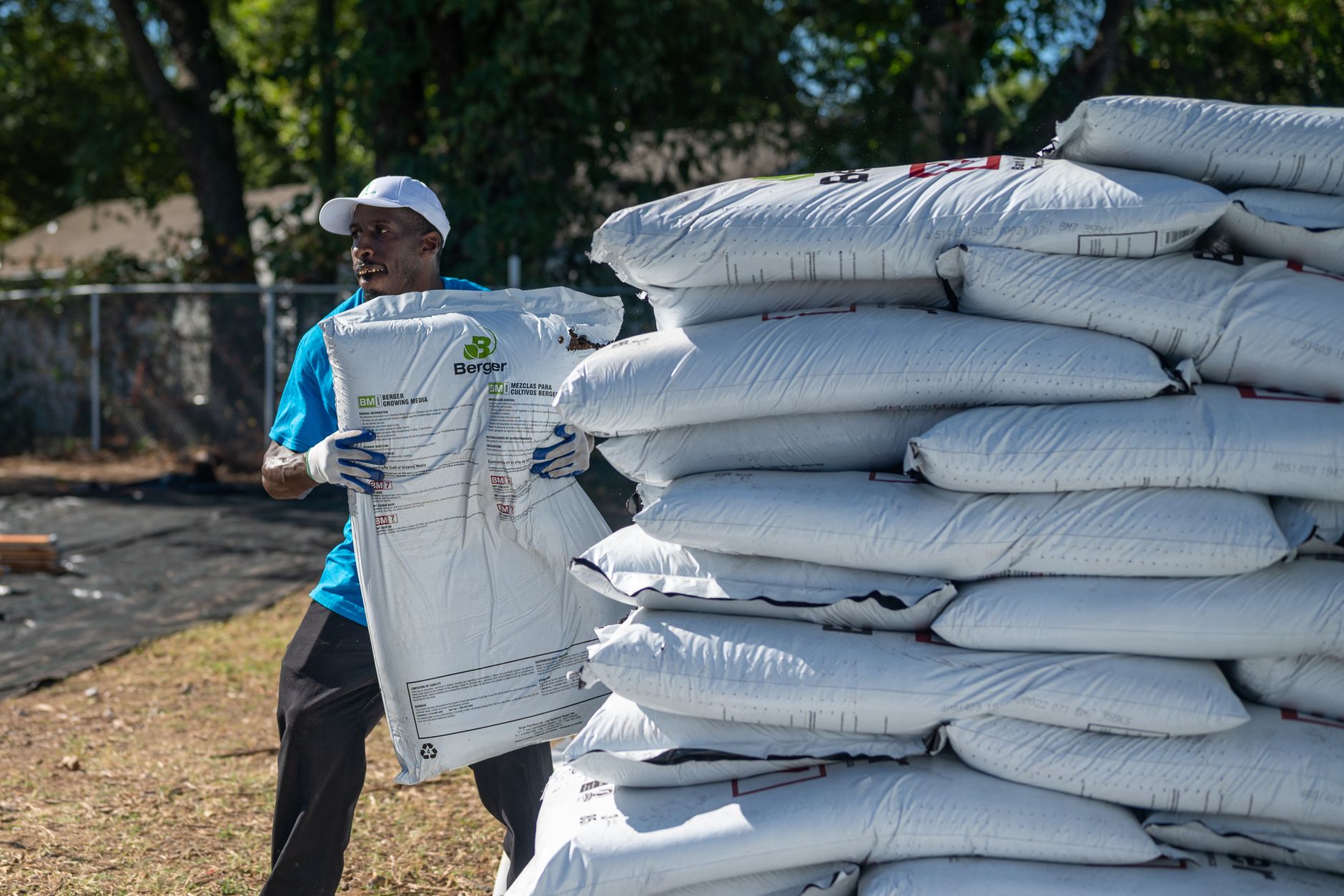
Prices in the Mid-South vary by sand grade, job size, and supplier. The ranges below reflect delivered pricing in West Tennessee as of 2024–2025. They are representative benchmarks, not guaranteed quotes — always call your supplier for a current figure tied to your specific project.
General Lawn Top Dressing Sand
For homeowners and landscapers doing routine lawn leveling or overseeding prep, a general-purpose top dressing sand typically falls in the $35–$50 per cubic yard delivered range in West Tennessee. This grade is suitable for residential lawns, park common areas, and low-traffic recreational fields where USGA certification is not required.
One cubic yard covers roughly 100–160 square feet at a ¼-inch depth, so a typical residential job of 500–1,000 sq ft needs 3–7 yards. Use the free yardage calculator to pin down your exact quantity before you call for a quote.
Athletic Field and Golf-Grade Sand
Sports turf managers and golf course superintendents working with USGA-spec or near-spec materials should budget $55–$75 per cubic yard delivered in the Mid-South market. This premium reflects tighter gradation control, lab testing, and the on-site blending process that keeps particle size consistent load to load.
A single 18-hole golf course may apply 200–400 cubic yards of top dressing sand per season across greens, tees, and approaches. At that volume, even a $5/yard difference in price adds up to $1,000–$2,000 — which is why verifying specs before buying matters as much as the unit price.
What's Usually Included in a Delivered Price
A quoted delivered price from a reputable supplier should include the material, loading, and delivery to your site. Jackson Sand owns its delivery trucks, which means no third-party hauler markup and no risk of a contaminated load from a truck that previously hauled something else. Always confirm whether a competitor’s quote is FOB (you pick up) or delivered — the difference can be $10–$20 per yard once you factor in your own hauling cost.
3. The 5 Factors That Move the Price Up or Down
The per-yard number on a quote is shaped by at least five variables. Understanding each one helps you control costs — and helps you spot when a low quote might be cutting corners on material quality or hiding fees elsewhere.
Sand Grade and Specification
As covered above, tighter gradation and lab certification cost more to produce. If your project requires a specific particle-size distribution — say, 90% of particles between 0.5 mm and 1.0 mm — expect to pay for the blending and testing that guarantees it. If your project is a backyard lawn leveling, a broader-spec sand will do the job at a lower price.
Order Volume and Job Size
Volume discounts are real. A 10-yard residential delivery and a 200-yard golf course seasonal contract are priced differently. Larger, recurring orders give suppliers predictable demand and lower per-load overhead, and good suppliers pass some of that savings back. If you’re a superintendent or field manager ordering regularly, ask about seasonal pricing or standing-order arrangements.
Haul Distance and Access
Jackson Sand is located at 139 United Dr., Jackson, TN 38305, putting it within practical delivery range of most of West Tennessee and the broader Mid-South. Sites farther from the yard or with difficult access — narrow gates, soft ground, weight-restricted roads — may incur additional charges. Confirm site access details when you request a quote.
Seasonal Demand
Top dressing demand spikes in spring (March–May) and again in early fall (September–October) when turf managers are aerating and overseeding. Scheduling deliveries during shoulder periods — mid-summer or late fall — can sometimes improve availability and lead times, though pricing is generally stable year-round with a reliable local supplier.
Delivery vs. Pickup
If you have your own equipment and can pick up material, you may save on delivery. However, for most turf applications, delivered sand is the practical choice — the loads arrive ready to spread, and you avoid the cost and hassle of renting or running your own dump truck. Jackson Sand’s included-delivery model makes the math simple.
4. How Much Top Dressing Sand Do You Actually Need?

Ordering too little means a second delivery charge. Ordering too much means you’re paying for material that sits unused. Getting the quantity right is as important as getting the price right — and the two are directly connected because most suppliers price by the yard.
Coverage Math for Common Applications
The standard top dressing rate for golf greens is ¼ to ½ cubic yard per 1,000 square feet per application. Athletic fields are often dressed at a slightly heavier rate — up to 1 cubic yard per 1,000 sq ft — especially after core aeration when voids need filling. Residential lawns typically receive ⅛ to ¼ inch, which works out to roughly 0.3–0.6 cubic yards per 1,000 sq ft.
Real-World Yardage Examples
Here are some practical benchmarks:
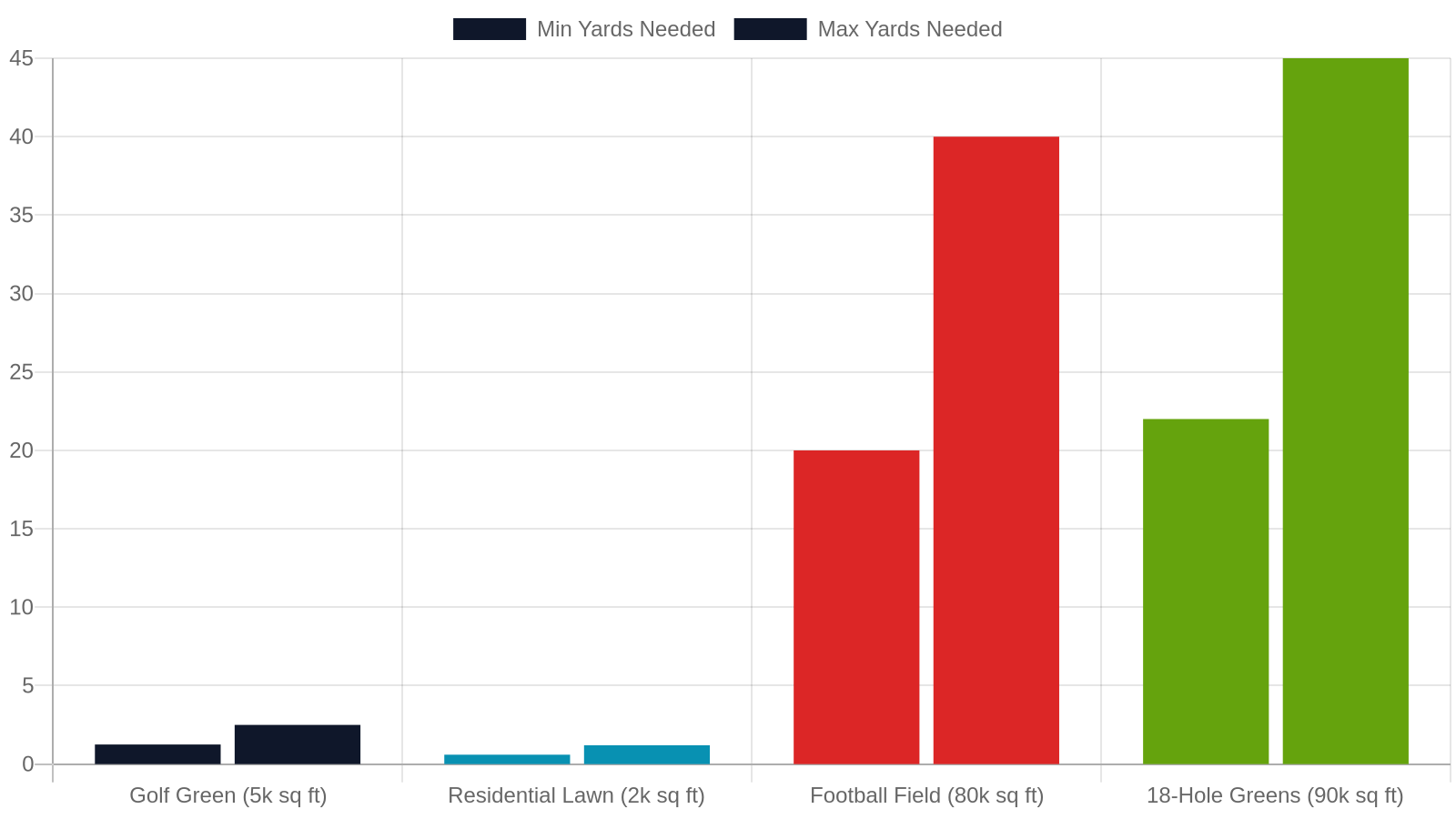
- Average golf green (5,000 sq ft): 1.25–2.5 yards per application
- High school football field (80,000 sq ft): 20–40 yards per dressing
- Residential backyard (2,000 sq ft): 0.6–1.2 yards
- 18-hole course (greens only, ~90,000 sq ft total): 22–45 yards per application cycle
These are estimates. Actual depth, surface irregularity, and aeration hole volume all affect the final number. Don’t guess — use the Jackson Sand yardage calculator to get a precise figure before you order.
5. Golf Course Top Dressing: Greens, Tees, and Fairways
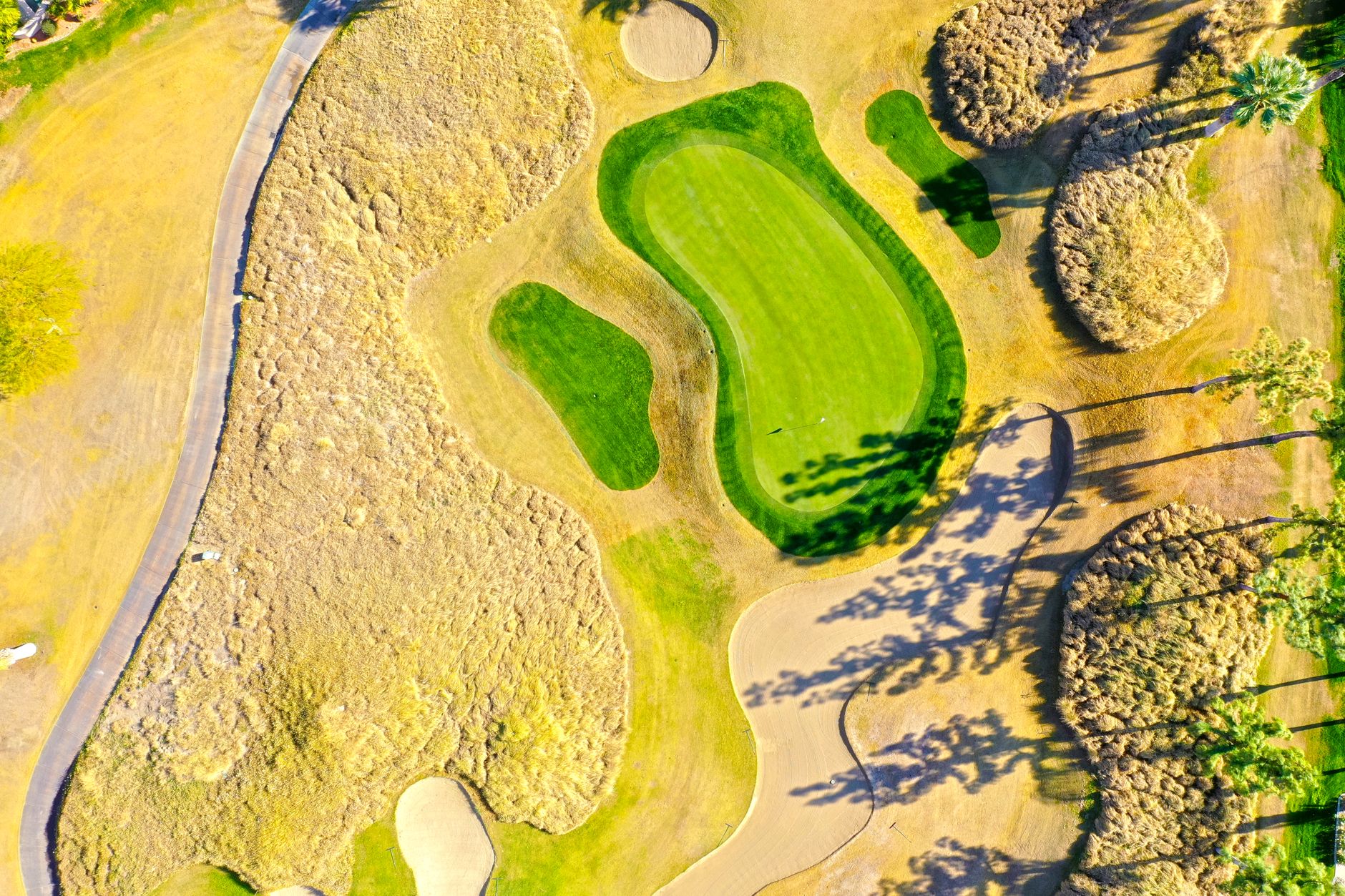
Golf course applications represent the most specification-sensitive use of top dressing sand — and often the largest volume. Getting the grade wrong is costly; getting the supplier wrong (inconsistent loads, contaminated material) can be even more so.
Why Golf Superintendents Specify Sand So Carefully
A USGA-spec putting green is built on a precisely engineered sand-based root zone. Introducing top dressing sand with a different particle-size distribution disrupts infiltration rates and can create layering problems that persist for years. That’s why most golf course superintendents require lab-verified sieve analysis on every delivery — not just a product description.
Jackson Sand provides spec sheets for its golf course sand products. Before your first order, review the golf course sand page and match the gradation data to your root zone profile.
Frequency and Annual Budget Planning
Most golf courses in the Mid-South top dress greens every 2–4 weeks during the growing season, with heavier applications after hollow-tine aeration in spring and fall. A course applying 2 yards per green, 18 greens, four times per season is moving roughly 144 yards of sand annually on greens alone. Add tees and approaches and that figure can double. At $55–$75/yard, the annual sand budget for a modest course ranges from $8,000 to $21,600 — making supplier reliability and consistent spec as important as unit price.
Bunker Sand vs. Top Dressing Sand
These are related but distinct products. Bunker sand is selected for playability, firmness, and resistance to splash — particle shape (sub-angular) and size both matter. Top dressing sand is optimized for infiltration and surface smoothness. Some courses use the same sand for both; others specify different products. Jackson Sand supplies both; see the bunker sand page for details on that product line.
6. Athletic Field Top Dressing: Schools, Parks, and Rec Departments
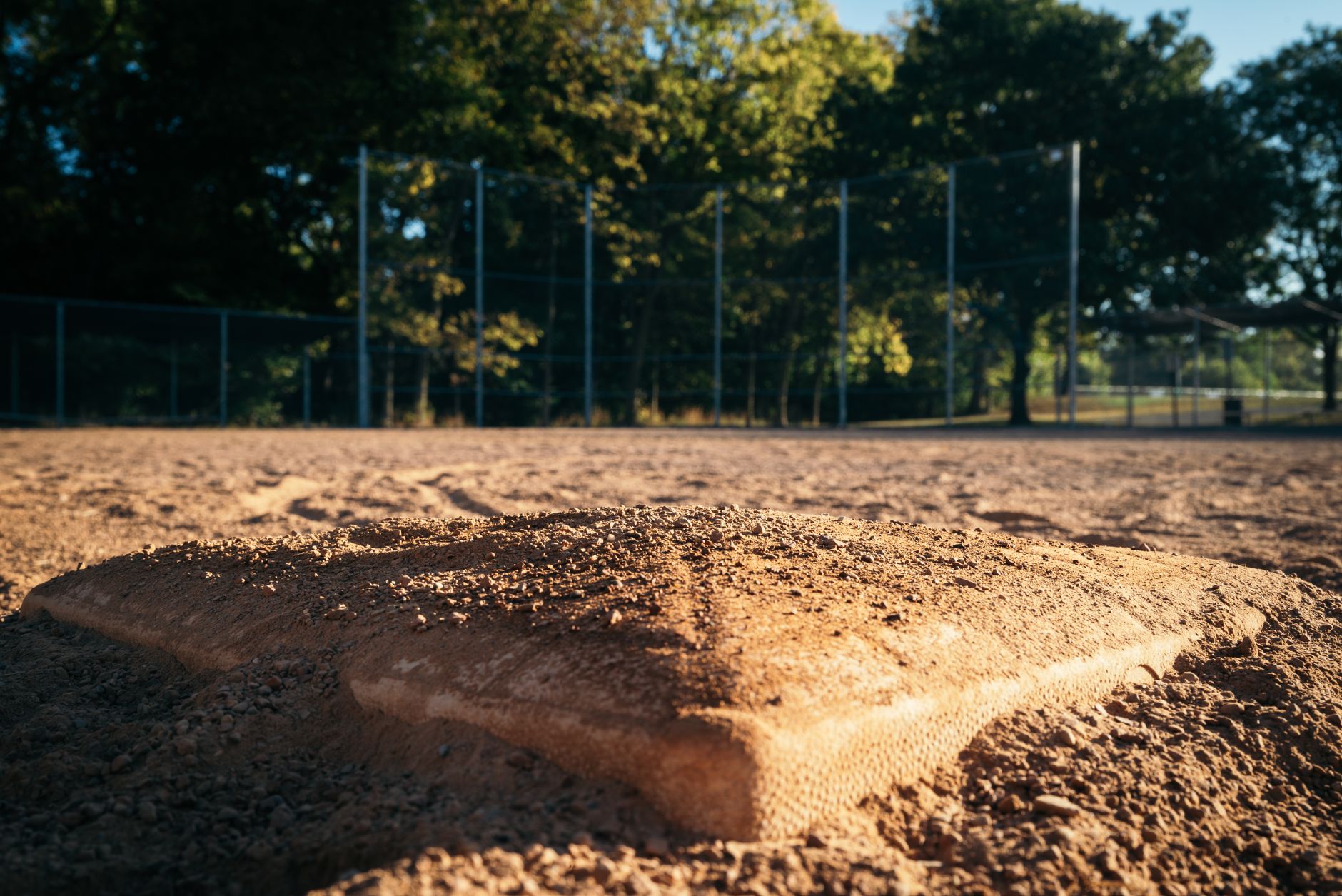
From high school football fields to municipal soccer complexes, athletic turf managers in West Tennessee face the same core challenge: keeping natural grass safe, level, and draining well through a full season of heavy use. Top dressing sand is a central tool in that effort.
Why Athletic Fields Need Top Dressing
Natural-grass athletic fields take a beating. Heavy foot traffic compacts the soil, creates low spots, and degrades drainage. Annual or semi-annual top dressing — especially following core aeration — restores surface firmness, improves drainage, and reduces injury risk from uneven footing. For school districts and parks departments in West Tennessee, this is one of the highest-value maintenance investments per dollar spent.
Budgeting for School and Municipal Projects
A standard high school football field (360 ft × 160 ft = ~57,600 sq ft of playing surface) dressed at ¼ inch requires roughly 18–22 cubic yards of sand. At Mid-South delivered prices, that’s approximately $810–$1,650 for the material, depending on grade. Add aeration and spreading labor and the total project cost is still well within most maintenance budgets. Jackson Sand also offers top dressing services — not just material — so you can outsource the application if your crew is stretched thin.
Choosing the Right Sand Grade for Turf Type
Bermudagrass fields (the dominant warm-season turf across West Tennessee) respond well to a medium-coarse sand with good infiltration. Overseeded ryegrass in fall needs the same drainage support. Avoid fine sands that can seal the surface and create a perched water table above the native soil. When in doubt, ask for the spec sheet and compare particle-size distribution to your soil test recommendations.
7. Residential and Landscaping Uses: What Homeowners Should Know

You don’t need to be a golf course superintendent to benefit from top dressing sand. Homeowners across Jackson, TN and West Tennessee use it every season to solve real problems: uneven lawns, poor drainage, and thin turf that won’t fill in. The key is ordering the right grade and the right quantity.
Common Residential Applications
Homeowners in Jackson and across West Tennessee use top dressing sand to level low spots in lawns, improve drainage in soggy areas, and prep for overseeding. A thin layer of sand worked into the turf after aeration encourages lateral spread of bermudagrass stolons and fills in bare patches more effectively than compost alone in clay-heavy Mid-South soils.
How Many Yards Does a Homeowner Actually Need?
Most residential top dressing jobs fall in the 1–5 cubic yard range. One yard weighs roughly 1.3–1.5 tons and fills a standard pickup truck bed (heaped). For anything over 2 yards, a delivered dump load is far more practical. Jackson Sand serves small residential jobs as well as large commercial ones — delivery is included, so you’re not penalized for ordering a modest quantity.
Sand vs. Compost vs. Blended Top Dressing
Some lawn care guides recommend compost or a sand-compost blend for top dressing. For drainage improvement and surface leveling, straight sand is more effective. For organic matter addition and microbial activity, compost has advantages. In West Tennessee’s clay-heavy soils, pure sand top dressing is often the right call for drainage — but if you’re unsure, consult a local turf professional before ordering. The wrong material applied at the wrong rate can make drainage worse, not better.
Top Dressing Sand Options at a Glance
Use this table to quickly match your project type to the right sand grade, estimated quantity, and approximate delivered cost range in the Mid-South.
8. Why On-Site Mixing and Company-Owned Trucks Change the Math
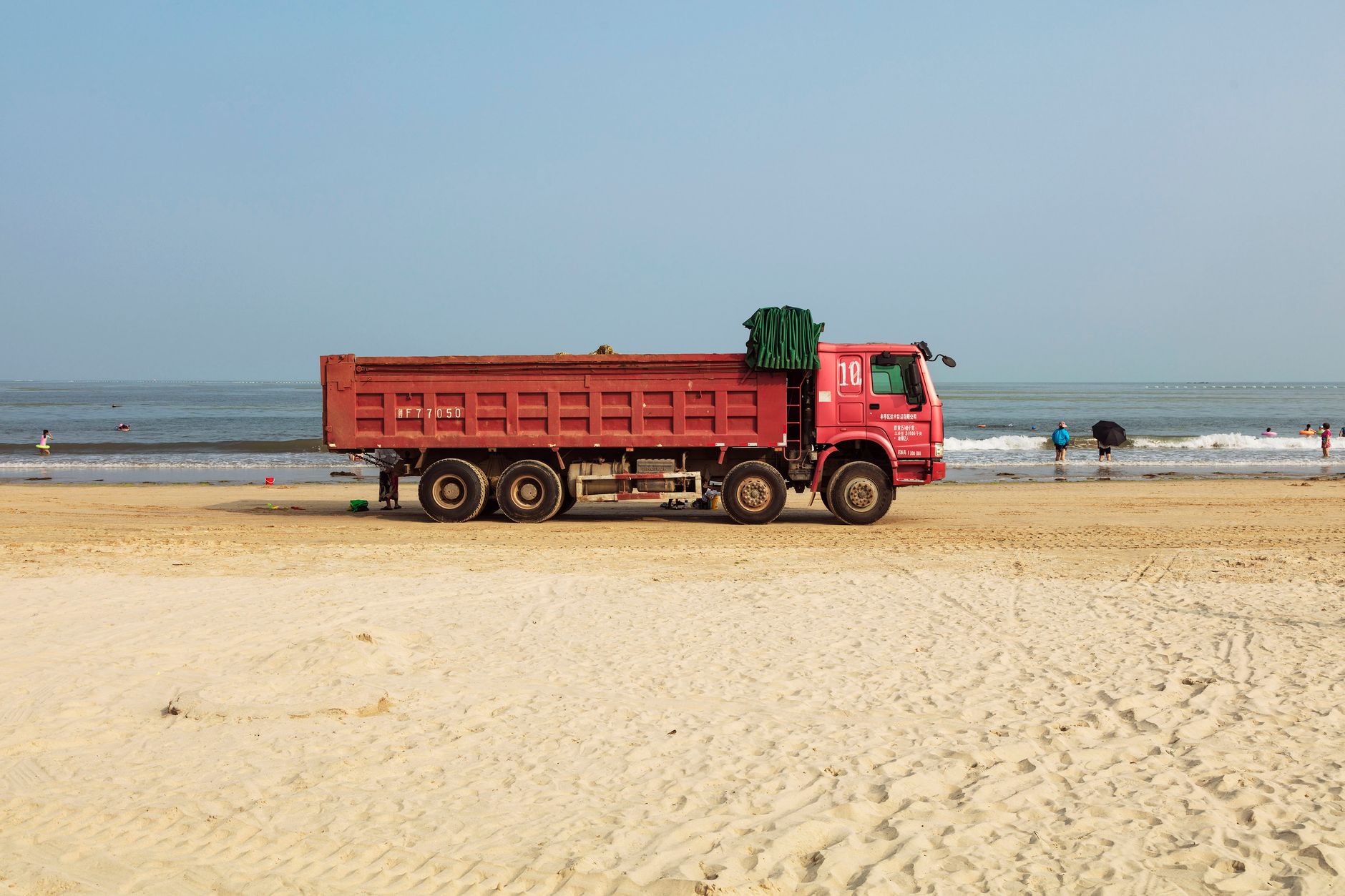
Two operational details about Jackson Sand — on-site mixing and a company-owned truck fleet — have direct implications for pricing, quality, and reliability. They’re worth understanding before you compare quotes from suppliers who source and haul differently.
Consistency Load to Load
When a supplier blends sand on their own premises rather than buying pre-bagged or pre-blended material from a distant processing plant, they control the output. Jackson Sand mixes its sand on-site, which means the gradation in load 10 matches load 1. For golf course superintendents who have dialed in an infiltration rate based on the first delivery, this consistency is not a minor detail — it’s agronomically critical.
Clean Loads, No Cross-Contamination
A truck that hauls sand one day and crushed limestone the next introduces contamination risk. Jackson Sand’s dedicated fleet means your top dressing sand arrives clean, uncontaminated, and accurately loaded. For USGA greens where even a small percentage of fines from a dirty truck can alter infiltration rates, this matters.
Delivery Included — No Surprise Add-Ons
Because Jackson Sand owns its trucks, delivery is included in the quoted price. There’s no third-party hauler arranging a separate invoice, no fuel surcharge from a freight broker, and no minimum-load penalty from a carrier. What you’re quoted is what you pay for the material delivered to your site. That transparency makes budget planning straightforward for both large institutional buyers and individual homeowners.
9. Comparing Your Options: DIY Pickup vs. Delivered Sand vs. Full-Service Top Dressing
There are three ways to get top dressing sand onto your turf: pick it up yourself, have it delivered and spread it yourself, or hire a full-service provider. Each has a different cost structure and a different labor implication. The right choice depends on your equipment, crew capacity, and project scale.
DIY Pickup
If you have a dump trailer or heavy-duty pickup and you’re close to the yard, picking up your own sand saves the delivery component. The trade-off: your time, your fuel, your equipment wear, and the risk of an inaccurate load if you’re self-filling. For small jobs where you’re already making a supply run, it can make sense. For anything over 3 yards, delivered is almost always more cost-effective when you account for your true cost of hauling.
Delivered Material Only
This is the most common arrangement for contractors, landscapers, and turf managers. You receive the sand at your site and your crew handles spreading. Jackson Sand’s included-delivery pricing makes this straightforward. You control the application; they control the material quality and logistics. Best for buyers who have their own top dresser equipment or crew capacity.
Full-Service Top Dressing
Jackson Sand also offers top dressing services — not just sand supply. If your crew is short-handed during a peak aeration window, or if you’re a homeowner without turf equipment, outsourcing the application makes sense. See the full details on the top dressing services page to understand what’s included and how to request a service quote for your West Tennessee property.
10. Drainage Materials and Gravel: Related Costs Worth Knowing
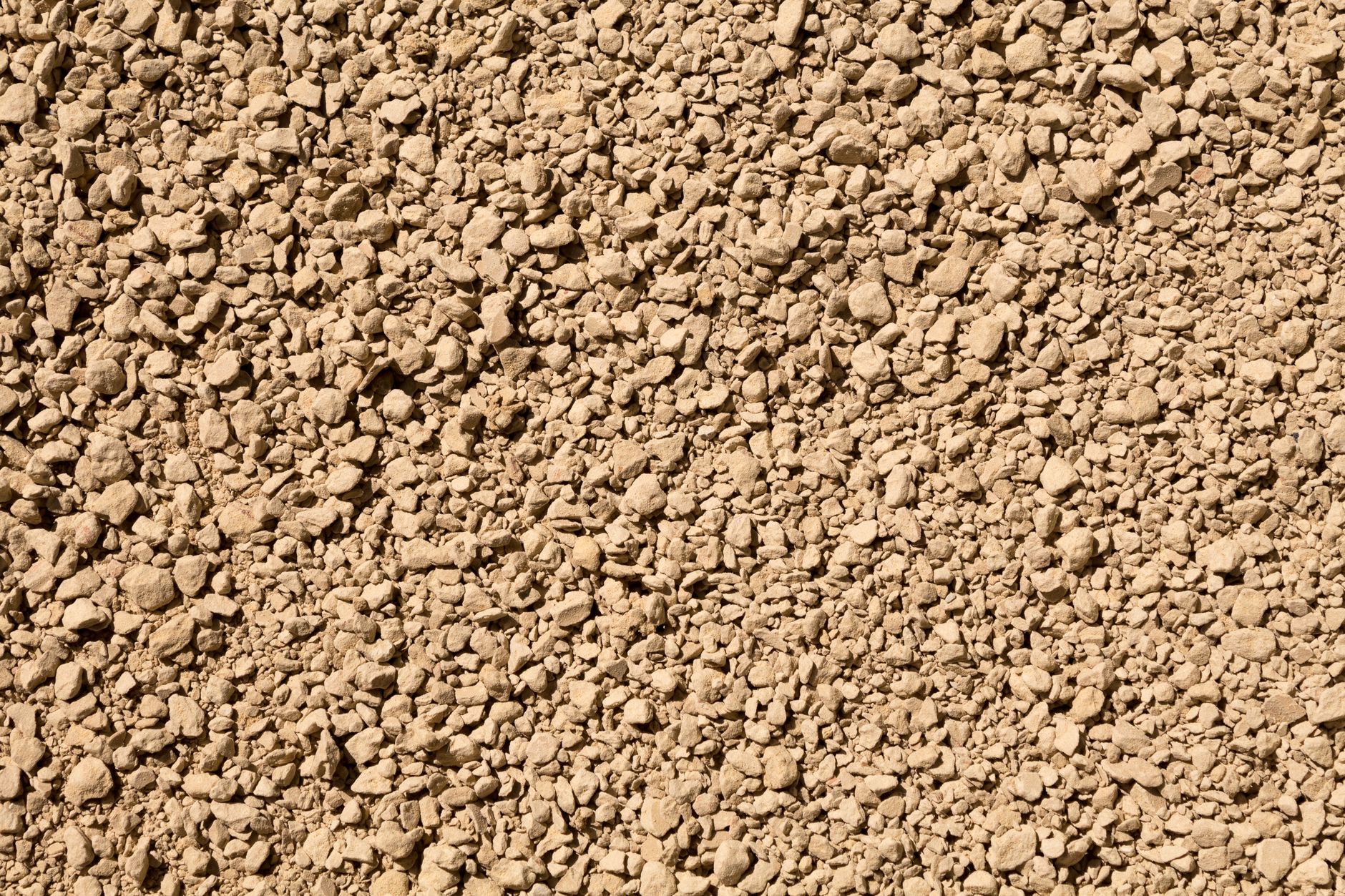
Top dressing sand is often one piece of a larger site improvement puzzle. Understanding how it fits with drainage materials and gravel can help you plan a more complete — and more cost-effective — project scope.
Surface Drainage and Slope
Top dressing sand improves surface drainage by increasing infiltration, but some sites need engineered surface drainage solutions — grading, swales, or catch basins — before top dressing delivers its full benefit. Jackson Sand supplies drainage aggregates for surface drainage and slope work in addition to turf sand. Addressing the underlying drainage problem first makes every top dressing dollar more effective.
Drainage Basins and Seepage Drainage
For sites with chronic standing water — athletic fields, golf course low spots, or residential yards — a drainage basin or seepage drainage system may be the right long-term fix. These systems use graded aggregate (not top dressing sand) to move water away from the root zone. Jackson Sand supplies the materials for both applications. Combining a drainage fix with a top dressing program gives you the best of both: water moves through and away from the surface.
Gravel and Mulch
Jackson Sand also supplies gravel and mulch for landscaping, site work, and contractor projects across West Tennessee. If your project involves multiple aggregate types — say, gravel for a parking area and top dressing sand for an adjacent athletic field — consolidating your order with one supplier simplifies logistics and may improve pricing on the combined order.
Ready to Get a Quote for Your West Tennessee Project?

Whether you’re a golf course superintendent planning your spring aeration program, a school district manager budgeting for field maintenance, or a homeowner in Jackson, TN who just wants a level lawn — Jackson Sand has the material, the equipment, and the local knowledge to get your project done right. Delivery is included, loads are clean, and the sand is mixed on-site to consistent spec.
Explore the full range of top dressing sand products and services from Jackson Sand, then call 731-668-0440 to get a quote tailored to your project.
How to Request a Quote from Jackson Sand
Getting a quote is straightforward. Know your square footage and target depth (or use the yardage calculator to convert to cubic yards), describe your application type (residential lawn, athletic field, golf course), and note any site access details. Call 731-668-0440 or use the contact form at jacksonsand.com. Jackson Sand serves West Tennessee and the broader Mid-South — from Jackson, TN outward — with delivery included in the quoted price.
What to Have Ready When You Call
To get the most accurate quote fastest, have these details ready:
- Project type (golf course, athletic field, residential lawn, contractor site)
- Approximate square footage of the area to be dressed
- Desired application depth (⅛ inch, ¼ inch, etc.)
- Site address and any access restrictions
- Preferred delivery window (especially important during spring and fall peak seasons)
Jackson Sand’s team — including Manager Wes Lipford — can walk you through grade options and help you match the right sand to your turf type and budget.
Frequently Asked Questions
How much does top dressing sand cost per cubic yard in West Tennessee?
Delivered top dressing sand in West Tennessee generally ranges from $35 to $75 per cubic yard depending on the grade. General lawn sand sits at the lower end; USGA-spec golf course sand is at the higher end. Call Jackson Sand at 731-668-0440 for a current project quote.
How many cubic yards of top dressing sand do I need for my lawn?
At a standard ¼-inch depth, plan on roughly 0.3–0.6 cubic yards per 1,000 square feet. A 2,000 sq ft residential lawn typically needs 0.6–1.2 yards. Use the free yardage calculator at jacksonsand.com to get a precise figure for your specific area and depth.
What is the difference between top dressing sand and regular sand?
Top dressing sand is a purpose-graded, washed coarse-to-medium sand with a controlled particle-size distribution designed for turf infiltration and surface leveling. Regular fill sand or masonry sand has a different gradation and can compact or seal the soil surface, damaging turf rather than improving it.
Does Jackson Sand deliver to my area in West Tennessee?
Jackson Sand is based in Jackson, TN and serves West Tennessee and the broader Mid-South region. Delivery is included in the quoted price and they use their own trucks, so there are no third-party hauler fees. Call 731-668-0440 to confirm delivery to your specific location.
How often should I top dress my golf course greens?
Most golf courses in the Mid-South top dress greens every 2–4 weeks during the active growing season, with heavier applications following hollow-tine aeration in spring and fall. Annual sand volume for greens alone on an 18-hole course can reach 22–45 cubic yards per application cycle.
Can I use the same sand for top dressing and bunker sand?
Some courses use a single sand for both, but they are optimized for different properties. Top dressing sand prioritizes infiltration and surface smoothness; bunker sand prioritizes playability, firmness, and splash resistance. Jackson Sand supplies both products — check the spec sheets to compare gradations for your specific needs.