
Golf Course Aeration and Sand Top Dressing: Your 9-Point Guide for Tennessee Courses
Quick answer: Golf course aeration breaks up soil compaction and thatch so roots can breathe, while sand top dressing fills aeration holes, smooths the surface, and improves long-term drainage. In Tennessee's humid climate — with Bermudagrass dominant from May through September and cool-season overseeding common in fall — timing these two practices correctly is critical. The ideal window for core aeration on Bermuda is late spring to midsummer; top dressing follows immediately after. Using properly sized, lab-tested sand (USGA-spec, typically 0.25–1.0 mm) prevents layering and keeps greens fast and firm all season.
1. Why Tennessee Turf Needs Aeration Every Single Year
Aeration is not optional maintenance for Tennessee golf courses — it is the single most important agronomic practice you can schedule each year. The state’s combination of heavy clay soils, high humidity, and intense summer heat creates compaction and thatch problems faster than almost any other region in the country. Understanding why these problems develop is the first step toward building a program that keeps your course playing well from April through November.
The Compaction Problem Beneath Every Busy Fairway
A regulation 18-hole course in Tennessee can see 30,000 to 70,000 rounds per year. Every cart path, every foot traffic pattern, and every mowing pass compacts the top 2–4 inches of soil. Compacted soil restricts oxygen movement, slows water infiltration, and stunts root depth — the three things Bermudagrass needs most to survive a Tennessee summer.
- Oxygen: Roots in compacted soil receive less than 10% of the oxygen available in properly aerated profiles.
- Water: Compacted greens can shed up to 60% of rainfall as runoff instead of absorbing it.
- Root depth: Shallow roots (under 3 inches) are far more vulnerable to summer heat stress above 95°F — common across West Tennessee from June through August.
Thatch: The Hidden Layer Choking Your Greens
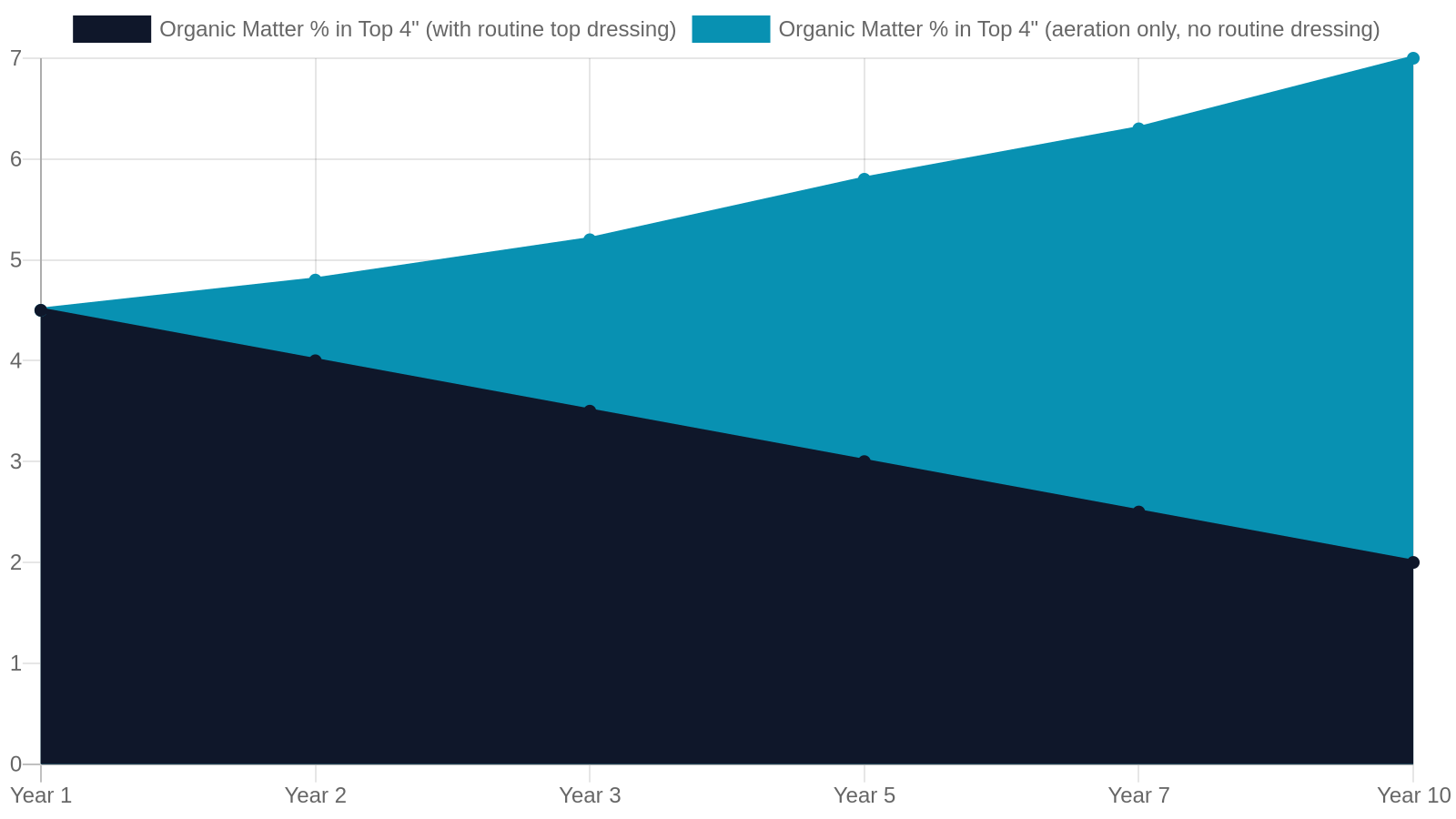
Thatch is the spongy mat of undecomposed organic matter — stems, roots, and clippings — that builds up between the soil surface and the living grass blades. A thatch layer thicker than ½ inch creates a perched water table that keeps the upper root zone perpetually wet, encourages disease, and makes greens soft and inconsistent. Annual core aeration physically removes thatch plugs, and sand top dressing accelerates microbial breakdown of what remains.
2. Core Aeration vs. Solid-Tine Aeration: Choosing the Right Tool
Not all aeration is created equal. The method you choose — and the tine size you select — determines how aggressively you disrupt the surface, how long recovery takes, and how much sand you can get into the profile. Tennessee courses typically rely on a combination of methods across the season to balance agronomic need with playability demands.
Core (Hollow-Tine) Aeration: Maximum Disruption, Maximum Benefit
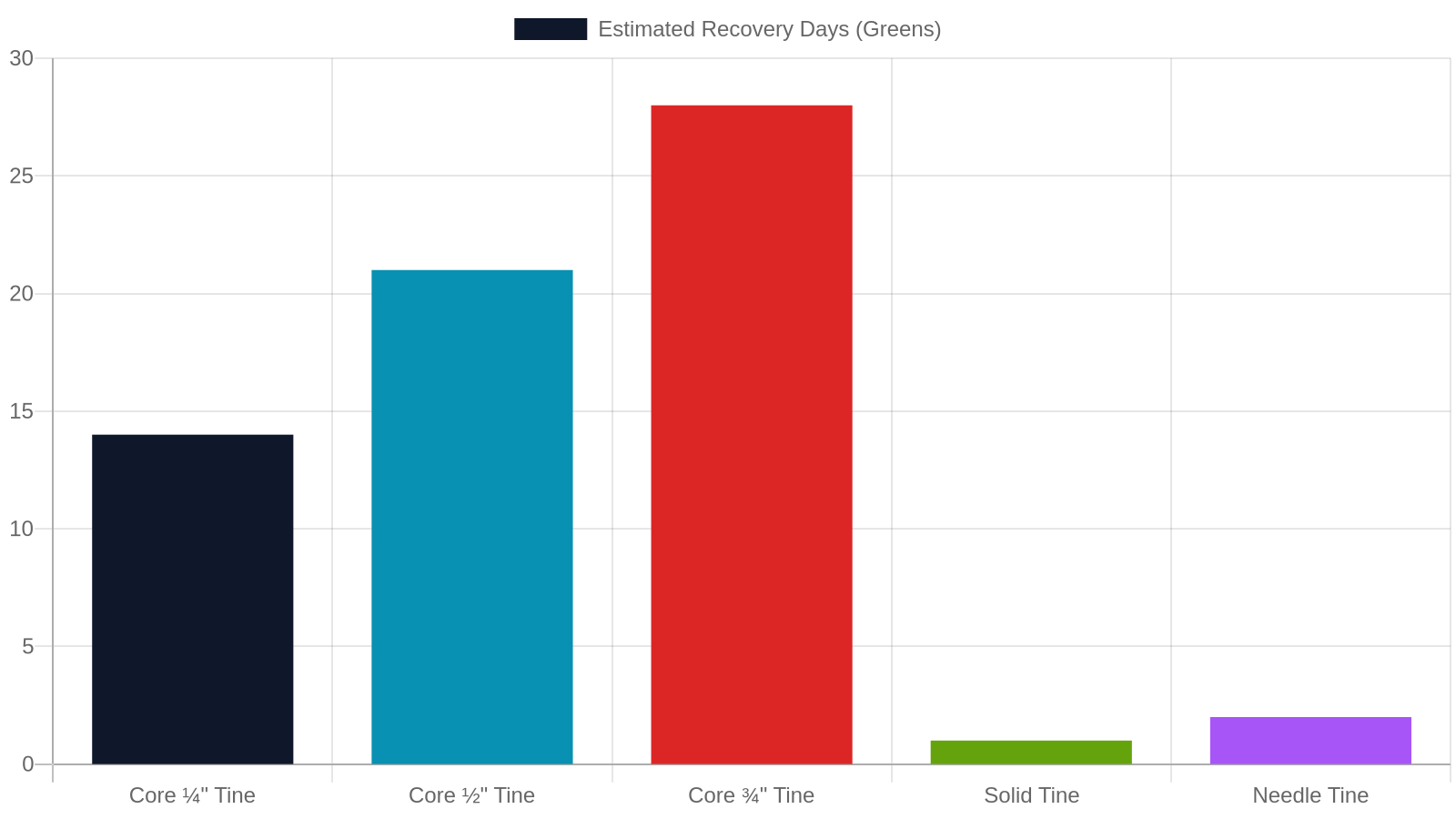
Core aeration uses hollow tines — typically ¼ inch to ¾ inch in diameter — to pull cylinders of soil and thatch out of the turf. Those cores are then removed or broken down, and the holes are filled with sand. This is the gold standard for greens and high-traffic tees because it physically removes compacted material rather than just displacing it.
- Tine diameter: ¼”–⅜” for greens (less disruption, faster recovery); ½”–¾” for tees and fairways
- Depth: 2–4 inches is standard; going deeper targets the most compacted zone
- Spacing: 2″×2″ or 2″×3″ patterns on greens; wider on fairways
- Recovery time: Greens typically recover in 2–4 weeks when sand-filled promptly
Solid-Tine and Needle-Tine: Low-Disruption Mid-Season Relief
Solid-tine aeration does not remove material — it simply punches holes that temporarily relieve compaction and improve gas exchange. Because there is no surface disruption, courses can aerate and return to play the same day. Many Tennessee superintendents use solid-tine passes every 4–6 weeks during peak season as a supplement to one or two full core aeration events per year. Needle-tine aeration (very small diameter, high density) is especially popular on tournament greens where surface disruption must be minimized.
3. The Best Timing for Aeration on Tennessee Golf Courses
Timing is everything in Tennessee turf management. Aerate too early and the turf hasn’t broken dormancy enough to recover quickly. Aerate too late and you risk heading into fall with open holes and stressed roots. The state’s climate — hot, humid summers and mild winters — gives West Tennessee courses a generous active-growth window, but it still requires a deliberate calendar.
Bermudagrass: Aerate During Active Growth
Bermudagrass — the dominant turfgrass on Tennessee golf courses — recovers fastest when soil temperatures are above 65°F and actively growing. In West Tennessee, that window runs from approximately mid-May through mid-August. Most superintendents target late May or early June for their primary core aeration event so the turf has the entire summer growing season to recover before fall overseeding or dormancy.
- Primary aeration: Late May – mid-June (peak growth, fast recovery)
- Secondary aeration: Mid-July to early August if a second event is needed
- Avoid: Aerating within 6 weeks of first frost (typically mid-October in Jackson, TN)
Overseeded Courses: Timing Around Ryegrass Transition
Many Tennessee courses overseed Bermuda greens and tees with perennial ryegrass in October for winter playability. If your course overseeds, schedule core aeration at least 6–8 weeks before overseeding to allow full recovery. Aerating into dormant or transitioning Bermuda dramatically slows healing and can leave greens vulnerable through the winter. Some courses also perform a light aeration pass in early spring — before ryegrass transition — to relieve winter compaction without disrupting the overseeded surface more than necessary.
4. What Makes a Good Top Dressing Sand for Golf Courses
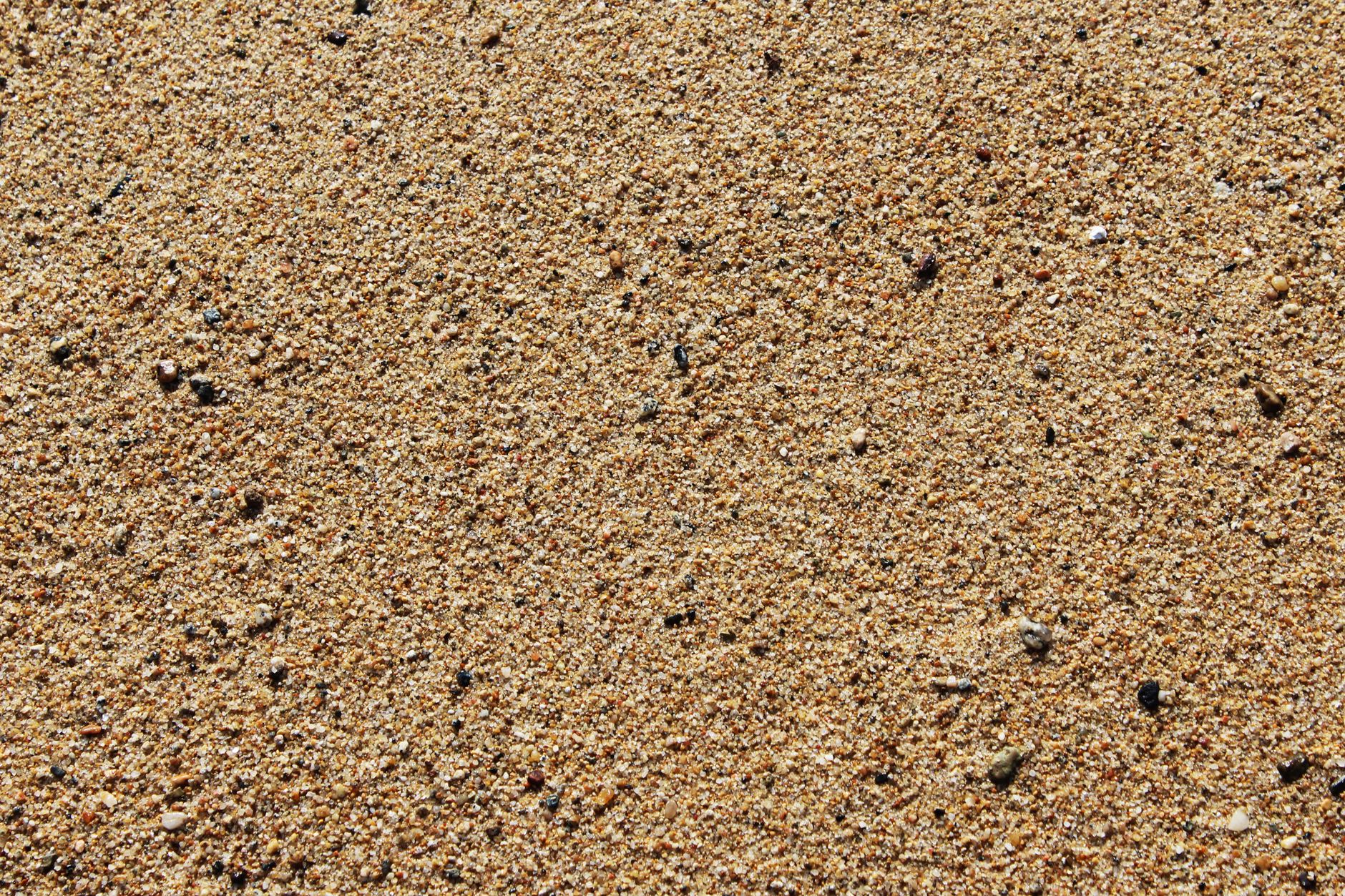
Not all sand is suitable for golf course top dressing. Using the wrong material — sand that’s too fine, too angular, or contaminated with silt and clay — can do more damage than no top dressing at all. Understanding particle size specifications and how they interact with your existing soil profile is essential before you order a single ton.
USGA Particle Size Standards: Why They Matter
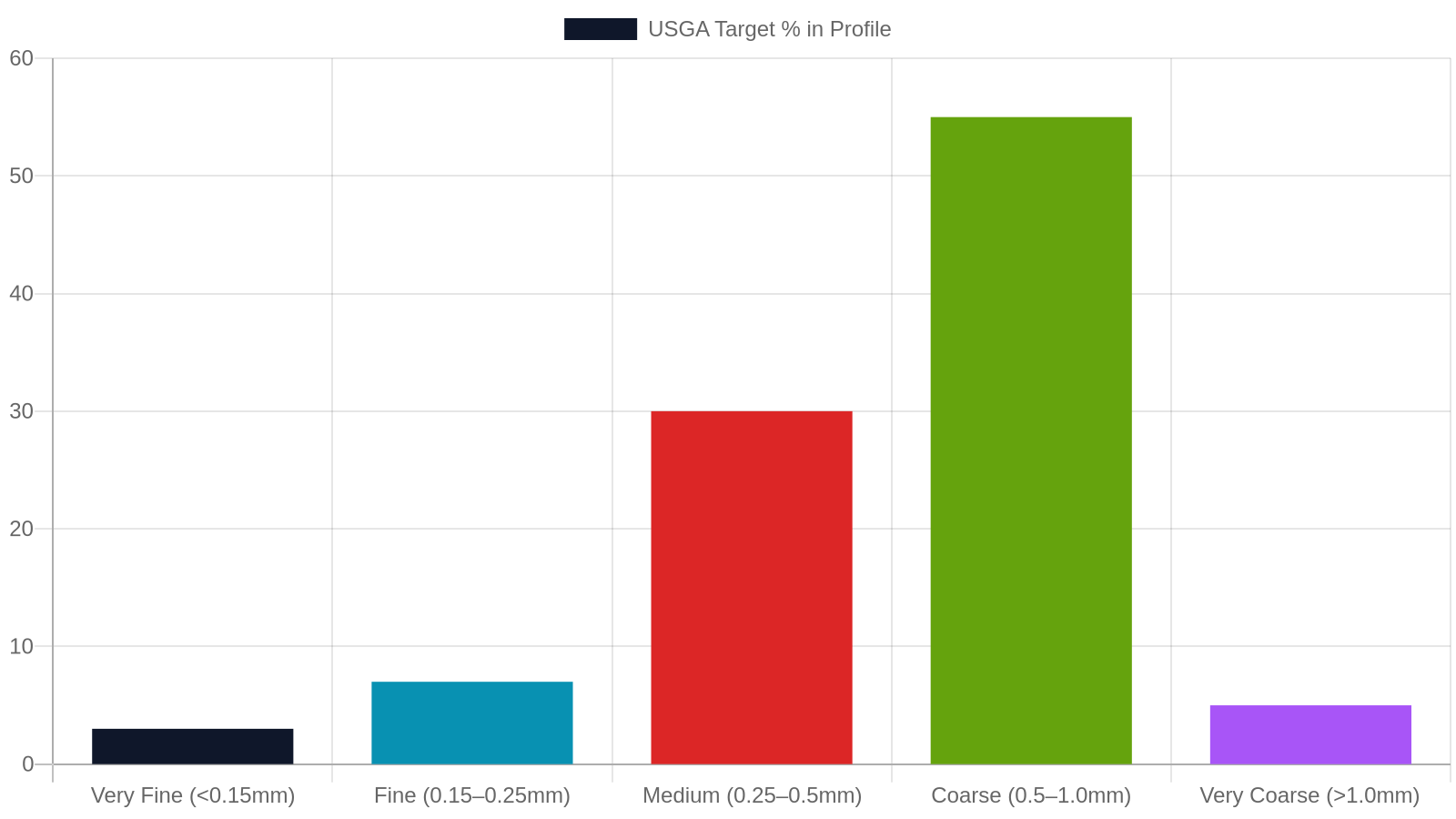
The United States Golf Association’s recommendations for putting green construction specify a sand particle size distribution that balances drainage, stability, and playability. The key range is 0.25 mm to 1.0 mm (medium to coarse sand), with at least 60% of particles falling between 0.5 mm and 1.0 mm for greens. Particles finer than 0.15 mm (very fine sand and silt) must be kept below 3% total — these fine particles migrate into pore spaces and destroy drainage over time.
- Too fine: Clogs pore spaces, creates layering, slows drainage
- Too coarse: Poor root anchorage, inconsistent ball roll, difficult to work into turf
- Just right: 0.25–1.0 mm, well-graded, low silt and clay content
Jackson Sand publishes lab-tested spec sheets for all their golf sands — you can review the sand specs and particle size data before ordering to confirm the material matches your greens’ existing profile.
Matching New Sand to Your Existing Profile
One of the most common mistakes in top dressing programs is using a sand that doesn’t match the particle size of the material already in the green. Layering — where distinctly different particle sizes create horizontal bands in the profile — disrupts water movement and creates inconsistent playing surfaces. Before ordering top dressing sand, pull a soil core from your greens and compare the existing material to the spec sheet of any new sand. If you’re unsure, send a sample to a turf lab for particle size analysis. Consistency over time is more important than any single application.
5. How to Top Dress After Core Aeration: Step-by-Step
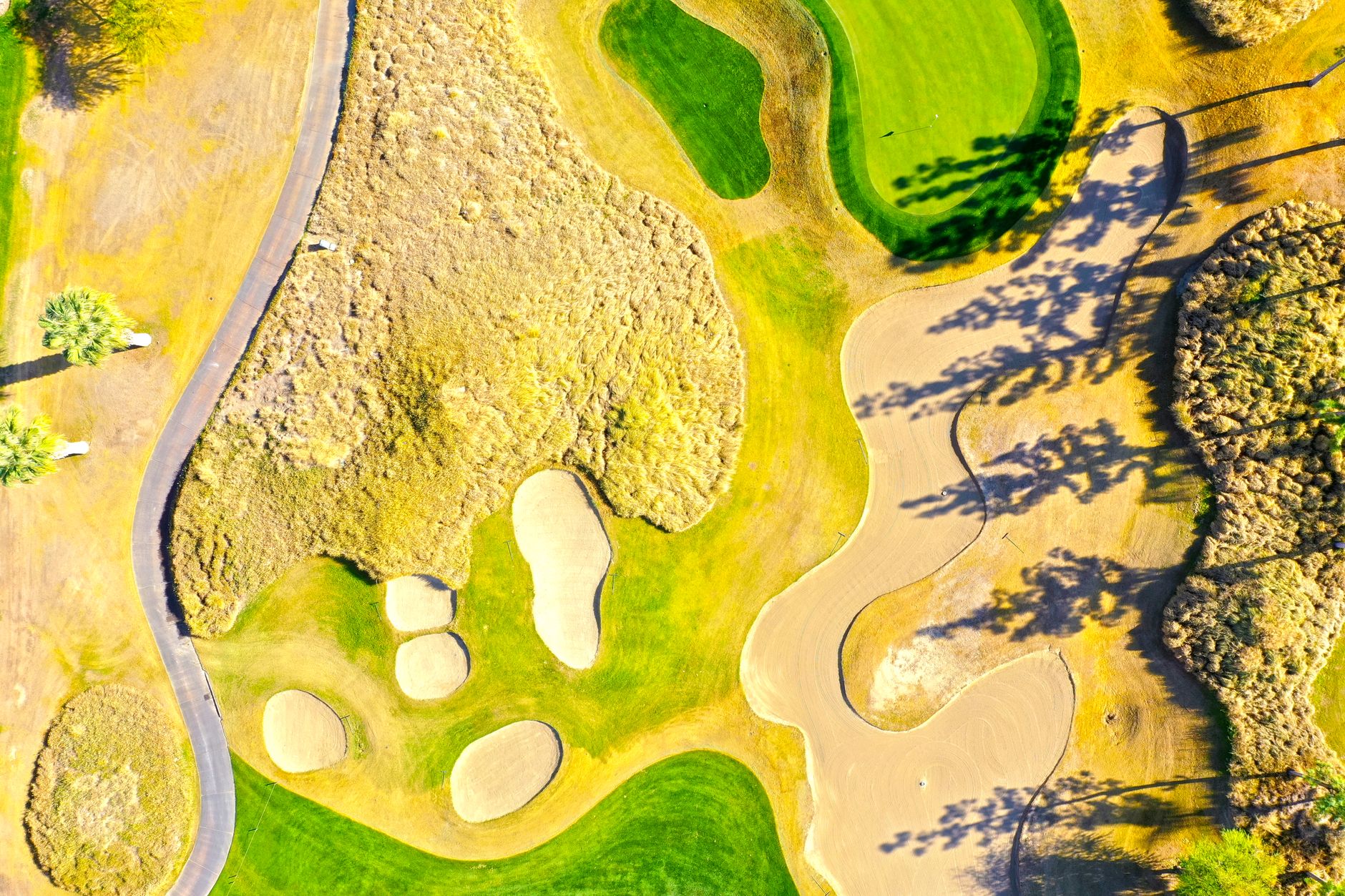
The window between pulling cores and getting sand into the holes is short — especially in the Tennessee summer heat. A well-organized aeration day moves from core removal to sand application to drag-and-water in a single continuous operation. Here’s how to execute it efficiently.
Step 1 — Remove or Break Down Cores Quickly
After pulling cores, you have two options: remove them entirely (cleaner but more labor-intensive) or drag and break them down so the native soil blends back into the surface. On greens, most superintendents remove cores to keep the surface clean and prevent the native clay-heavy soil from contaminating the sand profile. On fairways, dragging cores with a mat and allowing them to break down is common practice and saves significant labor time. Either way, move quickly — cores left sitting for more than 24 hours in summer heat can bake onto the surface and become difficult to manage.
Step 2 — Apply Sand Immediately and Work It In
Apply top dressing sand as soon as cores are managed. For greens, a standard application rate after core aeration is ½ to 1 cubic yard per 1,000 square feet, enough to fill the holes completely and leave a thin layer on the surface. Use a drop spreader, conveyor-style topdresser, or spinner-style unit depending on your equipment. After spreading, drag the sand into the holes with a flexible drag mat, working in multiple directions. Finish with a light irrigation pass to settle the sand and encourage it into the profile. For fairways, rates are typically lower — 0.25 to 0.5 cubic yards per 1,000 square feet — applied with a bulk topdresser.
Step 3 — Resume Mowing When Sand Is Worked In
Do not mow until the sand is fully worked into the holes and the surface is clean. Mowing over loose sand damages reel blades and creates scalping. On greens, you can typically resume mowing 24–48 hours after top dressing if the sand is fully incorporated. Raise the mowing height by 1/16″ to 1/8″ for the first two mowings after aeration to reduce stress on recovering turf. Monitor closely for signs of disease in the open holes — moist sand-filled cores in humid Tennessee summers can be an entry point for dollar spot and Pythium if fungicide coverage lapses.
6. Routine Top Dressing Between Aeration Events
A single heavy aeration and top dressing event each year is a good start — but the courses with the best-performing greens in Tennessee treat top dressing as an ongoing practice, not a once-a-year event. Light, frequent sand applications between core aeration events build the kind of consistent, fast, firm putting surfaces that golfers notice.
Light, Frequent Applications Build a Better Profile Over Time
Top dressing isn’t just a post-aeration task. Many agronomists recommend applying light sand applications — typically 1/16″ to 1/8″ depth, or roughly 0.1 to 0.2 cubic yards per 1,000 square feet — every 2–4 weeks during the growing season. These routine applications gradually dilute thatch, smooth surface irregularities, and maintain the sand-to-organic-matter ratio in the upper profile. Over a 5–10 year period, consistent light top dressing transforms native soil greens into near-USGA-spec profiles without the cost of a full reconstruction.
Matching Application Rate to Growth Rate
The key to routine top dressing is matching your sand application rate to your turf’s growth rate. Apply too much sand and you bury the canopy, slowing photosynthesis and creating a layering problem. Apply too little and thatch accumulates faster than sand dilutes it. A general rule: apply sand at a rate that keeps pace with organic matter accumulation — roughly 0.5–1.0 cubic yards per 1,000 square feet per growing season in total, spread across multiple applications. Use Jackson Sand’s free yardage calculator to estimate how many tons or yards you’ll need for each application across your greens, tees, and fairways.
7. Drainage: The Invisible Partner to Aeration and Top Dressing
Aeration improves vertical drainage through the soil profile. But if water can’t get off the surface quickly, or if your subsurface drainage system is undersized or clogged, the best top dressing program in Tennessee won’t keep your course playable after a heavy rain. Drainage infrastructure and agronomic practices must work together.
Why Surface Drainage Matters as Much as Soil Drainage
Even perfect aeration and top dressing won’t save a green that sheds water poorly at the surface. Tennessee receives an average of 52–55 inches of rainfall per year, and West Tennessee courses can see intense summer thunderstorms drop 2–3 inches in a single hour. If your greens, approaches, and fairway low spots don’t drain surface water quickly, you’ll have standing water, cart path damage, and disease pressure regardless of how well your soil profile drains. Proper surface grading — minimum 1–2% slope away from playing surfaces — works hand-in-hand with your aeration program.
Drainage Aggregates: Selecting the Right Material
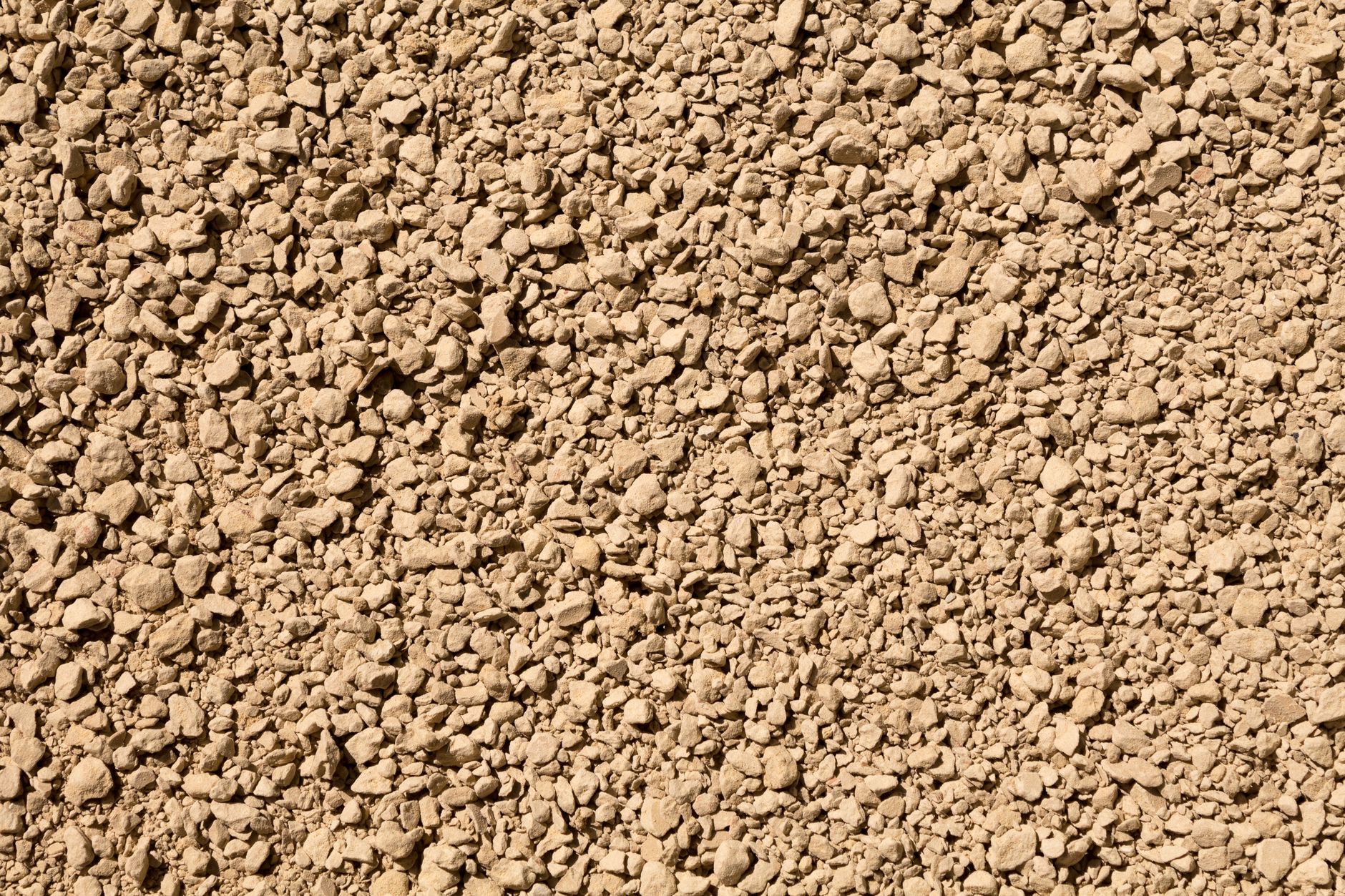
When installing French drains, drainage basins, or catch basins on your course, the aggregate you use in the trench or basin directly affects long-term performance. Angular, washed gravel in the ¾”–1½” range provides the best void space and long-term flow capacity. Avoid rounded pea gravel in drainage trenches — it compacts over time and reduces flow. Jackson Sand supplies drainage aggregates alongside their golf sands, so you can source both materials from a single local supplier with its own delivery trucks, keeping your project on schedule.
Aeration and Top Dressing Methods: 10-Point Comparison for Tennessee Golf Courses
Use this table to compare the most common aeration and top dressing approaches by disruption level, recovery time, best application, and typical frequency for Bermudagrass courses in Tennessee.
8. Bunker Sand and How It Differs from Top Dressing Sand

Bunker maintenance is one of the most visible — and most complained-about — aspects of golf course conditioning. Inconsistent sand depth, contaminated sand, or the wrong particle size creates plugged lies, poor drainage, and frustrated golfers. Understanding how bunker sand differs from your top dressing material helps you order correctly and maintain consistent playing conditions across all your hazards.
Bunker Sand Specifications: Firmness, Color, and Playability
Bunker sand and top dressing sand share some characteristics — both should be washed, low in silt and clay, and within a controlled particle size range — but they serve different purposes and are specified differently. Bunker sand priorities include:
- Firmness: Enough cohesion to hold a ball and allow a clean lie, without being so firm it causes plugging
- Color: Bright white or off-white for visibility and aesthetics
- Particle shape: Slightly rounded particles resist displacement from rain and foot traffic better than angular sand
- Particle size: Typically 0.25–1.0 mm, similar to top dressing sand, but the distribution may favor the medium range for better stability
Jackson Sand’s bunker sand is mixed on their premises in Jackson, TN, and delivered in their own trucks to ensure load consistency — critical when you’re filling multiple bunkers across an 18-hole course and need every load to match.
Bunker Renovation vs. Routine Bunker Sand Replenishment
Most courses need to replenish bunker sand annually — rain, wind, and play displace 10–20% of sand volume each year on average. A full bunker renovation — removing all old sand, addressing liner issues, and refilling — is typically a 5–10 year project depending on construction quality and weather exposure. For routine replenishment, calculate your bunker square footage and target depth (typically 4–6 inches in the base, 2–3 inches on the faces), then use a yardage calculator to determine tons needed. Ordering from a local supplier with its own trucks means you can schedule deliveries in stages rather than receiving one massive shipment you don’t have storage for.
9. Comparing Aeration Methods and Top Dressing Approaches at a Glance
Every course has different soil types, budgets, traffic levels, and playability demands. The table below summarizes the most common aeration and top dressing approaches used on Tennessee golf courses, along with their primary benefits and best-use scenarios. Use it as a starting point for building or refining your annual maintenance calendar.
10. Sourcing Sand and Aggregate Locally in West Tennessee
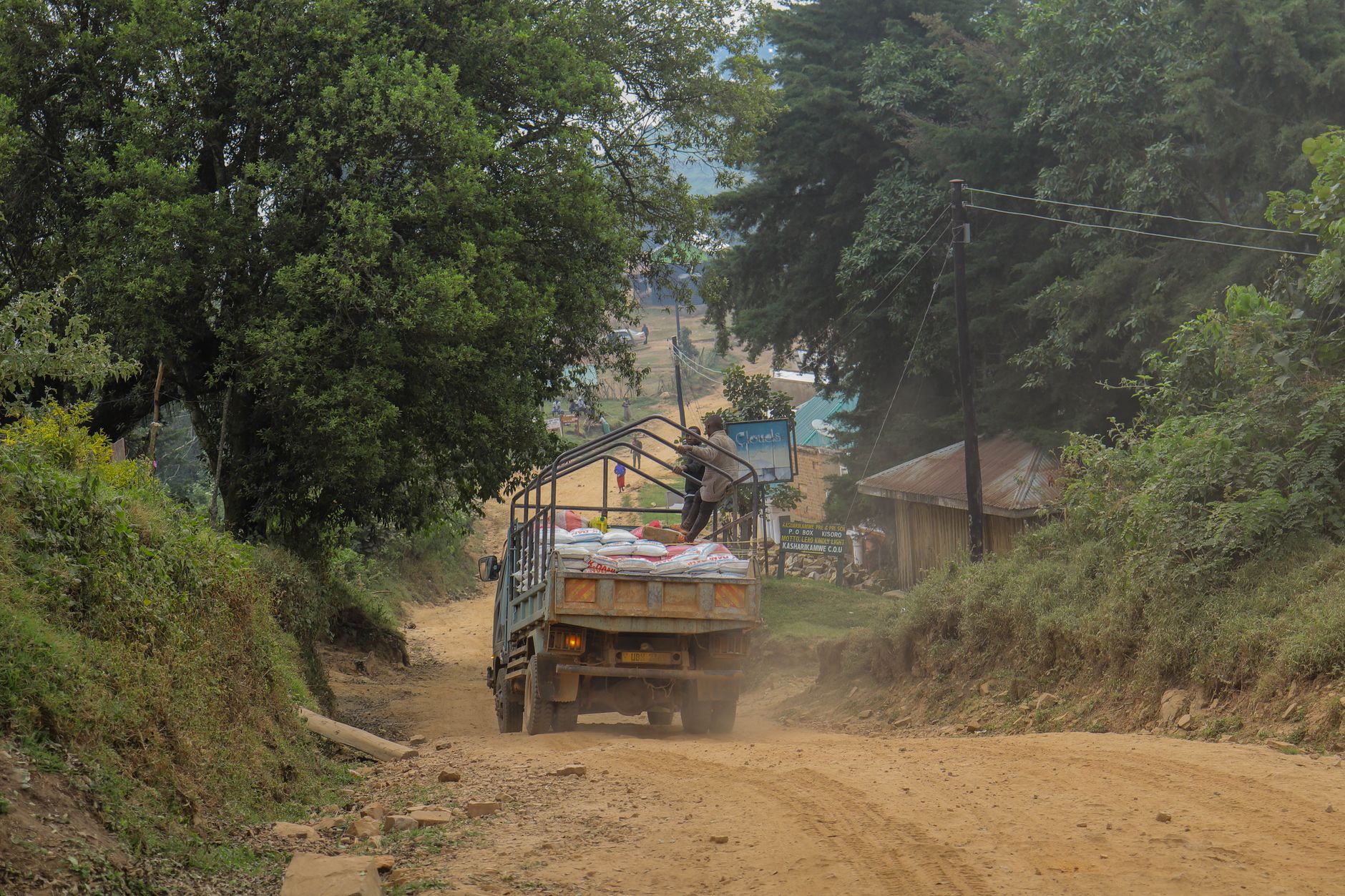
For golf courses in Jackson, West Tennessee, and the surrounding Mid-South, sourcing sand and aggregate locally from a supplier who controls their own mixing and delivery is a practical advantage — not just a convenience. It reduces variables in a process where consistency is everything.
Why Local Sourcing Matters for Golf Course Projects
Shipping sand long distances adds cost, introduces inconsistency between loads, and creates scheduling uncertainty. A local supplier who mixes their own sand on premises — and delivers in their own trucks — gives you tighter quality control and faster turnaround. When you’re planning a course-wide aeration and top dressing event, the last thing you need is a delayed or short-loaded delivery that leaves half your greens without sand at the end of the day.
- Consistency: Sand mixed on-site at a single facility is more uniform than material aggregated from multiple sources
- Accuracy: Owner-operated trucks mean load weights and volumes are verified before they leave the yard
- Speed: Local delivery means you can schedule multiple loads across a single aeration day without long wait times between trucks
Planning Your Order: Quantities and Specs
Before calling your supplier, have three numbers ready: your total square footage of greens, tees, and fairways you plan to top dress; your target application depth; and the particle size specification of your existing profile. With those numbers, you can calculate cubic yards needed and confirm the right product. If you’re not sure how to calculate volume, Jackson Sand offers a free yardage calculator on their website — enter your dimensions and application depth and it does the math for you. You can also download their lab-tested sand spec sheets to verify particle size distribution before you commit to an order.
Ready to Schedule Your Course's Aeration and Top Dressing Program?

Aeration and sand top dressing are the foundation of every high-performing Tennessee golf course. Get the timing right, use the correct sand specification, and source from a reliable local supplier — and your greens, tees, and fairways will reward you with faster drainage, firmer surfaces, and healthier turf from spring through fall.
Work with a Supplier Who Understands Golf Course Needs
Jackson Sand has been supplying golf courses across West Tennessee and the Mid-South with lab-tested sand, bunker material, and drainage aggregate for years. They mix sand on their own premises at 139 United Dr., Jackson, TN 38305, and deliver in their own trucks — which means every load that arrives on your course is clean, accurately measured, and consistent with the spec sheet you approved before ordering.
Whether you’re planning a full core aeration and top dressing event, replenishing bunker sand, or sourcing drainage aggregate for a renovation project, Jackson Sand can supply the material and the delivery logistics to keep your project on schedule. Explore the full range of golf course maintenance products and services from Jackson Sand to see everything available for your course.
Get in Touch Before Your Next Aeration Event
The best time to confirm your sand order is 2–3 weeks before your planned aeration date — enough lead time to schedule delivery, confirm specs, and arrange for multiple loads if needed. Don’t wait until the week before your aeration event to source material. Call Jackson Sand at 731-668-0440 to discuss your course’s specific needs, get a quantity estimate, or ask about scheduling delivery for your next top dressing application. Their team — including manager Wes Lipford — is available to talk through your project and make sure you get the right product for your greens, tees, and fairways.
Frequently Asked Questions
When is the best time to aerate a golf course in Tennessee?
For Bermudagrass — the dominant turfgrass on Tennessee courses — the best window for core aeration is late May through mid-August, when soil temperatures are above 65°F and the grass is actively growing. Most superintendents in West Tennessee target late May or early June for their primary event to allow maximum recovery time before fall.
How much sand do I need to top dress a putting green after aeration?
A standard post-aeration top dressing application on a putting green requires approximately ½ to 1 cubic yard of sand per 1,000 square feet — enough to fill the aeration holes completely and leave a thin surface layer. Use a yardage calculator to estimate total volume based on your green square footage and target depth.
What particle size sand should I use for golf course top dressing?
USGA guidelines recommend sand with 60% or more of particles in the 0.25–1.0 mm range (medium to coarse), with very fine particles below 0.15 mm kept under 3% of total volume. Always match new top dressing sand to the particle size of your existing profile to prevent layering.
How is bunker sand different from top dressing sand?
Both are washed, low-silt sands in a similar particle size range, but bunker sand is typically specified for firmness, color (bright white), and slightly rounded particle shape for stability and playability. Top dressing sand prioritizes drainage and profile compatibility. Always confirm specs with your supplier before ordering either product.
Can I get golf course sand delivered in West Tennessee?
Yes. Jackson Sand, located at 139 United Dr. in Jackson, TN, mixes golf course sand on their own premises and delivers in their own trucks to courses throughout West Tennessee and the Mid-South. Call 731-668-0440 to discuss your project and schedule delivery.
How often should I top dress greens between aeration events?
Most agronomists recommend light top dressing applications of 1/16" to 1/8" depth every 2–4 weeks during the active growing season. These routine applications dilute thatch, smooth the surface, and gradually improve the soil profile over time without disrupting play.