

Which Sand Is Best for Golf Course Bunker Renovation: Your 9-Point Guide
Quick answer: The best sand for golf course bunker renovation is a medium-coarse, sub-angular to rounded quartz sand with a particle size between 0.25 mm and 1.0 mm, a minimum infiltration rate of 20 inches per hour, and less than 5% fine particles (silt and clay). USGA and ASTM guidelines provide the benchmark specs. Beyond particle size, shape, hardness, and color consistency all affect playability, maintenance cost, and long-term performance. Jackson Sand, serving Jackson, TN and all of West Tennessee, mixes bunker sand on-site, tests it to published spec sheets, and delivers in company-owned trucks.
1. Why Bunker Sand Selection Is a High-Stakes Decision

Bunker sand is not a background detail — it is the playing surface itself. Every decision a superintendent makes about particle size, shape, depth, and drainage has a direct impact on golfer experience, maintenance labor, and long-term renovation costs. Before comparing specific products, it helps to understand exactly what is at stake when the wrong material goes into a bunker.
The Cost of Getting It Wrong
Bunker renovation is one of the largest capital line items a golf course superintendent will manage. A single 18-hole renovation project can involve hundreds of tons of sand, weeks of labor, and significant equipment costs. Choose the wrong sand and you face contamination within one to two seasons, chronic drainage failures, inconsistent playing surfaces, and the prospect of replacing the entire sand profile ahead of schedule — essentially paying twice.
- Contaminated bunkers trap moisture and breed disease pressure on adjacent turf.
- Fine-heavy sand crusts after rain, creating an unfair playing surface and increasing maintenance hours.
- Off-spec particle sizes can void liner warranties and USGA compliance on certified courses.
What Superintendents Are Really Buying
When a superintendent specifies bunker sand, they are purchasing a multi-year playing surface, not just a commodity material. The right sand should stay in place during heavy rain, resist contamination from native soil, rake cleanly, and provide consistent ball lie from the first round after renovation through the fifth season. That demands a material that meets documented physical and chemical standards — not just whatever is cheapest per ton at the nearest pit.
2. Understanding USGA Bunker Sand Specifications

The USGA has published bunker sand guidelines since the 1990s, and they remain the most widely referenced standard in North American golf course management. Understanding the core specifications — particle size distribution, infiltration rate, and chemical properties — gives superintendents a clear framework for evaluating any sand product before committing to a renovation.
The Core Particle-Size Window
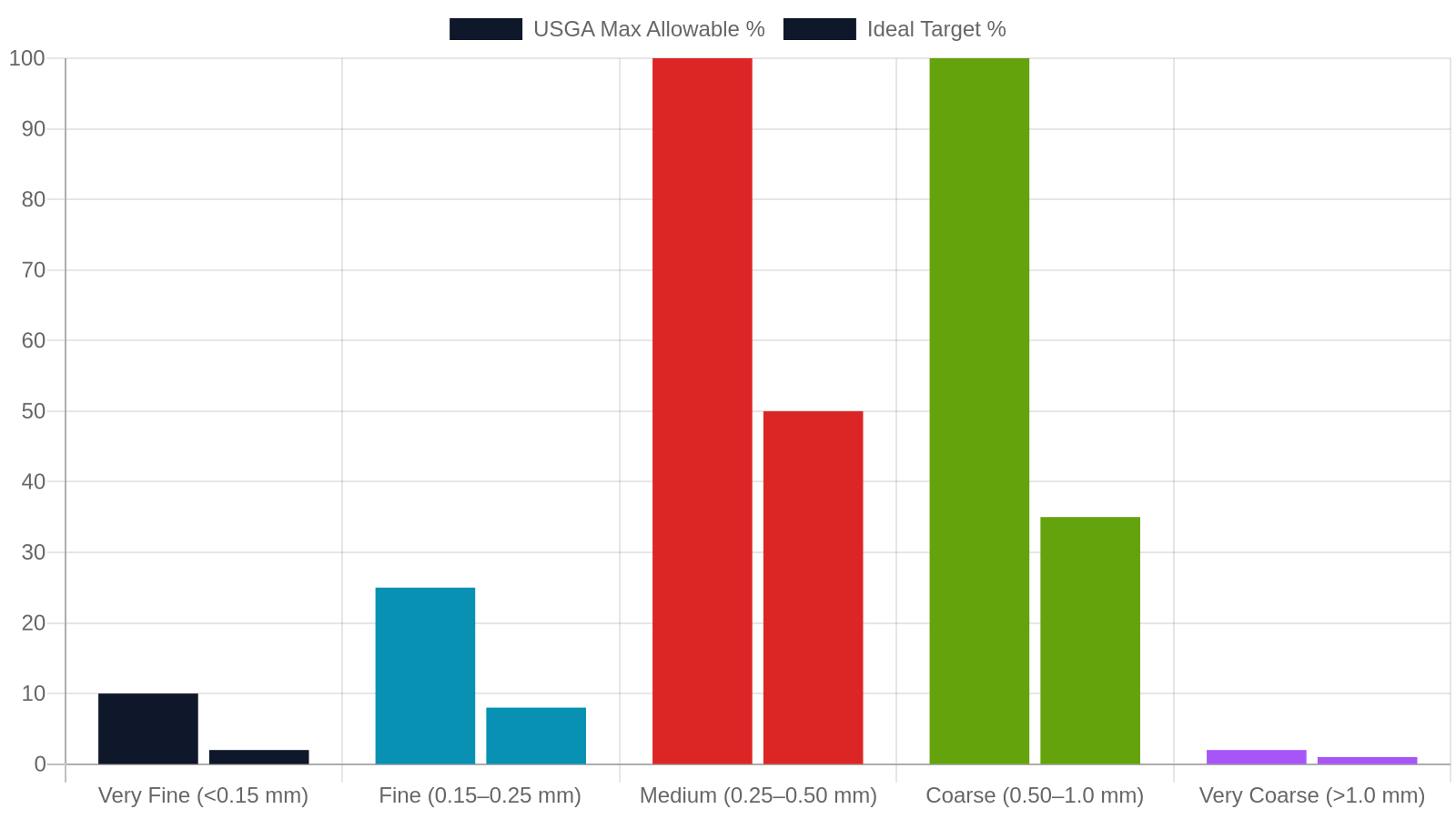
The United States Golf Association’s guidelines for bunker sand establish a particle-size distribution that balances firmness, drainage, and resistance to wind and water displacement. The USGA recommends that at least 65% of particles fall between 0.25 mm and 1.0 mm (medium to coarse sand), with no more than 10% finer than 0.15 mm. Particles coarser than 2.0 mm should be minimal — typically under 2% — to prevent a pebbly feel underfoot and under club.
- Very fine sand (<0.15 mm): Causes crusting, poor drainage, and fried-egg lies.
- Medium sand (0.25–0.50 mm): The sweet spot for most courses — firm yet responsive.
- Coarse sand (0.50–1.0 mm): Excellent drainage; may feel loose and shift more under foot traffic.
Infiltration Rate and Drainage Performance
Particle size alone does not guarantee drainage. The USGA recommends a saturated hydraulic conductivity of at least 20 inches per hour for bunker sand — meaning water should pass through the sand profile at that rate under saturated conditions. Sands that drain faster than 60 in/hr can become too loose and dry, while sands below 10 in/hr will pond after moderate rainfall and stay wet for days. Lab testing is the only reliable way to confirm this number; published spec sheets from your supplier should include it. You can review Jackson Sand’s lab-tested results on their Sand Specs page.
3. Particle Shape: Why Sub-Angular Beats Perfectly Round
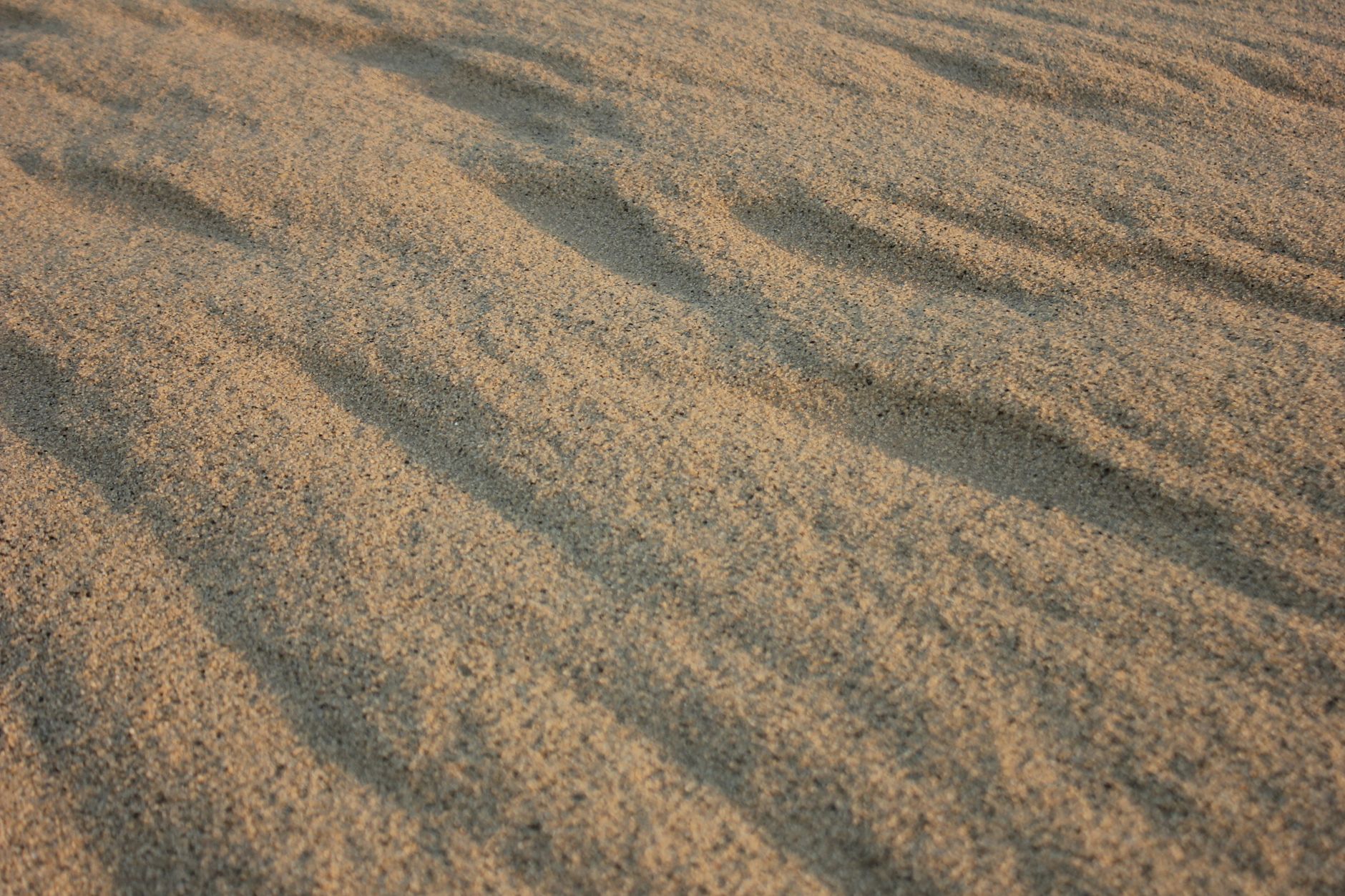
Particle-size distribution gets most of the attention in bunker sand specifications, but particle shape is equally important for long-term performance. Shape determines how grains interact under load, how easily the surface rakes, and how resistant the sand profile is to displacement during heavy rain or high-traffic play days.
The Interlocking Principle
Sand grains are described on a scale from angular to rounded. Sub-angular to sub-rounded grains — grains with slightly worn edges but not fully spherical — are widely considered the best shape for bunker sand. The slightly irregular faces interlock under pressure, which means the sand stays firmer underfoot and resists displacement during play and rain events. A golfer’s foot sinks in predictably rather than sliding, and raking produces a consistent surface texture.
- Angular sand: Locks tightly but can feel harsh underfoot; may compact excessively over time.
- Sub-angular (ideal): Balances firmness and workability; rakes cleanly.
- Rounded/spherical: Flows freely — great for drainage but prone to displacement and inconsistent lies.
Hardness and Resistance to Breakdown
Particle shape is not permanent. Soft minerals — feldspars, carbonates, shell fragments — break down under foot traffic, equipment, and weathering, generating fine particles that migrate downward and choke drainage. Quartz sand with a Mohs hardness of 7 is the gold standard for bunker applications because it resists breakdown over multiple seasons. When evaluating a sand source, ask whether the material is predominantly quartz or contains softer mineral fractions that will degrade within one to three years.
4. Color, Brightness, and Aesthetic Considerations
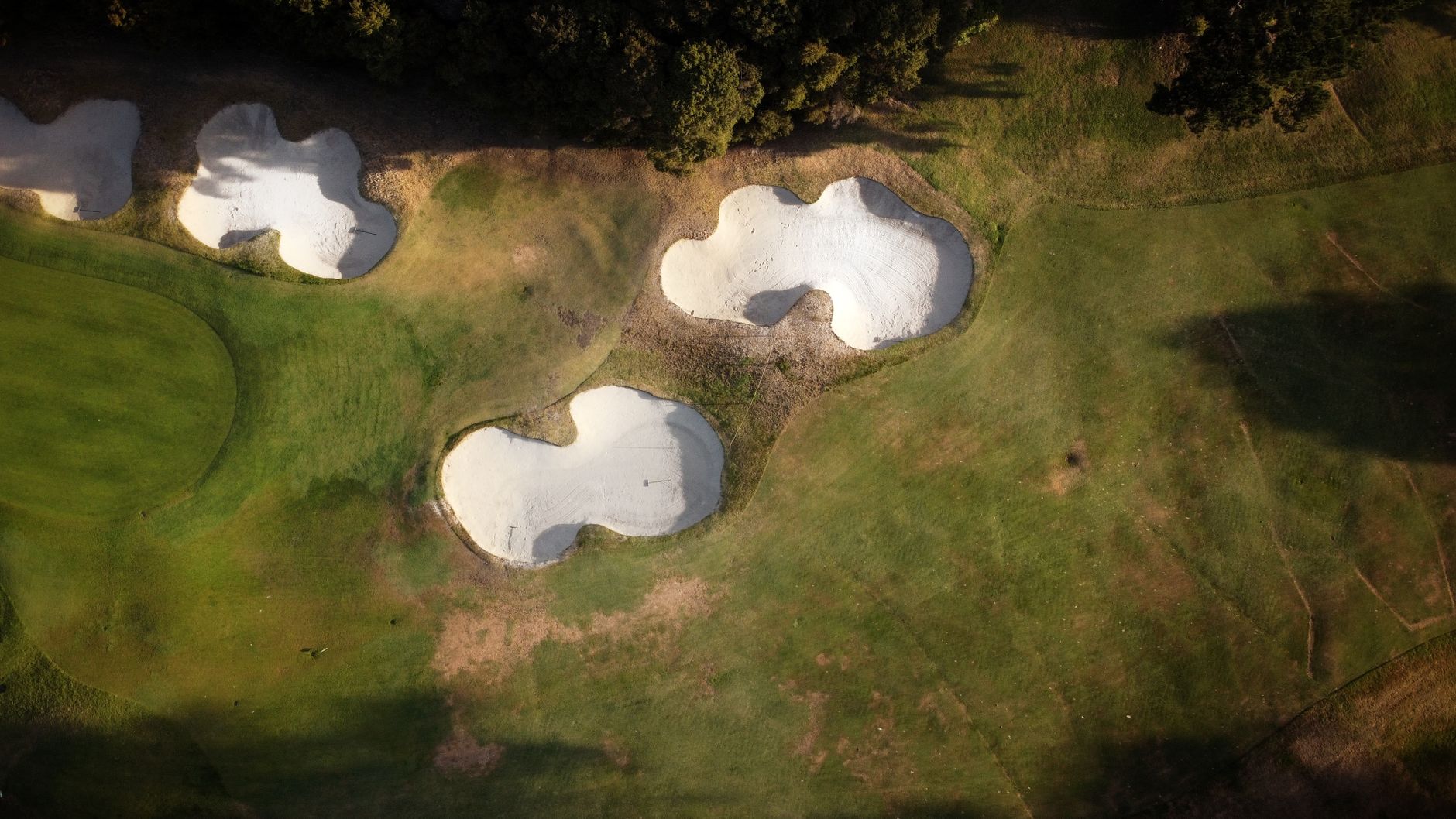
Aesthetics may seem secondary to performance specs, but bunker sand color directly affects the visual character of a golf course and the comfort of players. The right color choice depends on the course’s design style, regional sun intensity, and marketing goals — and it needs to stay consistent across every bunker on the property.
Brightness and Glare
Bright white bunker sand looks spectacular in photographs and television coverage, but it can create significant glare problems for golfers and maintenance staff on sunny days. Many course architects and superintendents now prefer off-white to light tan sands that photograph well while reducing eye strain during play. If your course hosts tournaments or is photographed frequently for marketing, confirm the sand’s color under both wet and dry conditions — some sands change dramatically when saturated.
Color Consistency Across a Renovation
Color consistency matters as much as color choice. When a course uses sand from multiple sources or multiple deliveries over a renovation season, visible color variation between bunkers becomes a maintenance and aesthetic headache. Working with a supplier who mixes sand on-site from consistent source materials — as Jackson Sand does at their Jackson, TN facility — helps ensure that the sand delivered to the first green matches the sand delivered to the eighteenth. Ask your supplier for wet and dry color samples before committing to a full renovation order.
5. Drainage Materials: What Goes Under the Sand
Bunker sand performs only as well as the drainage system beneath it. Even a perfectly spec’d sand will fail within a season if water cannot escape the bunker floor efficiently. Understanding the relationship between the sand layer, drainage aggregate, liner system, and surface grading is essential for any renovation that is meant to last.
Gravel Drainage Layers and Liner Systems
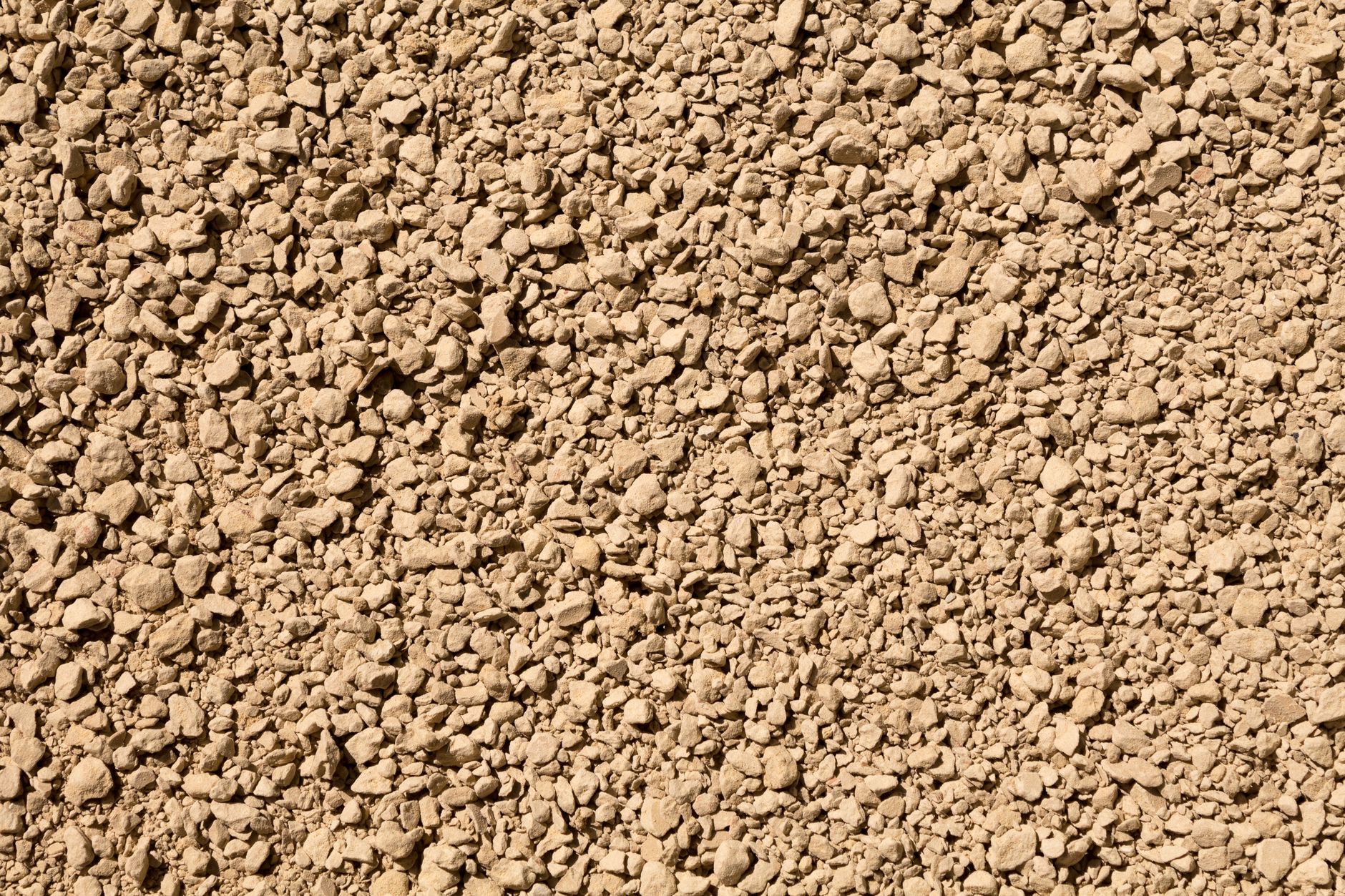
Modern bunker construction almost always pairs the sand layer with a drainage system beneath it. The two most common approaches are a gravel drainage layer (typically pea gravel or coarse aggregate, 4–6 inches deep) and a liner system (a fabric or plastic membrane that prevents native soil contamination while directing water to perforated drain pipes). The gravel layer must be coarse enough that the bunker sand above it does not migrate downward and clog the drainage path — this is why matching your sand spec to your drainage aggregate spec matters.
- Pea gravel (3/8 inch): Most common drainage layer; pairs well with medium-coarse bunker sand.
- Coarse angular aggregate: Better interlocking, less migration risk, slightly higher cost.
- Liner-only systems: Require precise sand specs to prevent liner damage from angular particles.
Surface Drainage and Slope Design
No drainage aggregate can compensate for poor surface drainage design. Bunkers should be graded so that water drains away from the center toward perimeter drain pipes or outlets. A minimum slope of 1–2% on bunker floors prevents ponding after rainfall. If your renovation includes regrading bunker floors or improving surface drainage channels around the bunker complex, coordinate that work before the sand goes in — adding drainage after the fact is expensive and disruptive.
6. Depth and Volume: How Much Sand Does a Bunker Need?

Ordering the right quantity of sand is as important as ordering the right type. Too little sand leaves thin spots that expose the liner or native soil; too much creates excessive depth that makes recovery shots unpredictable and increases contamination risk as excess sand spills onto the green surrounds. Accurate volume calculations before the first truck rolls save money and prevent mid-project shortfalls.
Recommended Sand Depth by Bunker Type
The USGA recommends a minimum of 4 inches of sand depth on bunker floors and at least 2 inches on bunker faces. Many renovation projects target 4–6 inches on floors and 3–4 inches on faces for a firmer, more consistent playing surface. Greenside bunkers that see heavy play often benefit from the deeper end of that range, while fairway bunkers with lower traffic volumes can perform well at the minimum. Depth also affects how quickly the bunker dries after rain — deeper profiles hold more moisture but also provide more buffer against washout.
Calculating Tons and Cubic Yards
Sand is sold and delivered by the cubic yard or by the ton. A cubic yard of dry bunker sand weighs approximately 2,600–2,800 pounds (1.3–1.4 tons), depending on particle density and moisture content. To estimate the volume needed for a single bunker: multiply the surface area (in square feet) by the target depth (in feet), then divide by 27 to convert to cubic yards. For example, a 1,200 sq ft bunker at 5 inches depth requires approximately 18.5 cubic yards, or roughly 12–13 tons. Use the Jackson Sand Yardage Calculator to run precise estimates for your renovation before ordering.
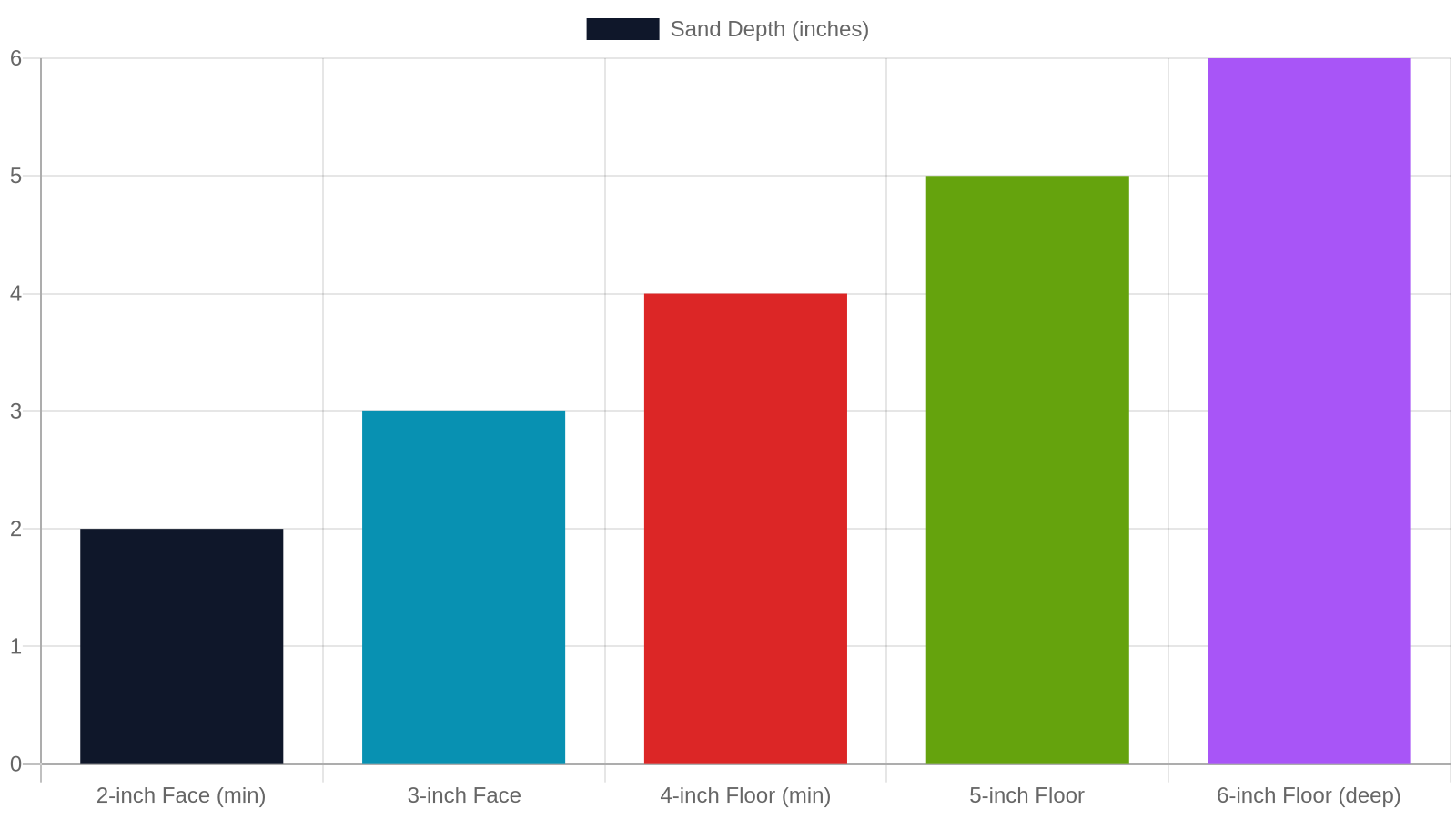
Bunker Sand Specification Comparison at a Glance
Use this table to quickly compare the key physical properties that differentiate bunker sand options and to check your candidate sand against USGA benchmarks.
7. Common Bunker Sand Failures and How to Avoid Them
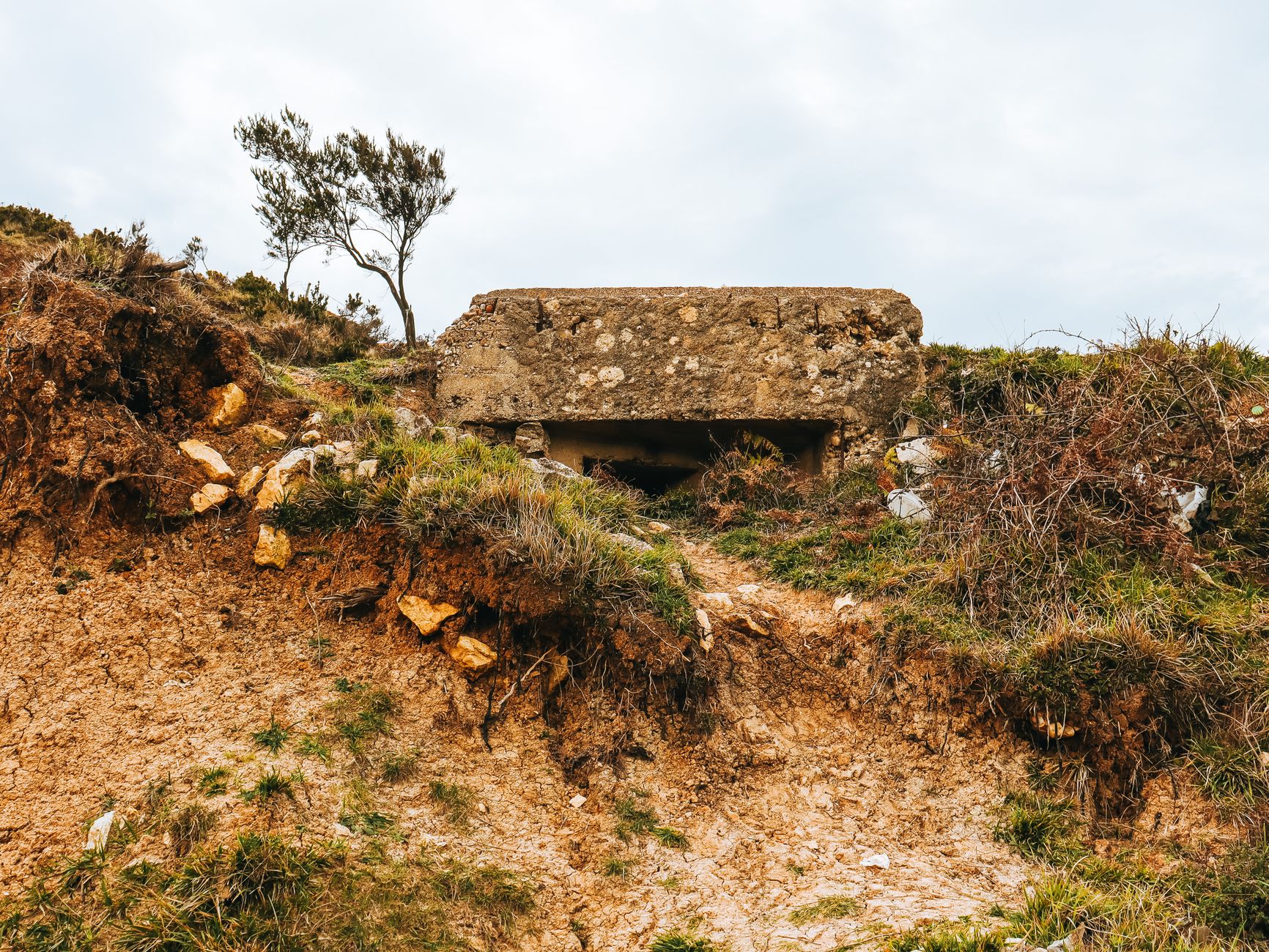
Even correctly specified sand can fail if the surrounding design, installation, or maintenance practices are not aligned. Understanding the most common failure modes — and the conditions that trigger them — helps superintendents make better renovation decisions and set realistic maintenance expectations after the new sand goes in.
Contamination from Native Soil
The most common long-term bunker failure is native soil contamination — fine clay and silt particles migrating upward from the subgrade into the sand profile, or washing in from bunker edges during rain events. Over time, contamination raises the fine-particle content of the sand above USGA limits, reduces infiltration rates, and creates the muddy, inconsistent surfaces that frustrate golfers and maintenance crews alike. Prevention requires a properly installed liner, adequate edging, and a sand spec with low initial fines content so the profile has room to absorb minor contamination before performance degrades.
Washouts and Sand Migration
Heavy rainfall events — common in West Tennessee — can displace significant volumes of bunker sand in a single storm. Washouts are most severe when bunker faces are steep (greater than 35°), when sand is too fine or too rounded to resist water movement, or when surface drainage around the bunker directs runoff into rather than away from the sand. Selecting a sub-angular, medium-coarse sand and pairing it with proper face grading reduces washout risk substantially. Some courses also use sand-stabilization products (organic binders or polymer treatments) on high-risk faces.
Compaction and Crusting
Fine-heavy sands compact under foot traffic and equipment, forming a hard crust that produces inconsistent ball lies and makes raking difficult. If your bunker sand crusts after rain, the most likely cause is an excess of fine particles — either in the original spec or from contamination. Regular testing of in-place sand (at least annually) catches fine-particle buildup before it becomes a renovation-level problem. A simple sieve analysis costs far less than a full sand replacement.
8. Comparing the Most Common Bunker Sand Types
Not all bunker sand products on the market are equivalent, even when they appear similar in price and color. The mineral composition, source geology, and processing method all affect how a sand performs over a multi-year renovation cycle. Here is a practical comparison of the types most relevant to courses in the Mid-South region.
Silica Quartz Sand
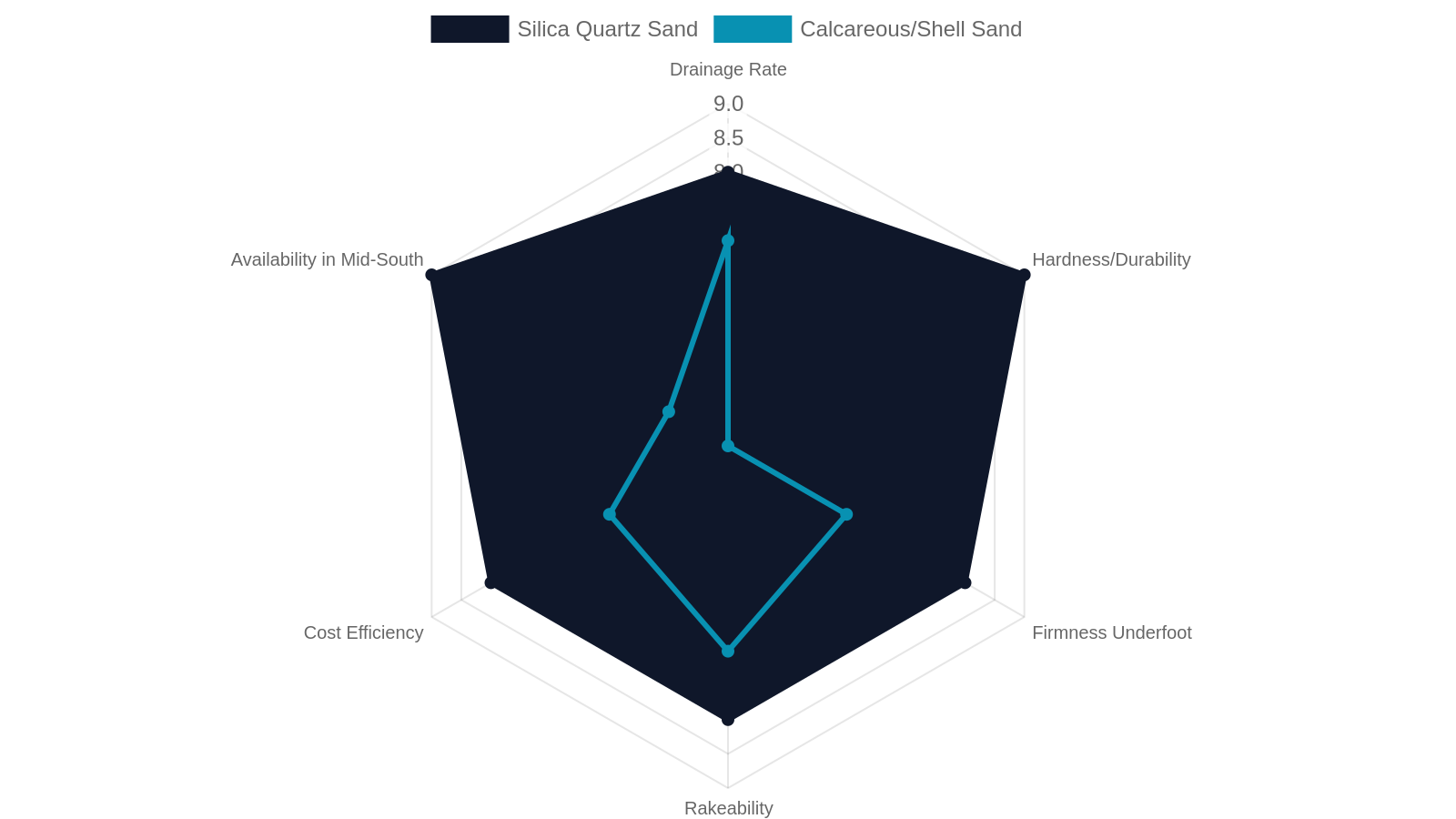
Silica quartz sand is the most widely used bunker sand in North America and the baseline against which all other types are measured. It is chemically inert, resistant to breakdown, available in a range of particle sizes, and relatively affordable. The challenge is sourcing a silica sand with the right particle-size distribution and shape — not all silica sands are created equal, and regional geology determines what is available from local pits. Well-sourced silica quartz sand mixed to a consistent spec is the practical choice for the majority of renovation projects.
Calcareous and Shell-Based Sands
Calcareous sands — derived from limestone, coral, or shell — are common in coastal regions and some parts of the Southeast. They tend to be bright white and visually striking, but they are softer than quartz (Mohs 3–4 vs. 7) and break down more rapidly under traffic and weathering. As they degrade, they generate fine particles that reduce drainage and create crusting. For inland courses in West Tennessee and the Mid-South, calcareous sands are rarely the best choice on a cost-per-year-of-service basis.
9. How Jackson Sand Supplies Bunker Sand in West Tennessee

For golf courses in Jackson, TN and across West Tennessee, sourcing bunker sand locally from a supplier who mixes on-site and delivers in their own trucks removes a significant layer of logistical uncertainty from any renovation project. Here is how Jackson Sand supports bunker renovation from specification through final delivery.
On-Site Mixing for Consistent Spec
Jackson Sand mixes bunker sand at their facility at 139 United Dr., Jackson, TN — which means every load is blended from the same source materials to the same particle-size target. There is no variability between early-season and late-season deliveries, no risk of receiving off-spec material from a distant pit, and no guesswork about what is actually in the truck. Superintendents and contractors can review the published spec sheets before ordering and hold Jackson Sand to those numbers on delivery.
Company-Owned Trucks and Included Delivery
Jackson Sand delivers in their own trucks, which keeps loads clean from the mixing facility to the course. There is no third-party hauler handling the material, no risk of cross-contamination from a shared trailer, and no surprise freight surcharges — delivery is included. For renovation projects that require multiple loads over several days, consistent truck ownership also means predictable scheduling and load accuracy. Whether you need a single trial load to test the sand on one bunker or a full-course renovation order, the logistics are straightforward.
Lab-Tested Specs and the Free Yardage Calculator
Jackson Sand publishes lab-tested spec sheets for their bunker sand products so superintendents can verify particle-size distribution, infiltration rate, and other physical properties before committing. When you are ready to estimate quantities, the free Yardage Calculator on their site walks you through the calculation by bunker dimensions and target depth. For full details on their golf course sand and bunker products, visit the Bunker Sand page or explore the complete range of golf course maintenance materials and services Jackson Sand offers to courses across West Tennessee and the Mid-South.
Frequently Asked Questions
What is the best particle size for golf course bunker sand?
The USGA recommends that at least 65% of bunker sand particles fall between 0.25 mm and 1.0 mm (medium to coarse sand), with no more than 10% finer than 0.15 mm. An ideal target is 70–85% in the medium-to-coarse range and fewer than 5% fines to ensure good drainage and resistance to crusting.
How deep should sand be in a golf course bunker?
The USGA recommends a minimum of 4 inches of sand on bunker floors and at least 2 inches on bunker faces. Most renovation projects target 4–6 inches on floors and 3–4 inches on faces for better firmness and washout resistance, especially on high-traffic greenside bunkers.
How many tons of sand does a bunker renovation require?
It depends on bunker size and target depth. A 1,200 sq ft bunker filled to 5 inches requires roughly 18–19 cubic yards, or about 12–13 tons of sand. Use a yardage calculator and multiply by the number of bunkers to get a project-level estimate before ordering.
Why does bunker sand get contaminated and how can I prevent it?
Bunker sand becomes contaminated when native soil fines migrate upward from the subgrade or wash in from bunker edges during rain. Prevention requires a properly installed liner, adequate edging, and a sand spec with low initial fines content. Annual sieve analysis of in-place sand catches contamination early before it requires full replacement.
Is silica quartz sand better than calcareous sand for golf bunkers?
For most inland courses, yes. Silica quartz sand has a Mohs hardness of 7 and resists breakdown over multiple seasons. Calcareous sands (limestone, shell) are softer (Mohs 3–4), degrade faster under traffic, and generate fines that reduce drainage. Calcareous sands are more common in coastal regions where local geology limits quartz availability.
Does Jackson Sand deliver bunker sand to golf courses in West Tennessee?
Yes. Jackson Sand, based in Jackson, TN, supplies lab-tested bunker sand to golf courses throughout West Tennessee and the surrounding Mid-South. They mix sand on-site for consistency, deliver in company-owned trucks, and include delivery in the order. Call 731-668-0440 or visit their website to discuss your renovation project.