
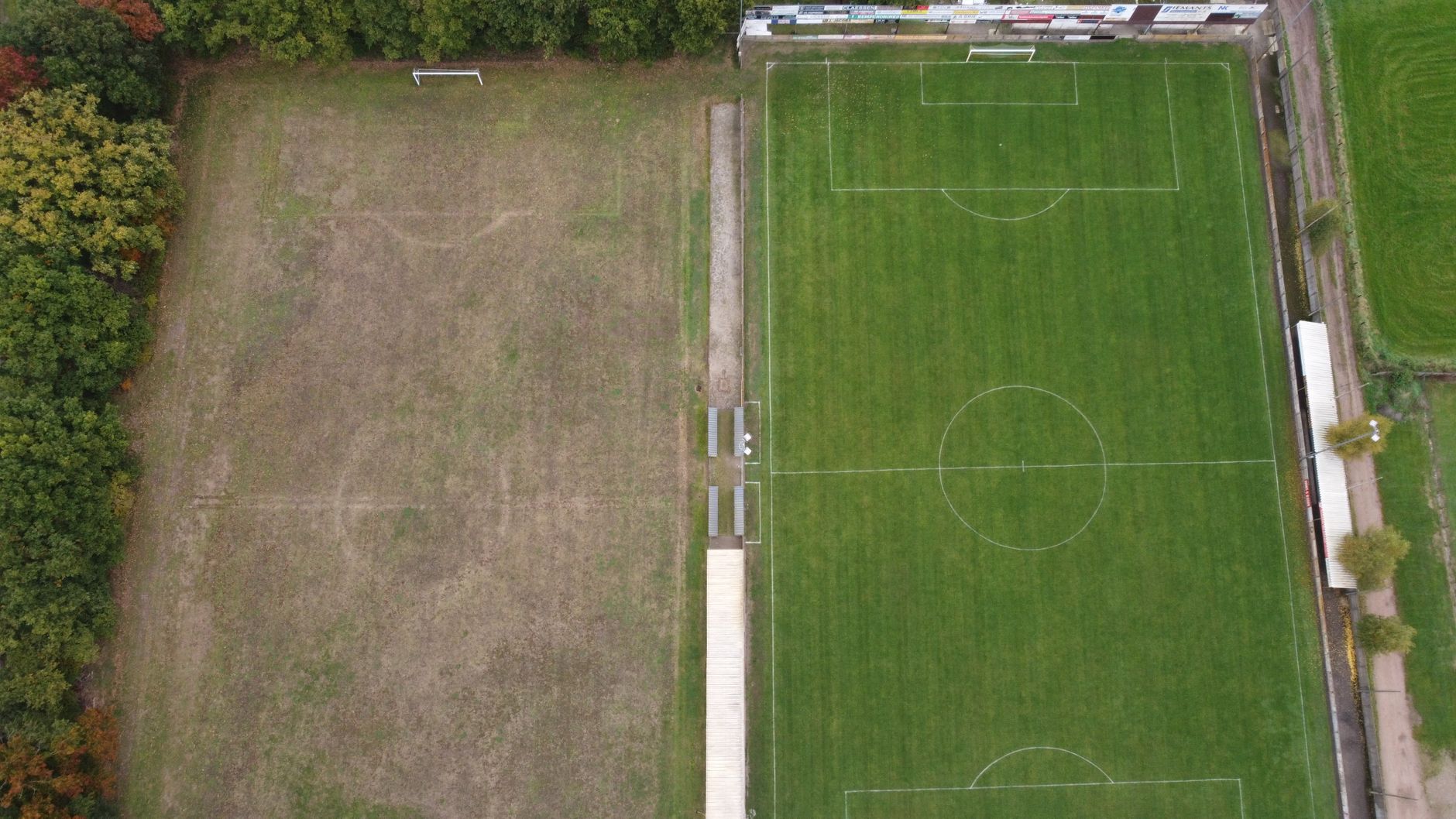
10 Ways to Improve Surface Water Drainage on Athletic Fields
Quick answer: Poor surface water drainage on athletic fields leads to cancelled games, turf damage, compaction, and safety hazards. The most effective fixes combine proper field grading (a 1–2% crown or slope), high-quality drainage sand in the rootzone and topdressing program, aeration to break up compaction, and purpose-built surface drainage channels or basins at low points. In West Tennessee's clay-heavy soils, getting the sand specification right is critical — the wrong particle size can make drainage worse, not better. Jackson Sand supplies lab-tested drainage and athletic field sands, mixes them on-site in Jackson, TN, and delivers in their own trucks.
1. Understand Why Athletic Fields Drain Poorly in the First Place
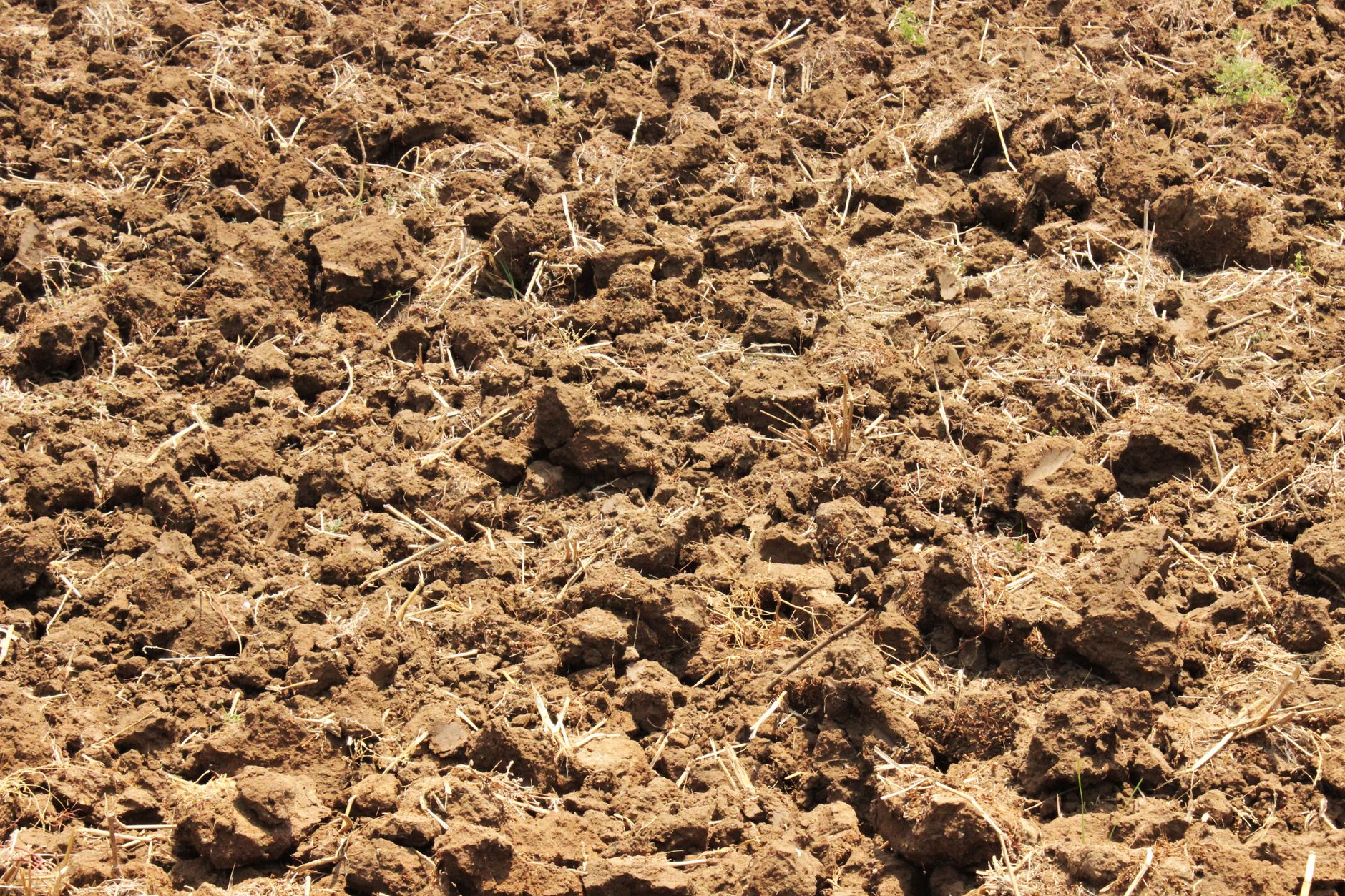
Before you spend money on sand, gravel, or drainage pipe, it pays to diagnose why your field holds water. Poor surface drainage on athletic fields almost always comes down to one or more of three root causes: the wrong soil texture, compaction from heavy use, or a grade that doesn’t move water toward an outlet. In West Tennessee, all three tend to show up together — which is why a single fix rarely solves the problem completely.
Clay Soils and the West Tennessee Problem
Much of West Tennessee sits on heavy clay or clay-loam soils. Clay particles are extremely fine — typically less than 0.002 mm — which means they pack tightly together, leaving almost no pore space for water to move through. After a hard rain, water has nowhere to go except sideways across the surface or into shallow depressions where it pools. A field that looks flat to the eye can have dozens of micro-low-spots that collect standing water for hours or even days after a storm.
The practical result: cancelled games, muddy sidelines, and turf that gets churned into bare dirt by cleats. Over a full season, repeated saturation weakens root systems and invites disease pressure, compounding the drainage problem year after year.
Compaction Makes Everything Worse
Even fields built on sandy rootzones can develop drainage problems as compaction builds up over time. Foot traffic, equipment, and repeated wet play crush soil particles together and destroy macropores — the large air spaces that let water infiltrate quickly. Research from the Sports Turf Managers Association (STMA) shows that heavily used fields can reach bulk densities above 1.6 g/cm³, at which point infiltration rates drop to near zero. At that point, even a modest rainfall event produces surface runoff rather than percolation.
Understanding whether your drainage problem is primarily a soil texture issue (clay content), a compaction issue, or a grade and slope issue determines which solutions will actually work — and in what order to tackle them.
2. Audit Your Field's Current Grade and Crown
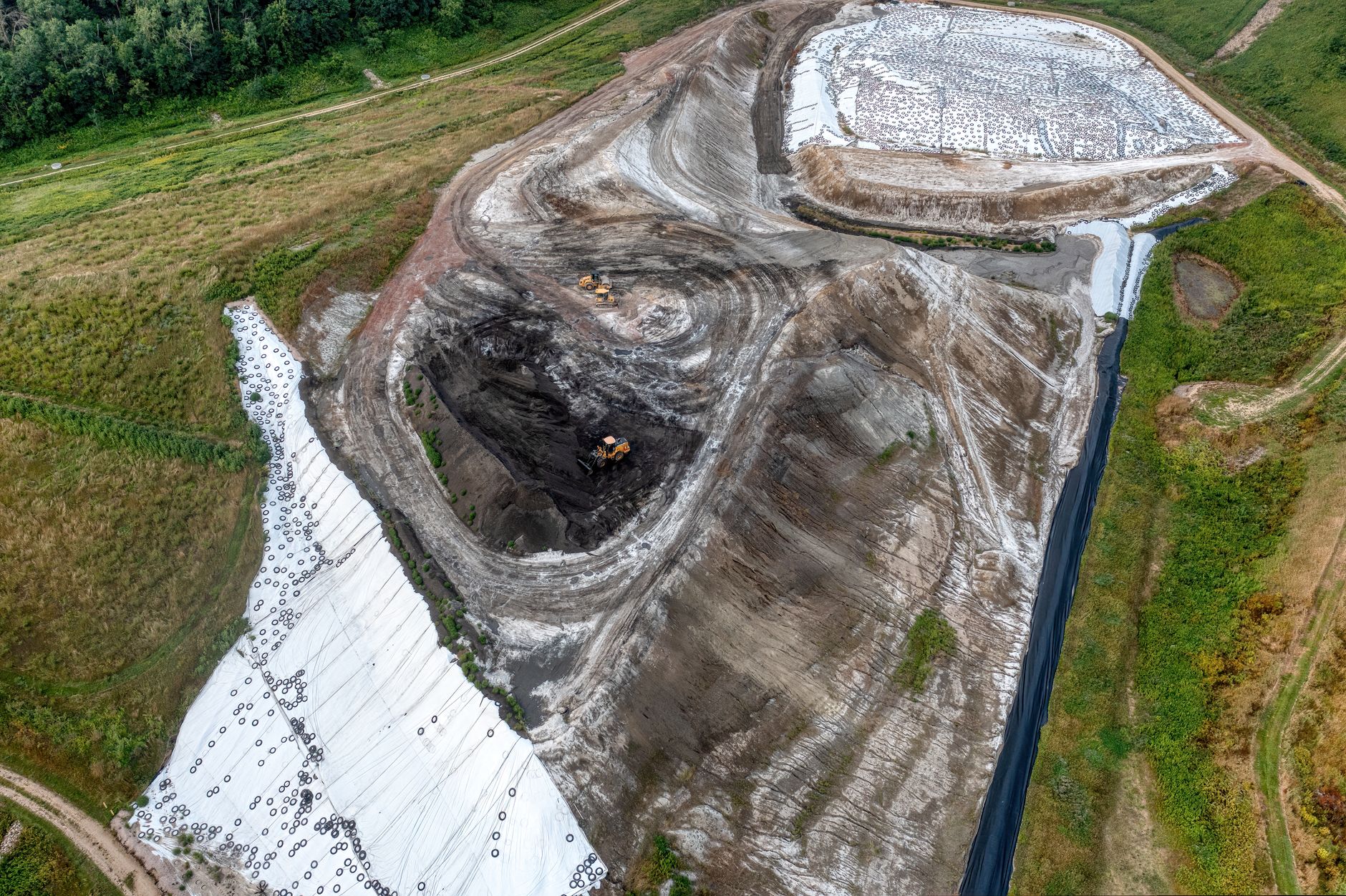
Grade is the foundation of surface drainage. No amount of sand, pipe, or aeration will compensate for a field that doesn’t slope water toward an outlet. Auditing your existing grade is the fastest way to identify whether you have a design problem, a maintenance problem, or both — and it costs nothing but a few hours and a laser level.
What the Numbers Mean
A properly graded athletic field should have a crown — a gentle high point running along the center — that sheds water toward the sidelines. The STMA recommends a minimum cross-slope of 1% and a maximum of 2% for most field sports. In practical terms, that means the center of a 160-foot-wide soccer field should sit roughly 19–38 inches higher than the sideline edge. End-to-end slope (the longitudinal grade) is typically kept at 0.5–1% to avoid visible tilting of the playing surface.
Fields that were graded correctly at construction can drift out of spec over years of use, settling, and topdressing that isn’t applied evenly. A field that’s 0.3% out of grade at the crown can hold water in a band 30–40 feet wide down the center — exactly where the heaviest play occurs.
How to Measure Your Grade
You don’t need a survey crew to get a useful grade reading. A laser level or a digital slope meter and a 10-foot straightedge can give you reliable cross-slope measurements in an afternoon. Mark a grid across the field at 10-foot intervals, record elevations, and map the low spots. Free apps like Surveying Calculator or even a smartphone level can supplement a physical straightedge for a quick field check.
If you find low spots deeper than 1–2 inches, those areas will need to be laser-graded or built up with topdressing sand before any other drainage improvement will be effective. Grading is always Step One — drainage infrastructure installed on a poorly graded field just moves water to a new low spot.
3. Choose the Right Sand for Your Rootzone and Topdressing Program
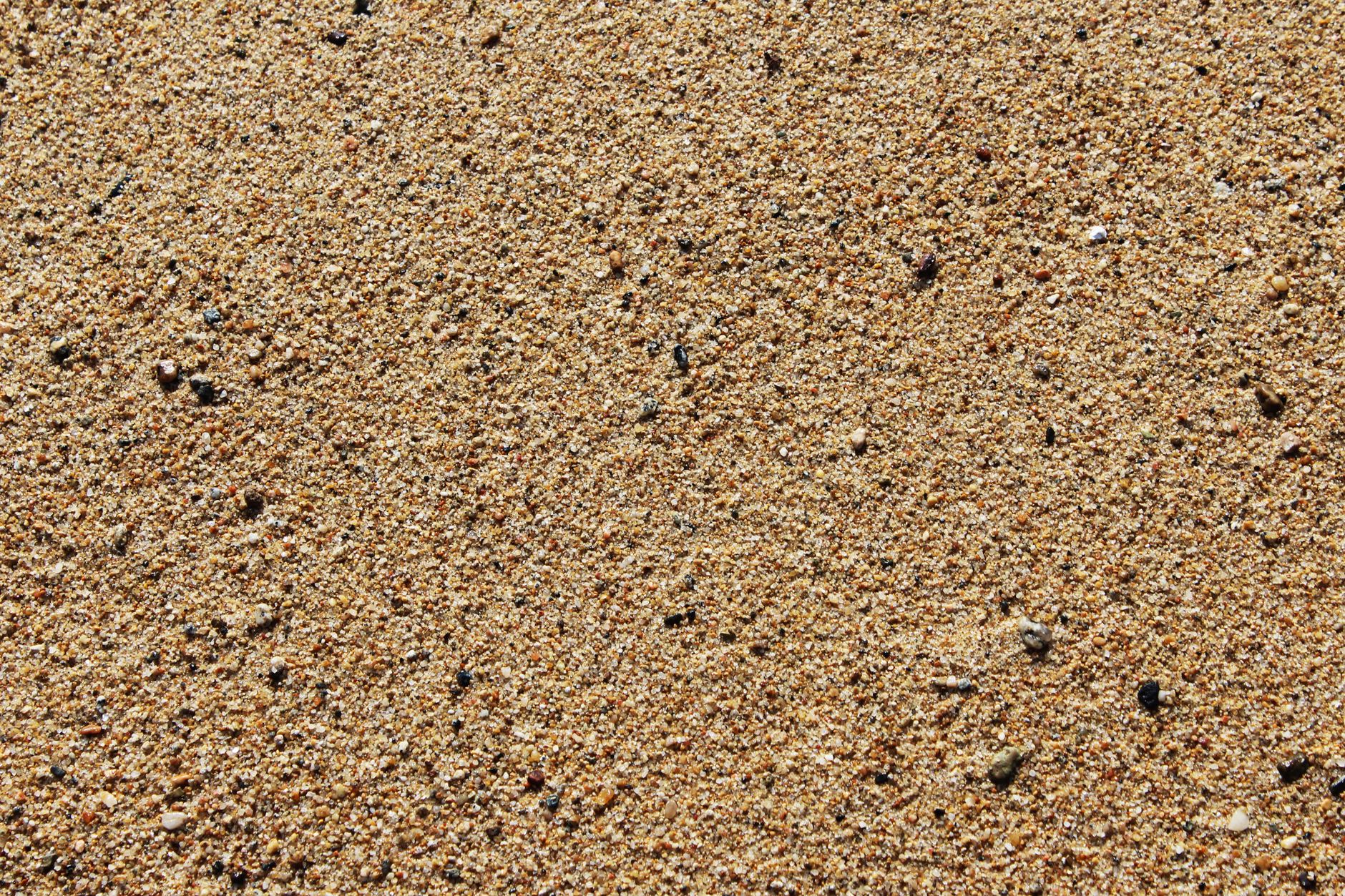
Sand is the single most important material decision in an athletic field drainage project, and it’s also the one most often made carelessly. Using the wrong sand is one of the most common — and most expensive — mistakes field managers make. Getting the specification right from the start protects your investment for decades.
Why Particle Size Is Everything
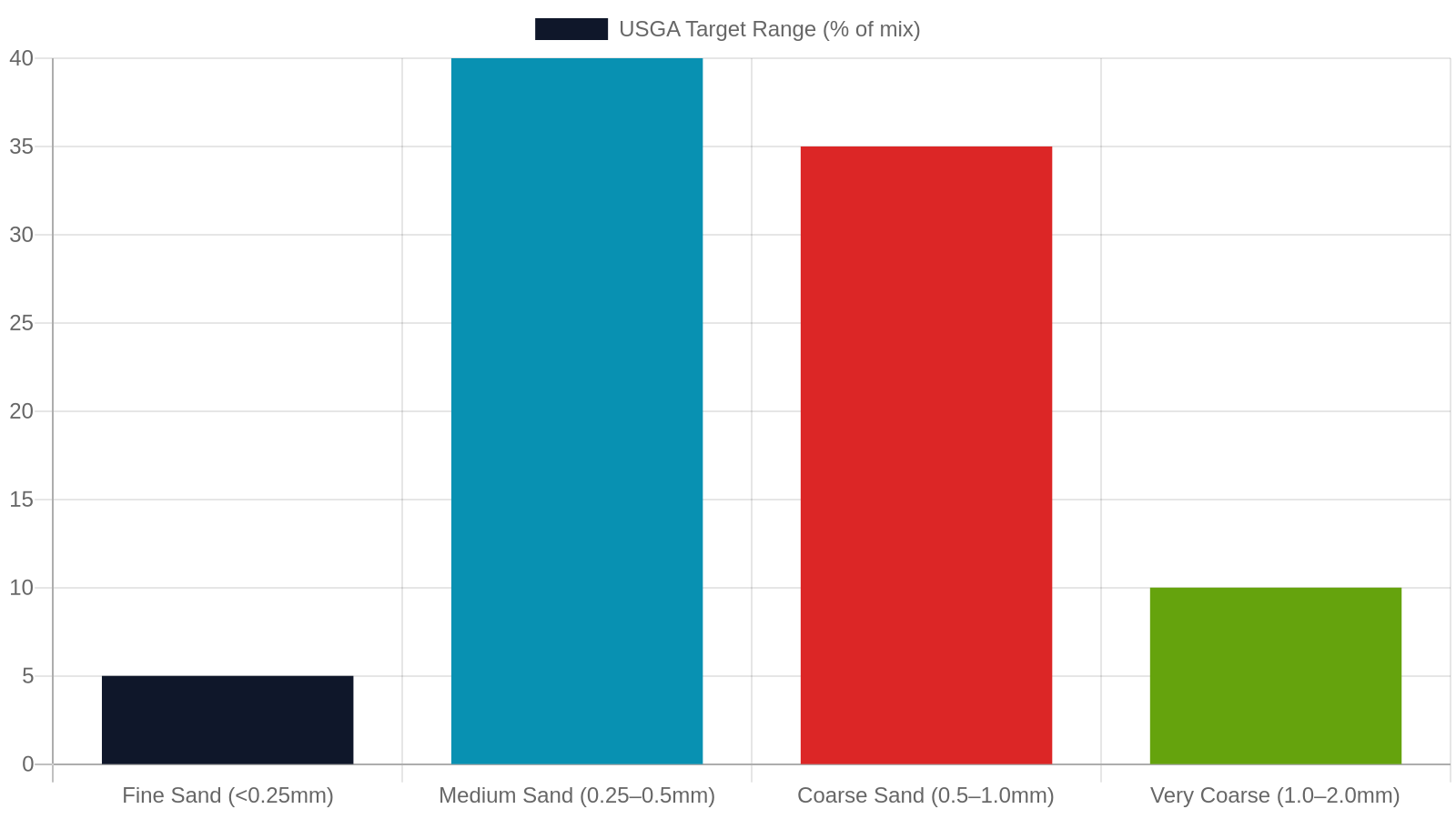
Sand is not a commodity. The drainage performance of a sand-based rootzone depends almost entirely on particle size distribution — specifically, the percentage of particles in the medium-to-coarse range (0.25–1.0 mm). The United States Golf Association (USGA) rootzone specification, which is widely adopted for premium athletic fields, targets a particle size distribution where at least 60% of particles fall between 0.25 mm and 1.0 mm, with strict limits on fine sand (less than 0.15 mm) and silt/clay content.
Fine sand or silty sand — the kind sometimes sold cheaply as ‘fill sand’ — can actually reduce infiltration rates in a rootzone because fine particles fill the pore spaces between larger grains. A field built with the wrong sand can drain worse than native soil within a few seasons.
Reading a Sand Spec Sheet
Reputable sand suppliers publish lab-tested particle size analysis (PSA) reports for each product. Key numbers to look for: D10 (the particle size at which 10% of the sample is finer), D60, and the uniformity coefficient (D60/D10). A uniformity coefficient below 3.5 indicates a well-graded, consistent sand that won’t segregate or compact excessively. You should also check the infiltration rate reported in inches per hour — USGA guidelines call for a minimum of 6 in/hr for the rootzone mix.
Jackson Sand publishes lab-tested spec sheets for their athletic field and drainage sand products. Review the Jackson Sand spec sheets before specifying material for your next project — it takes the guesswork out of compliance and gives you documentation for your records.
4. Aerate Regularly to Restore Infiltration Rates
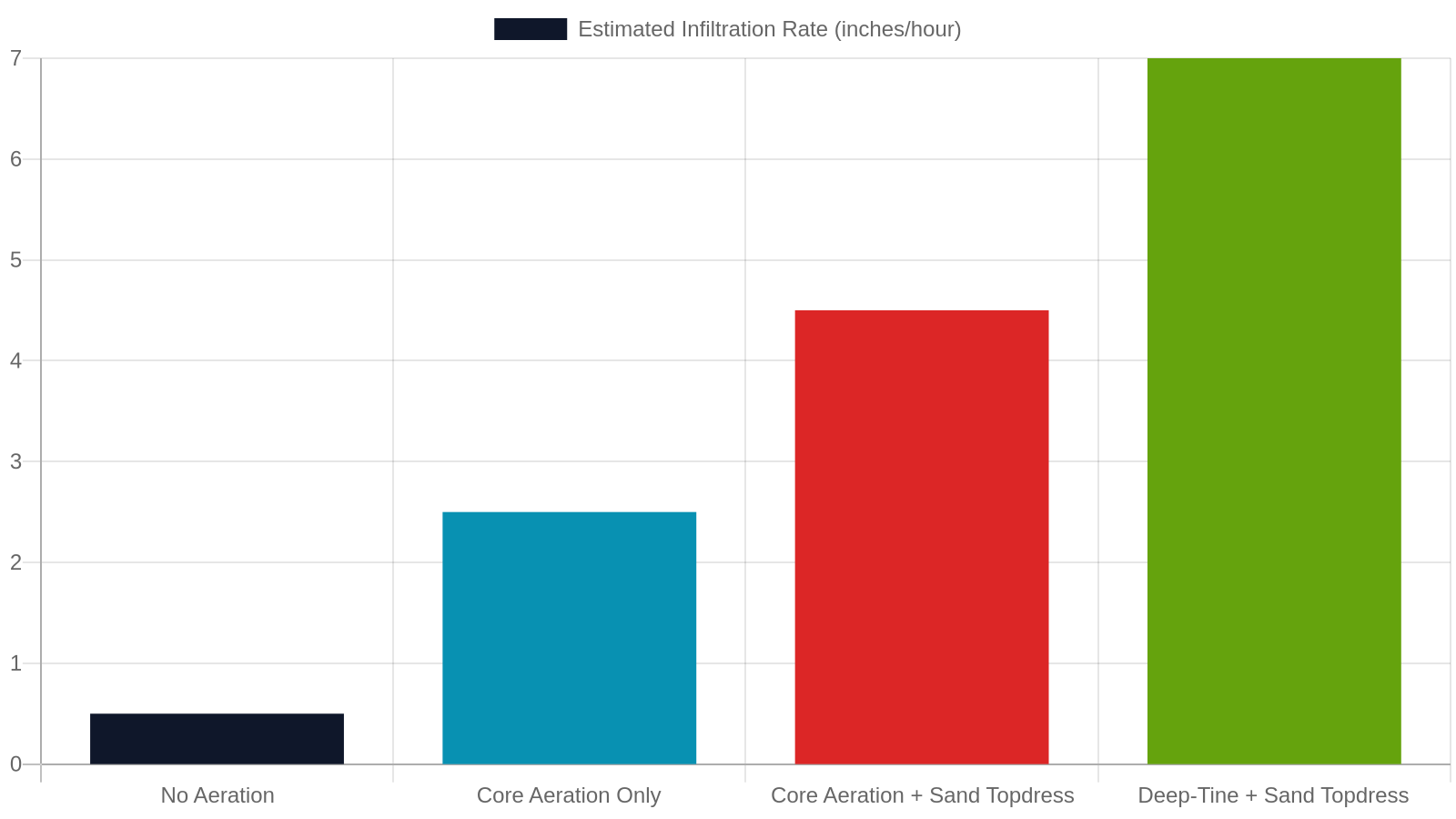
Aeration is the most cost-effective drainage improvement available to field managers working with existing fields. It doesn’t require excavation, it can be done during the off-season, and the results are measurable within days of treatment. Combined with a quality topdressing sand, aeration is the backbone of any long-term drainage maintenance program.
Core Aeration vs. Deep-Tine Aeration
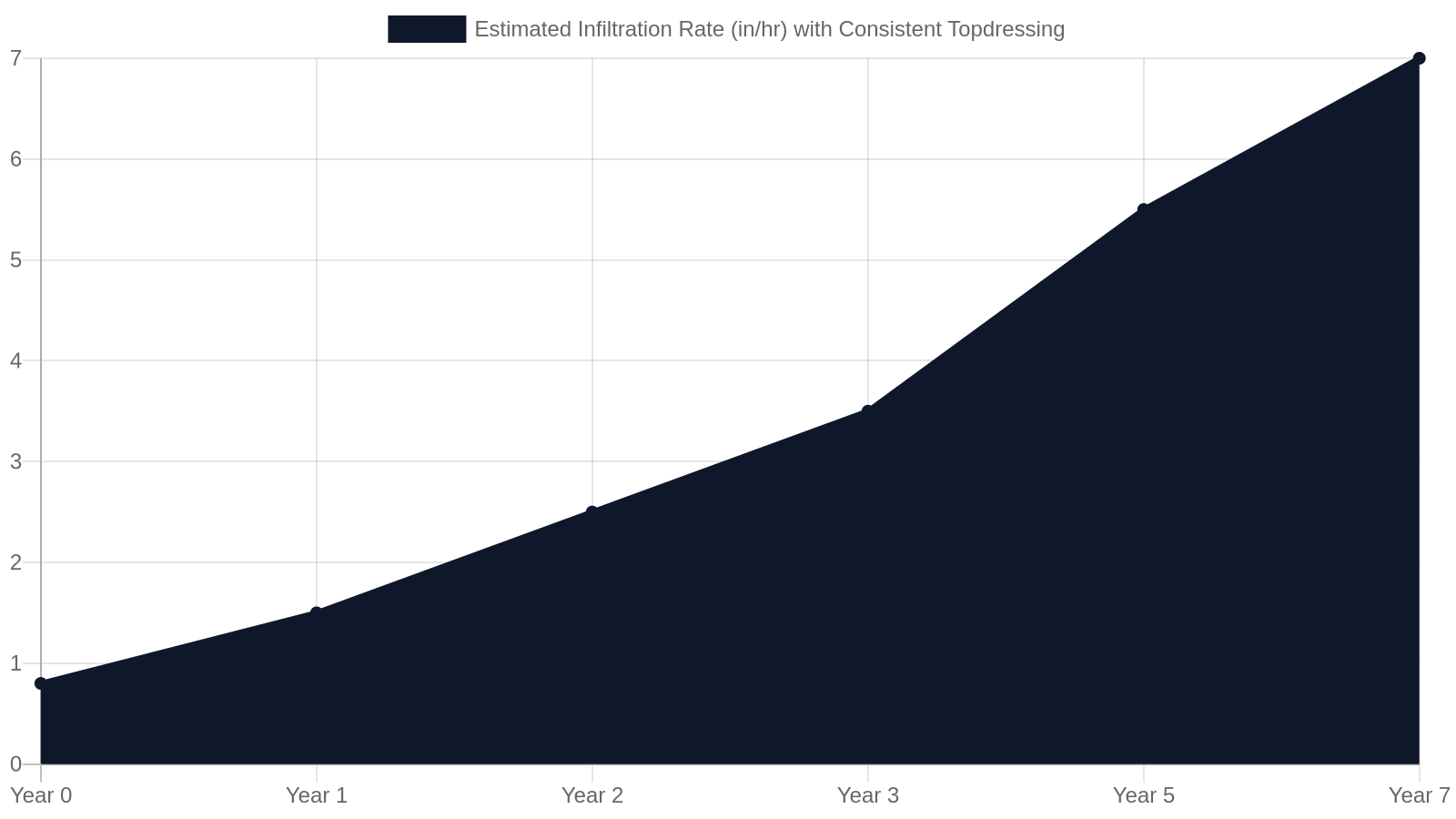
Core aeration — pulling plugs 3/4 to 1 inch in diameter and 3–4 inches deep — is the standard annual maintenance practice for breaking up surface compaction and improving gas exchange. On a heavily used field, core aeration twice per year (spring and fall) can restore infiltration rates from near-zero back to 2–4 inches per hour in the top 4 inches of the profile.
Deep-tine aeration goes further, using solid or hollow tines 8–12 inches long to fracture compaction layers that core aeration can’t reach. This is especially valuable on fields that were built with a sand cap over native clay — the interface between the two layers can become a perched water table that traps moisture in the rootzone. Deep-tine aeration breaks that seal and allows water to move downward.
Sand-Filling Aeration Holes for Maximum Benefit
Aeration alone improves drainage temporarily, but the holes close back up within weeks under traffic. The most effective practice is to immediately topdress with a compatible drainage sand after aeration, dragging the sand into the holes before they close. Over multiple seasons, this process gradually replaces compacted native soil in the top 4–6 inches with free-draining sand — a process sometimes called ‘sand injection’ or ‘dilution topdressing.’
For this to work, the topdressing sand must be compatible with your existing rootzone material. Mixing incompatible sands — particularly layering fine sand over coarse sand — can create a capillary break that holds water rather than releasing it. Always match your topdressing sand to your rootzone specification.
5. Install Surface Drainage Channels at Low Points
Surface drainage channels — catch basins, trench drains, and perimeter swales — are the most direct way to remove water that can’t infiltrate fast enough. They work independently of soil type and compaction, which makes them valuable on fields where improving infiltration alone isn’t enough to keep up with heavy rain events.
Catch Basins and Trench Drains
Even a perfectly graded field with excellent infiltration will occasionally receive more rainfall than the soil can absorb — especially in West Tennessee, where summer convective storms can drop 2–3 inches in under an hour. Surface drainage infrastructure is the safety valve that removes that excess water before it pools and damages turf.
Catch basins (also called drainage basins) are installed at the lowest points of the field — typically at the corners or along the sidelines — and connected to an outfall or storm sewer. A standard 12×12-inch grated basin can handle significant flow rates, but sizing depends on the contributing drainage area and your local rainfall intensity data. Jackson Sand supplies drainage basin materials and can help you think through the right configuration for your site.
Slope and Outlet Design
A drainage channel is only as good as its outlet. Water collected at a catch basin must have somewhere to go — a storm sewer connection, a detention pond, a vegetated swale, or a legal discharge point. In many West Tennessee municipalities, discharging to a roadside ditch is acceptable; in others, a permit may be required. Check with your local public works department before designing your outlet.
The channel or pipe connecting your basin to the outlet should maintain a minimum slope of 0.5% (1/2 inch of fall per 10 linear feet) to prevent sediment from settling inside the pipe. Steeper slopes — 1–2% — are better where site conditions allow. For a full overview of how surface slope and drainage channels work together, see Jackson Sand’s surface water drainage and slope resource page — it covers design principles and the materials needed for each application.
6. Use Drainage Aggregate Correctly in Trench and Pipe Systems
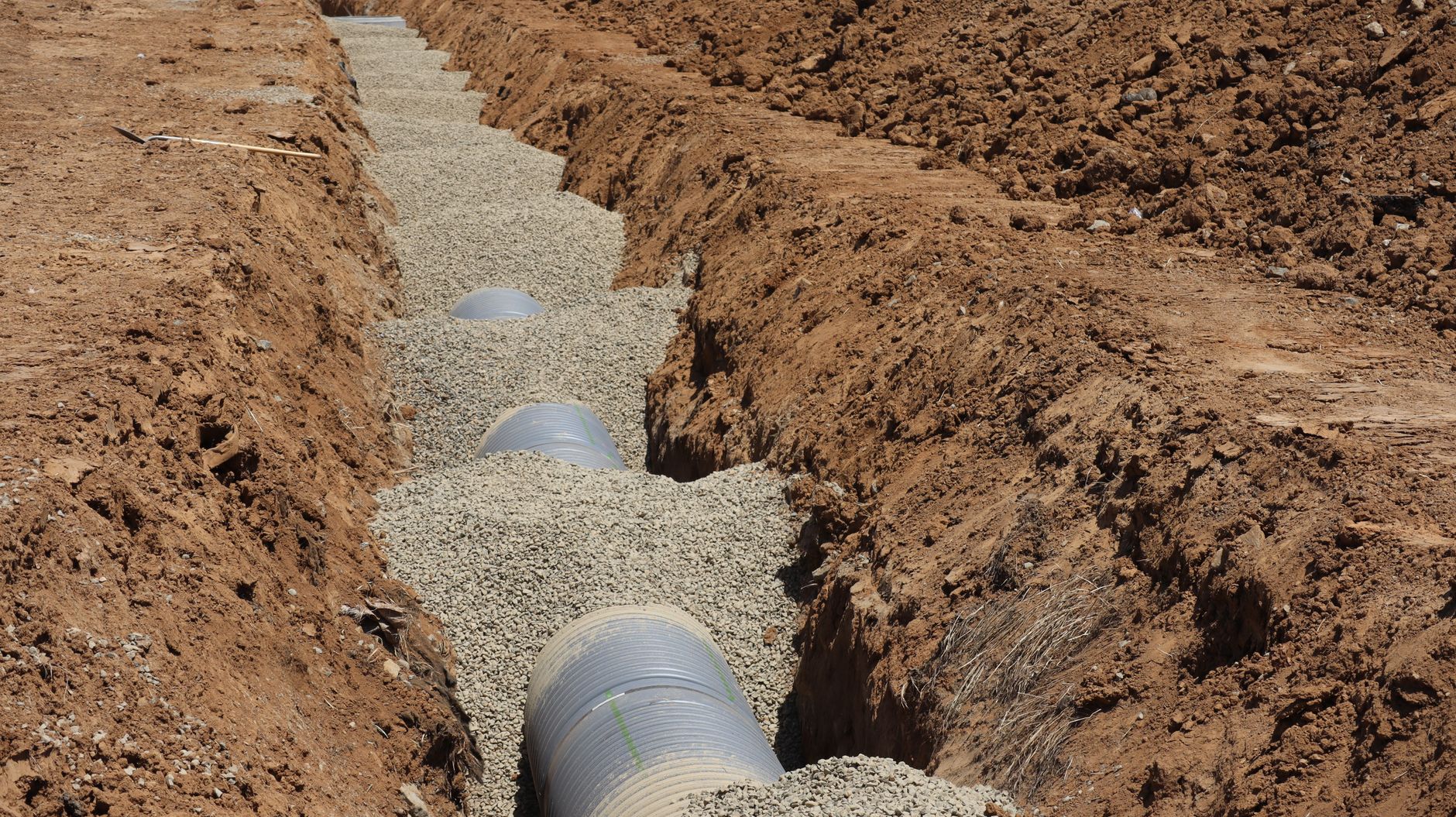
Subsurface drainage systems — perforated pipe in gravel-filled trenches — are the most powerful tool for removing water that has already infiltrated into the soil profile. They work best when paired with proper surface grading and a permeable rootzone, creating a complete drainage system that moves water efficiently from the surface all the way to the outlet.
What Goes Around the Pipe Matters
Perforated drain pipe buried under a field only works if the aggregate surrounding it allows water to move freely from the soil into the pipe. The standard specification calls for a clean, washed angular gravel — typically 3/8-inch to 3/4-inch crushed stone — placed in a trench around and above the pipe, then wrapped in a geotextile filter fabric to prevent fine soil particles from migrating in and clogging the system over time.
Using the wrong aggregate — rounded pea gravel, dirty bank gravel, or oversized stone — reduces the effectiveness of the system and can cause premature failure. Angular particles interlock less tightly than rounded ones, leaving larger pore spaces for water movement. Clean, washed material is essential: even a small percentage of fines can reduce the hydraulic conductivity of the aggregate layer by an order of magnitude.
Slit Drains vs. French Drains
Two common subsurface drainage configurations for athletic fields are slit drains and French drains. Slit drains use a narrow trench (2–4 inches wide, 12–18 inches deep) filled with coarse sand or fine gravel and a small-diameter perforated pipe at the bottom. They intercept surface water quickly and are minimally disruptive to the playing surface. French drains use a wider trench (12–24 inches) filled with gravel and a larger pipe, providing higher capacity for areas with significant subsurface water movement.
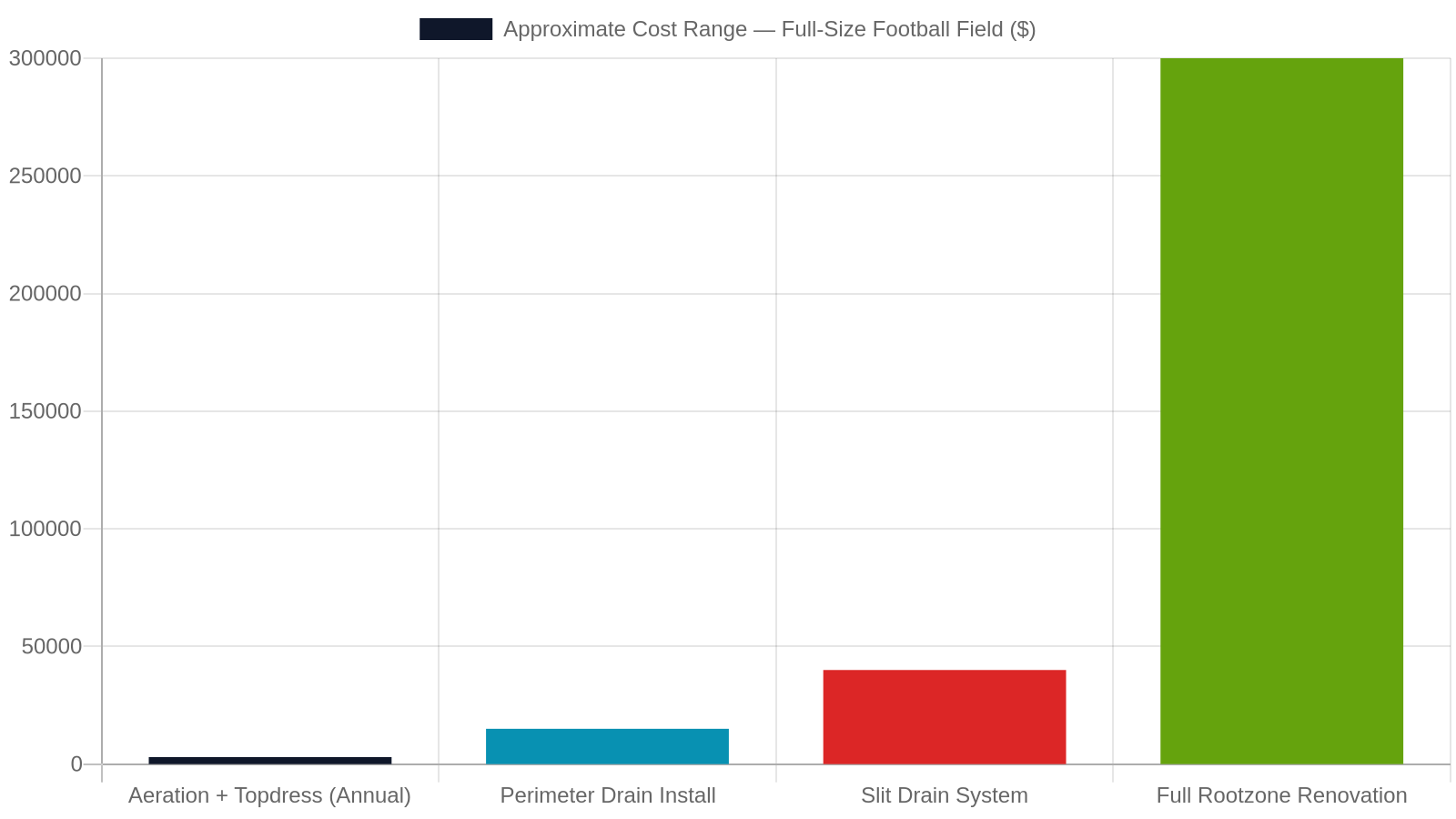
On a typical high school or parks-and-rec field, a herringbone pattern of slit drains spaced 15–20 feet apart can reduce surface ponding time from 24–48 hours to 2–4 hours after a 2-inch rain event. The cost is significant — installation typically runs $8,000–$30,000 or more depending on field size and site conditions — but the return in usable playing days is measurable.
7. Implement a Consistent Sand Topdressing Program
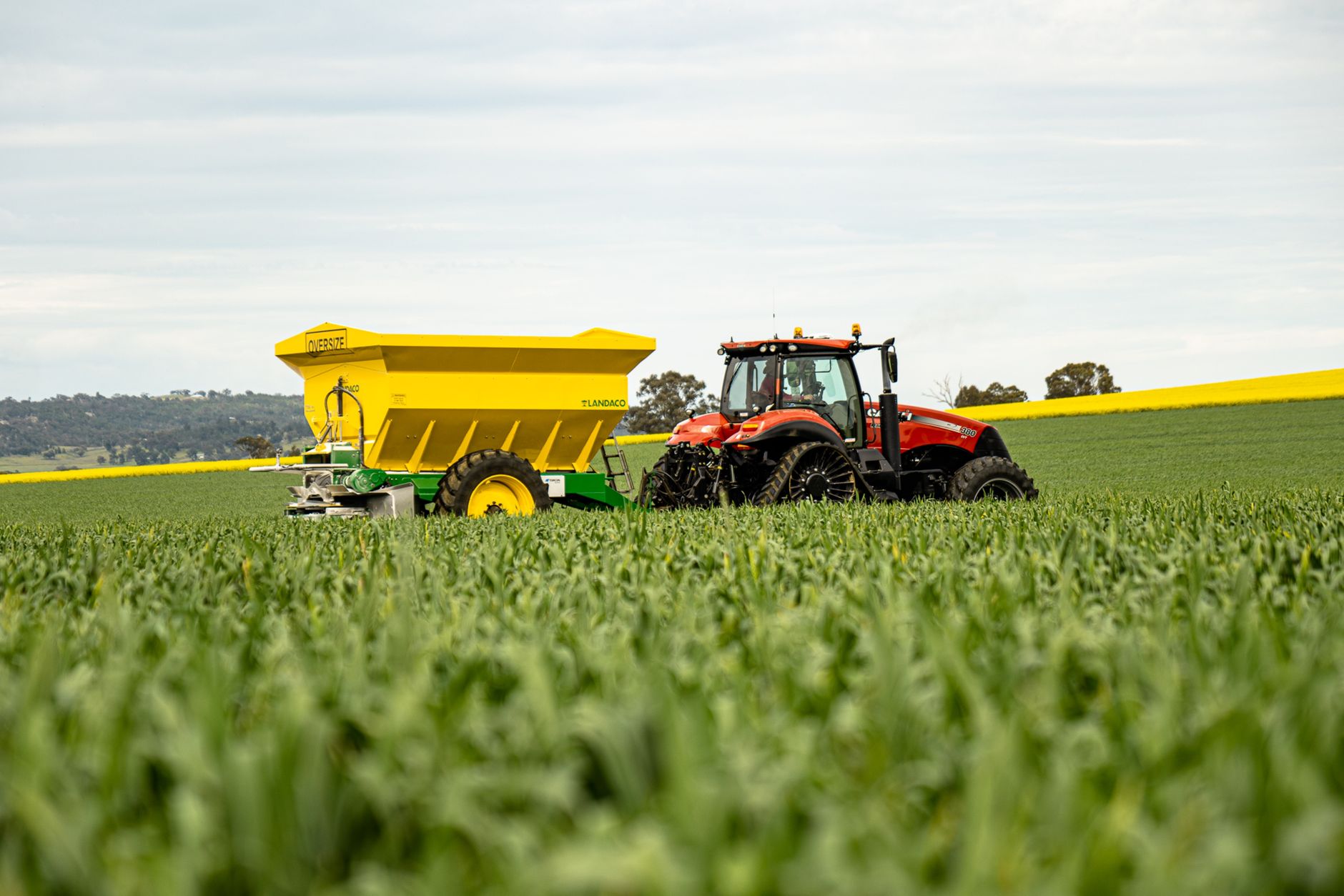
A sand topdressing program is the most sustainable way to improve field drainage over time without major reconstruction. It’s not dramatic — the results accumulate season by season — but fields that have been consistently topdressed for 5–10 years typically show dramatically better drainage, firmness, and turf quality than comparable fields that haven’t.
How Often and How Much
A topdressing program is a long-term investment in your field’s drainage capacity. The goal is to gradually increase the sand content of the top 4–6 inches of the rootzone, improving both infiltration and firmness. Most sports turf managers on natural grass fields target 4–8 topdressing events per year, applying 1/8 to 1/4 inch of sand per application — roughly 4–8 tons per 1,000 square feet annually on a full-size football field.
Timing matters. Topdressing immediately after aeration is most effective because the sand fills the open channels. Topdressing during active growth periods allows the turf to grow through the sand layer quickly, reducing disruption. Avoid topdressing during drought stress or when the field is in heavy use — sand on the surface without adequate incorporation can create a slippery, uneven playing surface.
Matching Sand to Your Existing Rootzone
Before starting or changing a topdressing program, have your existing rootzone tested and compare the particle size distribution to the sand you plan to apply. Layering incompatible sands is one of the most common mistakes in field management — it creates hydraulic discontinuities that trap water rather than draining it. A simple sieve analysis from a soil testing lab costs $50–$100 and can prevent thousands of dollars in remediation work later.
Jackson Sand mixes their topdressing and athletic field sands on-site from high-quality materials, and their topdressing sand products come with lab-tested particle size data so you can verify compatibility before you order. Use their free yardage calculator to estimate how many cubic yards you’ll need for your field dimensions and target application depth.
Athletic Field Drainage Solutions at a Glance
Not every drainage problem requires the same solution. Use this table to compare the most common approaches by cost, complexity, disruption to play, and expected impact.
8. Address Perimeter and Sideline Drainage
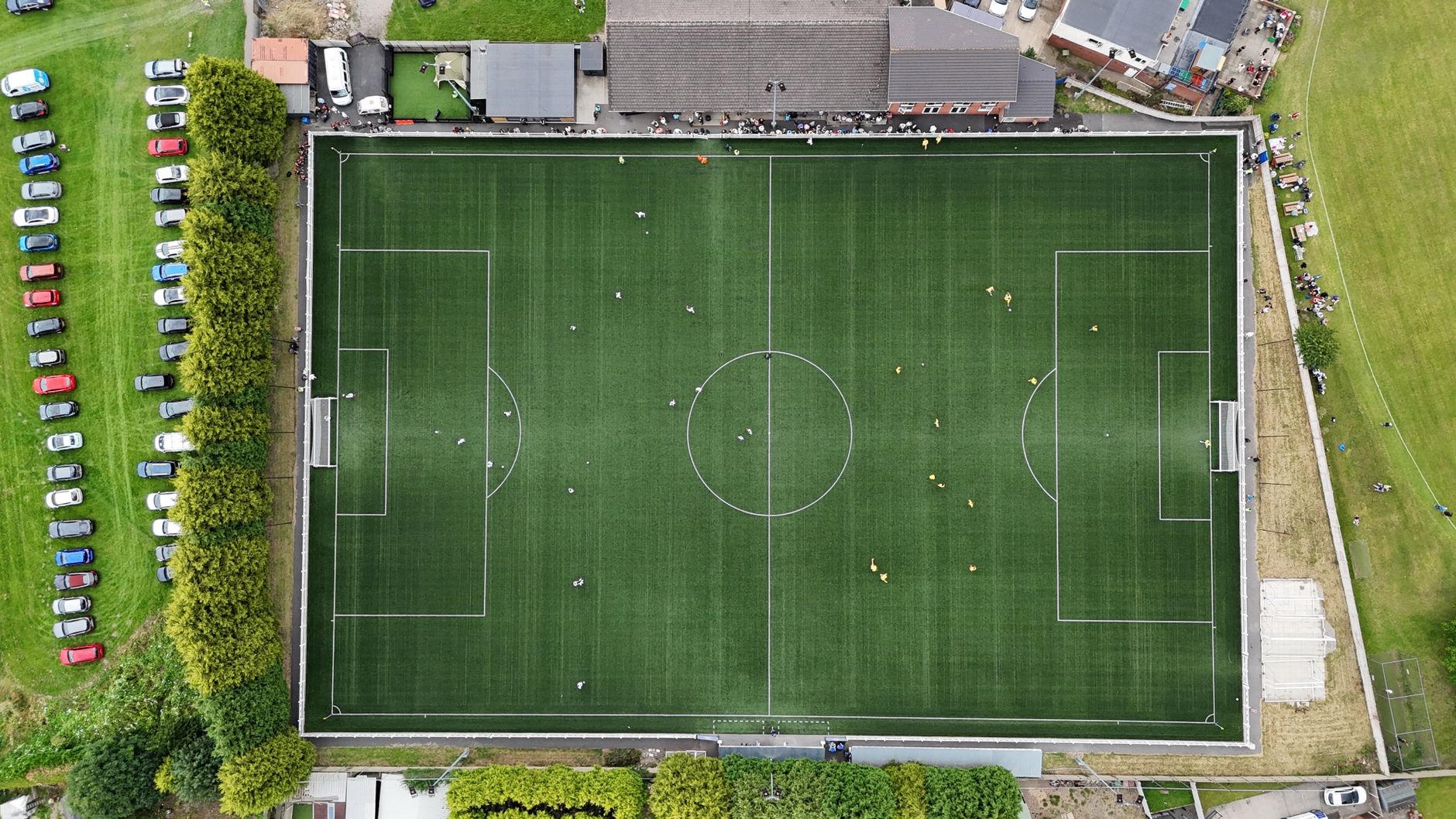
The perimeter of an athletic field is often an afterthought in drainage design, but it’s one of the highest-impact areas to address. Wet sidelines affect player safety, create liability exposure for field operators, and signal to visiting teams and parents that the facility isn’t well maintained. Perimeter drainage is typically lower-cost than full subsurface systems and can be installed during the off-season with minimal disruption.
Why the Edges Fail First
Sidelines and end zones take the heaviest foot traffic and are often the last areas to receive maintenance attention. They’re also where water naturally collects as it sheds off the crown of the field. The result is a chronic wet zone along the sidelines that never fully dries out between events, leading to turf loss, bare soil, and muddy conditions that track onto the playing surface.
Perimeter drainage — a shallow swale, a trench drain, or a row of catch basins running along the sideline — intercepts this water before it can saturate the sideline turf. Even a simple 6-inch-deep gravel-filled trench along the back of the bench area can dramatically reduce sideline mud during wet periods.
Connecting Perimeter Drains to an Outlet
Perimeter drains must connect to a positive outlet — a storm sewer, a drainage ditch, or a detention area. A perimeter drain that dead-ends simply concentrates water at one point rather than removing it. When designing your perimeter drainage, plan the outlet first and work backward to ensure continuous slope from the drain to the discharge point.
On school and municipal fields, the outlet often connects to existing stormwater infrastructure. Coordinate with your facilities or public works department early in the design process — retrofitting an outlet after the drain is installed is expensive and disruptive.
9. Manage Organic Matter and Thatch to Keep Pores Open
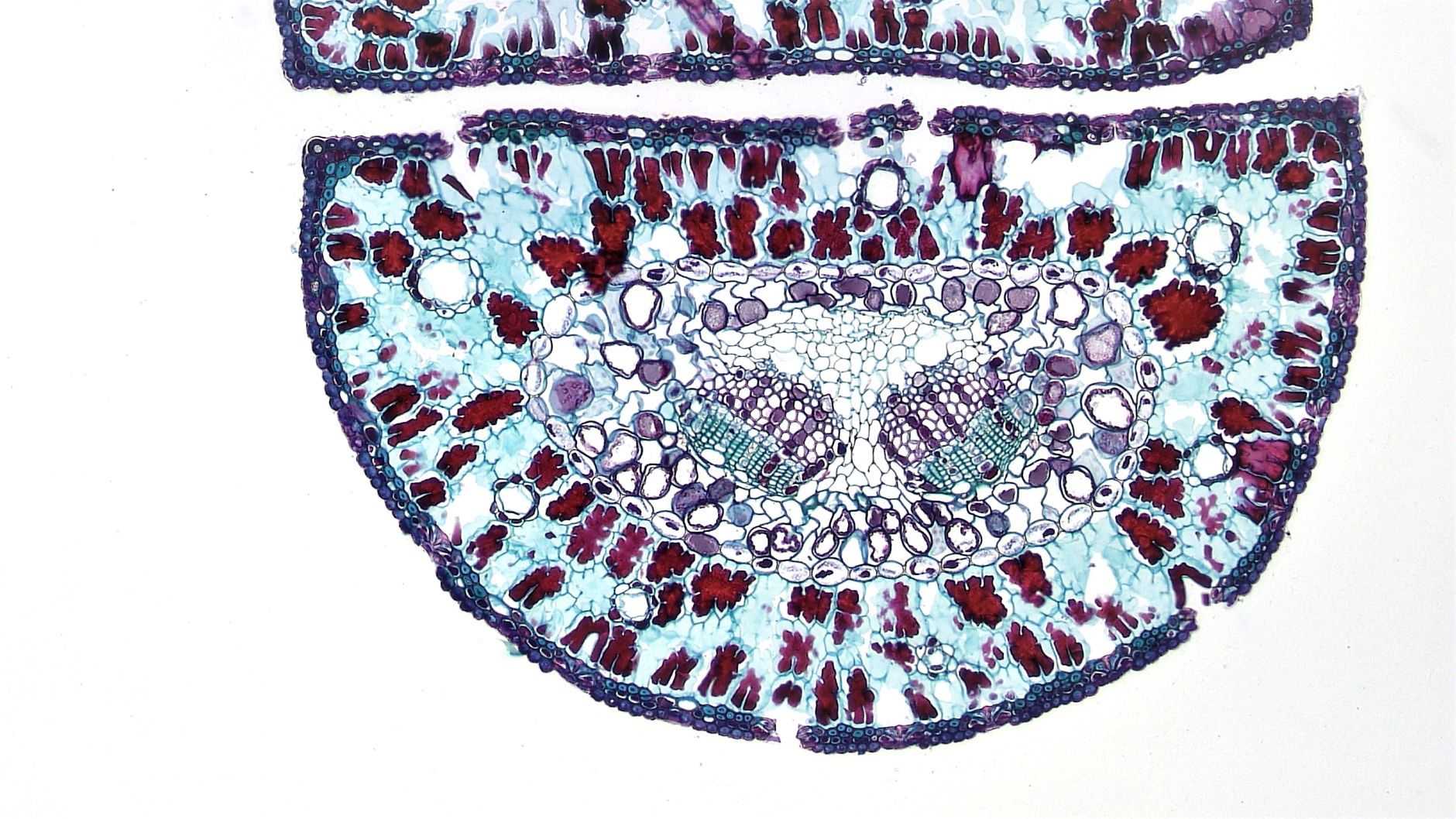
Drainage isn’t just about what’s under the field — it’s also about what’s on top of it. Thatch and organic matter accumulation are invisible drainage killers that develop gradually and are easy to overlook until the field is visibly struggling. Managing organic matter is an ongoing maintenance discipline, not a one-time fix.
How Thatch Blocks Drainage
Thatch — the layer of dead and living organic material between the green turf canopy and the soil surface — is a natural byproduct of turf growth. A thin thatch layer (less than 1/2 inch) is beneficial, providing cushion and protecting crowns. But when thatch exceeds 3/4 inch, it becomes hydrophobic: it repels water rather than allowing it to pass through to the rootzone below. Water sits on top of the thatch layer and runs off laterally, even on fields with excellent rootzone drainage.
Dethatching (vertical mowing or power raking) removes excess organic material and reopens the surface for infiltration. On bermudagrass fields — common in West Tennessee — aggressive vertical mowing in late spring, when the grass is actively growing, is standard practice. Follow immediately with aeration and topdressing for maximum drainage benefit.
Organic Matter in the Rootzone
In sand-based rootzones, organic matter accumulation in the top 1–2 inches of the profile is a long-term drainage threat. As organic matter builds up, it fills the pore spaces between sand particles, reducing hydraulic conductivity. USGA guidelines recommend keeping organic matter content in the top 4 inches of a sand rootzone below 5% by weight. Annual core aeration with sand backfill is the primary tool for diluting organic matter accumulation over time.
Soil testing every 2–3 years should include organic matter percentage alongside nutrient analysis. If organic matter is trending upward, increase aeration frequency or consider a more aggressive vertical mowing program before the problem requires expensive renovation.
10. Plan for Renovation When Incremental Fixes Aren't Enough
Sometimes the most honest answer is that a field needs to be rebuilt from the ground up. Knowing when incremental fixes have reached their limit — and having a realistic plan for renovation — is part of responsible field management. A well-designed renovation produces a field that drains reliably for decades, reducing long-term maintenance costs and maximizing usable playing time.
Signs a Field Needs Full Drainage Renovation
Incremental improvements — aeration, topdressing, perimeter drains — can extend the life of a poorly draining field for years. But some fields reach a point where the underlying drainage infrastructure is simply inadequate and no amount of maintenance will compensate. Signs that a field may need full renovation include: standing water that persists more than 24 hours after a 1-inch rain event; infiltration rates below 0.5 inches per hour despite regular aeration; chronic bare soil in high-traffic areas that won’t sustain turf; and a rootzone profile that has become so layered and inconsistent that topdressing compatibility is impossible to maintain.
Full renovation typically involves laser grading, installation of a subsurface drainage system, placement of a new sand rootzone to USGA or modified USGA specifications, and reestablishment of turf. It’s a significant investment — costs for a full-size football field can range from $150,000 to $500,000 or more depending on scope — but it produces a field that performs reliably for 15–25 years with proper maintenance.
Phased Renovation as a Budget Strategy
For schools and parks departments with limited capital budgets, phased renovation spreads the cost over multiple fiscal years. A common approach: Year 1 — laser grade and install perimeter and catch basin drainage. Year 2 — install slit drains in the highest-traffic zones (center field, goal mouths). Year 3 — full topdressing and aeration program to build up the rootzone. This approach won’t deliver the same results as a full build-out, but it makes meaningful improvements each year and keeps the field playable throughout the process.
When planning quantities for any phase of renovation, Jackson Sand’s free yardage calculator can help you estimate cubic yards of sand, gravel, or drainage aggregate needed based on your field dimensions and layer depths — saving time and reducing over- or under-ordering.
Ready to Improve Drainage on Your Field? Jackson Sand Can Help
Improving surface water drainage on an athletic field in West Tennessee starts with the right materials and the right plan. Jackson Sand has been supplying sand, drainage aggregate, and related materials to field managers and contractors across the region, and they’re ready to support your next project — whether it’s a single aeration topdressing or a full drainage renovation.
Local Supply, Lab-Tested Materials, Delivery Included
Jackson Sand is located at 139 United Dr. in Jackson, TN, and serves athletic field managers, school districts, parks and recreation departments, and contractors throughout West Tennessee and the Mid-South. They mix their own sand on-site from high-quality materials — which means consistent particle size and cleaner loads compared to suppliers who blend in the field. They own their own delivery trucks, so what you order is what arrives, and delivery is included.
Whether you need a few yards of topdressing sand for a spring aeration program or aggregate for a full slit-drain installation, Jackson Sand can supply the right material for the job. Their athletic field sand products are backed by lab-tested spec sheets, so you have documentation for your records and confidence that the material meets your project specification.
Get Started Today
For surface drainage design help and materials — including drainage aggregate, sand, and catch basin supplies — explore Jackson Sand’s surface water drainage and slope solutions to see what’s available for your project. When you’re ready to talk quantities, use the free yardage calculator on their site or call the team directly at 731-668-0440. They’re straightforward to work with, they know their products, and they’ll make sure you get the right material for your field — not just whatever’s easiest to load.
Frequently Asked Questions
How do I fix standing water on an athletic field?
Start by checking your field's grade — the surface should slope at 1–2% from the crown toward the sidelines. If grade is correct, the problem is likely compaction or an inadequate rootzone. Core aeration followed by sand topdressing is the most practical first step. For persistent ponding, catch basins or slit drains at the low points will remove water that can't infiltrate fast enough.
What kind of sand is best for athletic field drainage?
Medium-to-coarse sand with at least 60% of particles in the 0.25–1.0 mm range is the standard for athletic field rootzones, based on USGA guidelines. Avoid fine sand or silty sand — fine particles fill pore spaces and can reduce drainage. Always ask for a lab-tested particle size analysis before purchasing.
How often should I topdress an athletic field with sand?
Most sports turf managers topdress 4–8 times per year, applying 1/8 to 1/4 inch of sand per application. Topdressing immediately after core aeration is most effective because the sand fills the open holes and gradually improves the rootzone over multiple seasons.
What is a slit drain and does my athletic field need one?
A slit drain is a narrow trench (2–4 inches wide, 12–18 inches deep) filled with coarse sand or fine gravel and a small perforated pipe at the bottom. It intercepts surface water quickly and is minimally disruptive to the playing surface. Fields that pond for more than 12–24 hours after a 1-inch rain event are good candidates for slit drains.
Does Jackson Sand deliver to athletic fields in West Tennessee?
Yes. Jackson Sand owns their own delivery trucks and includes delivery with their sand, gravel, and drainage aggregate products. They serve athletic field managers, school districts, parks departments, and contractors throughout West Tennessee and the Mid-South from their location in Jackson, TN. Call 731-668-0440 to discuss your project.
How much sand do I need to topdress a football field?
A standard football field (roughly 80,000 square feet including end zones) requires approximately 25–50 cubic yards of sand per 1/8-inch topdressing application. Use Jackson Sand's free yardage calculator at jacksonsand.com/yardage-calculator/ to get a precise estimate based on your field dimensions and target depth.