
Drainage Basin Materials for Sports Turf: Your 9-Point Cost Guide for West Tennessee
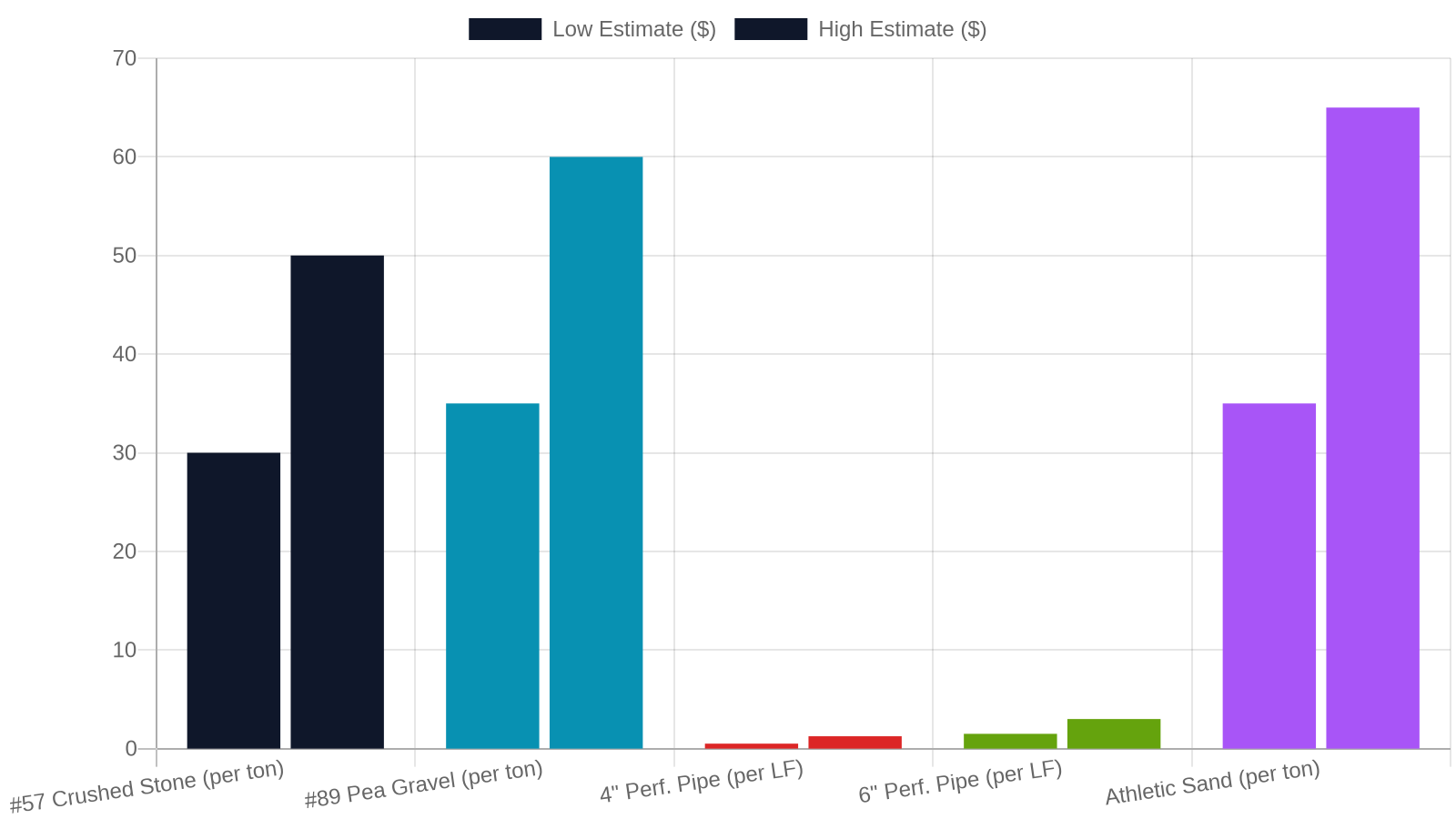
Quick answer: Drainage basin systems for sports turf in West Tennessee typically involve three material categories — drainage aggregate (crushed stone and gravel), perforated pipe, and a sand-based topping layer — plus delivery and installation labor. Aggregate runs roughly $30–$60 per ton depending on grade and volume; pipe and fittings add $1–$4 per linear foot; and a quality topping sand adds another $35–$65 per ton. Total installed costs for a single catch basin on a school or parks field commonly range from $800 to $3,500 depending on depth, pipe runs, and site conditions. Jackson Sand (731-668-0440) supplies all aggregate and sand components with delivery included.
1. Why Sports Turf Drainage Basins Matter in West Tennessee
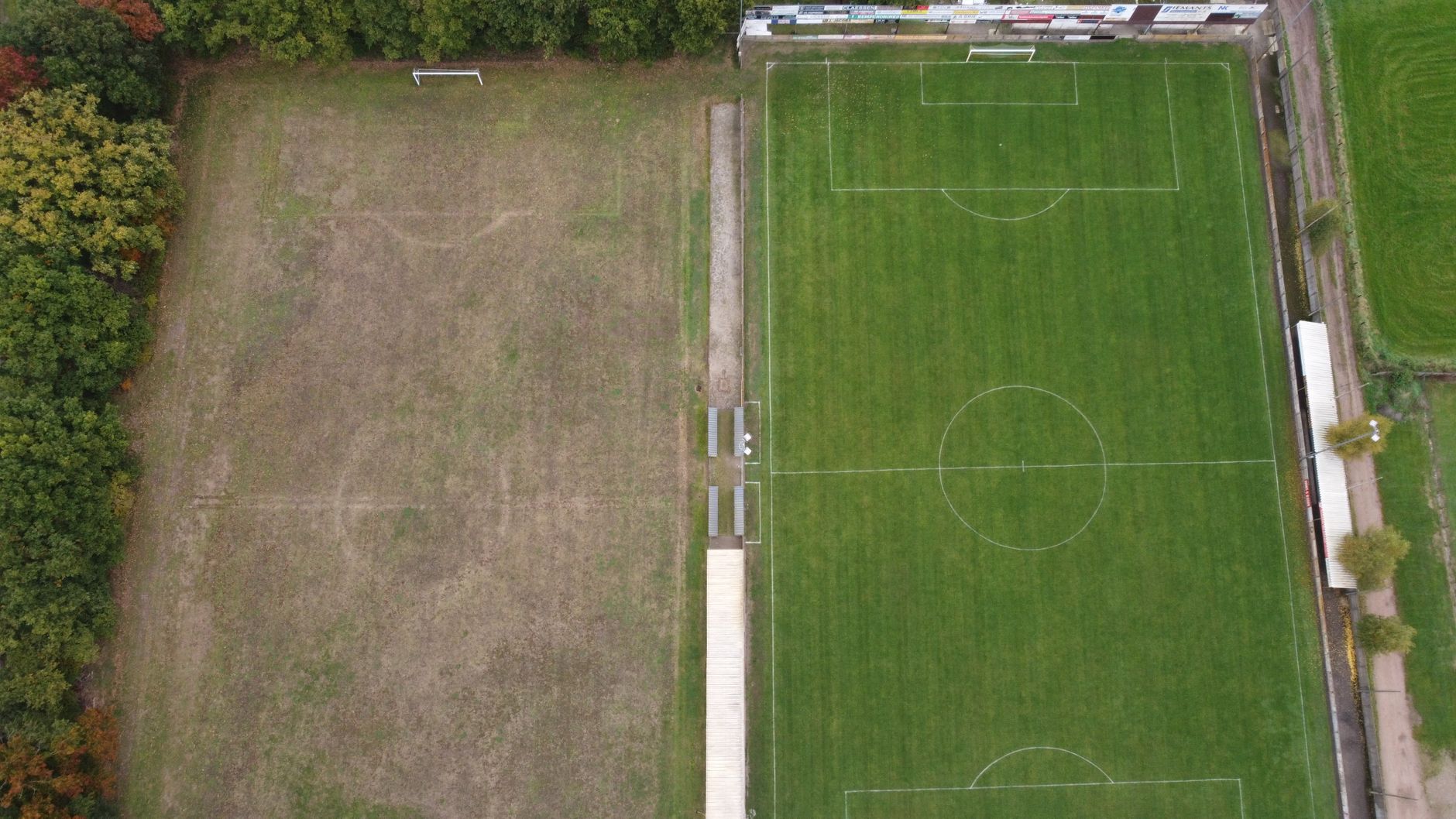
Before you can budget a drainage basin project for a sports field in West Tennessee, it helps to understand exactly what the system does and why the region’s soil and climate make it a near-necessity rather than a luxury. Fields that drain poorly don’t just cost you game days — they cost you turf replacement, regrading, and long-term compaction damage that compounds every season.
West Tennessee's Rainfall and Clay-Soil Problem
Jackson and the surrounding Mid-South region receive an average of 52–55 inches of rainfall per year, with peak events in late winter and spring that can dump 2–4 inches in a single storm. Beneath most natural athletic fields in the area sits a layer of heavy Shelby or Memphis series clay that drains at a rate of less than 0.5 inches per hour — far too slow to keep a field playable after a hard rain.
The result is standing water, compaction, and turf loss. A properly engineered drainage basin system intercepts that water before it pools on the surface, routes it through aggregate-filled trenches or basins, and carries it off the field through perforated pipe. Without it, a school or parks department can lose 15–30 playable days per season to wet conditions.
What a Drainage Basin System Actually Is
A drainage basin — sometimes called a catch basin or area drain — is a below-grade structure that collects surface runoff or subsurface seepage and channels it into a pipe network. On sports turf, basins are typically set at low points in the field grade, surrounded by drainage aggregate (crushed stone or gravel), and connected by perforated or solid pipe to an outlet or retention area.
The three main components are: (1) the basin structure itself (precast concrete or HDPE grate box), (2) the surrounding drainage aggregate (the largest material cost on most projects), and (3) the pipe network that carries water away. A sand topping layer is often added above the aggregate to protect the root zone and improve surface drainage speed.
2. The 4 Core Material Categories and Their Costs
Every drainage basin project draws from the same four material buckets. Knowing the typical price range for each — and how the quantities stack up — lets you build a realistic budget before you ever call a supplier or contractor. The numbers below reflect general West Tennessee market conditions; always get a current quote for your specific project.
Drainage Aggregate: Crushed Stone and Gravel
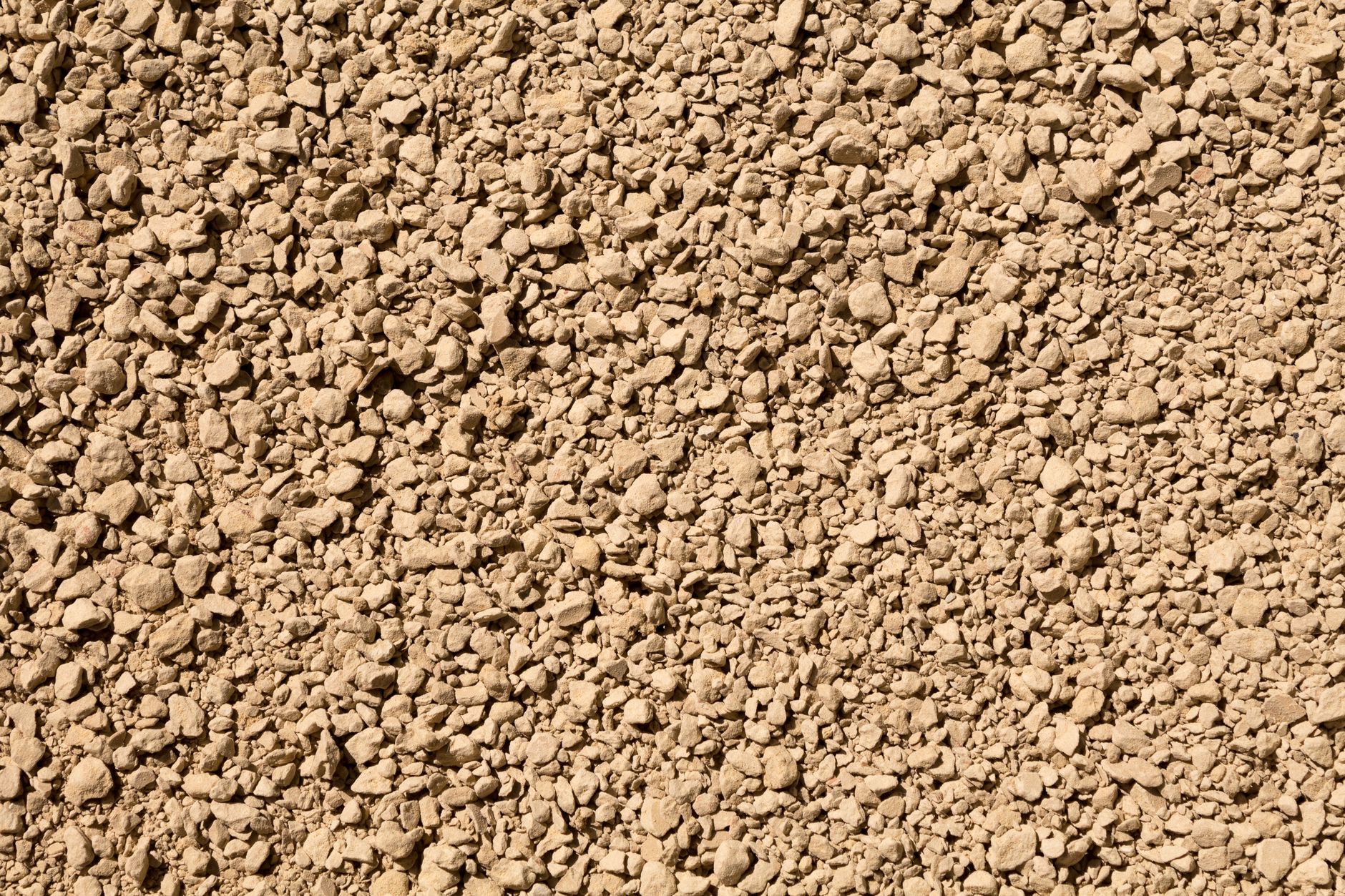
Drainage aggregate is almost always the largest single material line item. For sports turf drainage basins, the most common specs are #57 crushed stone (¾-inch nominal) and #89 pea gravel (3/8-inch nominal). In West Tennessee, bulk pricing from a local supplier typically runs $30–$50 per ton for #57 stone and $35–$60 per ton for #89 gravel, depending on quantity and haul distance.
A single standard catch basin installation — roughly a 4×4-foot basin with 20–30 linear feet of perforated pipe trench — requires approximately 3–6 tons of drainage aggregate. Larger systems with multiple basin inlets and long lateral runs can require 20–50 tons or more. Delivery is a significant cost variable; working with a supplier who owns their trucks and includes delivery (as Jackson Sand does) removes a major pricing unknown from your estimate.
Perforated Pipe and Fittings
Standard 4-inch corrugated perforated HDPE pipe runs $0.50–$1.25 per linear foot in bulk. Upgrading to 6-inch pipe (recommended for main collector lines on larger fields) costs $1.50–$3.00 per linear foot. Solid outlet pipe, end caps, tees, and elbows add another $0.50–$1.50 per linear foot of run when averaged across the system.
Sock filters (geotextile sleeves around perforated pipe) are often specified on fine-sand or silt-prone soils to prevent pipe clogging. These add roughly $0.30–$0.60 per linear foot. For a 100-linear-foot lateral system, pipe and fittings together typically total $250–$500 in materials before installation labor.
Sand Topping and Root-Zone Material
Many sports turf drainage projects include a layer of USGA-spec or athletic-field-grade sand above the aggregate to protect the root zone, improve surface infiltration, and provide a consistent playing surface. Topping sand in West Tennessee runs approximately $35–$65 per ton depending on particle size specification and volume.
A 2-inch sand topping over a 60,000-square-foot (roughly 1.4-acre) natural grass field requires approximately 370–400 tons of sand. For smaller targeted applications — filling in around a basin or top-dressing a high-traffic area — quantities are far smaller. Use the Jackson Sand yardage calculator to get an accurate tonnage estimate before you order.
3. Basin Structure Costs: Precast Concrete vs. HDPE Grate Boxes
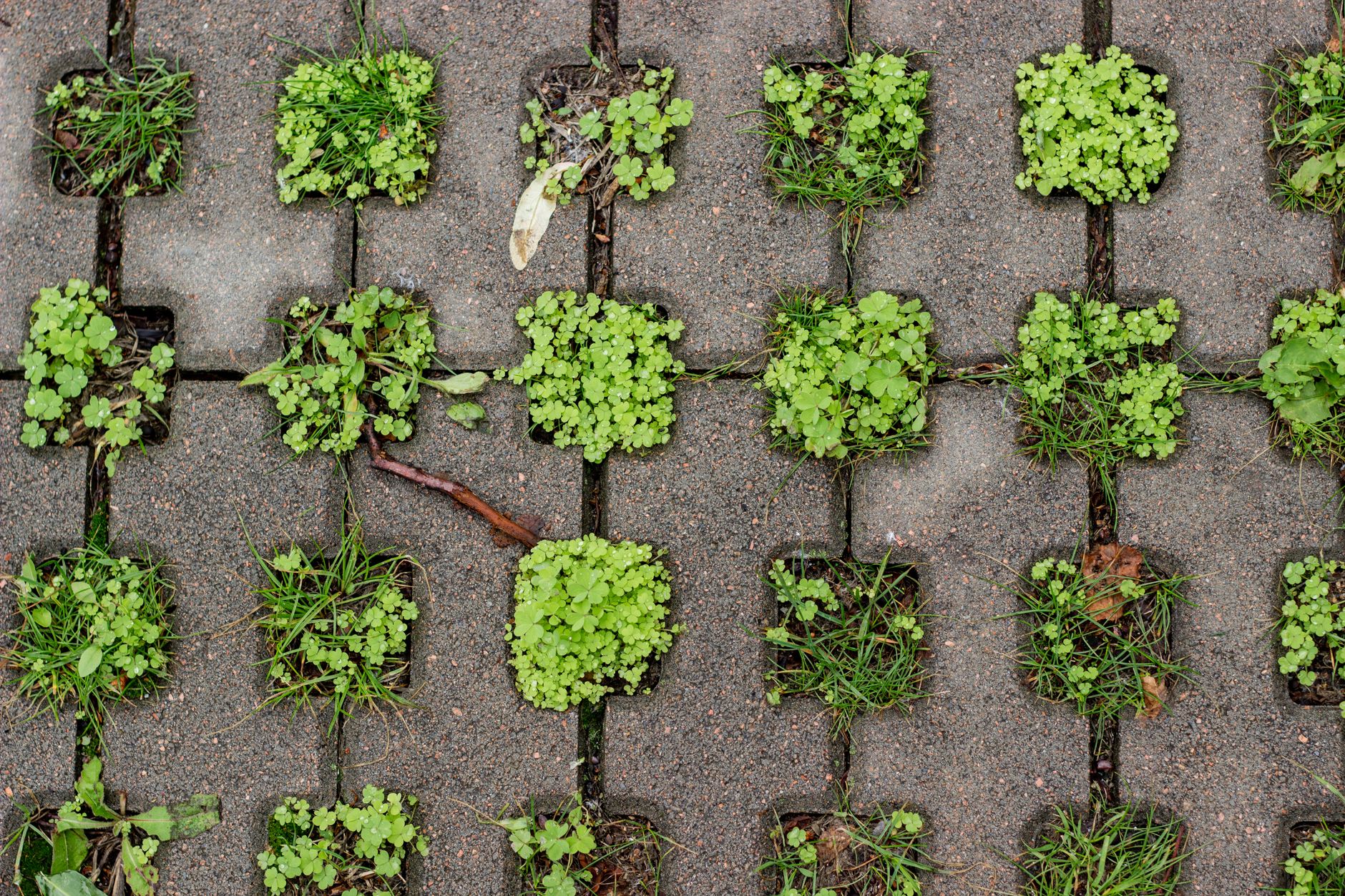
The basin structure itself — the box and grate that sit at the surface — is often a smaller line item than the aggregate surrounding it, but it still deserves careful selection. The wrong choice can mean a basin that shifts, floods, or fails under mower traffic within a few seasons. Here’s how the two main options compare on cost and durability.
Precast Concrete Catch Basins
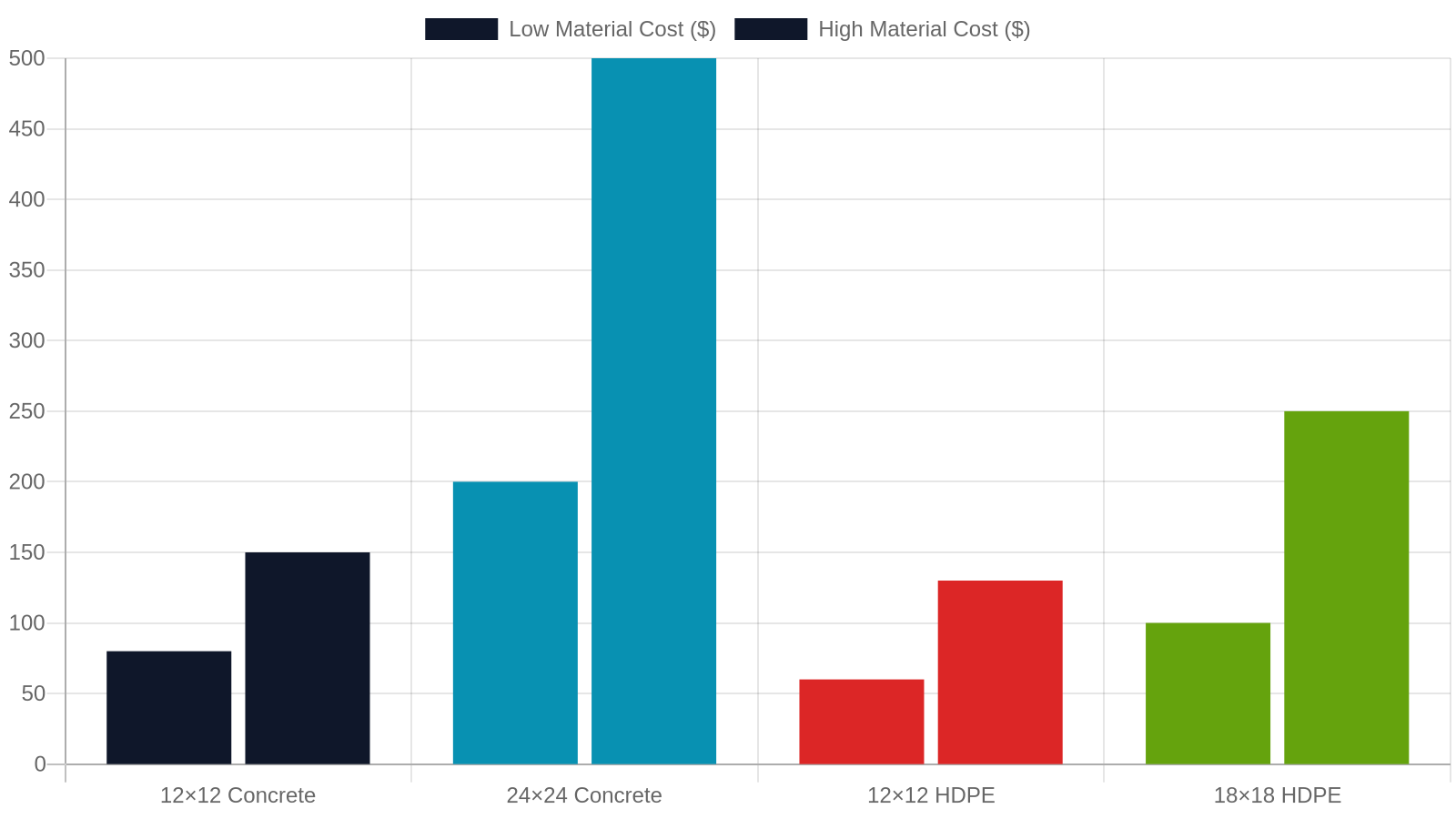
Precast concrete basins are the traditional choice for athletic fields. A standard 12×12-inch inlet basin (the smallest common size) costs roughly $80–$150 per unit in materials. Larger 18×18-inch or 24×24-inch basins — more appropriate for high-flow areas on full-size football or soccer fields — run $200–$500 per unit, not including grates.
Cast iron or ductile iron grates that can withstand mower and vehicle traffic add $40–$120 per basin. Precast concrete is heavy (a 24-inch basin can weigh 300–600 lbs), which increases installation labor costs but also provides long-term stability in high-traffic zones.
HDPE Grate Boxes and Modular Systems
High-density polyethylene (HDPE) catch basin boxes have become popular on school and parks fields because they are lightweight, corrosion-proof, and easy to adjust in the field. A standard 12×12-inch HDPE basin with grate costs $60–$130; larger 18×18-inch units run $100–$250. Stackable risers allow height adjustment without cutting concrete, which saves labor time during installation and future regrading.
The trade-off is load rating. Some HDPE basins are not rated for heavy equipment traffic, so confirm the manufacturer’s load spec before installing on a field that sees tractors or utility vehicles. On pedestrian-only or low-traffic areas, HDPE is often the more cost-effective choice.
4. Installation Labor: What Contractors Charge in West Tennessee
Material costs are only half the budget picture. Labor — excavation, pipe laying, basin setting, and surface restoration — can easily double or triple the material total on a small project. Understanding what drives labor costs helps you compare contractor bids intelligently and identify where value engineering is possible.
Excavation and Trench Work
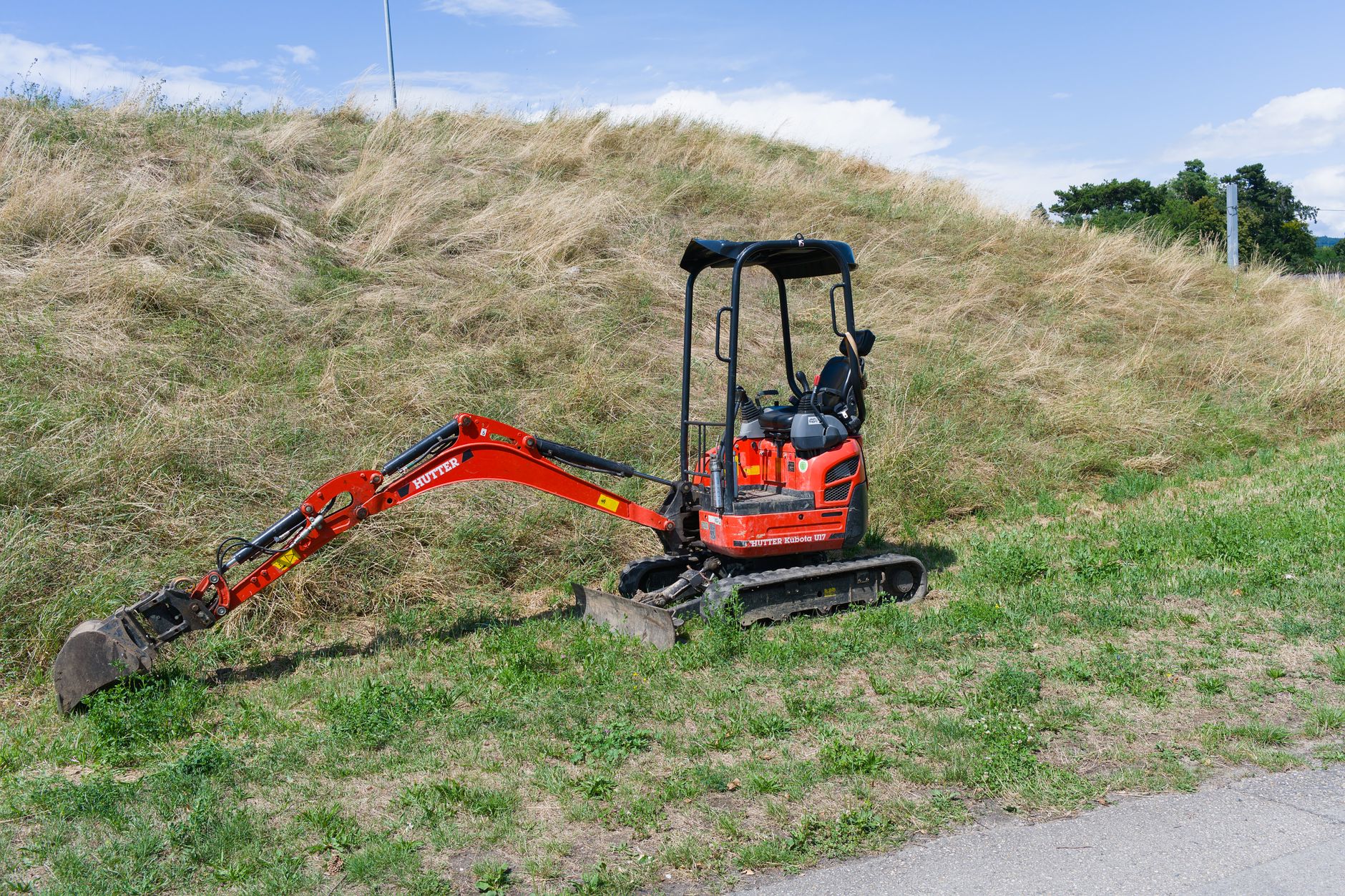
Labor is frequently the largest single cost on a drainage basin project — often exceeding materials on smaller jobs. In West Tennessee, excavation and trenching for a basic catch basin system runs roughly $35–$75 per linear foot of trench when using a mini-excavator or trencher, including backfill and compaction. A 100-foot lateral system therefore adds $3,500–$7,500 in labor before any materials are counted.
Trench depth matters: a standard 18-inch-deep trench is faster and cheaper than a 36-inch deep-drain installation. Clay soils common in West Tennessee can also slow excavation and increase equipment wear, which some contractors price into their bids.
Basin Setting and Pipe Connection
Setting a single precast concrete basin — including leveling, connecting lateral pipe, and backfilling with aggregate — typically takes a two-person crew 3–5 hours. At prevailing West Tennessee contractor rates of $65–$95 per hour per crew member, that’s $390–$950 per basin in labor alone. HDPE basins are lighter and faster to set, often cutting that time by 30–40%.
Outlet connections to existing storm sewer infrastructure, retention ponds, or roadside ditches add complexity and cost. If a new outlet pipe must be bored under a path or road, directional boring adds $20–$50 per linear foot of bore.
Grading and Sod Restoration
After the drainage system is installed, the disturbed field surface must be regraded, seeded or sodded, and allowed to establish before full play resumes. Sod in West Tennessee runs $0.35–$0.65 per square foot installed; seeding with bermudagrass or tall fescue is cheaper at $0.08–$0.20 per square foot but requires 4–8 weeks of establishment time. Budget $500–$2,500 for surface restoration on a typical single-basin installation depending on the disturbed area and turf type.
5. Total Installed Cost Ranges by Project Scale
Project scale is the single biggest driver of total cost. A spot repair and a full-field drainage overhaul share the same material categories but differ by a factor of 50 or more in total spend. The ranges below are general benchmarks for West Tennessee conditions — actual costs depend on site-specific factors your contractor will assess during a site visit.
Small Projects: Single Basin or Short Lateral
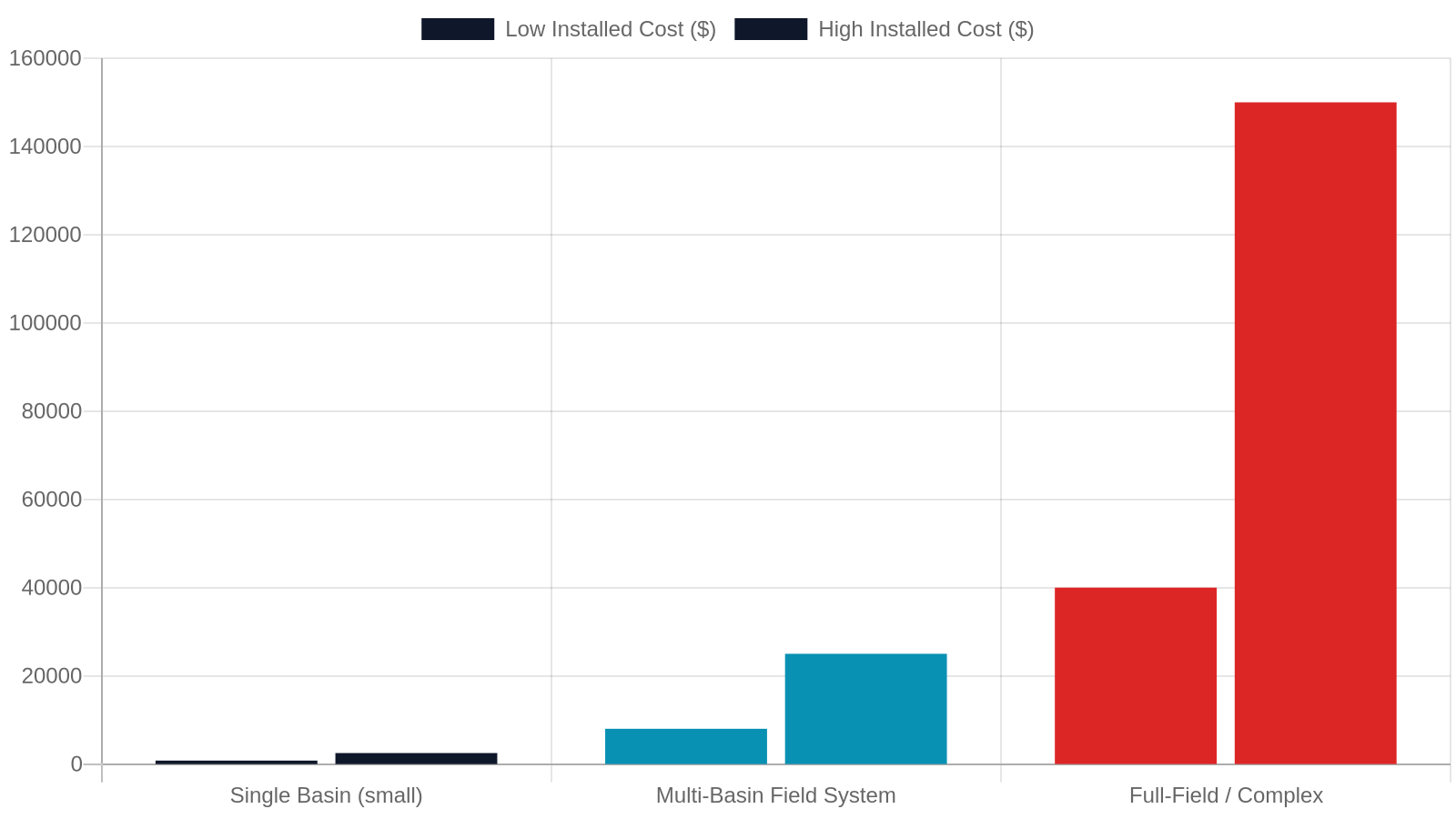
A single catch basin with 20–40 feet of perforated lateral pipe — the kind of spot fix common on a school sideline or a low corner of a park field — typically costs $800–$2,500 installed. Materials (aggregate, pipe, basin box) account for roughly $300–$900 of that total; labor makes up the rest. This scale is also where DIY or in-house maintenance crew installation is most realistic, particularly if the school or parks department already owns a small excavator or trencher.
Mid-Scale Projects: Multi-Basin Field Systems
A full sideline-to-sideline drainage system for a youth football or soccer field — typically 4–8 basins connected by 150–300 feet of lateral pipe feeding a main collector — runs $8,000–$25,000 installed, depending on soil conditions, outlet complexity, and surface restoration scope. Aggregate alone at this scale can total 15–30 tons, making supplier selection and delivery cost critical variables.
Large Projects: Full-Field or Multi-Field Complexes
Comprehensive drainage systems for high school stadiums, college practice facilities, or multi-field sports complexes involve engineered drawings, multiple collector mains, and sometimes French drain networks working alongside traditional basins. These projects range from $40,000 to well over $150,000 in total installed cost. At this scale, the aggregate specification becomes especially important — particle size distribution, permeability, and lab-tested gradation data all affect long-term system performance. Review the Jackson Sand sand specs to understand the gradation data available for drainage and topping materials.
6. Aggregate Specification: Choosing the Right Gravel for Your Drainage Basin
Specifying the wrong aggregate is one of the most common — and most expensive — mistakes on sports turf drainage projects. The wrong gradation can clog pipe perforations, reduce basin capacity, or fail to support the turf layer above. Here’s what to look for when reviewing aggregate specs for your project.
AASHTO and ASTM Gradation Standards
Not all gravel is created equal for drainage applications. The two most commonly referenced gradation standards for sports turf drainage aggregate are AASHTO #57 (¾-inch to No. 4 sieve, roughly 0.75–0.19 inches) and AASHTO #89 (3/8-inch to No. 50 sieve). Both are well-graded, open-structured aggregates that allow rapid water movement — typically 100–300 inches per hour permeability — far exceeding the minimum 12 inches per hour recommended for sports turf drainage.
Avoid using bank-run gravel or crusher run (which contains fines) in the aggregate surround of a drainage basin. The fine particles migrate into pipe perforations and reduce flow capacity over time. Specify washed, open-graded stone.
Matching Aggregate to Pipe Size and Basin Depth
Pipe slot size and aggregate particle size must be compatible to prevent migration. A 4-inch perforated pipe with 1/8-inch slots pairs well with #89 gravel (particles too large to enter the slots). A 6-inch pipe with larger perforations can accept #57 stone in the surround. When in doubt, wrap the pipe in a geotextile sock filter — especially in West Tennessee’s finer-textured soils where silt migration is a real risk.
Basin depth also influences aggregate choice. Shallow basins (18–24 inches) in stable soil can use #57 stone throughout. Deeper installations (36+ inches) may benefit from a two-layer approach: coarser stone at depth for rapid conveyance, transitioning to finer #89 gravel near the surface to support the turf root zone above.
7. Surface Drainage vs. Subsurface Basins: Knowing Which You Need
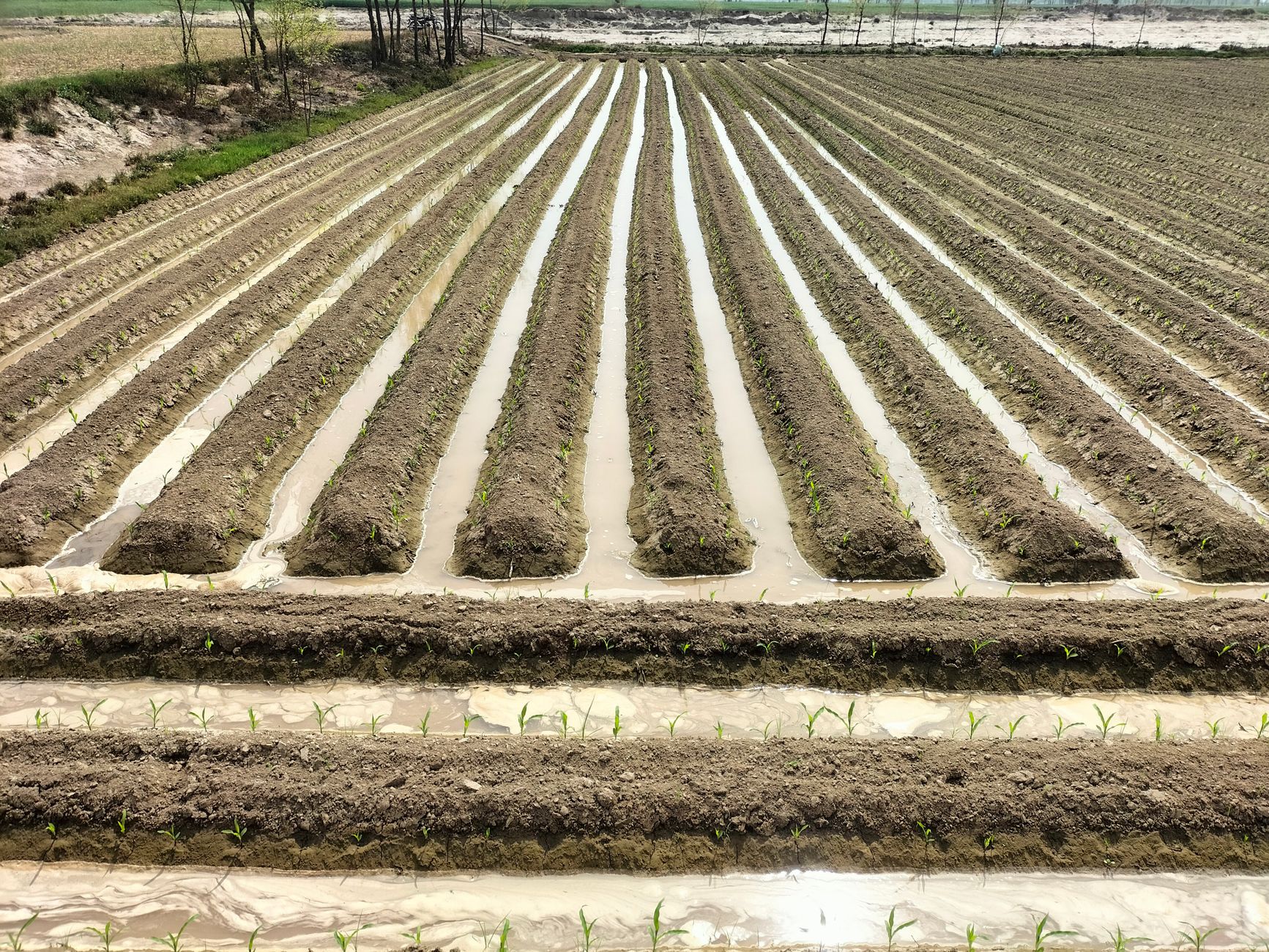
Before budgeting for drainage basins, it’s worth confirming that subsurface infrastructure is actually the right solution for your field. In some cases, improving surface slope and outlet channels is faster, cheaper, and equally effective. In others, no amount of regrading will solve a drainage problem rooted in soil permeability — and that’s when basins earn their cost.
Surface Drainage: Slope and Swale Solutions
Surface drainage relies on proper field grading — typically a 1–2% cross-slope — to move water off the playing surface by gravity before it can pond or infiltrate. Swales, berms, and channel drains along field perimeters are the primary tools. Surface drainage improvements are generally less expensive than subsurface systems: regrading a field to improve slope can cost $2,000–$15,000 depending on the volume of material moved, but requires no pipe or basin installation.
Surface drainage works best on fields with permeable native soil or an existing sand-based root zone. On heavy clay fields, surface slope alone is rarely sufficient — water moves off the surface but still saturates the top 6–12 inches of soil, leaving the field soft and unplayable.
Subsurface Basins: When You Need Underground Infrastructure
Subsurface drainage basins are necessary when surface grading alone cannot remove water fast enough, when the field sits in a topographic low point with no natural outlet, or when the native soil permeability is too low to drain between events. They are also required when a field must meet a specific drainage rate standard — for example, USGA recommendations call for a minimum 6-inch-per-hour drainage rate for golf greens, and many sports turf engineers target similar rates for high-use athletic fields.
Learn more about how surface and subsurface drainage work together on the Jackson Sand surface water drainage and slope page.
Drainage Basin Material Options at a Glance
Use this table to compare the most common material choices for sports turf drainage basin systems in West Tennessee across cost, performance, and best-fit application.
8. Cost Factors Specific to West Tennessee and the Mid-South
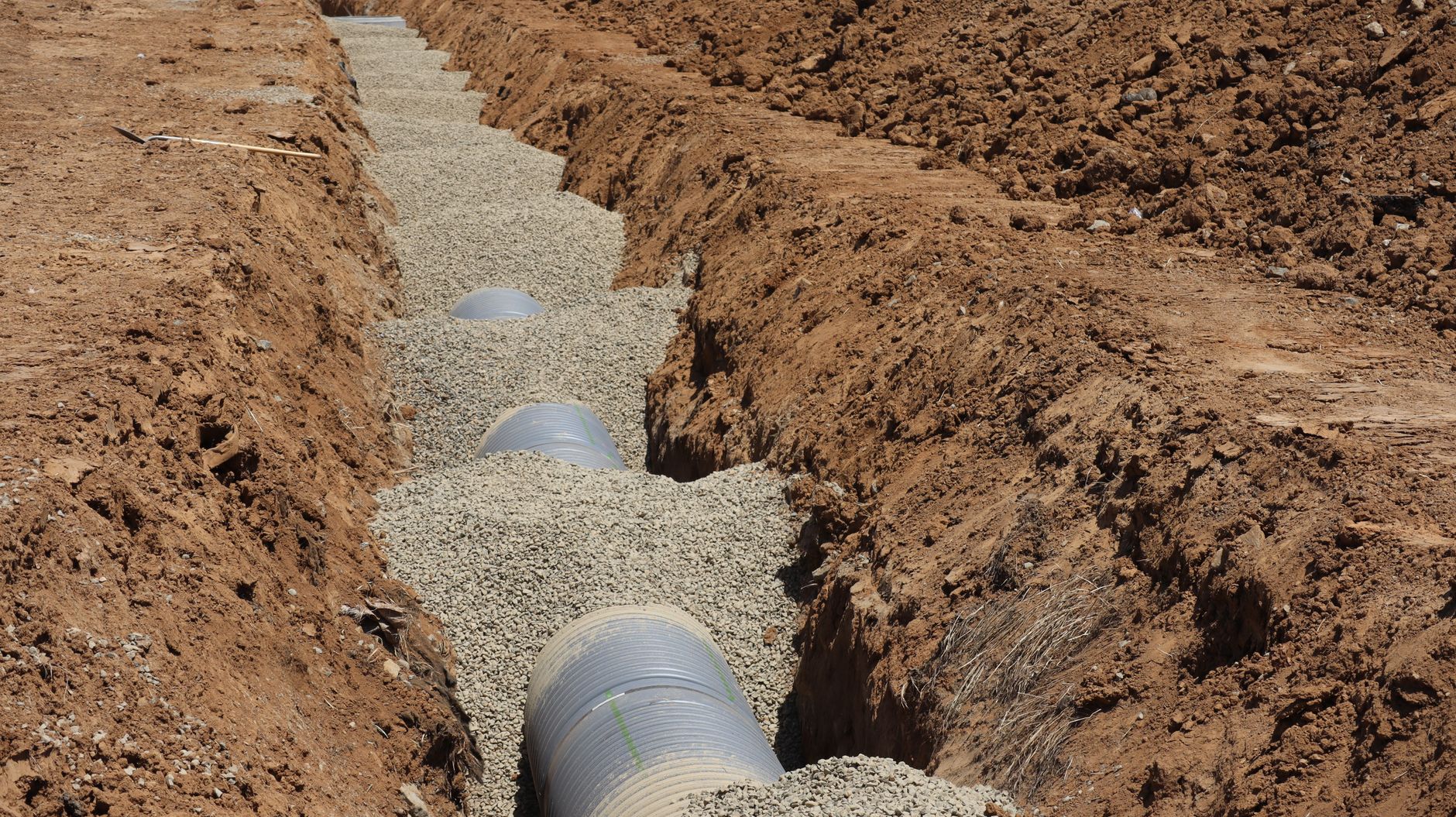
General cost benchmarks are a starting point, but several factors specific to West Tennessee and the broader Mid-South region can push your project costs higher or lower than national averages. Understanding these regional variables helps you plan realistically and avoid budget surprises mid-project.
Clay Soil Conditions and Excavation Difficulty
West Tennessee’s predominant Shelby and Memphis series soils are high-plasticity clays that become extremely sticky and heavy when wet. This increases excavation time, equipment wear, and the risk of trench wall collapse during wet-season installation. Contractors working in the Jackson area routinely add a 10–20% wet-soil premium to their base excavation rate when scheduling spring or fall drainage work. If possible, schedule drainage basin installation during dry summer months to reduce this risk and cost.
Haul Distance and Delivery Costs
Aggregate is heavy — a ton of #57 stone occupies roughly 0.7 cubic yards — and haul distance directly affects delivered cost. Sourcing from a local West Tennessee supplier with their own truck fleet eliminates third-party freight markups and ensures accurate load weights. Jackson Sand mixes and delivers from their facility at 139 United Dr., Jackson, TN, using their own trucks, which keeps loads clean and quantities accurate — important when you’re paying by the ton.
For larger projects, ask your supplier about volume pricing thresholds. Many aggregate suppliers offer meaningful per-ton discounts at 20-ton, 50-ton, and 100-ton order levels. Consolidating multiple field repairs into a single order can meaningfully reduce your per-ton cost.
Seasonal Demand and Lead Times
Spring is peak season for drainage work in West Tennessee — fields are wet, problems are visible, and school and parks budgets are often in a new fiscal year. Contractor availability tightens from March through May, and aggregate suppliers can see delivery lead times stretch from 1–2 days to 1–2 weeks during peak demand. Planning drainage basin projects for June through September — when contractor schedules are more flexible and soils are drier — can reduce both labor costs and scheduling headaches.
9. How to Estimate Your Material Quantities Before You Call
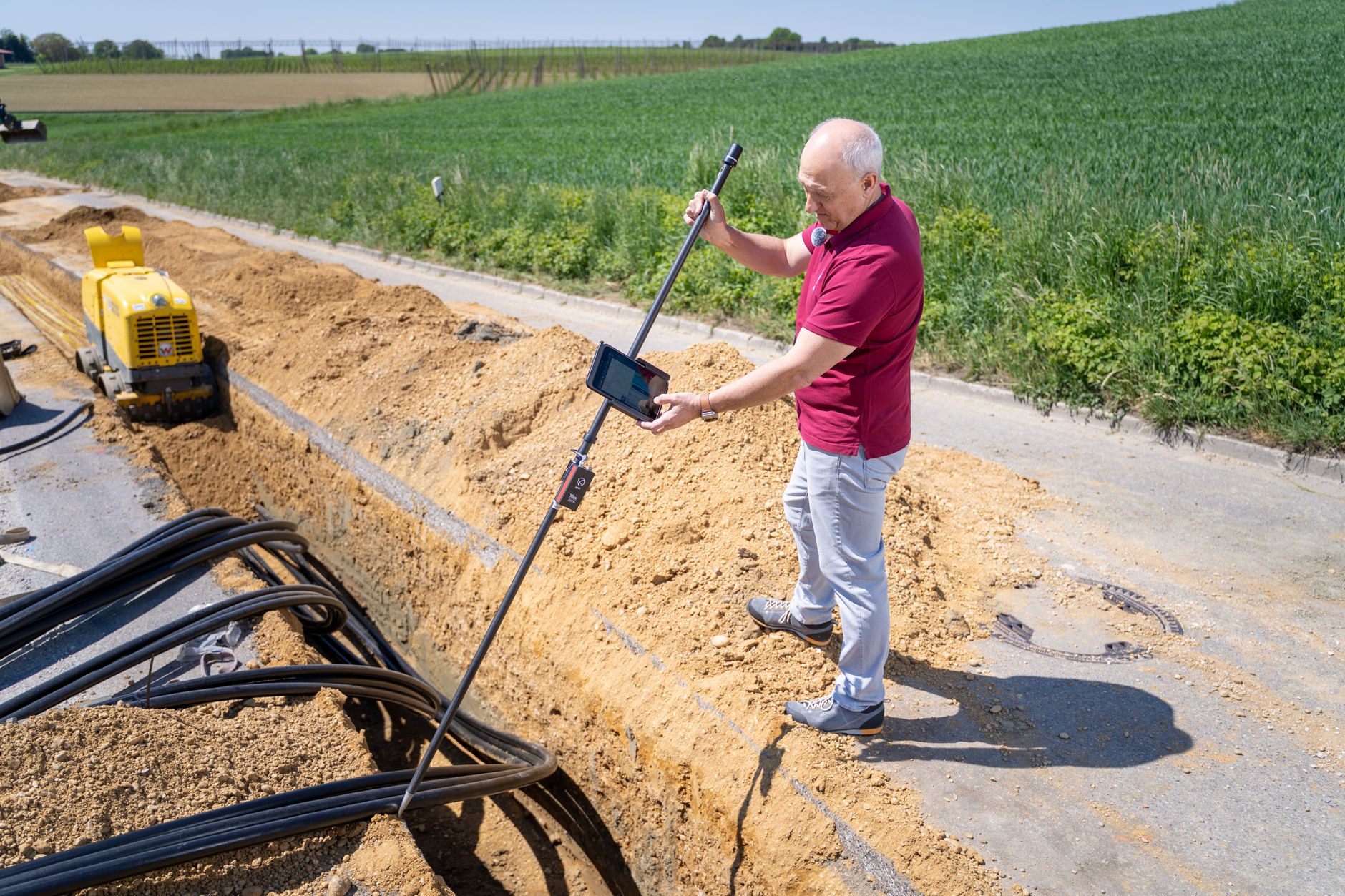
Walking into a supplier conversation with a rough quantity estimate in hand puts you in a much stronger position — you can get an accurate quote, compare bids fairly, and avoid the common mistake of under-ordering and paying a second delivery charge. Here’s how to do a back-of-the-envelope quantity estimate for the two most common material categories on a drainage basin project.
Calculating Aggregate Volume for a Trench or Basin Surround
The basic formula for aggregate volume in a drainage trench is: Length (ft) × Width (ft) × Depth (ft) ÷ 27 = cubic yards. Convert to tons by multiplying cubic yards by approximately 1.4 (the typical bulk density of #57 crushed stone). A 50-foot trench that is 18 inches wide and 24 inches deep requires: 50 × 1.5 × 2 ÷ 27 = 5.6 cubic yards, or roughly 7.8 tons of aggregate.
Add 10–15% for waste and settling. For basin surround aggregate, calculate the volume of the excavated basin minus the volume of the basin structure itself, then apply the same conversion. The Jackson Sand yardage calculator can help you work through these numbers quickly for your specific dimensions.
Estimating Sand Topping Quantities
If your project includes a sand topping or root-zone layer above the drainage aggregate, use the same cubic-yard formula: Area (sq ft) × Depth (ft) ÷ 27 = cubic yards. A 2-inch sand layer over a 10,000-square-foot area requires: 10,000 × 0.167 ÷ 27 = 61.8 cubic yards, or approximately 86 tons of sand. Always round up by 10% to account for surface irregularities and compaction.
For projects where particle size specification matters — such as USGA-spec topping sand or athletic field sand — review the available gradation data on the Jackson Sand sand specs page before finalizing your order to confirm the material meets your engineer’s or agronomist’s requirements.
Ready to Plan Your West Tennessee Drainage Basin Project?
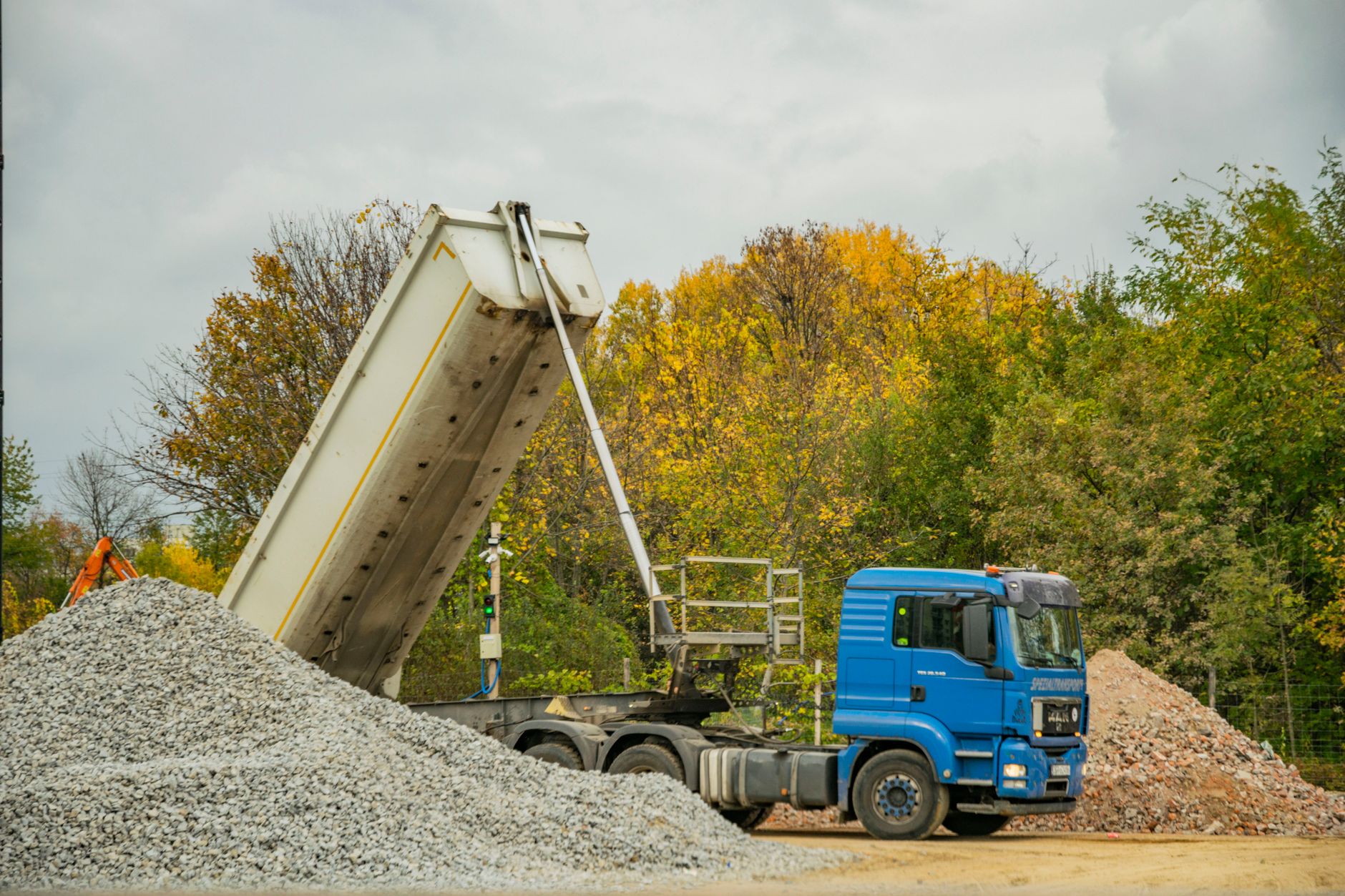
Drainage basin projects in West Tennessee don’t have to be a guessing game on materials or cost. With a clear understanding of the four material categories, realistic installed cost ranges by project scale, and a local supplier who owns their trucks and includes delivery, you can budget confidently and keep your field in play through the region’s wet seasons.
What Jackson Sand Supplies for Drainage Projects
Jackson Sand supplies the full range of aggregate and sand materials needed for sports turf drainage basin systems in Jackson, TN and across West Tennessee: #57 crushed stone, #89 pea gravel, drainage sand, athletic field sand, and topping sand. All materials are mixed on premises from high-quality inputs, loaded into Jackson Sand’s own trucks, and delivered with accuracy — you get what you ordered, not a short load or a mixed-material surprise.
Explore the Jackson Sand drainage basins page for a full overview of drainage materials and services available for your project, whether you’re a school maintenance director, a parks and rec manager, a sports turf contractor, or a landscaper working on a commercial field in the Mid-South.
Your Next Steps
Here’s a simple three-step process to move your drainage project forward:
- Step 1 — Estimate your quantities. Use the formulas in Section 9 or the online yardage calculator to get a rough tonnage figure for aggregate and sand.
- Step 2 — Review material specs. Check the sand and aggregate gradation data to confirm the material matches your project requirements or your engineer’s spec sheet.
- Step 3 — Call Jackson Sand. Reach the team at 731-668-0440 to discuss your project, confirm current pricing, and schedule delivery. Jackson Sand serves large and small jobs throughout West Tennessee, and delivery is included.
Whether you’re patching a single wet corner on a youth soccer field or planning a full drainage overhaul for a high school stadium, Jackson Sand has the materials, the trucks, and the local knowledge to help you get the job done right.
Frequently Asked Questions
How much does it cost to install a drainage basin on a sports field in West Tennessee?
A single catch basin with 20–40 feet of perforated lateral pipe typically costs $800–$2,500 installed in West Tennessee, including materials and labor. A full multi-basin system for a youth football or soccer field runs $8,000–$25,000, and large stadium or multi-field complexes can exceed $150,000. Actual costs depend on soil conditions, basin depth, pipe run length, and surface restoration scope.
What type of gravel is best for sports turf drainage basins?
AASHTO #57 crushed stone (¾-inch nominal) and #89 pea gravel (3/8-inch nominal) are the most common choices. Both are washed, open-graded aggregates with very high permeability — typically 100–300 inches per hour. Avoid bank-run gravel or crusher run, which contain fine particles that can clog pipe perforations over time.
Does Jackson Sand deliver drainage aggregate and sand in West Tennessee?
Yes. Jackson Sand delivers drainage aggregate, gravel, and sand using their own truck fleet from their facility at 139 United Dr., Jackson, TN. Delivery is included, and they serve both large and small jobs throughout West Tennessee and the surrounding Mid-South. Call 731-668-0440 to discuss your project and schedule delivery.
How do I calculate how much gravel I need for a drainage trench?
Multiply the trench length (feet) × width (feet) × depth (feet), then divide by 27 to get cubic yards. Multiply cubic yards by 1.4 to convert to tons of #57 crushed stone. Add 10–15% for waste and settling. The Jackson Sand yardage calculator at jacksonsand.com/yardage-calculator/ can also help you work through the math quickly.
What is the difference between surface drainage and subsurface drainage basins for athletic fields?
Surface drainage uses field slope (typically 1–2%) and swales to move water off the playing surface by gravity. Subsurface drainage basins intercept water underground through perforated pipe and aggregate-filled trenches, routing it to an outlet. Surface drainage is less expensive but insufficient on heavy clay soils or fields in topographic low points — those situations require subsurface basins.
When is the best time of year to install drainage basins on a sports field in West Tennessee?
June through September is generally the best window in West Tennessee. Summer months bring drier soil conditions that make excavation faster and safer, contractor schedules are more flexible than in the spring peak season, and the field has time to recover before fall play begins. Avoid scheduling drainage work during the wet March–May period if possible.