
Best Sand for Sports Turf Drainage and Leveling: Your 9-Point Guide
Quick answer: The best sand for sports turf drainage and leveling is a medium-coarse, angular or sub-angular silica sand with particle sizes predominantly between 0.25 mm and 1.0 mm, low silt and clay content (under 3%), and a high percolation rate. For athletic fields in West Tennessee and the broader Mid-South, Jackson Sand mixes lab-tested sand on-site at their Jackson, TN facility, delivers in their own trucks, and supplies material sized specifically for drainage layers, topdressing, and leveling — whether you're maintaining a high school football field or a collegiate soccer complex.
1. Why Sand Selection Makes or Breaks an Athletic Field
Sand is the foundation of every high-performance athletic field, yet it’s also one of the most misunderstood inputs in sports turf management. Walk into any turf supply conversation and you’ll hear terms like particle size distribution, percolation rate, and Gmax hardness thrown around — but what do they actually mean for a field in Jackson, TN or anywhere across West Tennessee? This section lays the groundwork before we get into specific products and applications.
The Drainage-Playability Tradeoff
Every sports turf manager faces the same core tension: a field must drain fast enough to stay playable after rain, yet retain just enough moisture and firmness to protect athletes and support healthy turf. Sand is the primary tool for solving that equation. Get the particle size wrong — too fine and you get a compaction-prone, slow-draining surface; too coarse and you sacrifice root-zone moisture retention and traction.
Research from the Sports Turf Managers Association (STMA) consistently shows that fields built or renovated with properly specified sand see 30–50% fewer weather-related game cancellations compared to native-soil fields. That translates directly to revenue, scheduling flexibility, and athlete safety.
What Happens When You Use the Wrong Sand
Using mason sand, play sand, or generic fill sand on an athletic field is one of the most common — and costly — mistakes turf managers make. These sands are typically too fine (often 90%+ passing a #100 sieve), which means they:
- Compact under foot traffic and equipment, reducing pore space
- Drain at rates as low as 1–2 inches per hour — far below the 6–12 in/hr minimum recommended for competitive play
- Migrate into existing drainage pipe perforations, clogging systems within one or two seasons
- Create inconsistent surface hardness that increases injury risk
Choosing the right sand from the start — or correcting an existing specification — is always cheaper than rebuilding a drainage system.
2. Understanding Sand Particle Size: The Numbers That Matter
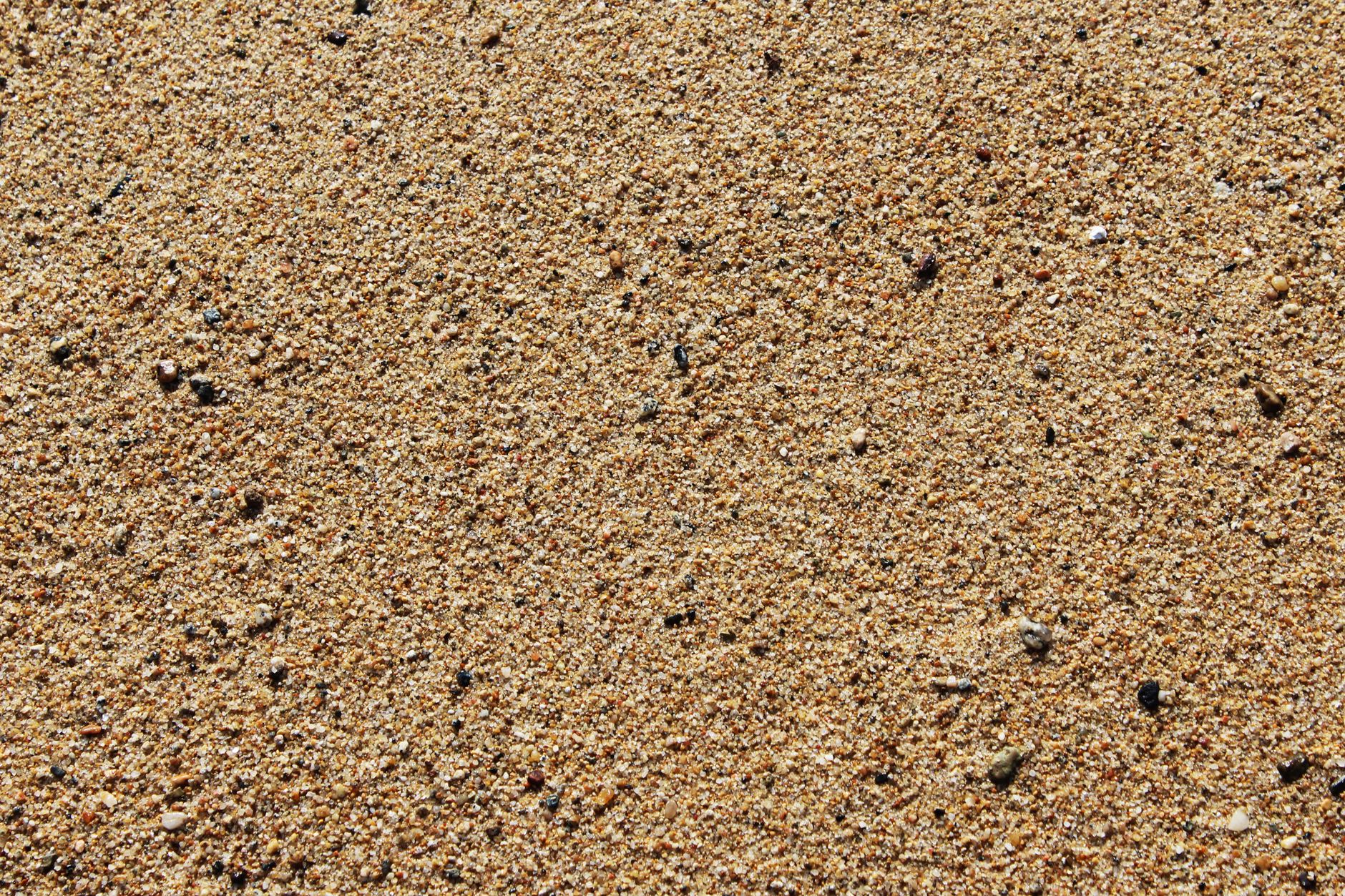
If you only learn one technical concept about sports turf sand, make it particle size distribution (PSD). PSD determines drainage rate, compaction resistance, root-zone moisture, and surface firmness — essentially every performance characteristic that matters to a turf manager or athletic director. The good news is that the numbers are straightforward once you know what you’re looking at.
USGA and ASTM Size Classifications
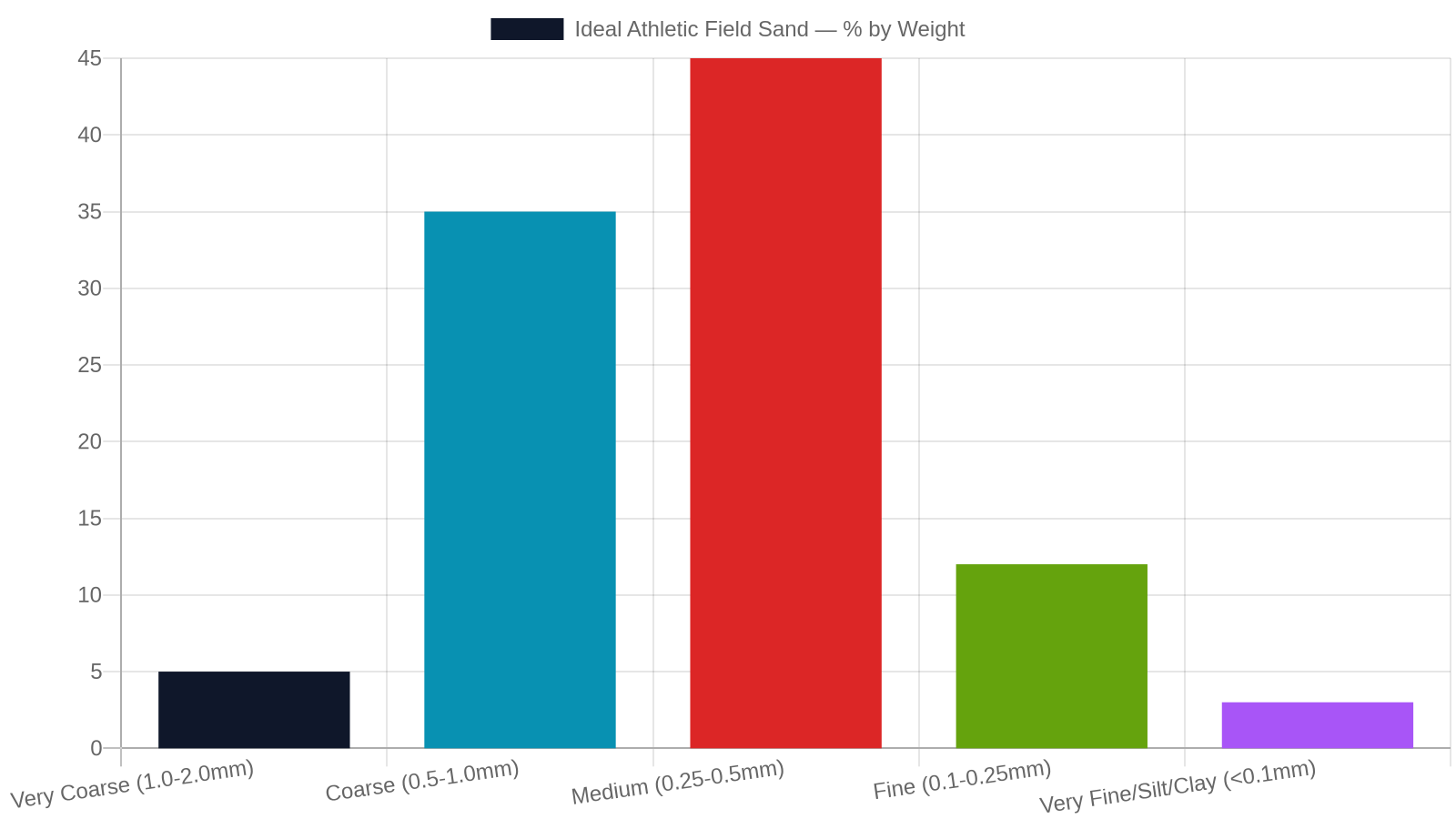
The United States Golf Association (USGA) and ASTM International both publish particle-size standards that have become the de facto benchmarks for sports turf sand. The key sieve sizes and their classifications are:
- Very coarse (1.0–2.0 mm): Provides excellent drainage but poor root anchorage; rarely used alone
- Coarse (0.5–1.0 mm): The workhorse of drainage layers; fast percolation, good stability
- Medium (0.25–0.5 mm): Ideal for topdressing and leveling; balances drainage with moisture retention
- Fine (0.1–0.25 mm): Acceptable in small percentages; too much causes compaction
- Very fine / silt / clay (<0.1 mm): Must be kept below 3% total; these fractions destroy drainage
A well-specified athletic field sand typically has at least 60% of particles in the medium-to-coarse range (0.25–1.0 mm) with a uniformity coefficient (D60/D10) between 2.0 and 4.0.
Particle Shape: Angular vs. Rounded
Beyond size, particle shape significantly affects how a sand performs under load. Angular and sub-angular particles interlock when compacted, creating a stable surface that resists lateral movement — critical for cutting and pivoting sports like soccer, football, and lacrosse. Rounded particles, by contrast, behave more like ball bearings: they drain well but can shift underfoot, increasing ankle-roll risk.
For most athletic field applications, sub-angular silica sand hits the sweet spot — enough angularity for stability, smooth enough edges to avoid excessive abrasion on turf grass roots. Jackson Sand sources and mixes material to meet these shape and size requirements, and publishes lab-tested spec sheets so managers can verify the numbers before a single yard is delivered.
3. Drainage Layer Sand vs. Topdressing Sand: Two Different Jobs
One of the most common specification errors in sports turf construction and maintenance is treating all sand as interchangeable. In reality, the sand that goes into your drainage layer and the sand you use for topdressing serve fundamentally different functions — and using the same product for both often means you’re compromising one job or the other.
Drainage Layer Sand: Built for Speed
The drainage layer — typically 4 to 12 inches deep depending on field design — is the engine of the entire system. Its job is to move water out of the root zone as fast as possible and deliver it to perforated collection pipes or a surface outlet. For this layer, you want:
- Percolation rates of 6–20 inches per hour (USGA recommends a minimum of 6 in/hr for the root zone)
- Predominantly coarse particles (0.5–1.0 mm) with minimal fines
- Consistent gradation — a well-graded mix prevents bridging and pipe clogging
- Low organic matter content (<0.5%) to prevent biological clogging over time
Jackson Sand’s drainage materials are mixed on-site to hit these targets, and because they own their delivery trucks, the gradation that leaves the yard in Jackson, TN is the gradation that arrives on your field — no contamination from prior loads.
Topdressing Sand: Built for Consistency
Topdressing sand is applied in thin layers (typically 1/8 to 1/4 inch per application) to level the surface, dilute thatch, and gradually improve the soil profile over multiple seasons. Because it must blend with existing root-zone material and support active turf growth, the spec is slightly different:
- Medium particle size (0.25–0.5 mm) dominates
- Must be compatible with existing root-zone sand — mixing sands with very different particle sizes creates layering problems
- Should be dry or low-moisture at application to flow freely through spreader equipment
- Organic matter kept near zero to avoid thatch acceleration
Applying the wrong topdressing sand — even a good sand with the wrong gradation — can create a hydraulic barrier between the new material and the existing profile, trapping water exactly where you don’t want it. Always match your topdressing spec to your existing root-zone analysis. See Jackson Sand’s published sand specs to compare gradations before ordering.
4. Percolation Rates: How Fast Should Your Field Drain?
Percolation rate — the speed at which water moves through the root zone — is the single most important performance metric for a sports turf drainage system. It determines how quickly a field recovers after rain, how often you can irrigate without waterlogging, and ultimately how many playable days per year your facility delivers. Here’s what the numbers mean in practical terms for fields across West Tennessee.
Benchmark Drainage Rates by Sport and Use
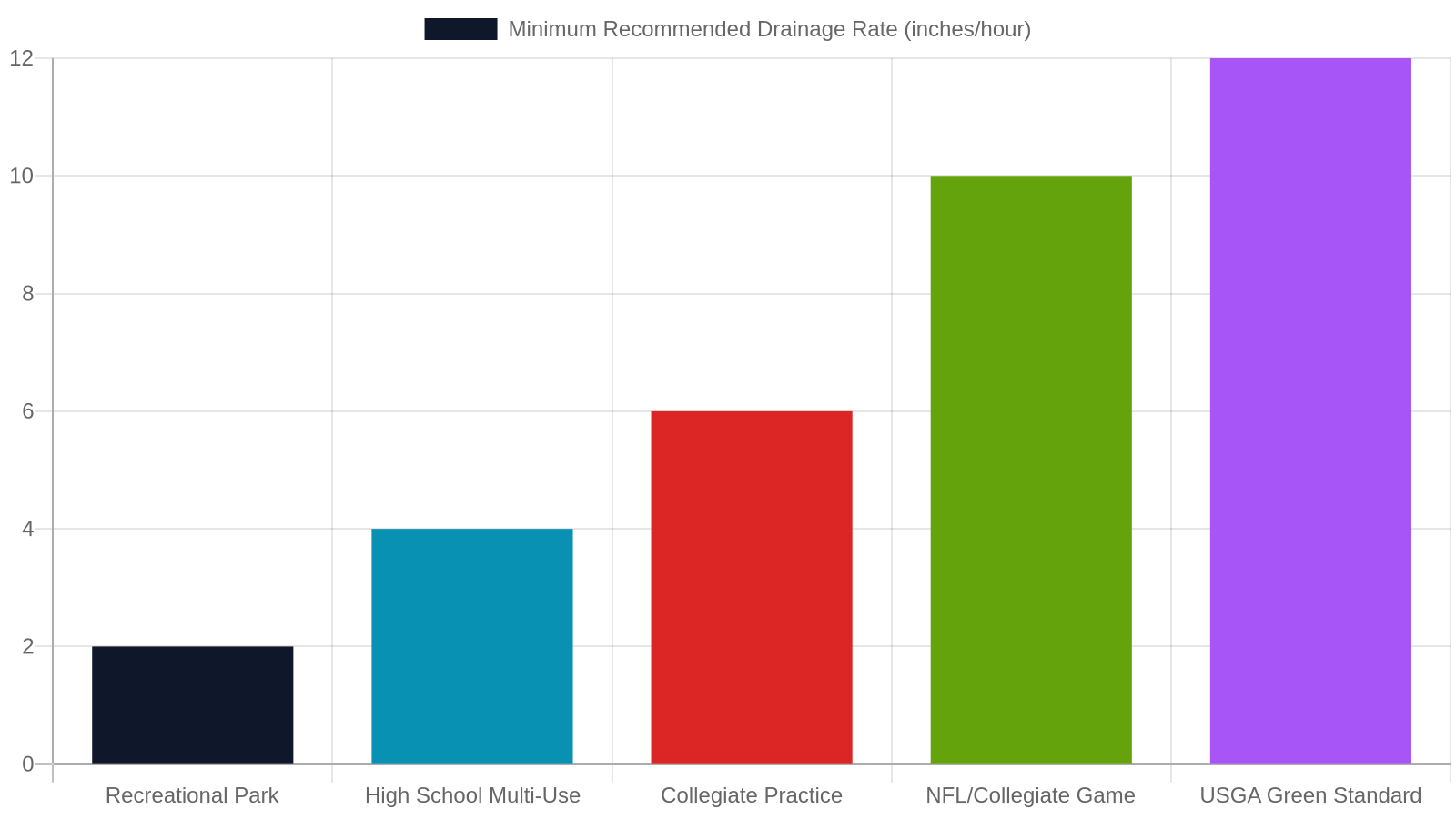
Different sports and governing bodies have different drainage expectations. Here are the most widely cited benchmarks:
- USGA putting green standard: 6–12 inches per hour (root zone)
- NFL/collegiate football: Minimum 10 in/hr recommended for natural turf game fields
- High school multi-use fields: 4–8 in/hr is generally considered acceptable
- Practice fields and recreational parks: 2–4 in/hr may suffice if scheduling flexibility exists
West Tennessee averages roughly 52 inches of annual rainfall, with intense summer thunderstorms capable of dropping 2–3 inches in under an hour. A field draining at only 2 in/hr will be unplayable for hours after such an event; one draining at 10 in/hr can be back in play within 30–45 minutes.
How to Test and Verify Your Field's Drainage Rate
Before specifying or ordering sand, it’s worth knowing your current baseline. A simple field percolation test involves:
- Driving a 6-inch diameter ring 2 inches into the turf surface
- Filling it with water and measuring how many inches drop per hour
- Repeating in 3–5 locations across the field to account for variability
If results vary widely across the field, you likely have localized low spots, compaction zones, or inconsistent soil composition — all problems that targeted sand leveling and aeration can address. For a more rigorous analysis, a certified lab test of your root-zone core sample will give you the full particle size distribution and hydraulic conductivity data you need to match a sand specification. Jackson Sand publishes lab-tested sand spec sheets so you can compare your existing profile to available materials before committing to an order.
5. Leveling Sand: Correcting Low Spots and Uneven Surfaces
A perfectly flat playing surface isn’t just an aesthetic goal — it’s a safety standard. Surface irregularities on athletic fields are a leading contributor to non-contact lower-extremity injuries, and they’re almost entirely preventable with a consistent leveling program. The right sand, applied correctly and on a regular schedule, keeps a field safe, playable, and visually sharp season after season.
Why Athletic Fields Develop Low Spots
Even a well-constructed field will develop surface irregularities over time. The primary causes include:
- Settlement: Native soil sub-bases compress under repeated load, especially in goal mouths, hash marks, and high-traffic sideline areas
- Freeze-thaw cycles: West Tennessee experiences periodic hard freezes that heave soil and disrupt surface uniformity
- Thatch accumulation: Organic matter builds up unevenly, creating soft, spongy zones that compress differently than surrounding areas
- Irrigation and rainfall erosion: Water channels gradually carry fine particles from high points to low points
Low spots are more than cosmetic problems. They collect standing water, create inconsistent ball roll, and — most seriously — represent tripping and ankle-injury hazards. STMA guidelines recommend correcting any depression greater than 3/4 inch deep before it compounds further.
Topdressing vs. Targeted Fill: Choosing the Right Approach
For minor surface irregularities (under 1 inch), routine topdressing — applying 1/8 to 1/4 inch of sand per pass and working it in with a drag mat — is the standard corrective approach. Multiple applications over a season gradually raise low areas without smothering the turf.
For more significant depressions (1–3 inches), targeted fill sand applied directly to the low spot, followed by aeration and topdressing to blend the edges, is more efficient. Depressions deeper than 3 inches typically require removing the sod, adding fill, reestablishing grade, and resodding or reseeding.
In all cases, the leveling sand must match the existing root-zone material as closely as possible. Introducing a finer sand into a coarse-sand profile — or vice versa — creates a textural discontinuity that disrupts water movement and root development. Use the Jackson Sand yardage calculator to estimate how many cubic yards you’ll need for a leveling project before calling for a quote.
6. Aeration and Sand: Why They Work Together
Sand alone can’t fix a compacted, poorly draining field — it needs a delivery mechanism to get below the surface where the problem actually lives. That’s where aeration comes in. The combination of core aeration and sand backfill is one of the highest-ROI maintenance investments a sports turf manager can make, and it’s a service Jackson Sand provides directly to fields across West Tennessee.
How Core Aeration Opens the Door for Sand
Core aeration — removing plugs of soil and thatch from the turf surface — is the most effective way to relieve compaction and create channels for sand infiltration. A standard hollow-tine aerator pulls cores 3/4 to 1 inch in diameter and 3 to 4 inches deep, leaving holes that, when filled with sand, create a network of drainage pathways through the native soil profile.
The math is straightforward: a field aerated at 4-inch spacing on a 4-inch grid creates approximately 65,000–80,000 holes per 1,000 square feet. Filling those holes with coarse sand essentially installs thousands of miniature French drains through the compacted layer — dramatically improving both drainage and root-zone oxygen levels.
Sand Backfill Specs for Aeration Programs
The sand used to backfill aeration holes must be coarser than the surrounding soil to function as a drainage channel rather than simply filling the void with more of the same material. Key specifications:
- Particle size predominantly in the coarse range (0.5–1.0 mm)
- Very low fines content — silt and clay will wash back into the holes within one or two rain events, negating the benefit
- Dry at application so the sand flows freely into the holes rather than bridging at the surface
Jackson Sand offers aeration services alongside sand supply, which means the same operation that delivers your material can also handle the application — a significant time and logistics savings for school districts and parks departments managing multiple fields across West Tennessee.
7. Sand for Specific Sports: Football, Soccer, Baseball, and More
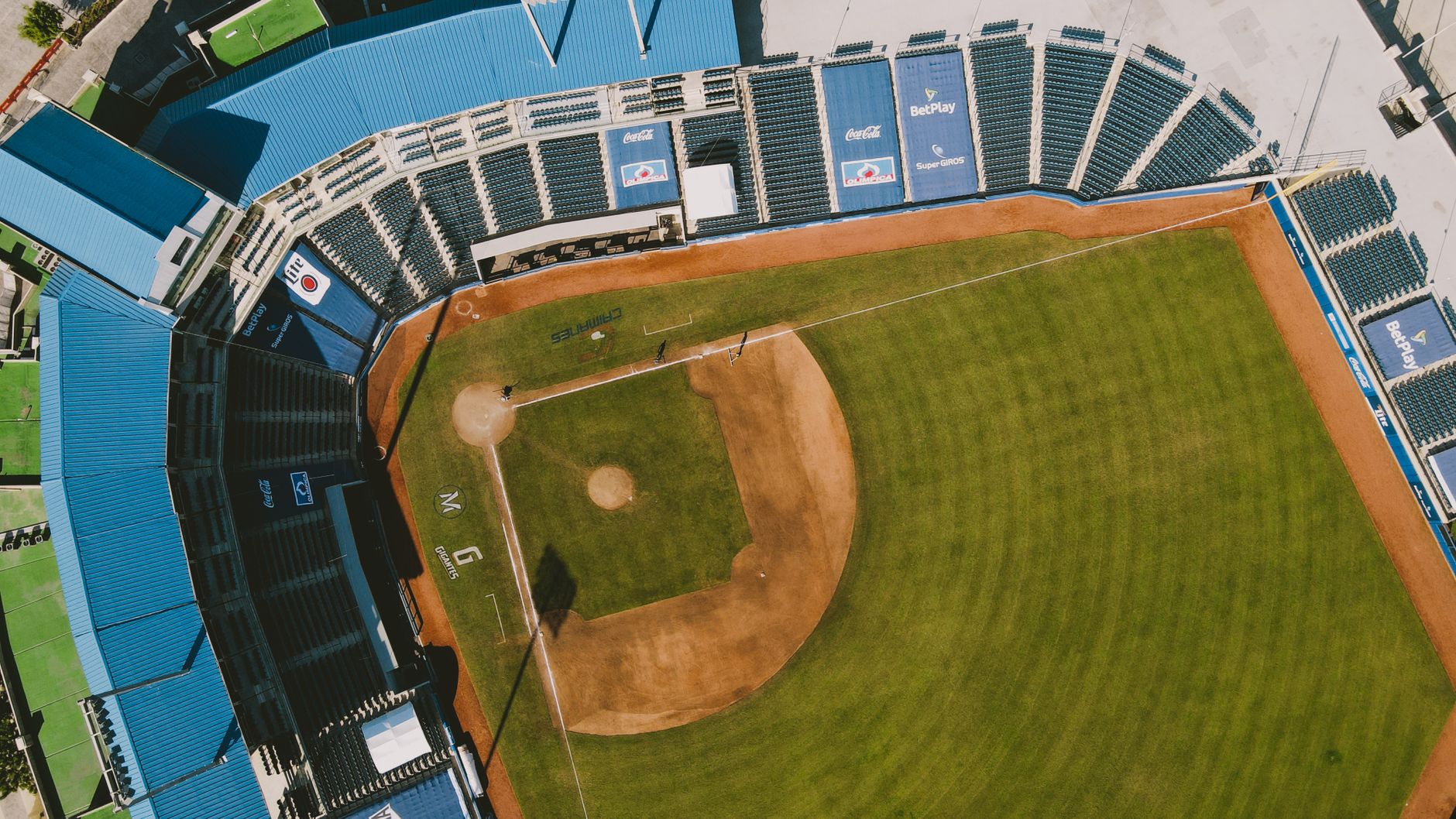
While the core principles of sand specification apply across all sports turf, different sports create different wear patterns, traffic loads, and surface requirements. Here’s how the spec shifts for the most common field types Jackson Sand serves across West Tennessee.
Football and Multi-Use Fields
High school and collegiate football fields in West Tennessee face some of the harshest conditions of any turf surface: heavy equipment (band, maintenance vehicles), concentrated traffic on hash marks and goal lines, and a season that runs through fall’s most unpredictable weather. Recommended sand profile:
- Root zone: medium-coarse silica sand, 0.25–1.0 mm, <3% fines
- Drainage layer: coarse sand or pea gravel, 1.0–6.0 mm, <1% fines
- Topdressing program: 4–6 applications per year, 1/4 inch per pass
- Aeration: minimum twice annually (spring and late summer)
Soccer, Lacrosse, and Field Hockey
These sports demand the most uniform surface of any field sport — ball roll consistency and traction for cutting movements are paramount. A slightly finer medium sand (0.25–0.5 mm) in the topdressing program helps maintain a smooth, consistent surface texture. Drainage specs remain the same as football, but leveling frequency should increase: monthly drag-and-topdress during the playing season is not uncommon on high-use soccer complexes.
Baseball and Softball Infields
Baseball infield mixes are a different animal — they typically combine sand with silt and clay in ratios like 60/20/20 or 70/15/15 (sand/silt/clay) to achieve the right firmness and moisture retention for safe footing and true ball bounce. The sand component should be medium-grained and angular. The warning track and outfield, however, follow the same drainage-focused specifications as other turf fields. Jackson Sand supplies the sand component for infield mixes as well as outfield drainage and topdressing material — two different specs, both available from the same supplier and delivered in the same clean trucks.
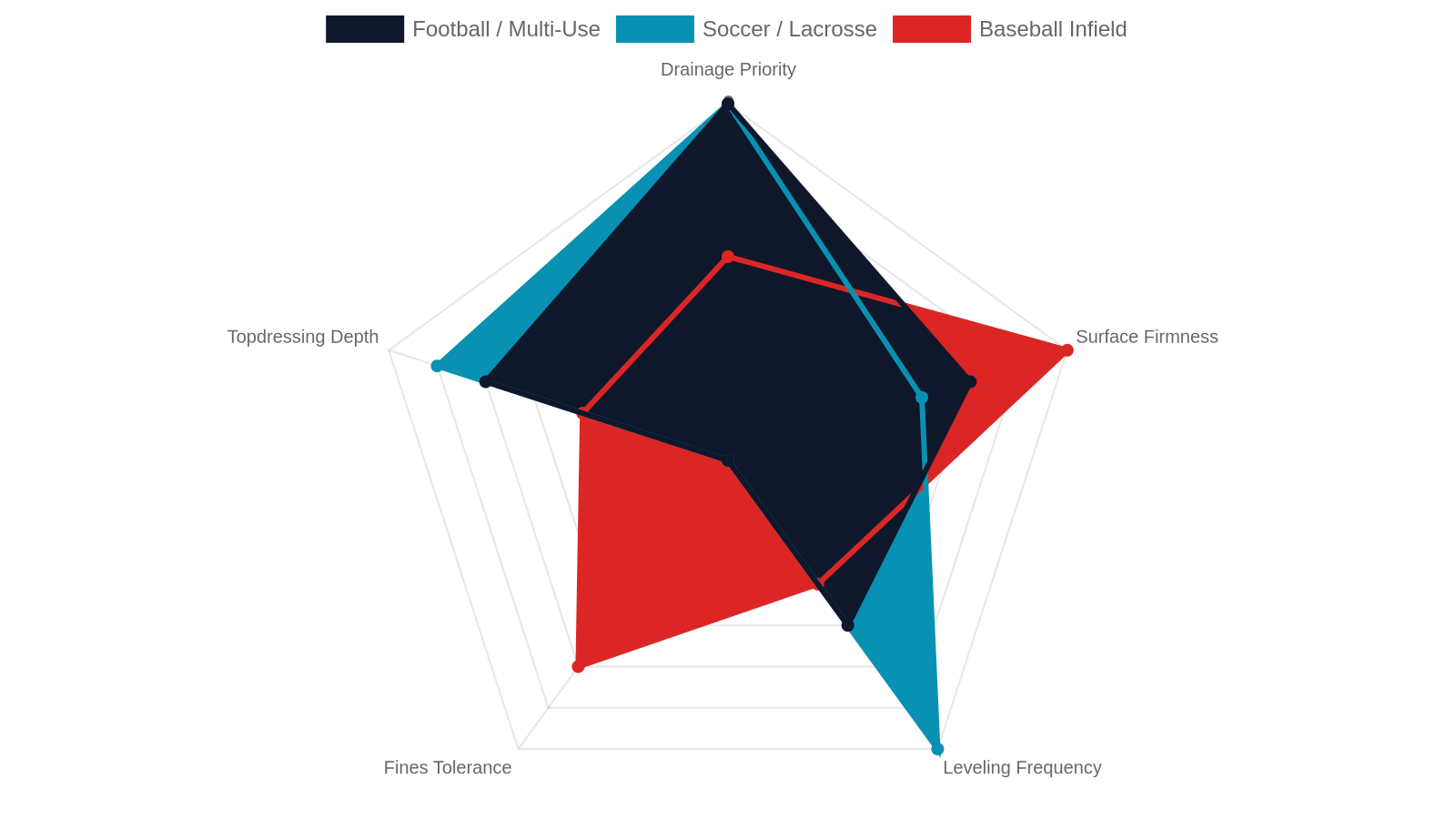
Athletic Field Sand Types at a Glance: 5-Option Comparison
Not all sand is created equal. This table compares the most common sand types used on athletic fields across key performance attributes so you can match the right product to your specific application.
8. Reading a Sand Spec Sheet: What to Look for Before You Buy
Purchasing sand without a spec sheet is like hiring a contractor without checking their license. The spec sheet is your proof that the material you’re buying will actually perform the way you need it to — and it’s your documentation if a field fails to drain properly and you need to trace the cause. Here’s how to read one quickly and confidently.
The Five Numbers That Tell the Whole Story
A lab-tested sand spec sheet can look intimidating, but five data points tell you almost everything you need to know:
- D10 (effective size): The particle size at which 10% of the sample is finer. For athletic field sand, D10 should be ≥0.15 mm.
- D60: The size at which 60% is finer. Target 0.4–0.8 mm for a balanced drainage/retention profile.
- Uniformity Coefficient (D60/D10): Values between 2.0 and 4.0 indicate a well-graded mix; values above 6.0 suggest too wide a range of sizes.
- % passing #200 sieve (0.075 mm): This is your silt-and-clay fraction. Keep it under 3% — ideally under 1%.
- Hydraulic conductivity (Ksat): The lab-measured percolation rate. Look for ≥6 inches per hour for competitive fields.
Why Lab Testing Beats Visual Inspection Every Time
Sand that looks right — clean, light-colored, medium-grained — can still fail a spec sheet test. Invisible fines, inconsistent gradation, and elevated organic matter content don’t show up to the naked eye but will absolutely show up in your field’s drainage performance within one season. Always request a lab-tested spec sheet before purchasing sand for a significant project.
Jackson Sand publishes their spec sheets publicly at jacksonsand.com/sand-specs, so you can review the actual particle size distribution data, compare it to your project requirements, and have an informed conversation before placing an order. This level of transparency is relatively rare in the aggregate supply industry and is especially valuable for turf managers who need to document their material specifications for facility compliance or governing body audits.
9. Ordering, Delivery, and Estimating Quantities for Your Project
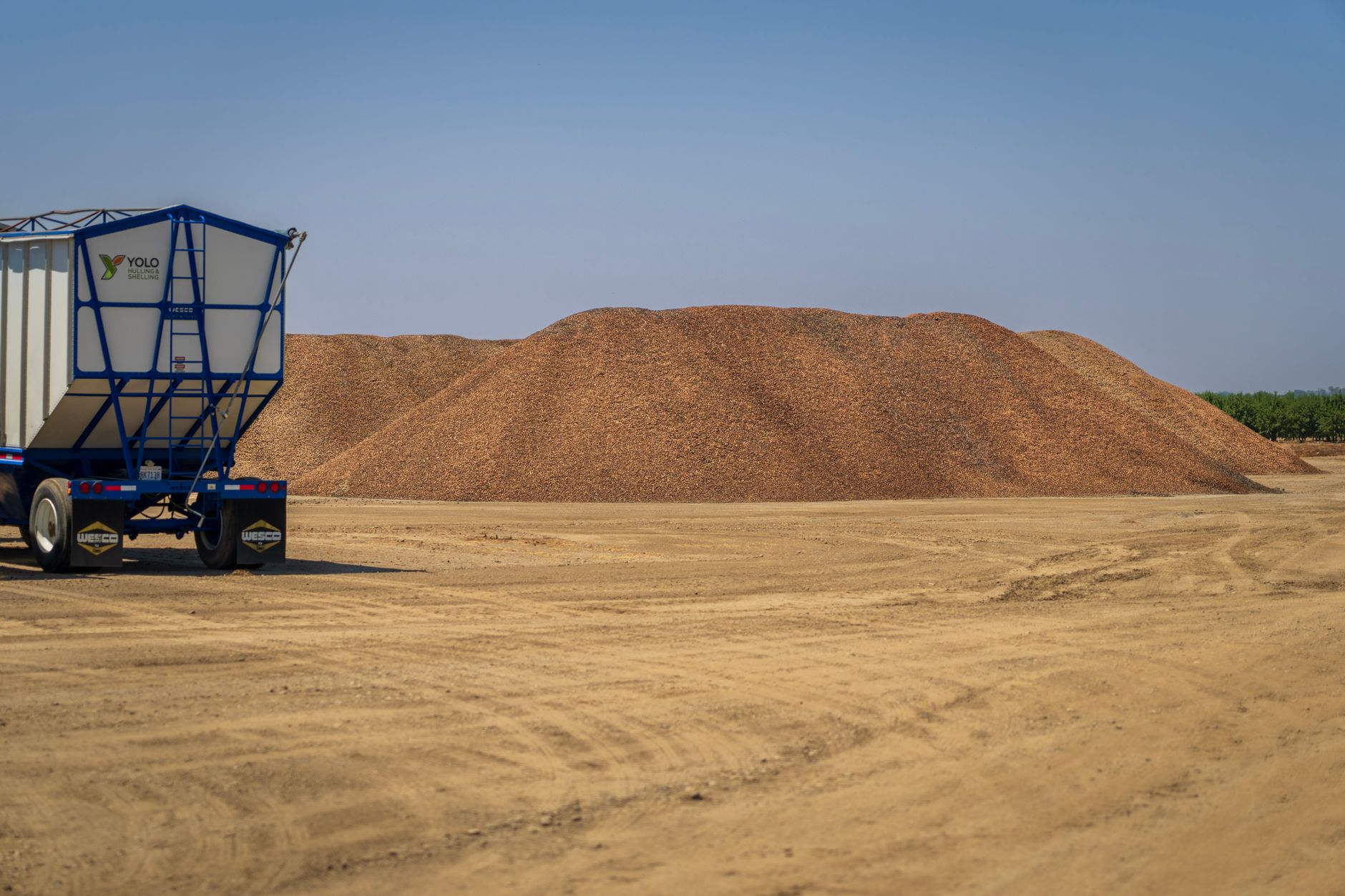
Even the best sand specification doesn’t help if you can’t get the right quantity delivered cleanly and on schedule. Here’s a practical look at how to estimate your project needs and what the delivery process looks like when you work with Jackson Sand in Jackson, TN.
How to Estimate Cubic Yards for Common Field Projects
Ordering too little means a second delivery and potential scheduling delays; ordering too much wastes budget. Here are quick reference formulas for the most common athletic field sand projects:
- Topdressing at 1/4 inch depth: (Field area in sq ft × 0.0208) ÷ 27 = cubic yards. A standard 80,000 sq ft football field needs approximately 62 cubic yards per 1/4-inch pass.
- Drainage layer at 6 inches: (Field area in sq ft × 0.5) ÷ 27 = cubic yards. That same football field requires roughly 1,481 cubic yards for a full 6-inch drainage layer.
- Leveling low spots: Measure the area and average depth of each depression; multiply length × width × depth (in feet) ÷ 27 for cubic yards per spot.
For any project, use the free yardage calculator at jacksonsand.com to get a quick estimate before calling for a quote.
What to Expect from Jackson Sand's Delivery Process
Jackson Sand owns and operates their own delivery trucks, which matters more than it might seem at first. Third-party haulers often carry mixed loads — aggregate, fill dirt, and sand in rotation — which introduces contamination risk and gradation inconsistency. When Jackson Sand delivers, the material that was mixed on-site at their Jackson, TN facility is the same material that arrives on your field, uncontaminated and accurately measured.
Delivery is included in their pricing, serving athletic facilities, schools, parks departments, and contractors throughout West Tennessee and the surrounding Mid-South. For scheduling, especially during peak spring and fall seasons, calling ahead at 731-668-0440 ensures your project timeline stays on track. Jackson Sand handles both large construction-volume orders and smaller maintenance deliveries, so there’s no minimum order threshold that prices out a single-field leveling job.
Ready to Improve Your Field's Drainage and Surface Quality?
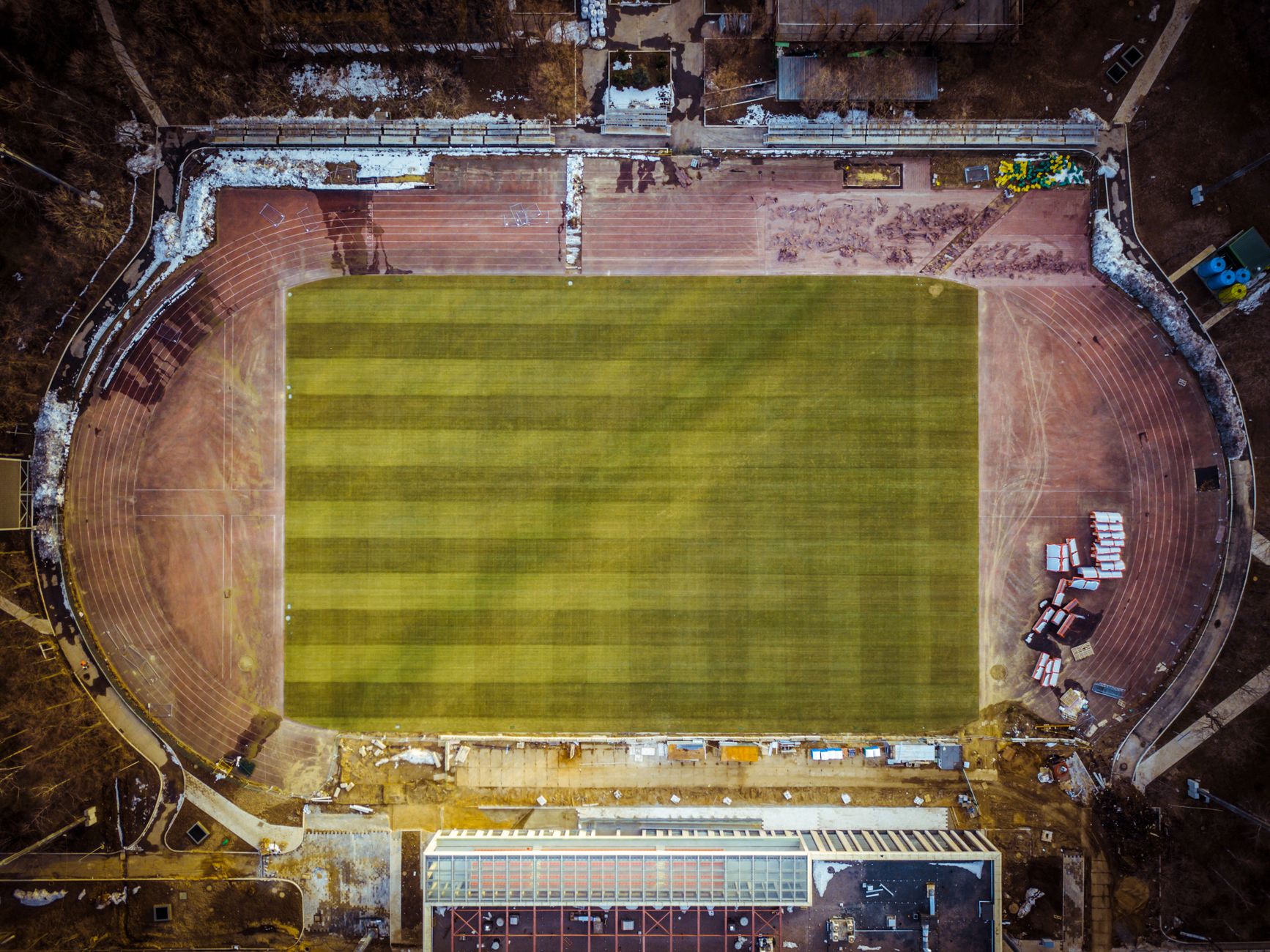
A well-drained, properly leveled athletic field doesn’t happen by accident — it’s the result of consistent material specifications, a reliable supply chain, and a maintenance program built around the right sand for every application. For facilities across West Tennessee and the Mid-South, Jackson Sand provides all three: lab-tested products, on-site mixing, and delivery in their own trucks from their Jackson, TN location.
Start with the Right Supplier for West Tennessee
Whether you’re managing a high school football field in Madison County, a municipal soccer complex in the Mid-South, or a collegiate multi-sport facility anywhere in West Tennessee, the quality of your sand supply directly determines the quality of your playing surface. Jackson Sand has been mixing and delivering lab-tested athletic field sand from their Jackson, TN facility, giving turf managers and contractors a local source they can trust for accurate specs, clean loads, and reliable delivery.
Explore the full range of products and services on the Jackson Sand athletic fields page — including sand specifications, aeration services, and drainage materials sized for every layer of a high-performance field system. When you’re ready to talk quantities and scheduling, call the team directly at 731-668-0440.
Your Pre-Order Checklist
Before placing your order, run through this quick checklist to make sure you have everything you need for a smooth project:
- ✔ Current root-zone particle size analysis (or request Jackson Sand’s spec sheets to compare)
- ✔ Field dimensions and target application depth entered into the yardage calculator
- ✔ Delivery access confirmed — gate widths, weight limits on access roads, staging area for the load
- ✔ Application equipment ready (topdresser, drag mat, aerator if needed)
- ✔ Project timeline communicated to Jackson Sand so delivery can be scheduled around field use
Getting these details right before the first truck rolls means your sand goes exactly where it needs to go, in exactly the right quantity, on exactly the right day. That’s how a well-maintained athletic field in West Tennessee stays playable 365 days a year.
Frequently Asked Questions
What is the best sand for athletic field drainage?
A medium-to-coarse sub-angular silica sand with particle sizes predominantly between 0.25 mm and 1.0 mm, less than 3% silt and clay content, and a hydraulic conductivity of at least 6 inches per hour is the standard for competitive athletic fields. Always verify with a lab-tested spec sheet before purchasing.
How much sand do I need to topdress a football field?
A standard football field of approximately 80,000 square feet requires about 62 cubic yards of sand per 1/4-inch topdressing application. Use the free yardage calculator at jacksonsand.com to get a precise estimate for your specific field dimensions and target depth.
Can I use play sand or mason sand on an athletic field?
No. Play sand and mason sand are too fine for athletic field use. They compact easily, drain at rates below 3 inches per hour, and can clog drainage systems within one or two seasons. Always use a sand specified and lab-tested for sports turf applications.
How often should I topdress an athletic field with sand?
Most competitive athletic fields benefit from 4 to 6 topdressing applications per year at 1/8 to 1/4 inch per pass. High-use soccer and lacrosse fields may need monthly applications during the playing season. Pair topdressing with core aeration at least twice annually for best results.
Does Jackson Sand deliver to athletic fields outside Jackson, TN?
Jackson Sand serves West Tennessee and the surrounding Mid-South region, delivering in their own trucks from their Jackson, TN facility at 139 United Dr. Call 731-668-0440 to confirm delivery availability for your specific location.
What particle size sand is best for filling aeration holes?
Coarse silica sand in the 0.5–1.0 mm range with very low fines content (under 1% passing a #200 sieve) works best for aeration backfill. The coarser gradation creates a drainage channel through the compacted layer rather than simply refilling the hole with similar material.