
How to Improve Footing on School Athletic Fields in West Tennessee: Your 10-Point Guide
Quick answer: Poor footing on school athletic fields in West Tennessee usually comes down to compacted soil, inadequate drainage, and the wrong sand profile. The fix starts with aerating compacted ground, topdressing with properly sized athletic-field sand, and installing or improving surface and subsurface drainage. Done consistently — typically twice a year — these steps firm up the surface, reduce mud and standing water, and cut injury risk significantly. Jackson Sand supplies lab-tested athletic-field sand and delivers throughout West Tennessee, making it straightforward to get the right material for your field.
1. Understand Why Footing Fails on West Tennessee Fields
Before you can fix footing problems, you need to know what’s causing them. On most school athletic fields in West Tennessee, the root causes fall into three overlapping categories: soil compaction, poor drainage, and an inadequate or absent sand layer. These problems reinforce each other — compacted soil drains slowly, standing water weakens turf roots, and weak turf tears under cleated traffic, creating bare patches that erode further. Breaking that cycle requires addressing all three issues together, not just the most visible symptom.
The West Tennessee Climate Factor
West Tennessee sits in a humid subtropical climate zone. Annual rainfall averages around 52 inches, much of it falling in heavy spring and fall events that coincide with peak football, soccer, and baseball seasons. Clay-heavy native soils — common across Madison County and the surrounding region — absorb that moisture and swell, turning firm turf into a slick, uneven surface almost overnight.
When temperatures swing between freezing nights and warm days in winter and early spring, that clay also heaves, breaking apart the turf canopy and creating ruts. Understanding these regional patterns is the first step toward building a field that holds up all season long.
Compaction: The Hidden Culprit
Heavy foot traffic — from practices, games, and maintenance equipment — compresses soil particles together, squeezing out the air and water pores that roots and drainage depend on. A compacted field feels hard when dry, but that same tight soil structure prevents water from moving downward, so rain pools on the surface instead of draining away.
Studies from the Sports Turf Managers Association (STMA) indicate that soil compaction is the number-one maintenance problem on high-use athletic fields nationwide. On school fields that host multiple sports and P.E. classes, compaction can develop in as little as 4–6 weeks of heavy use without active remediation.
2. Test Your Soil Before You Spend a Dollar
Jumping straight to topdressing or drainage work without testing is a common — and costly — mistake. A field with moderately compacted, sandy loam soil needs a different fix than one sitting on heavy clay. Spending 30 minutes and less than $20 on a soil test can save thousands in misapplied materials. The University of Tennessee Extension office in Jackson serves Madison County and can process samples quickly during the off-season.
What a Soil Test Tells You
A basic soil test — available through the University of Tennessee Extension Service for a nominal fee — reports pH, organic matter content, nutrient levels, and texture (the ratio of sand, silt, and clay). For athletic fields, texture is especially important. A soil that is more than 30% clay is a strong candidate for sand incorporation, because clay particles compact easily and drain poorly.
Soil tests also reveal pH imbalances that stress turf and make it thin and weak — thin turf means less root mass anchoring the surface, which directly worsens footing.
Penetrometer and Moisture Readings
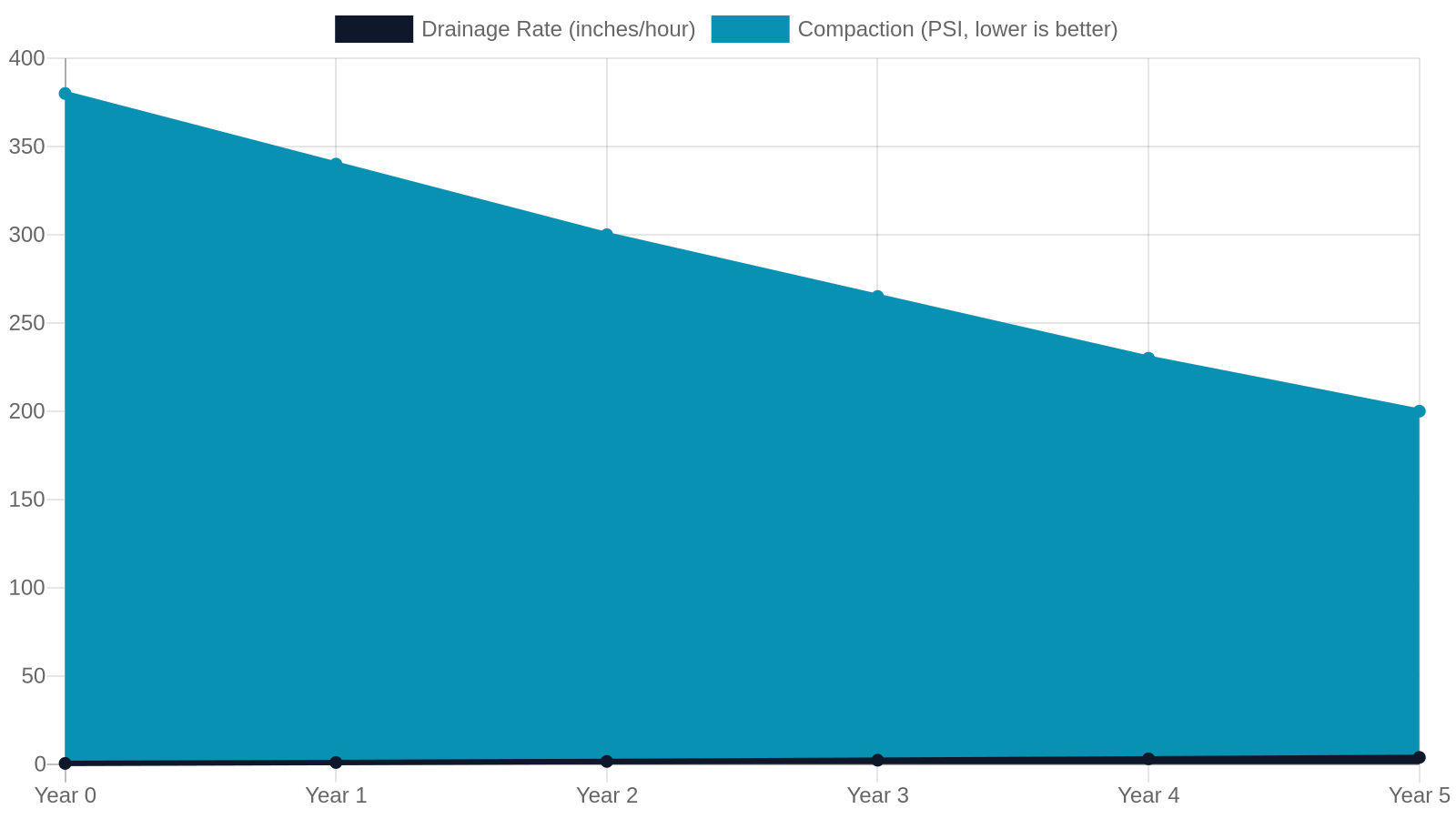
A soil penetrometer measures compaction in pounds per square inch (PSI). Most turf scientists recommend keeping athletic field compaction below 300 PSI in the top 4 inches of soil. Readings above 300 PSI signal that roots cannot penetrate effectively and that aeration is overdue.
Pair penetrometer readings with a simple moisture meter check. If a field reads high on compaction but low on moisture, the soil structure itself is the problem. If it reads high on both, drainage is likely the primary issue. These two inexpensive tools give you a clear, data-driven starting point before committing to any remediation budget.
3. Aerate Aggressively and on the Right Schedule
Aeration is the single most impactful mechanical practice for restoring footing on compacted school fields. It breaks up the dense soil structure, re-opens drainage pathways, and — critically — creates the channels that allow sand topdressing to work its way into the root zone rather than just sitting on the surface. Without regular aeration, even the best sand program will underperform.
Core Aeration vs. Deep-Tine Aeration
Core aeration (hollow-tine) removes plugs of soil typically 3–4 inches deep and ½ inch in diameter, opening channels for air, water, and roots. It’s the most common method and works well for annual maintenance on moderately compacted fields.
Deep-tine aeration drives solid or hollow tines 8–12 inches deep, fracturing compacted layers that core aeration can’t reach. For school fields that have gone years without remediation — or that sit on a dense clay pan — deep-tine work is often the necessary first step before any topdressing program can be effective.
Timing Aeration for West Tennessee Seasons
In West Tennessee, the two best aeration windows are late February through March (before spring sports ramp up) and late July through August (after summer heat stress but before fall football season). Aerating during active play tears up an already stressed surface and risks injury.
Most turf professionals recommend aerating athletic fields at least twice per year, with heavily used fields benefiting from three or four passes. After each aeration, the holes should be filled with sand topdressing as quickly as possible — ideally within 24–48 hours — to prevent the channels from collapsing back shut.
4. Choose the Right Sand — Particle Size Is Everything
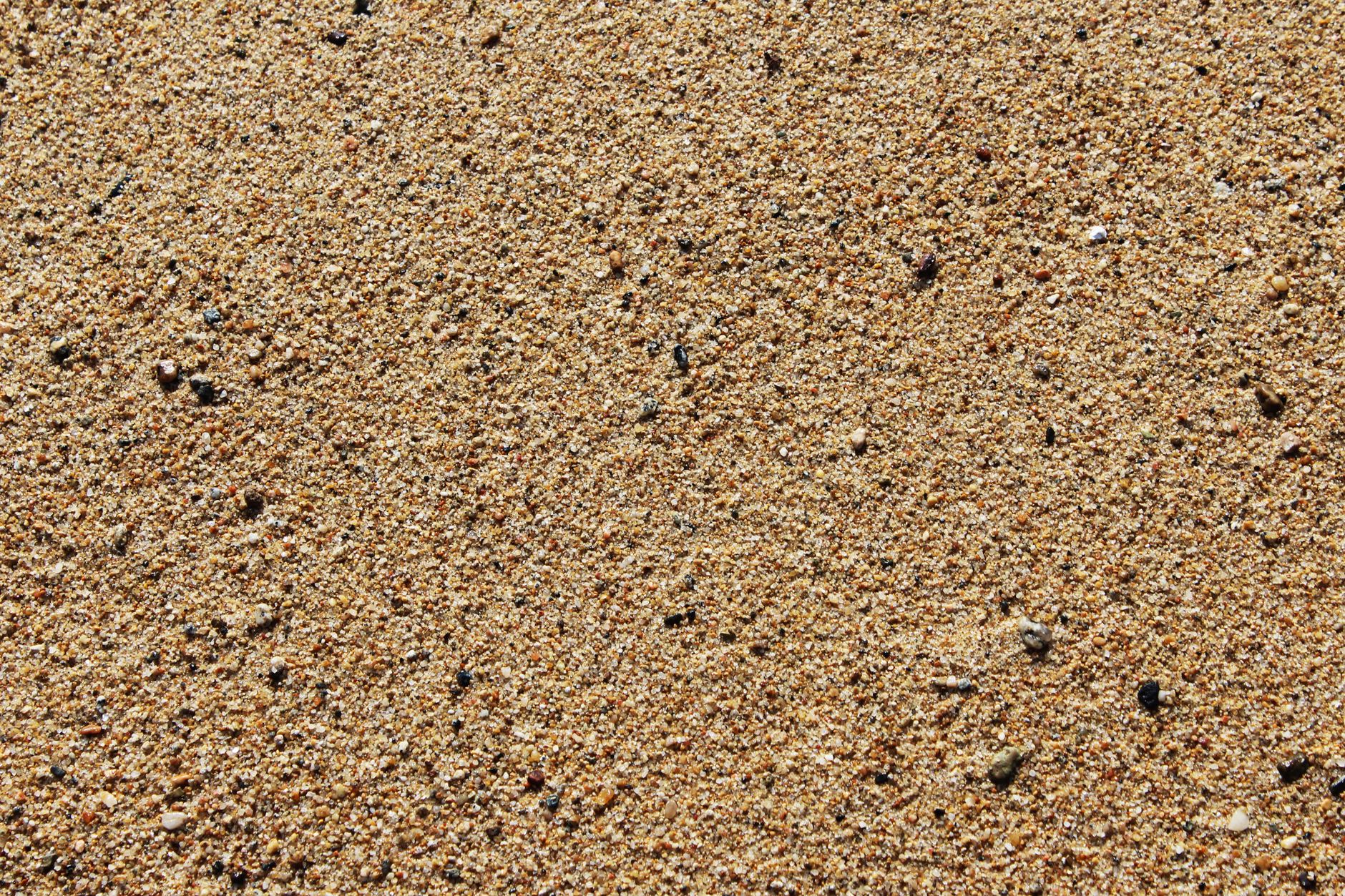
Once your field is aerated, the next critical decision is what goes into those channels and onto the surface. Sand topdressing improves drainage, firms the surface, and — over time — amends the native soil profile to make it less prone to compaction. But the particle size of that sand determines whether the program works or backfires. Getting the specification right is non-negotiable.
Why Not All Sand Is Created Equal
Using the wrong sand is one of the most common — and most damaging — mistakes on athletic fields. Fine masonry sand or bank sand with a high silt and clay content can actually worsen drainage and create a layered soil profile that traps water. The goal is a sand with a particle size distribution that drains freely, resists compaction, and interlocks firmly enough to provide stable footing.
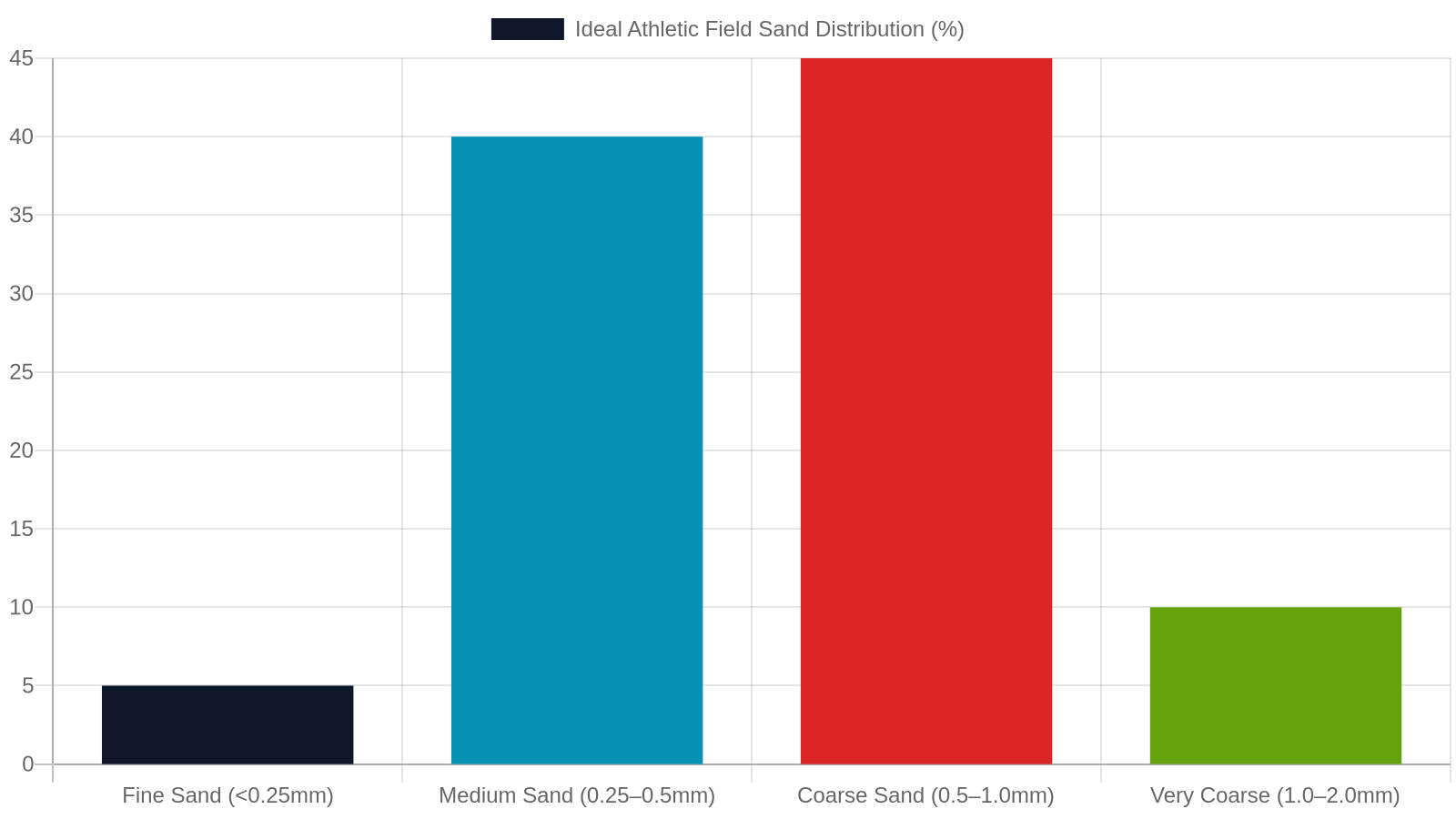
The USGA and ASTM both publish particle size specifications for athletic-field sand. Most specifications call for medium to coarse sand with the majority of particles falling between 0.25 mm and 1.0 mm, with strict limits on fine particles (silt and clay) that clog pore spaces.
Lab-Tested Sand Specs You Can Trust
Jackson Sand mixes its athletic-field sand on-premises in Jackson, TN, using high-quality source materials, and publishes lab-tested spec sheets so turf managers can verify the particle size distribution before ordering. That transparency matters: a sand that looks right on a truck is not the same as one that has been tested to confirm it meets athletic-field standards.
Before placing any order — from any supplier — ask for a current gradation analysis. Review the sand specs at Jackson Sand to see what a proper lab report looks like and what ranges to expect for athletic-field applications. A spec sheet should show D10, D50, and D90 values, uniformity coefficient, and percent passing each sieve size.
5. Topdress Consistently — Depth, Rate, and Frequency
Aeration opens the door; topdressing is what walks through it. A consistent topdressing program — applied two to four times per year, always following aeration — gradually converts a clay-heavy native soil into a more sand-dominant profile that drains faster, compacts less, and provides firmer, more consistent footing. Consistency is the key word: one heavy application every few years is far less effective than regular lighter applications.
How Much Sand to Apply
A standard topdressing application for athletic fields runs ¼ to ½ inch of sand per pass, which translates to roughly 40–80 tons per acre depending on density. Heavier applications — sometimes called “renovation topdressing” — can go up to 1 inch but require the turf to be actively growing so it can recover quickly.
For an average high school football field (approximately 1.5 acres including sidelines), a single topdressing event might require 60–120 tons of sand. Use the free yardage calculator at Jackson Sand to estimate your exact tonnage before you order — it prevents both shortfalls and costly over-ordering.
Drag and Work the Sand In
Topdressing sand dropped on the surface and left there does little good. After spreading, drag the field with a steel mat or specialized turf drag to work the sand down into the aeration holes and through the turf canopy. On heavily thatched fields, a vertical mower (verticut) pass before topdressing opens the canopy and dramatically improves sand incorporation.
Finish by irrigating lightly — about ¼ inch of water — to settle the sand and prevent it from being kicked up during the next practice. Avoid heavy irrigation that moves sand off the field or creates ruts before it has settled.
6. Fix Surface Drainage Before It Undermines Everything Else
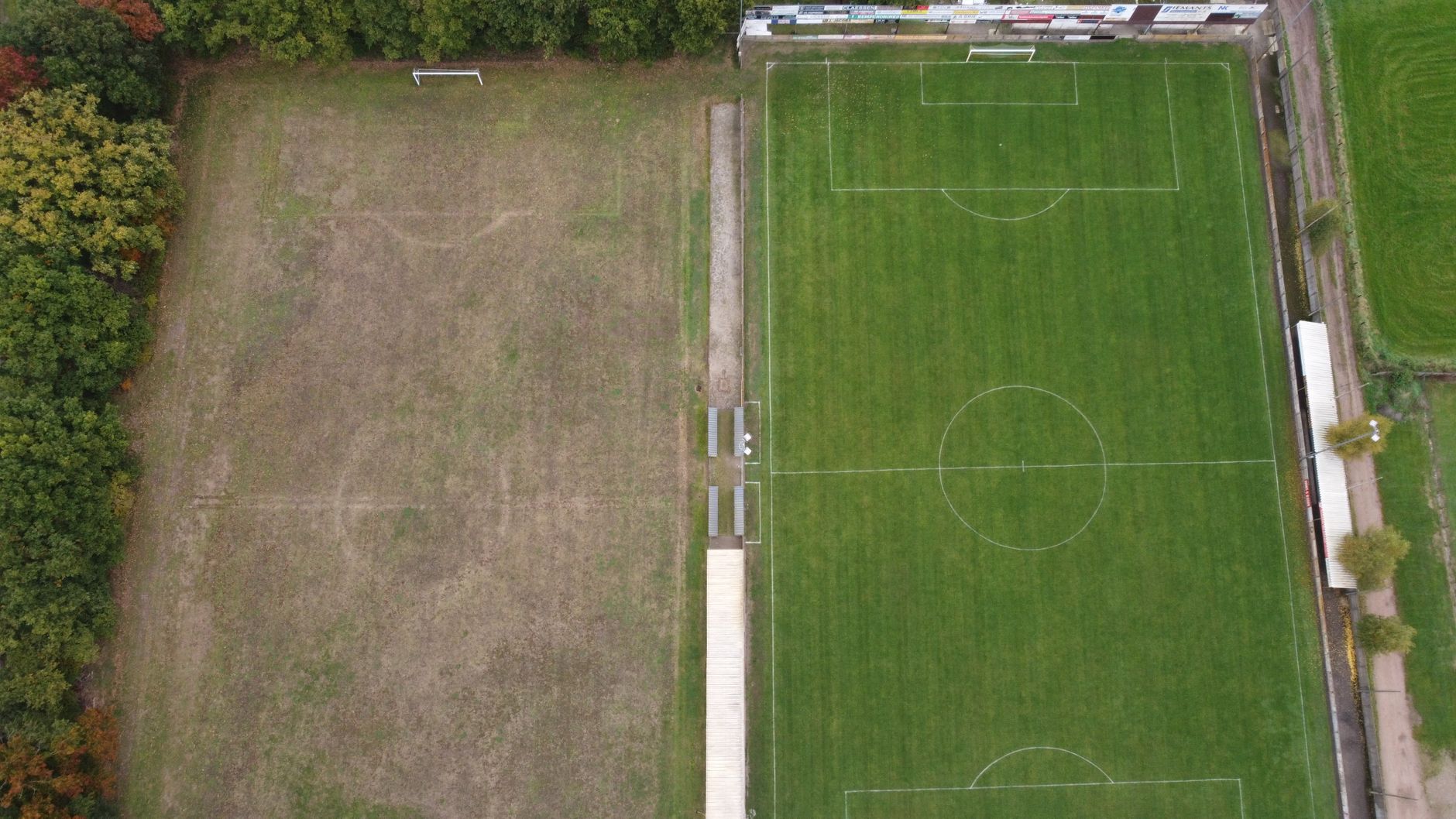
You can aerate and topdress perfectly, but if surface water has nowhere to go, the field will still be unplayable after rain. Surface drainage — the movement of water across and off the field — is governed by grade, and grade problems are invisible until it rains. Addressing surface drainage is often the most cost-effective single improvement a school district can make, because it protects every other investment in the field.
Grading and Crown
A properly graded athletic field has a 1–2% crown (slope from center to sidelines) that moves surface water off the playing area quickly. Many older school fields in West Tennessee were graded decades ago and have settled unevenly since, creating low spots that collect water after every rain.
Walk your field 24 hours after a significant rain event and mark every standing water location with flags. Those low spots are your priority targets. Minor low spots can often be corrected with targeted topdressing; significant grade problems may require laser-grading equipment and a full renovation.
Perimeter Swales and Catch Basins
Surface water that runs off the field crown needs somewhere to go. Perimeter swales — shallow, grassed channels along the sidelines — direct runoff to catch basins or storm inlets. Without them, water backs up against the sideline turf and re-enters the field from the edges, creating the muddy sideline conditions that are a hallmark of poorly drained school fields.
Catch basins should be cleaned of debris at least twice per year. A clogged basin is effectively no basin at all. Jackson Sand supplies drainage aggregate for basin construction and surface drainage applications throughout West Tennessee.
7. Install or Upgrade Subsurface Drainage Where Needed
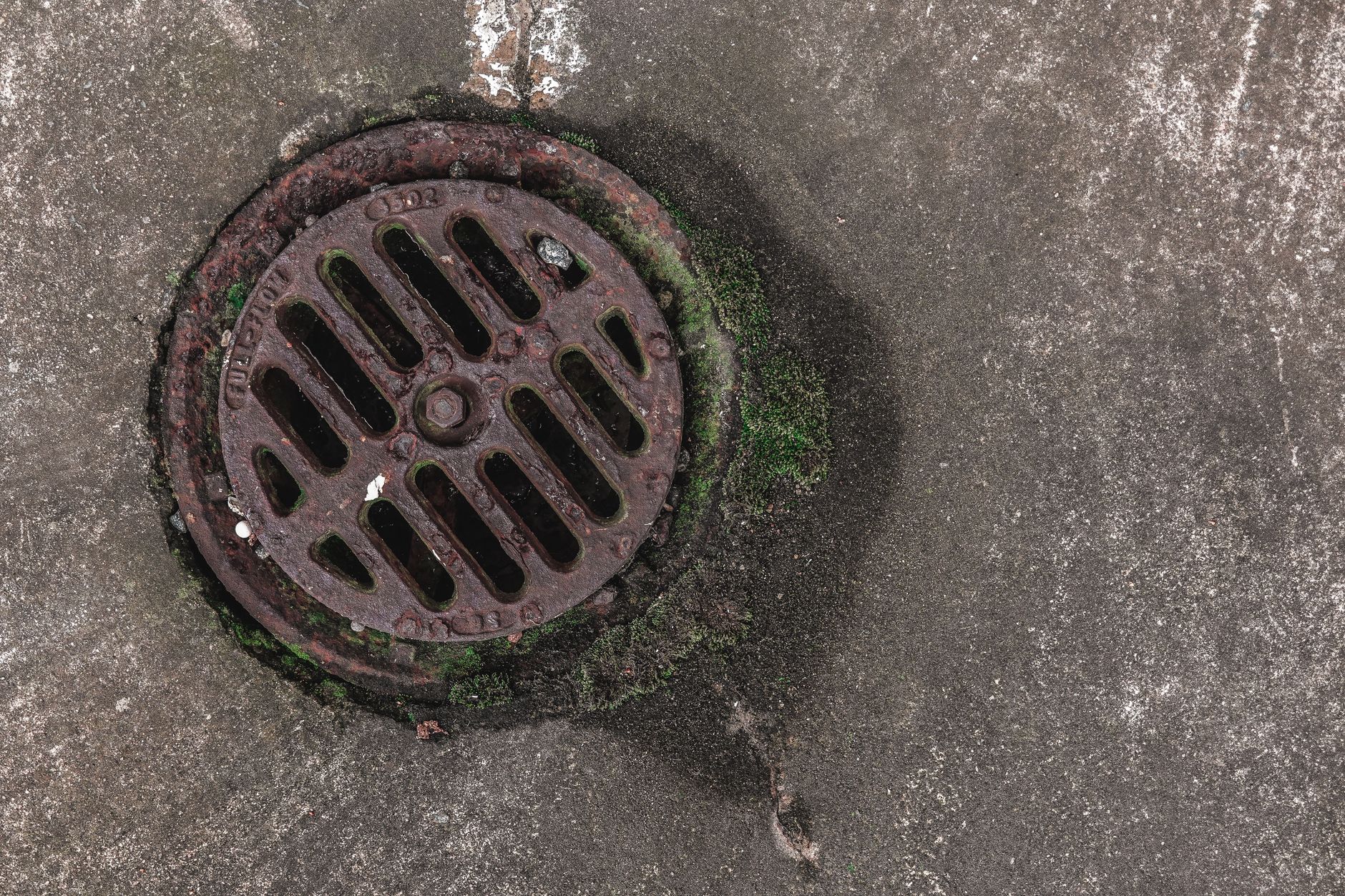
Subsurface drainage is the most significant capital investment in athletic field improvement, but it’s also the one that delivers the most dramatic, long-lasting results. Fields with properly installed pipe drainage systems can be playable within hours of a heavy rain event — rather than days. For schools in West Tennessee where spring rain regularly cancels games and damages turf, the return on investment is clear.
French Drains and Pipe Systems
When surface grading alone can’t move water fast enough — common on clay-heavy West Tennessee soils — subsurface drainage is the answer. A French drain system consists of perforated pipe laid in gravel-filled trenches, typically 12–18 inches deep, spaced 10–20 feet apart across the field. Water infiltrates through the turf, percolates down through the sand/soil profile, enters the perforated pipe, and exits to a daylight outlet or storm system.
The gravel surrounding the pipe is a critical component: it must be clean, washed aggregate sized to prevent migration of fine soil particles into the pipe. Jackson Sand supplies washed drainage gravel for exactly this application.
Slit Drains for Established Fields
Full French drain installation requires significant disruption to an existing field. For schools that can’t afford a full shutdown, slit drainage is a less invasive option. A slit drain machine cuts narrow trenches — typically 2–4 inches wide and 12–18 inches deep — and backfills them with sand or gravel in a single pass. The narrow trenches heal quickly under active turf, and the drainage improvement is often noticeable within the first growing season.
Slit drains work best when connected to a collection pipe or outlet at the field perimeter. Without a proper outlet, water simply fills the trench and has nowhere to go.
Athletic Field Improvement Methods: Side-by-Side Comparison
Not every field needs every treatment. Use this comparison to prioritize the methods that match your field's specific problems and your available budget.
8. Address Bare Spots and Turf Density — Footing Starts With Grass
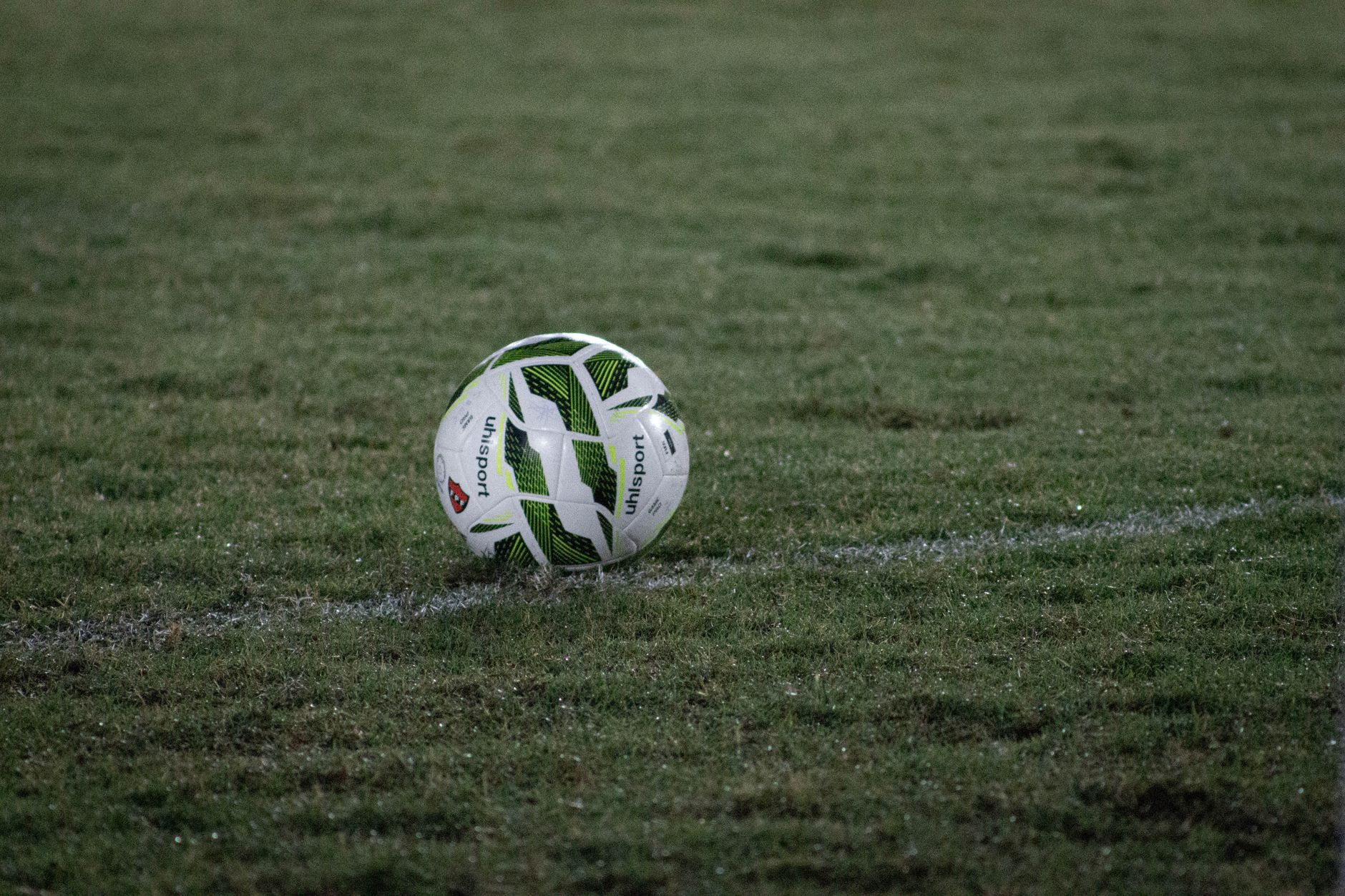
Sand, drainage, and aeration all support the turf — but the turf itself is the playing surface. Dense, healthy grass provides the cushion, traction, and consistency that athletes depend on. A field with excellent drainage but 40% bare soil is still a dangerous field. Turf density management must run parallel to soil and drainage work, not after it.
Why Bare Spots Are a Safety Issue
Bare soil patches are not just an aesthetic problem — they are a direct safety hazard. Exposed soil compacts faster than turfed areas, becomes slick when wet, and creates uneven surface transitions that increase ankle and knee injury risk. STMA data suggests that turf cover below 70% on high-traffic areas correlates with a measurable increase in non-contact lower-extremity injuries.
In West Tennessee, bare spots most commonly develop at goal mouths, hash marks, and sideline areas — exactly the zones with the highest traffic and the highest injury risk. These areas need priority attention in every renovation plan.
Overseeding and Renovation Timing
For cool-season grasses (tall fescue, Kentucky bluegrass) common on West Tennessee school fields, the best overseeding window is mid-August through mid-October, when soil temperatures drop below 70°F and fall rains support germination. For warm-season bermudagrass fields, sprigging or sodding bare areas in May through July gives the grass time to establish before fall sports.
Always topdress with sand immediately after overseeding to improve seed-to-soil contact, retain moisture, and protect germinating seedlings from traffic. A light ⅛-inch sand cover over freshly seeded areas can improve germination rates by 20–30% compared to unseeded bare soil.
9. Build a Realistic Maintenance Calendar for School Budgets

A great maintenance plan that never gets funded is no plan at all. The most effective programs for school athletic fields in West Tennessee are built around realistic budgets, available equipment, and the actual calendar of sports seasons. Knowing when you can’t work on a field — during active seasons — is just as important as knowing when you should.
Minimum Viable Maintenance Schedule
Most school districts in West Tennessee operate athletic field maintenance on tight budgets and limited staff. A realistic minimum program for a single multi-sport field includes: two aeration events per year (spring and late summer), two topdressing events per year tied to those aeration dates, one overseeding event in fall, and monthly mowing at the correct height for the grass species (typically 2–3 inches for fescue, 1–1.5 inches for bermuda).
This minimum program, consistently executed, will produce measurable improvement in footing and drainage within two to three seasons. Skipping even one aeration cycle sets the program back significantly, because compaction rebuilds quickly under active use.
Prioritizing Multiple Fields
Schools with multiple fields — football, soccer, baseball, softball, practice areas — rarely have the budget to treat all fields equally. Prioritize by use intensity and injury risk. The primary varsity football/soccer field used for games typically warrants the full program. Practice fields and secondary fields can operate on a reduced schedule — one aeration and topdress per year — until budget allows more.
Document every maintenance event with date, material quantity, and equipment used. This record-keeping pays off when requesting budget increases: concrete data showing inputs and outcomes is far more persuasive to school boards than general descriptions of field condition.
10. Work With a Local Supplier Who Knows West Tennessee Fields
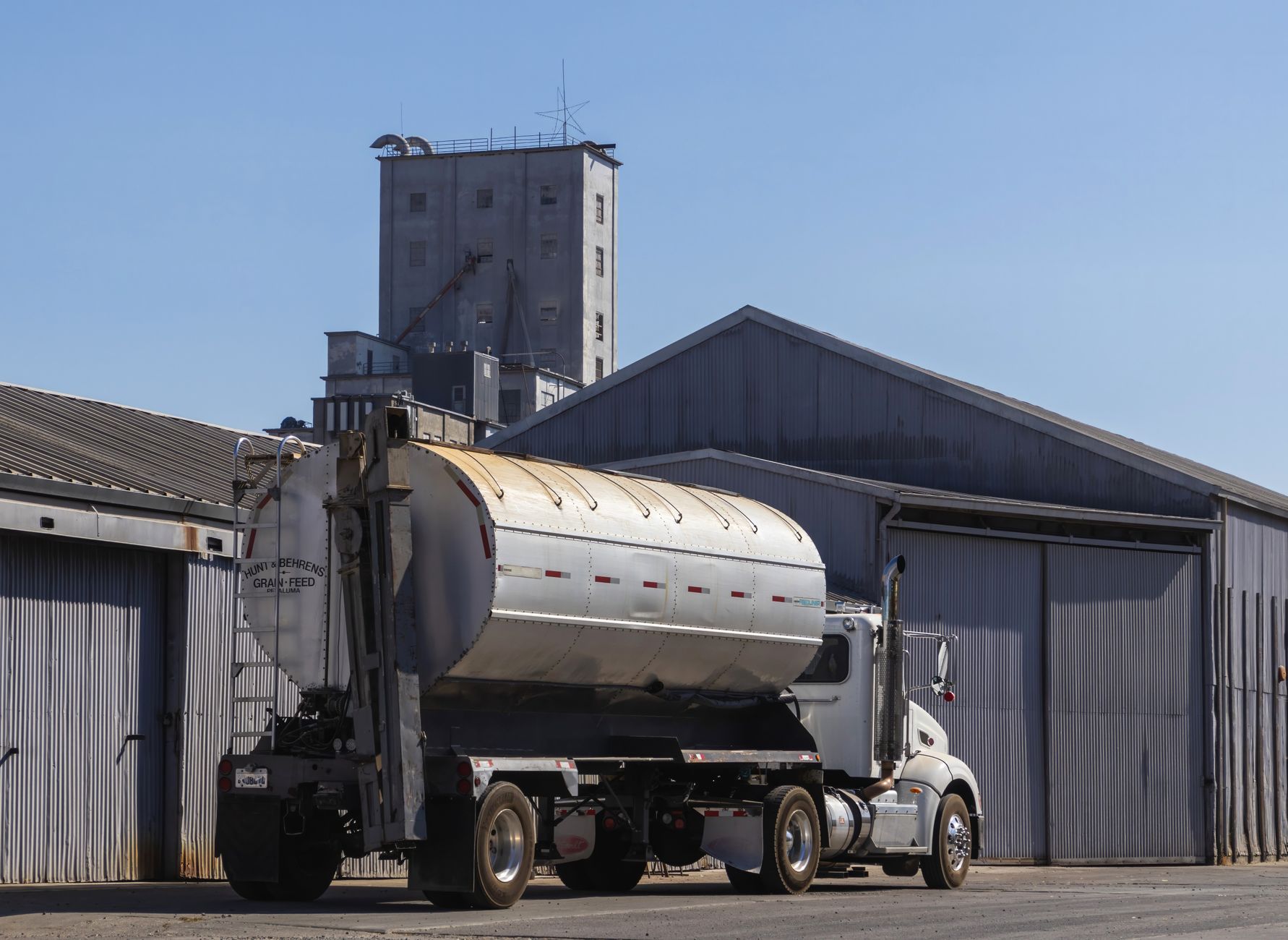
Every recommendation in this guide depends on getting the right material to the right place at the right time. That’s where a reliable local supplier makes the difference between a program that works and one that stalls. For school districts, parks departments, and contractors across West Tennessee, Jackson Sand has been that supplier — mixing quality athletic-field sand on-site and delivering it in their own trucks throughout the region.
Ready to put a real plan together for your school’s fields? Visit Jackson Sand’s athletic fields page to learn more about available products and services, or call 731-668-0440 to talk through your specific project with the team in Jackson, TN.
Why Local Supply Matters
Athletic field sand is heavy — a single load can weigh 20–25 tons — and transportation cost is a significant portion of the total price. Working with a supplier based in Jackson, TN means shorter hauls, fresher loads, and a supplier who understands the specific soil conditions, rainfall patterns, and field types common across West Tennessee and the Mid-South.
Jackson Sand mixes its own sand on-premises at 139 United Dr., Jackson, TN, owns its delivery trucks, and includes delivery in its pricing. That means the sand you order is the sand that arrives — no third-party haulers mixing loads or substituting materials.
Getting a Quote and Calculating Your Order
Before calling for a quote, measure your field dimensions and decide on your application depth. Use the free yardage calculator at Jackson Sand to convert square footage and depth into cubic yards and estimated tonnage. Having that number ready makes the quoting conversation faster and more accurate.
For questions about which sand product fits your specific field type, review the published sand specs or call Jackson Sand directly at 731-668-0440. The team can walk you through product selection based on your soil test results, field use, and budget.
Frequently Asked Questions
What kind of sand should I use for a school athletic field in West Tennessee?
Use a medium-to-coarse athletic-field sand with the majority of particles between 0.25 mm and 1.0 mm, and less than 10% fine particles (silt and clay). Always ask your supplier for a lab gradation analysis before ordering. Jackson Sand publishes tested spec sheets for its athletic-field sand at jacksonsand.com/sand-specs/.
How often should a school athletic field be aerated?
Most school athletic fields in West Tennessee benefit from aeration at least twice per year — once in late February or March before spring sports, and again in late July or August before fall football season. Heavily used fields may need three or four aeration events annually to keep compaction in check.
How much sand does it take to topdress a high school football field?
A standard ¼- to ½-inch topdressing application on a typical high school football field (about 1.5 acres including sidelines) requires roughly 60–120 tons of sand. Use a yardage calculator to get a precise estimate based on your field dimensions and desired application depth.
Why does my school field stay wet for days after rain?
Prolonged wetness after rain usually points to heavy clay soil, poor surface grade (low spots with no crown), or the absence of subsurface drainage. The fix typically involves improving surface grade to create a 1–2% crown, adding perimeter swales and catch basins, and — for chronic cases — installing a subsurface French drain or slit drain system.
Can I improve footing on a school field without a full renovation?
Yes. Core aeration followed by sand topdressing is a non-invasive treatment that can be done during the off-season and produces measurable improvement within one to two seasons. Addressing obvious low spots with targeted topdressing and cleaning clogged drainage basins are also quick wins that don't require a full field shutdown.
Does Jackson Sand deliver to schools and parks departments outside Jackson, TN?
Jackson Sand serves West Tennessee and the surrounding Mid-South region, delivering in their own trucks from their facility at 139 United Dr., Jackson, TN 38305. Call 731-668-0440 to confirm delivery availability for your specific location and project size.