

7 Things to Know When Choosing a Golf Course Sand Supplier Near Jackson, TN
Quick answer: Choosing the right golf course sand supplier near Jackson, TN comes down to five factors: particle size and lab-tested specifications, consistent on-site mixing, clean delivery in dedicated trucks, a product line that covers bunker sand and top dressing, and a supplier who understands turf management. Jackson Sand, located at 139 United Dr. in Jackson, TN, mixes its own sand on premises, owns its delivery trucks, and provides published spec sheets — making it a reliable local source for West Tennessee golf courses of every size.
1. Why Local Sand Sourcing Matters for West Tennessee Golf Courses

When a golf course superintendent in West Tennessee needs sand, the instinct is sometimes to search nationally for the lowest unit price. But the total cost of ownership — including freight, delivery timing, and product consistency — almost always favors a regional supplier who controls its own mixing and delivery. Here’s why that matters from the first order to the hundredth.
Freight Costs and Delivery Reliability
Sand is heavy — a single cubic yard of golf-grade sand weighs roughly 2,700 to 3,000 pounds. Shipping it long distances adds freight costs that can dwarf the material price itself. When you source locally, you eliminate those freight markups and gain a supplier who can schedule deliveries around your maintenance windows rather than regional distribution schedules.
For golf courses in Jackson and across West Tennessee, a local supplier with its own truck fleet means you can coordinate a Monday morning bunker renovation delivery without worrying about a third-party carrier’s routing priorities.
Consistency Across the Season
Golf course sand isn’t a one-time purchase. Superintendents order bunker sand after storm washouts, top dressing sand on a weekly or bi-weekly schedule during the growing season, and drainage aggregate during renovation projects. A local supplier who mixes on premises can maintain batch-to-batch consistency throughout the year — critical when you’re trying to keep particle size distribution uniform across all 18 holes.
Inconsistent sand from multiple sources leads to layering problems in the soil profile, poor water infiltration, and uneven playing surfaces that frustrate golfers and create extra labor for your crew.
2. Understanding Golf Course Sand Specifications
Sand is not a commodity. Two loads of ‘white sand’ from different sources can perform completely differently on a putting green or in a bunker. Understanding the specifications — and demanding documentation — is the single most important thing a superintendent can do before placing an order.
Particle Size Distribution: The Number That Drives Performance
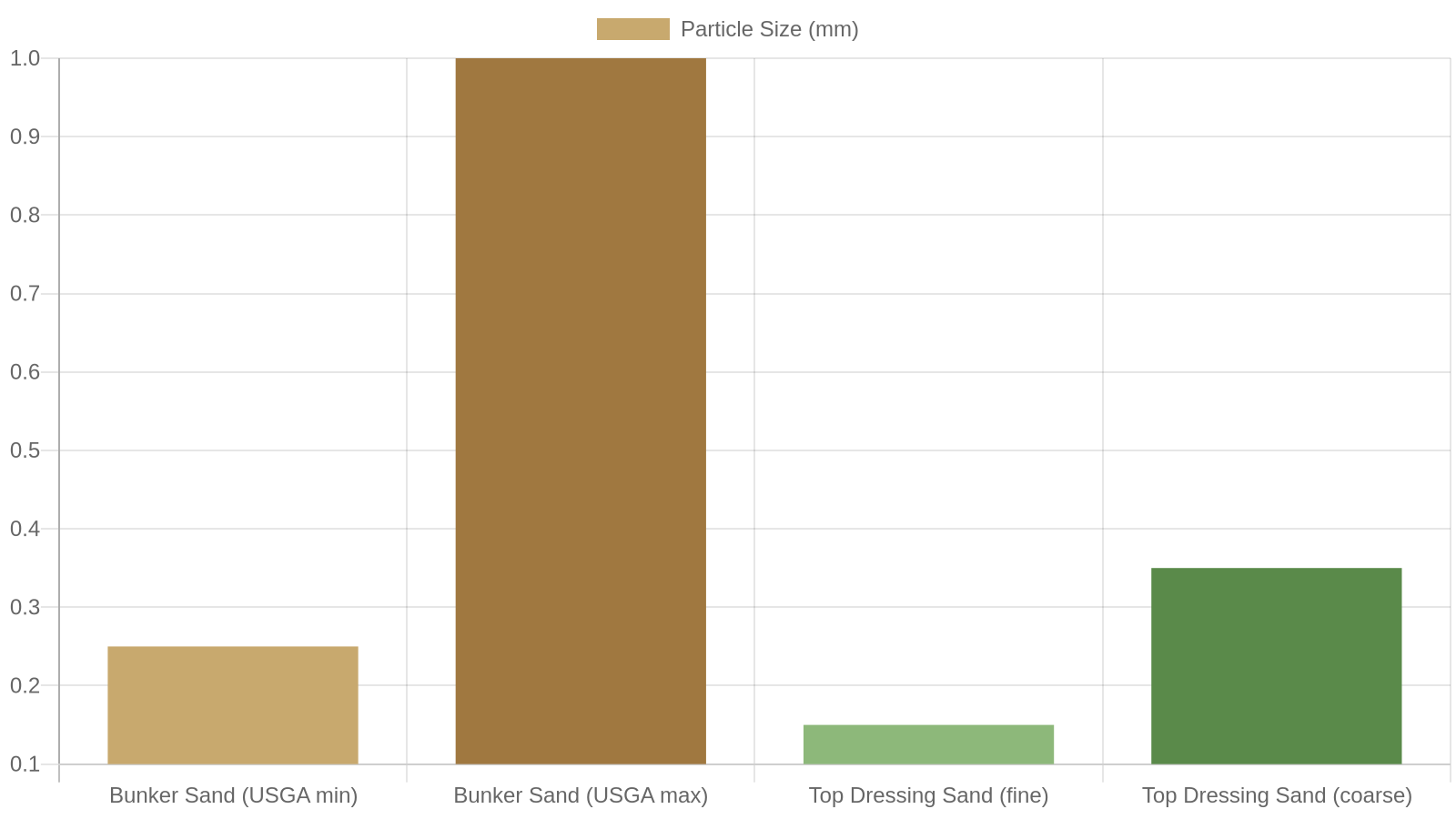
The United States Golf Association (USGA) recommends that bunker sand fall within a particle size range of 0.25 mm to 1.0 mm, with the majority of particles between 0.5 mm and 1.0 mm for adequate firmness and playability. Top dressing sand for greens typically calls for a finer profile — often 0.15 mm to 0.35 mm — to work down through existing turf without smothering it.
These aren’t arbitrary numbers. Sand that’s too coarse drains too fast and feels punishing underfoot. Sand that’s too fine compacts, crusts, and holds water — exactly what you don’t want in a bunker or on a putting surface.
Lab Testing and Published Spec Sheets
Any reputable golf course sand supplier should be able to hand you a lab-tested specification sheet that shows particle size distribution, organic matter content, infiltration rate, and sometimes even angularity data. If a supplier can’t produce that document, you’re buying blind.
Jackson Sand publishes lab-tested spec sheets for its products. Before you order, you can review the sand specifications at Jackson Sand to confirm the material matches your course’s agronomic requirements or your architect’s renovation specs. This is especially important when you’re matching existing sand in a partial bunker renovation — particle size mismatch creates the layering problems that plague poorly planned projects.
Infiltration Rate and Drainage Performance
Infiltration rate — how fast water moves through the sand — is measured in inches per hour. USGA guidelines suggest a target range of 6 to 12 inches per hour for putting green root zones, though bunker sand requirements vary. A supplier who understands these benchmarks can help you select the right product rather than just selling you whatever’s in stock.
3. Bunker Sand: What Makes a High-Performance Product
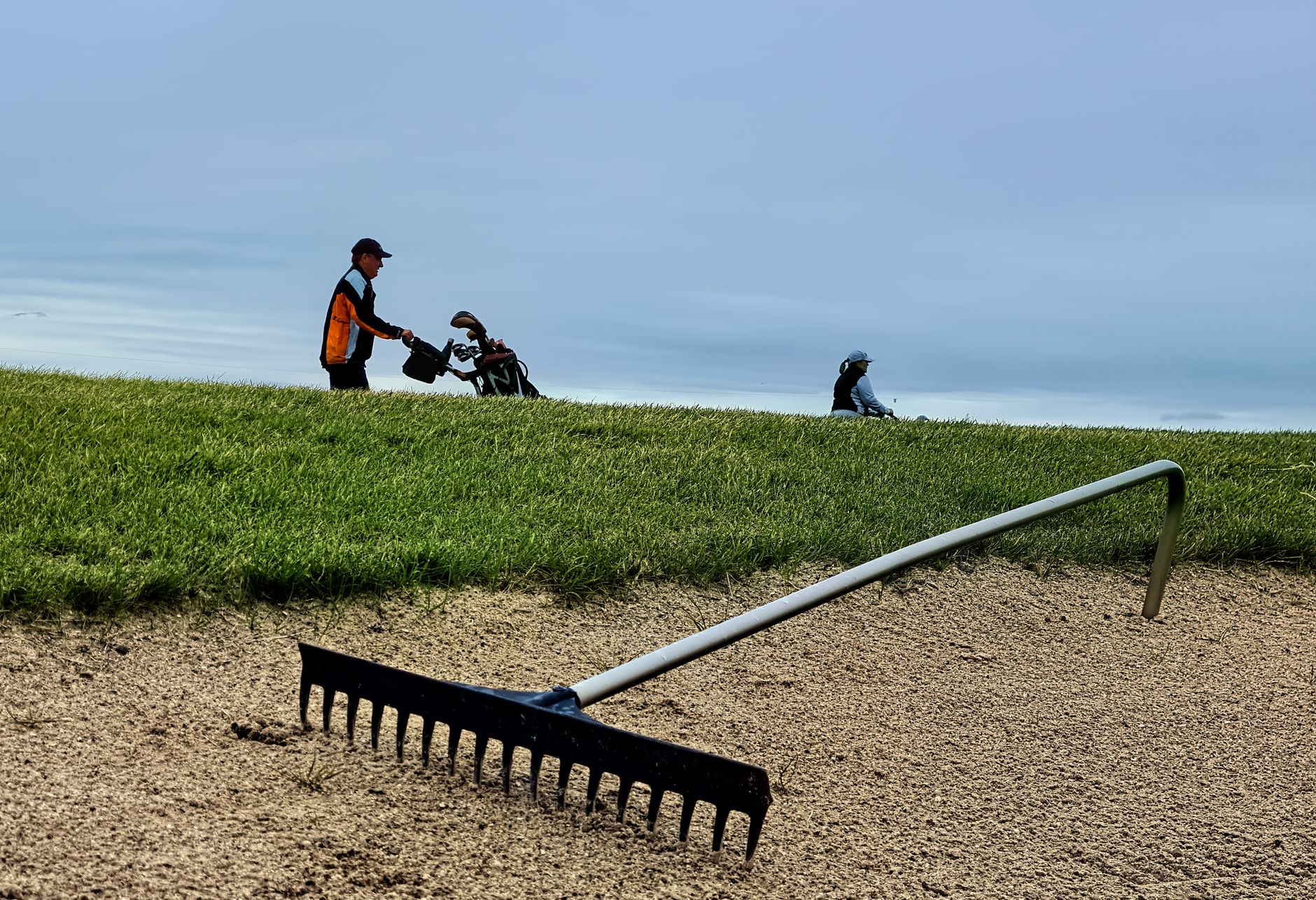
Bunker sand is arguably the most scrutinized material on a golf course. Golfers notice it immediately — in the way a ball sits, the way the sand behaves at impact, and the consistency from hole to hole. Getting the product right starts well before the first shovel hits the ground.
Firmness vs. Playability: Striking the Balance
Golfers expect bunkers to be consistent — not so soft that a ball plugs on every shot, not so firm that it bounces unpredictably. The right bunker sand has enough angular particle shape to interlock and resist displacement during play and rain events, while still allowing a club to slide cleanly through at impact.
Highly rounded particles (like many beach sands) tend to shift and ‘fluff,’ making bunkers inconsistent and increasing the labor required to maintain a firm, raked surface. Angular to sub-angular particles are generally preferred for golf course bunkers.
Fried Egg Lies and Contamination Resistance
One of the most common superintendent complaints is sand that ‘crusts’ after rain — forming a hard surface layer that causes fried-egg lies and uneven drainage. This is usually a sign of too many fine particles (below 0.1 mm) in the mix, which compact and seal the surface. A quality bunker sand supplier will keep fine content low and document it on the spec sheet.
Contamination from native soil is another issue. When bunker sand mixes with underlying clay or silt over time, infiltration rates drop dramatically. Proper bunker construction with a liner or wash layer helps, but starting with a clean, well-graded sand is the first line of defense.
How Much Bunker Sand Do You Need?
A standard golf course bunker renovation requires roughly 150 to 300 tons of sand per bunker, depending on size and depth. A full 18-hole course renovation can run into thousands of tons. For ongoing maintenance — topping off after washouts or adding depth — orders of 10 to 50 tons per event are common.
Use the Jackson Sand yardage calculator to estimate how many cubic yards you’ll need before you call — it saves time and helps you get an accurate quote on the first conversation.
4. Top Dressing Sand and Why Application Frequency Matters
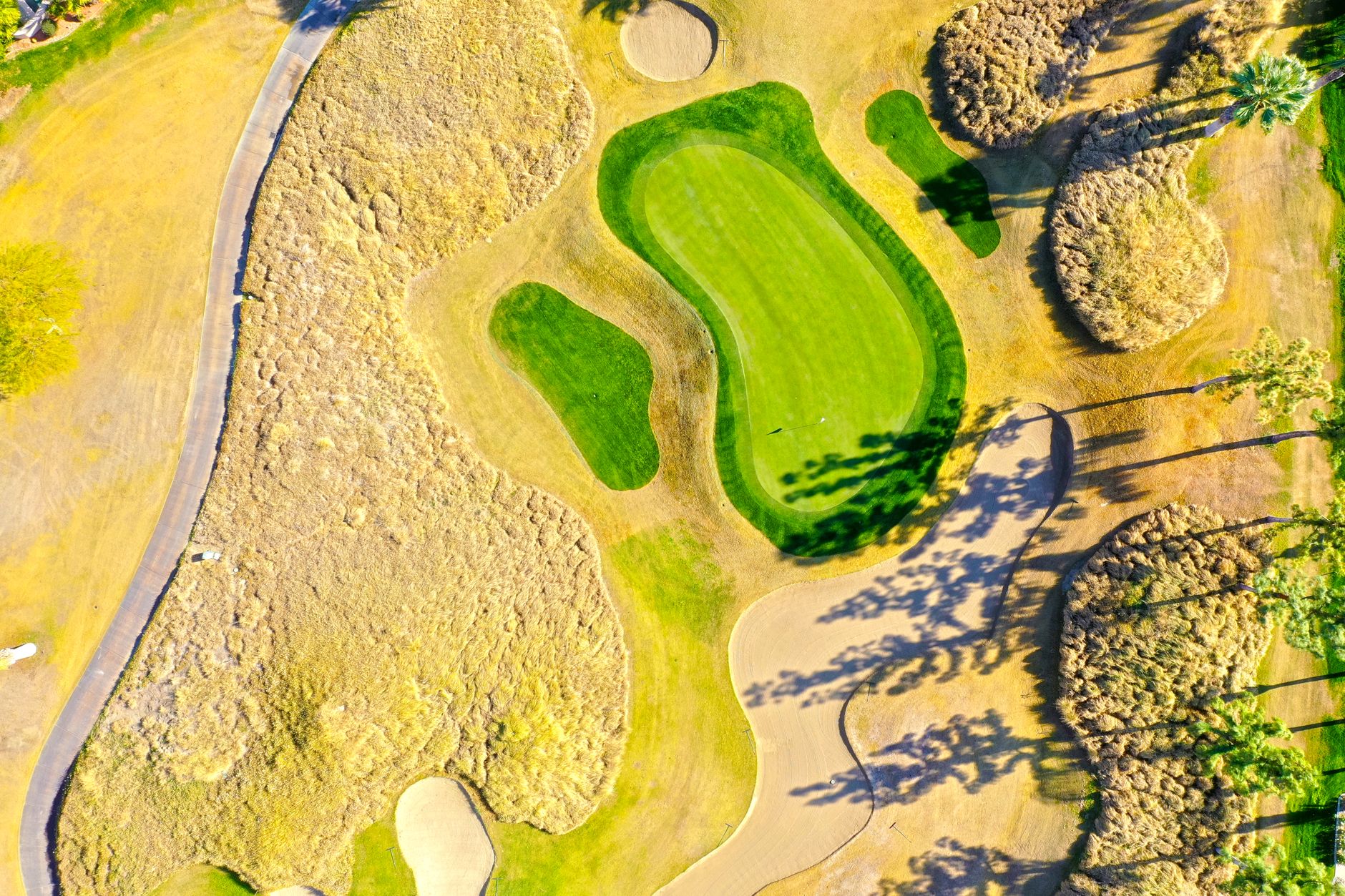
Top dressing is one of the highest-frequency sand purchases a golf course makes — and one of the most impactful on playing quality. Getting the material right and keeping deliveries on schedule is as important as the agronomic program itself.
The Science Behind Regular Top Dressing
Top dressing is the practice of applying a thin layer of sand — typically 1/8 to 1/4 inch — over putting greens, tees, or fairways on a regular schedule. Done consistently, it dilutes organic matter accumulation in the thatch layer, smooths surface irregularities, and gradually builds a uniform sand-based soil profile that drains well and resists compaction.
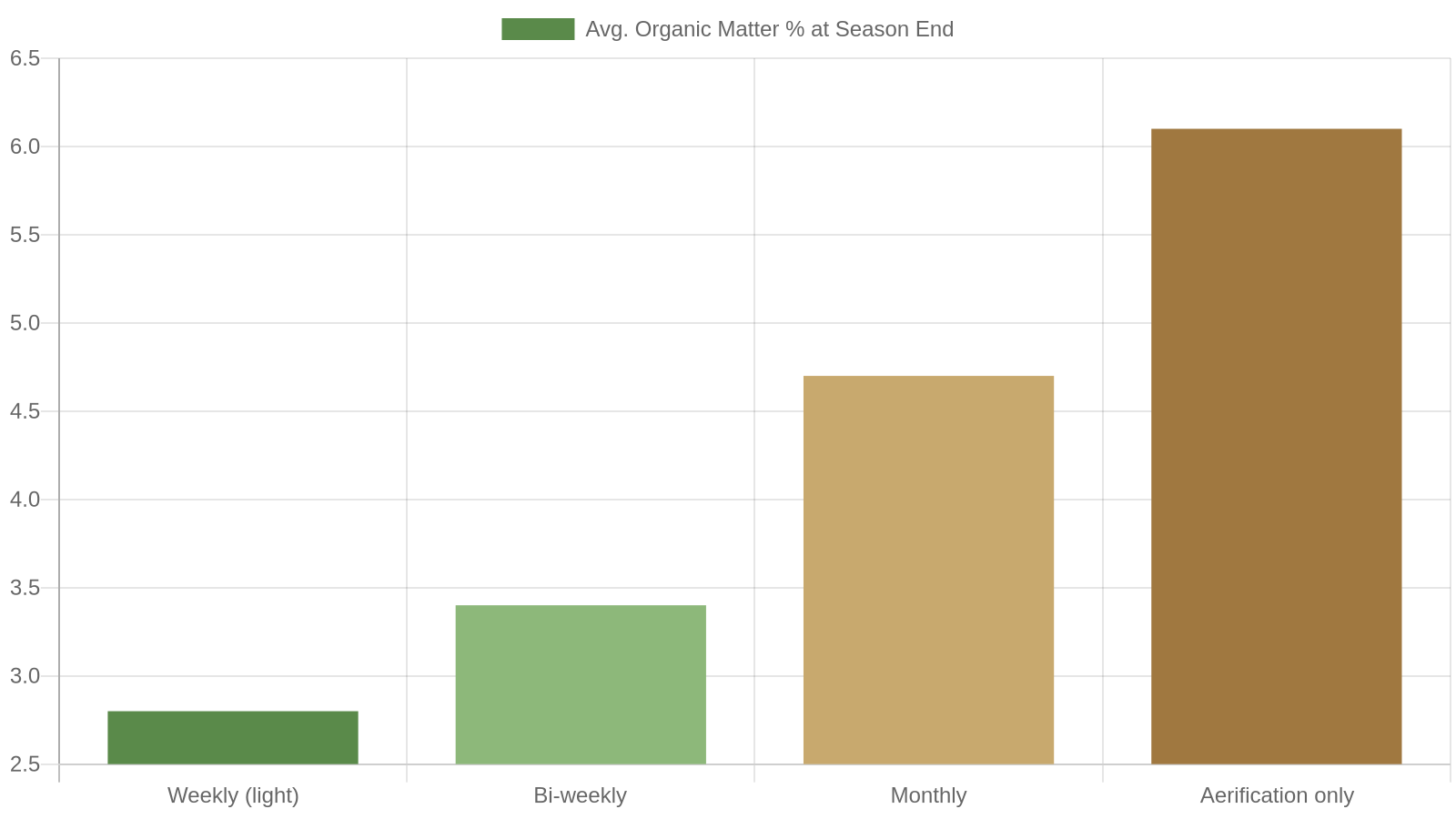
Research from turfgrass universities consistently shows that greens top dressed every 2 to 4 weeks during the growing season maintain lower organic matter percentages and better ball roll than those top dressed infrequently. The key is matching the sand to the existing soil profile — particle size mismatches create layers that impede root growth and water movement.
Light and Frequent vs. Heavy and Infrequent
There are two schools of thought on top dressing frequency. Light, frequent applications (sometimes called ‘dusting’) keep the surface smooth with minimal disruption to play. Heavy, infrequent applications — often tied to aerification events — allow more material to be worked into the profile but require longer recovery periods.
Most modern agronomic programs favor a combination approach: light weekly or bi-weekly applications during the season, with heavier applications immediately following core aerification in spring and fall. Your sand supplier should be able to support both schedules with reliable, consistent deliveries.
Top Dressing Services in West Tennessee
Not every golf course has the equipment or crew bandwidth to handle top dressing in-house. Jackson Sand offers top dressing sand and top dressing services for courses across West Tennessee — supplying both the material and the application when needed. This is particularly useful for smaller municipal courses or private clubs without a full-time equipment fleet.
5. On-Premises Mixing: Why It Produces More Consistent Sand
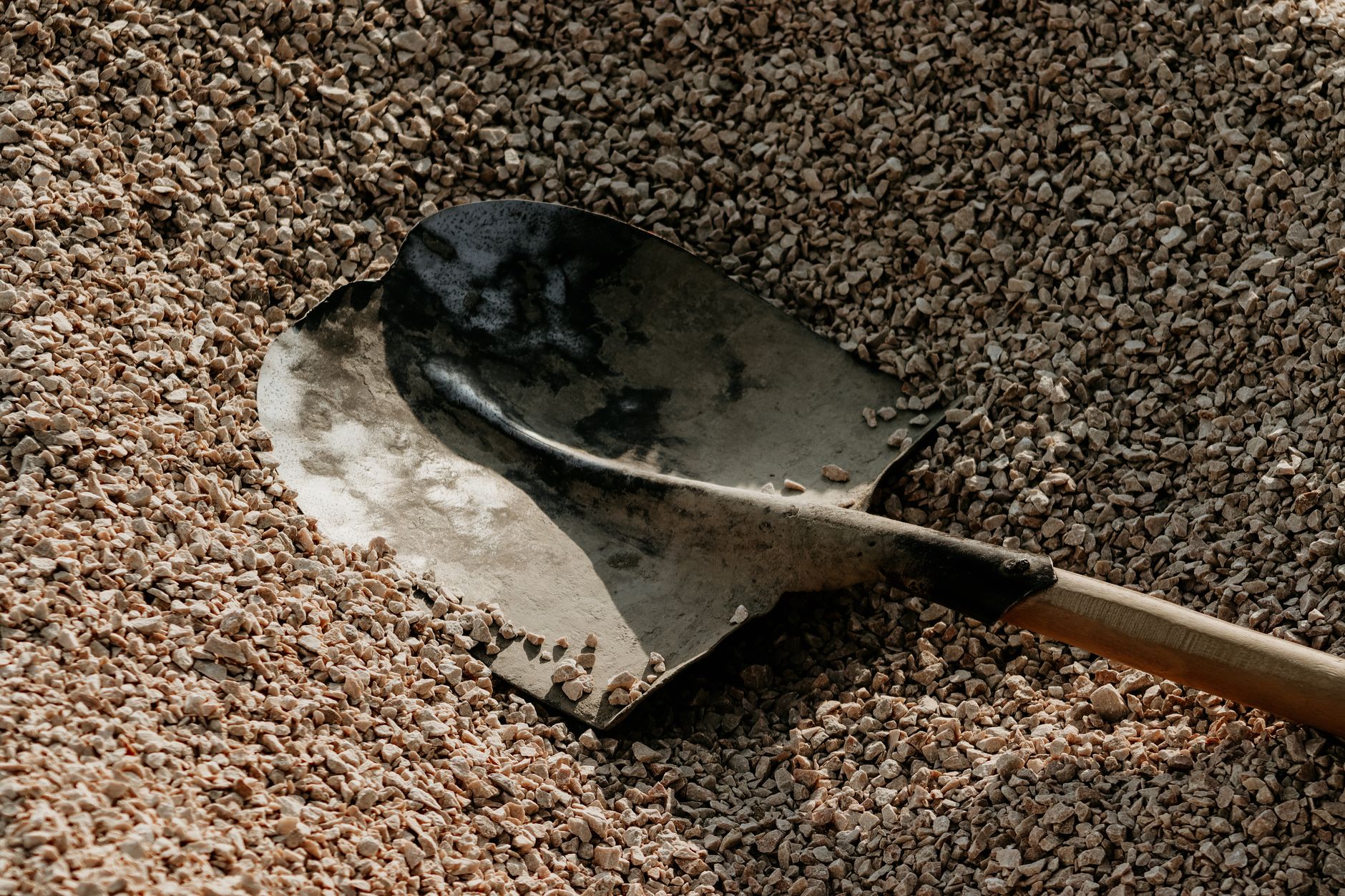
The phrase ‘we mix our own sand’ might sound like a minor operational detail, but for golf course superintendents who care about spec consistency, it’s one of the most important things a supplier can say. Here’s what it means in practice.
What 'Mixed on Premises' Actually Means
Some sand suppliers simply resell material sourced from a single quarry or pit — what you get is whatever the pit produces that week. A supplier who mixes sand on its own premises blends materials to hit a target specification, giving them control over particle size distribution, cleanliness, and consistency that a pass-through reseller simply can’t match.
Jackson Sand mixes its sand on premises in Jackson, TN. That means each load is produced to specification rather than pulled from a stockpile of variable material. For a superintendent who needs to match existing bunker sand or hit a tight spec for a renovation, this distinction is significant.
Cleanliness and Contamination Control
Contaminated sand — material mixed with clay, organic debris, or inconsistent aggregate — is one of the leading causes of bunker drainage failure and putting green layering problems. When sand is mixed in a controlled environment with quality source materials, the risk of contamination drops substantially.
On-premises mixing also allows for quality checks before the material leaves the facility. A supplier who loads directly from a controlled stockpile knows what’s in the truck. A reseller passing through material from multiple pits may not.
Dedicated Trucks Keep Loads Clean
Even the best sand can arrive contaminated if it’s hauled in a truck that previously carried topsoil, mulch, or construction debris. Jackson Sand owns its own delivery trucks, which are dedicated to sand and aggregate — keeping loads clean from the mixing pad to your course. This is a detail that’s easy to overlook when comparing quotes but matters enormously for material quality.
6. Drainage Aggregate: The Unsung Partner to Golf Course Sand
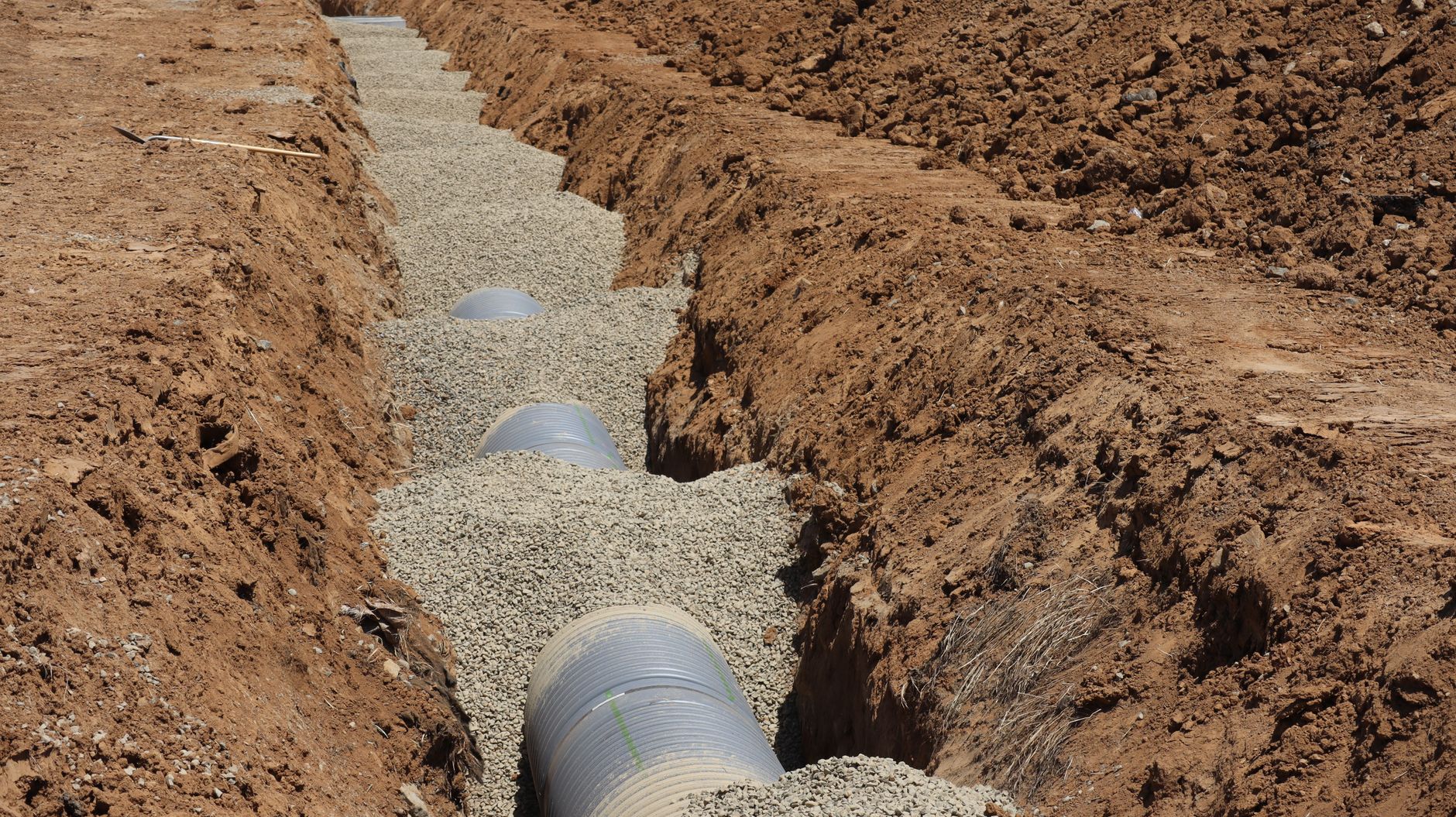
A golf course’s drainage infrastructure is only as good as the aggregate materials that make it up. Superintendents who plan renovation projects often focus on the sand and overlook the gravel — until a drainage failure forces the issue. Getting both materials from a supplier who understands the system is a significant advantage.
Why Drainage Aggregate Belongs in Every Renovation Plan
Sand gets most of the attention in golf course construction, but drainage aggregate — the gravel and crushed stone layers beneath the sand — is what makes the system work. A USGA-method green, for example, requires a 4-inch gravel drainage layer beneath 12 inches of sand-based root zone. Without the right aggregate in that layer, the perched water table effect that makes the system work breaks down.
Bunker drainage systems, surface drainage swales, and catch basin installations all require specific aggregate gradations. Using the wrong material — or substituting native gravel — can compromise drainage performance for years.
Surface Drainage, Basins, and Seepage Systems
Golf courses deal with three primary drainage challenges: surface water that needs to be directed away from playing surfaces, subsurface seepage that saturates root zones, and basin collection that captures runoff at low points. Each requires different aggregate specifications.
Jackson Sand supplies materials for all three applications — surface drainage and slope work, drainage basins, and seepage drainage systems. Having a single local supplier who understands all three reduces the coordination burden on your maintenance team and ensures material compatibility across the drainage system.
Gravel for Cart Paths and Maintenance Roads
Beyond playing surfaces, golf courses consume significant quantities of gravel for cart path bases, maintenance road improvements, and equipment staging areas. These applications don’t require the tight specifications of bunker or green sand, but they do benefit from a consistent, well-graded product that compacts properly and resists washout. Jackson Sand supplies gravel for these applications alongside its turf-grade sand products.
7. How to Evaluate a Golf Course Sand Supplier: a 10-Point Checklist

Not all sand suppliers are created equal. Before you commit to a vendor for a major renovation or an ongoing supply relationship, run through these ten evaluation points. The answers will quickly separate suppliers who understand golf course needs from those who just sell sand.
Product Documentation and Transparency
A supplier who can’t show you a lab-tested spec sheet is a supplier to avoid. Look for particle size distribution data, organic matter content, and infiltration rate. Ask whether the specs are tested per batch or just at initial product approval — batch testing is the gold standard.
- Lab-tested spec sheets available? Yes/No
- Particle size distribution documented? Yes/No
- Infiltration rate provided? Yes/No
Delivery Capability and Reliability
Ask whether the supplier owns its trucks or uses third-party carriers. Owner-operated fleets generally offer more scheduling flexibility and better load cleanliness. Confirm minimum order sizes, lead times, and whether delivery is included in the quoted price or billed separately.
- Owns delivery trucks? Yes/No
- Delivery included in price? Yes/No
- Can accommodate your maintenance schedule? Yes/No
- Minimum order size fits your needs? Yes/No
Local Knowledge and Ongoing Support
A supplier who has worked with golf courses in your region understands local soil conditions, seasonal demand patterns, and the logistical realities of West Tennessee weather. That knowledge translates into better product recommendations and more reliable service during peak renovation seasons — spring and fall — when everyone is ordering at once.
- Experience with golf course clients? Yes/No
- Understands local soil conditions? Yes/No
- Responsive to urgent orders? Yes/No
Golf Course Sand Applications at a Glance
Different areas of a golf course require different sand specifications and application methods. Use this table as a quick reference when planning orders or discussing requirements with your supplier.
8. Serving Golf Courses Across West Tennessee and the Mid-South

Geography matters in the aggregate business. A supplier’s location relative to your course affects freight cost, delivery lead time, and the supplier’s ability to respond quickly to urgent orders. Here’s how Jackson Sand’s position in West Tennessee works in your favor.
Jackson, TN as a Supply Hub
Jackson, Tennessee sits near the center of West Tennessee, making it a practical distribution point for golf courses throughout the region. Whether your course is in Madison County, Gibson County, Henderson County, or further into the Mid-South, a Jackson-based supplier with its own trucks can reach you without the freight premiums that come with shipping from out of state.
Jackson Sand is located at 139 United Dr., Jackson, TN 38305 — a purpose-built facility for mixing and loading sand and aggregate for delivery across the region.
Small Courses and Large Renovations — Both Welcome
Some suppliers only want to talk to you if you’re ordering hundreds of tons. Jackson Sand serves both large renovation projects and smaller ongoing maintenance orders. A nine-hole municipal course topping off bunkers after a wet spring gets the same quality product and the same delivery service as a private club doing a full 18-hole renovation.
This flexibility matters for parks and recreation departments, school golf programs, and smaller private clubs that may not have the budget for large-scale orders but still need spec-grade sand delivered reliably.
9. Estimating Your Sand Order: Quantities, Calculators, and Planning Ahead

Ordering the right quantity of sand is as important as ordering the right specification. Too little means project delays; too much ties up budget and storage space. A few minutes of planning before you call saves significant headaches during the season.
Typical Quantities for Common Golf Course Applications
Planning a sand order without a quantity estimate is a recipe for either a shortage mid-project or an expensive overrun. Here are rough benchmarks for common applications:
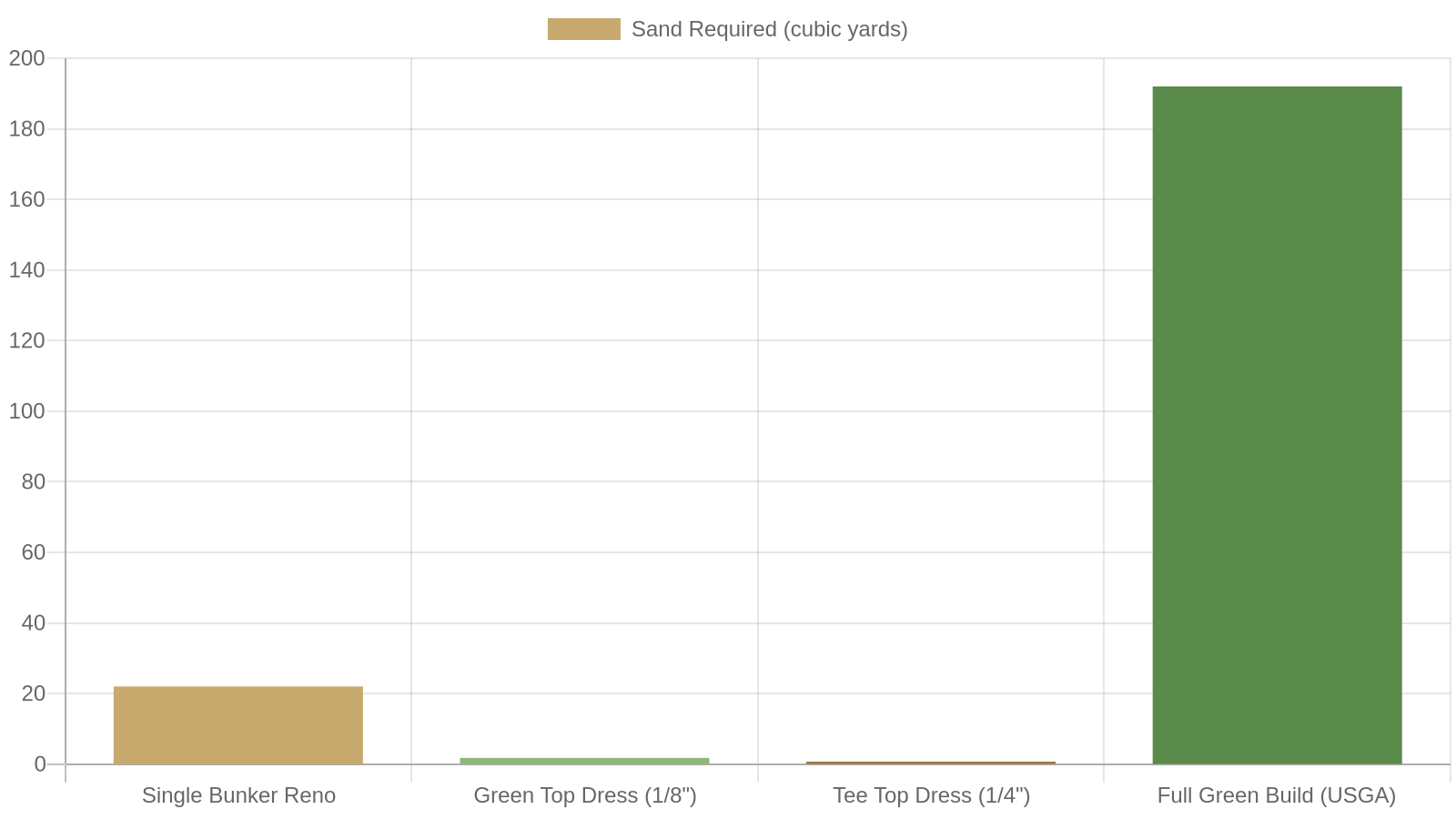
- Bunker renovation (average bunker, 4-inch depth): 15–30 cubic yards per bunker
- Putting green top dressing (1/8-inch application, 5,000 sq ft green): approximately 1.5–2 cubic yards
- Tee top dressing (1/4-inch application, 1,000 sq ft tee): approximately 0.6–0.8 cubic yards
- Full green construction (USGA method, 5,000 sq ft, 12-inch root zone): 185–200 cubic yards of sand plus 65–70 cubic yards of gravel
These are estimates — actual quantities depend on your specific dimensions and existing conditions.
Using the Yardage Calculator
Before calling for a quote, use the Jackson Sand yardage calculator to get a precise cubic yard estimate based on your area dimensions and desired depth. It takes less than two minutes and gives you a number you can bring into the conversation with confidence — rather than estimating on the fly and risking a costly shortage or surplus.
Planning for the Full Season
Superintendents who plan their annual sand budget in advance — rather than ordering reactively after each storm or aerification event — tend to get better pricing, better scheduling, and fewer supply disruptions. Work backward from your agronomic calendar: identify your aerification dates, your top dressing schedule, and any renovation projects, then build a delivery schedule with your supplier at the start of the season.
10. Aeration and Sand: Making the Most of Your Maintenance Windows

Aerification is the most disruptive — and most productive — maintenance practice in golf course management. The sand you apply in that window does more agronomic work than any other application of the year. Getting the timing and the product right is worth the extra planning effort.
Why Aeration and Top Dressing Go Hand in Hand
Core aerification — pulling plugs from greens, tees, and fairways — creates channels for sand to infiltrate the soil profile. When you follow aerification immediately with a heavy top dressing application and drag the sand into the holes, you’re building a sand-based profile from the bottom up over multiple seasons. This is the foundation of long-term putting green performance.
The timing matters: sand should be on site and ready to apply within 24 to 48 hours of aerification to take advantage of the open channels before they begin to close. A reliable local supplier who can confirm delivery dates in advance is essential for this window.
Matching Sand to Your Existing Profile
If your greens have been top dressed with a particular sand for several years, introducing a dramatically different particle size can create a layer interface that impedes water movement and root penetration. Before switching suppliers or products, compare the new sand’s spec sheet against your existing material.
Jackson Sand’s published spec sheets make this comparison straightforward. If you’re unsure whether a product matches your existing profile, the team at Jackson Sand can walk you through the specs before you commit to an order.
Ready to Order Golf Course Sand in West Tennessee?

Whether you’re planning a full bunker renovation, setting up a seasonal top dressing program, or just need a few yards of sand to top off a problem area, Jackson Sand is equipped to help golf courses across West Tennessee get the right material delivered on time. Here’s how to get started.
What to Have Ready When You Call
To get an accurate quote quickly, have the following information ready before you call Jackson Sand:
- Application type (bunker renovation, top dressing, green construction, drainage)
- Approximate square footage and desired depth
- Delivery location and access details (tight gate widths, weight limits on cart paths, etc.)
- Preferred delivery date or window
- Any spec requirements from your architect or agronomist
The more detail you can provide upfront, the faster the team can confirm product availability and schedule your delivery.
Get in Touch with Jackson Sand
Jackson Sand serves golf courses, athletic fields, landscapers, contractors, and homeowners across Jackson, TN and West Tennessee. They mix their own sand on premises, own their delivery trucks, and include delivery with orders — so the price you’re quoted is the price you pay without freight surprises.
Explore the full range of products and services on the Jackson Sand golf course sand page, or call the team directly at 731-668-0440 to discuss your project. For an instant quantity estimate, use the free yardage calculator before you call — it takes two minutes and makes the conversation faster for everyone.
Frequently Asked Questions
Where can I find a golf course sand supplier near Jackson, TN?
Jackson Sand, located at 139 United Dr. in Jackson, TN, supplies bunker sand, top dressing sand, and drainage aggregate to golf courses across West Tennessee and the Mid-South. They mix sand on premises and deliver in their own trucks. Call 731-668-0440 for availability and quotes.
What particle size should golf course bunker sand be?
USGA guidelines recommend bunker sand with particle sizes primarily between 0.25 mm and 1.0 mm, with the majority falling in the 0.5–1.0 mm range for firmness and playability. Always ask your supplier for a lab-tested spec sheet to confirm the distribution before ordering.
How much sand does it take to renovate a golf course bunker?
A typical golf course bunker renovation requires approximately 15 to 30 cubic yards of sand per bunker, depending on the bunker's size and the desired depth (usually 4 to 6 inches). Use a yardage calculator with your specific dimensions for a precise estimate.
How often should I top dress putting greens?
Most turfgrass agronomists recommend top dressing putting greens every 2 to 4 weeks during the growing season with light applications of 1/8 inch or less. Heavier applications are typically made immediately following core aerification in spring and fall.
Does Jackson Sand deliver, and is delivery included in the price?
Yes. Jackson Sand owns its own delivery trucks and includes delivery with orders. They serve golf courses, athletic fields, contractors, and homeowners across West Tennessee. Call 731-668-0440 to confirm delivery availability for your location.
Why does it matter if a sand supplier mixes their own sand on premises?
On-premises mixing gives the supplier control over particle size distribution and material cleanliness, producing more consistent loads than resellers who pass through variable quarry output. It also allows for quality checks before the sand is loaded, reducing the risk of contamination that can damage bunker drainage or putting green soil profiles.