
How to Get a Price Quote for Sand Delivery in the Mid-South
Quick answer: To get an accurate sand delivery price quote in the Mid-South, you need three things: the type of sand your project requires (bunker, top dressing, athletic field, drainage, etc.), an accurate yardage estimate of how much you need, and a supplier who mixes their own product and owns their delivery trucks. Jackson Sand in Jackson, TN serves golf courses, athletic fields, contractors, and homeowners across West Tennessee. Call 731-668-0440 or use their online yardage calculator to start your quote today.
1. Why the Quote Process Matters More Than the Price Tag

Getting a price quote for sand delivery sounds straightforward — call a supplier, give them a number, get a price back. In practice, the quotes that actually save you money and headaches are the ones built on accurate information from the start. Whether you’re a golf course superintendent in West Tennessee ordering bunker sand by the truckload or a homeowner in Jackson, TN who needs a few yards of fill, the quoting process follows the same fundamental logic: know your material, know your quantity, and know your supplier.
A Low Number Isn't Always a Good Deal
Sand is a commodity, but not all sand is the same — and not all quotes cover the same scope. A price that looks attractive on paper can balloon once you factor in delivery fees, load minimums, fuel surcharges, or the cost of correcting a bad material choice after the fact. A well-structured quote tells you the total landed cost: product plus delivery, with no surprises at the gate.
When you’re managing a golf course renovation, prepping an athletic field for a new season, or grading a drainage swale on a construction site, the wrong sand can mean redoing work that costs far more than the original material savings. That’s why starting the quote process with the right questions — not just the right price — is the smarter move.
What a Reliable Supplier's Quote Includes
A trustworthy aggregate supplier will quote you on at least four elements: material type and grade, quantity in cubic yards or tons, delivery logistics, and any project-specific services such as top dressing application or aeration. Jackson Sand includes delivery in their pricing and mixes sand on their own premises in Jackson, TN — which means the load that leaves their yard at 139 United Dr. is the same consistent product that arrives on your site, without third-party handling that can introduce contamination or short loads.
2. Identify the Right Type of Sand for Your Project

The single biggest variable in any sand delivery quote is the type of material. Sand is not a monolithic product — particle size, gradation, mineral composition, and intended use all affect which product is right for your job and what it will cost. Ordering the wrong type is one of the most common and expensive mistakes buyers make, especially when purchasing for specialized applications like golf courses or athletic fields.
Golf Course Sand: Bunker and Top Dressing
Golf course applications demand the most precise particle specifications of any sand use. Bunker sand must meet USGA guidelines for particle size distribution, infiltration rate, and resistance to contamination from the native soil below. Top dressing sand for putting greens and fairways is typically a medium-fine sand that blends with existing rootzone material without disrupting surface playability. Quoting the wrong product — even from the same supplier — can mean a sand that crusts, compacts, or drains poorly under play conditions.
Jackson Sand publishes lab-tested spec sheets for their golf course products. Before you request a quote, review the sand specs page to confirm particle size distribution matches your agronomist’s or architect’s recommendation.
Athletic Field and Sports Turf Sand
Athletic field sand is engineered for drainage, footing stability, and turf health under heavy traffic. Schools, parks and recreation departments, and colleges across the Mid-South use sand topdressing and field renovation programs to keep natural grass fields playable through long seasons. The particle size for athletic field applications is often slightly coarser than putting green sand, prioritizing rapid surface drainage over the ultra-smooth finish required on greens.
If you’re managing a multi-field complex or a single practice field, the quote process should account for total square footage, current soil profile, and whether you need a one-time renovation load or a recurring seasonal program.
Drainage Aggregate, Gravel, and General Fill
Contractors and homeowners often need sand or gravel for drainage applications — French drains, drainage basins, seepage beds, and slope correction. These projects require specific aggregate gradations that allow water to move freely without fine particles migrating and clogging the system over time. Gravel and coarser drainage materials are quoted differently than fine sands, and mixing up the two on a quote can lead to ordering material that simply won’t perform as designed.
For general landscaping fill, mulch, or site-work gravel, the specification tolerance is wider, but quantity accuracy still matters enormously for cost control.
3. Measure Your Project Area Accurately Before You Call
Nothing derails a sand delivery quote faster than inaccurate measurements. Order too little and you’re paying for a second delivery. Order too much and you’re managing excess material on-site. Before you pick up the phone or fill out a contact form, spend 15 minutes measuring your project area and calculating the cubic yardage you need. It’s the single most useful thing you can do to get a fast, accurate quote.
The Basic Formula: Length × Width × Depth
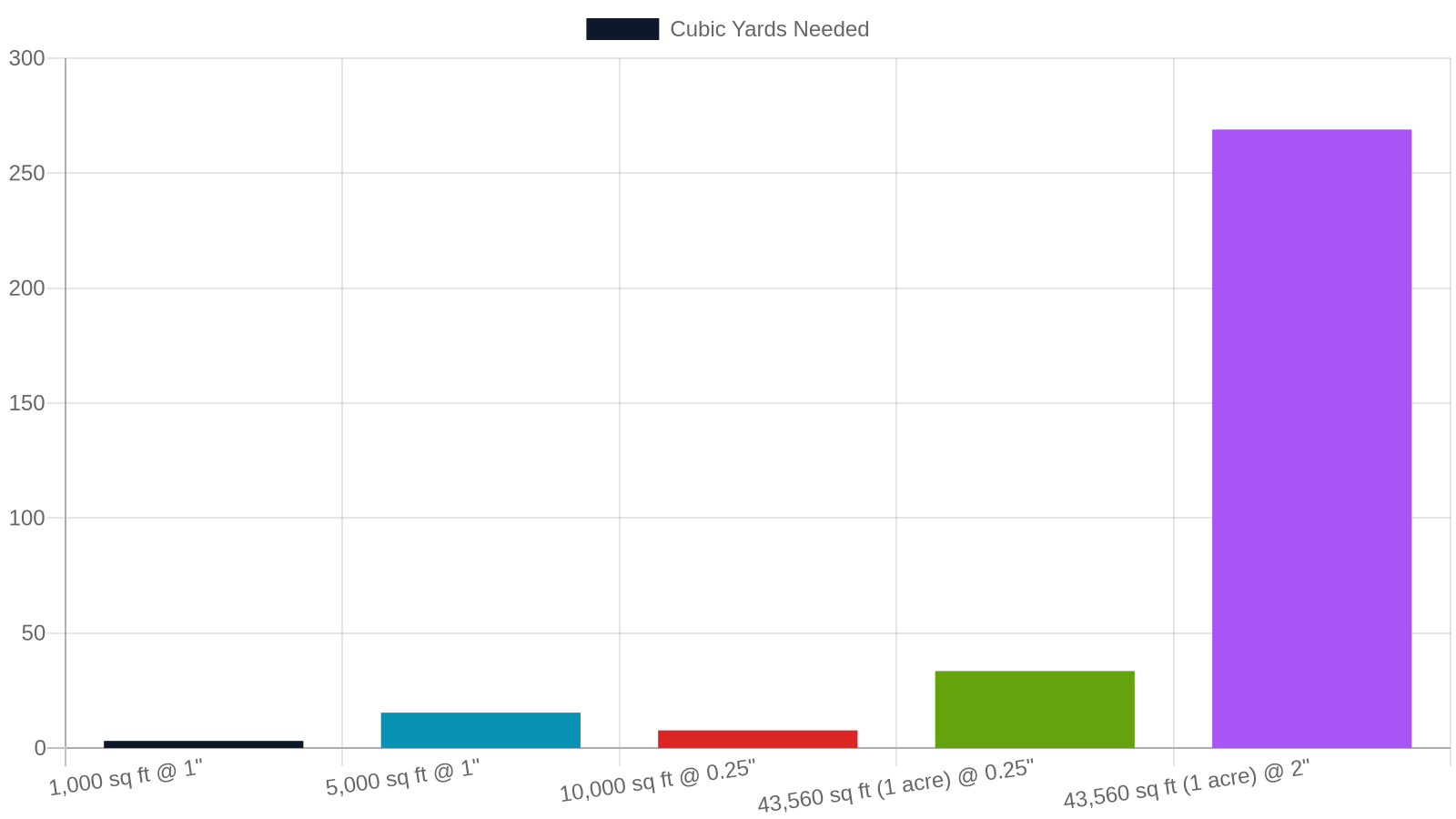
Sand and aggregate are sold by the cubic yard. One cubic yard equals 27 cubic feet. To calculate how many cubic yards you need, measure your area in feet (length × width), multiply by the depth in feet (convert inches to a decimal — 3 inches = 0.25 ft, 6 inches = 0.5 ft), then divide by 27. For example, a 10,000 sq ft athletic field receiving a 0.25-inch top dressing application needs approximately 7.7 cubic yards of sand.
For irregular shapes, break the area into rectangles or triangles, calculate each section separately, and add them together. It’s better to round up slightly — running short mid-project means a second delivery and potentially a visible seam in the finished surface.
Use the Free Yardage Calculator
Jackson Sand offers a free online tool that does the math for you. The yardage calculator lets you enter your dimensions and depth, and it returns the cubic yardage you need. This is especially useful when you’re managing multiple zones — greens, tees, fairways, and bunkers on a golf course, or multiple fields in an athletic complex — because you can run each area separately and sum the totals before you call for a quote.
Having a calculated yardage in hand before you contact a supplier makes the quote conversation faster and more accurate. Suppliers can give you a firm number instead of a range, and you avoid the awkward back-and-forth of estimating on the fly.
Account for Compaction and Waste
Loose sand compacts once it’s spread and trafficked. For most topdressing applications, the volume loss is minimal — the sand is applied in thin lifts and worked into existing turf. For deeper fills, drainage trenches, or bunker reconstruction, plan for 10–15% additional material to account for compaction and any waste at the edges of the pour. Your supplier can advise on a typical overage factor for your specific application based on their experience with similar projects in the Mid-South.
4. Understand What's Included in a Delivered Price
A sand delivery quote has multiple components, and the number a supplier gives you over the phone is only useful if you know what it covers. In the Mid-South aggregate market, pricing structures vary — some suppliers bundle delivery, some don’t, and some charge extra for services like spreading or multiple drop points on a single job site. Understanding what’s included before you compare quotes will save you from sticker shock on the invoice.
Material Cost vs. Total Landed Cost
Some suppliers quote material cost only and add delivery as a line item — sometimes a flat fee, sometimes a per-mile or per-load charge. Others, like Jackson Sand, include delivery in their pricing so you’re comparing apples to apples from the start. When you’re evaluating quotes from multiple sources, always ask: Is delivery included? A quote that looks 10–15% cheaper may evaporate once freight is added.
Also ask about load minimums. Most bulk aggregate suppliers have a minimum order quantity — commonly one full truckload. Ordering below the minimum may trigger a small-load surcharge that significantly changes the per-yard cost.
Truck Type and Load Accuracy
Jackson Sand owns and operates their own delivery trucks. This matters for two reasons. First, load accuracy — when a supplier controls their own hauling, they can verify that the quantity leaving the yard matches what was ordered. Third-party haulers sometimes short-load or overload, and neither outcome is good for the buyer. Second, material cleanliness — a dedicated fleet means the truck bed isn’t carrying a different aggregate from a previous job, which can contaminate a precision sand product like USGA bunker sand.
Services Beyond Delivery
For golf courses and athletic fields, delivery is often just the first step. Jackson Sand also offers top dressing services and aeration, which means they can quote you on a complete program rather than just a material drop. If you need sand spread and incorporated — not just dumped on-site — ask about service pricing at the same time you request a material quote. Bundling delivery and application into a single contract simplifies scheduling and accountability.
5. Know the Common Sand Applications and Their Specs

Different applications have different technical requirements, and those requirements directly affect which product you need and how much of it. Understanding the specs for your particular use case — even at a basic level — helps you have a more productive conversation with your supplier and ensures the quote you receive is for the right material, not just the cheapest option on the shelf.
USGA-Method Bunker and Green Construction
The United States Golf Association publishes detailed guidelines for rootzone and bunker sand particle size distribution. USGA-spec sand typically has a particle size range of 0.25–1.0 mm, with the majority of particles falling in the medium (0.25–0.5 mm) and medium-coarse (0.5–1.0 mm) fractions. Infiltration rates for USGA rootzone mixes are generally targeted at 6–12 inches per hour, though some high-sand profiles push higher. These specs exist to ensure consistent drainage and resist compaction under cart and foot traffic.
When requesting a quote for golf course sand, share your agronomist’s spec sheet with the supplier so they can match their product to your requirements. Jackson Sand publishes their own lab-tested spec sheets — review them at the sand specs page before your call.
Top Dressing Programs: Frequency and Volume
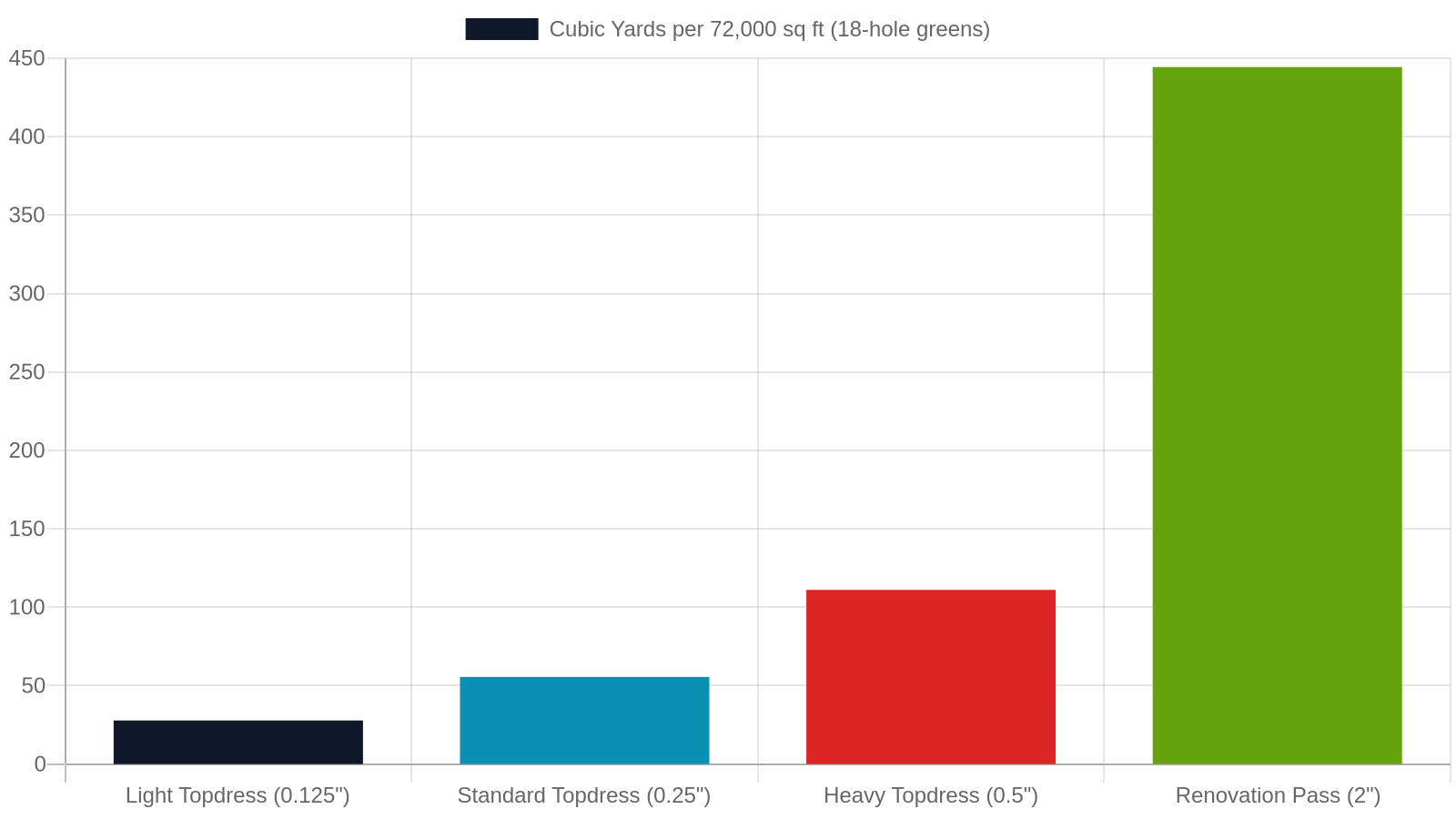
Most golf course superintendents in the Mid-South run top dressing programs multiple times per season — light applications of 0.1–0.25 inches every 2–4 weeks during the growing season, with heavier renovation passes in spring and fall. A single 18-hole course with 72,000 sq ft of putting surface receiving a 0.125-inch application needs roughly 27–30 cubic yards per pass. Over a full season of 10–12 applications, that’s 270–360 cubic yards of topdressing sand — a significant volume that benefits from a standing supply agreement rather than one-off quotes.
Athletic Field Renovation Standards
For natural grass athletic fields, the Sports Turf Managers Association (STMA) recommends sand-based or sand-amended rootzones that provide rapid drainage and resist compaction under heavy use. A typical field renovation might involve 2–4 inches of sand incorporation via deep-tine aeration and heavy topdressing — requiring 200–650 cubic yards per field depending on size. Annual maintenance topdressing programs use far less, but even a modest 0.25-inch application on a 75,000 sq ft football/soccer complex requires about 58 cubic yards.
6. Drainage and Gravel Projects: Quoting Aggregate the Right Way
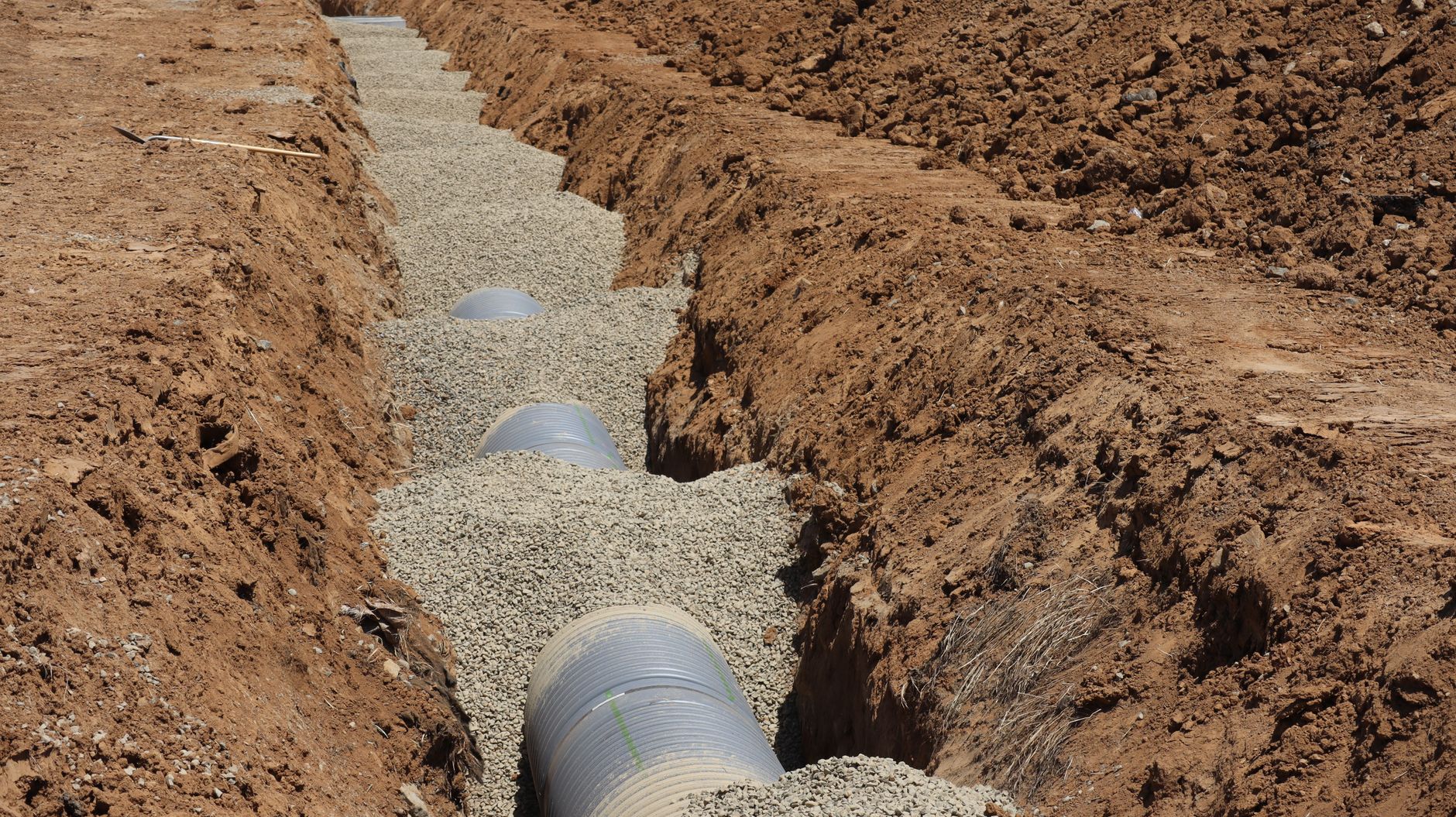
Drainage aggregate projects — whether you’re a contractor building a stormwater system or a homeowner fixing a soggy backyard — follow the same quoting logic as sand: material type, volume, and delivery. The difference is that drainage aggregate specifications are driven by hydraulic performance rather than agronomic requirements, which means the gradation of your gravel matters as much as the quantity.
Surface Drainage and Slope Correction
Surface drainage projects — redirecting sheet flow, correcting low spots, building swales — typically use a combination of graded fill, coarse sand, and sometimes gravel as a cap layer. The key measurement for a quote is the volume of the corrected area: how deep is the low spot, how wide is the swale, and how long does it run? Even a modest drainage correction on a residential lot can require 5–15 cubic yards of material, while a commercial site-work project may need hundreds of yards across multiple drainage paths.
French Drains, Drainage Basins, and Seepage Beds
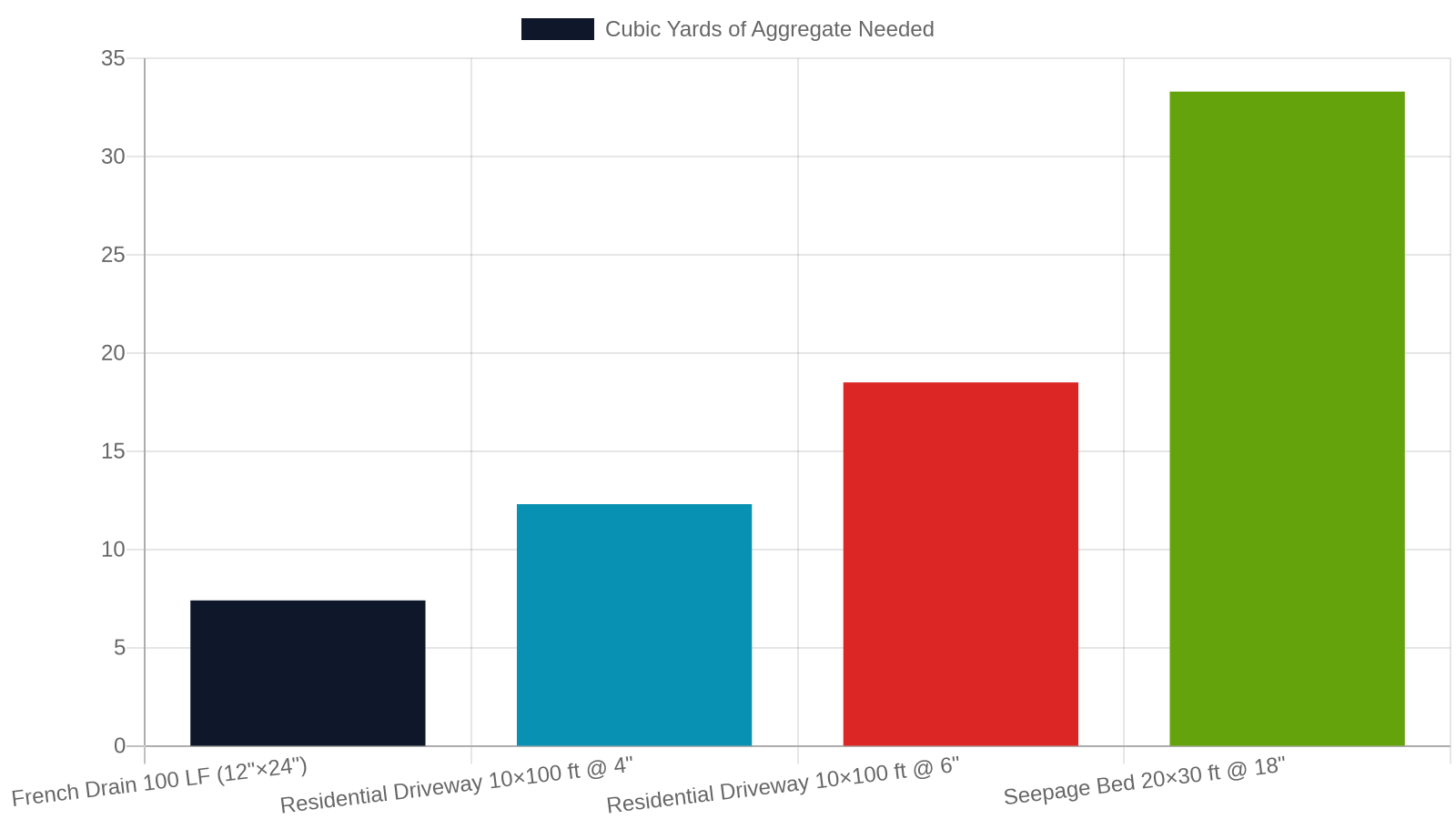
Subsurface drainage systems — French drains, drainage basins, and seepage beds — require washed, angular gravel or coarse aggregate that won’t compact and block flow over time. The trench dimensions (depth × width × length) give you the volume; subtract the space occupied by the perforated pipe and you have your aggregate requirement. A standard 12-inch-wide, 24-inch-deep French drain running 100 linear feet needs approximately 7.4 cubic yards of drainage aggregate, not counting the pipe displacement.
Quoting these projects accurately requires knowing the pipe diameter, the trench geometry, and whether a geotextile fabric is being used (which affects how tightly the aggregate needs to be graded).
Gravel for Driveways, Parking Areas, and Pads
Homeowners and contractors across West Tennessee frequently need gravel for driveways, equipment pads, and parking areas. A standard residential driveway (10 ft × 100 ft) with a 4-inch gravel base requires approximately 12.3 cubic yards. A 6-inch base on the same footprint needs 18.5 cubic yards. These are the kinds of projects where Jackson Sand’s delivery-included pricing and accurate loads make a real difference — you know exactly what you’re getting and what it costs before the truck rolls.
7. Questions to Ask Before You Commit to a Quote

A price quote is a two-way conversation. The supplier needs information from you (type, quantity, location, timing), and you should be gathering information from them. The questions below are ones that experienced turf managers, contractors, and savvy homeowners ask before signing off on any aggregate delivery — and the answers will tell you a lot about whether you’re dealing with a supplier who knows their product and their operation.
Material and Quality Questions
Before accepting any quote, ask the supplier: Where does this sand come from, and how is it processed? Jackson Sand mixes their sand on their own premises from high-quality source materials — that’s a meaningful quality control step that not every supplier can claim. Ask whether the product has been lab-tested and whether spec sheets are available. For golf and athletic field applications, a supplier who can hand you a particle size distribution report is far more credible than one who can only describe the product verbally.
Logistics and Scheduling Questions
Lead time matters — especially for golf course projects timed around course closures or athletic field projects scheduled between seasons. Ask: What is your current lead time for delivery? and Can you accommodate a specific delivery window? Also confirm the truck access requirements for your site. A standard tri-axle dump truck needs a clear path at least 12–14 feet wide and overhead clearance of 14 feet. Low-hanging branches, narrow gates, or soft ground conditions can complicate or prevent delivery.
Volume, Minimums, and Repeat Orders
If you’re managing an ongoing maintenance program — seasonal topdressing, annual bunker sand replenishment, or recurring gravel for a fleet yard — ask about volume pricing and whether a standing order or supply agreement is available. Locking in pricing for a season’s worth of material protects you from mid-season price fluctuations and ensures your supplier has your product reserved. Ask about load minimums and whether partial loads are available for smaller jobs or top-off orders.
Sand and Aggregate Product Comparison at a Glance
Not sure which product fits your project? Use this table to compare Jackson Sand's main product categories by application, typical particle size, and key performance requirement.
8. How Jackson Sand Handles the Quote Process
Understanding how a supplier operates gives you confidence that the quote you receive reflects what you’ll actually get. Here’s how Jackson Sand approaches the quote and delivery process for customers across West Tennessee and the broader Mid-South region.
Mixed On-Site, Delivered in Their Own Trucks
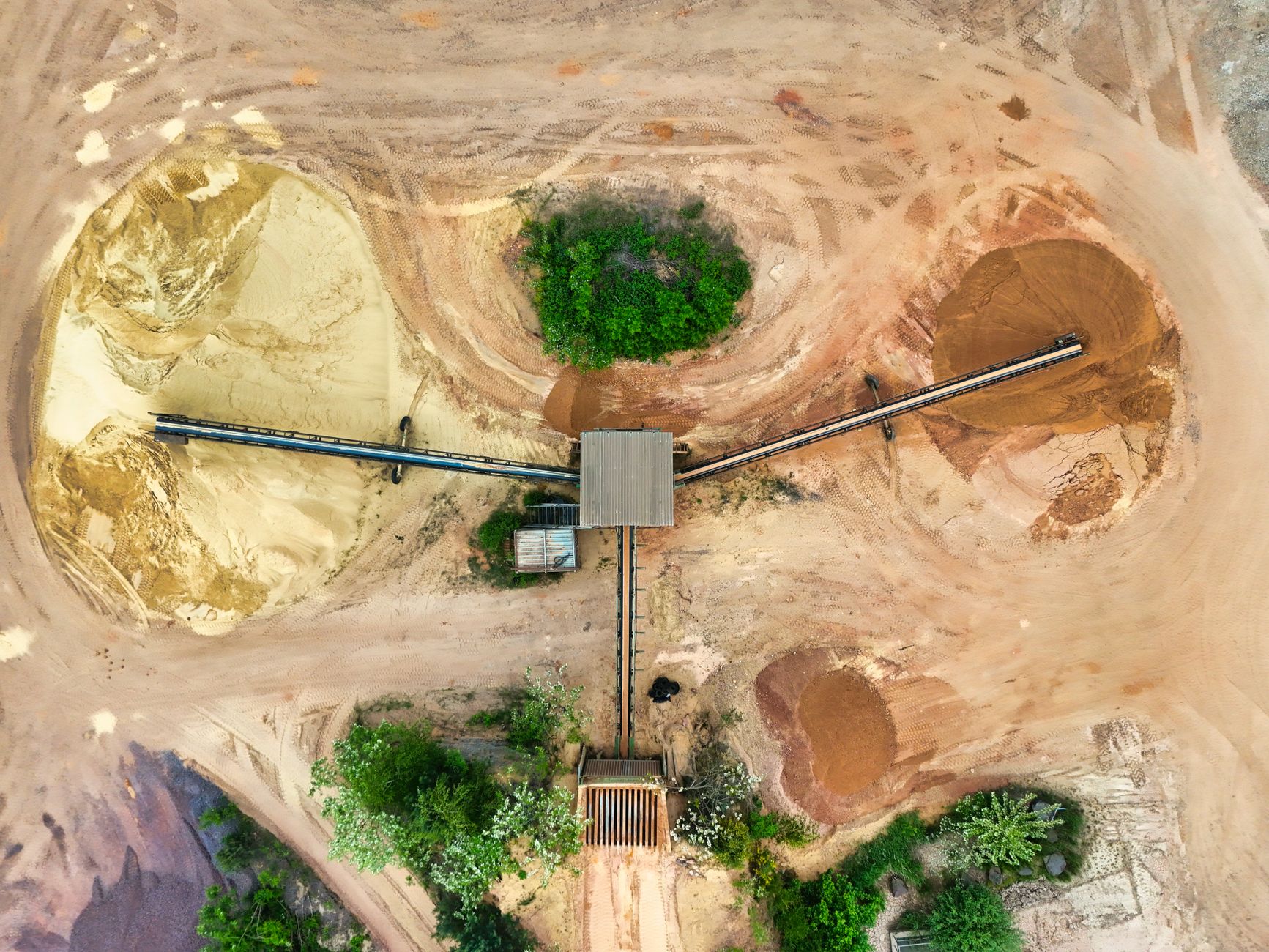
Jackson Sand’s operational model is built around quality control at every step. They mix sand on their own premises at 139 United Dr., Jackson, TN — which means the product is consistent from batch to batch and isn’t sitting in a third-party yard where contamination or substitution can occur. Their own trucks handle every delivery, so the load that’s weighed and verified at their facility is the same load that arrives on your job site. For precision applications like USGA bunker sand or putting green topdressing, that chain of custody matters.
Delivery Included — No Freight Surprises
One of the most common frustrations buyers have with aggregate suppliers is the freight add-on that appears after the initial quote. Jackson Sand includes delivery in their pricing, which makes budgeting straightforward. Whether you’re a golf course superintendent ordering a full season’s worth of topdressing sand or a homeowner in Jackson, TN who needs a few yards of gravel for a driveway, the quote you receive reflects the total cost of material on your site.
Lab-Tested Specs and a Free Yardage Calculator
Jackson Sand publishes lab-tested spec sheets for their products — a level of transparency that’s valuable for any buyer who needs to match a specification or justify a material choice to an agronomist, architect, or facilities director. Before you call for a quote, you can review the specs online and arrive at the conversation already knowing whether their product fits your application. Pair that with the free yardage calculator to have your quantity estimate ready, and the quote process becomes a short, productive call rather than a lengthy back-and-forth.
9. Homeowners: Getting a Quote for Small Jobs
Jackson Sand serves both large commercial accounts and individual homeowners — and the quoting process for a residential job is just as straightforward. If you’re a homeowner in Jackson, TN or anywhere in West Tennessee who needs sand, gravel, or mulch delivered, here’s what to expect.
What Counts as a Small Job?
Not every sand delivery is a multi-truckload golf course renovation. Homeowners in Jackson and across West Tennessee regularly need sand, gravel, or mulch for backyard drainage fixes, garden beds, play areas, driveway repairs, and landscaping projects. These smaller jobs are just as welcome at Jackson Sand as large commercial orders. The quoting process is the same — material type, quantity, delivery address — but the conversation is typically shorter and simpler.
Common residential requests include: coarse sand for drainage correction under a patio or deck, fill sand for leveling a lawn, gravel for a driveway or parking pad, and mulch for landscape beds. If you’re not sure which material fits your project, describe what you’re trying to accomplish and let the supplier guide you to the right product.
Measure Before You Call — Even for Small Projects
The yardage calculator works just as well for a 200 sq ft garden bed as it does for a 10-acre golf course. Before you call for a quote, spend five minutes measuring your area and plugging the numbers into the calculator. Knowing that you need 3.5 cubic yards instead of saying “I need a few yards” gives the supplier what they need to give you a firm quote — and it prevents you from ordering too much or too little. A short-load surcharge on a small residential delivery can represent a significant percentage of the total cost, so getting the quantity right matters even more on smaller orders.
10. Seasonal Timing and Planning Your Order

Timing your sand delivery order isn’t just about convenience — it affects lead times, scheduling flexibility, and in some cases pricing. The Mid-South has distinct busy seasons for golf course maintenance, athletic field renovation, and general construction, and understanding those cycles helps you plan orders that arrive when you need them without last-minute scrambling.
Golf Course Ordering Windows
Golf course sand programs in the Mid-South follow the turf growth calendar. Bermudagrass greens and fairways are most receptive to topdressing during active growth — typically May through September in West Tennessee. Spring and fall renovation windows are the busiest periods for bunker sand and rootzone work, often coinciding with course closures or reduced play periods. Ordering early — 4–6 weeks ahead of your planned application — gives your supplier time to prepare the volume you need and schedule delivery around your maintenance window.
Athletic Field and School Season Timing
Athletic field renovation work typically happens in late summer (July–August) before fall sports seasons begin, and again in late winter or early spring before baseball and soccer seasons. School districts and parks departments often have budget cycles that align with the fiscal year (July 1 in most Tennessee municipalities), which means procurement decisions for summer renovation work are often made in May and June. Getting your quote early in the budget cycle makes it easier to secure funding approval before the busy season hits.
Contractor and Homeowner Timing
For site-work contractors and homeowners, the busiest periods for aggregate delivery in West Tennessee are spring (March–May) and fall (September–October), when weather conditions are most favorable for grading, drainage work, and landscaping. Ordering during peak periods may mean slightly longer lead times. If your project timeline is flexible, mid-summer and mid-winter orders often come with faster turnaround. Either way, having your measurements and material type ready when you call speeds up the quoting and scheduling process significantly.
11. Ready to Request Your Quote? Here's Your Next Move

You’ve measured your area, identified your material, and understand what a complete delivered quote should include. Now it’s time to make the call. Jackson Sand has been serving golf courses, athletic fields, contractors, and homeowners across West Tennessee and the Mid-South from their Jackson, TN facility — and getting a quote is a straightforward process when you come prepared.
Have These Three Things Ready
When you contact Jackson Sand for a price quote, the conversation goes fastest if you have three things ready: (1) the type of material you need (bunker sand, top dressing sand, athletic field sand, drainage gravel, fill sand, mulch, etc.), (2) your quantity estimate in cubic yards (use the free yardage calculator if you haven’t already), and (3) your delivery address and any site access notes (gate codes, weight limits on access roads, preferred drop location). With those three pieces of information, Jackson Sand can give you a firm quote quickly.
Call, or Use the Online Contact Form
You can reach Jackson Sand by phone at 731-668-0440 during business hours — this is the fastest way to get a quote and ask any questions about product specs or scheduling. If you prefer to submit your project details online and receive a follow-up, use the contact form on their website to describe your project and request a quote. Either way, you’ll be talking to a team that knows West Tennessee job sites, understands turf and construction applications, and can give you a straight answer on material, quantity, and delivery.
Frequently Asked Questions
How do I get a price quote for sand delivery in Jackson TN?
Call Jackson Sand at 731-668-0440 or use the contact form at jacksonsand.com/get-in-touch/. Have your material type, cubic yardage estimate, and delivery address ready before you call to get a fast, accurate quote.
Does Jackson Sand include delivery in their price?
Yes. Jackson Sand includes delivery in their pricing, so the quote you receive reflects the total cost of material delivered to your site — no separate freight charges added afterward.
How many cubic yards of sand do I need for my project?
Use the free yardage calculator at jacksonsand.com/yardage-calculator/. Enter your area dimensions and desired depth and the tool calculates your cubic yardage. For most projects, add 10–15% for compaction and waste on deeper fills.
What is the difference between bunker sand and top dressing sand?
Bunker sand is engineered for firmness, playability, and resistance to contamination from native soil, typically with a broader particle size range. Top dressing sand is a finer, more uniform product designed to blend smoothly into existing putting green rootzone without disrupting surface playability.
Does Jackson Sand serve homeowners, or only commercial accounts?
Jackson Sand serves both. Homeowners across West Tennessee can order sand, gravel, and mulch for residential projects including drainage correction, driveway gravel, lawn leveling, and landscaping. Large and small jobs are both welcome.
Can I see lab test results for Jackson Sand's products before ordering?
Yes. Jackson Sand publishes lab-tested spec sheets for their products at jacksonsand.com/sand-specs/. Review particle size distribution and other specs before you call so you can confirm the product matches your application requirements.