
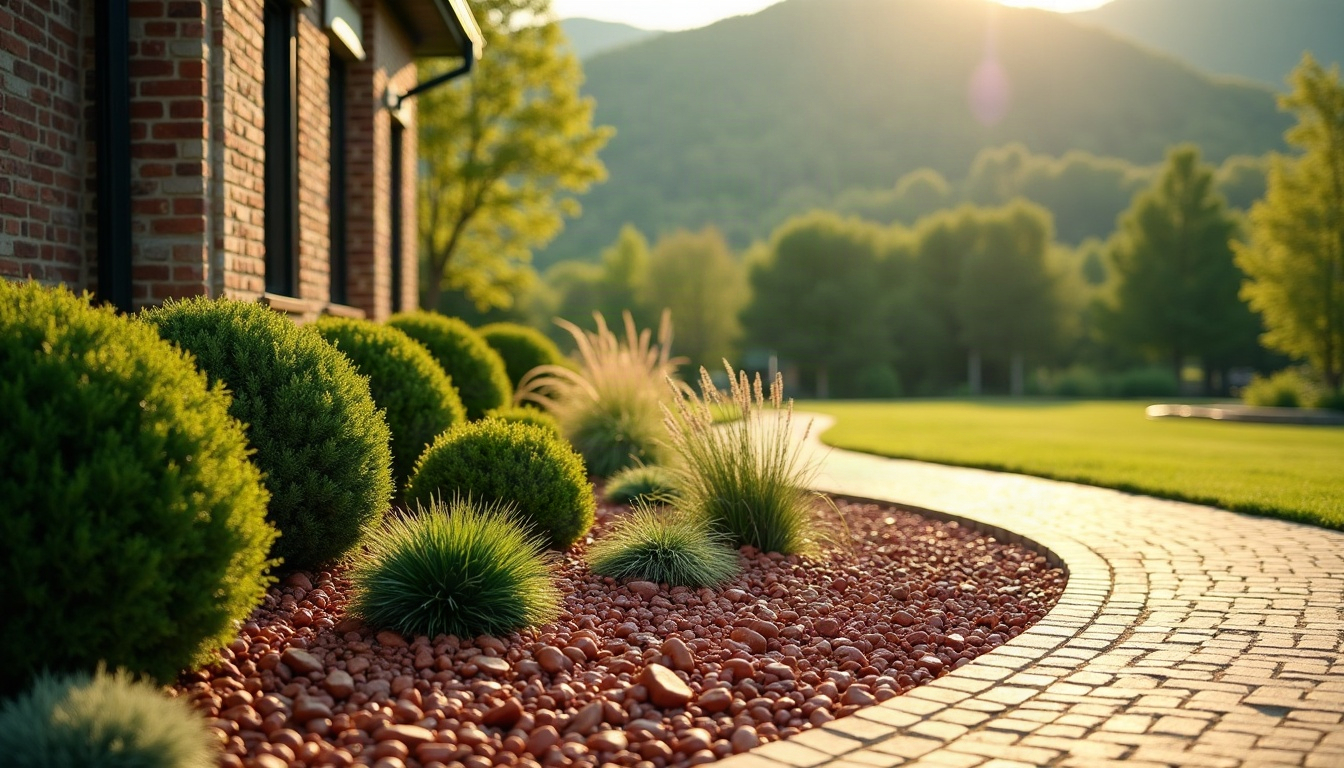
Red River Rock for Landscaping: Beds, Creek Beds and Drainage
Quick answer: Red river rock is naturally rounded stone in warm red, rust and brown tones. It works well in decorative beds, dry creek beds and drainage strips along foundations, where it resists washout and stops mud splash. Install it over landscape fabric with solid edging, about 2 to 4 inches deep depending on stone size, and make sure the soil beneath slopes away from buildings.
What River Rock Is
River rock is natural stone that has been smoothed and rounded by moving water. Over long periods, currents in rivers and streams tumble stones against one another and against the streambed, grinding away sharp corners until each piece has a soft, rounded profile. The stones are then gathered, washed and screened into size ranges for landscaping and construction use.
Because it is shaped by nature rather than a crusher, every piece of river rock is a little different. Sizes, shapes and colors vary within a load, which gives river rock its relaxed, organic look. It reads as something that belongs outdoors, the way a creek bed or a gravel bar does.
River rock is generally larger than pea gravel. Where pea gravel is roughly pea-sized, landscape river rock commonly ranges from about the size of a grape up to a hen’s egg or larger, depending on the product. That extra size gives it more visual weight in a bed, makes it less likely to be kicked or washed away, and makes it a strong choice anywhere water moves across the ground.
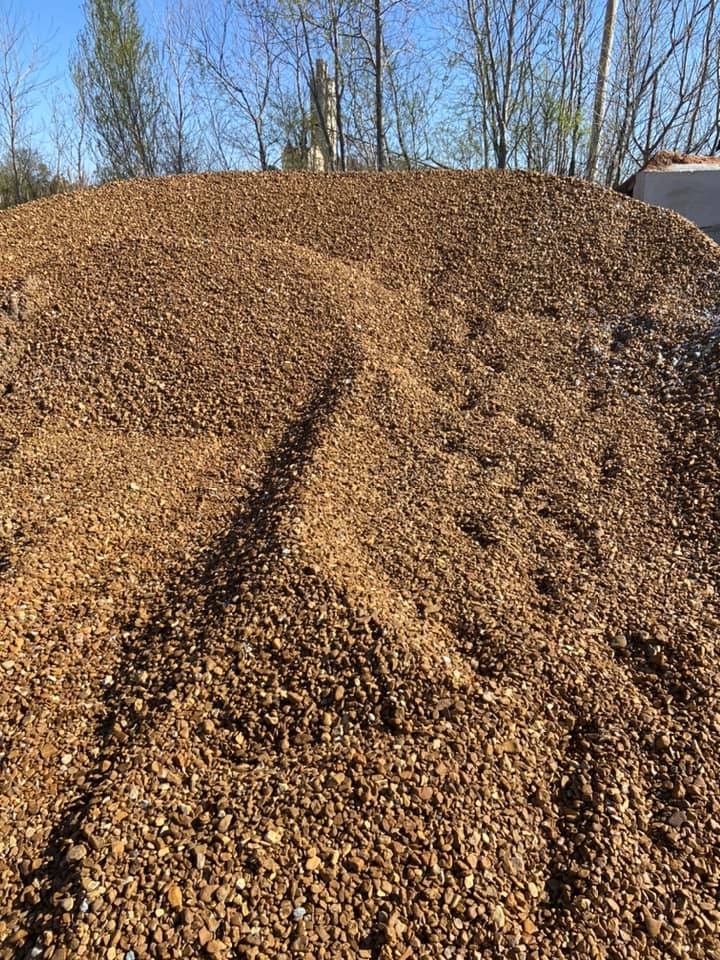
Jackson Sand carries Red River Rock, a rounded river pebble with warm color, as part of our gravels lineup. Homeowners and landscapers across West Tennessee use it for decorative beds, dry creek beds and drainage edges around foundations. This guide covers how to use it well, how to install it so it stays clean and in place, and how much to order.
Color and Texture: What Makes Red River Rock Stand Out
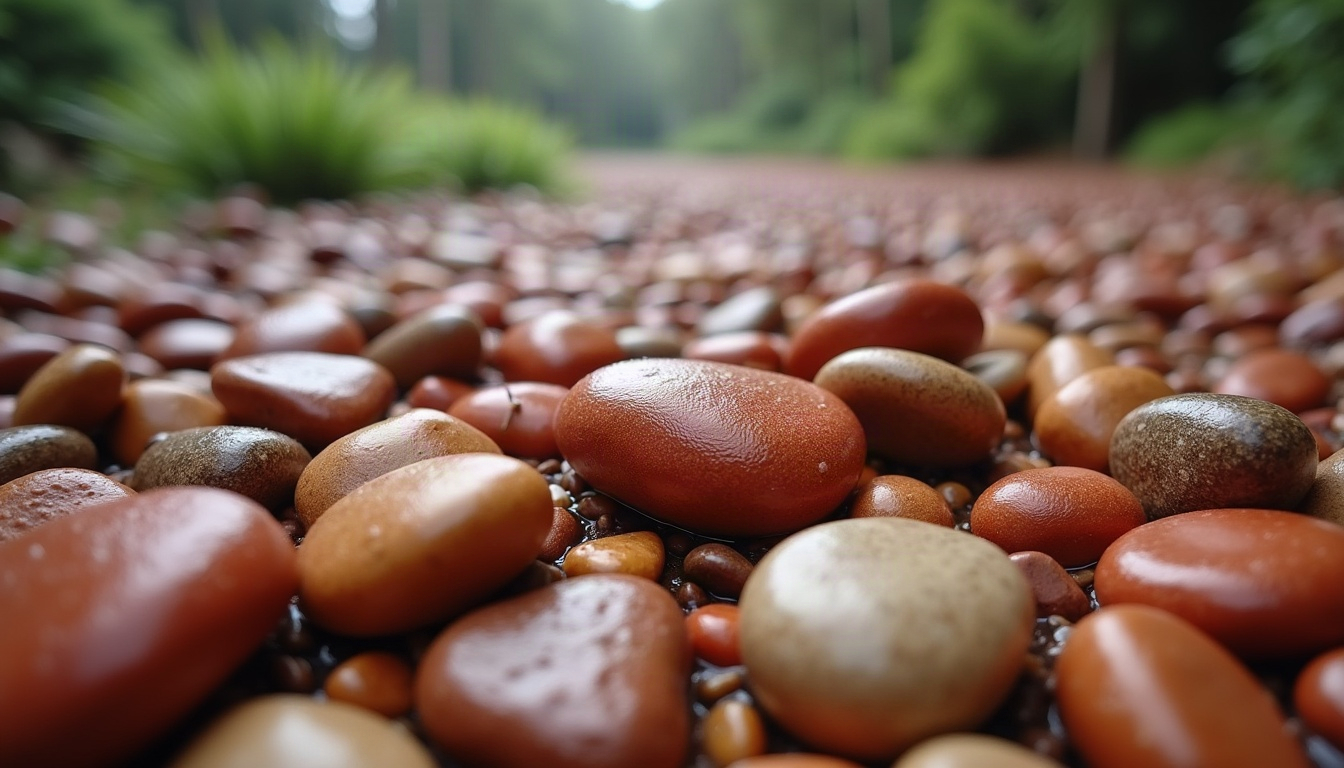
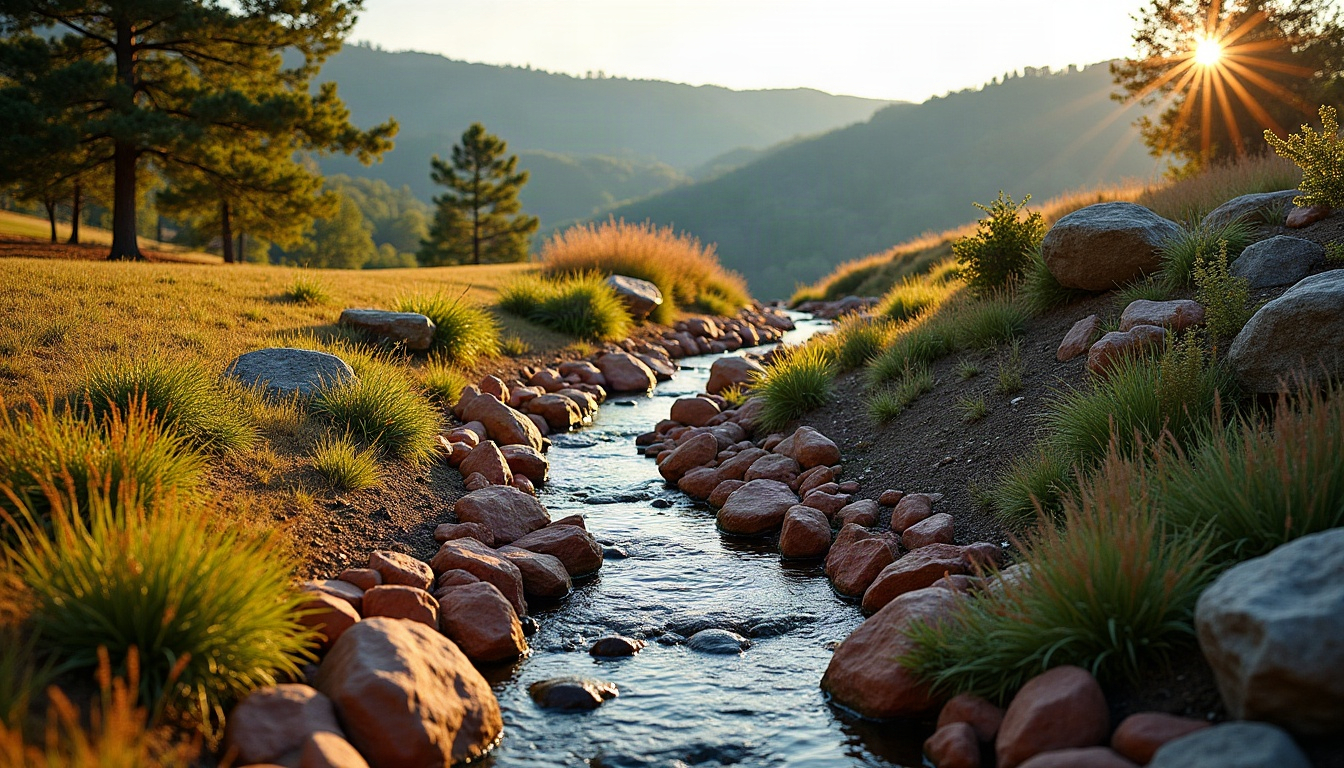
Most river rock comes in shades of gray, tan and white. Red river rock brings warmer tones into the mix: rusty reds, terra cotta, brick, deep browns and buff, often with lighter stones scattered through. The exact palette varies from load to load since it is a natural product, but the overall impression is warm and earthy.
Why the warm palette works in the Mid-South
Red and brown stone pairs naturally with red brick homes, which are common across West Tennessee. It also complements the reddish clay soils of the region, so beds and creek features look like they belong in the landscape rather than sitting on top of it. Against green turf and the deep green of boxwoods, hollies and hostas, the warm color stands out without looking artificial.
Smoothness
The rounded surfaces of river rock catch light softly and look polished, especially when wet. After a rain, the colors deepen and a red river rock bed or creek bed comes alive. Some homeowners even rinse their beds before guests arrive for that effect.
Wet vs. dry appearance
Keep in mind that the stone you see in the bed most of the time is dry. Dry river rock looks lighter and more muted than the wet stone you may see in photos. When choosing a color scheme, look at the stone in both conditions.
Mixing sizes
Landscapers often combine river rock with larger boulders and smaller gravel to create a more natural look. A dry creek bed, for instance, looks more convincing with a few larger stones placed along the banks and finer material settled in the low points.
Decorative Beds and Landscape Borders
Decorative beds are the most common use for red river rock. Used in place of mulch or alongside it, stone provides a permanent ground cover that does not wash away, fade quickly or need replacing every year.
Where river rock beds work well
- Around foundation plantings, especially on sides of the house where mulch keeps washing out under roof runoff.
- Under downspouts and roof valleys, where falling water would otherwise dig holes in soil or mulch.
- Along driveways and walks, as a clean border strip that holds up to edge traffic.
- Around mailboxes, light posts and signs, where mowing and trimming is awkward.
- In xeriscape and low-water gardens, paired with drought-tolerant plants, ornamental grasses and succulents.
- Around trees, as a ring that keeps mowers and string trimmers away from bark, kept a few inches back from the trunk.
Stone vs. mulch
| Factor | Red river rock | Organic mulch |
|---|---|---|
| Lifespan | Many years with occasional top-up | Breaks down, usually replenished yearly |
| Washout resistance | High | Low to moderate |
| Soil benefit | None (does not add organic matter) | Adds organic matter as it breaks down |
| Heat | Absorbs and radiates heat in full sun | Keeps soil cooler |
| Weed control | Good with fabric, needs debris removal | Good when kept at proper depth |
| Up-front cost | Higher | Lower |
One more consideration in full sun: stone beds against a south- or west-facing brick wall can get hot in a Tennessee July. Choose heat-tolerant plants for those spots, or shade the stone with shrubs that spread over it as they mature.
A common compromise is stone in the high-runoff and high-traffic areas, with mulch around plants that prefer cooler, richer soil.
Building a Dry Creek Bed
A dry creek bed is a shallow, stone-lined channel that looks like a natural streambed. Most of the time it is dry. During heavy rain it carries runoff across the yard, often from a downspout or low spot toward a ditch, swale or rain garden. It solves a drainage problem and adds a strong design feature at the same time.
Planning the route
Watch where water flows during a storm. The best creek beds follow the path water already wants to take. Natural streams curve, so avoid a straight line. Vary the width, wider at bends and narrower in straight runs, and make sure the channel has a continuous downhill slope with an outlet where water can safely leave your property or soak in.
Construction steps
- Call Tennessee 811 to have utilities located before digging.
- Excavate the channel. A typical residential creek bed is about 2 to 4 feet wide and 8 to 18 inches deep, with sloped sides rather than vertical walls.
- Compact the bottom and check the slope so water will not pond.
- Line with landscape fabric, overlapping seams generously and running the fabric up the sides.
- Place larger stones and boulders first along the edges and at bends, where moving water pushes hardest.
- Fill the channel with river rock, nesting stones together and covering the fabric completely.
- Finish the edges with plants such as ornamental grasses, ferns, sedges or daylilies so the creek blends into the yard.
Handling bigger volumes
If the creek bed is carrying water from a large roof or a big piece of upslope property, consider placing a perforated drain pipe in clean gravel beneath the river rock. Our page on seepage drainage explains how buried drains work.

Drainage Edges Around Foundations
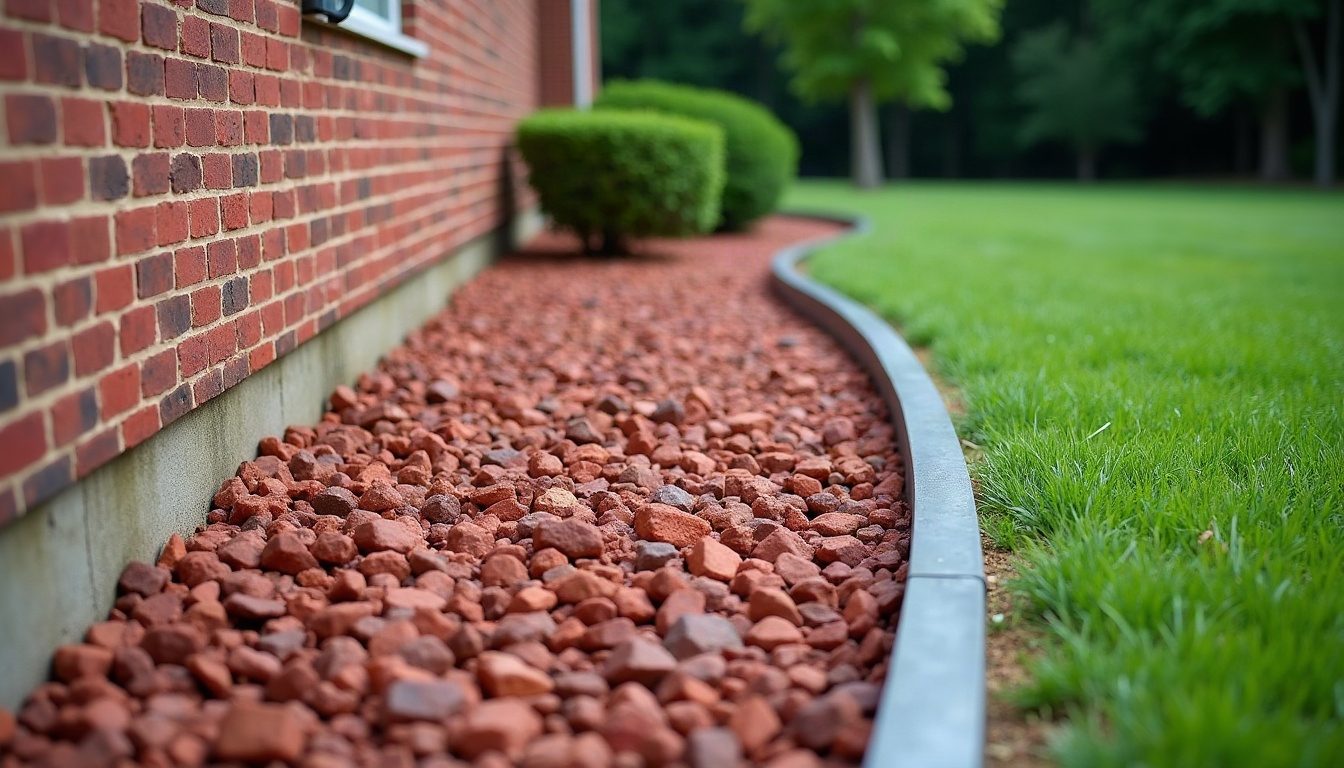
One of the most practical uses of red river rock is a drainage strip around the foundation of a house, garage or outbuilding. Roofs without gutters, or with overflowing gutters, drop water in a line along the drip edge. Over time that water splashes mud onto siding, digs a trench in the soil, and can push moisture toward the foundation and crawlspace.
How a drip-edge strip helps
- The stone breaks the fall of the water so it does not splash mud onto walls.
- It keeps the soil beneath from eroding into a trench.
- It gives water a path to spread out and drain away, provided the ground beneath slopes away from the house.
- It eliminates the hard-to-mow strip right against the wall.
Getting the grade right
Stone alone does not move water away from a house. The soil beneath the stone has to slope away from the foundation. A common rule of thumb is a drop of about 6 inches over the first 10 feet out from the wall. Building a stone strip on top of soil that slopes toward the house only hides the problem. Our guide to surface water drainage and slope covers minimum grades.
Typical dimensions
A drip-edge strip is commonly 18 to 24 inches wide, wide enough to catch water falling from the roof edge, and about 3 inches of stone over fabric. Use edging on the lawn side to keep stone out of the grass and the mower.
Keep stone below siding
Leave several inches between the top of the stone and the bottom of any siding, and do not bury weep holes in brick veneer. Keeping a clear gap helps walls dry out and discourages pests.
Installing River Rock With Landscape Fabric
River rock installation is straightforward, but a few steps make the difference between a bed that looks good for years and one that turns weedy and muddy after one season.
- Clear the area. Remove grass, weeds and roots. For persistent weeds, dig out roots rather than relying on fabric alone.
- Grade the soil. Shape the surface so water flows the direction you want, away from structures, and compact it lightly.
- Install edging. Steel, aluminum, stone or concrete edging defines the bed and keeps stones out of the lawn. Set the top slightly above the finished stone surface.
- Lay landscape fabric. Use a quality woven or nonwoven geotextile rather than thin plastic. Fabric lets water through while separating stone from soil, so rocks do not sink into mud and the bed stays cleaner. Overlap seams by about 6 inches and pin it down with landscape staples.
- Cut openings for plants. Cut an X in the fabric, fold back the flaps, plant, then fold them back around the stem.
- Place the stone. Dump or shovel river rock onto the fabric carefully to avoid tearing it, then spread by hand or with a rake to the finished depth.
- Rinse. A quick spray removes dust and shows off the color.
Why fabric matters with river rock
Without fabric, river rock slowly works its way down into the soil, especially in clay that gets soft when wet. Soil also works up between the stones, giving weeds a perfect seedbed. Fabric keeps those two layers apart. It is not a permanent weed barrier, since windblown seeds can still sprout in debris on top, but it greatly reduces the work.
How Deep Should River Rock Be?
Getting the depth right keeps fabric covered, holds weeds down and keeps the bed looking full without wasting stone.
| Application | Typical depth | Notes |
|---|---|---|
| Decorative bed (smaller river rock) | 2 to 3 in | Enough to fully hide fabric |
| Decorative bed (larger river rock) | 3 to 4 in | Larger stones need more depth to cover gaps |
| Drip-edge strip around foundation | About 3 in | Keep top of stone below siding |
| Dry creek bed channel | 4 in or more | Plus larger stones on banks and bends |
| Downspout splash area | 3 to 4 in | Use larger stone where flow is strongest |
The rule of thumb
Plan for a depth of at least about twice the size of the average stone. That way the stones overlap and nest together, covering fabric and soil completely. One layer of stone laid side by side will leave gaps that show fabric.
Avoid going too deep
Extra depth adds cost and weight without much benefit. In beds with plants, very deep stone makes it hard to add new plants and can trap heat around stems in summer.
How Much Red River Rock to Order
River rock is ordered by the cubic yard or by weight. Start with your measurements.
The formula
Length (ft) x width (ft) x depth (ft) / 27 = cubic yards. Divide inches by 12 to convert, so 3 inches is 0.25 feet and 4 inches is 0.33 feet.
Examples
| Project | Dimensions | Depth | Approx. cubic yards |
|---|---|---|---|
| Drip-edge strip, one side of a house | 50 ft x 2 ft | 3 in | 0.9 |
| Drip-edge strip, whole house | 180 ft x 2 ft | 3 in | 3.3 |
| Front foundation bed | 40 ft x 5 ft | 3 in | 1.9 |
| Dry creek bed | 60 ft x 3 ft | 4 in | 2.2 |
| Mailbox ring | 6 ft diameter circle | 3 in | 0.26 |
For circles, area is 3.14 x radius x radius. For a dry creek bed with sloped sides, measure the width along the fabric, not just across the top, since stone covers the full surface.
Add 5 to 10 percent for uneven ground and settling. Our free yardage calculator handles the math, and we are glad to double-check your numbers when you call.
Maintenance and Common Mistakes
River rock is one of the lowest-maintenance landscape materials, but it does need some attention.
Routine care
- Clear leaves and debris. Organic matter that settles between stones breaks down into soil, and that soil grows weeds. A leaf blower on low or a rake works well in fall.
- Pull weeds when small. They come out easily from a stone bed if caught early.
- Rinse occasionally. A hose spray brightens the color and washes dust down.
- Top up thin spots. Add a little stone where fabric starts to show.
- Check after storms. In creek beds, reset stones that moved and look for spots where water undercut the edges.
Mistakes to avoid
- Skipping fabric. Stones sink into the soil and weeds move in.
- Too shallow. Visible fabric looks unfinished and breaks down in sunlight.
- Ignoring grade. Stone does not fix soil sloping toward a foundation.
- Piling stone against siding or tree trunks. Leave a gap.
- Straight-line creek beds. They look artificial; let them curve and vary in width.
- Stone where you mow. Use edging to keep rocks out of the lawn, where they become projectiles.
Order Red River Rock in Jackson, Tennessee
Red river rock gives West Tennessee yards a warm, natural finish while solving real problems with runoff, splashing and erosion. Jackson Sand stocks it at our yard in Jackson alongside pea gravel, 33C limestone and our full line of sands. We have been in production since around 1996 and today run about 14 trucks of our own, so your stone arrives clean, with no leftover material from someone else’s job.
Measure your beds, run the numbers, and call us at 731-668-0440 or contact us online to order red river rock or ask which stone fits your project.
Inside the Jackson Sand Plant
Take a 90-second look at where our sand comes from: the washing plant, screens and conveyors, and the Jackson Sand truck fleet that delivers every load. President Carlton Pope tells the story of how the company grew from one truck in 1996.
Sources and Further Reading
- mulching with gravel, rock and organic materials (Colorado State University Extension)
- EPA Soak Up the Rain: rain gardens (U.S. EPA)
- USGS construction sand and gravel statistics (U.S. Geological Survey)
Frequently Asked Questions
What is red river rock?
Red river rock is natural stone that has been rounded and smoothed by moving water, in warm shades of red, rust, terra cotta, brown and buff. It is larger than pea gravel and is used mainly for decorative landscape beds, dry creek beds and drainage edges around foundations, where its weight and shape help it stay in place.
How deep should river rock be in a landscape bed?
Plan on about 2 to 3 inches for smaller river rock and 3 to 4 inches for larger stones. A good rule is a depth of roughly twice the average stone size, so the stones overlap and fully cover the landscape fabric. Dry creek beds usually need 4 inches or more, with larger stones placed along the banks.
Do I need landscape fabric under river rock?
Yes, in most installations. A woven or nonwoven geotextile keeps stones from sinking into the soil and keeps soil from rising between the stones, which greatly reduces weeds. Overlap seams about 6 inches and pin the fabric with landscape staples. Fabric is not a complete weed barrier, so keep leaves and debris cleared off the stone.
Does river rock help with drainage around a house?
River rock helps by breaking the fall of roof runoff, stopping mud splash and preventing erosion trenches along the drip line. But the soil beneath must slope away from the foundation, typically about 6 inches over the first 10 feet. Stone placed over soil that slopes toward the house will not fix a drainage problem.
How do I build a dry creek bed with river rock?
Follow the path water already takes, excavate a curving channel about 2 to 4 feet wide and 8 to 18 inches deep with sloped sides, line it with landscape fabric, place larger stones at the edges and bends, then fill with river rock. Make sure it slopes continuously to a safe outlet. Plant the edges to blend it in.
How much river rock do I need?
Multiply length by width by depth in feet and divide by 27 for cubic yards. For example, a 2 foot wide strip around a house with a 180 foot perimeter at 3 inches deep needs about 3.3 cubic yards. Add 5 to 10 percent for uneven ground, or use the yardage calculator on our website.
Ready to order or have a question about the right material? Call Jackson Sand at 731-668-0440 or send us a message and we will help you pick the right product and quantity.
Leave a Reply