
Sand Aggregate Specs for Athletic Fields: Your 9-Point Guide for Jackson, TN
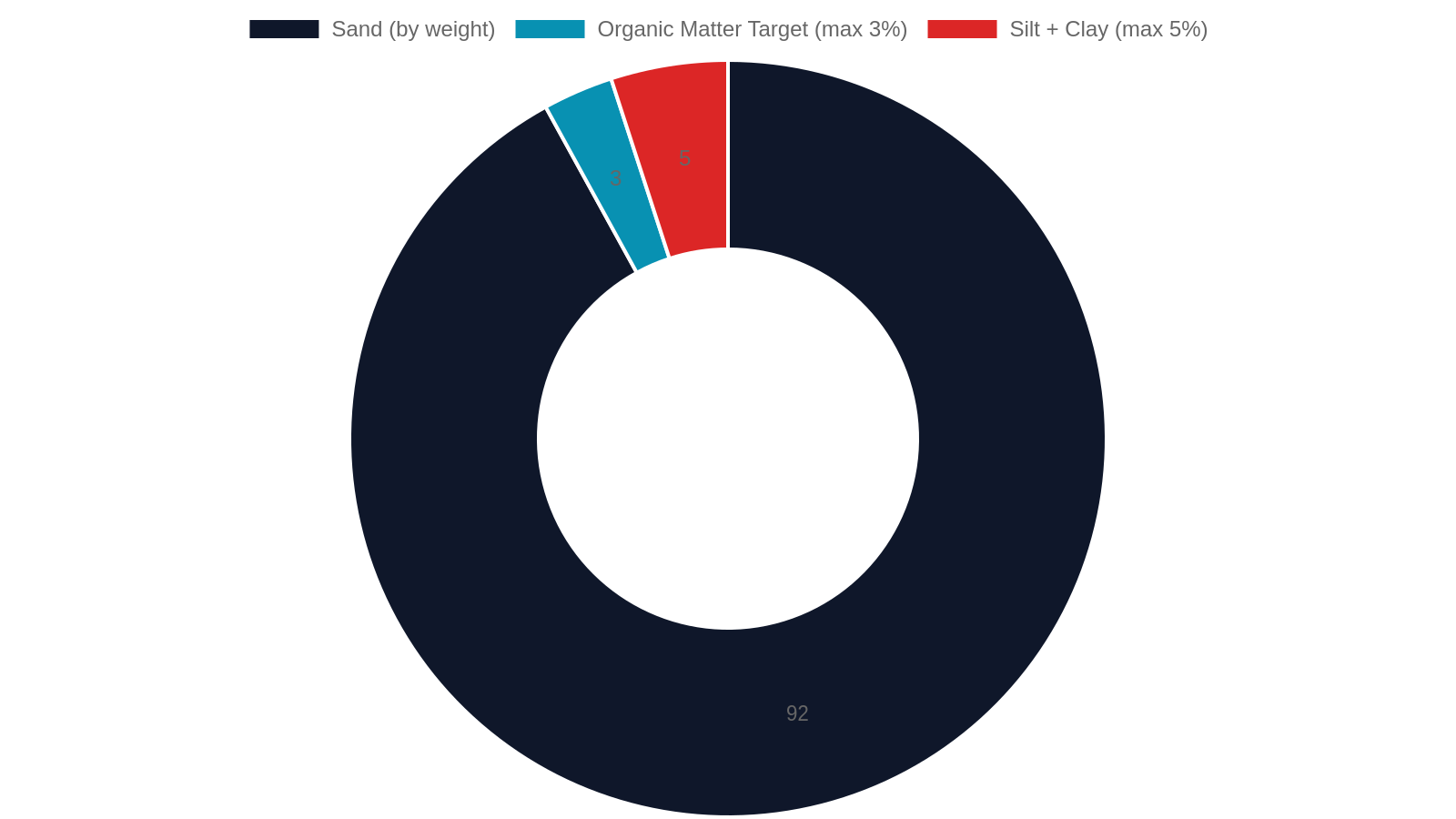
Quick answer: Athletic field sand must meet tight particle-size, drainage, and organic-matter standards to keep playing surfaces safe, firm, and fast-draining. In Jackson, TN, the key specs are a USGA-range particle distribution (0.25–1.0 mm), a saturated hydraulic conductivity of at least 6 inches per hour, less than 3% organic matter, and low silt-plus-clay content (under 5%). Jackson Sand mixes its own sand on premises, publishes lab-tested spec sheets, and delivers in company-owned trucks throughout West Tennessee — so you get consistent, verified material every load.
1. Why Sand Specs Matter More on Athletic Fields Than Anywhere Else
Sand is the foundation of every high-performance athletic field, but not all sand is equal. The difference between a field that drains in 20 minutes and one that stays soggy for two days comes down to measurable, testable physical properties — particle size distribution, hydraulic conductivity, organic matter content, and more. For school districts, parks departments, and college programs in Jackson and across West Tennessee, getting those specs right from the start protects both the investment in the field and the athletes who use it.
Player Safety Starts at the Root Zone
A poorly specified sand mix can create a compacted, slippery, or uneven surface that directly increases the risk of ankle sprains, turf burns, and knee injuries. When particle sizes are too fine, pore spaces collapse under foot traffic, water pools, and cleats lose traction. When particles are too coarse and angular, the surface becomes abrasive and unstable. The right spec sits in a precise middle ground — round to sub-round particles in the medium-to-coarse sand range — that gives athletes a predictable, forgiving surface every game.
Drainage Failure Costs More Than a Rainout
A field that drains poorly does not just cancel games — it accumulates compaction damage with every use on wet soil, shortens turf life, and can render a field unusable for weeks after a single heavy rain event. West Tennessee receives an average of roughly 54 inches of rainfall per year, meaning drainage capacity is not a luxury — it is a maintenance necessity. Sand with the correct hydraulic conductivity keeps that water moving through the profile instead of sitting on the surface or in the root zone.
2. Particle Size Distribution: The Most Important Number on the Spec Sheet
Of all the numbers on a sand specification report, particle size distribution carries the most weight. It controls drainage rate, compaction resistance, surface stability, and how well the sand integrates with existing soil or a gravel drainage layer. Understanding the standard size categories — and what percentage of each is acceptable — lets field managers evaluate competing materials with confidence rather than guessing.
The USGA Particle-Size Window
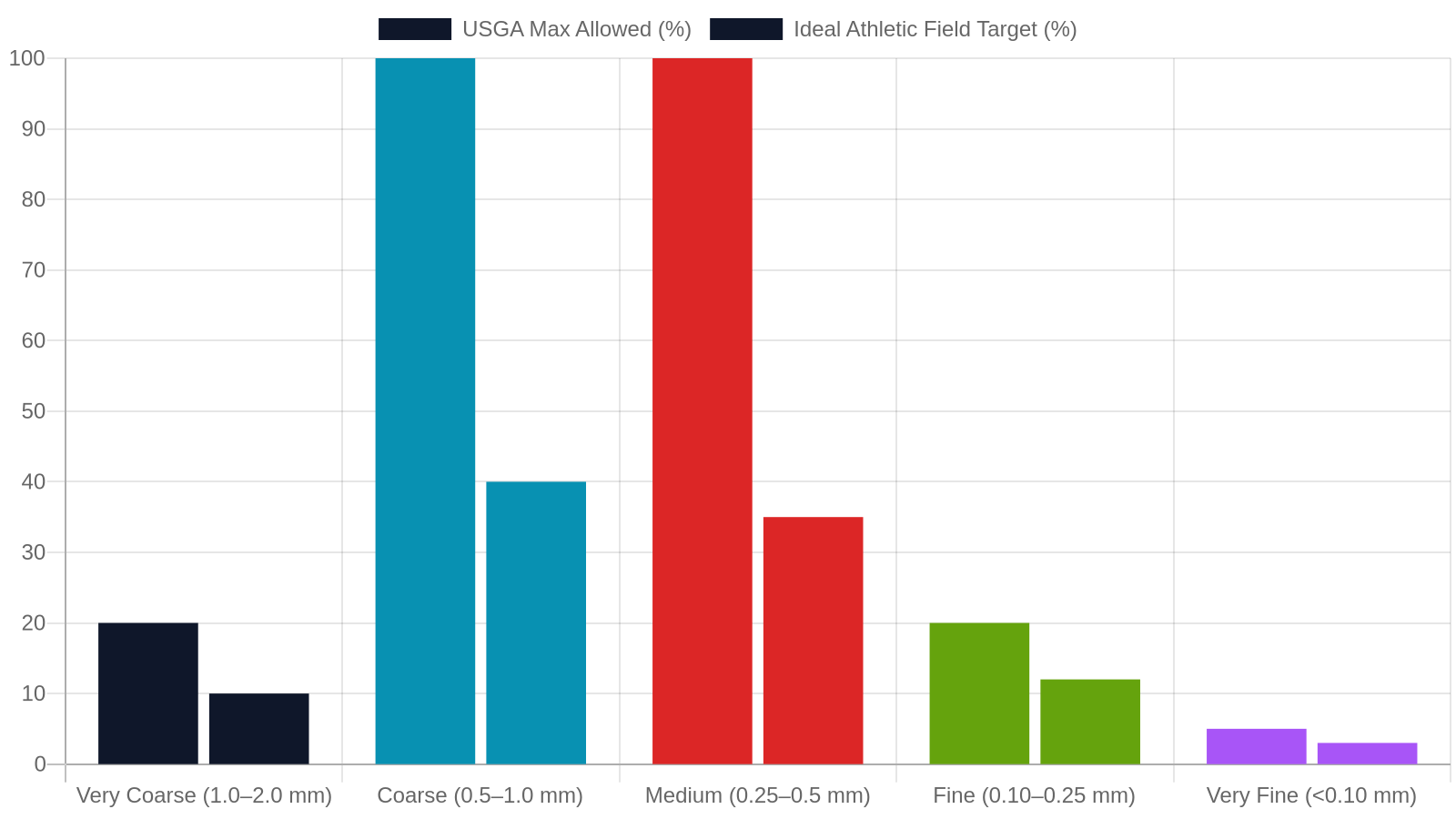
The United States Golf Association (USGA) root-zone recommendations — widely adopted for athletic fields as well as golf — define acceptable sand as having at least 60% of particles in the medium-to-coarse range (0.25–1.0 mm). Very coarse particles (1.0–2.0 mm) should stay below 20%, and fine particles (0.05–0.25 mm) should stay below 20% as well. This distribution keeps pore spaces large enough for rapid drainage while still providing the particle-to-particle contact that gives the surface stability under load.
- Very coarse sand: 1.0–2.0 mm — max 20%
- Coarse sand: 0.5–1.0 mm — included in target zone
- Medium sand: 0.25–0.5 mm — core of the target zone
- Fine sand: 0.10–0.25 mm — limited to 20%
- Very fine sand: 0.05–0.10 mm — kept as low as possible
Sieve Analysis: How Labs Measure Particle Size
A sieve analysis (also called a gradation test) passes a dried sand sample through a stacked series of wire-mesh screens with progressively smaller openings. The percentage of material retained on each screen is weighed and reported as a cumulative gradation curve. A well-graded athletic-field sand produces a smooth S-curve, confirming that no single size dominates. A spike in the fine-sand range is a red flag — it signals a material that will compact quickly and drain slowly. Jackson Sand publishes lab-tested gradation data on its sand spec sheets, so field managers can verify compliance before the first load arrives.
3. Hydraulic Conductivity: How Fast Water Moves Through Your Field
Particle size tells you what the sand looks like; hydraulic conductivity tells you how it performs when it rains. A field can have a textbook gradation curve and still drain poorly if the material is compacted, contaminated with fines, or layered incorrectly. Ksat is the single most field-relevant number on a sand test report, and it should be confirmed by an independent lab before any large purchase.
The 6-Inch-Per-Hour Benchmark
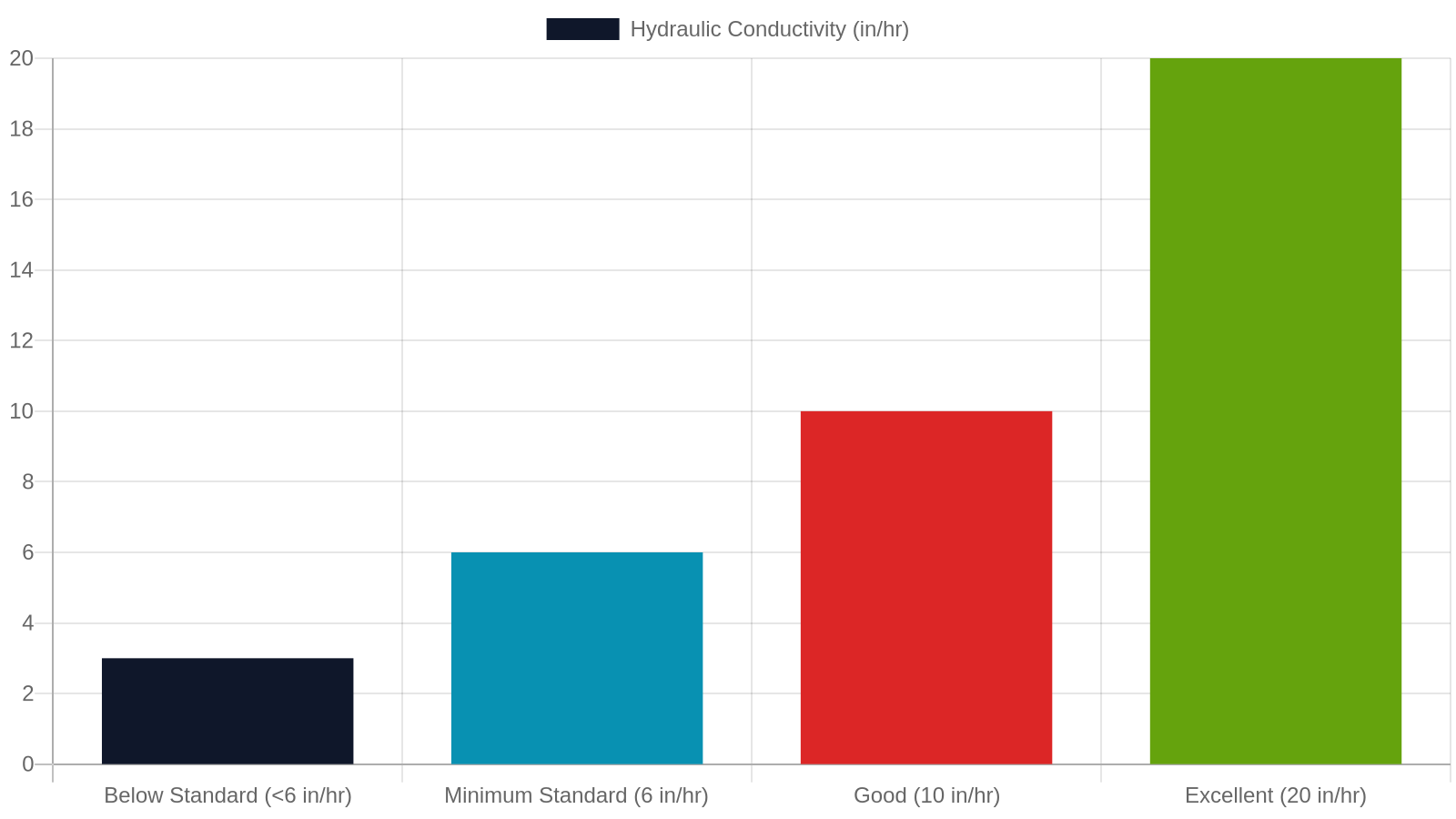
Saturated hydraulic conductivity (Ksat) measures how quickly water moves through a saturated sand sample under a standard head of pressure. For athletic fields, the widely cited minimum target is 6 inches per hour (in/hr), though many high-use fields aim for 10–20 in/hr to handle intense rain events without surface ponding. A Ksat below 6 in/hr means the sand layer itself becomes the drainage bottleneck — no amount of subsurface pipe will compensate for a root zone that cannot pass water quickly enough.
What Lowers Ksat Over Time
Even a sand that tests at 15 in/hr when new can drop below 6 in/hr within a few seasons if the wrong materials are introduced. The main culprits are:
- Silt and clay contamination — particles smaller than 0.05 mm fill pore spaces and act like a slow-release plug
- Organic matter accumulation — thatch and decomposing roots bind fine particles together
- Layering problems — placing a finer-textured material over a coarser one creates a perched water table that stops downward movement
Specifying a low-silt, low-clay sand from the start — and using consistent material for topdressing — is the most reliable way to protect long-term drainage performance.
4. Silt and Clay Content: The Hidden Drainage Killers
Silt and clay are the silent saboteurs of athletic field drainage. Because they are invisible to the naked eye, they are easy to overlook during a purchasing decision — and expensive to correct after a field is built. Understanding where fines come from, how labs measure them, and what thresholds to enforce puts field managers in a much stronger position when evaluating sand suppliers.
The 5% Rule for Combined Fines
USGA guidelines recommend that the combined silt-plus-clay fraction of an athletic field sand stay at or below 5% by weight. Many specifications tighten this further, requiring silt below 3% and clay below 1% individually. These particles are so small — silt ranges from 0.002–0.05 mm, clay is below 0.002 mm — that even a small percentage dramatically reduces pore-space diameter and slows water movement. A sand testing at 8% combined fines may look clean to the eye but will behave like a loam under compaction.
How Fines Get Into Your Sand
Silt and clay contamination can enter a sand supply at the pit, during processing, or during transport. Unscreened or minimally processed pit sand often carries significant fines from the surrounding geological deposit. That is why the mixing and processing stage matters as much as the raw material source. Jackson Sand mixes its sand on premises using quality-controlled materials, which limits the introduction of fines that would otherwise compromise field performance. Requesting a written gradation report — including the percent passing the No. 200 sieve (0.075 mm), which captures silt and clay — is the simplest way to verify what you are actually buying.
5. Organic Matter: How Much Is Too Much?
Organic matter content is one of the most frequently misunderstood variables in athletic field sand specifications. Field managers sometimes assume that more organic matter means better growing conditions — and up to a point, that is true. But in a sand-based root zone designed for drainage and firmness, excess organics work directly against those goals. Knowing the right range, and how to manage accumulation over time, is part of long-term field stewardship.
The 3% Threshold for New Installations
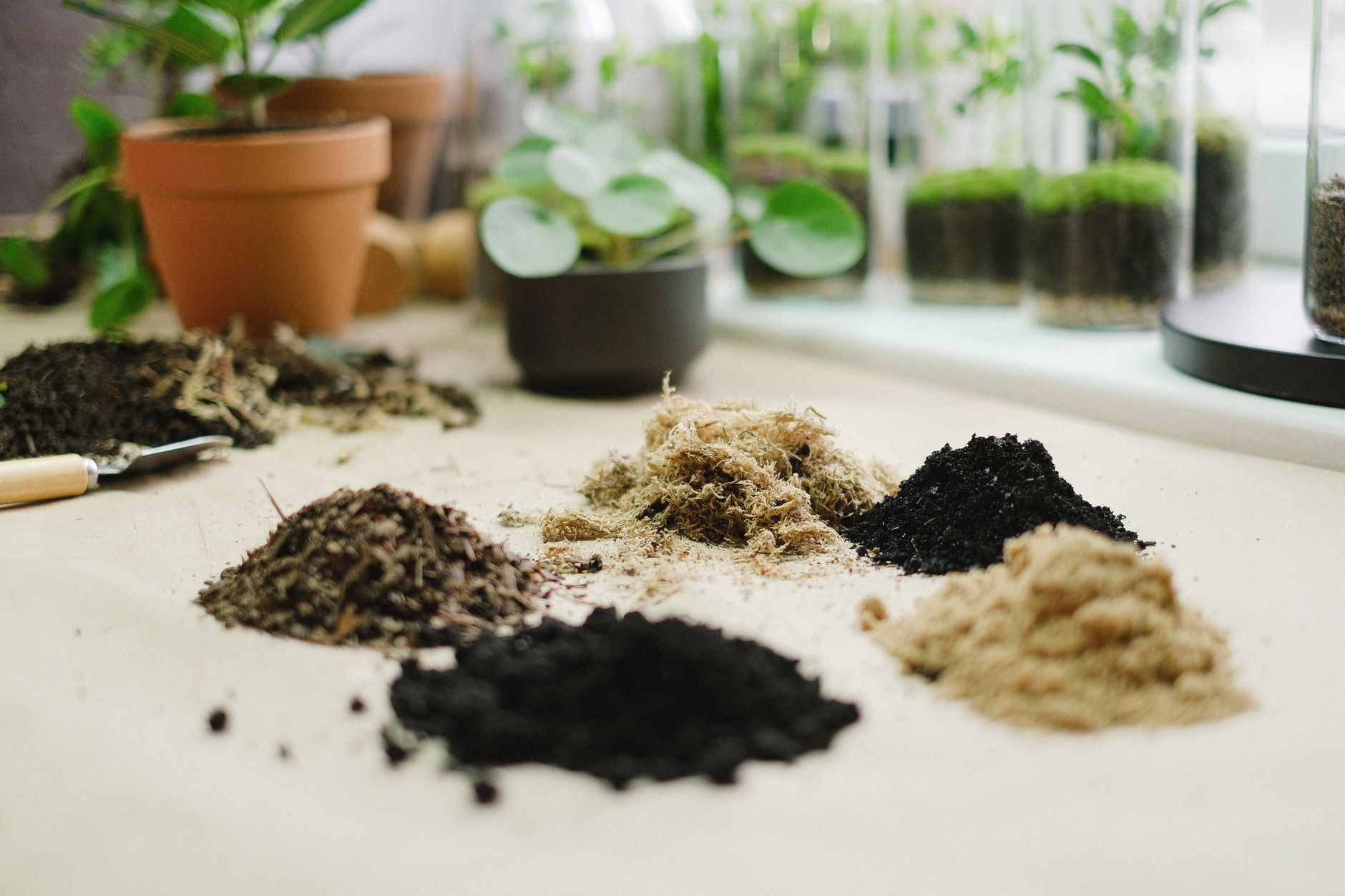
Organic matter in a sand root zone is a double-edged input. A small amount — typically 1–3% by weight — supports microbial activity, nutrient retention, and turf establishment. Above 3%, however, organic matter begins to reduce macropore space, increase water retention beyond what roots need, and create anaerobic zones that promote disease. For new field construction or major renovation, most sports turf specifications call for sand with less than 1% organic matter, with any organic amendment added separately and blended to a controlled ratio.
Organic Matter Accumulation Over Time
Even a sand root zone that starts at 0.5% organic matter will accumulate thatch and decomposed root material over time. Research from university turf programs suggests that organic matter in sand-based root zones increases at roughly 0.3–0.5% per year under moderate use without active management. Aerification, verticutting, and consistent topdressing with spec-compliant sand are the primary tools for keeping organic matter in check. This is why the sand used for annual topdressing should meet the same particle-size and Ksat standards as the original root-zone material — inconsistent topdressing sand is one of the most common causes of layering problems on established fields.
6. Particle Shape and Hardness: Roundness, Angularity, and Durability
Two sand samples can have identical particle-size distributions and still perform very differently on the field — because shape and hardness matter nearly as much as size. These properties are less commonly discussed in purchasing conversations, but they directly affect surface feel, compaction rate, and how long the root zone maintains its drainage characteristics under years of use.
Why Rounded Particles Outperform Angular Ones
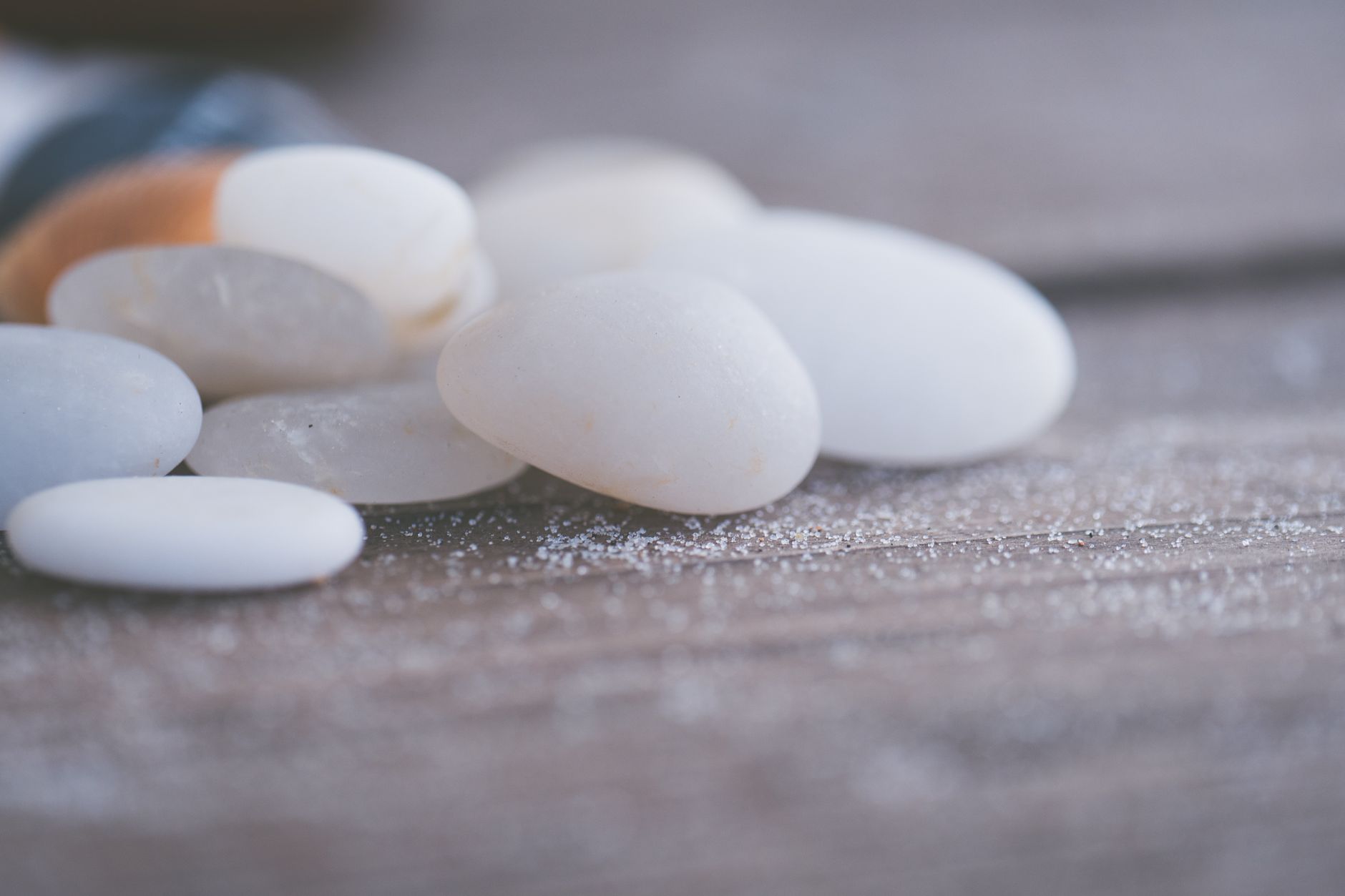
Particle shape affects how sand grains pack together under load. Angular particles — those with sharp edges and irregular faces — interlock tightly when compacted, reducing pore space and increasing resistance to water movement. They also create a more abrasive surface, which matters for athletes who slide or fall. Rounded to sub-rounded particles, by contrast, pack less densely, maintain larger pore spaces under traffic, and provide a less abrasive playing surface. Most athletic field sand specifications call for a roundness rating of at least 0.6 on the Krumbein-Sloss scale, where 1.0 is a perfect sphere.
Hardness and Breakdown Resistance
Soft or friable sand grains — those that break down under mower traffic, aerifier tines, or heavy foot traffic — generate fines over time, progressively degrading drainage performance. Quartz sand is the preferred material for athletic fields precisely because of its hardness (7 on the Mohs scale) and chemical inertness. Limestone-based sands are softer and more reactive, making them a poor long-term choice for high-use fields. When evaluating a sand supplier, asking about the mineralogical composition of the source material is a reasonable due-diligence step, especially for fields that will receive heavy aerification and topdressing programs.
7. Comparing Sand Types for Athletic Field Applications
Not every sand product is interchangeable, even when the bags look the same. Understanding the functional differences between sand types — and matching the right material to the right application — prevents costly mistakes and protects the long-term performance of the field. The comparison table below summarizes the key attributes across the most common athletic field sand applications.
Bunker Sand vs. Athletic Field Sand
Bunker sand and athletic field sand share many physical characteristics — both require controlled particle size, low fines, and good drainage — but their performance priorities diverge. Bunker sand is optimized for firmness and resistance to splash displacement, meaning it often skews slightly coarser and is selected for surface stability under impact. Athletic field sand prioritizes root-zone drainage and turf establishment, which calls for a tighter medium-sand distribution and sometimes a slightly higher fine-sand fraction to support root anchorage. Using bunker sand as a direct substitute for athletic field topdressing sand is not always appropriate without reviewing the gradation data side by side.
Topdressing Sand vs. Root-Zone Construction Sand
Root-zone construction sand — used to build or renovate the base profile of a field — is typically applied in larger volumes (4–6 inches deep) and must meet the strictest drainage standards because it forms the permanent structural layer. Topdressing sand is applied in thin layers (1/8 to 1/4 inch) multiple times per season to smooth the surface, dilute thatch, and maintain drainage. Both should meet the same particle-size and Ksat standards, but topdressing sand is sometimes specified with a slightly finer median particle size to improve surface smoothness and reduce interference with mower reels. Consistency between the two is critical — using a finer topdressing sand over a coarser base creates a layering problem that traps water at the interface.
Athletic Field Sand Spec Comparison at a Glance
Use this table to quickly compare the key specification thresholds for different athletic field sand applications. Values reflect widely cited USGA and sports turf industry guidelines.
8. Drainage System Design: How Sand Specs Interact With Subsurface Infrastructure
Sand specifications do not exist in isolation — they must be matched to the drainage infrastructure beneath the field. A high-Ksat sand placed over an incompatible gravel layer, or on a field with inadequate surface slope, will underperform regardless of how well the sand itself tests. Understanding how the root-zone sand interacts with the rest of the drainage system is essential for anyone designing or renovating an athletic field in Jackson or the broader West Tennessee region.
The Gravel Drainage Layer and the Bridging Factor
Most USGA-style athletic field profiles include a 4-inch gravel drainage layer beneath the sand root zone. The interface between these two layers is critical: if the sand is too fine relative to the gravel, it will migrate downward and clog the drainage layer — a phenomenon called particle bridging failure. The USGA bridging factor formula requires that the D15 of the gravel (the particle size at which 15% of the gravel is finer) be no more than 8 times the D85 of the sand (the size at which 85% of the sand is finer). Meeting this ratio prevents sand migration without requiring a geotextile filter fabric in most cases.
Surface Drainage and Slope Requirements
Even the best-draining sand root zone benefits from proper surface slope to move water toward collection points quickly. Athletic fields typically require a 1–2% crown or slope — enough to encourage surface runoff without creating an uneven playing surface. In West Tennessee, where heavy convective rain events can drop 2–3 inches in under an hour, combining a high-Ksat sand root zone with correct surface drainage slope is the most reliable way to keep fields playable within hours of a storm. Jackson Sand supplies drainage aggregates alongside its sand products, making it straightforward to source compatible materials for both the root zone and the drainage layer from a single supplier.
9. Reading a Lab Report: What Every Field Manager Should Know

A lab report is only useful if you know what to look for. Many field managers receive spec sheets from suppliers and are not sure which numbers matter most or how to interpret them. This section breaks down the five most important data points on any athletic field sand report and explains how often retesting should happen to ensure consistent quality across multiple deliveries.
Key Numbers to Check First
When a sand spec sheet arrives from a supplier, most field managers should focus on five numbers before anything else:
- D50 (median particle size): should fall between 0.35–0.60 mm for most athletic field applications
- Percent passing No. 200 sieve: should be below 5% (captures combined silt and clay)
- Saturated hydraulic conductivity (Ksat): minimum 6 in/hr, ideally 10+ in/hr
- Organic matter %: below 1% for new construction sand
- Uniformity coefficient (Cu): ideally between 2.0 and 4.0 — too low means poorly graded, too high means too wide a range of sizes
If a supplier cannot provide a current lab report for the specific material being quoted, that is a significant red flag.
How Often to Retest
Sand pits are not static — the gradation of material extracted from a given location can shift as the pit face changes. For ongoing topdressing programs, it is good practice to request a fresh gradation test at least once per year, or whenever a new delivery lot appears visually different from previous loads. Some university extension programs recommend retesting every 500 tons for large construction projects. Keeping a file of lab reports for every sand purchase creates a traceable record that is invaluable if drainage problems develop later and the cause needs to be identified.
10. Calculating How Much Sand You Need for Your Field
Even the best sand specification is only as useful as an accurate quantity estimate. Over-ordering wastes budget; under-ordering delays a project and risks using a second lot of sand that may not match the first. Understanding the volume formulas for both root-zone construction and topdressing — and using a reliable calculator — keeps projects on schedule and on budget.
Root-Zone Construction: Volume Formula
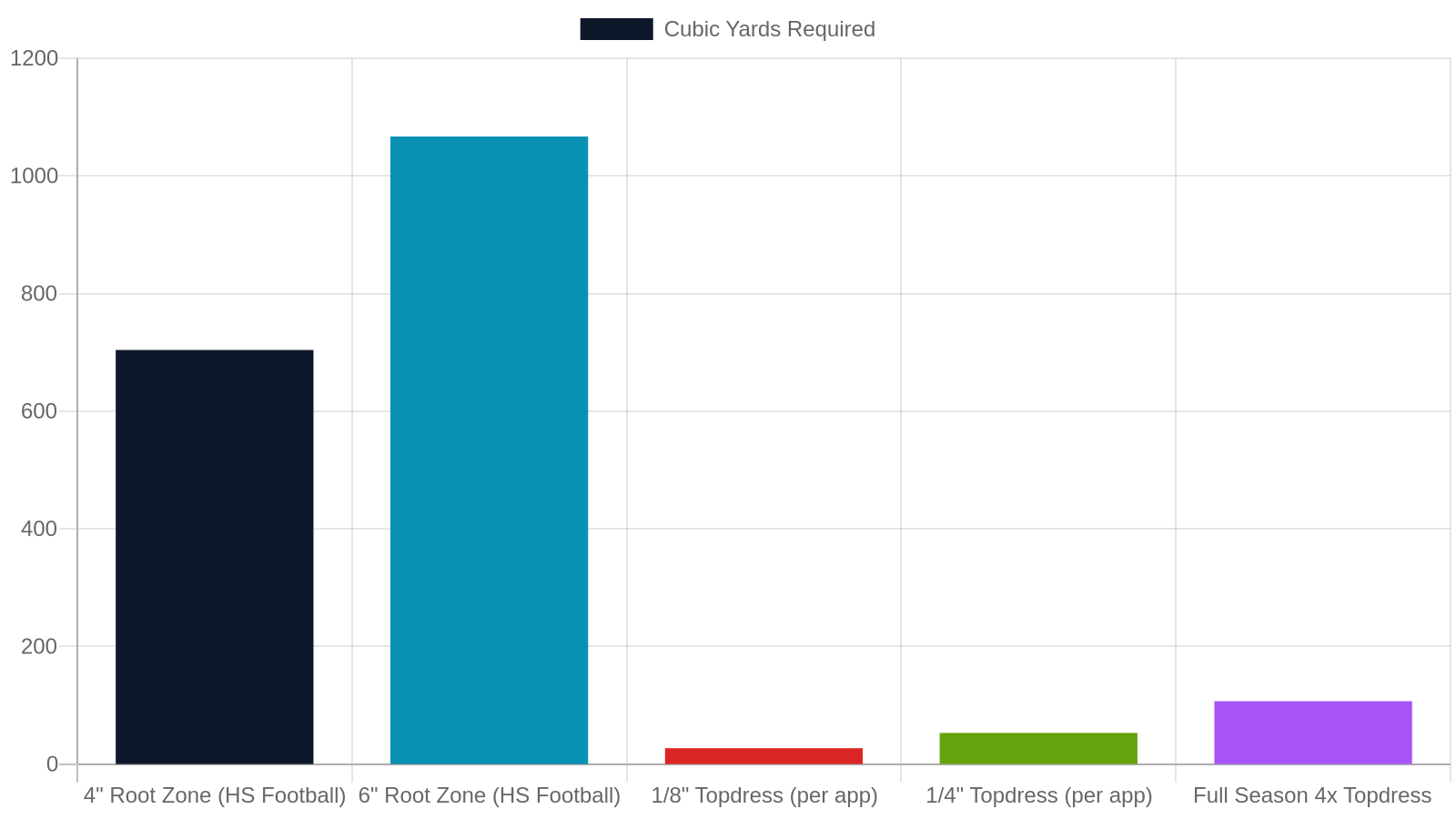
For a new root-zone installation or major renovation, the volume of sand needed is straightforward to calculate: Length (ft) × Width (ft) × Depth (ft) ÷ 27 = cubic yards. A standard high school football field (360 ft × 160 ft) at a 4-inch (0.33 ft) sand depth requires approximately 704 cubic yards of sand. At a 6-inch depth, that rises to roughly 1,067 cubic yards. These are significant volumes, and small errors in the depth spec can translate to large quantity differences — which is why getting the calculation right before ordering matters.
Topdressing: Thin Layers Add Up
Annual topdressing programs apply sand in thin, repeated layers — typically 1/8 inch (0.01 ft) to 1/4 inch (0.02 ft) per application, two to four times per season. For that same 360 × 160 ft football field, a single 1/8-inch topdressing application requires approximately 26–27 cubic yards of sand. Over a full season of four applications, that is roughly 105–110 cubic yards per year. Use the Jackson Sand yardage calculator to get a precise figure for your specific field dimensions and application depth — it takes about 30 seconds and removes the guesswork from your ordering process.
Ready to Order Spec-Compliant Sand for Your Field in West Tennessee?
Getting the right sand to the right field on time is the practical goal behind every specification conversation. Jackson Sand serves large and small jobs across West Tennessee, delivers in company-owned trucks, and includes delivery in its pricing — so there are no hidden freight surprises. Whether you are building a new field from scratch, renovating a worn root zone, or setting up a seasonal topdressing program, the process starts with a quick call or a review of the available spec data.
What to Have Ready Before You Call
Before reaching out to Jackson Sand, having a few pieces of information ready will make the conversation faster and more productive:
- Field dimensions — length and width in feet
- Application type — new root-zone construction, renovation, or topdressing
- Desired depth — in inches
- Any existing spec requirements — from a landscape architect, extension service, or governing body
- Preferred delivery schedule — single load vs. phased delivery
Jackson Sand owns its delivery trucks and mixes sand on premises, which means load accuracy and material consistency are controlled end to end — not dependent on a third-party hauler or a distant processing facility.
Verify the Specs Before the First Load Rolls
Every athletic field project deserves a verified sand specification before material is ordered. Review the Jackson Sand spec sheets to confirm that the material meets your project’s particle-size, Ksat, and fines requirements. If you are managing a field for a school district, parks department, or college program in Jackson or anywhere in West Tennessee, Jackson Sand’s team can walk you through the data and help you match the right product to your application. For questions about athletic field sand products and services, call 731-668-0440 — the team is straightforward to work with and knows the region’s soil and drainage conditions well.
Frequently Asked Questions
What particle size sand is best for athletic fields?
Most sports turf specifications call for medium-to-coarse sand with a median particle size (D50) between 0.35 and 0.60 mm, with at least 60% of particles in the 0.25–1.0 mm range. This distribution balances drainage speed with surface stability and root anchorage.
How fast should athletic field sand drain?
The widely used minimum for saturated hydraulic conductivity (Ksat) is 6 inches per hour. High-use fields or those in high-rainfall areas like West Tennessee should target 10–20 in/hr to handle heavy rain events without surface ponding.
Can I use the same sand for topdressing as I used to build the root zone?
Yes — and consistency is actually recommended. Using a topdressing sand with a significantly finer particle size than the base root-zone sand creates a layering problem that traps water at the interface and degrades drainage over time. Matching the gradation as closely as possible prevents this.
How much sand do I need to topdress a football field?
A standard high school football field (360 ft × 160 ft) requires approximately 27 cubic yards per 1/8-inch topdressing application. Over a full season of four applications, that totals roughly 105–110 cubic yards. Use a yardage calculator to get an exact figure for your field dimensions.
Does Jackson Sand deliver to athletic fields outside Jackson, TN?
Jackson Sand serves West Tennessee and the surrounding Mid-South region, delivering in company-owned trucks. Contact them at 731-668-0440 to confirm delivery availability for your specific location.
How do I verify that a sand supplier's material meets athletic field specs?
Ask for a current lab report showing the sieve analysis (gradation curve), percent passing the No. 200 sieve, saturated hydraulic conductivity, and organic matter content. Reputable suppliers publish this data or provide it on request. Jackson Sand publishes lab-tested spec sheets on its website.