
7 Best Aggregate Materials for Surface Water Runoff Control
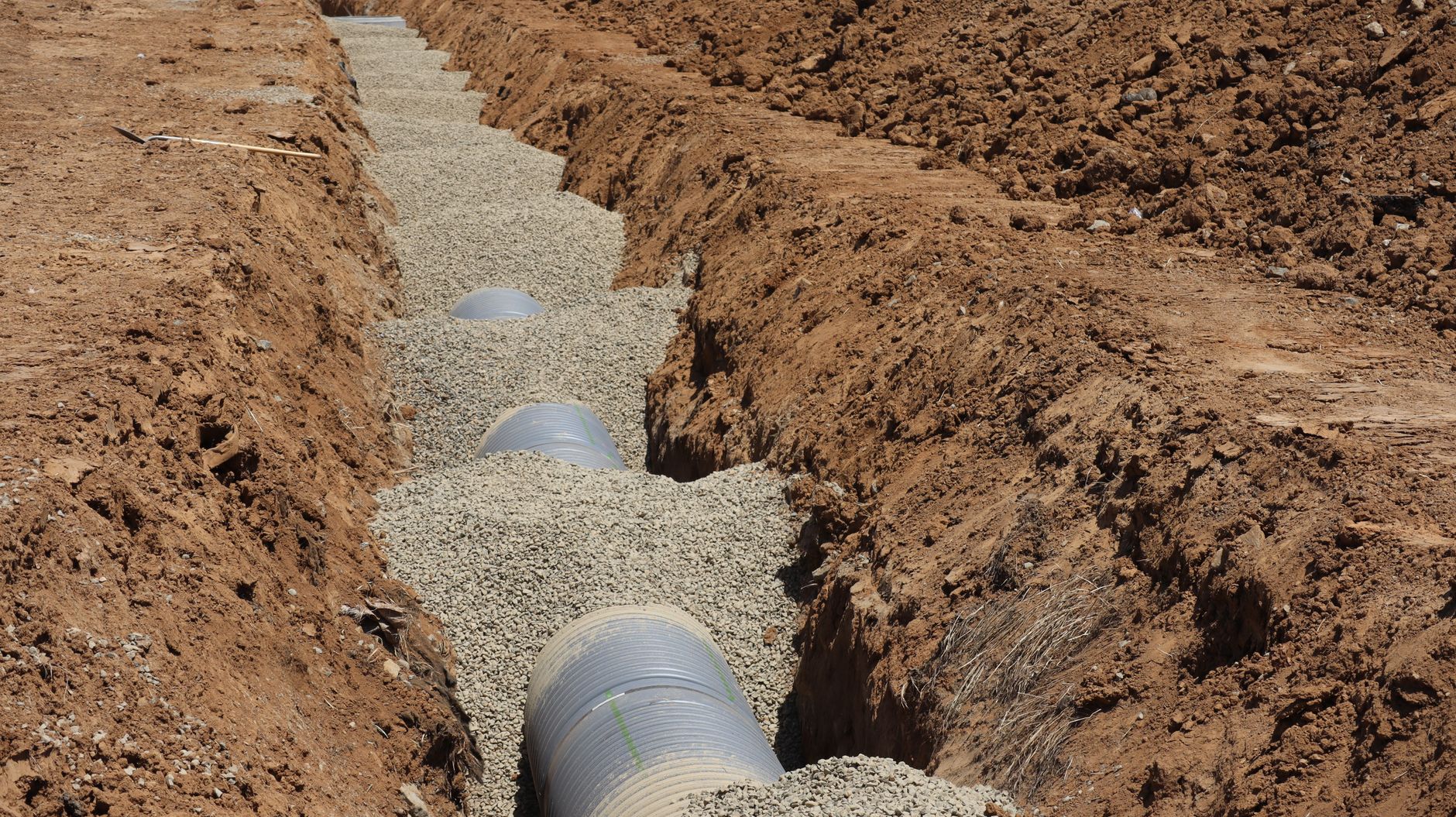
Quick answer: The best aggregate materials for controlling surface water runoff include crushed stone, pea gravel, angular drainage gravel, coarse sand, permeable base rock, river rock, and recycled concrete aggregate. Each material works differently depending on slope, flow volume, soil type, and whether you need surface channeling or subsurface seepage. For golf courses, athletic fields, and job sites in West Tennessee, the right aggregate choice — properly graded and installed — can prevent erosion, protect turf, and keep standing water from becoming a chronic problem. Jackson Sand supplies and delivers drainage aggregates throughout the Jackson, TN area.
Why Aggregate Selection Makes or Breaks a Drainage System
Surface water runoff is not simply a nuisance — it is a structural threat to turf, hardscape, and soil stability. Whether you manage a golf course in West Tennessee, maintain a school athletic complex, or are grading a residential lot in Jackson, TN, the aggregate material you choose for your drainage system determines how well that system performs for decades. Aggregate is not a commodity where any gravel will do. Particle size, shape, angularity, and gradation all interact to control how fast water moves, how much sediment is filtered, and whether the system stays open over time.
How Water Moves Through and Over Aggregate
Aggregate controls runoff in two fundamental ways: surface conveyance (guiding water along the top of the material) and infiltration (letting water pass through the voids between particles into the soil or a collection layer below). The right material does one or both, depending on where it sits in your drainage design.
Particle shape, size, and gradation all determine how much void space exists. Angular crushed stone, for example, locks together and creates predictable void channels. Rounded river rock lets water move quickly but can shift under heavy flow. Understanding these mechanics before you order a single yard of material saves you from expensive rework later.
The Cost of Getting It Wrong
Undersized or poorly graded aggregate clogs quickly with fines migrating up from the subgrade. Oversized stone in a shallow swale creates turbulence that undercuts edges and accelerates erosion. On a golf course, a failed drainage layer under a bunker or fairway can mean weeks of course closure and thousands of dollars in repair. On an athletic field, standing water after a rain event cancels games and degrades the root zone.
According to the USGA, improper drainage is among the top three causes of turf failure on maintained sports surfaces. Specifying the correct aggregate from the start — and verifying it with lab-tested gradations — is the single highest-leverage decision in any drainage project.
1. Crushed Stone (AASHTO #57 and #67) — the Workhorse of Drainage
When drainage engineers and turf managers reach for a go-to aggregate, crushed stone is almost always the first material on the list. Its combination of high void ratio, structural stability, and wide availability makes it the backbone of both surface and subsurface drainage systems across golf courses, athletic fields, and commercial site work. Here is what you need to know about specifying and using it correctly.
What Makes #57 and #67 Stone So Effective
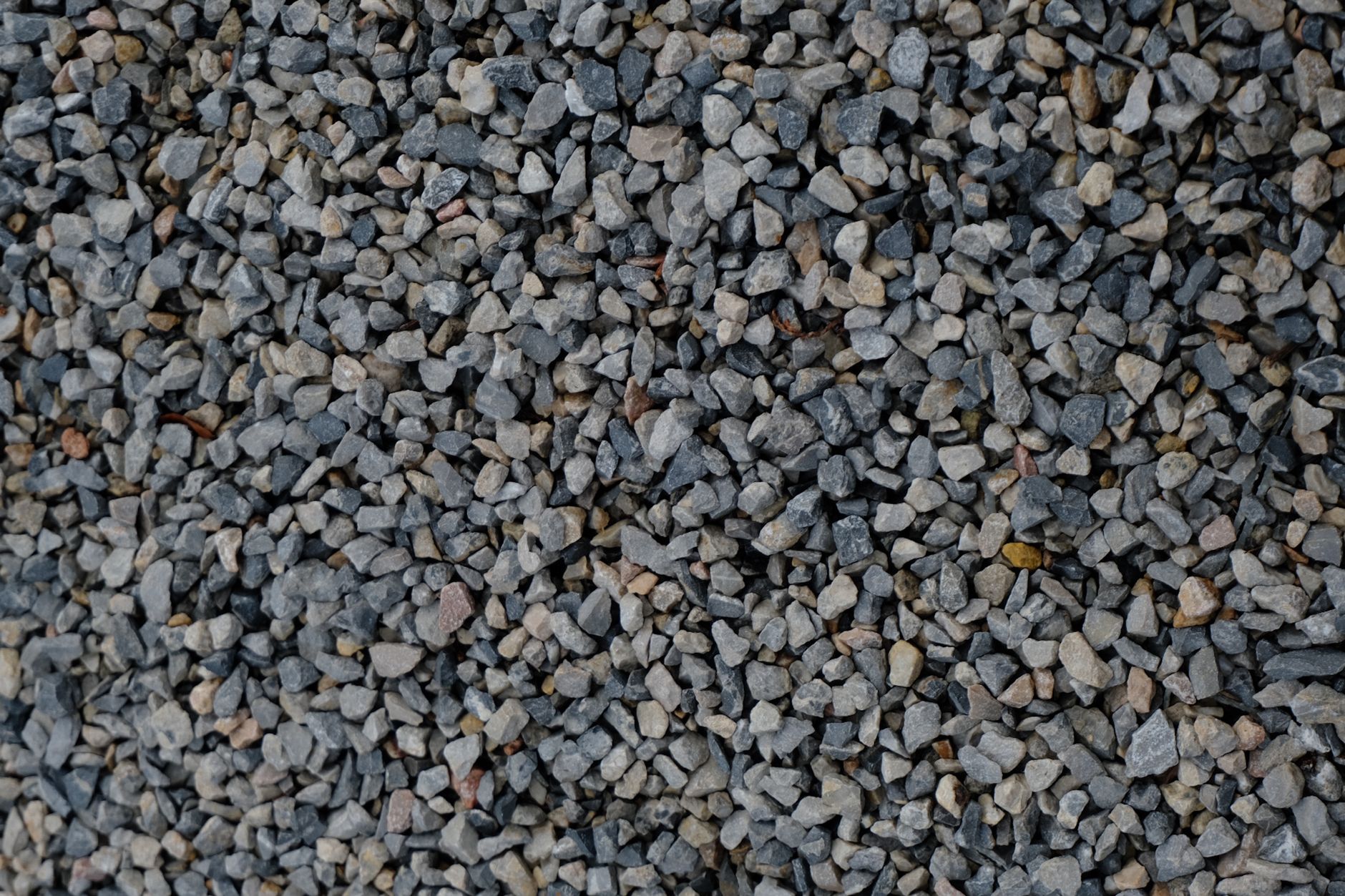
AASHTO #57 stone (nominal size ¾ inch to 1 inch) and #67 stone (¾ inch and smaller) are the most widely specified aggregates for subsurface drainage systems in the United States. Their angular, fractured faces interlock to create a stable matrix while leaving roughly 35–40% void space for water to pass through. That void ratio is high enough to handle significant flow rates without the stone shifting or settling unevenly.
#57 is the standard fill for French drains, pipe bedding, and drainage blankets beneath athletic fields and golf course putting greens. #67 is slightly finer and is often used where a smoother surface grade is needed or where the drainage layer transitions to a finer filter medium above it.
Best Applications for Crushed Stone
Crushed stone excels in:
- French drain trenches surrounding structures, fields, or fairways
- Subsurface drainage blankets under USGA-spec greens and tees
- Pipe bedding for 4-inch and 6-inch perforated drainage lines
- Retention and detention basin outfall zones where erosion protection is needed
For most West Tennessee soil conditions — which tend toward heavy clay — a 6- to 12-inch layer of #57 crushed stone over a perforated pipe provides the drainage capacity needed to drop surface water quickly after heavy rain events, which average about 53 inches per year in the region.
2. Coarse Sand — Essential for Turf Drainage Profiles
Sand is not just a growing medium — it is a critical drainage material in any turf system. Used correctly, coarse sand creates the high-infiltration root zone that allows golf greens and athletic fields to shed water within minutes of a heavy rain. Used incorrectly, it becomes a compaction layer or a drainage barrier. The difference comes down entirely to particle size distribution and how well the sand is matched to the system it is going into.
Particle Size and Why It Matters for Turf
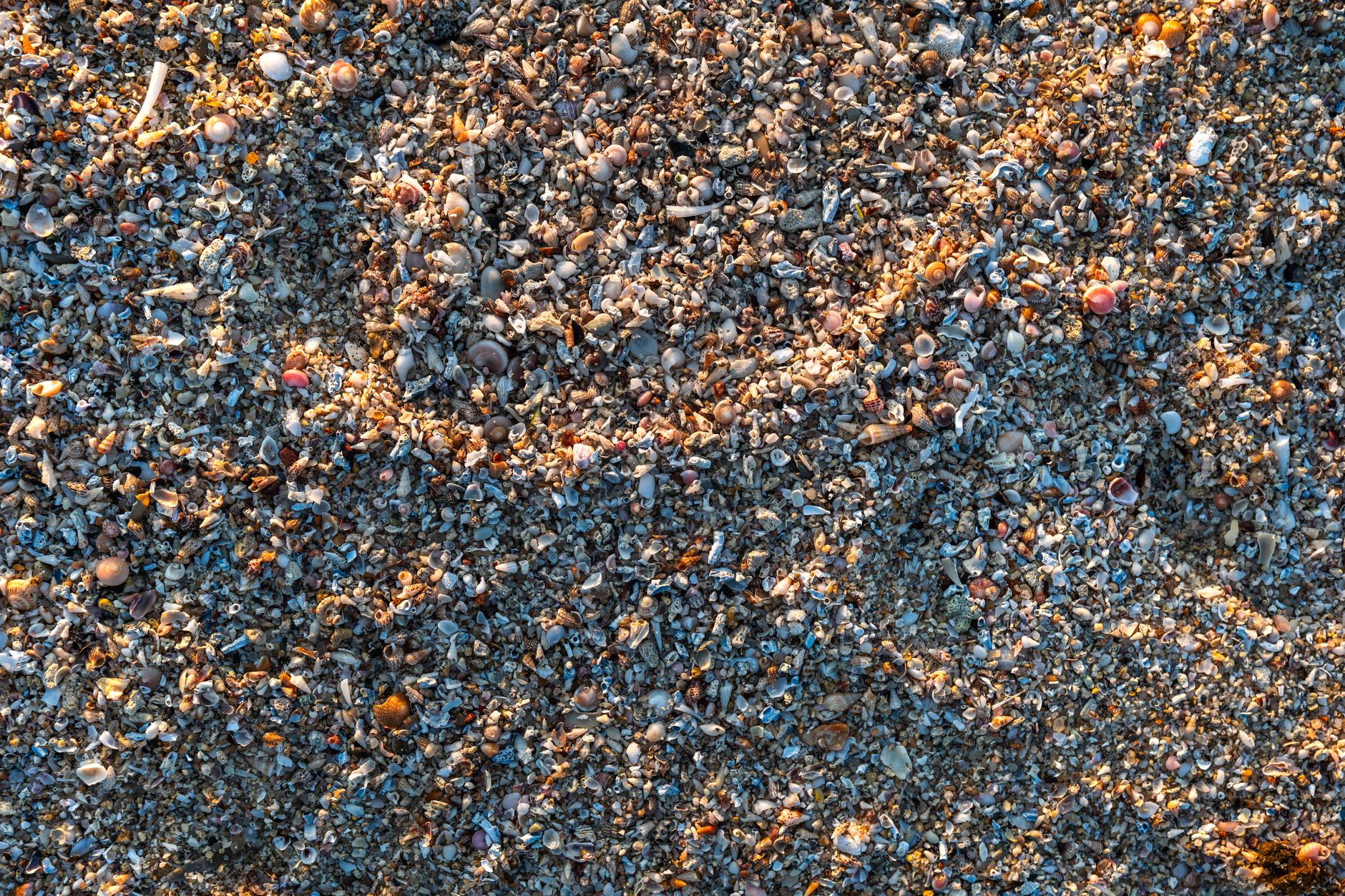
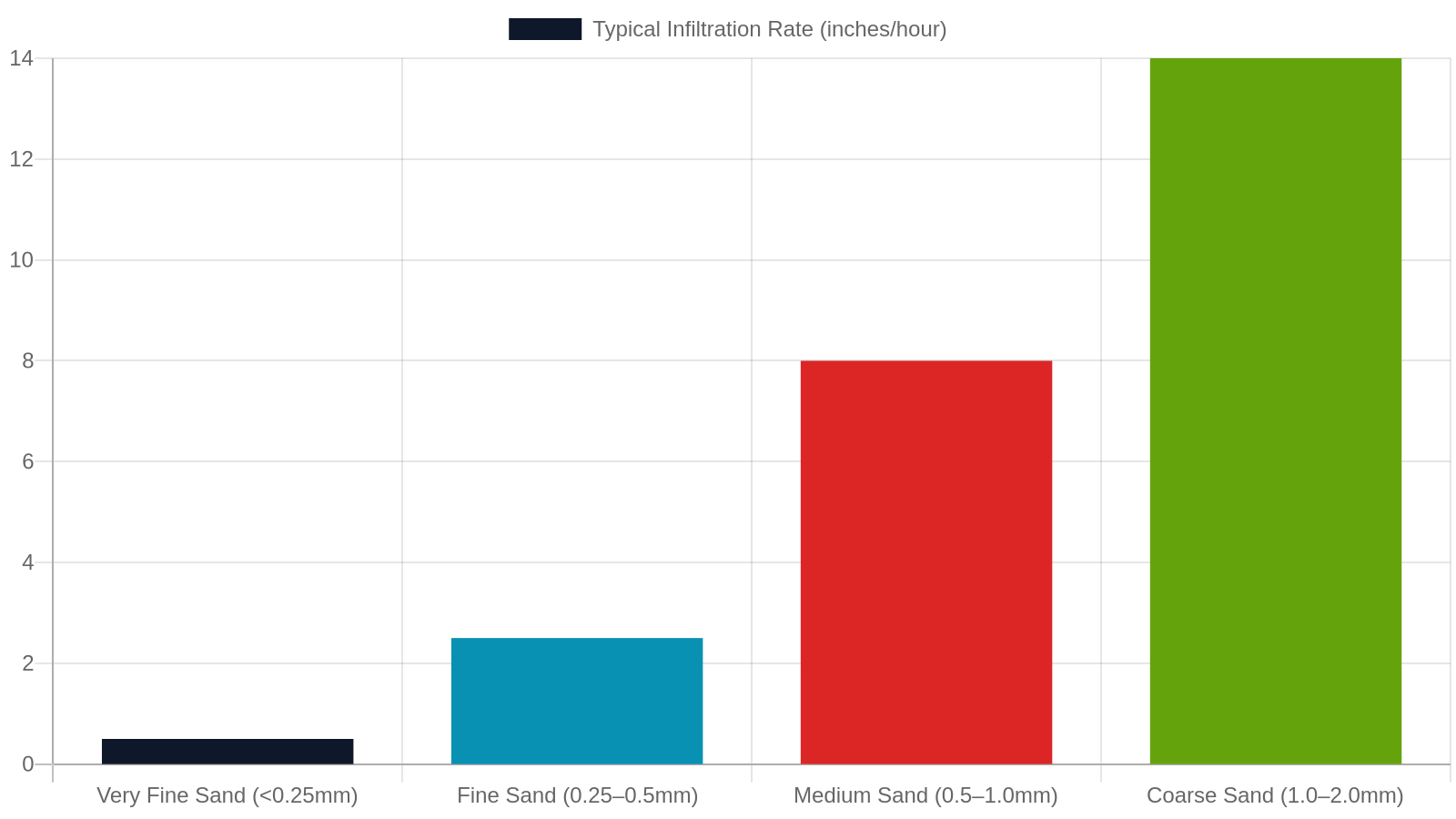
Not all sand drains. Fine sand and silty sand compact quickly and can actually reduce infiltration rates over time. Coarse sand — with a median particle diameter in the 0.5 mm to 1.0 mm range — maintains pore space under foot traffic and equipment loads. The USGA recommends a particle size distribution for putting green root zones where at least 60% of particles fall between 0.25 mm and 1.0 mm, with strict limits on fine and very fine fractions.
Jackson Sand mixes its own sand on premises from high-quality materials and publishes lab-tested spec sheets so buyers can verify gradation before delivery. That kind of documented quality matters enormously on a golf course or sports field where the wrong sand can cost far more to fix than it saved at purchase.
Top Dressing Sand vs. Root Zone Sand
Coarse sand serves two distinct roles in turf management:
- Root zone sand is the primary growing medium — it makes up 80–90% of a USGA-spec green profile and must drain at a minimum of 6 inches per hour while still retaining enough moisture for healthy turf.
- Top dressing sand is applied in thin layers (typically ⅛ inch or less) after aeration to fill tine holes, smooth the surface, and gradually dilute thatch. It must match the existing root zone sand as closely as possible to avoid layering problems.
Using the wrong particle size for top dressing — especially a finer sand than the root zone — creates a hydraulic barrier that traps water above the green profile. Always match gradations. You can review Jackson Sand’s lab-tested sand specs to confirm the right fit for your existing profile.
3. Pea Gravel — Smooth, Versatile, and Easy to Work With
Pea gravel occupies a unique middle ground in drainage design — it is functional enough for real drainage work and attractive enough for visible landscape applications. Homeowners, landscapers, and light commercial contractors in West Tennessee reach for pea gravel when they need a material that handles water effectively without looking purely utilitarian. Understanding its strengths and limits helps you use it in the right situations.
Physical Properties and Drainage Performance
Pea gravel consists of naturally rounded stones typically ranging from ⅜ inch to ½ inch in diameter. Its smooth, rounded shape means it does not interlock the way crushed stone does, which makes it less stable under heavy loads but excellent for applications where water needs to move quickly in multiple directions. The void ratio of pea gravel runs around 30–35%, slightly lower than angular crushed stone, but still high enough for effective drainage in most residential and light commercial applications.
Because the particles are smooth, pea gravel resists clogging from fine sediment better than angular stone in surface-exposed applications — water and debris tend to wash through rather than lodge between particles.
Where Pea Gravel Works Best
Pea gravel is a strong choice for:
- Decorative drainage swales that double as landscape features
- Dry creek beds that channel runoff away from foundations and low spots
- Drainage basin surrounds where aesthetics matter alongside function
- Pipe bedding in shallow trenches where angular stone would be difficult to compact around a pipe
- Residential drainage channels in Jackson, TN yards that collect roof runoff from downspouts
One caution: because pea gravel is rounded and loose, it should not be used on steep slopes without containment edging. On grades steeper than about 3:1, water velocity can displace the stones and cause erosion rather than prevent it.
4. Angular Drainage Gravel (AASHTO #89 and #9) — Fine Aggregate for Filter Layers
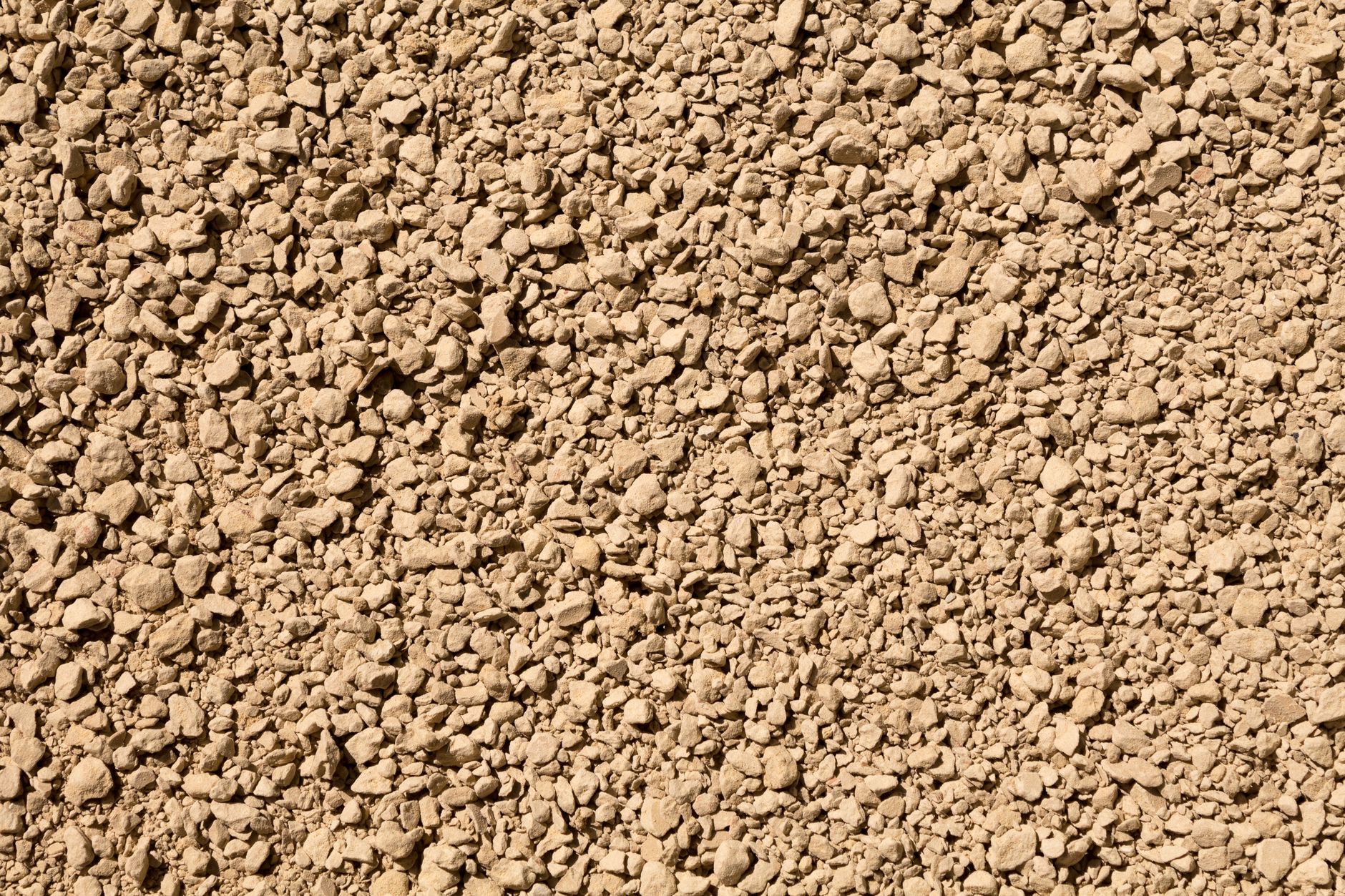
Angular fine aggregate is the unsung hero of engineered drainage systems. While coarse stone gets the credit for moving water, it is the fine aggregate transition and filter layers that keep the whole system from clogging over time. For golf course superintendents and sports turf managers building or renovating drainage profiles, understanding where these finer materials fit in the stack is critical to long-term performance.
The Role of Fine Aggregate in Drainage Profiles
Between the coarse drainage stone and the growing medium above it, most engineered drainage systems include a filter or transition layer of finer aggregate. AASHTO #89 (⅜ inch nominal) and #9 (¼ inch nominal) crushed stone are the most common choices. Their job is to prevent fine particles from the root zone or topsoil from migrating down into the coarser drainage layer and clogging it — a phenomenon called piping or migration.
Filter layers must be sized according to the filter ratio rule: the D15 of the filter material should be no more than 5 times the D85 of the material being protected. Getting this ratio right is the difference between a drainage system that stays open for 20 years and one that fails in 3.
Practical Uses on Golf Courses and Athletic Fields
On USGA-spec golf greens, a 2-inch choker layer of #89 or #9 stone sits between the 12-inch sand root zone and the 4-inch gravel drainage blanket below. This choker layer prevents sand from filtering into the gravel while still allowing water to pass freely downward. The same principle applies to:
- Sand-based athletic field profiles under natural grass or hybrid turf
- Aeration backfill on compacted fields where drainage cores need a coarse filler
- Trench drain surrounds where the drain pipe needs a stable, clean aggregate bed
Specifying the wrong gradation here — say, using #57 stone directly under a sand root zone — allows sand to migrate into the gravel within one or two seasons, dramatically reducing drainage capacity.
5. River Rock and Rip-Rap — Erosion Armor for High-Flow Zones
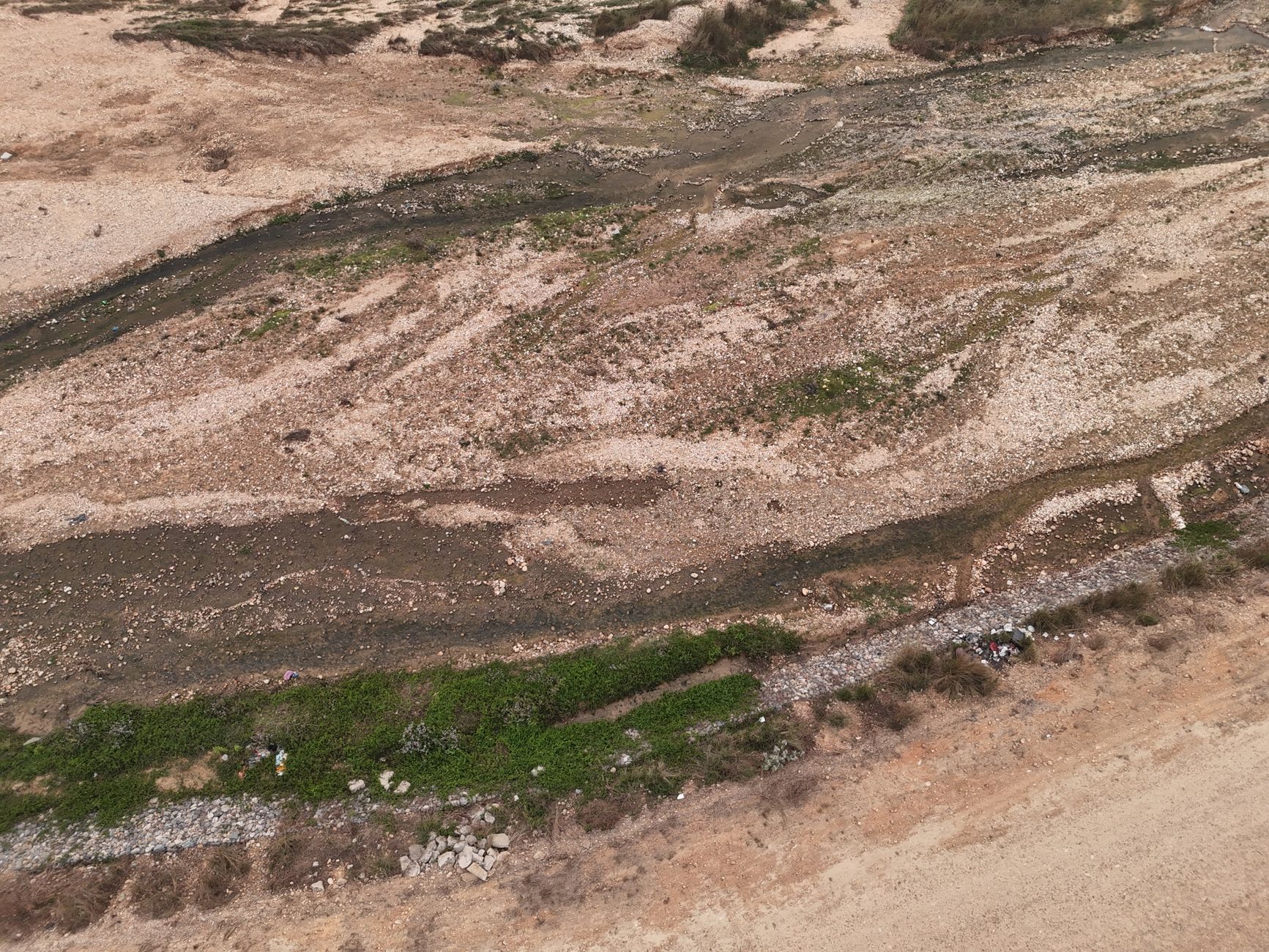
Not every drainage challenge is about moving water slowly through a filter. Some applications demand materials that can stand up to the raw force of concentrated runoff — the kind that scours channels, undercuts banks, and carries away soil in sheets after a heavy Tennessee thunderstorm. River rock and rip-rap are the aggregate answers to high-energy flow, providing mass and stability where smaller materials would simply wash away.
When You Need Erosion Armor, Not Just Drainage
In high-velocity flow zones — the outlet of a drainage basin, the bottom of a steep swale, or a channel that concentrates runoff from a large impervious area — water moves fast enough to erode soil and dislodge smaller aggregate. River rock (typically 2–5 inches in diameter) and rip-rap (6 inches and larger) are used as erosion armor rather than filtration media. Their mass and size resist displacement even under significant flow rates.
The design principle is straightforward: the larger the drainage area and the steeper the slope, the larger the stone needed to resist movement. Engineers use Manning’s equation and stone size charts to specify the right material for a given flow velocity.
Practical Applications in West Tennessee
River rock and rip-rap are commonly used in West Tennessee for:
- Outlet protection at the end of culverts and storm drain pipes to prevent scour
- Channel lining in drainage swales that carry concentrated flow from parking lots, rooftops, or large turf areas
- Slope stabilization on cut banks and fill slopes where sheet flow would otherwise cause rill erosion
- Detention basin shorelines where wave action and fluctuating water levels erode unprotected soil
For golf courses with naturalized areas or stream corridors, river rock also serves an aesthetic function — it looks natural while providing real erosion control. On athletic field complexes, rip-rap outfall aprons at field drainage outlets are often required by local stormwater ordinances.
6. Permeable Base Rock and Open-Graded Aggregate — Subsurface Reservoirs
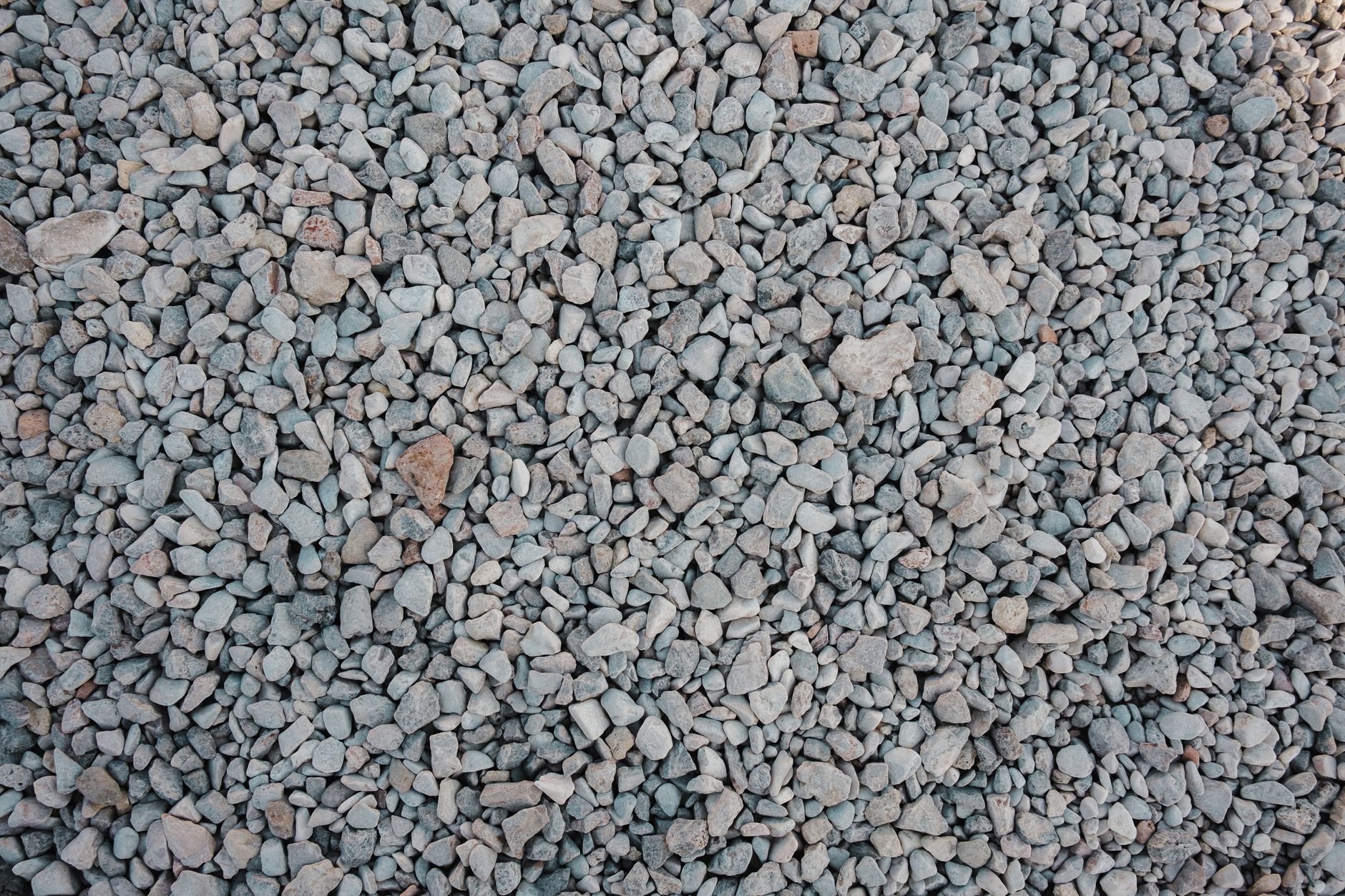
Modern stormwater management increasingly requires sites to manage runoff on-site rather than simply channeling it away as fast as possible. Open-graded aggregate and permeable base rock make that possible by creating underground storage volume within the aggregate layer itself. This approach is particularly valuable on constrained sites — school campuses, golf courses, and urban athletic complexes — where there is no room for a traditional detention pond but regulations require runoff reduction.
What Makes Aggregate 'Open-Graded'
Open-graded aggregate is crushed stone that has had the fine particles (dust and chips smaller than ¼ inch) deliberately removed, leaving only the target size range. The result is a material with a void ratio of 35–45% — essentially a rock matrix with as much air space as solid material. When water enters this layer, it spreads laterally and stores temporarily in those voids, releasing slowly into the subgrade or toward a collection pipe.
This is the principle behind permeable pavement base layers, stormwater infiltration galleries, and subsurface detention systems used on commercial sites, school campuses, and golf course cart path surrounds. The aggregate itself becomes a temporary reservoir, dramatically reducing peak runoff rates after storm events.
Applications for Athletic Fields and Golf Courses
Open-graded base layers are increasingly specified under:
- Synthetic turf fields, where the infill and drainage mat above need a free-draining base that can handle the 30+ inches per hour drainage rates required by field standards
- Cart paths and maintenance roads on golf courses, where permeable base prevents puddle formation and reduces runoff to adjacent turf areas
- Parking areas and staging zones at athletic complexes, where stormwater regulations increasingly require on-site infiltration
- Drainage galleries alongside greens and tees that intercept lateral water movement before it reaches the playing surface
The key specification requirement is that the open-graded stone must be kept clean — contamination with fines from adjacent soil or improper installation will rapidly fill the void space and destroy drainage capacity.
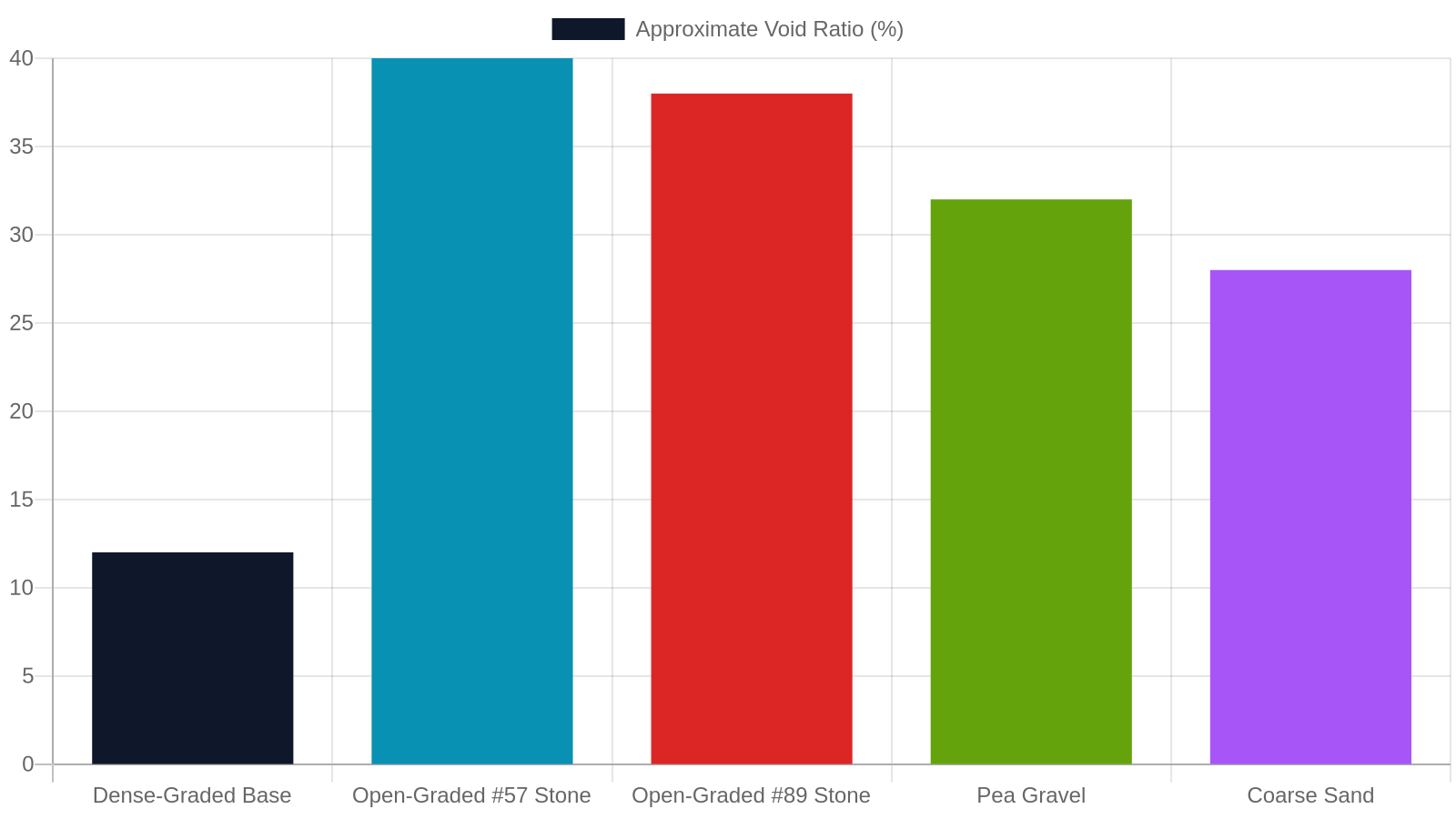
7 Drainage Aggregates Compared at a Glance
Use this table to quickly compare the seven aggregate materials by their key drainage characteristics, best applications, and typical limitations.
7. Recycled Concrete Aggregate (RCA) — Practical and Cost-Effective for Site Work
Not every drainage project demands the precision of a USGA green or a synthetic turf field. For contractors, site-work crews, and homeowners who need a practical, cost-effective drainage aggregate for roads, pads, and general grading work, recycled concrete aggregate offers solid performance at a lower price point than virgin crushed stone. Here is where it fits — and where it does not.
What RCA Is and How It Drains
Recycled concrete aggregate is crushed demolished concrete, typically processed to a 1-inch minus or ¾-inch minus gradation. It behaves similarly to virgin crushed limestone in drainage applications — angular particles, reasonable void ratio (25–35%), and good structural stability. Because it contains residual cement paste, RCA tends to bind slightly over time, which can be a benefit for road base applications but a drawback if long-term drainage openness is the priority.
For surface drainage applications — gravel roads, construction site access tracks, and temporary drainage channels — RCA is a cost-effective choice that performs well. For precision drainage profiles on golf courses or athletic fields, virgin crushed stone with a certified gradation is the better specification.
Best Uses for RCA on Job Sites and Landscaping Projects
RCA is well suited to:
- Construction site access roads and staging areas where a stable, free-draining surface is needed temporarily
- Driveway base layers on residential properties in West Tennessee where drainage improvement is needed under a gravel surface
- Fill and grading projects where large volumes of free-draining material are needed at lower cost
- Erosion control on disturbed slopes during construction, where a coarse surface layer slows sheet flow and reduces soil loss
Contractors and site-work crews in the Jackson, TN area often use RCA as a practical first layer in drainage systems where budget is a constraint and long-term precision is less critical than immediate function.
How to Match Aggregate to Your Specific Drainage Challenge
Choosing the right aggregate is only half the equation. You also need to match that material to the specific drainage challenge your site presents. A material that performs brilliantly in a subsurface filter layer may be completely wrong for a surface erosion-control application — and vice versa. The following framework helps you think through the decision systematically, whether you are a golf course superintendent, a sports turf manager, or a homeowner dealing with chronic wet spots in the yard.
Slope, Flow Volume, and Soil Type
Three site variables should drive your aggregate selection before anything else:
- Slope: Steeper slopes generate faster-moving water that requires larger, heavier aggregate to resist displacement. Flat areas need high-void materials that allow water to infiltrate quickly before it spreads.
- Flow volume: Large drainage areas concentrate more water. A swale draining a single residential lot can use pea gravel; one draining a 10-acre athletic complex needs engineered rip-rap or concrete-lined channels.
- Soil type: West Tennessee’s clay-heavy soils have low natural infiltration rates (often less than 0.5 inches per hour). Any drainage system here must move water laterally to a collection point rather than relying on soil infiltration alone.
Surface vs. Subsurface Drainage Strategy
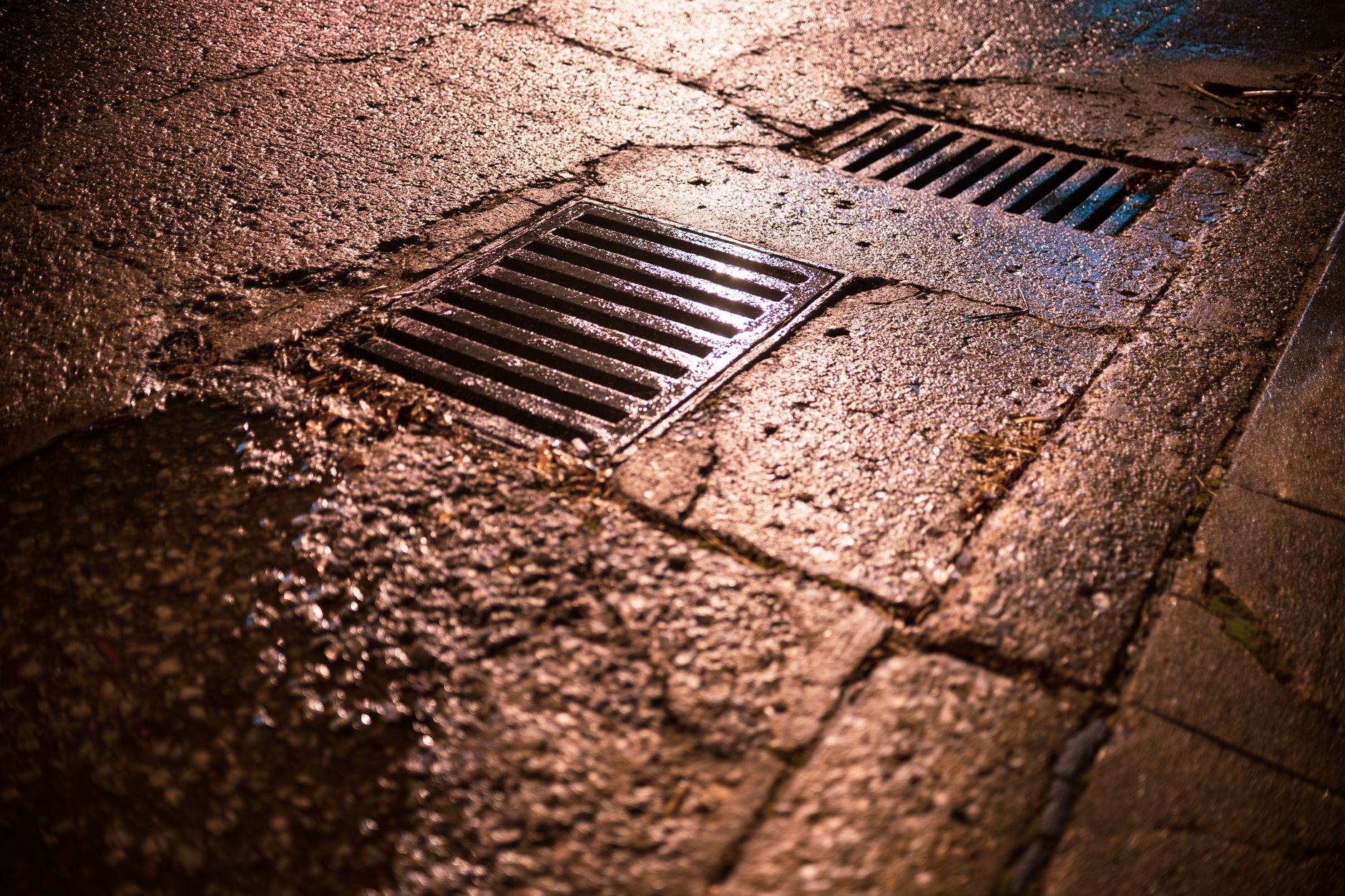
Surface drainage moves water across the top of the landscape using slope and channels. Subsurface drainage captures water that has already entered the soil profile and moves it through pipes and aggregate layers to an outlet. Most well-designed systems use both:
- Surface layer: Graded topography, swales, and surface aggregate (river rock, pea gravel, rip-rap) direct sheet flow to collection points.
- Subsurface layer: Perforated pipes bedded in #57 crushed stone, wrapped in filter fabric, intercept water below the surface and carry it to daylight or a basin.
For a deeper look at how surface drainage slope and grading work together, visit Jackson Sand’s surface water drainage and slope resource page — it walks through design principles that apply to both turf and hardscape projects in West Tennessee.
Aggregate Quantities: How Much Do You Actually Need?
Even the best aggregate specification fails if you order too little and run short mid-installation, or too much and pay to haul away the excess. Accurate quantity estimation is a practical skill that saves real money on every drainage project. Here is a straightforward approach to calculating how much aggregate your project actually requires — along with a tool that does the math for you.
Calculating Volume for Drainage Projects
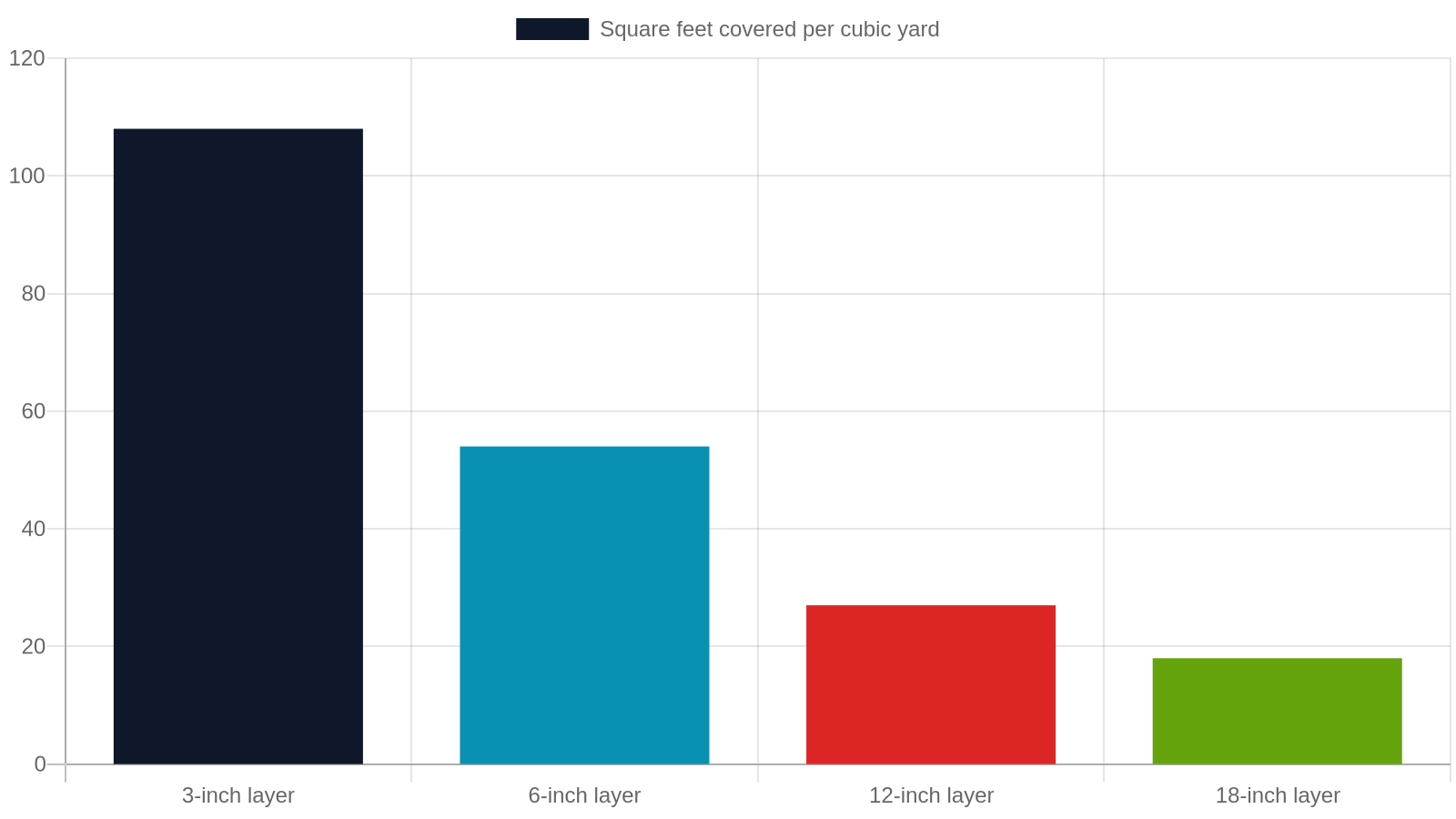
Drainage aggregate is typically sold and delivered by the cubic yard. One cubic yard covers:
- A 3-inch-deep layer over approximately 108 square feet
- A 6-inch-deep layer over approximately 54 square feet
- A 12-inch-deep layer (typical drainage blanket) over approximately 27 square feet
For a French drain trench that is 12 inches wide and 18 inches deep, you need roughly 0.056 cubic yards per linear foot of trench — so a 100-foot trench requires about 5.6 cubic yards of aggregate. Always add 10–15% for compaction and waste.
Getting the quantity right before you order avoids the cost and delay of a second delivery or the waste of leftover material. Use the Jackson Sand yardage calculator to estimate your project needs quickly and accurately.
Delivery and Load Accuracy
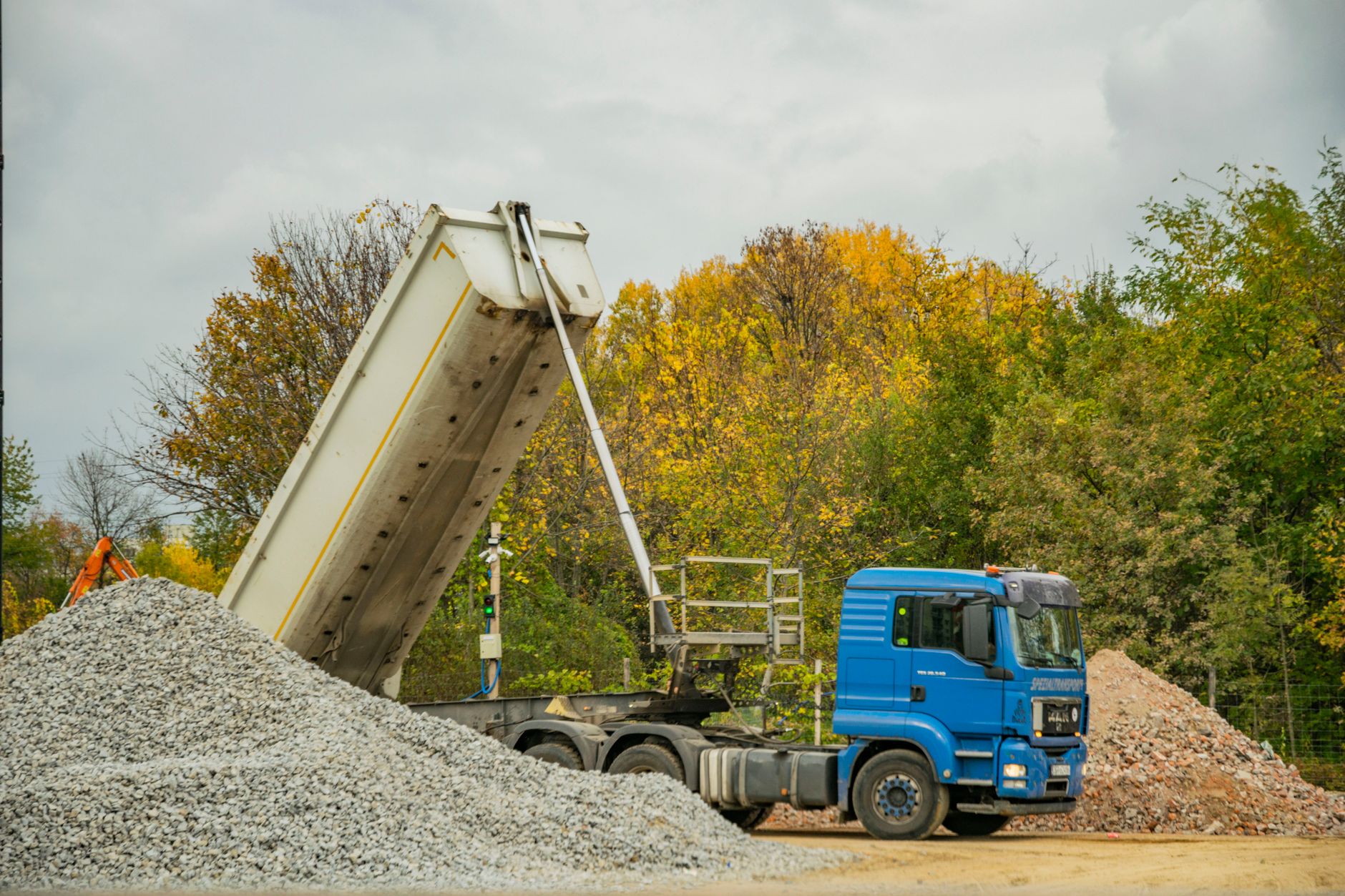
One advantage of working with a supplier that owns its own trucks — as Jackson Sand does — is load accuracy. When a driver loads your aggregate at the yard and delivers it directly, you get the quantity you ordered without the variability that comes from third-party hauling or multiple-stop deliveries. Clean trucks also mean clean loads: no contamination from previous hauls of different materials, which matters enormously when you are specifying a precise gradation for a turf drainage profile.
For large projects — golf course renovations, multi-field athletic complexes, or major site-work jobs — coordinating delivery schedules with your installation crew is critical. Jackson Sand serves large and small jobs throughout West Tennessee, and delivery is included in the order.
Ready to Solve Your Runoff Problem? Here's Your Next Move
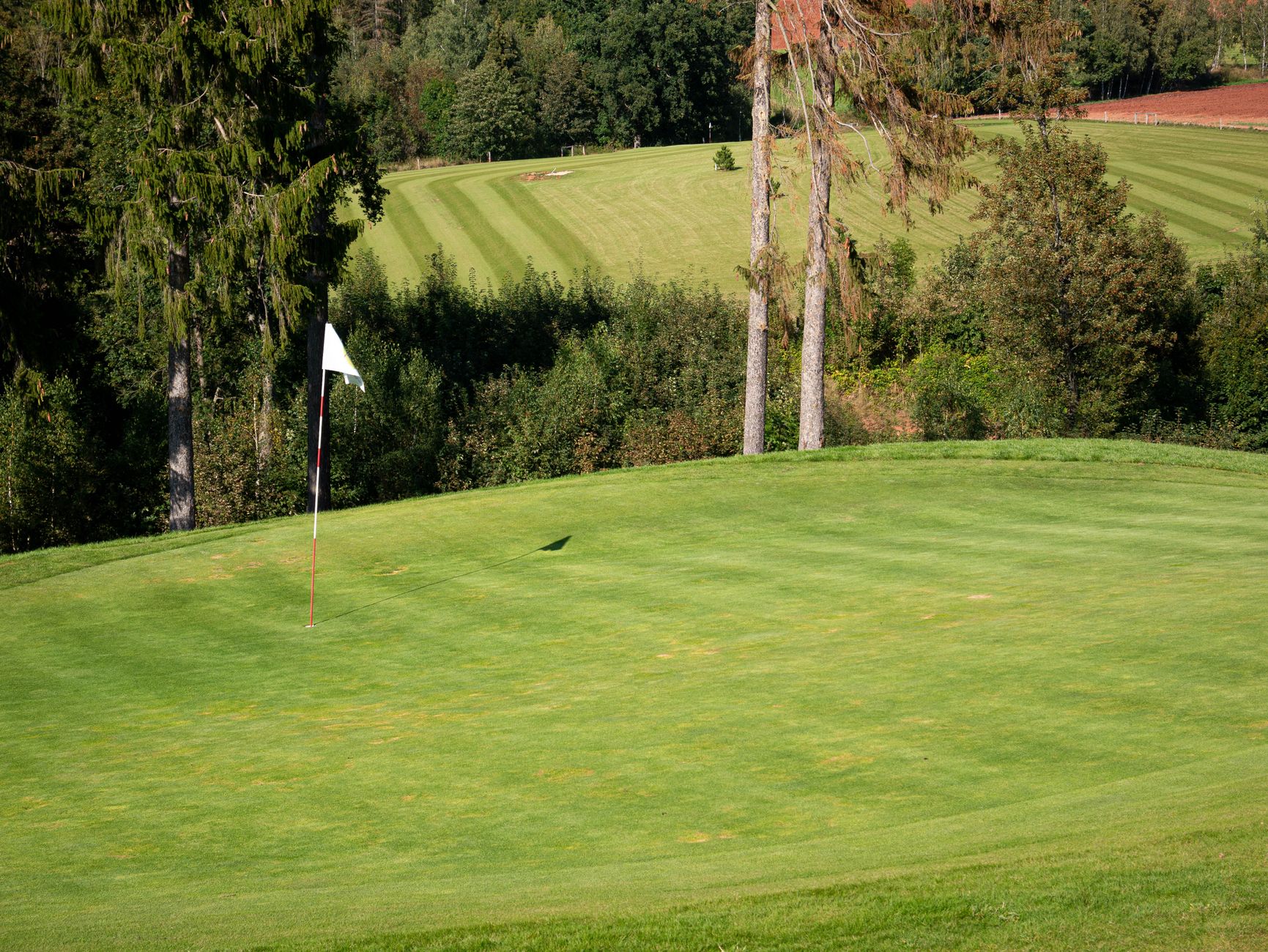
Controlling surface water runoff is not a one-size-fits-all problem, and the right aggregate material depends on your specific site conditions, drainage goals, and budget. The good news is that the seven materials covered in this guide — crushed stone, coarse sand, pea gravel, angular fine aggregate, river rock, open-graded base, and recycled concrete aggregate — cover the full range of drainage challenges you are likely to face on a golf course, athletic field, or job site in West Tennessee. The key is matching the right material to the right application, specifying it correctly, and ordering from a supplier who can verify what they are delivering.
Talk to Jackson Sand Before You Order
Jackson Sand has been supplying drainage aggregates, sand, gravel, and mulch to golf courses, athletic fields, contractors, and homeowners across West Tennessee for years. President Carlton Pope and manager Wes Lipford understand the specific drainage challenges that West Tennessee’s clay soils and heavy rainfall present — and they can help you identify the right material for your project before you commit to a load.
Whether you need a few yards of pea gravel for a residential drainage channel or hundreds of yards of USGA-spec bunker sand and drainage aggregate for a full golf course renovation, Jackson Sand mixes its own materials on premises, loads its own trucks, and delivers clean, accurate loads directly to your job site. Call 731-668-0440 to discuss your project or get a delivery scheduled.
Resources to Help You Plan
Before you call or order, these resources on the Jackson Sand website can help you prepare:
- Yardage Calculator — estimate how many cubic yards your project needs based on area and depth
- Sand Spec Sheets — lab-tested gradation data for every sand product, so you can verify the material matches your specification
- Surface Water Drainage and Slope — design principles for surface drainage grading and aggregate placement on turf and hardscape projects
Jackson Sand serves the greater Jackson, TN area and throughout West Tennessee and the Mid-South. If you are managing a drainage project — large or small — reach out at 731-668-0440 and get the right aggregate on the right truck to your site.
Frequently Asked Questions
What is the best gravel for drainage in clay soil?
In clay soil, AASHTO #57 crushed stone is the most reliable choice for subsurface drainage. Its high void ratio (35–40%) and angular shape create stable drainage channels that move water laterally to a collection pipe rather than relying on clay soil to absorb it. Always wrap the trench in filter fabric to prevent clay fines from migrating into the stone over time.
How much crushed stone do I need for a French drain?
For a standard French drain trench that is 12 inches wide and 18 inches deep, you need approximately 0.056 cubic yards of stone per linear foot of trench. A 100-foot trench requires about 5–6 cubic yards. Add 10–15% for compaction and waste. Use the Jackson Sand yardage calculator at jacksonsand.com/yardage-calculator/ to get a precise estimate for your specific dimensions.
What sand is used for golf course drainage?
USGA-spec golf course greens use coarse sand with a median particle diameter of 0.5–1.0 mm as the primary root zone growing medium. A 2-inch choker layer of #89 or #9 crushed stone sits between the sand root zone and the coarse gravel drainage blanket below. The sand must be lab-tested to verify gradation — Jackson Sand publishes spec sheets for all its sand products.
Can I use pea gravel for drainage under a downspout?
Yes, pea gravel works well for downspout splash pads and short surface drainage channels around residential foundations. It resists erosion from concentrated roof runoff, drains quickly, and looks clean. For longer drainage runs or steeper slopes, consider a larger stone or a contained dry creek bed to prevent the gravel from migrating.
What is the difference between surface drainage and subsurface drainage?
Surface drainage moves water across the top of the landscape using slope, swales, and surface aggregate to direct sheet flow toward collection points. Subsurface drainage captures water that has entered the soil profile and moves it through perforated pipes bedded in crushed stone to an outlet. Most effective drainage systems for athletic fields and golf courses use both approaches together.
Does Jackson Sand deliver aggregate to job sites in West Tennessee?
Yes. Jackson Sand delivers sand, gravel, drainage aggregate, and mulch throughout the Jackson, TN area and the broader West Tennessee and Mid-South region. Delivery is included, and Jackson Sand uses its own trucks to ensure clean, accurate loads. Call 731-668-0440 to discuss your project and schedule delivery.