
Drainage Basin Installation for Athletic Fields: Your 9-Point Guide for West Tennessee
Quick answer: Drainage basin installation is the most reliable way to eliminate standing water and soggy turf on athletic fields in West Tennessee. A properly designed system combines catch basins, perforated pipe, and the right aggregate to move surface and subsurface water off the field quickly — protecting turf health, reducing field closures, and extending the life of your investment. For Jackson-area fields, local soil conditions and heavy seasonal rainfall make a well-engineered drainage basin system not a luxury but a necessity. Jackson Sand supplies the drainage aggregate, gravel, and sand you need, with delivery included.
1. Why Athletic Fields in West Tennessee Have a Drainage Problem
Before specifying materials or digging a single trench, it helps to understand why drainage problems are so common on athletic fields in the Jackson, TN area — and why a surface fix like regrading alone rarely solves the problem long-term. The answer lies underground, in the soil profile and the region’s weather patterns.
West Tennessee Soil and Rainfall: A Tough Combination
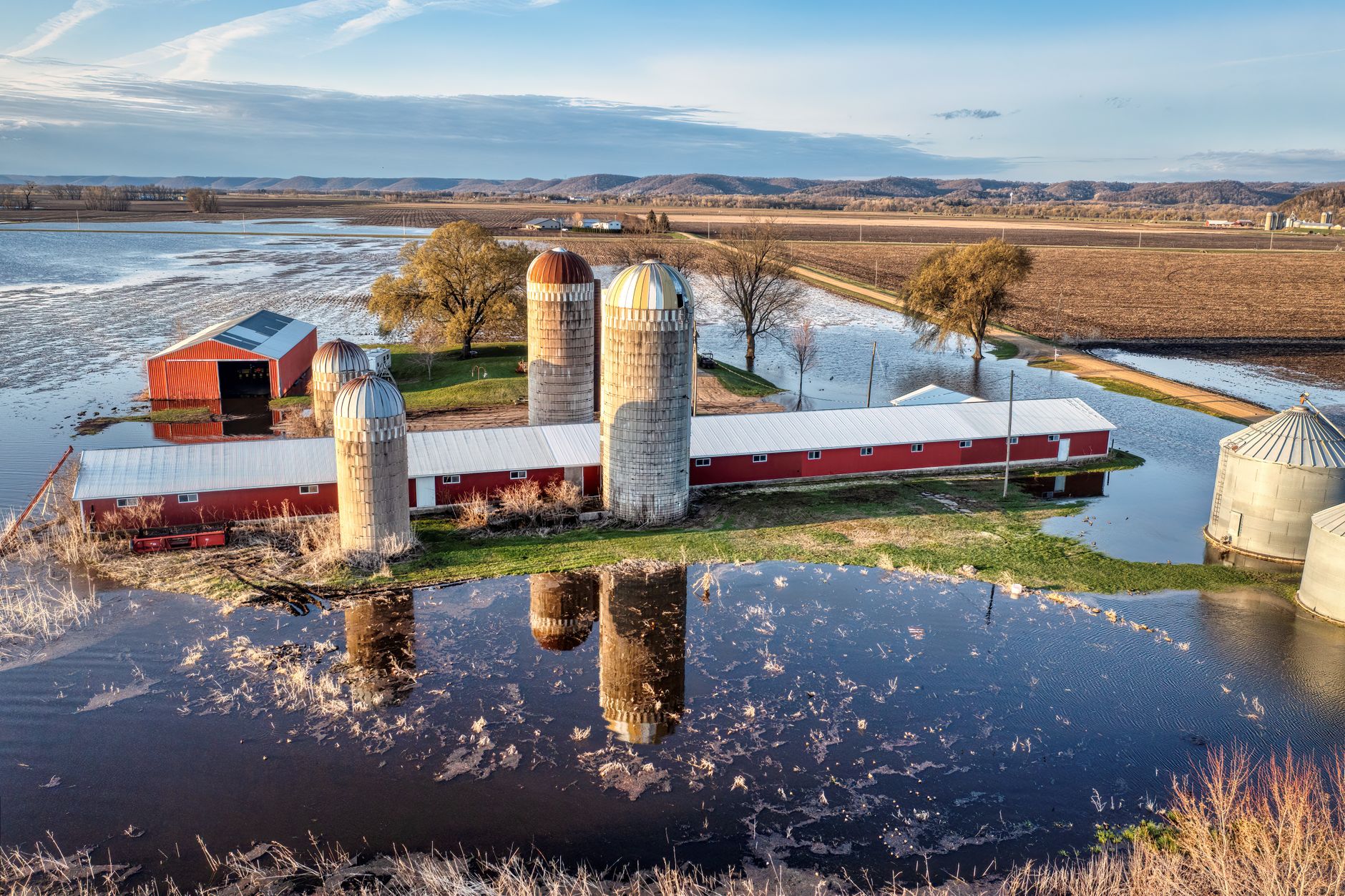
West Tennessee sits on a mix of clay-heavy soils and alluvial floodplain deposits left by the Mississippi River system. Clay soil holds water rather than letting it pass through — a great characteristic for a garden bed, a terrible one for a soccer field or football practice facility. When 2–4 inches of rain fall in a single afternoon storm (a routine summer event in the Jackson area), fields built on native clay can hold standing water for 24–72 hours after the rain stops.
The result: cancelled games, compacted turf, muddy sidelines, and increased injury risk for athletes. Over a full season, repeated saturation weakens root systems and accelerates turf loss in high-traffic zones.
The Real Cost of Poor Drainage
Field closures aren’t just an inconvenience — they carry real financial and operational costs. A school athletic director managing three or four sports simultaneously can lose dozens of practice hours per season to waterlogged fields. Parks and recreation departments face complaints, rescheduling headaches, and sometimes liability concerns when wet fields contribute to player injuries.
Studies from university turf programs estimate that a single field closure costs a school or municipality between $500 and $2,000 in rescheduling, staff overtime, and lost facility revenue, depending on field type and usage. Over a 10-year period, the cost of doing nothing almost always exceeds the cost of installing a proper drainage system.
2. What a Drainage Basin Actually Is (and How It Works)
The phrase “drainage basin” gets used loosely in the field maintenance world. Before you can specify materials, get bids, or order aggregate, it pays to understand exactly what the components are and how they interact. Here is a plain-language breakdown of the system.
Catch Basins vs. Drainage Basins: Clearing Up the Terminology
The terms are often used interchangeably, but there is a practical distinction. A catch basin is a single inlet structure — typically a concrete or plastic box with a grated top — that captures surface runoff at a low point. A drainage basin system is the broader network: multiple inlets, perforated lateral pipes, a main collector pipe, and a discharge point such as a detention pond, storm sewer, or daylighted outlet.
For athletic fields, you almost always need the full system, not just a single catch basin. One inlet can handle a small parking lot corner; a 60,000-square-foot football field needs a coordinated network of inlets and pipes sized to move water faster than it accumulates during peak rainfall events.
How Water Moves Through the System
A properly installed drainage basin system works in two complementary ways:
- Surface drainage: The field is graded with a slight crown (typically 1–2% slope from center to sidelines) so water sheets off the turf surface toward sideline inlets and catch basins.
- Subsurface drainage: Perforated pipe buried in a gravel-filled trench intercepts water that has infiltrated below the turf surface, preventing it from saturating the root zone.
The aggregate surrounding the pipe — usually a clean, washed drainage gravel — acts as a filter medium, allowing water to flow freely while keeping fine soil particles from migrating into and clogging the pipe over time. Choosing the right aggregate is just as important as the pipe size or inlet spacing.
3. The 5 Core Components of an Athletic Field Drainage System
A complete athletic field drainage basin system has five distinct components, and each one has to be specified and installed correctly for the system to perform. Skimping on any single component — especially the aggregate — undermines the whole investment.
Catch Basin Inlets and Grates
The inlet is the visible part of the system — the grated box set flush with the turf surface at low points along sidelines, end zones, or field perimeters. For athletic fields, inlets are typically 12″×12″ or 18″×18″ precast concrete or high-density polyethylene (HDPE) boxes. Grates should be load-rated for maintenance equipment (at minimum 10,000 lb. vehicle load) to prevent collapse when mowers or field equipment pass over them. Inlets are typically spaced every 50–100 feet along sidelines, depending on field size and slope.
Perforated Collector Pipe
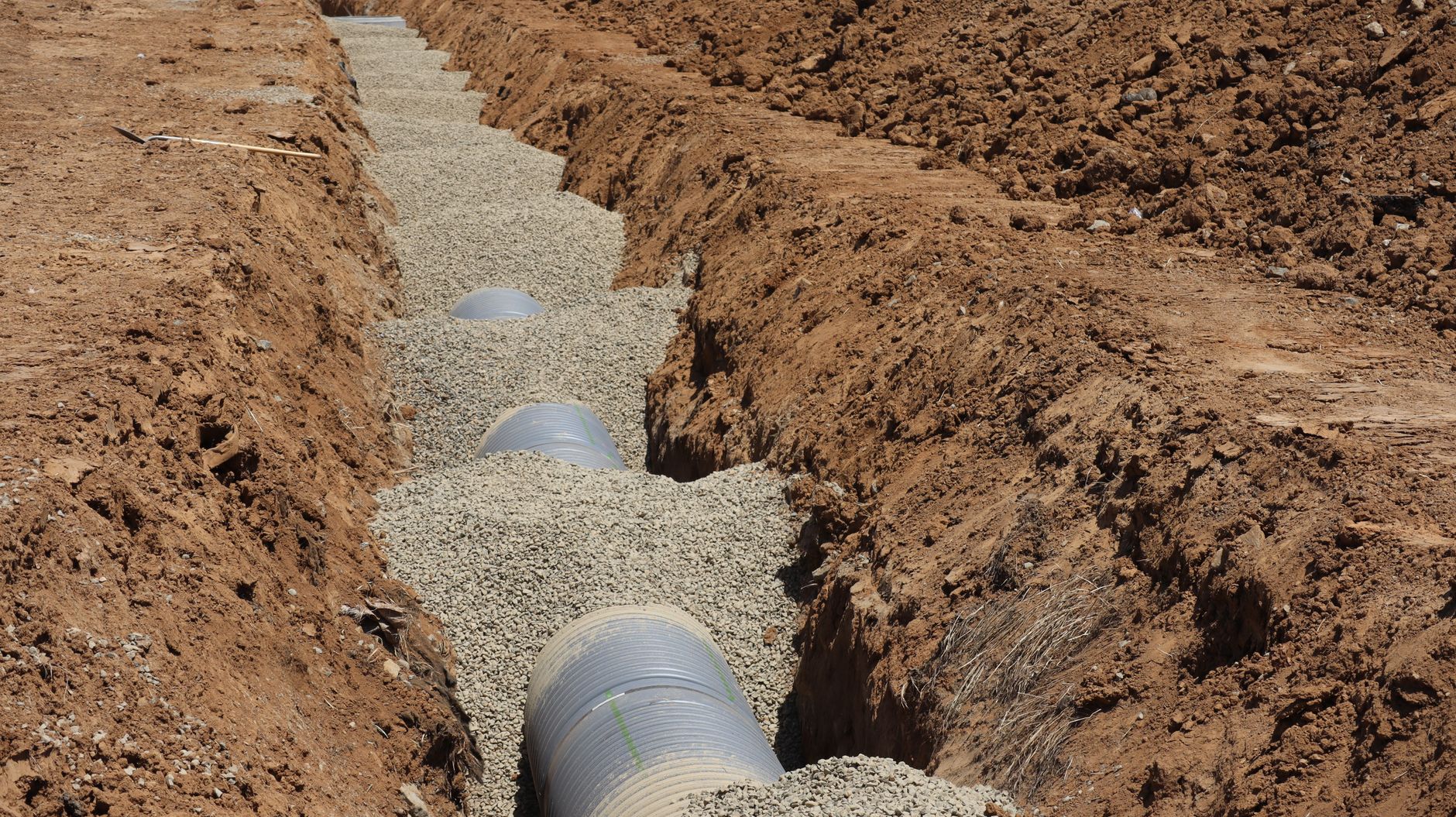
Perforated PVC or HDPE pipe — commonly 4″, 6″, or 8″ diameter — runs in trenches beneath the field, connecting to the catch basin inlets and carrying water to the main outlet. Lateral lines are typically spaced 10–20 feet apart on heavily used natural-turf fields, or 15–30 feet apart on fields with a sand-cap layer that improves surface drainage. Pipe must be bedded in clean drainage aggregate to prevent soil intrusion and maintain long-term flow capacity.
Drainage Aggregate and Filter Material
The aggregate surrounding the pipe is the unsung hero of the system. It needs to be:
- Clean and washed — free of fines that would migrate into the pipe
- Properly graded — particle size matched to the pipe perforation size to prevent migration
- Durable — able to resist crushing under compaction loads
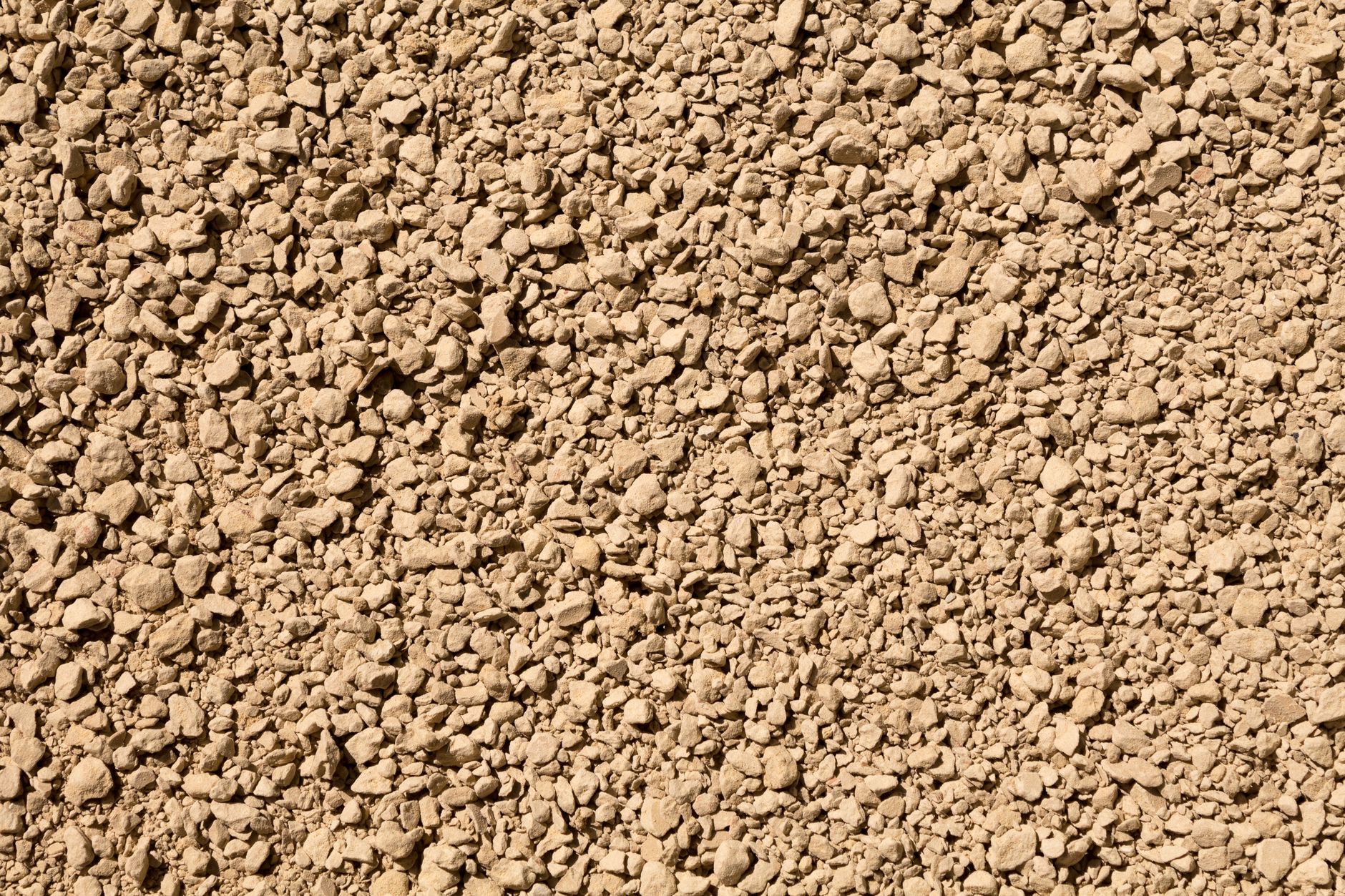
Common specifications call for a #57 or #67 crushed stone (roughly 3/4″ nominal size) as the primary drainage aggregate. Jackson Sand supplies drainage gravel and aggregate materials for exactly this application, mixed and loaded on-premises and delivered in their own trucks to job sites across West Tennessee.
Sand Cap or Rootzone Layer
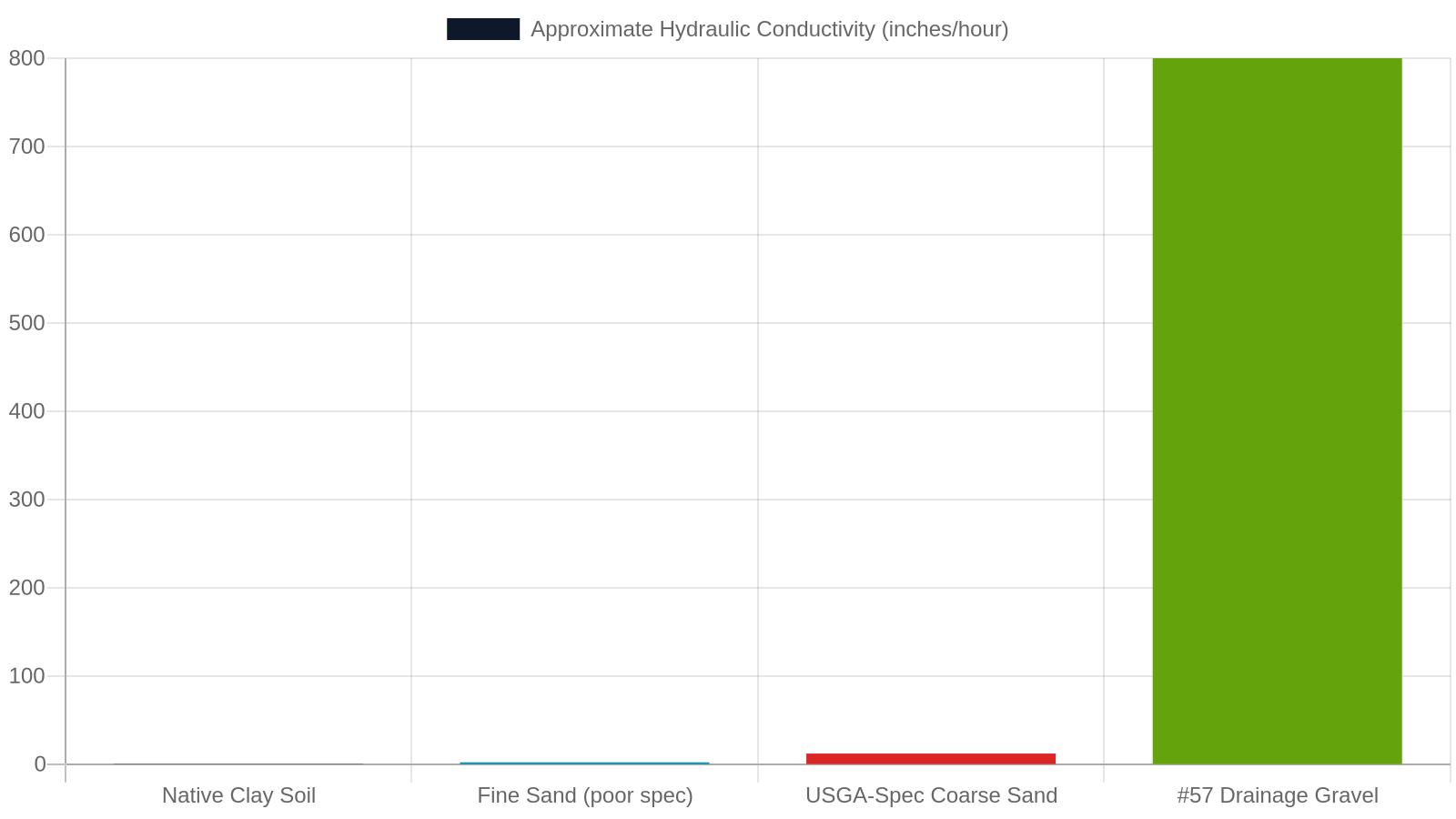
Many modern athletic field drainage designs include a 4–6″ layer of coarse, angular sand above the native soil and below the turf. This sand cap dramatically increases the infiltration rate of the surface — from a typical clay-soil rate of 0.1–0.5 inches per hour to 6–20 inches per hour or more, depending on sand specification. The sand cap works in tandem with the subsurface drainage system: water moves quickly through the sand layer and then into the perforated pipe network below.
Outlet and Discharge Structure
Water collected by the system has to go somewhere. Common discharge options include: a storm sewer connection (requires municipal approval), a daylighted pipe outlet to a swale or detention basin, or a seepage bed where water slowly infiltrates into native soil away from the field. The outlet must be sized to handle peak flow without backing up — undersizing the outlet is one of the most common design mistakes on school and park field projects.
4. Sizing Your System: Pipe Diameter, Inlet Spacing, and Flow Rates
Drainage system sizing is where many DIY or low-bid projects go wrong. A system that looks right on paper but is undersized for actual rainfall intensity will back up during the first major storm and leave standing water just as long as no system at all. Here is how the math works — in plain terms.
Calculating Peak Rainfall Runoff
Drainage engineers use the Rational Method (Q = CiA) to estimate peak runoff from a field: Q is flow in cubic feet per second, C is the runoff coefficient (typically 0.35–0.45 for natural turf), i is the rainfall intensity in inches per hour for the design storm, and A is the drainage area in acres. For Jackson, TN, the 10-year, 1-hour design storm intensity is approximately 3.5–4.0 inches per hour based on NOAA Atlas 14 data for Madison County. A 1.5-acre football field and surrounding area might generate 1.5–2.5 cubic feet per second of peak runoff — enough to fill a standard bathtub every 2–3 seconds.
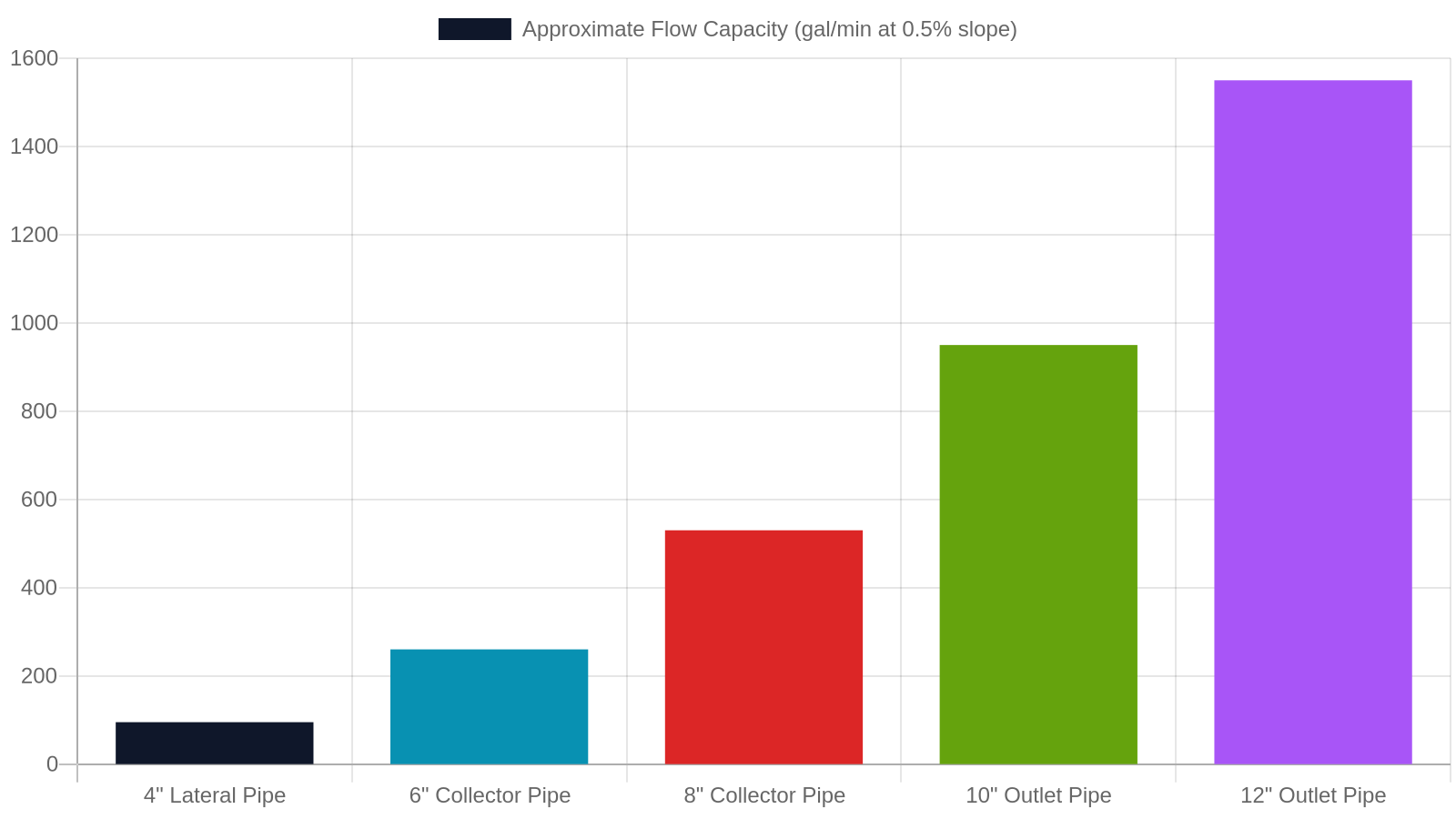
Pipe Sizing Rules of Thumb
For most natural-turf athletic fields in West Tennessee, the following pipe sizes are common starting points:
- Lateral lines: 4″ perforated PVC or HDPE
- Collector mains: 6″ or 8″ solid pipe
- Outlet pipe: 8″–12″ depending on total drainage area
These are starting points only — a licensed civil engineer or drainage contractor should confirm sizing based on site-specific topography, soil permeability, and local stormwater regulations. Undersized pipe is the leading cause of drainage system failure on athletic fields.
Inlet Spacing and Field Crown
The standard recommendation for natural-turf athletic fields is to maintain a 1–2% crown from the center of the field to the sidelines. This gentle slope is barely perceptible to players but is enough to sheet water off the surface in 15–20 minutes after a moderate rain event. Catch basin inlets are then spaced along the sidelines every 50–75 feet on fields with a crown, or more closely on flat fields that rely more heavily on subsurface drainage. End zone inlets are typically added at each corner.
5. Choosing the Right Aggregate: Gravel, Sand, and Filter Media
The aggregate you put in the ground is the component you’ll never see again — but it determines whether your drainage system performs for 5 years or 25 years. Here is what to specify for each layer of an athletic field drainage system, and why the details matter.
Drainage Gravel: What 'Clean' Really Means
When a spec sheet calls for “clean drainage gravel,” it means aggregate that has been washed to remove clay fines, silt, and dust. Fines are the enemy of a drainage system: they migrate through the gravel bed over time, coat the pipe perforations, and dramatically reduce flow capacity. A gravel with even 5–8% fines content by weight can lose 30–50% of its hydraulic conductivity within a few years of installation.
Jackson Sand mixes aggregate on-premises from high-quality materials, which means loads arrive clean and consistent — not contaminated with road dust or mixed-in soil from an open stockpile. That consistency matters for drainage applications where the spec is tight.
Sand Cap Specifications for Athletic Fields
If your design includes a sand cap or rootzone layer, particle size distribution is critical. The USGA and ASTM have published guidelines for sports field sands that specify:
- Medium to coarse sand: 0.25–1.0 mm particle size range
- Less than 3% fines (particles smaller than 0.05 mm)
- Less than 10% very coarse particles (greater than 2.0 mm)
Sand that is too fine will compact and lose permeability quickly. Sand that is too coarse creates an unstable, inconsistent playing surface. Jackson Sand publishes lab-tested sand spec sheets so you can verify that the material meets your project’s requirements before you order.
Filter Fabric: Use It or Skip It?
Geotextile filter fabric is sometimes placed between the native soil and the gravel drainage layer to prevent soil migration. On clay-heavy soils like those common in West Tennessee, a non-woven geotextile (150–200 g/m² weight) is generally recommended. However, fabric must be specified carefully — fabric with too small an opening size can blind (clog) quickly in silty soils, creating a drainage barrier rather than a filter. Some designers prefer a graded aggregate filter (a transitional layer of medium gravel between the native soil and the drainage stone) instead of fabric for long-term reliability.
6. Step-by-Step: How Drainage Basin Installation Works in the Field
Understanding the installation sequence helps field managers, athletic directors, and parks departments plan for downtime, coordinate material deliveries, and communicate with contractors. Here is how a typical drainage basin installation unfolds from start to finish on a West Tennessee athletic field.
Phase 1 — Site Survey and Design
Before any equipment arrives, a drainage contractor or civil engineer surveys the existing field grades using a transit or GPS-based grade laser. The survey identifies low spots, existing drainage outlets, and the overall slope of the site. From this data, the designer lays out the inlet locations, pipe routes, and discharge point on a plan drawing. This step typically takes 1–3 days for a standard athletic field and is the single most important investment in the project — a poorly designed system installed perfectly is still a poorly designed system.
Phase 2 — Excavation and Pipe Installation
A trenching machine or mini-excavator cuts trenches to the specified depth — typically 18–36 inches deep for lateral lines on natural-turf fields. The trench bottom is graded to the design slope (minimum 0.2%, preferably 0.5% or more), a bed of drainage gravel is placed, the perforated pipe is laid and connected to inlet structures, and the trench is backfilled with drainage aggregate to within 4–6 inches of the surface. Compaction of the aggregate layer is intentionally minimal — you want the gravel to remain open and permeable.
Phase 3 — Sand Cap, Regrading, and Turf Establishment
If the design includes a sand cap, it is spread and laser-graded to the design crown after pipe installation is complete. Topsoil may be blended into the upper 2–3 inches to support turf establishment. The field is then seeded or sodded, and a 4–6 week establishment period is typically required before the field is returned to full use. Irrigation during establishment is critical — the sand cap drains so efficiently that it can dry out quickly in West Tennessee summers, stressing new seedlings.
Athletic Field Drainage Options Compared at a Glance
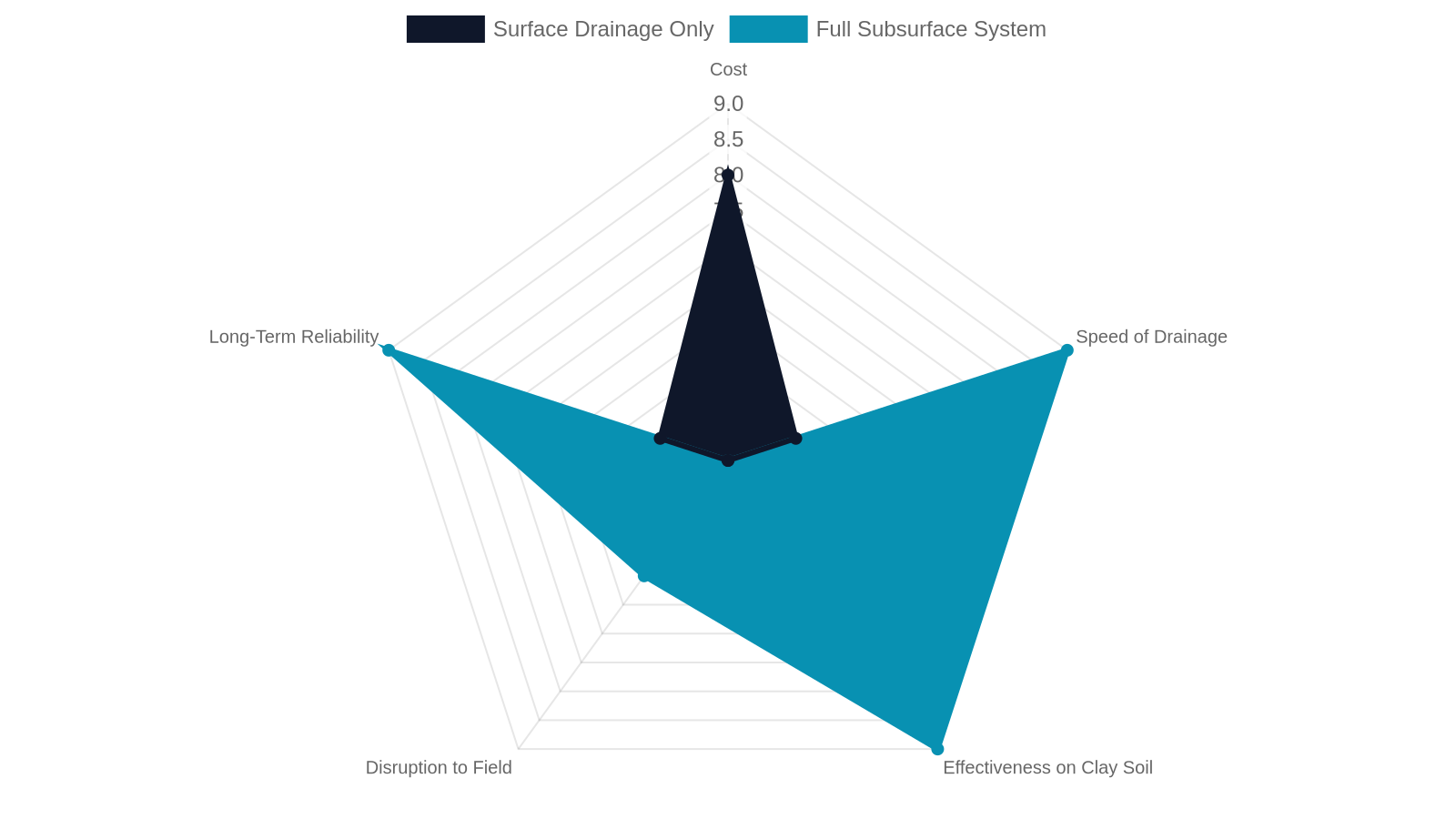
Different drainage approaches suit different budgets, soil conditions, and performance goals. Use this table to compare the most common options for athletic fields in West Tennessee.
7. Surface Drainage vs. Subsurface Drainage: Which Does Your Field Need?
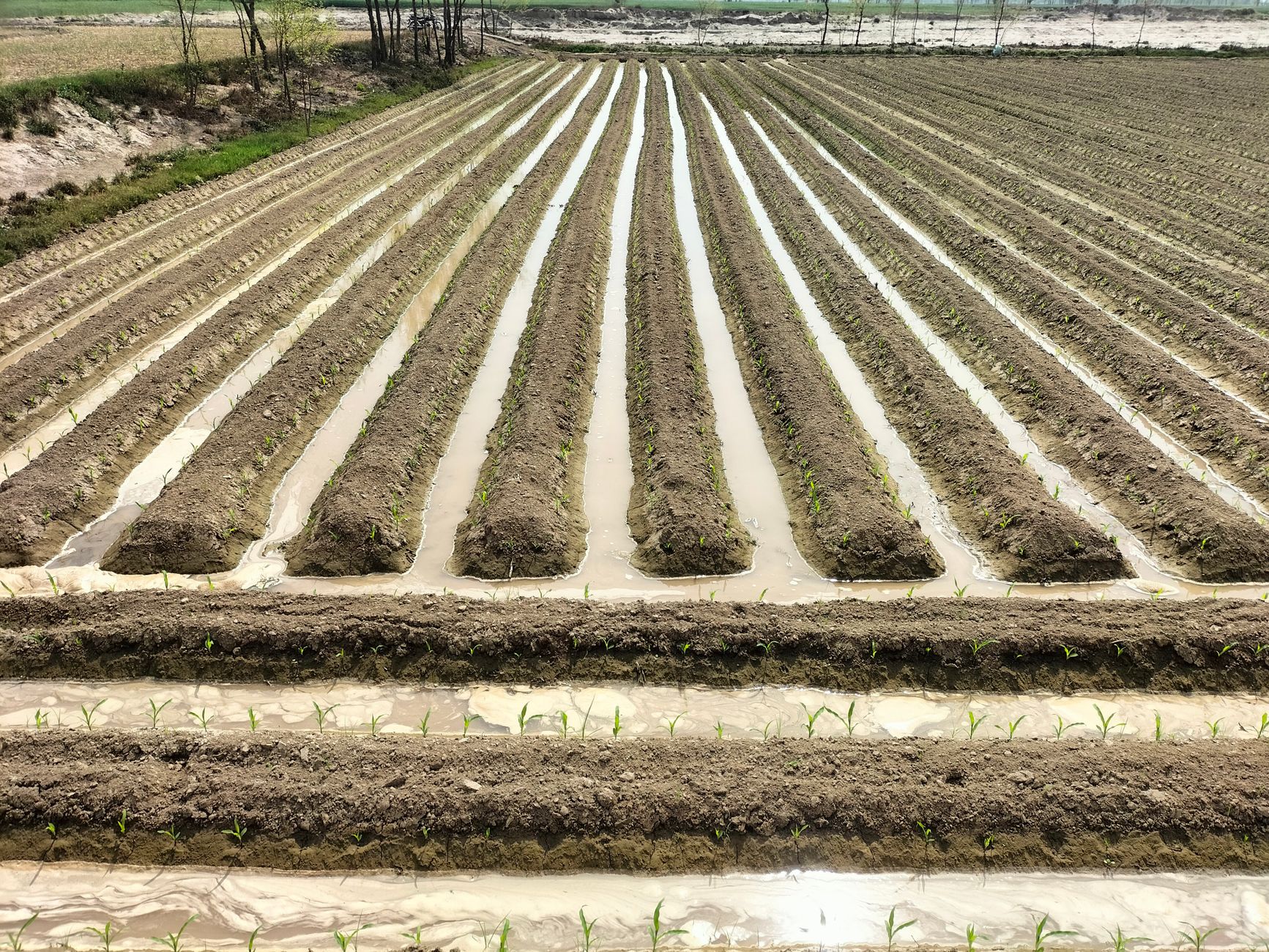
Not every wet field needs the same solution. The right drainage approach depends on where the water is coming from and where it is going. Understanding the difference between surface and subsurface drainage helps you match the solution to the actual problem — and avoid spending money on the wrong fix.
When Surface Drainage Alone Is Enough
Surface drainage — regrading the field to improve slope and directing water to perimeter swales or inlets — is the lowest-cost intervention and is sometimes sufficient for fields that drain reasonably well but have developed low spots from years of settlement and traffic. If your field drains within 4–6 hours after a moderate rain (1–1.5 inches) but holds water for 24+ hours after heavy events, improved surface grading combined with a few strategically placed catch basins may solve the problem without a full subsurface system.
When You Need Subsurface Drainage
Subsurface drainage is necessary when the native soil’s hydraulic conductivity is too low to allow water to drain away even after surface runoff has been managed. Signs that you need subsurface drainage include:
- Standing water 24+ hours after rain events even on a properly sloped field
- Consistently soggy or spongy turf in the center of the field (away from low spots)
- Turf thinning and disease pressure in wet areas despite proper agronomic management
- A soil probe that shows saturated soil 4–8 inches below the surface for days after rain
For most clay-soil fields in West Tennessee, some level of subsurface drainage is needed to achieve reliable playability.
8. Maintenance: Keeping Your Drainage System Performing Year After Year
Installing a drainage system is a capital investment — and like any capital investment, it requires routine maintenance to deliver its expected lifespan. The good news: maintenance for a well-installed drainage basin system is straightforward and inexpensive compared to the cost of field closures or system replacement.
Annual Inspection Checklist
A drainage basin system is largely maintenance-free if installed correctly, but annual inspection prevents small problems from becoming expensive failures. Each fall, before the wet season, field managers should:
- Remove debris and sediment from all catch basin inlets — a single inlet clogged with leaves can back up an entire lateral line
- Flush lateral lines with a garden hose or drain snake to check for sediment accumulation
- Inspect outlet structures for erosion, undermining, or blockage by vegetation
- Walk the field after a moderate rain event and note any areas that drain slowly or hold water — these may indicate a clogged pipe or collapsed section
Aeration: The Maintenance Tool That Protects Your Drainage Investment
Even the best subsurface drainage system can be undermined by a compacted turf surface that prevents water from reaching the drainage layer below. Core aeration — removing plugs of soil 3–4 inches deep across the field surface — relieves compaction, improves infiltration, and allows the subsurface drainage system to do its job. For high-use natural-turf fields, core aeration 2–3 times per year is recommended, with the cores removed and the holes filled with a top dressing sand that matches the rootzone specification.
Jackson Sand supplies top dressing sand for exactly this purpose, and also offers top dressing services for fields across West Tennessee.
When to Call a Professional
If annual inspection reveals that large sections of the field are draining slowly despite clean inlets and open outlets, the problem is likely inside the pipe — either sediment accumulation, root intrusion, or a collapsed section. A drainage contractor with a pipe camera can diagnose the problem without excavation. Repair costs for a single collapsed lateral section are typically $500–$2,500 depending on depth and access, far less than the cost of a full system replacement. Catching problems early is always cheaper than waiting for a complete failure.
9. Ready to Fix Your Field? How Jackson Sand Can Help
You now have the framework to understand, specify, and maintain a drainage basin system for your athletic field in West Tennessee. The next step is getting the right materials on-site — and that is where Jackson Sand comes in. Here is what working with Jackson Sand looks like from first call to final delivery.
Materials Delivered in Jackson Sand's Own Trucks
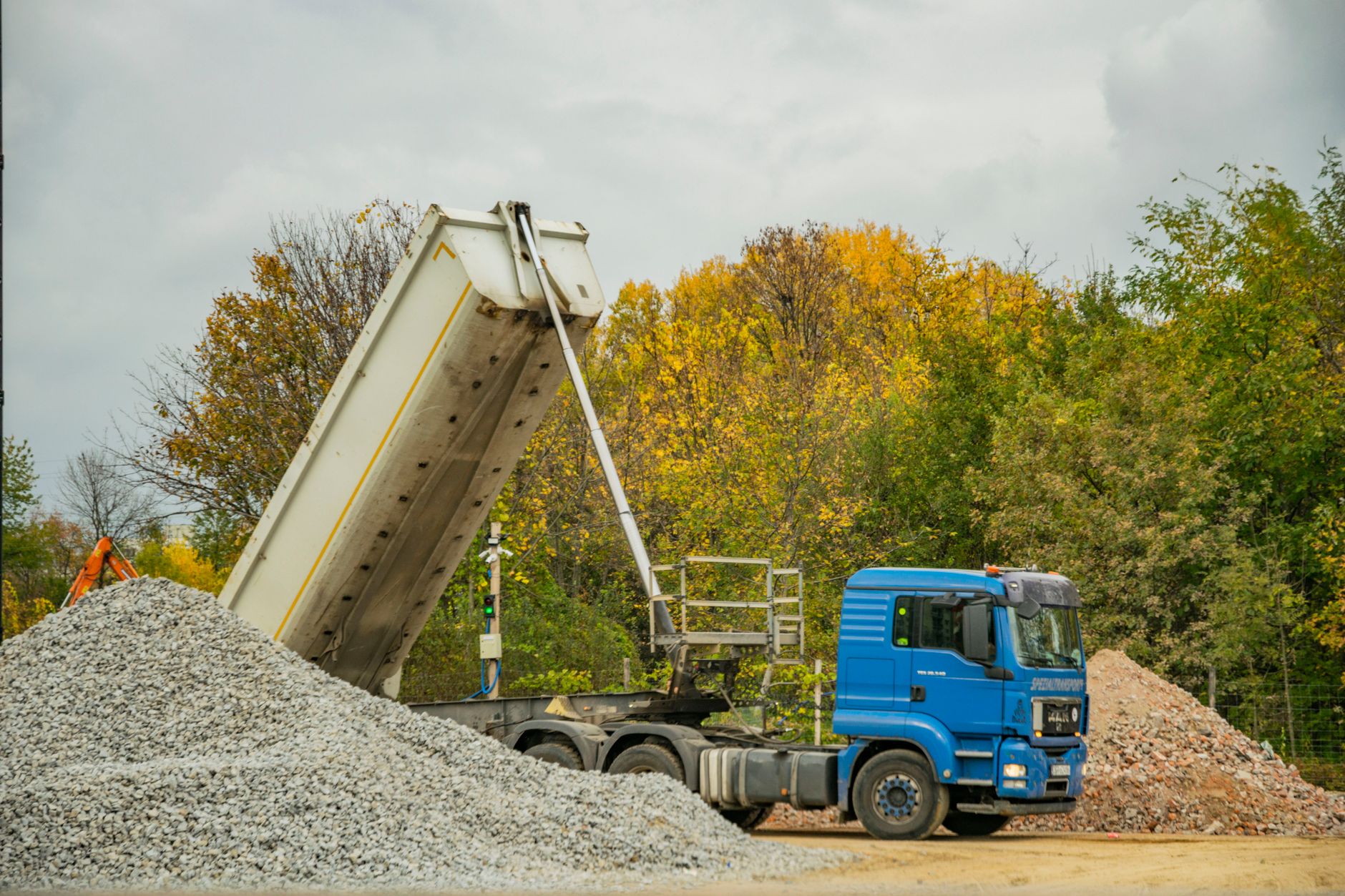
Jackson Sand supplies drainage aggregate, gravel, and athletic field sand from their facility at 139 United Dr., Jackson, TN — and they deliver in their own trucks, which means loads arrive clean, accurately measured, and on schedule. For drainage projects, that consistency matters: a load of drainage gravel contaminated with fines from a shared truck bed can compromise the hydraulic performance of the entire system.
Use the free yardage calculator on the Jackson Sand website to estimate how much aggregate, sand, or gravel your project requires before you call — it takes the guesswork out of ordering and helps you get an accurate quote from your contractor.
Products for Every Part of the System
Whether you are installing a new drainage basin system from scratch or adding a sand cap to an existing field, Jackson Sand has the materials you need:
- Drainage gravel and aggregate for pipe bedding and trench fill
- Athletic field sand for sand cap and rootzone layers
- Top dressing sand for annual aeration and surface maintenance
- Gravel and surface drainage materials for perimeter swales and outlet structures
Explore the full range of drainage basin materials and services at Jackson Sand to see what fits your project, or call the team directly at 731-668-0440 to talk through your field’s specific needs.
Serving Schools, Parks, and Contractors Across West Tennessee
Jackson Sand serves large and small jobs across West Tennessee and the surrounding Mid-South — from a single load of drainage gravel for a school sideline repair to full aggregate packages for new athletic complex construction. Delivery is included. If you are a contractor, parks department, school athletic director, or turf manager in the Jackson area dealing with a wet field problem, the team at Jackson Sand — President Carlton Pope and Manager Wes Lipford — has the materials knowledge and the local experience to help you get the right product for the job. Call 731-668-0440 or get in touch online to start the conversation.
Frequently Asked Questions
How much does it cost to install a drainage basin system on an athletic field?
Costs vary widely depending on field size, soil conditions, and system complexity. A basic perimeter catch basin installation may run $10,000–$40,000, while a full subsurface lateral pipe system on a clay-soil field typically costs $40,000–$150,000 or more. A sand cap combined with subsurface drainage can reach $80,000–$250,000 for a full-size football field. Getting a site-specific quote from a licensed drainage contractor is the only way to get an accurate number.
How long does drainage basin installation take on a sports field?
A typical subsurface drainage installation on a natural-turf athletic field takes 2–4 weeks of active construction, plus a 4–6 week turf establishment period before the field returns to full use. Simpler perimeter catch basin projects can be completed in 3–7 days. Planning around your off-season or a school break is strongly recommended.
What type of gravel or aggregate is used in athletic field drainage systems?
The most common specification is a clean, washed #57 or #67 crushed stone (approximately 3/4" nominal size) for pipe bedding and trench fill. This aggregate must be free of clay fines to maintain long-term hydraulic conductivity. A USGA-spec coarse sand (0.25–1.0 mm particle size) is used for sand cap and rootzone layers. Lab-tested spec sheets help verify that materials meet project requirements.
Can Jackson Sand deliver drainage aggregate and gravel to my athletic field project in West Tennessee?
Yes. Jackson Sand delivers drainage gravel, aggregate, and athletic field sand in their own trucks to job sites across West Tennessee and the surrounding Mid-South. Delivery is included. Call 731-668-0440 to discuss your project and get a quote.
How do I know if my athletic field needs subsurface drainage or just surface regrading?
If your field holds standing water for more than 6–8 hours after a moderate rain event, or if the turf feels spongy and saturated in the center of the field (not just at low spots), subsurface drainage is likely needed. Fields on clay-heavy soils — common throughout West Tennessee — almost always benefit from some level of subsurface drainage because native soil permeability is too low to drain water quickly on its own.
How often does a drainage basin system need maintenance?
An annual inspection is recommended — typically each fall before the wet season. This includes clearing debris from catch basin inlets, flushing lateral lines, and inspecting outlet structures. Core aeration 2–3 times per year also protects the drainage investment by preventing surface compaction that blocks water from reaching the subsurface system. Well-maintained systems can perform reliably for 20–30 years.