
7 Surface Drainage Solutions for Golf Courses in West Tennessee
Quick answer: Golf courses in West Tennessee face heavy seasonal rainfall and clay-heavy soils that trap water and keep fairways unplayable for days. The most effective surface drainage strategy combines proper slope grading (a minimum 1–2% grade away from play areas), channel and swale design, high-quality drainage aggregate, and purpose-mixed sand topdressing to improve infiltration. Jackson Sand supplies lab-tested drainage sand and aggregate, mixes materials on-site, and delivers in their own trucks to courses throughout the Mid-South region.
Why West Tennessee Golf Courses Struggle With Standing Water

Before choosing a drainage solution, it helps to understand exactly why West Tennessee courses are so prone to surface water problems. The combination of regional rainfall, native soil type, and course topography creates conditions where even a moderate storm can leave fairways unplayable. Knowing the root causes lets superintendents prioritize the right fixes rather than applying band-aid solutions year after year.
Rainfall Patterns and Soil Composition
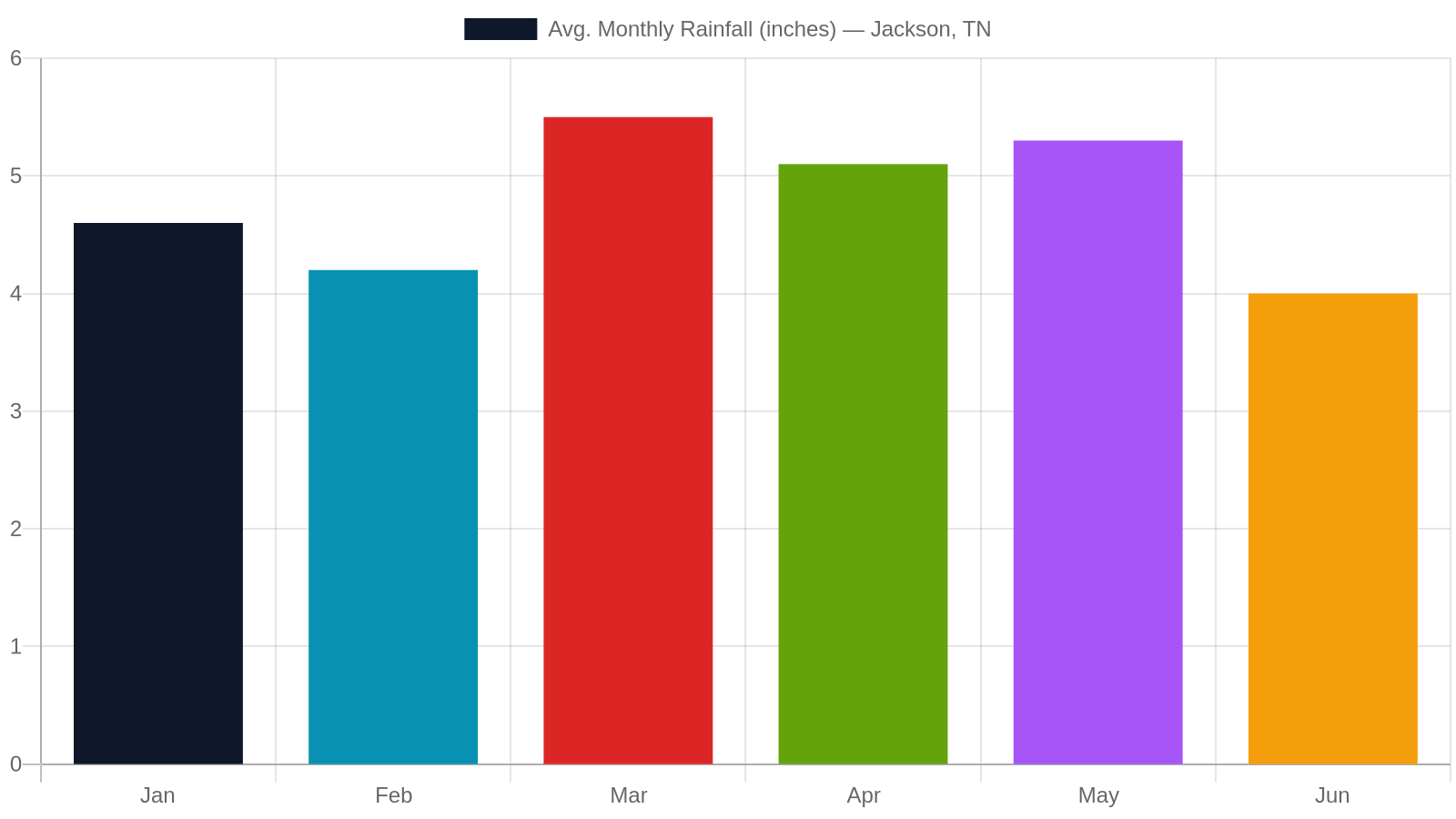
West Tennessee receives an average of 52–55 inches of rainfall per year, with the heaviest totals falling between December and May — exactly when courses are trying to open for the season. Jackson and the surrounding Mid-South region sit on a mix of silty loam and clay-heavy soils that have low permeability. Water that can’t infiltrate quickly pools on fairways, cart paths, and greens surrounds, sometimes for 48–72 hours after a significant rain event.
- Clay content in native West Tennessee soils often exceeds 30%, creating a near-impermeable layer just inches below the surface.
- Compaction from cart traffic makes infiltration even slower over time.
- Low-lying areas common in the Tennessee River basin create natural collection points for runoff.
The Real Cost of Poor Drainage
Every day a golf course is closed or cart-path-only costs revenue. Industry estimates put the average daily revenue loss for an 18-hole public course at $3,000–$8,000 depending on region and season. Beyond lost green fees, saturated turf is vulnerable to disease pressure — Pythium blight, for example, thrives in standing water and can destroy a green in 24 hours. Repeated wet-dry cycles also accelerate soil compaction, creating a feedback loop that makes drainage worse every year without intervention.
Addressing surface drainage is not just a maintenance task — it’s a capital protection strategy for any course in the Mid-South.
1. Establish Proper Surface Slope and Grade
Slope is the foundation of every surface drainage system. No amount of pipe, aggregate, or sand can compensate for a fairway that’s flat or crowned in the wrong direction. Getting grade right — or as close to right as budget allows — should be the first item on any drainage improvement plan for a West Tennessee golf course.
Minimum Grade Standards for Fairways and Approaches
The single most cost-effective drainage improvement a course can make is correcting surface slope. The USGA recommends a minimum 1% grade on fairways and approaches, with 1.5–2% being more practical in high-rainfall regions like West Tennessee. A 1% grade means water moves 1 foot vertically for every 100 feet of horizontal distance — enough to clear a fairway in 30–45 minutes after rain stops, rather than sitting for hours.
- Greens surrounds should slope away from the putting surface at 2–3% to prevent water from backing onto the green.
- Tee boxes require a 1–2% cross-slope to shed water off the playing surface.
- Cart paths need a minimum 1.5% crown or cross-slope to prevent pooling.
Regrading vs. Topdressing to Achieve Slope
For severe low spots, mechanical regrading with a laser-guided grader is the fastest solution — but it’s also the most disruptive and expensive, often requiring a hole to be closed for weeks. A less disruptive alternative is progressive topdressing with a high-quality sand to gradually build up low areas over one to three seasons. This approach works well for minor grade corrections of 1–3 inches and keeps the hole playable throughout the process.
Jackson Sand mixes topdressing sand on-site to match your existing rootzone profile, which is critical when building grade — adding incompatible sand can create a layering problem that makes drainage worse, not better.
2. Design and Install Surface Drainage Swales
Swales are the workhorses of surface drainage — simple in concept, highly effective when properly designed, and far less expensive than underground pipe networks. For West Tennessee courses dealing with broad, sheet-flow runoff across fairways, a well-placed swale network can move thousands of gallons of water per hour without a single pump or catch basin.
What a Swale Does and Where to Put One
A drainage swale is a shallow, gently sloped channel — typically 12–24 inches wide and 6–12 inches deep — designed to collect and convey surface water away from play areas. Unlike underground pipe systems, swales are visible, inexpensive to construct, and easy to maintain with standard turf equipment. They work best along the edges of fairways, between holes, and in the rough areas that naturally collect runoff.
- Swales should maintain a minimum 0.5% longitudinal slope to keep water moving — flat swales become mosquito breeding grounds.
- Vegetated swales slow water velocity and filter sediment before it reaches drainage outlets.
- In West Tennessee’s clay soils, lining a swale bottom with 2–3 inches of coarse drainage aggregate dramatically improves its capacity.
Turfgrass Selection for Swale Stability
A swale that erodes during heavy rain defeats its own purpose. In West Tennessee, bermudagrass and tall fescue are the most common choices for swale stabilization. Bermuda establishes quickly in summer and handles high water velocity well. Fescue is better for shaded areas and winter months when bermuda goes dormant. Some superintendents use a bermuda/fescue blend to maintain year-round coverage.
For newly constructed swales, erosion control blankets (ECBs) protect the soil surface for the first 60–90 days while turf establishes. Avoid seeding swales in late fall — germination rates drop sharply below 50°F soil temperature, and West Tennessee winters can be unpredictable.
3. Use the Right Drainage Aggregate in the Right Place
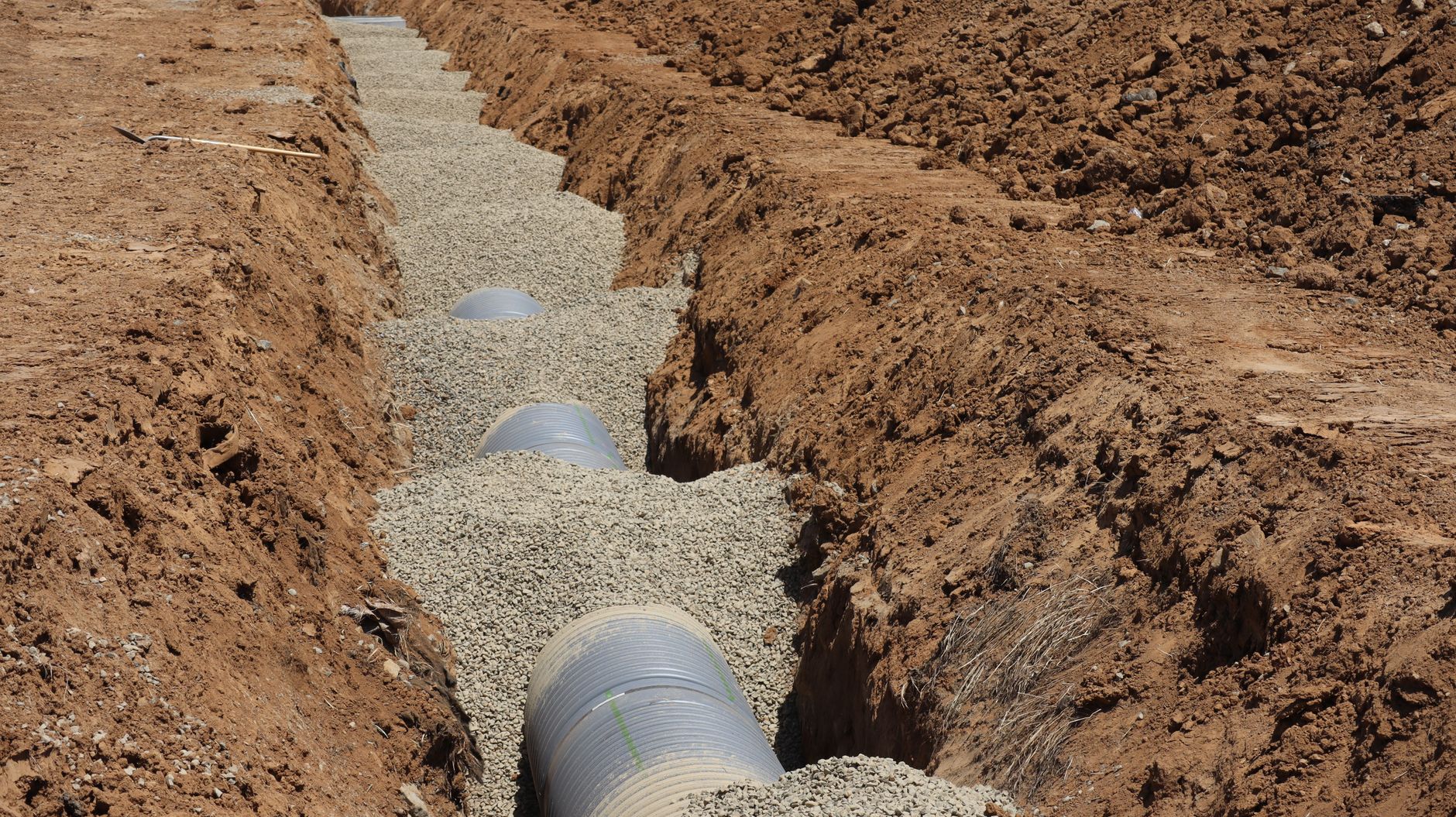
Aggregate selection is where many drainage projects go wrong. Superintendents often specify the right system design but then accept whatever gravel the local supplier has on hand. In West Tennessee, where clay soils create specific filtration challenges, using the correct aggregate gradation in each layer of a drainage system is the difference between a fix that lasts 20 years and one that clogs in two seasons.
Aggregate Types and Their Drainage Roles
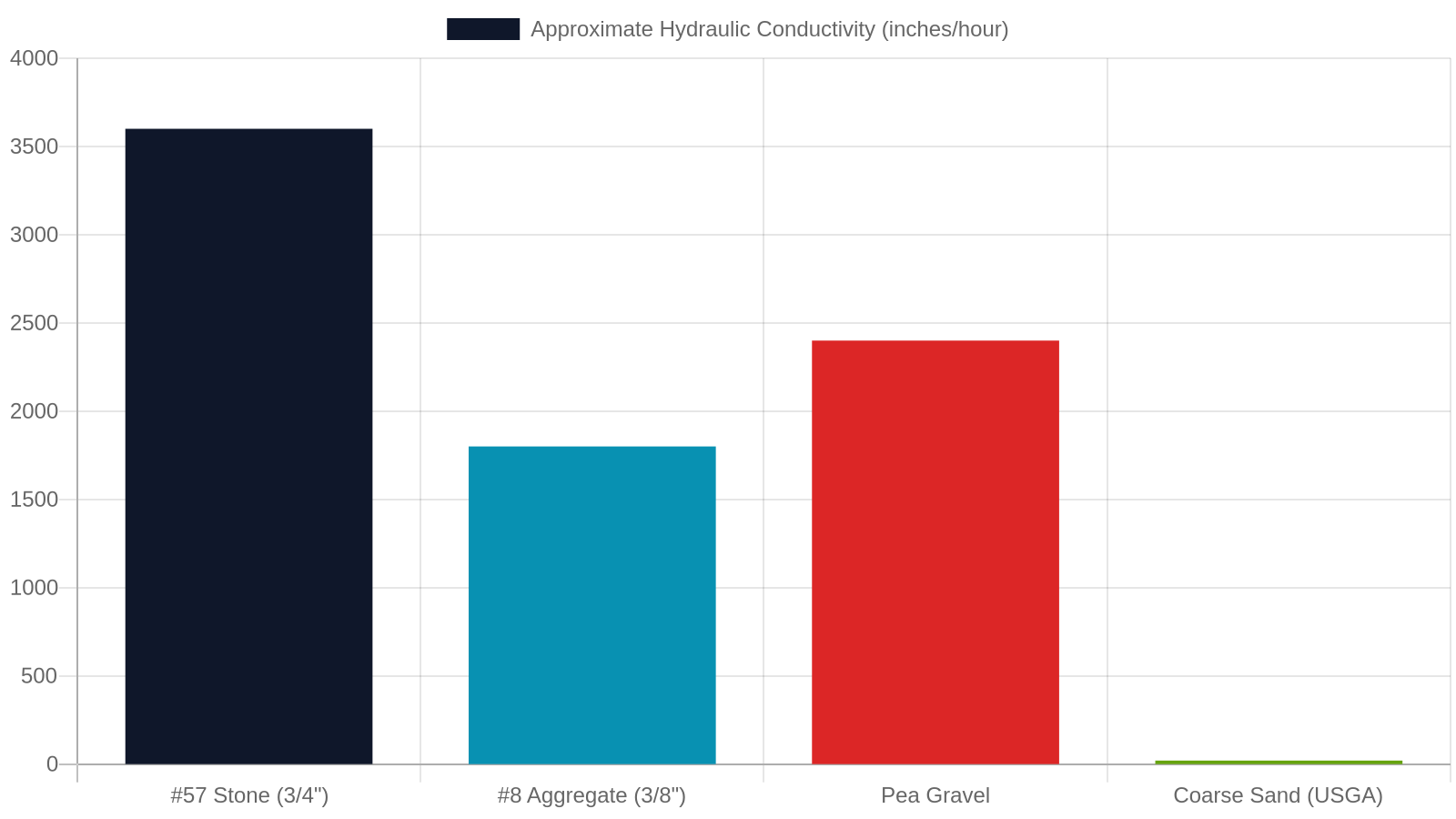
Not all gravel is created equal. The aggregate you choose for a drainage application needs to match the hydraulic demands of that specific location. Here’s a quick breakdown of common aggregate types used on golf courses:
- #57 Crushed Stone (3/4 inch) — the most versatile drainage aggregate; used in French drain trenches, drainage basin surrounds, and swale linings. High void ratio allows rapid water movement.
- #8 Aggregate (3/8 inch) — used as a transition layer between native soil and coarser stone; prevents fines migration.
- Pea Gravel — rounded, smooth; used in decorative drainage features and some catch basin applications where aesthetics matter.
- Coarse Sand (USGA spec) — used in rootzone construction and topdressing; not a substitute for structural aggregate in drainage trenches.
Avoiding the Layering Problem
One of the most common drainage mistakes on golf courses is installing incompatible particle sizes next to each other without a proper transition layer. Fine particles migrate into coarse aggregate over time, clogging the void spaces that make drainage work. The USGA’s particle size ratio guideline states that the D15 of the coarser layer should be no more than 5 times the D85 of the finer layer to prevent migration.
In practical terms: if you’re placing drainage aggregate next to native West Tennessee clay soil, you need a geotextile fabric or a bridging sand layer between them. Jackson Sand can help you identify the right aggregate and sand combination for your specific soil profile — check the sand specs page for lab-tested particle size data on available materials.
4. Topdress Fairways and Greens With Purpose-Mixed Sand
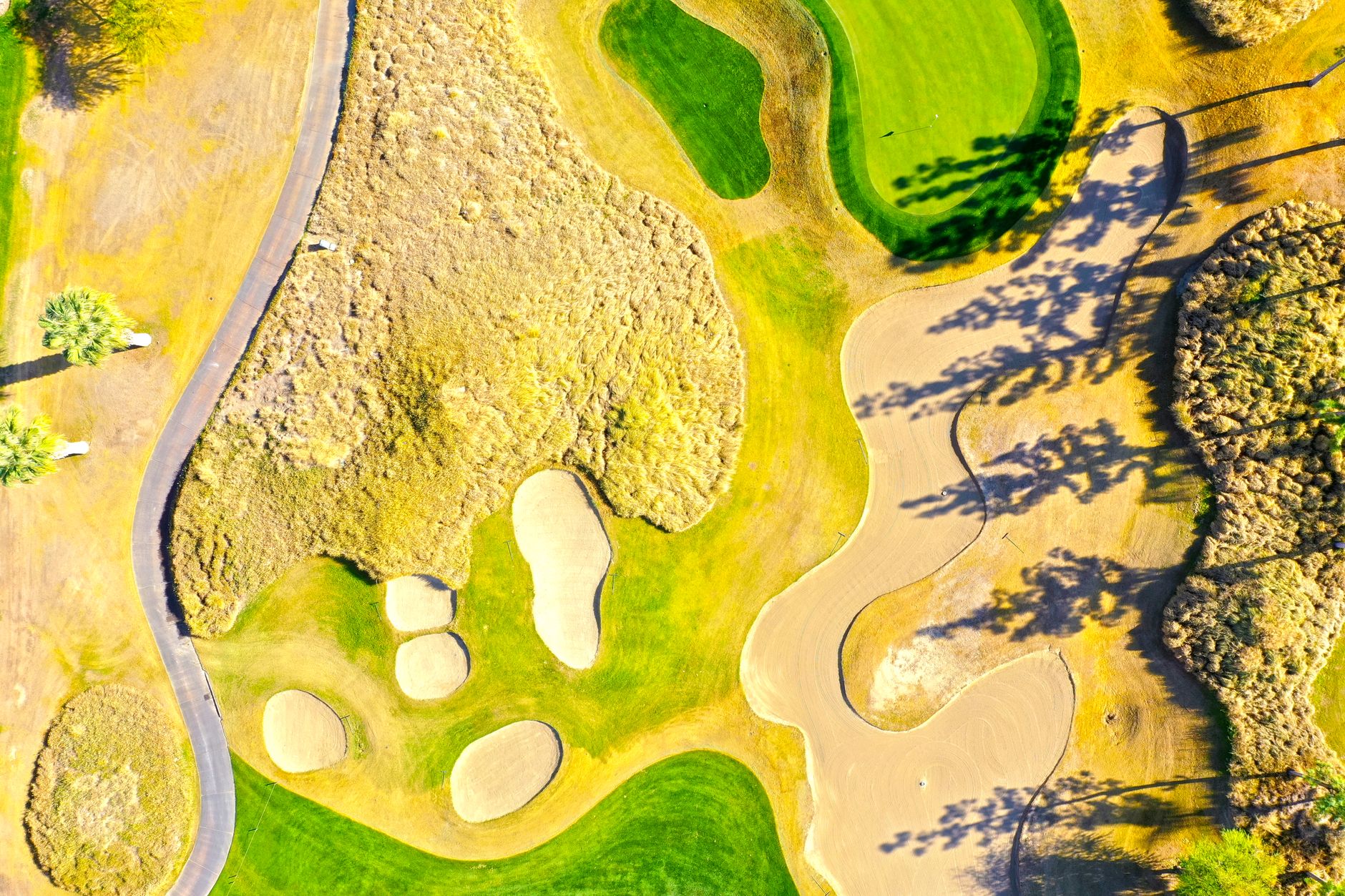
Surface drainage isn’t only about moving water off the course — it’s also about improving the rate at which water moves through the turf and rootzone. Sand topdressing addresses the infiltration side of the equation, and it’s a tool that compounds in value the longer it’s applied consistently. A course that has topdressed its greens for a decade will drain measurably faster than one that hasn’t, all else being equal.
How Topdressing Improves Surface Drainage
Regular sand topdressing is one of the most powerful long-term drainage tools available to a golf course superintendent. Each application adds a thin layer of high-porosity sand to the surface, gradually replacing the organic matter and fine particles that clog the upper rootzone. Over time — typically 3–5 years of consistent topdressing — infiltration rates on a treated green or fairway can improve by 200–400% compared to an untreated surface.
- Greens topdressing rates typically run 0.25–0.5 cubic feet per 1,000 sq ft per application.
- Fairway topdressing is applied at heavier rates — often 1–2 cubic yards per 1,000 sq ft — using dedicated topdressers or sand spreaders.
- Topdressing is most effective when combined with aeration, which opens channels for sand to move into the rootzone.
Why Sand Particle Size Matters for Drainage
Using the wrong particle size in a topdressing application can create a layering problem that actually reduces drainage. Sand that is too fine will seal the surface; sand that is too coarse won’t integrate with the existing rootzone. The USGA recommends topdressing sand with a median particle size of 0.25–0.35mm for most putting greens, with local adjustments based on existing rootzone composition.
Jackson Sand mixes topdressing sand on their own premises to meet specific particle size targets, and their lab-tested spec sheets let you verify the material before it arrives on your course. That level of quality control is especially important in West Tennessee, where native soils vary significantly from one side of a county to another.
5. Integrate Catch Basins and Drainage Inlets Strategically

Swales and slope handle sheet flow across broad areas, but every course has low points where water concentrates faster than it can be conveyed away by surface grade alone. That’s where catch basins earn their place in the drainage system. Properly sized, positioned, and maintained, a network of drainage inlets can capture runoff from an entire hole in minutes rather than hours.
Where Catch Basins Belong on a Golf Course
Catch basins — also called drainage inlets or drop inlets — are underground structures that collect surface water and route it into a pipe network or detention area. They’re most effective at low points that can’t be regraded, such as the base of a slope between two holes, the low corner of a green surround, or a natural depression in the rough that would require significant earthwork to eliminate.
- A standard 12×12-inch catch basin can handle approximately 0.5–1.0 cubic feet per second of flow depending on grate type and pipe size.
- Basins should be spaced so that no point on the collection area is more than 100–150 feet from an inlet in high-rainfall zones.
- In West Tennessee’s clay soils, basins should be surrounded by 6–12 inches of coarse aggregate to prevent soil migration into the structure.
Maintenance Requirements for Drainage Inlets
A catch basin that isn’t maintained will fail silently — sediment accumulates in the sump, grates clog with debris, and the system backs up during the next storm. West Tennessee courses should plan to inspect and clean catch basins at least twice per year: once in early spring before peak rainfall season and again in late fall after leaf drop.
Signs of a failing basin include water pooling around the grate during moderate rain (indicating a clogged grate or full sump), sinkholes forming near the basin (indicating pipe joint failure), and turf discoloration in a ring pattern around the inlet (indicating water is backing up into the surrounding soil). Proactive maintenance costs a fraction of emergency repairs.
6. Address Bunker Drainage to Protect Playability and Safety
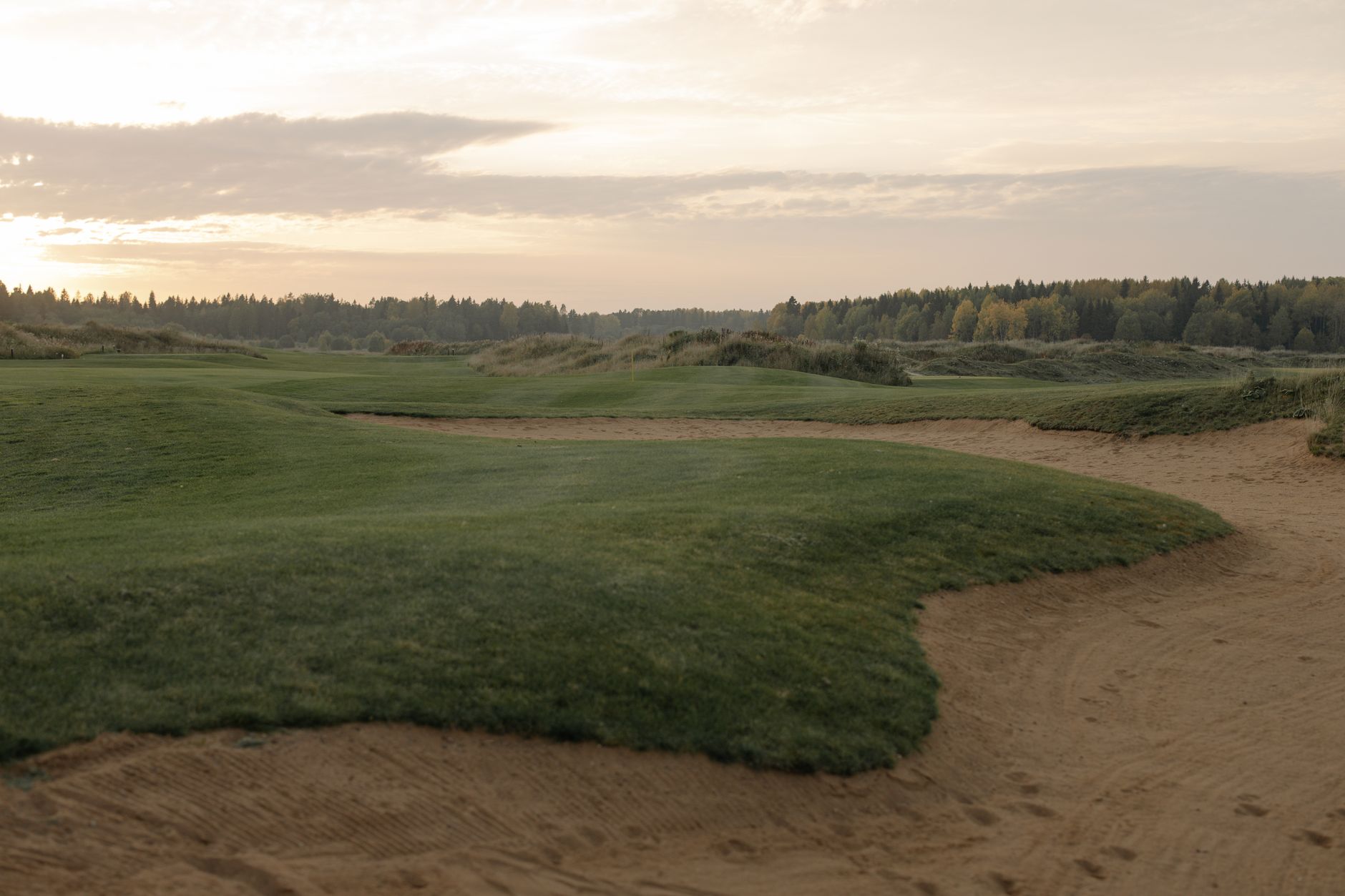
Bunker drainage is often treated as an afterthought — something to fix after the rest of the course drainage system is addressed. That’s a mistake. Wet bunkers are among the most visible and frustrating drainage failures a golfer encounters, and they signal to members and guests that the course isn’t being maintained at a high level. Getting bunker drainage right is as much a marketing decision as a maintenance one.
Why Bunkers Are a Drainage Priority
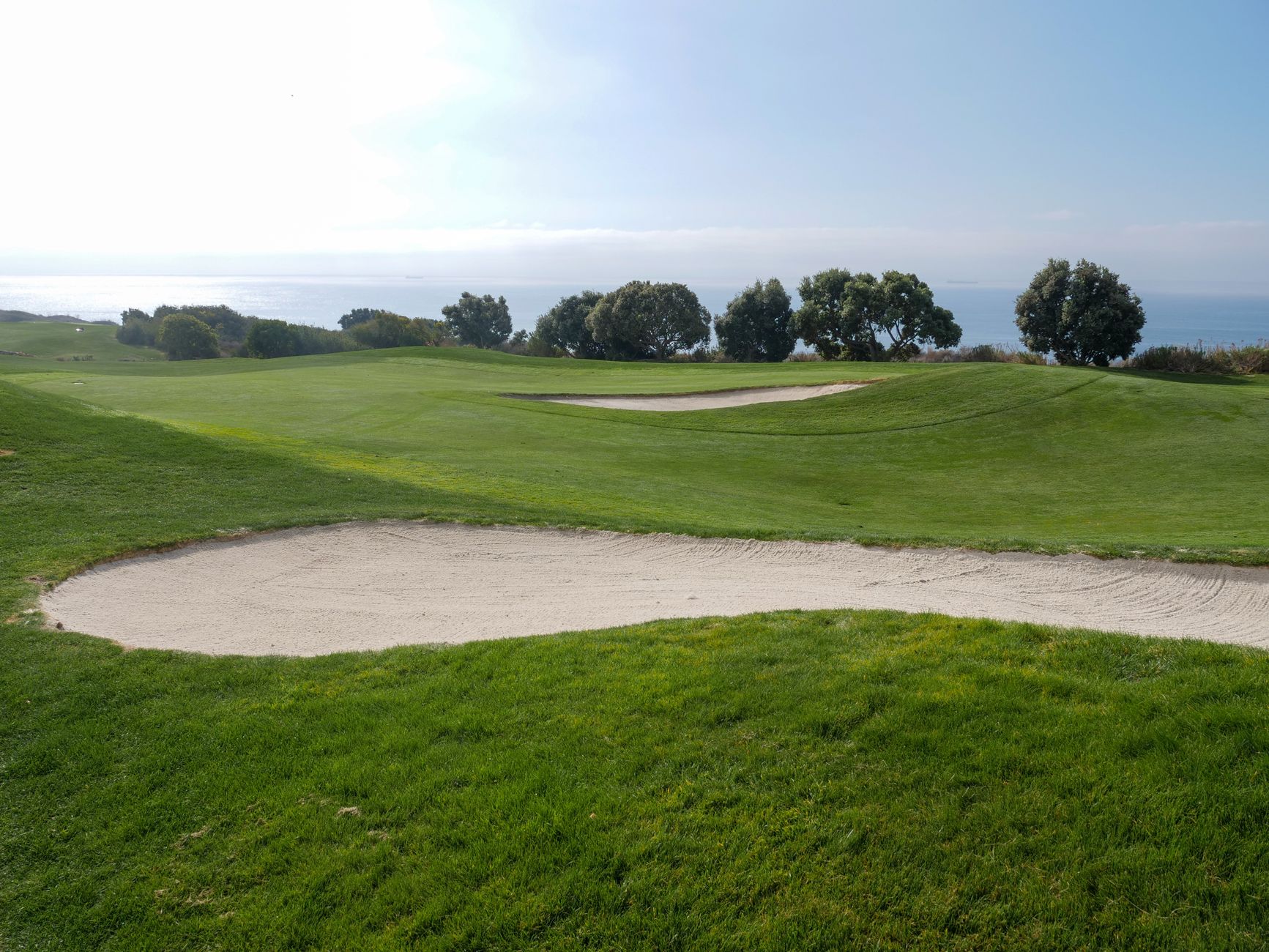
Bunkers are magnets for water. Their bowl shape collects both direct rainfall and runoff from surrounding slopes, and a bunker that holds water after a storm is both unplayable and a safety hazard — players can slip on wet sand and the surface becomes compacted and uneven as it dries. For West Tennessee courses that receive 4–5 inches of rain in a single event during spring storm systems, bunker drainage is not optional — it’s a core maintenance requirement.
- USGA-spec bunker drainage systems use a perforated pipe bedded in coarse aggregate at the base of the bunker, covered by a choker sand layer, then topped with the playing sand.
- Bunker liner systems (fabric or sprayed-on) can reduce sand contamination and improve drainage consistency.
- Bunker sand particle size affects drainage — coarser sand drains faster but may not meet firmness standards for playability.
Selecting the Right Bunker Sand for West Tennessee
Bunker sand selection involves balancing drainage performance, playability, and durability. In West Tennessee’s humid climate, sand that stays too wet too long will develop a crust that’s frustrating for players and difficult to maintain. The ideal bunker sand has a hydraulic conductivity of at least 20 inches per hour and a particle shape (angular to sub-angular) that provides firmness without compacting into a concrete-like surface when wet.
Jackson Sand supplies purpose-mixed bunker sand with published lab specs — you can review particle size distribution and other performance data on their bunker sand page before ordering. Knowing exactly what you’re getting eliminates the guesswork that leads to costly re-sanding projects.
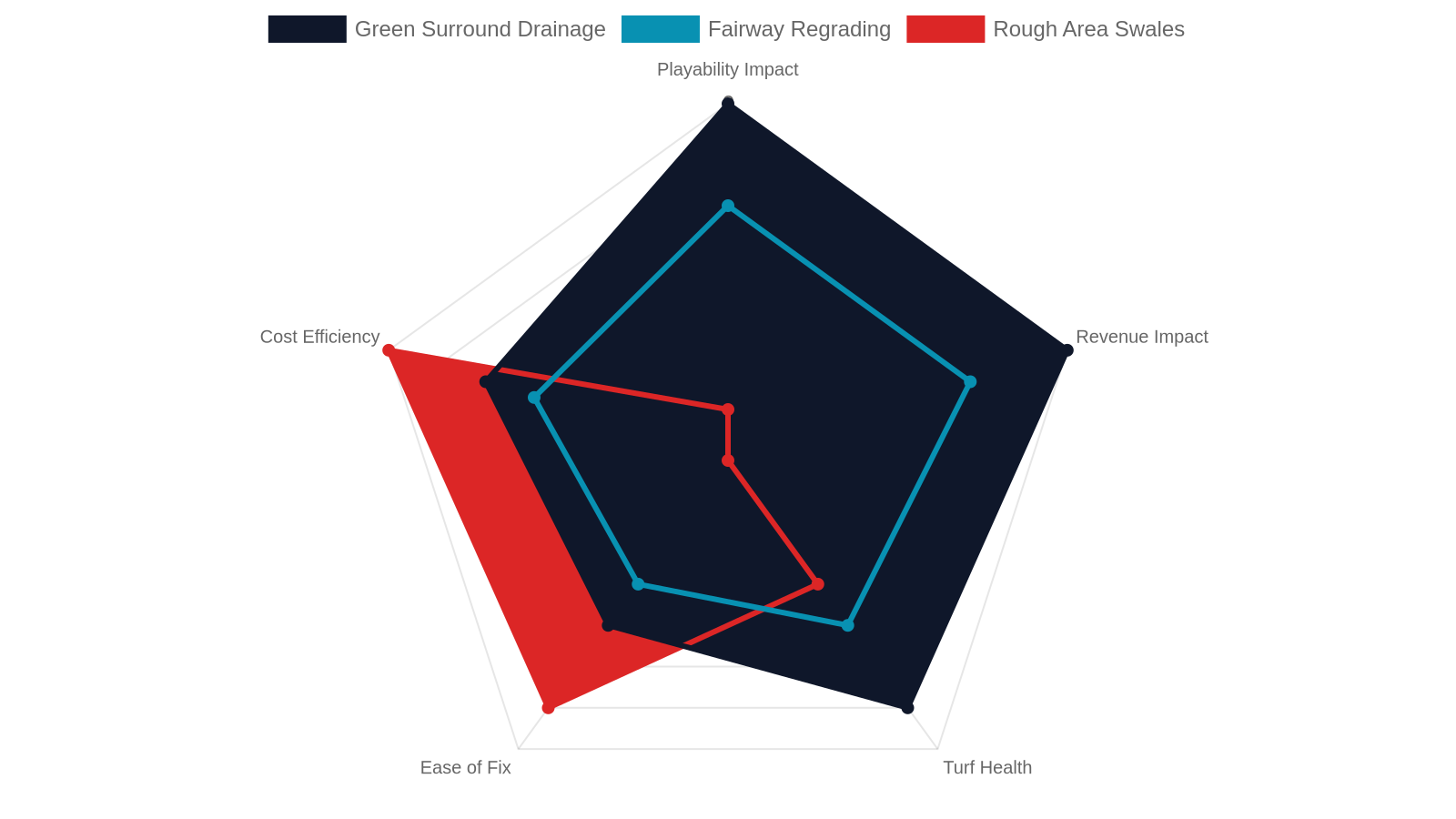
Surface Drainage Solutions at a Glance: Method Comparison
Every drainage challenge is different. Use this comparison to match the right solution to your specific problem area and budget.
7. Plan for Aeration and Seepage Drainage in Problem Areas
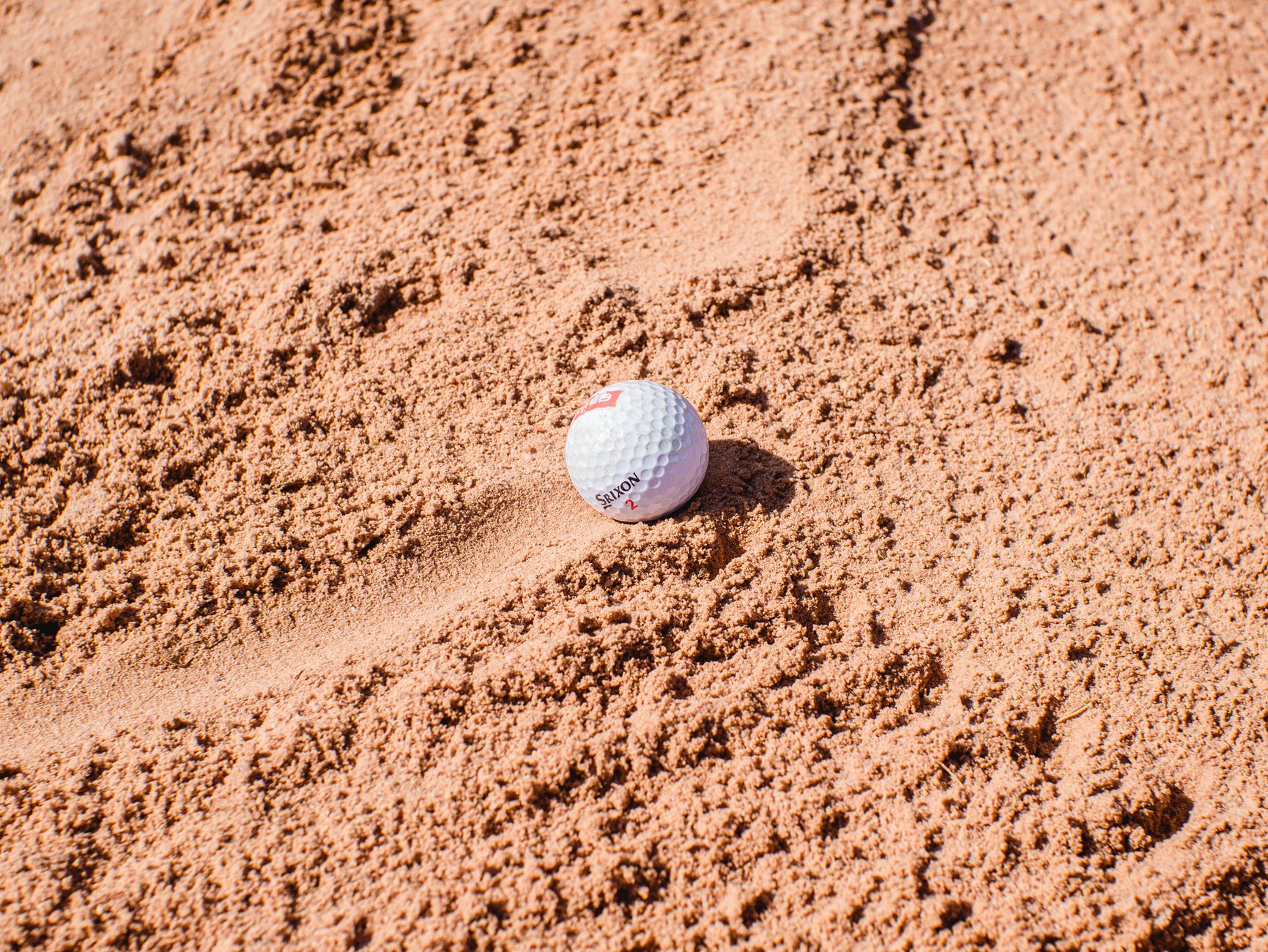
Even a well-graded, well-drained golf course will have problem areas — persistent wet spots that don’t respond to surface fixes because the water source is underground. Aeration and seepage drainage are the tools that address these subsurface issues, and they work best when combined with the surface drainage strategies described in the sections above. Think of them as the final layer of a comprehensive drainage system.
Core Aeration as a Drainage Tool
Mechanical aeration — pulling plugs of soil from the turf surface — is the most direct way to break up compaction and create channels for water and air to move through the rootzone. On heavily trafficked West Tennessee courses, greens may need to be aerated 2–3 times per year, with fairways aerated at least once annually. Core aeration followed immediately by sand backfill is the most effective combination: the sand-filled channels remain open long after the turf has healed over, creating a permanent network of drainage pathways.
- Standard hollow-tine cores are 0.5 inches in diameter and pulled to a depth of 2.5–4 inches.
- Deep-tine aeration (6–12 inches) is used to break through hardpan layers that standard aeration can’t reach.
- Backfilling aeration holes with USGA-spec sand rather than native soil maximizes long-term drainage benefit.
Seepage Drainage for Persistent Wet Spots
Some wet spots on a golf course persist because water is seeping up from a subsurface source — a high water table, a broken irrigation line, or a natural spring. Surface drainage solutions alone won’t fix these areas. Seepage drainage — a system of shallow trenches filled with permeable aggregate that intercepts and redirects subsurface water — is the appropriate tool.
A typical seepage drain consists of a 6–12 inch wide trench filled with coarse aggregate (no pipe required in many cases), cut across the slope above the wet area to intercept lateral groundwater flow before it reaches the surface. Jackson Sand supplies the coarse aggregate needed for seepage drainage systems and can help you estimate material quantities using their free yardage calculator at jacksonsand.com/yardage-calculator.
How to Prioritize Drainage Projects on a Limited Budget
Knowing what to fix is only half the battle — knowing what to fix first is where superintendents and turf managers earn their keep. A systematic approach to drainage project prioritization prevents the common mistake of spending the entire drainage budget on an aesthetically visible problem while a more damaging issue goes unaddressed for another year.
Triage: High-Impact vs. Low-Impact Fixes
Most golf courses can’t address every drainage problem in a single season. Prioritizing by impact — measured in rounds lost, turf damage, and player complaints — helps allocate limited maintenance budgets where they’ll do the most good. A simple triage framework:
- Priority 1 — Fix first: Drainage problems that affect greens, tees, or cart paths. These directly impact playability and revenue.
- Priority 2 — Fix this season: Fairway low spots that stay wet for more than 24 hours after a 1-inch rain event.
- Priority 3 — Plan for next year: Rough and out-of-play areas that hold water but don’t affect the round.
Phasing Multi-Year Drainage Plans
A phased drainage improvement plan spreads capital costs over 3–5 years while delivering measurable improvement each season. A typical phasing structure for a West Tennessee 18-hole course might look like this: Year 1 — address all green surround drainage and regrade the three worst fairway low spots. Year 2 — install catch basin network on the back nine and begin fairway topdressing program. Year 3 — complete front nine catch basins and address bunker drainage on the highest-traffic holes.
Documenting each phase with before-and-after photos, rainfall data, and playability records creates a compelling case for continued capital investment when presenting to a board or parks department.
Working With a Local Supplier Who Knows West Tennessee Soils

The quality of a drainage system is only as good as the materials that go into it. For West Tennessee golf courses, working with a supplier who understands local soil conditions, stocks lab-tested materials, and can deliver reliably across the Mid-South region eliminates a significant source of project risk. Jackson Sand has been supplying courses, athletic fields, and contractors in this region with purpose-mixed sand and aggregate — and the expertise to back it up.
Why Local Sourcing Matters for Drainage Materials
Drainage aggregate and sand sourced from distant suppliers often arrives without detailed particle size data, and the material may not be suited to the specific soil conditions in West Tennessee. A local supplier who mixes their own materials on-site can adjust gradations to match your existing rootzone, provide lab-tested spec sheets for every product, and deliver in their own trucks — which means cleaner loads, accurate quantities, and no third-party handling that can contaminate or segregate aggregate during transit.
- Lab-tested specs let you verify material before it goes in the ground — not after a drainage system fails.
- On-site mixing means consistent gradation from load to load, not variable quality from a stockpile that’s been sitting in weather.
- Delivery in company-owned trucks eliminates the risk of mixed loads or short-weights that can occur with brokered freight.
Products Jackson Sand Supplies for Golf Course Drainage
Jackson Sand at 139 United Dr., Jackson, TN serves golf courses throughout West Tennessee and the Mid-South with a full range of drainage materials: bunker sand, topdressing sand, drainage aggregate, gravel, and drainage basin materials. They mix sand on their own premises and deliver in their own trucks, keeping every load clean and accurate. Their published spec sheets give superintendents the particle size data they need to make confident material decisions.
For a complete overview of surface water management options — including slope design, channel drainage, and aggregate specifications — visit Jackson Sand’s surface water drainage and slope page. It’s a practical starting point for any West Tennessee course planning a drainage improvement project.
Ready to Improve Drainage on Your West Tennessee Course?
Surface drainage improvement is one of the highest-return investments a West Tennessee golf course can make — more playable days, healthier turf, lower disease pressure, and a better experience for every golfer who walks through the gate. The seven strategies in this guide give you a framework to assess your course’s drainage challenges and build a prioritized plan to address them, season by season.
Calculate Your Material Needs Before You Call
Before reaching out for a quote, it helps to have a rough estimate of how much material you’ll need. Jackson Sand offers a free yardage calculator at jacksonsand.com/yardage-calculator — plug in your dimensions and get an instant estimate for sand, aggregate, or gravel quantities. Having a number in hand makes the conversation faster and helps you budget the project accurately before committing.
For material specifications, the sand specs page provides lab-tested particle size data on Jackson Sand’s available products — exactly the information you need to confirm compatibility with your existing rootzone or drainage system design.
Get in Touch With Jackson Sand
Jackson Sand serves golf courses, athletic fields, contractors, and homeowners throughout West Tennessee and the Mid-South. Whether you need a single load of drainage aggregate or a multi-season supply of topdressing sand, they deliver in their own trucks and mix materials on-site to your specifications. Call 731-668-0440 to talk through your drainage project with the team at Jackson Sand — practical advice, no sales pressure, and materials that are ready to work in West Tennessee’s demanding conditions.
Frequently Asked Questions
What is the minimum slope needed for a golf course fairway to drain properly?
The USGA recommends a minimum 1% grade for fairways, meaning 1 foot of drop per 100 feet of horizontal distance. In high-rainfall regions like West Tennessee, a 1.5–2% grade is more practical and will clear the surface significantly faster after a storm.
How often should a golf course in West Tennessee topdress its greens?
Most West Tennessee courses benefit from topdressing greens 6–10 times per year, with heavier applications following core aeration events in spring and fall. Consistent annual topdressing improves infiltration rates by 200–400% over 3–5 years compared to untreated surfaces.
What type of sand is best for golf course drainage in West Tennessee?
For greens topdressing, USGA guidelines recommend sand with a median particle size of 0.25–0.35mm. For bunkers, a coarser, angular-to-sub-angular sand with hydraulic conductivity of at least 20 inches per hour works best. Lab-tested spec sheets from your supplier let you verify the material before it arrives on site.
Can I fix a wet spot on a fairway without regrading the entire hole?
Yes. Minor grade corrections of 1–3 inches can be achieved through progressive sand topdressing over one to three seasons, keeping the hole playable throughout. For subsurface wet spots caused by seepage or a high water table, a seepage drainage trench filled with coarse aggregate can intercept and redirect groundwater without major earthwork.
How do I know how much drainage aggregate or sand I need for a project?
Jackson Sand offers a free yardage calculator at jacksonsand.com/yardage-calculator — enter your project dimensions and get an instant material estimate. Having a quantity estimate before you call a supplier speeds up the quoting process and helps you budget accurately.
Does Jackson Sand deliver to golf courses outside of Jackson, TN?
Jackson Sand serves golf courses and contractors throughout West Tennessee and the surrounding Mid-South region, delivering in their own trucks to keep loads clean and quantities accurate. Call 731-668-0440 to confirm delivery to your specific location.