
DryJect and Profile Porous Ceramic Mixes: A Superintendent’s Guide
Quick answer: DryJect is an aerification method that uses high-pressure water to open channels in the root zone and injects dry amendment into them in the same pass, with little surface disruption. High-content Profile porous ceramic blends are used as the fill because the ceramic holds water and nutrients inside each particle, does not decompose, and keeps channels draining. Plain sand fills holes but adds no water or nutrient holding. Jackson Sand blends DryJect mixes in Jackson, Tennessee.
What DryJect Aeration Is
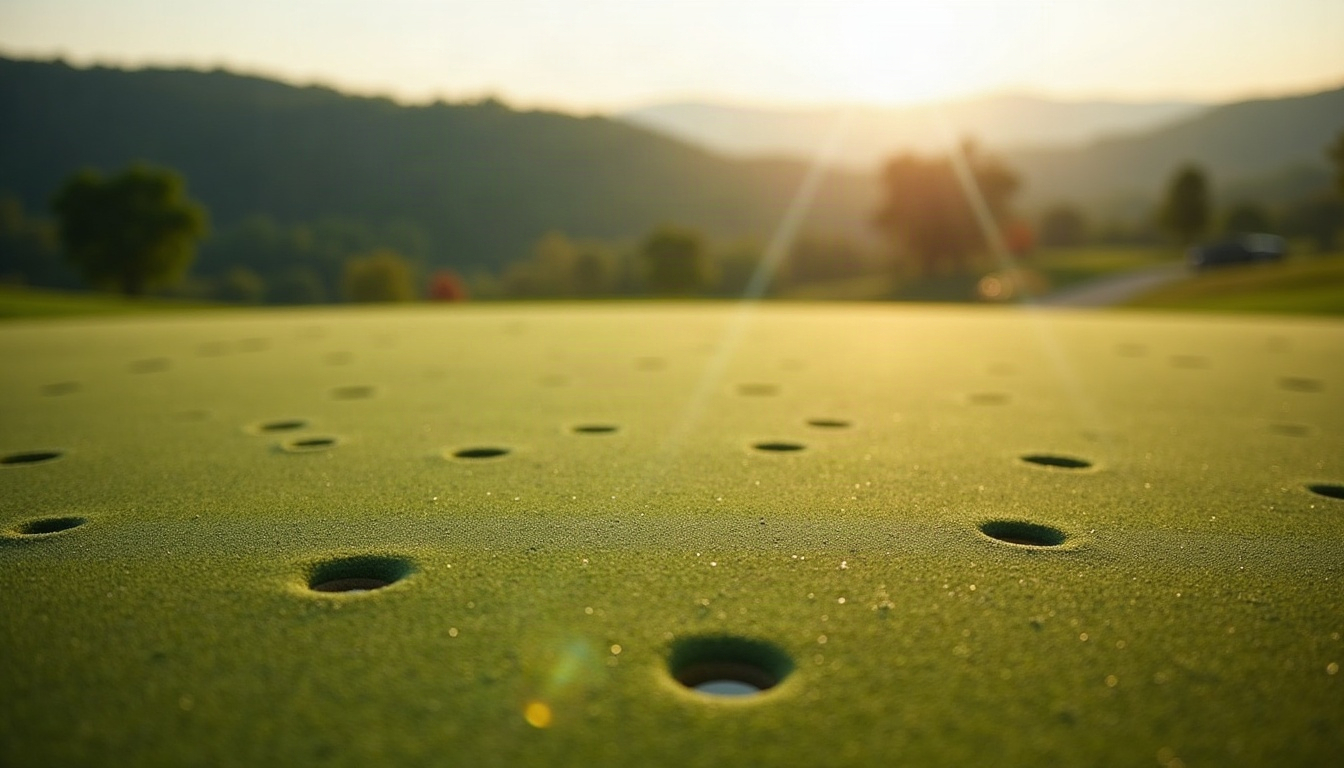
DryJect is an aerification method built around a simple idea: open up the root zone and fill it with a better material in a single pass. The machine uses a high-pressure pulse of water to fracture the soil beneath the surface and, at the same moment, carries dry amendment into the channel it creates. When the machine moves on, the holes are already filled.
That combination sets it apart from traditional core aeration. A hollow-tine aerifier pulls cores out of the green, leaving open holes and a surface full of soil plugs that have to be cleaned up, dragged or removed before sand is spread and worked into the holes. With DryJect, there are no cores to clean up and the surface is left fairly smooth, so play can usually resume much sooner than after a full core aerification.
Why superintendents use it
- Less disruption. Greens are back in play quickly, which matters on busy courses and during the playing season.
- Deep reach. The water pulse fractures the profile below the depth that small solid tines reach, breaking up layers and compacted zones.
- Amendment placement. Material goes down into the root zone instead of sitting on the surface waiting to be brushed in.
- Combined jobs. Aerification and amendment happen at once, saving labor.
DryJect does not usually replace core aeration entirely. Core aerification still removes organic matter, which DryJect does not. Many programs use both: core aeration at key points in the season to pull out thatch, and DryJect in between or in place of a second core event to keep the profile open with less disruption.
DryJect service is typically performed by trained operators with the specialized equipment. What Jackson Sand supplies is the material that goes into the holes: high-content Profile porous ceramic mixes blended for DryJect systems.
Why the Fill Material Matters
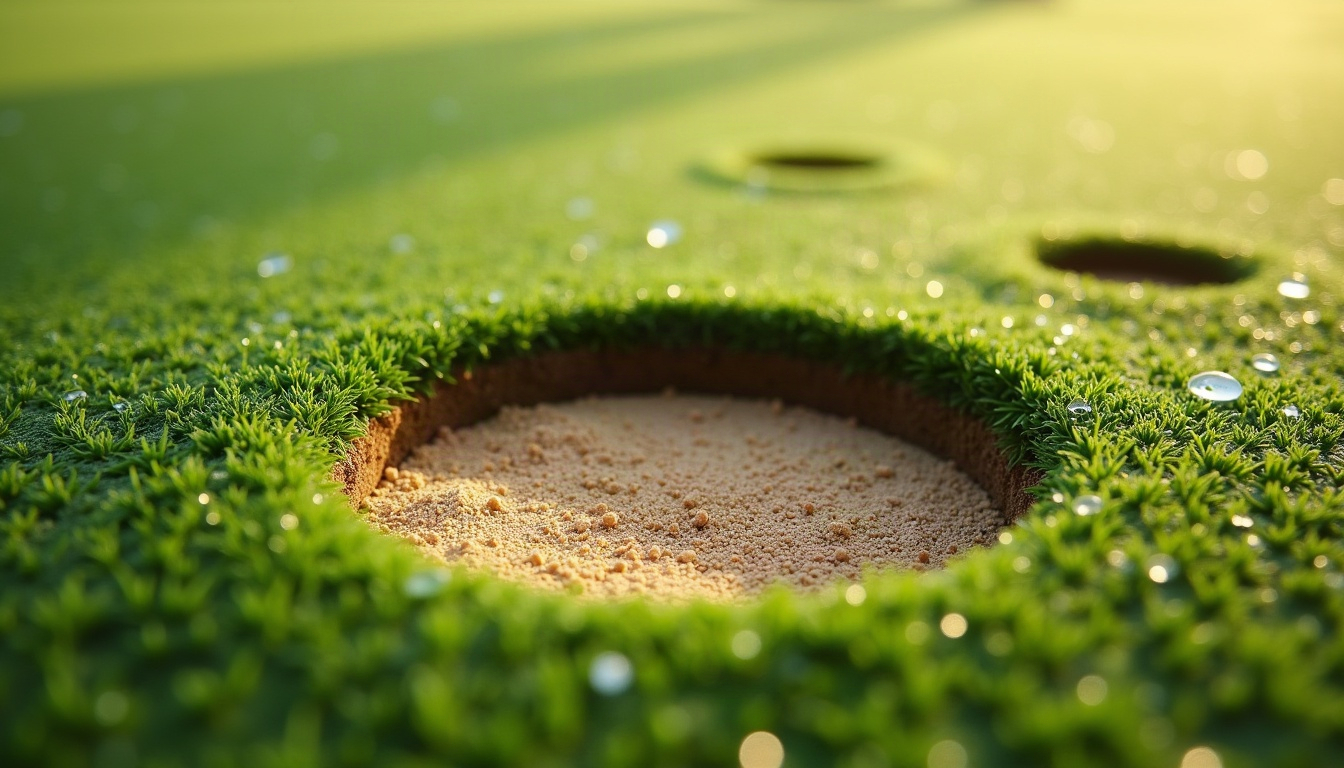
Every DryJect pass leaves thousands of channels filled with whatever material went through the machine. Over several seasons, those channels add up to a meaningful share of the upper root zone. What you put in them shapes how the green drains, holds water and feeds roots for years.
The channel becomes a root highway
Roots follow the path of least resistance. A fresh channel filled with loose, well-aerated material is an easy place for roots to grow deeper. If that material also holds some water and nutrients, roots have a reason to go there and stay there. The result is a deeper, healthier root system that handles summer stress better.
Bad fill creates new problems
If the fill contains silt, clay or fine particles that pack down, the channels can slow drainage instead of improving it. If it is heavy in decomposing organic matter, it can add to the very layer you are trying to manage. And if it varies from load to load, the root zone becomes a patchwork.
The machine needs dry, free-flowing material
DryJect equipment depends on the amendment flowing smoothly through the hopper and injection system. Damp, clumpy material clogs the machine and leads to uneven fills. That is a practical reason to use a properly blended, dry product and to keep it dry until the day of application. It is also why consistency in particle size is important: an even blend feeds evenly.
These requirements point toward a specific kind of mix. It should drain well, hold water and nutrients without breaking down, flow freely, and be consistent. That is the job high-content Profile porous ceramic blends were developed for.
What Profile Porous Ceramic Is
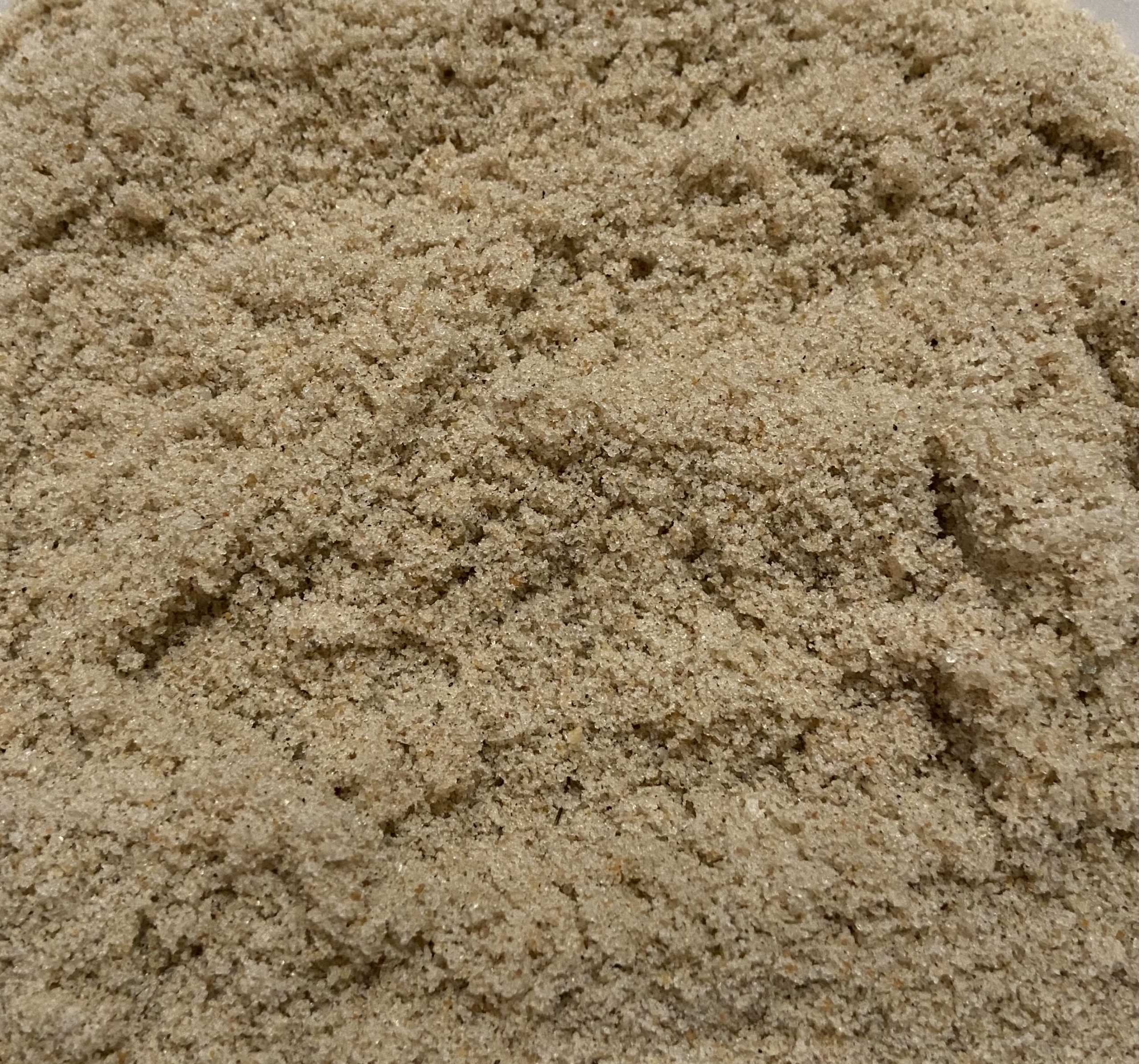
Profile is a porous ceramic soil amendment. The particles are made by firing clay at high temperature, which creates a hard, stable granule full of tiny internal pores. To the eye, it looks like a coarse, light-colored sand. Under magnification, each grain is a sponge with a rigid skeleton.
Two kinds of pore space
A root zone needs both air and water. In a sand root zone, the large spaces between grains carry air and drain water away; the small spaces hold water. Porous ceramic adds a third kind of space: pores inside each particle. Those internal pores hold water and dissolved nutrients, while the spaces between particles stay open for drainage and air.
Key properties
- Water holding inside the particle, available to roots.
- Nutrient holding, helping keep fertilizer in the root zone instead of letting it leach through.
- Permanence. Fired ceramic does not decompose, so the benefit does not fade like organic amendments do.
- Firmness. It behaves like a mineral particle, not a soft organic one, so it does not soften the surface.
- Compatibility with sand. It blends with top dressing sand and works into turf the same way.
Help with localized dry spots
Sand greens in the Mid-South often develop localized dry spots in summer, where the upper root zone becomes hard to rewet and turf wilts in patches even with normal irrigation. Wetting agents are the usual first response. Adding channels of porous ceramic gives water a path into the profile and a place to be stored once it gets there, which many superintendents find makes those spots easier to manage over time.
Because it does not break down, porous ceramic is often chosen when the goal is to improve water and nutrient holding in an existing sand green without adding to organic matter. That fits exactly with what most superintendents are trying to do during in-season aerification.
Why High-Content Profile Blends Are Used in DryJect
Jackson Sand offers Profile mixes at different ratios, including high-content Profile mixes specifically for DryJect systems. The reasoning for using a higher ceramic content in DryJect work comes down to where the material ends up.
Concentrated placement
When Profile is used in a broadcast top dressing, it spreads across the whole surface in a thin layer. In DryJect, it goes straight into channels in the root zone. Since the volume of material per pass is limited by the size and number of channels, a higher ceramic content puts more of the beneficial amendment exactly where roots will grow.
Long-term modification
Each DryJect event replaces a small fraction of the root zone with amended material. Repeated over several seasons, those channels gradually shift the character of the whole upper profile. A high-content blend makes each pass count for more, which is why many programs treat DryJect plus Profile as a long-term root zone improvement strategy rather than just an aerification.
Drainage without layering
A ceramic-rich fill drains freely, so channels stay open as vertical drainage paths. Because the material does not decompose, the channel does not slowly fill with organic residue and lose its effectiveness the way an organic fill might.
Clean flow through the machine
Ceramic particles are uniform and hard, and a well-blended high-content mix flows consistently through DryJect equipment when it is kept dry.
The exact ratio that is right for your greens depends on your root zone, your goals and your agronomist’s recommendation. We can blend to your specification.
Profile Mixes Versus Plain Sand
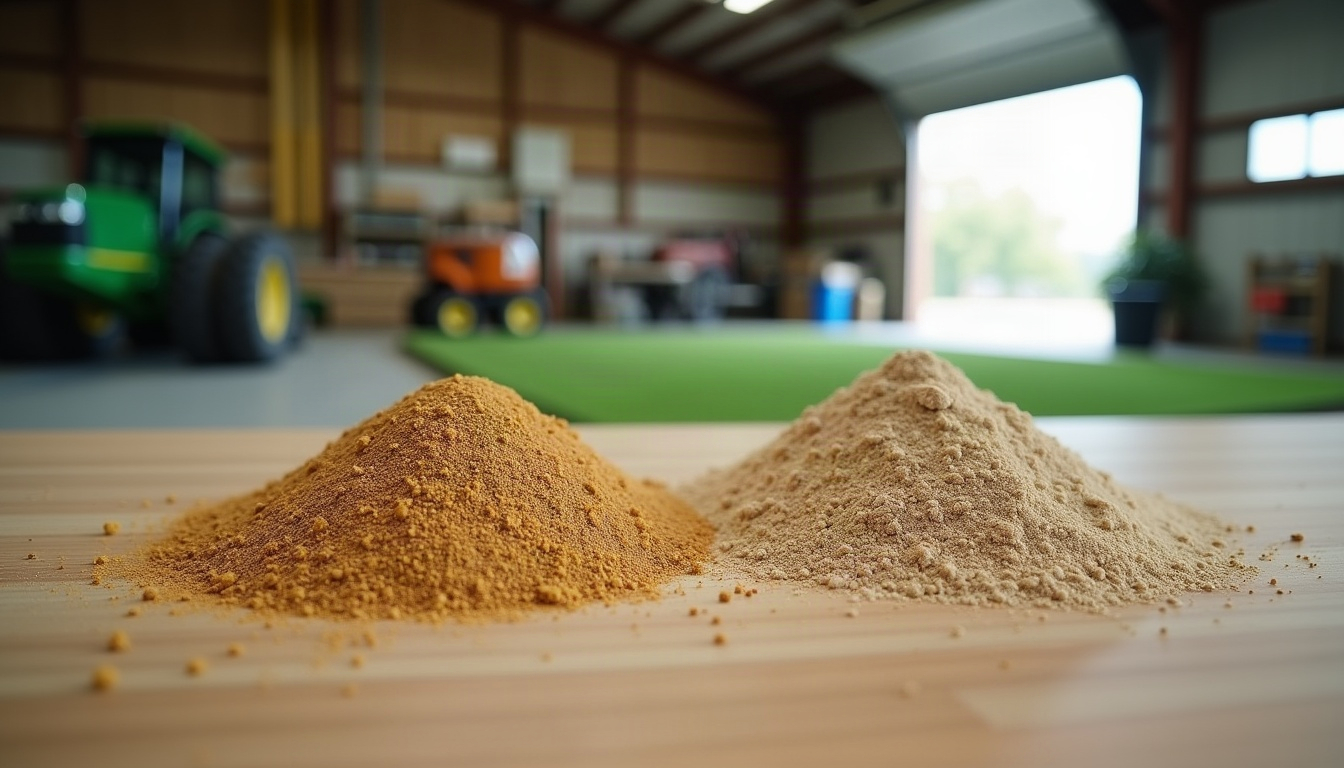
Plain sand is the default fill for core aerification holes, and for good reason: it is affordable, it drains and it dilutes thatch. So why pay for a ceramic blend? The comparison below shows the tradeoffs.
| Factor | Plain top dressing sand | High-content Profile mix |
|---|---|---|
| Drainage | Good when the sand is clean and well graded | Good; channels stay open |
| Water holding | Low | Higher, held inside ceramic particles |
| Nutrient holding | Very low | Improved |
| Breaks down over time | No | No |
| Adds organic matter | No | No |
| Thatch dilution | Yes | Yes |
| Cost | Lower | Higher |
| Best use | Routine top dressing; core aeration backfill | DryJect fills; targeted root zone improvement |
When plain sand is enough
For routine top dressing and for filling core aeration holes on greens that already hold water well, a quality sand is usually the right call. Our top dressing sands, including regular top dressing that meets USGA specifications and Champion top dressing for ultradwarf bermudagrass, cover most routine needs.
When ceramic earns its cost
- Greens that dry out quickly and develop localized dry spots.
- Root zones where fertilizer seems to wash through without lasting effect.
- Programs aimed at deeper rooting before summer heat.
- Courses that want to reduce irrigation while keeping a firm surface.
Planning a DryJect Program
DryJect works best as part of a planned aerification and top dressing program rather than a one-off event. A few principles help it pay off.
Timing
Greens recover fastest when the turf is actively growing. For ultradwarf bermudagrass in West Tennessee, that generally means late spring through summer. For bentgrass and other cool-season greens, spring and fall are the usual windows, with care to avoid stressful hot stretches. Because DryJect is less disruptive than core aeration, some courses schedule it during the season when pulling cores would interfere with play.
Combining with core aeration
Core aeration removes organic matter; DryJect does not. A common approach is one or two core events per year for organic matter control, with DryJect events in between for deep fracturing and amendment. Your agronomist can help set the balance based on your organic matter levels.
Material quantity
The volume of material each DryJect pass uses depends on hole spacing, depth and the operator’s settings. Coordinate with your service provider for an estimate, then confirm with us so the mix is blended and delivered in time. For broadcast top dressing calculations, our yardage calculator converts area and depth to cubic yards.
Measure the results
A DryJect and Profile program is an investment over several seasons, so track it. Handheld soil moisture meters show whether greens are holding moisture more evenly between irrigation cycles. Simple infiltration tests before and after a season show whether drainage is holding up. Rooting depth, checked with a soil probe at the same spots each month, tells you whether roots are following the channels down. Periodic physical soil testing by an accredited lab gives the most complete picture, including organic matter content in the upper inches. Keep notes on hand-watering hours and fertilizer response too; fewer wilt calls in July are often the first sign the program is working.
Follow-up top dressing
Many superintendents follow a DryJect pass with a light top dressing to smooth the surface and fill any channels that did not fill completely. Using a sand that matches your root zone keeps the profile consistent. Our golf course maintenance page covers how sand fits into a broader maintenance program.
Storage and Handling of DryJect Mixes
The best mix in the world performs poorly if it shows up damp or gets wet before application. Handling matters with DryJect material more than with almost any other turf product.
Keep it dry
- Store under cover on a dry, hard surface.
- Use tarps if the material will sit outside, even for a short time.
- Schedule delivery close to the application date when possible.
- Check moisture before loading the machine; damp material should be dried or set aside.
Avoid contamination
Stray gravel, debris or leftover material from another product can clog injection equipment or end up in the green. Jackson Sand runs around 14 trucks of its own, which lets us keep strict cleanliness standards and prevent cross-contamination. When a high-content Profile mix leaves our yard, it arrives as the same blend.
Keep blends consistent across events
If you run DryJect several times a year, using the same blend each time keeps your root zone modification uniform. Because we mix on our own premises with consistent materials, we can repeat your blend event after event.
Plan around weather
Rain the day before or during application can make both the turf and the material harder to work with. Build some flexibility into the schedule with your service provider and with your material delivery.
Other Places Profile Mixes Help
DryJect is the headline use for high-content Profile mixes, but porous ceramic blends are also useful in other parts of a turf program.
Core aeration backfill
After core aerification, holes can be filled with a Profile blend instead of straight sand. Each hole becomes a column of amended material, similar to a DryJect channel but shallower and wider.
Top dressing
Lower-content Profile blends can be used in broadcast top dressing to gradually improve water and nutrient holding at the surface. Because ceramic is firm and light-colored, it blends in and does not soften the surface the way heavy organic dressings can.
Tees and sports fields
Sand-based tees and athletic fields face the same drainage and water-holding tradeoffs as greens. Ceramic blends can be used in aeration backfill on these surfaces too. Our athletic fields page covers aeration and top dressing for sports turf.
New construction
Root zone mixes for new greens can include ceramic alongside or instead of peat. Jackson Sand offers greens mixes and root zone mixes blended with Dakota reed sedge peat, Peat Inc, Canadian sphagnum peat moss and Profile, so the right combination can be matched to the project and confirmed by lab testing.
Order DryJect and Profile Mixes from Jackson Sand
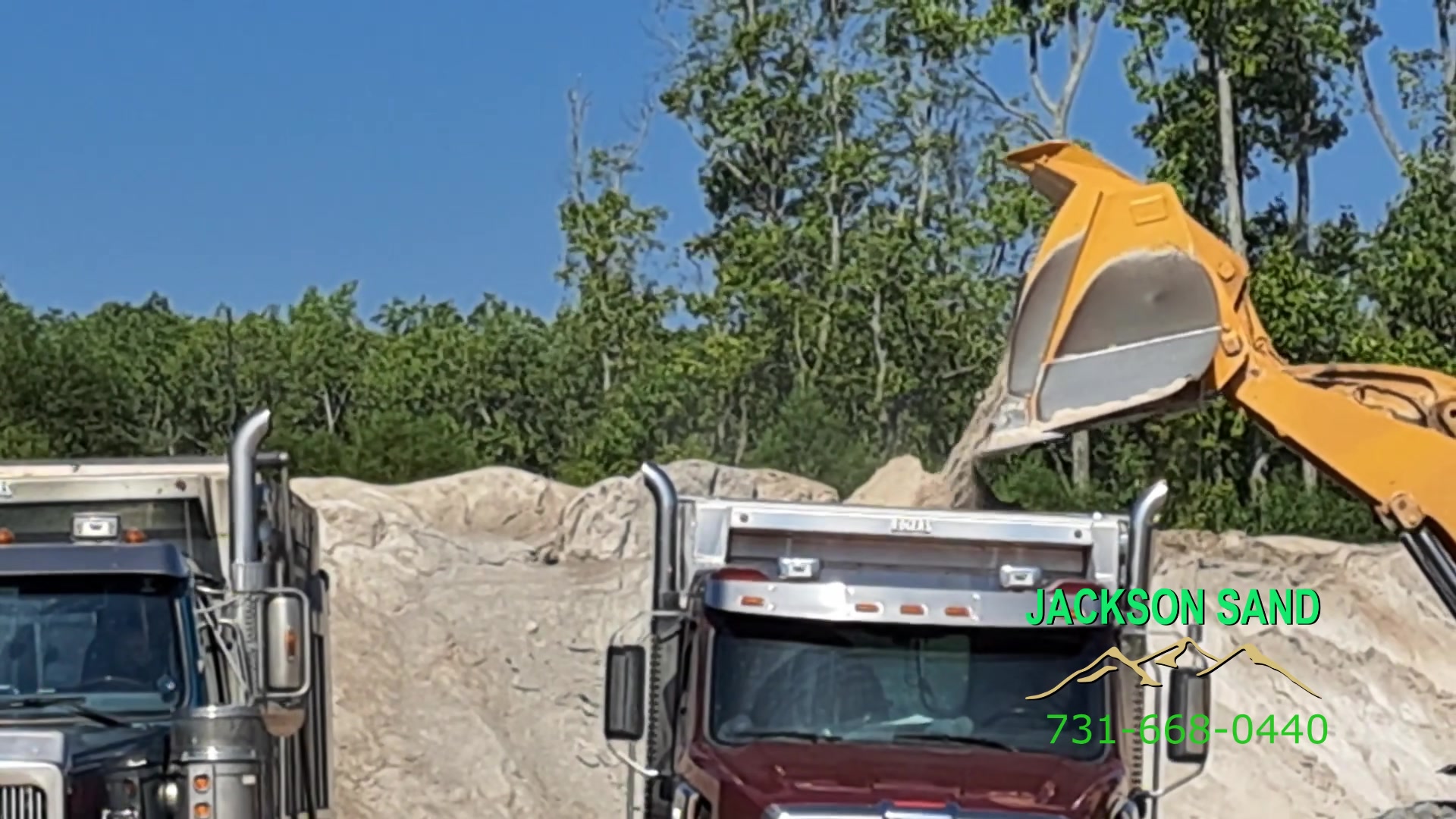
Jackson Sand is sand from the source, producing golf course-grade sand since 1996. We blend high-content Profile porous ceramic mixes for DryJect systems, along with lower-content Profile top dressing blends and peat-based greens mixes, on our own premises in Jackson, Tennessee. We deliver in trucks we own, keeping every load clean and exactly what you ordered.
We work with golf course superintendents, sports-field managers and turf contractors across West Tennessee and the Mid-South, with our own trucks hauling from Huntsville, Alabama to Jackson, Mississippi and as far east as Tullahoma, Tennessee. If you are scheduling DryJect this season, talk to us early so your mix is blended and ready when your operator arrives.
- See our full line of golf course sand.
- Review lab gradations on the sand specs page.
Call 731-668-0440 or contact Jackson Sand online to order DryJect and Profile mixes or to talk through the right blend for your greens.
Inside the Jackson Sand Plant
Take a 90-second look at where our sand comes from: the washing plant, screens and conveyors, and the Jackson Sand truck fleet that delivers every load. President Carlton Pope tells the story of how the company grew from one truck in 1996.
Sources and Further Reading
- USGA on aeration methods including DryJect (USGA Green Section Record)
- GCSAA research: adding inorganic amendments to a putting green (PDF) (GCSAA)
- A Healthy Injection for the Greens (injection topdressing, PDF) (MSU Turfgrass Information Center)
- solid-tine aeration order of operations (USGA)
Frequently Asked Questions
What is DryJect aeration?
DryJect is an aerification method that uses a high-pressure pulse of water to fracture the root zone and injects dry amendment into the resulting channels in the same pass. It leaves no cores to clean up and causes little surface disruption, so greens typically return to play quickly. It is usually performed by trained operators with specialized equipment.
Why use Profile porous ceramic in DryJect instead of sand?
Porous ceramic holds water and nutrients inside each particle while the spaces between particles stay open for drainage. It does not decompose, so the benefit lasts. Plain sand fills the channel and drains, but adds little water or nutrient holding. High-content Profile mixes make each DryJect pass a long-term root zone improvement.
Does DryJect replace core aeration?
Usually not entirely. Core aeration physically removes organic matter, which DryJect does not. Many programs use one or two core aerification events per year for organic matter control and add DryJect in between for deep fracturing and amendment placement with less disruption to play. Your agronomist can help find the right balance.
Why does DryJect material have to be dry?
DryJect equipment depends on the amendment flowing freely through the hopper and injection system. Damp or clumped material clogs the machine and produces uneven fills. Store DryJect mixes under cover on a dry surface, schedule delivery close to application and check moisture before loading.
Can Profile mixes be used for regular top dressing?
Yes. Lower-content Profile blends can be broadcast as top dressing to gradually improve water and nutrient holding near the surface, and Profile mixes can also backfill core aeration holes. Because ceramic is firm and light-colored, it blends in with sand and does not soften the surface like heavy organic dressings.
Does Jackson Sand perform DryJect service?
Jackson Sand supplies the material: high-content Profile porous ceramic mixes blended for DryJect systems, mixed on its own premises in Jackson, Tennessee and delivered in its own clean trucks. Coordinate the application with your DryJect operator, then call 731-668-0440 to order the mix.
Ready to order or have a question about the right material? Call Jackson Sand at 731-668-0440 or send us a message and we will help you pick the right product and quantity.
Leave a Reply