
Masonry Sand: What It Is and What Masons Look For
Quick answer: Masonry sand is a fine, washed, well-graded sand used for mortar, stucco, plaster and grout. It is finer and smoother than concrete sand and much cleaner than fill sand. Masons look for low silt and clay, a balanced spread of grain sizes, consistent color and no clay lumps. Jackson Sand washes and classifies masonry sand in Jackson, Tennessee and sells it through distributors in Middle and West Tennessee.
What Masonry Sand Is
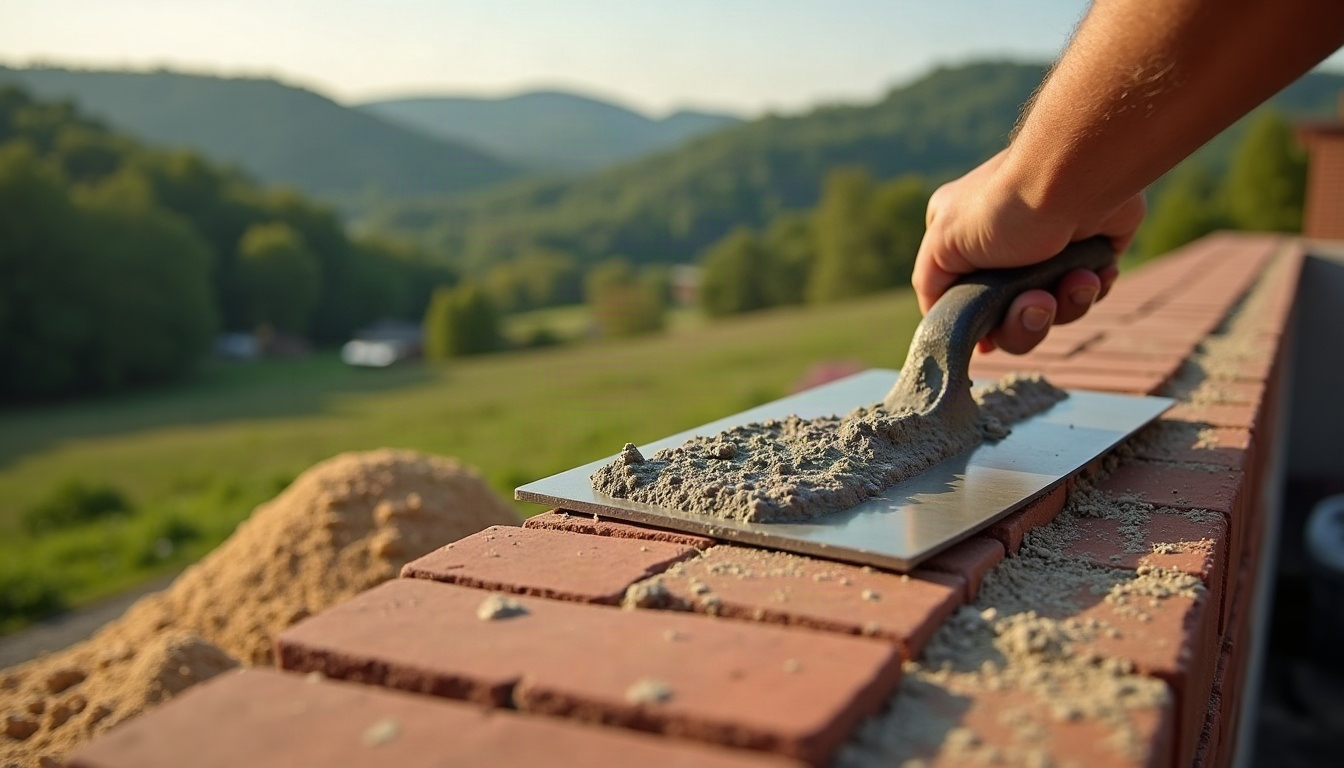
Masonry sand is the fine aggregate that goes into mortar, stucco, plaster and grout. When a mason lays a course of block or brick, the bed joint holding it in place is mostly sand by volume, bound together by portland cement, lime or masonry cement. The sand gives the mortar its body, its workability on the trowel and much of its final strength and appearance.
Compared with the sands used for concrete or fill, masonry sand is finer and more uniform. Its grains are small enough to make a smooth, buttery mortar that can be spread into a thin joint, yet it still carries a range of sizes so the particles pack together instead of leaving voids. Good masonry sand is also clean: it has been washed to remove the silt, clay and organic material that weaken mortar and stain finished walls.
Typical uses include:
- Mortar for laying concrete block, brick and stone veneer
- Stucco and exterior plaster base and finish coats
- Parging foundation walls and block surfaces
- Grout and repointing work on older masonry
- Setting beds under pavers and flagstone, where a fine, smooth sand is preferred
Because it shows up in the finished wall, masonry sand is one of the few aggregates where buyers care about color as much as grading. A mason building a long brick facade wants the joints in the last course to match the first, which means the sand has to come from a consistent source and process.
How Masonry Sand Is Made: Washing, Classifying and Dewatering
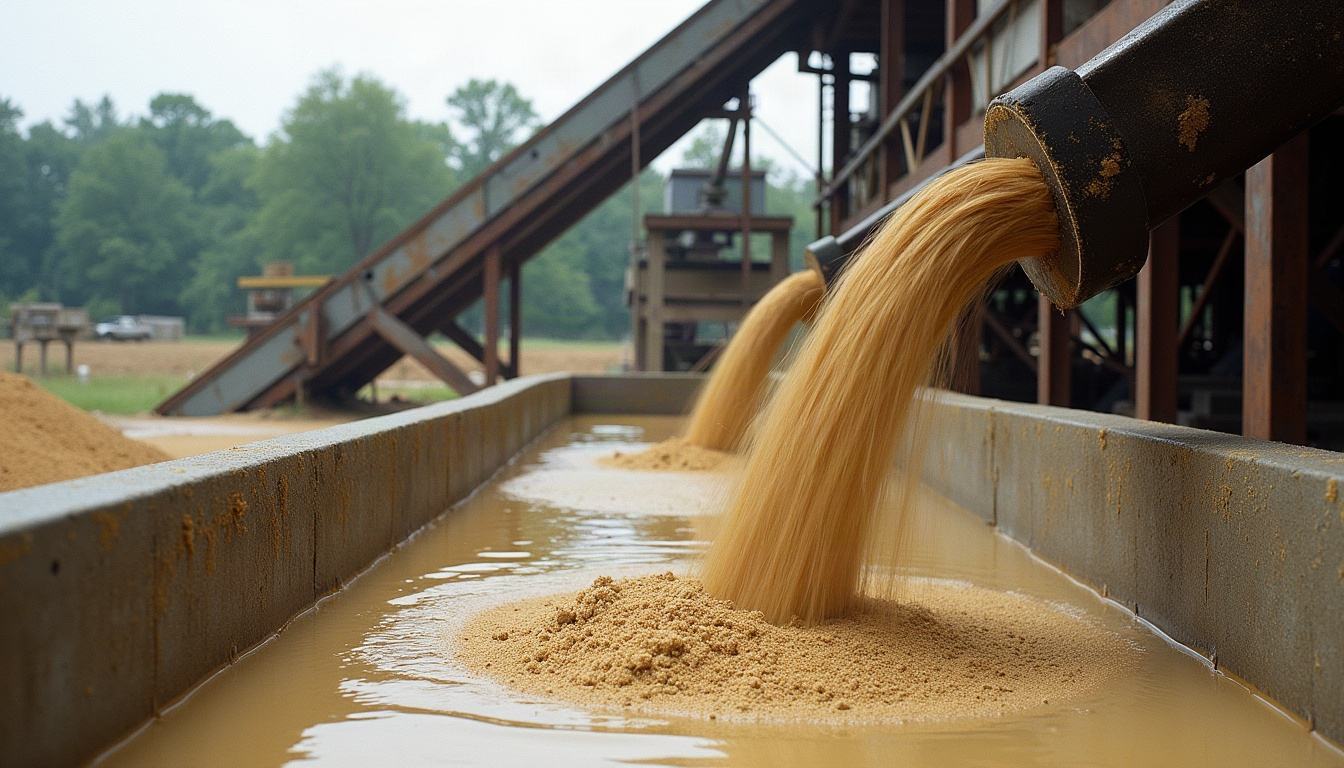
Raw sand pulled from a pit or deposit is rarely ready for mortar. It carries fine silt and clay, bits of roots and organic matter, and a mix of grain sizes that can swing from one part of the deposit to the next. Turning it into a reliable masonry product is a processing job, and the steps matter.
Washing
Washing is the heart of the process. Water is run through the sand to suspend and carry off the very fine material that would otherwise coat each grain. Clay and silt films stop cement paste from bonding to the sand, raise the water demand of the mix and leave mortar weaker and more prone to shrinkage cracking. Washing also helps remove clay balls and organic debris.
Classifying
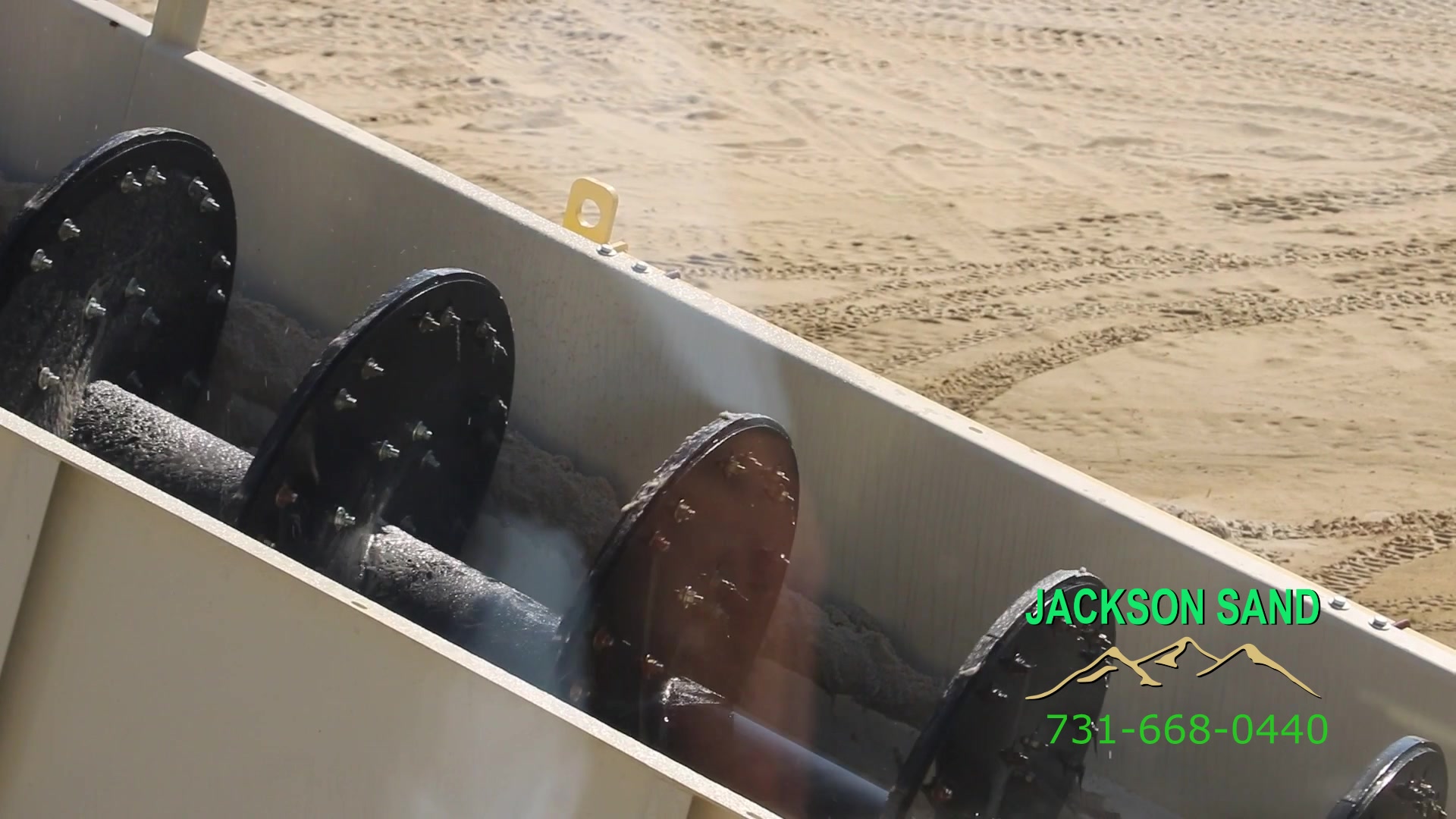
At Jackson Sand’s plant in Jackson, Tennessee, sand is washed and sized using screw classifiers. A screw classifier is an inclined trough with a rotating screw: heavier, sand-sized particles settle and are carried up and out by the screw, while lighter fines overflow with the wash water. Adjusting the process lets a producer control how much fine material stays in the finished sand.
Dewatering and stockpiling
Washed sand then passes over vibrating dewatering screens that shake out excess water, and stacking conveyors build it into stockpiles. A sand that drains well in the stockpile arrives at the jobsite with a more predictable moisture content, which helps masons keep their mortar consistent batch to batch.
Jackson Sand has been producing sand since around 1996, and the same washing and classifying approach that supports its golf course sands applies to its masonry sand: clean material, controlled sizing and close attention to what ends up in the stockpile.
Masonry Sand vs. Concrete Sand, Fill Sand and Play Sand
Sand gets sold under a lot of names, and the differences are not just marketing. Each type is processed for a different job, and swapping one for another usually causes problems. Here is how the common types compare.
| Sand type | Grain size and grading | Washed? | Typical uses | Why not use it for mortar? |
|---|---|---|---|---|
| Masonry sand | Fine, well graded, smooth feel | Yes | Mortar, stucco, plaster, parging, grout | It is the right choice |
| Concrete sand | Coarser, angular, larger top size | Usually | Ready-mix and site-mixed concrete, some bedding | Coarse grains make harsh mortar that is hard to spread in thin joints |
| Fill sand | Variable, often unwashed with silt and clay | Usually not | Backfill, grading, raising low spots | Clay and silt weaken bond, stain walls and cause shrinkage |
| Play sand | Very fine, often uniform single size | Yes, sometimes screened | Sandboxes, some crafts | Too uniform and fine; raises water demand and leaves weak, crack-prone mortar |
Concrete sand
Concrete sand is built to fill the gaps between larger stone in a concrete mix. It is coarser and often more angular than masonry sand. In concrete that is a benefit, but in a 3/8 inch mortar joint those bigger grains drag on the trowel, make the mortar harsh and leave a rough joint face.
Fill sand
Fill sand is the least processed. It is meant to take up space, not to bond. It may carry a high percentage of silt and clay, which is fine under a slab but bad news in mortar.
Play sand
Play sand is clean and soft, which leads some homeowners to try it for small mortar jobs. The trouble is that it is usually very fine and narrowly sized. Without a spread of grain sizes, the paste has more surface area to coat and more voids to fill, so the mortar needs more water and ends up weaker.
What Masons Look For in a Masonry Sand
Ask an experienced mason what makes good sand and the answer usually comes back to a few practical things they can see and feel on the board.
Cleanliness
Clean sand has little silt, clay or organic matter. A quick field check is to put some sand in a clear jar with water, shake it hard and let it settle. A thick layer of silt on top of the sand, or cloudy water that will not clear, signals too many fines. Leaves, roots and dark organic specks are another warning sign, since organics can interfere with cement hydration.
Gradation
Masons want a fine sand with a range of grain sizes rather than one uniform size. That spread lets smaller grains fill the gaps between larger ones, so the mix needs less paste and less water to become workable. Too coarse and the mortar is harsh; too fine and it gets sticky, shrinks and loses strength.
Color consistency
Mortar joints can make up a meaningful share of a wall’s visible surface. Sand color affects mortar color, especially with natural gray cement or lighter pigmented mortars. A sand that shifts from tan to reddish to gray between loads can leave visible banding in a wall. Consistent color comes from a consistent source and a consistent process.
No clay lumps or debris
Clay balls are a common complaint. They may break down in the mixer and add fines, or survive as soft lumps that pop out of a joint later. Sticks, rocks larger than the sand’s top size and other debris slow the mason down and show up as defects in the finished work.
Feel on the trowel
Finally, masons judge sand by how the mortar handles. Good masonry sand produces mortar that holds its shape on the board, spreads smoothly, sticks to the unit and tools cleanly. That workability is the sum of everything above.
Why Washed Sand Matters for Mortar and Stucco
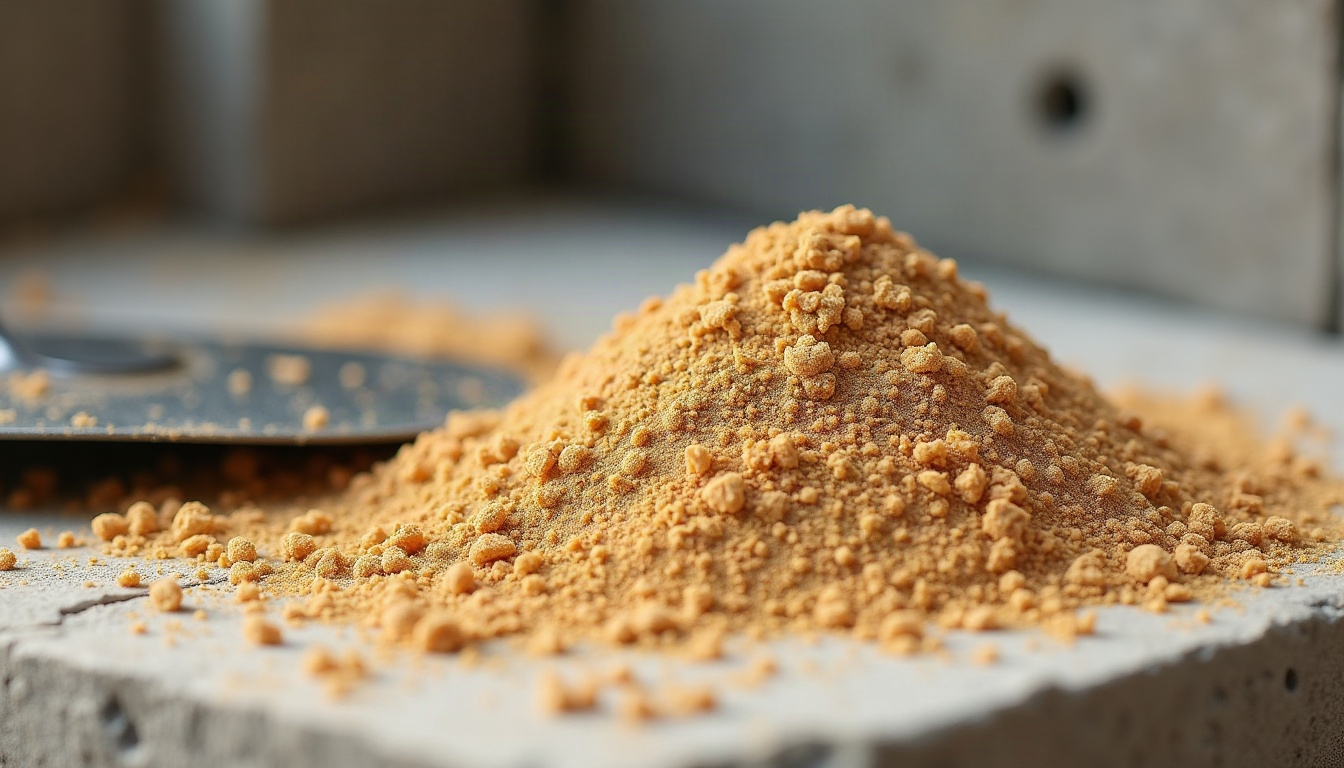
Washing is the single biggest difference between a sand that makes reliable mortar and one that causes callbacks. Here is what the fines removed by washing would otherwise do.
- Weaker bond. Clay and silt coat sand grains, so cement paste bonds to the coating instead of the grain. The result is lower bond strength between the mortar and the masonry unit.
- Higher water demand. Fine particles have a huge surface area. More water is needed to make the mortar workable, and extra water means more shrinkage and lower strength once it cures.
- Shrinkage cracking. In stucco especially, excess fines are a common contributor to map cracking and crazing as the coat dries.
- Efflorescence and staining. Dirty sand can bring soluble salts and clays that leave white bloom or discoloration on the wall face.
- Inconsistent batches. Unwashed sand varies more from load to load, so the mason is always adjusting water and mix proportions.
Washing does not strip out all fine material. Some very fine particles help mortar workability and water retention. The goal is control: remove the clay, silt and organics that cause trouble, and keep a balanced, repeatable grading. That is the job screw classifiers and dewatering screens do at a washing plant.
For stucco and plaster work, the stakes are even higher. Stucco is applied in thin coats over large surfaces, so any weakness or shrinkage in the sand shows up across the whole wall. Many plastering crews are particular about their sand source for exactly this reason.
Understanding ASTM C144 and Masonry Sand Specifications
When contractors, engineers or architects ask a supplier about masonry sand, the standard that usually comes up is ASTM C144, the industry specification for aggregate used in masonry mortar. It is the general reference point buyers use when they talk about masonry sand quality.
What ASTM C144 covers
In general terms, ASTM C144 sets out:
- Grading limits. A range of the percentage of sand that should pass a series of standard sieves, from the No. 4 sieve down to the No. 200 sieve. The bands are intended to produce a fine, well-graded sand that makes workable mortar.
- Limits on concentration in narrow size ranges, so the sand is not dominated by one particle size.
- Limits on deleterious substances, such as clay lumps, friable particles and lightweight material.
- Organic impurity testing, to screen out sand with organics that could affect the mortar.
- Consistency of grading from shipment to shipment, so the mortar behaves the same throughout a job.
How mortar specs relate
Mortar itself is commonly specified under ASTM C270, which defines mortar types M, S, N and O. In proportion-based mixes, the sand volume is generally kept between 2.25 and 3 times the combined volume of cementitious materials. Stucco and plaster have their own aggregate specifications, and project specs may call out one of these documents directly.
What to ask a supplier
If your project has a written specification, share it with the supplier and ask what testing information is available for the sand you are buying. For commercial work, the engineer of record or the specifier decides what documentation is acceptable. For residential jobs, the practical checks in the previous sections, along with a sample run of mortar, tell you a lot.
Jackson Sand publishes lab data for several of its golf course products on its sand specs page. For masonry sand, call the office to talk through what your project requires.
Estimating How Much Masonry Sand You Need
Ordering the right amount saves money and keeps a crew from running out mid-wall. Sand is usually bought by the ton or the cubic yard, and mortar consumption depends on unit size, joint thickness and waste.
Rules of thumb for mortar
Industry rules of thumb are a reasonable starting point, but every crew and job is different:
- Volume ratio. Most mortar mixes use roughly 2.25 to 3 parts sand to 1 part cementitious material by volume.
- Block work. Standard 8 inch concrete block uses far fewer units per square foot of wall than brick, so it typically consumes less mortar per square foot of wall.
- Brick work. Modular brick has many more joints per square foot, so mortar, and sand, use goes up.
- Waste. Add a margin for droppings, cleanup and mix adjustments. Many estimators add 10 to 20 percent.
For bedding and fill areas
When masonry sand is used as a setting bed under pavers or flagstone, estimate by volume. Multiply length by width by depth (all in feet) and divide by 27 to get cubic yards. A 12 by 20 foot patio with a 1 inch bed works out to 12 x 20 x 0.083 / 27, or about 0.74 cubic yards before waste.
Jackson Sand’s free yardage calculator does this math for you. Enter the dimensions and it returns cubic yards, which you can bring to your supplier when you order.
Storage on site
Keep the sand pile on a clean surface or tarp, away from topsoil and mud, and cover it if rain is coming. A saturated pile changes how much water the mortar needs, and dirt kicked into the pile by equipment undoes the benefit of buying washed sand.
Common Mistakes When Buying and Using Masonry Sand
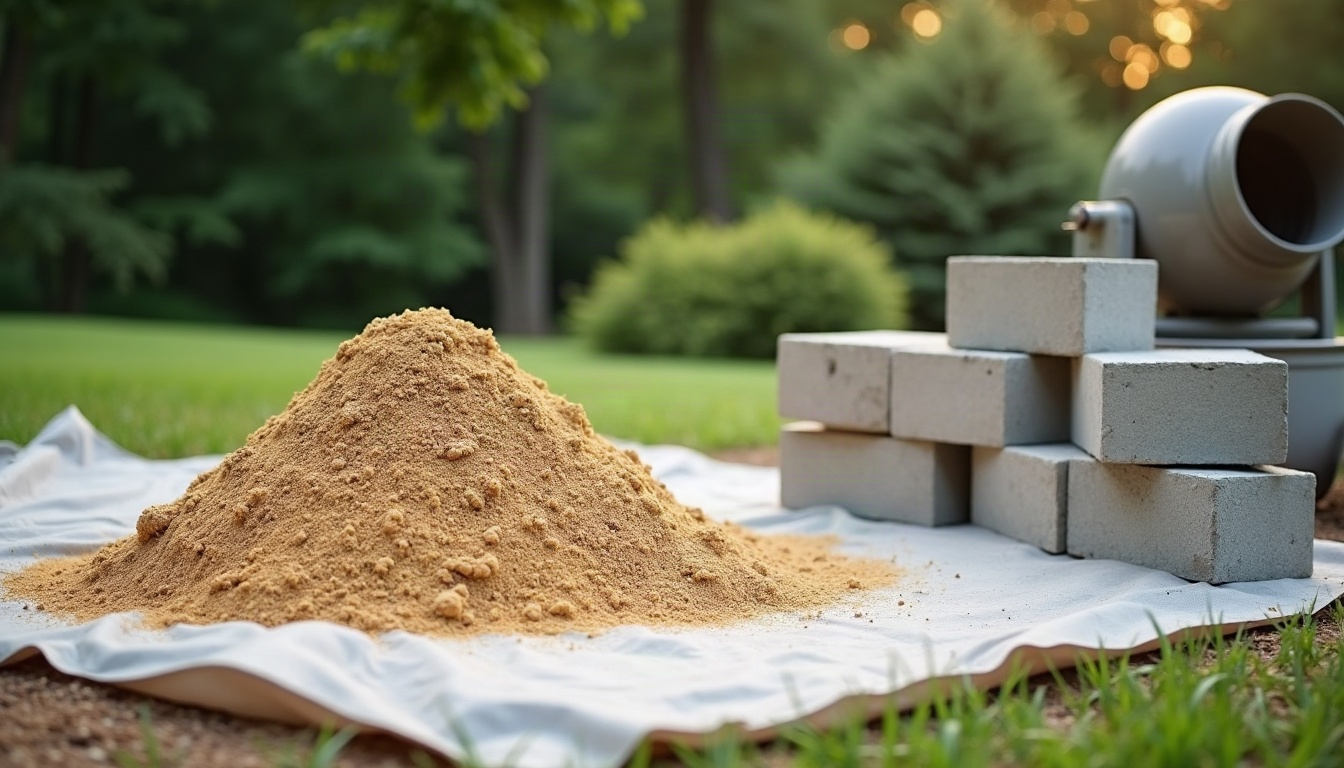
Most masonry sand problems trace back to a handful of avoidable decisions.
- Using whatever sand is on site. Leftover fill sand or concrete sand from another phase of the job is tempting, but it is the wrong material for mortar and stucco.
- Switching sources mid-project. Even two good sands can differ in color and grading. Order enough from one source to finish a visible wall or elevation, or blend carefully if you must switch.
- Ignoring moisture. Wet sand bulks up, so a shovelful of damp sand holds less actual sand than a shovelful of dry sand. Crews that batch by shovel should account for this to keep proportions steady.
- Adding water to fix harsh mortar. If mortar is stiff and harsh, extra water is a band-aid that costs strength. The real fix is usually a better graded sand or the right amount of lime.
- Storing sand in the dirt. A clean pile can pick up clay and debris quickly from equipment traffic. Protect it.
- Skipping a test batch. On color-sensitive work, mix a sample panel with the actual sand, cement and pigment before the crew starts the main wall.
Avoiding these mistakes costs nothing and protects both the look and the durability of the finished masonry.
Where to Buy Jackson Sand Masonry Sand in Tennessee
Jackson Sand produces masonry sand at its plant in Jackson, Tennessee, and sells it through distributors serving the Middle Tennessee and West Tennessee markets. For many contractors and homeowners, that means the easiest way to get the sand is through a local building materials dealer that carries it.
The company also runs its own fleet of around 14 trucks, which run daily from as early as 6 a.m. into the early evening. Owning the trucks lets Jackson Sand keep its loads clean and avoid cross-contamination, so the material that arrives is the material that was ordered. That same discipline has served its golf course customers since the late 1990s, when the plant began producing bunker sands, top dressings and root zone mixes.
If you are a dealer looking to stock masonry sand, a contractor with a larger project, or a buyer who wants to know which distributor near you carries it, call the office and the team will point you in the right direction. Jackson Sand also produces pea gravel, 33C limestone and red river rock, listed on the gravels page, which often end up on the same masonry and hardscape jobs.
Talk to Jackson Sand About Masonry Sand
Good mortar starts with clean, consistent sand. Jackson Sand has been washing and classifying sand in Jackson, Tennessee since the 1990s, and its masonry sand reaches masons, contractors and dealers across West and Middle Tennessee through its distributor network.
Call 731-668-0440 to ask about masonry sand availability, distributor locations, or what information is available for your project specification. You can also reach the team through the contact page. The office is at 139 United Dr., Jackson, TN 38305.
Inside the Jackson Sand Plant
Take a 90-second look at where our sand comes from: the washing plant, screens and conveyors, and the Jackson Sand truck fleet that delivers every load. President Carlton Pope tells the story of how the company grew from one truck in 1996.
Sources and Further Reading
- ASTM C144 standard specification for masonry mortar aggregate (ASTM International)
- BIA Technical Note 8: mortars for brickwork (PDF) (Brick Industry Association)
- USGS construction sand and gravel statistics (U.S. Geological Survey)
Frequently Asked Questions
What is the difference between masonry sand and concrete sand?
Masonry sand is finer and more uniform, made to produce smooth, workable mortar that spreads into thin joints. Concrete sand is coarser and often more angular, designed to fill voids between larger stone in concrete. Using concrete sand in mortar typically makes a harsh mix that is hard to trowel and leaves rough joints.
Can I use play sand to make mortar?
It is not recommended. Play sand is usually very fine and narrowly sized, so mortar made with it needs extra water and ends up weaker and more prone to shrinkage cracking. A well-graded, washed masonry sand gives better workability, bond and durability for block, brick and stucco work.
Why does masonry sand need to be washed?
Washing removes silt, clay and organic matter that coat sand grains. Those fines weaken the bond between cement paste and sand, raise water demand, increase shrinkage and can cause staining or efflorescence. Washed sand produces stronger, more consistent mortar and stucco from batch to batch.
What is ASTM C144?
ASTM C144 is the standard specification for aggregate used in masonry mortar. It sets grading limits across a series of sieves, limits on clay lumps and other deleterious material, and requirements for organic impurities and grading consistency. Buyers often reference it when discussing masonry sand quality with suppliers.
How much sand do I need for mortar?
Most mortar mixes use roughly 2.25 to 3 parts sand to 1 part cementitious material by volume. Total quantity depends on whether you are laying block or brick, joint thickness and waste. For bedding areas, multiply length by width by depth in feet and divide by 27 for cubic yards, or use Jackson Sand's yardage calculator.
Where can I buy Jackson Sand masonry sand?
Jackson Sand sells its masonry sand through distributors in the Middle Tennessee and West Tennessee markets. Call the office in Jackson at 731-668-0440 to find out which dealer near you carries it, or to discuss larger orders and dealer supply.
Ready to order or have a question about the right material? Call Jackson Sand at 731-668-0440 or send us a message and we will help you pick the right product and quantity.
Leave a Reply